Weekend links 204

somnium.jpg

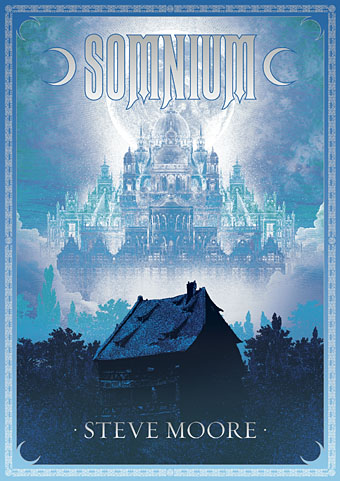
RIP Steve Moore. We never met, unfortunately, but I was very pleased he asked me to create a cover for his unique occult novel, Somnium, in 2011. Prior to this we’d been connected by shared acquaintances, colleagues, and membership in the informal cabal that was (and maybe still is) The Moon & Serpent Grand Egyptian Theatre of Marvels. Steve’s long friendship with Alan Moore (no relation) is well-documented, not least by Alan himself who made Steve the subject of his Unearthing project. One surprising connection for me was that Steve also had a link to Savoy Books. In the late 1960s he was working for comics publisher Odhams where he was able to copy for David Britton some Ken Reid comic art which Odhams had refused to print. Dave published the forbidden pages in his first magazine, Weird Fantasy, in 1969. In 2011 Steve talked to Pádraig Ó Méalóid about Somnium, and also to Aug Stone at The Quietus. Aug Stone penned a few memorial words here.

• “People love using the word ‘porn’ as long as there’s a partner for it. Pair ‘porn’ with something else and it’s usually a good thing. A celebration of style and culture. But that word on its own? Well.” Porn star Conner Habib asks why people have such a problem with porn actors.

Dave Maier‘s Russian cinema recommendations. Several favourites there including the magical and remarkable Shadows of Our Forgotten Ancestors (1964) which, as Maier notes, isn’t really Russian but should be seen in any case.

Shakespeare uses verbal magic, cantrips and ditties, nonsense songs and verses throughout the plays, but in Othello he gives a glimpse of how powerful a spell becomes when it’s no longer oral, but fixed in material form. The fatal handkerchief is no ordinary hanky; it’s a love spell, and it was made with gruesome and potent ingredients (mummified “maiden’s hearts”) by a two-hundred-year-old sibyl in Egypt—Egypt being the birthplace and pinnacle of magic knowledge.

Marina Warner on magic.

• Mixes of the week: an hour of electro-acoustics and contemporary classical recordings sequenced by Laurel Halo, and (from 2010) 36-minutes of “umbral electronic hypnagogia” by The Wyrding Module.

• “This is the book that, 10 years later, inspired Richard Hollis’s landmark design for John Berger’s Ways of Seeing.” Rick Poynor on Chris Marker’s Commentaires.

• Is the Linweave Tarot the grooviest deck ever made? Dangerous Minds thinks so.

• Bobby Barry talks to Holger Czukay about his 1969 audio collage, Canaxis 5.

• “What Happened to Experimental Writing?” asks Susan Steinberg.

Aldous Huxley‘s lectures on visionary experience at MIT, 1962.

Laura Palmer will see Agent Cooper again in just a few hours.

Callum found a copy of The Gay Coloring Book (1964).

Metal Cats

Moonshake (1973) by Can | Lunar Musick Suite (1976) by Steve Hillage | Dark Moon (1993) by Holger Czukay | Boy In The Moon (2012) by Julia Holter
Weekend links 203

budich.jpg

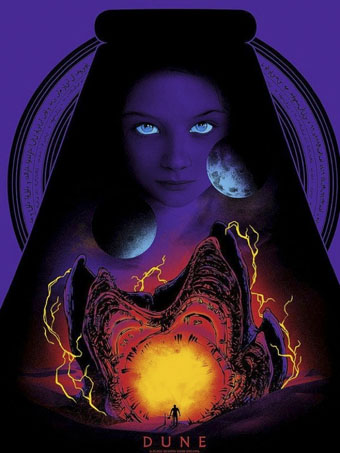
A Dune-inspired piece by Joshua Budich for In Dreams: an art show tribute to David Lynch at Spoke Art.

• “[Montague] Summers was a friend of Aleister Crowley and, like [Jacques d’Adelswärd] Fersen, conducted homoerotic black masses; whatever eldritch divinity received their entreaties was evidently propitiated by nude youths.” Strange Flowers goes in search of the Reverend Summers.

• More Jarmania: Veronica Horwell on the theatrical life of Derek Jarman, Paul Gallagher on When Derek Jarman met William Burroughs, and Scott Treleaven on Derek Jarman’s Advice to a Young Queer Artist.

Robert Henke of Monolake talks to Secret Thirteen about his electronic music. More electronica: analogue-synth group Node have recorded a new album, their first since their debut in 1995.

This hypertrophied response to decay and dilapidation is what drives the “ruin gaze”, a kind of steroidal sublime that enables us to enlarge the past because we cannot enlarge the present. When ruin-meister Giovanni Piranesi introduced human figures into his “Views of Rome”, they were always disproportionately small in relation to his colossal (and colossally inaccurate) wrecks of empire. It’s not that Piranesi, an architect, couldn’t do the maths: he wasn’t trying to document the remains so much as translate them into a grand melancholic view. As Marguerite Yourcenar put it, Piranesi was not only the interpreter but “virtually the inventor of Rome’s tragic beauty”. His “sublime dreams”, Horace Walpole said, had conjured “visions of Rome beyond what it boasted even in the meridian of its splendour”.

Frances Stonor Saunders on How ruins reveal our deepest fears and desires.

Gustave Doré. L’imaginaire au pouvoir: Four short films from the Musée d’Orsay to accompany their current exhibition, Gustave Doré (1832–1883): Master of Imagination.

• At Dangerous Minds: Remembering Cathy Berberian, the hippest—and funniest—lady of avant-garde classical music.

• “Merely a Man of Letters”: Jorge Luis Borges interviewed in 1977 by Denis Dutton & Michael Palencia-Roth.

Luke Epplin on Big as Life (1966), a science-fiction novel by EL Doctorow which the author has since disowned.

The Psychomagical Realism of Alejandro Jodorowsky: Eric Benson talks to the tireless polymath.

• A video essay by Matt Zoller Seitz for the 10th anniversary of David Milch’s Deadwood.

Eugene Brennan on Scott Walker’s The Climate of Hunter (1984).

Dune at Pinterest.

• Prophecy Theme from Dune (1984) by Brian Eno | Olivine (1995) by Node | Gobi 110 35′ south 45 58′ (1999) by Monolake

Weekend links 202

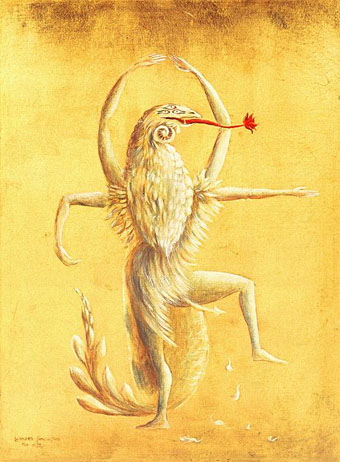
carrington.jpg

Figuras Miticas: Bailarin II (1954) by Leonora Carrington.

• The 26th Annual Lambda Literary Award Finalists have been announced. Ghosts in Gaslight, Monsters in Steam; Gay City: Volume 5 made the LGBT Anthology list, so congratulations to editors Evan J. Peterson & Vincent Kovar, and everyone else involved. I illustrated and designed the cover of that volume which also contains a piece of my fiction, Study in Blue, Green, and Gold.

Music in School (1969), episode 4: “A New Sound”. Amazing BBC TV programme for schools showing children playing avant-garde compositions using bowed metal sheets, tape loops, and primitive electronic equipment. I was at school then, and can’t help but feel a little jealous. Related: Delia Derbyshire Day approaches.

Voices Of Haiti (1953), recorded during ceremonials near Croix Des Missions and Petionville in Haiti by Maya Deren.

These days it’s hard to remember that Whistler’s Symphony in White, No. 1: The White Girl caused a bigger uproar at the Salon des Refusés of 1863 than Manet’s Déjeuner sur l’herbe, or that Monet was more influenced by Whistler than vice-versa. The delicacy of Whistler’s perceptions and his willingness to sacrifice everything for the sake of harmony make for an art less bracing than that of Degas or Pissarro. And yet how much life there is in his little Thames riverscapes. Perhaps we need another major exhibition—there hasn’t been one for twenty years—to re-evaluate him.

Whistler’s Battles by Barry Schwabsky

• Mix of the week (and a very good one it is): Abandoned Edwardian Schoolhouse by The Geography Trip.

Morton Subotnick tells Alfred Hickling how recording Silver Apples of the Moon blew his mind.

• The fantasy artwork of Ian Miller. A new book, The Art of Ian Miller, is published next month.

Queen for a Day by Alison Fensterstock. A look at the Mardi Gras Queens of New Orleans.

Tex Avery (1988): A 50-minute BBC documentary about the great animation director.

• The Gentle Revolutionary: Peter Tatchell talks to Joseph Burnett about Derek Jarman.

The Soaring and Nearly Forgotten Arches of New York City.

Dennis Hopper‘s photos of American artists in the 1960s.

Vodun at Pinterest.

Litanie Des Saints (1992) by Dr. John | Dim Carcosa (2001) by Ancient Rites | Far From Any Road (2003) by The Handsome Family

Weekend links 201

kettelwell.jpg

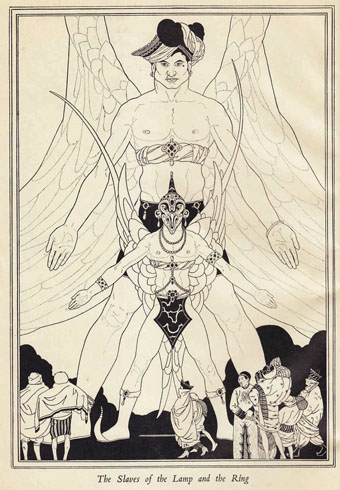
An illustration by John Kettelwell for The Story of Aladdin and the Wonderful Lamp (1928).

• “The strain in everything I write, of not being taken with the bounteousness of humankind, was also the attitude of both my parents.” Jonathan Meades talking to James Kidd about his forthcoming memoirs.

• 7 Trumps From the Tarot Cards and Pinions (1969), and album of electronic music by Ruth White, is being given a limited vinyl reissue. Related: Ruth White—An American Composer.

• 82 minutes of Michael Moorcock talking in 1972 to Jean-Pierre Turmel, co-founder of the Sordide Sentimental record label.

If Verne’s protagonists often seem to stop short of revelation, it’s because the revelation is not meant to be known. Revelation has a way of putting man back at the front of the evolution chart, moving neatly toward a happily progressing future, out of the darkness and into the light. The characters who embark upon the Voyages Extraordinares move backward and forward and all about, spun around like blindfolded children trying to pin the tail on the donkey. The point of the adventure, after all, is not to have a conclusion; it is to get knocked off your feet.

Stefany Anne Golberg on Journey to the Center of the Earth at 150.

• Photographs of pre-Haussmann Paris by Charles Marville, and photographs by Amy Heiden of industrial ruins.

• Mixes of the week: FACT Mix 427 by Wild Beasts, and Secret Thirteen Mix 108 by Kangding Ray.

• Hear Italo Calvino read selections from Invisible Cities, Mr Palomar and others.

William S. Burroughs in Dub conducted by Dub Spencer & Trance Hill.

• Cycles, Returns & Rebirth: Alexander Tucker on Derek Jarman.

Harold Budd: the composer with no urge to make music.

The Museum of Imaginary Musical Instruments.

• 80 minutes of Monolake playing live in 1999.

• At 50 Watts: Dyl’s Dance.

Owls And Flowers (2006) by Belbury Poly | Learning Owl Reappears (2011) by The Advisory Circle | The Owls (2013) by Félicia Atkinson

Weekend links 200

fukaya.jpg

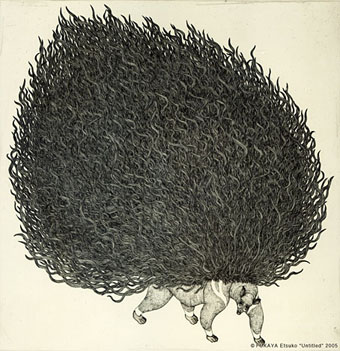
Untitled etching by Etsuko Fukaya, 2005.

• “By the time Scorsese met Powell, in 1975, the British director had fallen on hard times and was largely ignored by the UK film establishment.” A London office used by Michael Powell and Emeric Pressburger is given the Blue Plaque treatment.

• Ambient reminiscences at The Quietus: Wyndham Wallace on the genesis of Free-D (Original Soundtrack) by Ecstasy Of St Theresa, and Ned Raggett on Aphex Twin’s Selected Ambient Works II.

• “Even Queen Victoria was prescribed tincture of cannabis,” writes Richard J. Miller in Drugged: the Science and Culture Behind Psychotropic Drugs. Steven Poole reviewed the book.

I don’t relate to standard psychologizing in novels. I don’t really believe that the backstory is the story you need. And I don’t believe it’s more like life to get it—the buildup of “character” through psychological and family history, the whole idea of “knowing what the character wants.” People in real life so often do not know what they want. People trick themselves, lie to themselves, fool themselves. It’s called survival, and self-mythology.

Rachel Kushner talking to Jonathan Lee

Sound Houses by Walls is a posthumous collaboration based on a collection of “weird sonic doodles” by electronic composer Daphne Oram. FACT has a preview.

The skeletal trees of Borth forest, last alive 4,500 years ago, were uncovered in Cardigan Bay after the recent storms stripped the sand from the beach.

Stephen O’Malley talks to Jamie Ludwig about Terrestrials, the new album by Sunn O))) and Ulver. There’s another interview here.

• At BibliOdyssey: Takushoku Graphic Arts—graphic design posters by contemporary Japanese artists.

• The Unbearable Heaviness of Being: Dave Segal on the rumbling splendour of Earth 2.

So Much Pileup: “Graphic design artifacts and inspiration from the 1960s – 1980s.”

• Lots of illustrations by Virgil Finlay being posted at The Golden Age just now.

• Mix of the week: Episode #114 by Lustmord at Electric Deluxe.

Lucinda Grange’s daredevil photography. There’s more here.

Experimental music on Children’s TV

Kazumasa Nagai at Pinterest.

• Teeth Of Lions Rule The Divine (1993) by Earth | He Who Accepts All That Is Offered (Feel Bad Hit Of The Winter) (2002) by Teeth Of Lions Rule The Divine | Big Church (megszentségteleníthetetlenségeskedéseitekért) (2009) by Sunn O)))