
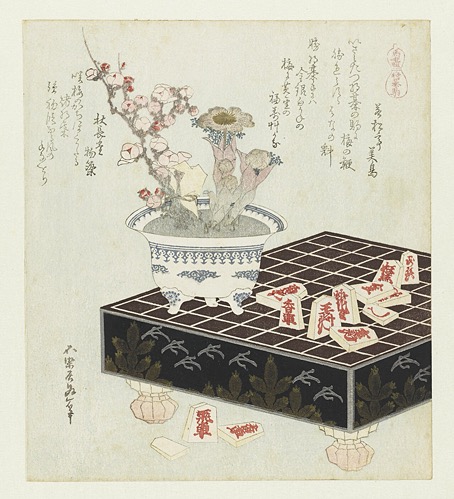
Shogi Chess Board.
I ought to have posted this several weeks ago for the advent of the Year of the Horse. Umazukushi is a series of wood-block prints by Katsushika Hokusai created to celebrate another Year of the Horse, 1822. Umazukushi (also Uma-zukushi) is usually translated as “A Selection of Horses”, and this is what Hokusai gives us, albeit in a cryptic manner since most of the prints are still-life views of household objects. Each print features a short poem—the series was commissioned by a group of poets—while each picture contains a reference to horses. The allusions aren’t always easy to decipher for the non-Japanese, especially when looking back over two centuries. The Japanese robin, for example, is known as the “horse bird” as a result of its singing voice which was regarded as sounding like the neighing of a horse. I’m still not sure about some of the other prints. A complete description of the references would be useful but my searches so far have failed to turn up anything.
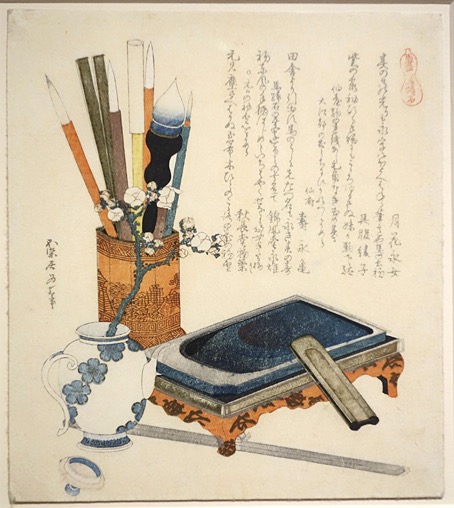
Inkstone in a Horseshoe Shape.
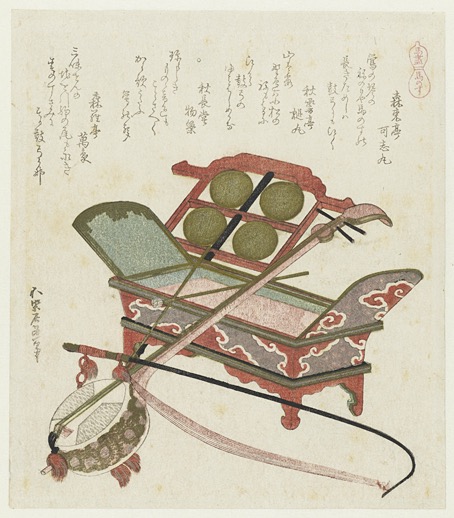
Musical Instruments and Horse’s Tail.
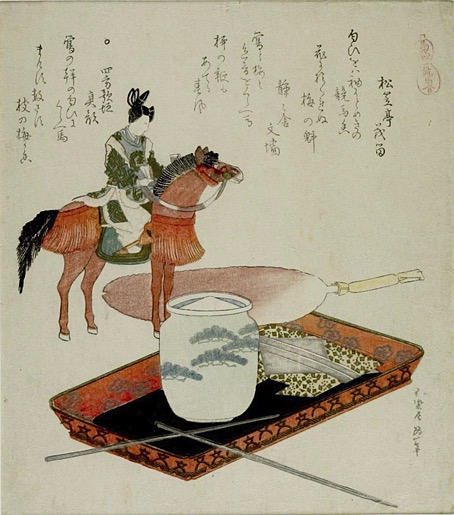
Toy Horse Fan and Incense Burner.
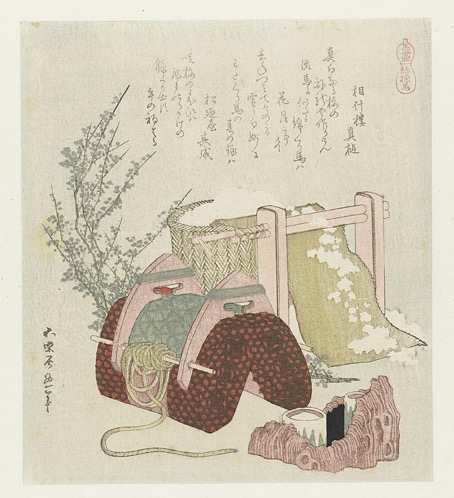
Saddle Wringer, Smoking Outfit and Plum Branch.
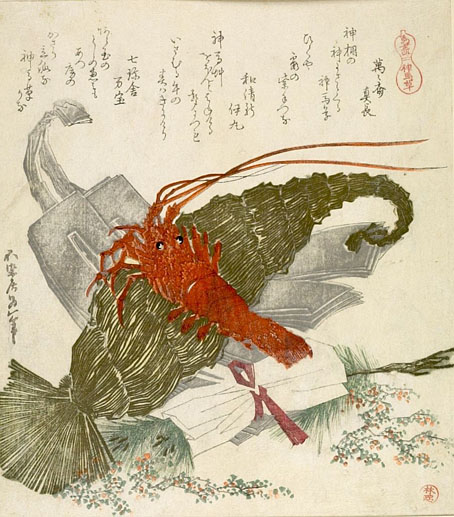
Prawn and Other Offerings.
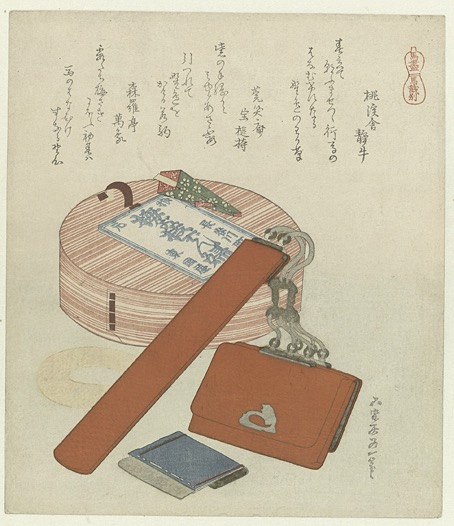
A Pipe Case with a Tobacco Pouch.
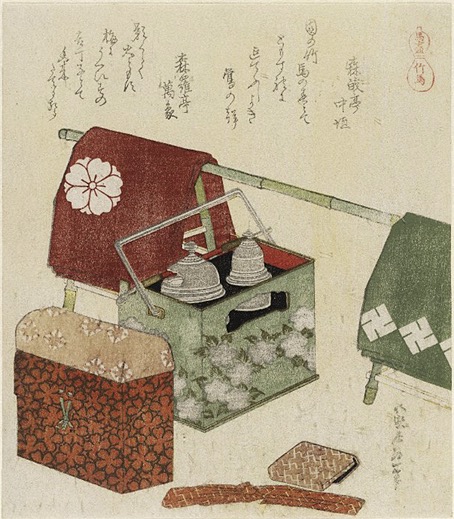
Bamboo Clothes Horse.
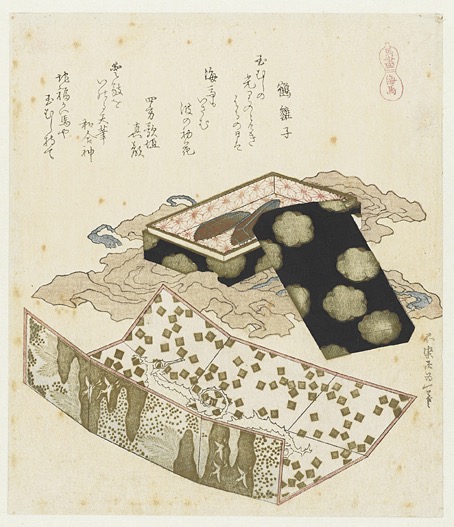
Kaiba and Sea Horses.
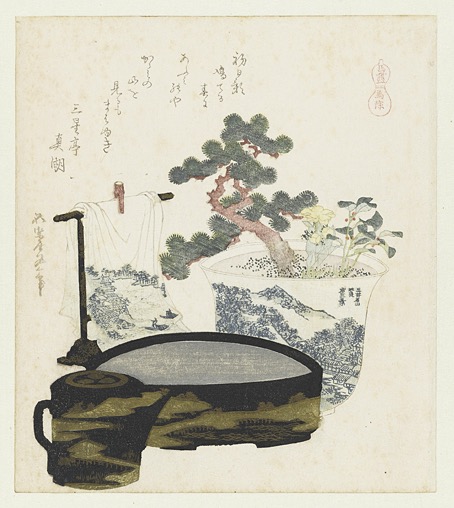
Horse Talisman.
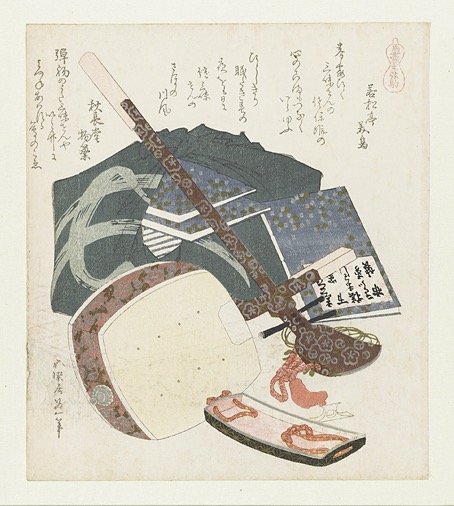
The Three-Stringed Colt.
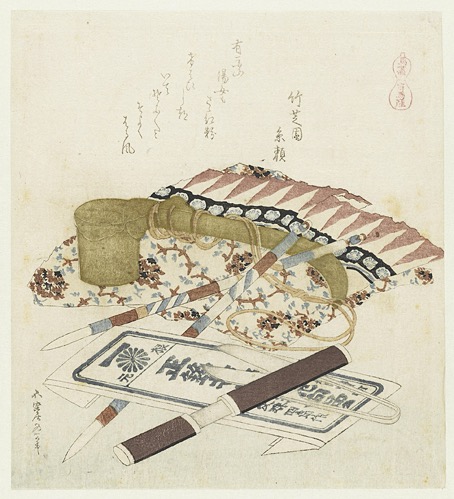
Writing Kit, Scissor and Clothes.
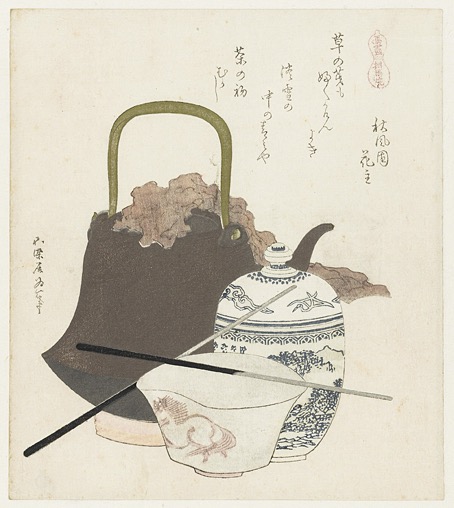
Running Horse.
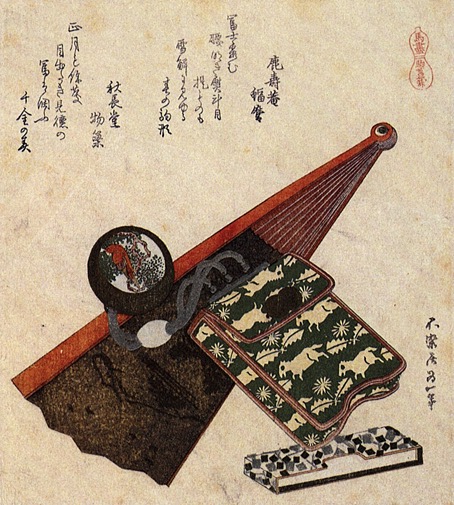
Horse Iris Pattern.
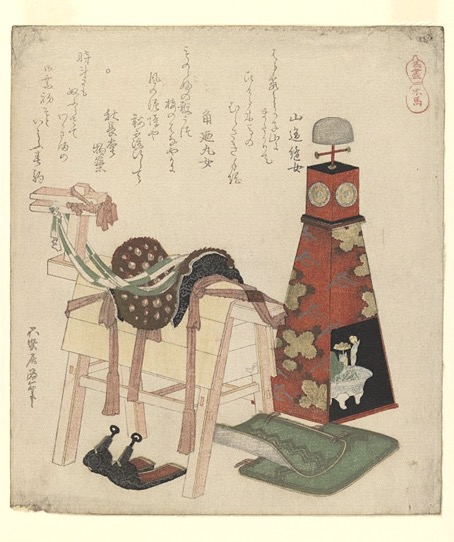
Hobby Horse.
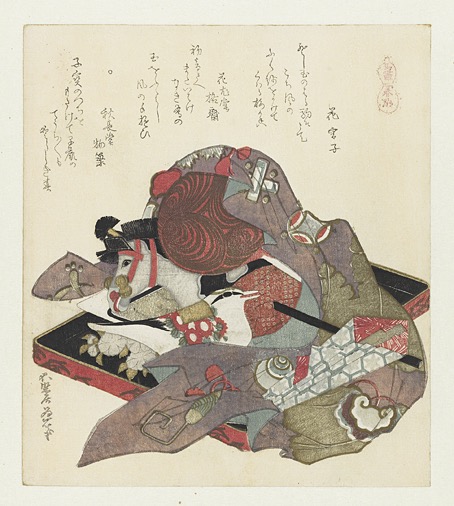
Hobby Horse 2.
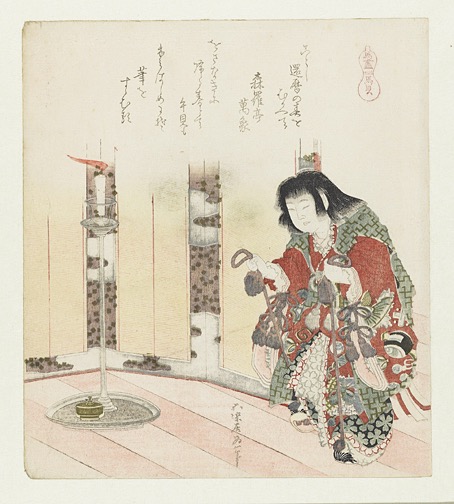
Horse Shells.
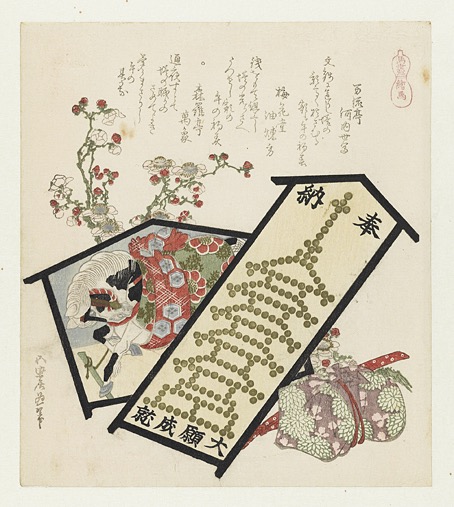
Votive Pictures.
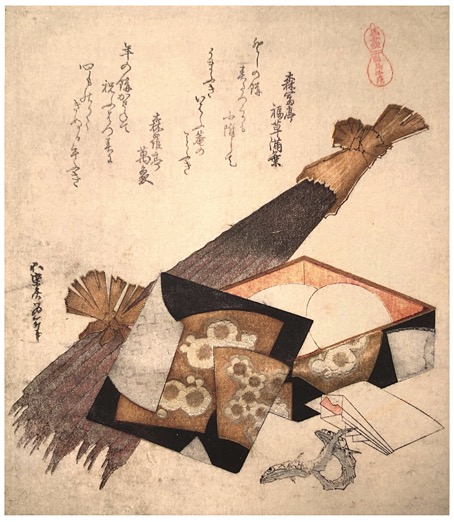
Horse Burdock.
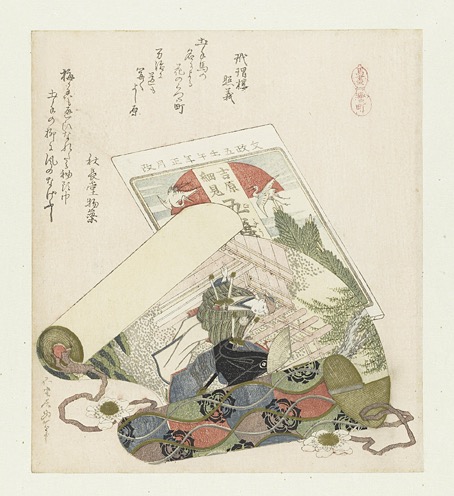
Kutsuwa District.
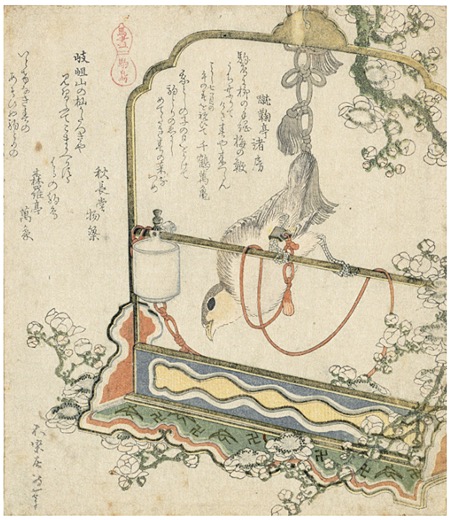
Japanese Robin.
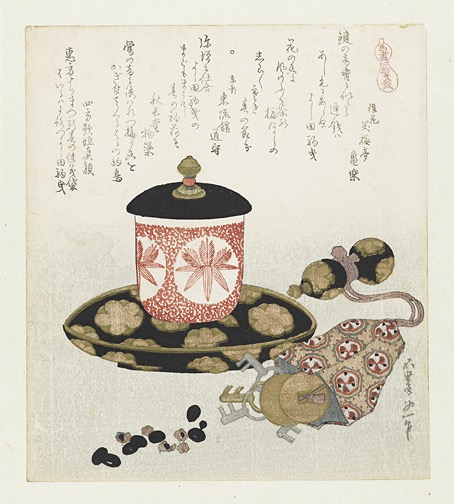
Leading a Horse Money.
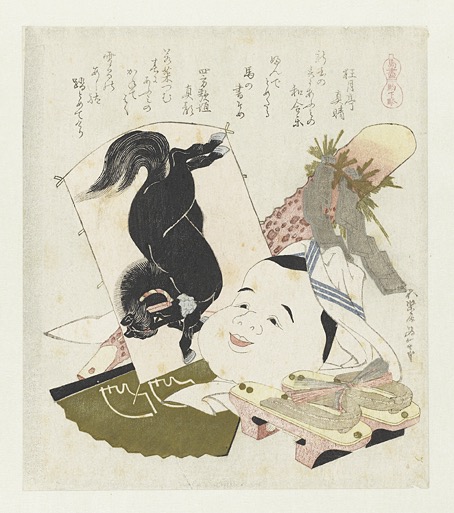
Horse Clogs.
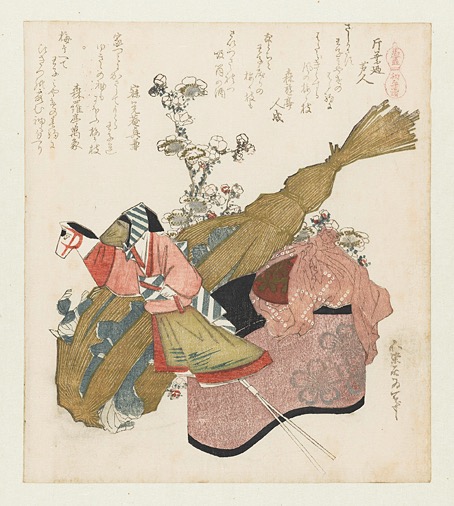
The First Horse Day.
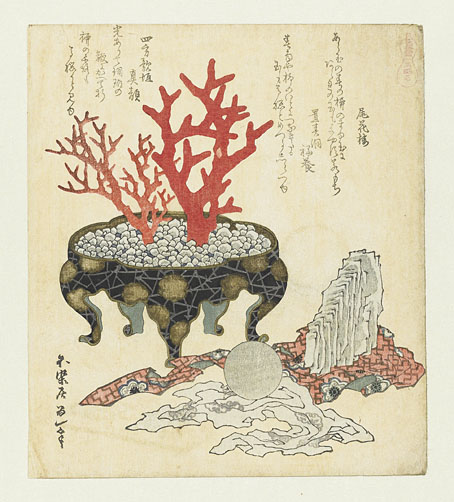
Agate.
Previously on { feuilleton }
• One Hundred Views of Mount Fuji
• Okinami letterforms
• Hokusai record covers
To explain a few… Note 馬 is the character for horse.
“Votive pictures” features “ema” 絵馬 “picture-horses”. Historical horse sacrifices turned into pictures of horses turned into pictures of anything on pentagonal pieces of wood, which are still common at shrines today. They are almost always with the proportions of the short one in this picture.
“Kutsuwa District” appears to be a short-lived euphemism for Yoshiwara or other red-light districts – googling it in Japanese mainly turns up this specific picture. “Kutsuwa” is a horse’s bit and not a normal place name.
“Writing Kit, Scissor and Clothes” is titled 有馬産 or “made in Arima”, where Arima is a place name with the horse character in it. The items are things Arima is (or was) known for.
Agate is 瑪瑙 in Japanese – note the horse character inside the first character. Apparently the etymology of the term is that the cross section of agate resembles a horse’s brain (脳 = brain); the oldest document with the name simply uses 馬脳 but later it transformed to differentiate it.
“Kaiba and Sea Horses” is kind of an odd title. 海馬 “kaiba” is literally just “ocean horse” and now normally refers to the hippocampus (because it resembles a sea horse), but historically meant seahorse (which looking closely I realize is in the paper in the front) or walrus or some other things. (There is also an excellent anime called “Kaiba”, even in English, which will confuse searches.) The oblong things appear to be tamamushi (jewel beetles).
Thanks, Paul, I didn’t think the references would be too cryptic to people more familiar with the language and culture.