Weekend links 824

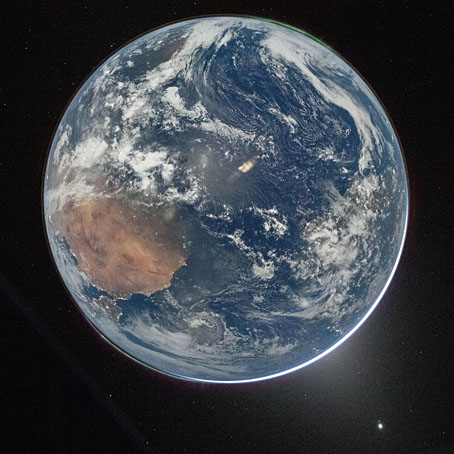
earth.jpg

“A view of Earth taken by NASA astronaut and Artemis II Commander Reid Wiseman from one of the Orion spacecraft’s windows after completing the translunar injection burn on April 2, 2026. The image features two auroras (top right and bottom left) and zodiacal light (bottom right) is visible as the Earth eclipses the Sun.”

• I was surprised this week to find myself quoted by David Hudson at Criterion Current in an overview of the schedule for Cold War Visions: Nuclear Anxiety in Eastern Bloc Cinema, a short season of films that will be showing at the Barbican throughout this month. One of those films is Andrei Tarkovsky’s Stalker, a cult film round here, which a handful of lucky Londoners will be able to see on a big screen.

邪神三十六景 (Thirty-six Views of the Evil Gods) is collection of drawings by Takeki Yamada that combine Hokusai’s celebrated views of Mount Fuji with beings from Lovecraft’s Cthulhu Mythos. I’m a little underwhelmed by the results but the book is out there for those who want it.

• Among the new titles at Standard Ebooks, the home of free, high-quality, public-domain texts: Last and First Men by Olaf Stapledon. (Previously)

• Coming soon at Unquiet Things: The Art of the Unknown: A Visual Treasury of the Esoteric, Uncanny, and Unexplained by S. Elizabeth.

• At Public Domain Review: Elizabeth I’s manuscript copy of Pierre Boaistuau’s Histoires Prodigieuses (1559).

• New music: Enter the Nuummite Cosmos by Brotherhood Of Sleep.

• At the BFI: Where to begin with Peter Weir.

A Brief History of the Dust Jacket.

Out Of The Unknown (1984) by Died Pretty | Brian’s Nightmare / The Unknown, Part One (2005) by Robin Guthrie / Harold Budd | A Gift Of Unknown Things (2017) by Teleplasmiste

Hokusai’s Horses

hokusai01.jpg

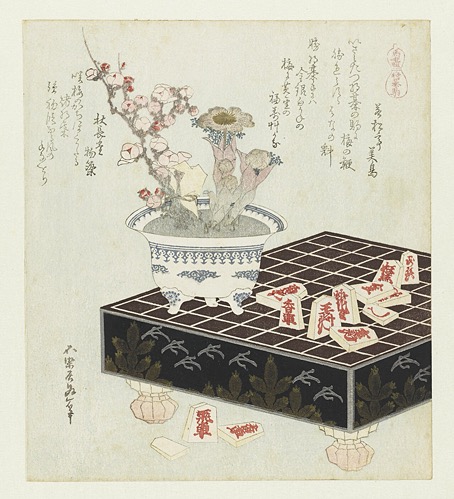
Shogi Chess Board.

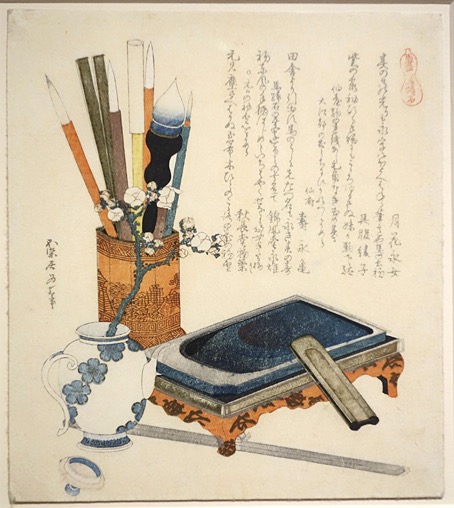
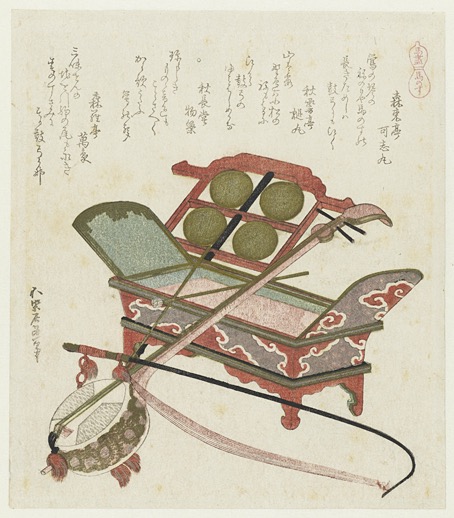
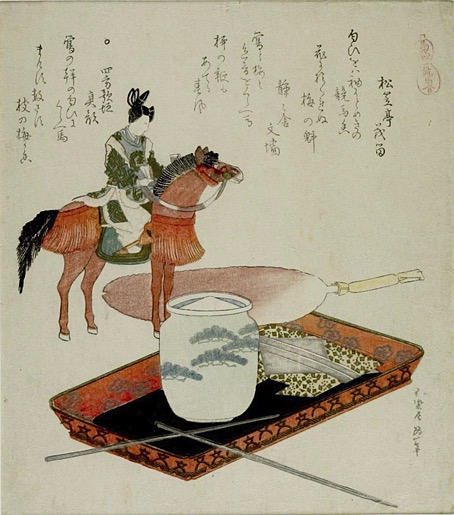
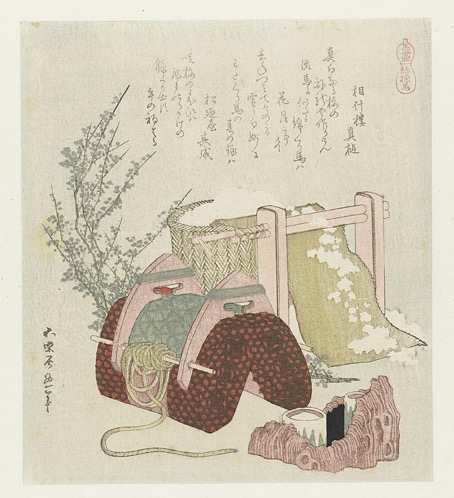
I ought to have posted this several weeks ago for the advent of the Year of the Horse. Umazukushi is a series of wood-block prints by Katsushika Hokusai created to celebrate another Year of the Horse, 1822. Umazukushi (also Uma-zukushi) is usually translated as “A Selection of Horses”, and this is what Hokusai gives us, albeit in a cryptic manner since most of the prints are still-life views of household objects. Each print features a short poem—the series was commissioned by a group of poets—while each picture contains a reference to horses. The allusions aren’t always easy to decipher for the non-Japanese, especially when looking back over two centuries. The Japanese robin, for example, is known as the “horse bird” as a result of its singing voice which was regarded as sounding like the neighing of a horse. I’m still not sure about some of the other prints. A complete description of the references would be useful but my searches so far have failed to turn up anything.

hokusai02.jpg

Inkstone in a Horseshoe Shape.

hokusai03.jpg

Musical Instruments and Horse’s Tail.

hokusai04.jpg

Toy Horse Fan and Incense Burner.

hokusai05.jpg

Saddle Wringer, Smoking Outfit and Plum Branch.

Continue reading “Hokusai’s Horses”

Twenty-four octopuses and a squid

octopus11.jpg

Abalone Fishergirl with an Octopus (c. 1773-1774) by Katsukawa Shunsho.

Cephalopods in Japanese prints. There are many more octopuses than squids, especially the marauding variety, and that’s before you get to the erotic encounters like Hokusai’s notorious shunga dream.

octopus07.jpg

The Dream of the Fisherman’s Wife (1814) by Katsushika Hokusai.

octopus03.jpg

Seven Divers and a Big Octopus (c. 1830–40s) by Utagawa Kunisada.

octopus05.jpg

Ario-maru Struggling with a Giant Octopus (1833–1835) by Utagawa Kuniyoshi.

octopus06.jpg

Popular Octopus Games (1840–1842) by Utagawa Kuniyoshi.

Continue reading “Twenty-four octopuses and a squid”

Weekend links 730

beardsley.jpg

Cover Design for ‘The Yellow Book’ Vol.I (1894) by Aubrey Beardsley.

• “[Dorian Gray’s] version of Decadence filled the popular imagination when Decadence became an ostentatiously stylish zeitgeist—stylish being the operative word. For Decadent style encapsulated the attitude of being hellbent on thrilling experiences.” The danger of Decadence is also its value. We need more of it, says Kate Hext.

• At Swan River Press: Of Wraiths, Spooks and Spectres. Robert Lloyd Parry, in an interview with John Kenny, talks about the researches that led to the compiling of his latest ghost-story collection, Friends and Spectres.

• The latest pictorial accumulation from DJ Food is a collection of late-60s concert posters by Jim Michaelson, an artist whose designs look like Mad magazine going fully psychedelic.

• Old music: Future Travel by David Rosenboom; new music: Taking Shasta Mountain (By Strategy) by John Von Seggern & Dean DeBenedictis.

• At Public Domain Review: Hunter Dukes on Rückenfiguren, views of the human back as a subject in the history of art.

• In a week when Adobe has been in the news for pissing off its users, a list of alternatives for Adobe software.

• At Spoon & Tamago: Hokusai-inspired erasers reveal Mt. Fuji the more they get used.

• At Unquiet Things: A celebration of Annie Stegg Gerard’s enchanting worlds.

• Mix of the week: DreamScenes – June 2024 by Ambientblog.

• At The Quietus: The Strange World of…Diamanda Galás.

Wraith (2002) by Redshift | El Wraith (2002) by Amon Tobin | Wraith (2015) by John Carpenter

One Hundred Views of Mount Fuji

hokusai01.jpg

You won’t get all one hundred views here, of course, but all may be seen in their original three-volume printing courtesy of the Smithsonian Library’s Hokusai archive. (See below for the individual book links.) I linked to this cache some time ago but it’s taken me until now to have a proper look at the Hundred Views, rather a shameful admission considering how good they are. In mitigation, this is partly the fault of the Smithsonian Library who insist on labelling all the books with their Japanese titles and no other information. To find the Fuji books you either have to already know the Japanese title (Fugaku Hyakkei), or else look through 82 different uploads to see what they contain.

hokusai02.jpg

Hokusai’s books differ substantially from his colour prints, even though they use the same woodblock print process, and there’s often an overlap in subject matter, as with the Mount Fuji volumes. Many of the prints are monochrome, using combinations of black lines or dots with grey tones. A few of them also use a second colour, usually a flesh tone, while a handful are fully coloured. The books show greater artistic variety than in Hokusai’s ukiyo-e prints which, being intended for display, were subject to different aesthetic demands. One of the books is dedicated to the artist’s designs for painted combs, for example, while others—the manga series—are sketchbooks that show Hokusai’s invention, his sense of humour and his powers of observation. (The use of manga here shouldn’t be confused with the contemporary term for Japanese comics.)

hokusai03.jpg

The Hundred views of Mount Fuji are more playful than the famous colour prints of the mountain, being inventions rather than drawings from life. The series is a virtuoso exercise in portraying the sacred volcano in as many ways as possible—silhouette, distant outline, reflection in water—at all times of the year and in all weathers. The views are populated by a wide range of Japanese humanity, from the upper classes to the lowest labourers, as well as a variety of animals: cranes and smaller birds, deer, horses, bats, a dragon, even a spider that seems to catch the mountain in its web. The perspectives also shift from drawing to drawing. There’s no question that Hokusai knew perfectly well how to represent perspectival depth yet his view of a group of astronomers looking at the mountain dispenses with the Western approach to perspective. The three Fuji books were created in the 1830s, at a time when there was no analogue for this type of pictorial experimentation in Western art. I love the formal invention in these drawings, all the ones that show columns of people where every face is obscured by a large hat. I could enthuse at length about so many other details but you should really just go and look at them yourself.

hokusai04.jpg

The Smithsonian collection has a couple of sets of Fugaku Hyakkei. The set I’ve chosen has lighter paper which provides better contrast for the printing, especially the grey tones which are often applied with great subtlety.

Fugaku Hyakkei: Book One | Book Two | Book Three

hokusai05.jpg

Continue reading “One Hundred Views of Mount Fuji”