Weekend links 851

greenwood.jpg

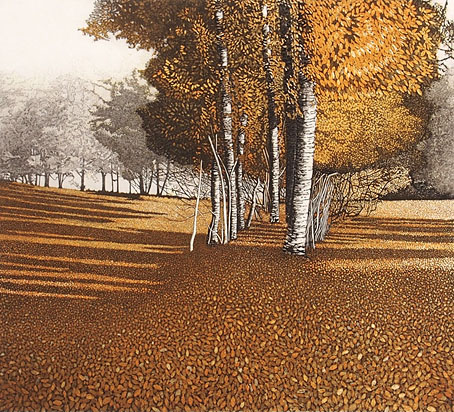
Amber Light, a print by Phil Greenwood.

• “When I heard the term industrial music, I mistook it for techno and soon learned it was not.” Steven Heller talks to Chris Grimley and Alan Rapp about Industrial Music/Graphics: A Visual History of a Movement.

• Halloween approaches, as does Ghosts on the Cam. Editor Robert Lloyd Parry talks to Swan River Press about his latest story collection.

• “There we were, and we could be naked”: Stanley Stellar’s photographs are a record of gay life in New York from the 1970s onwards.

She researched cultures in which dreams delivered prophetic truth-telling messages from a higher plane. Like splashes and blots, dreams emanated from hidden forces, perhaps of the human mind, perhaps not. She had a metaphysical belief in their potential to put her in touch with supernatural beings, not angels or demons in any religious sense, nor the fairies or phantoms of popular belief, but spirits posited by mystical systems such as astrology and alchemy, otherworldly manifestations raised by enchanters and magi who had developed means of contacting them.

Marina Warner in a lengthy appraisal of the occult and Surrealist obsessions of Ithell Colquhoun

• The October catalogue of lots for the After Dark: Gay Art and Culture online auction. Homoerotic art, photos, historic porn, etc.

• At Wormwoodiana: Mark Valentine on the house that vanished, a literal ghost house.

• At Colossal: “Amok Island’s geometric murals teem with vibrant local flora and fauna”.

• At Public Domain Review: The Alchemical Transformations of the Mutus Liber (1677).

• New music: Trinitatis by Deaf Center; Ancient Future by Bana Haffar.

• Old music: Metal & Flesh by Hard Corps receives another reissue.

• Mix of the week: DreamScenes – October 2026 at Ambientblog.

• “My one political film”: Ken Russell on The Devils.

• RIP Matt Howarth and Eva Marie Saint.

• Amber (1980) by The Residents | Amber (1996) by Little Axe | Amber (1996) by Zoviet France
Ghosts on the Cam

ghosts1.jpg

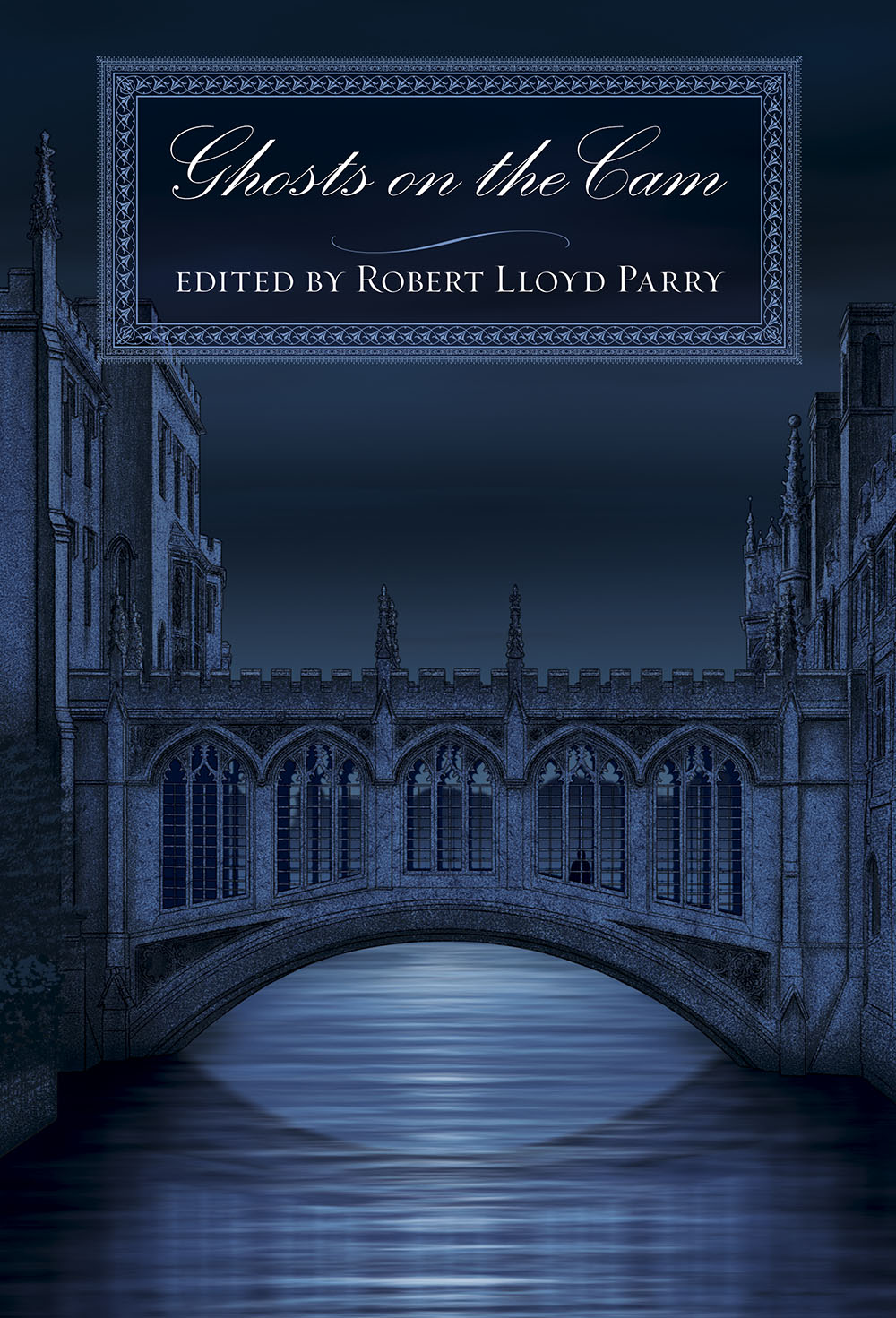
Presenting my latest cover illustration for Swan River Press, and another story collection edited by Robert Lloyd Parry:

Ghosts on the Cam is the third in a series of linked anthologies. Ghosts of the Chit-Chat (2020) collected supernatural tales by members of the Cambridge University Chit-Chat Club, of which MR James was a leading light. Friends and Spectres (2024) looked more widely at works by MRJ’s friends outside the club. In the present volume the authors’ personal connections with MRJ are less strong, though his literary influence is just as powerfully felt. But what really binds the tales collected together here is the town of Cambridge itself, with its libraries and chapels and echoing cloisters, its murky river and misty streets. Many of the authors studied at Cambridge; several worked there; two were born there. In a series of introductory essays Robert Lloyd Parry looks at how and why a small market town on the edge of the Fens has produced so many writers of the supernatural.

bridge.jpg

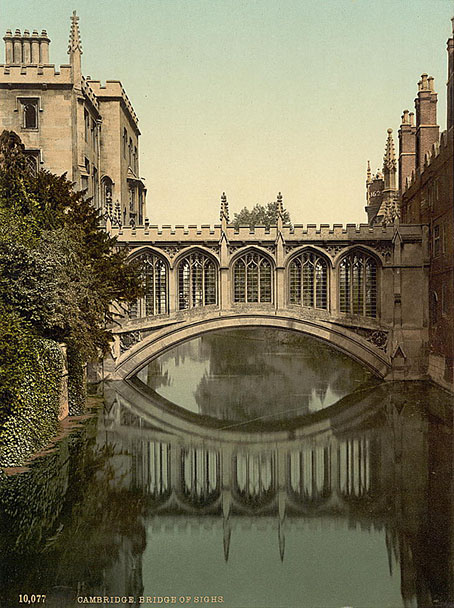
A photochrom print from 1905.

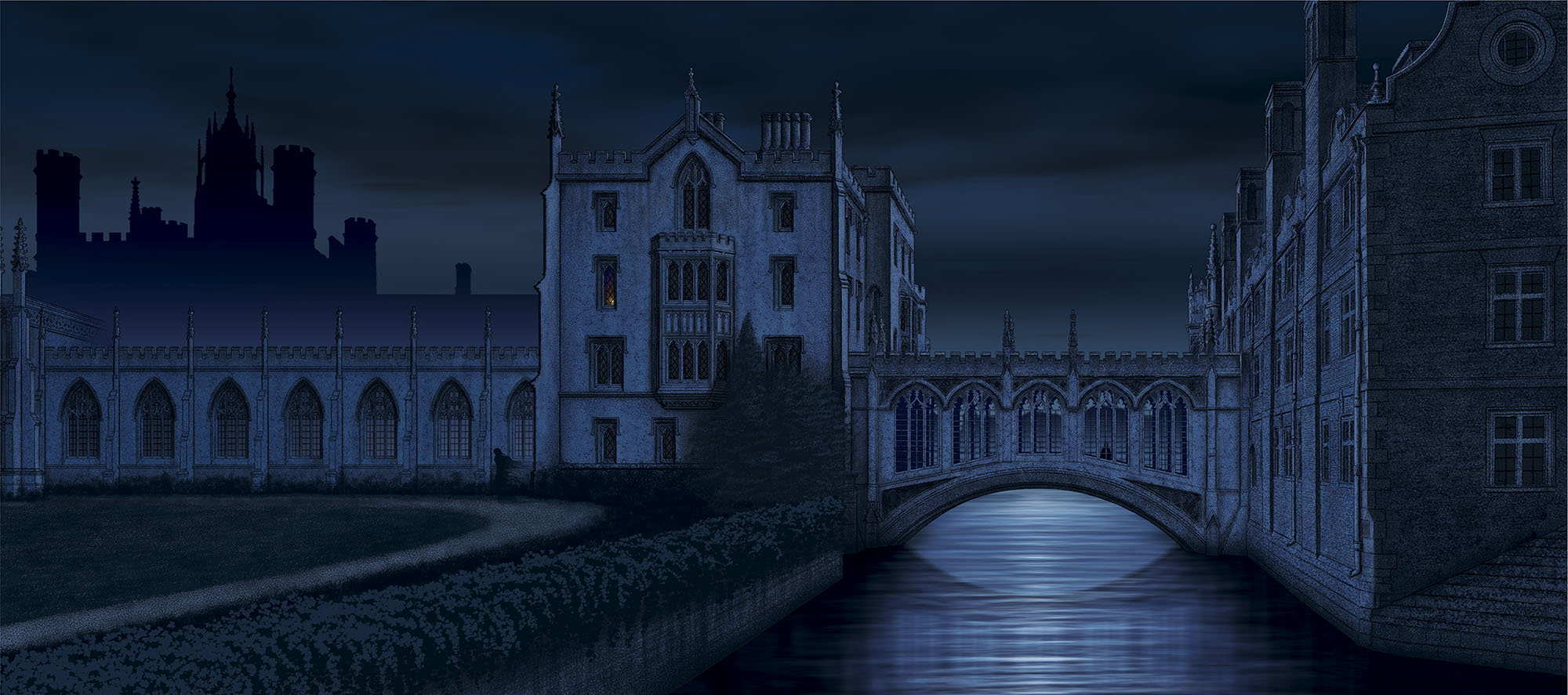
As with the cover wrap for Friends and Spectres, we’re out in Cambridge at night, only this time the scene is a distinctly chilly one. The Cam is the river that runs through Cambridge, so a view of the river itself seemed unavoidable, especially when it’s crossed by the elegant Bridge of Sighs which connects two of the buildings of St John’s College. The name of the bridge derives from the Ponte dei Sospiri in Venice, a more appropriate borrowing than when applied to the Hertford Bridge in Oxford which also bears the name Bridge of Sighs even though it spans a narrow road. The bridge over the Cam was built in 1831, and is especially attractive for its Gothic styling which matches the college buildings while making the structure seem much older than it is. The bridge also benefits from having been built parallel to an older bridge close by, the so-called Kitchen Bridge (or St John’s Bridge), which has provided a platform for numerous photographers to capture the Bridge of Sighs from the middle of the river.

ghosts2.jpg

The abundance of photo reference was certainly useful but cameras can generate unforeseen problems when you’re trying to create a single extended view of a place which has only ever been photographed as isolated details. Most of the photos of the area concentrate either on the bridges or the mass of college buildings which are enclosed by a wall pierced by Gothic windows. David Hockney used to say that photographs never show you things the way they are, by which he meant that they don’t show you the world as it appears to our eyes: photo views are cropped more narrowly than our field of vision, and lenses of all kinds distort perspectives. Hockney’s dissatisfaction with photography led him to create his mosaic views of people or places constructed from multiple overlapping photographs. I had to do something similar (albeit much more precise) to achieve this view of the Bridge of Sighs which is wider and deeper than anything you’d be able to capture with a camera. The older photos of the bridge revealed that the group of trees by the bank have been pruned back several times, while the river wall had gone in the opposite direction, having once been overgrown with ivy. Since all the stories are set in the past I’ve restored some of these earlier appearances although the buildings themselves have changed very little since the bridge was built.

That’s a lot of words about architecture for a book which is really concerned with the supernatural. There is a ghost in the widescreen picture if you look carefully, possibly two ghosts. As with Friends and Spectres I leave it to the viewer to decide about the second figure.

Ghosts on the Cam will be published in December, and is available for pre-order here.

Previously on { feuilleton }
• Friends and Spectres
• Ghosts of the Chit-Chat

Weekend links 850

drury.jpg

Peacock Mandala (no date) by Judith Drury.

• A few links related to my own activities this week. Firstly, the mix of the week is a guest mix I put together for The Invisible College. I haven’t made a properly mixed mix for a while. This one was made with Audacity, an application that’s free, open source and multi-platform. Secondly, there’s the news that Ghosts on the Cam, another collection of spectral tales compiled by Robert Lloyd Parry, will be published by Swan River Press in December. I’ll have more to say about my cover art for the book at a later date. And on the subject of cover art, my cover for The Legend of Charlie Fish by Josh Rowntree is being reused by Planeta9 for a Czech edition of the novel.

• Halloween approaches. At Wormwoodiana Mark Valentine looks at the first modern ghost story anthology, The Ghost Book edited by Cynthia Asquith, which was published 100 years ago this month.

• At Smithsonian Magazine: “The Icebergs is one of Frederic Edwin Church’s most spectacular paintings. For decades, no one knew where it was.”

• New music: Passage by Chris Meyer’s Alias Zone featuring Robert Rich; Window To Askoy by Strugatsky Brothers.

• RIP Mighty Sparrow. Related: Two hours of Mighty Sparrow’s music at The Explorer’s Room.

• At the BFI: Josh Slater-Williams chooses 10 great South Korean science-fiction films.

• At Nautilus: This obscure 1960s guide to LSD holds up. Kristen French reports.

• At Colossal: The painted mandalas of Mu Pan.

• The Strange World of…Steve Reich.

• Bastardica

• Mandala (1973) by Stomu Yamash’ta’s Red Buddha Theatre | Mandala (1980) by Fondation | Sand Mandala (1997) by Philip Glass

Weekend links 730

beardsley.jpg

Cover Design for ‘The Yellow Book’ Vol.I (1894) by Aubrey Beardsley.

• “[Dorian Gray’s] version of Decadence filled the popular imagination when Decadence became an ostentatiously stylish zeitgeist—stylish being the operative word. For Decadent style encapsulated the attitude of being hellbent on thrilling experiences.” The danger of Decadence is also its value. We need more of it, says Kate Hext.

• At Swan River Press: Of Wraiths, Spooks and Spectres. Robert Lloyd Parry, in an interview with John Kenny, talks about the researches that led to the compiling of his latest ghost-story collection, Friends and Spectres.

• The latest pictorial accumulation from DJ Food is a collection of late-60s concert posters by Jim Michaelson, an artist whose designs look like Mad magazine going fully psychedelic.

• Old music: Future Travel by David Rosenboom; new music: Taking Shasta Mountain (By Strategy) by John Von Seggern & Dean DeBenedictis.

• At Public Domain Review: Hunter Dukes on Rückenfiguren, views of the human back as a subject in the history of art.

• In a week when Adobe has been in the news for pissing off its users, a list of alternatives for Adobe software.

• At Spoon & Tamago: Hokusai-inspired erasers reveal Mt. Fuji the more they get used.

• At Unquiet Things: A celebration of Annie Stegg Gerard’s enchanting worlds.

• Mix of the week: DreamScenes – June 2024 by Ambientblog.

• At The Quietus: The Strange World of…Diamanda Galás.

• Wraith (2002) by Redshift | El Wraith (2002) by Amon Tobin | Wraith (2015) by John Carpenter

Friends and Spectres

spectres1.jpg

Presenting my latest cover illustration for Swan River Press, and another story collection edited by Robert Lloyd Parry:

Friends and Spectres is a companion volume to Ghosts of the Chit-Chat (2020), an anthology of ghost stories by authors who had been members of the Cambridge University Chit-Chat Club along with M. R. James. Here the associations with MRJ are less formal, but stronger and more enduring: for it is the bond of genuine friendship that ties these writers to him.

The majority of pieces here were originally published under pseudonyms, and over half appeared first in amateur magazines or local newspapers. All deal with the supernatural, and several of the stories are themselves spectres—or more properly “revenants”, only now re-emerging into the light after decades of oblivion. There are rediscoveries here of “lost” tales by Arthur Reed Ropes, E. G. Swain, and the enigmatic “B.”

My cover for the earlier volume showed an imaginary interior for one of the meetings of the Chit-Chat Club where James first read his own ghost stories. The new cover shows a more accurate exterior view of the grounds outside the King’s College Chapel. Given the quantity of pictorial reference I thought this might be relatively easy to do but I had a problem finding a view that matched the one I had in mind, a twilight view of the west end of the chapel seen front-on rather than at a sharp angle. Views of the chapel from the banks of the river have been standing as an emblem of the university itself for a very long time but the majority of these are angled views. My solution was to work from a collage of three different reference photos in order to have enough drawing to fill out the spread of the jacket.

spectres2.jpg

Friends and Spectres is another of Swan River’s small hardbacks which in this case is limited to 500 copies. Given the following that Mr Parry has accumulated via his readings of James’ stories I imagine this one will go quickly, so anyone interested is advised to pre-order now.

Previously on { feuilleton }
• Ghosts of the Chit-Chat