
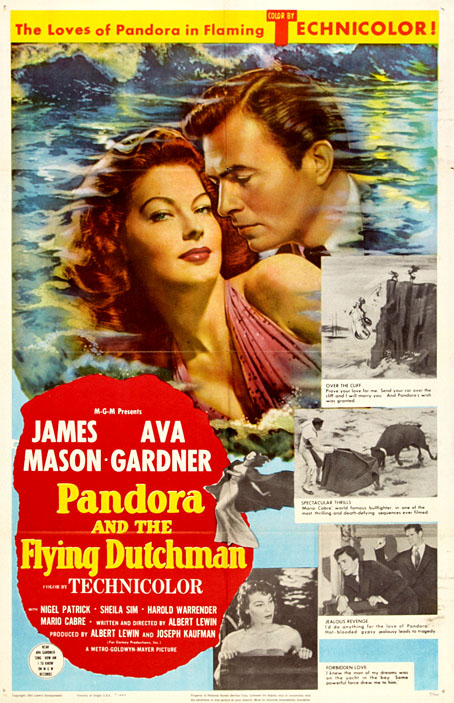
Continuing an occasional series about artworks in feature films. This is a minor entry but a worthwhile one if only to draw some attention to an unusual fantasy film by Albert Lewin, an equally unusual director. Pandora and the Flying Dutchman was made in 1951, a British film with an American star (Ava Gardner) and a Spanish setting. Gardner plays Pandora Reynolds, an American nightclub singer living in the coastal town of Esperanza where she’s the centre of attention for the small colony of stuffy middle-class Brits who also live there. Like her mythical namesake, Pandora is a source of endless trouble, only in this case the evils are the result of the romantic chaos she provokes. Her own romantic desires are upset when a mysterious yacht anchors off the coast, its sole occupant being Hendrik van der Zee (James Mason) who we soon learn is the Flying Dutchman of legend, doomed to sail the seas until he can find salvation in the love of a woman who will die for him.
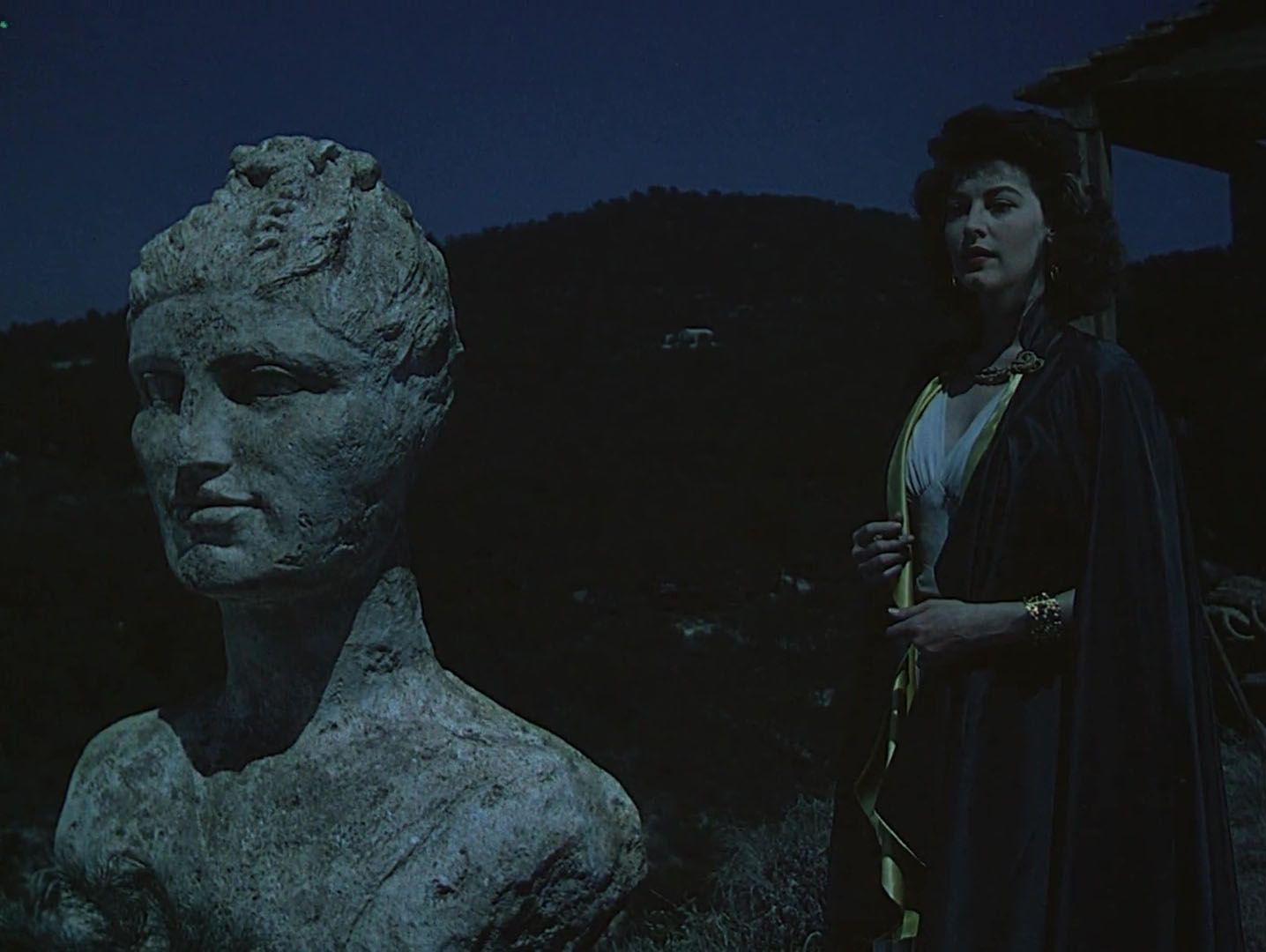
Pandora with one of the many statues that surround the home of Fielding the archaeologist.
Lewin’s film was restored recently after having been out of circulation for many years. I’d been intending to see it again after reading about the restoration which could only be an improvement on the terrible copy that used to turn up late at night on British TV. Further impetus was prompted by a book review for The Spectator in which Michael Moorcock notes similarities between the film and the stories by JG Ballard which were collected as Vermilion Sands. I’ve never seen Ballard mention the film but the Vermilion Sands stories have long been favourites of mine. The film moved to the top of the viewing list.
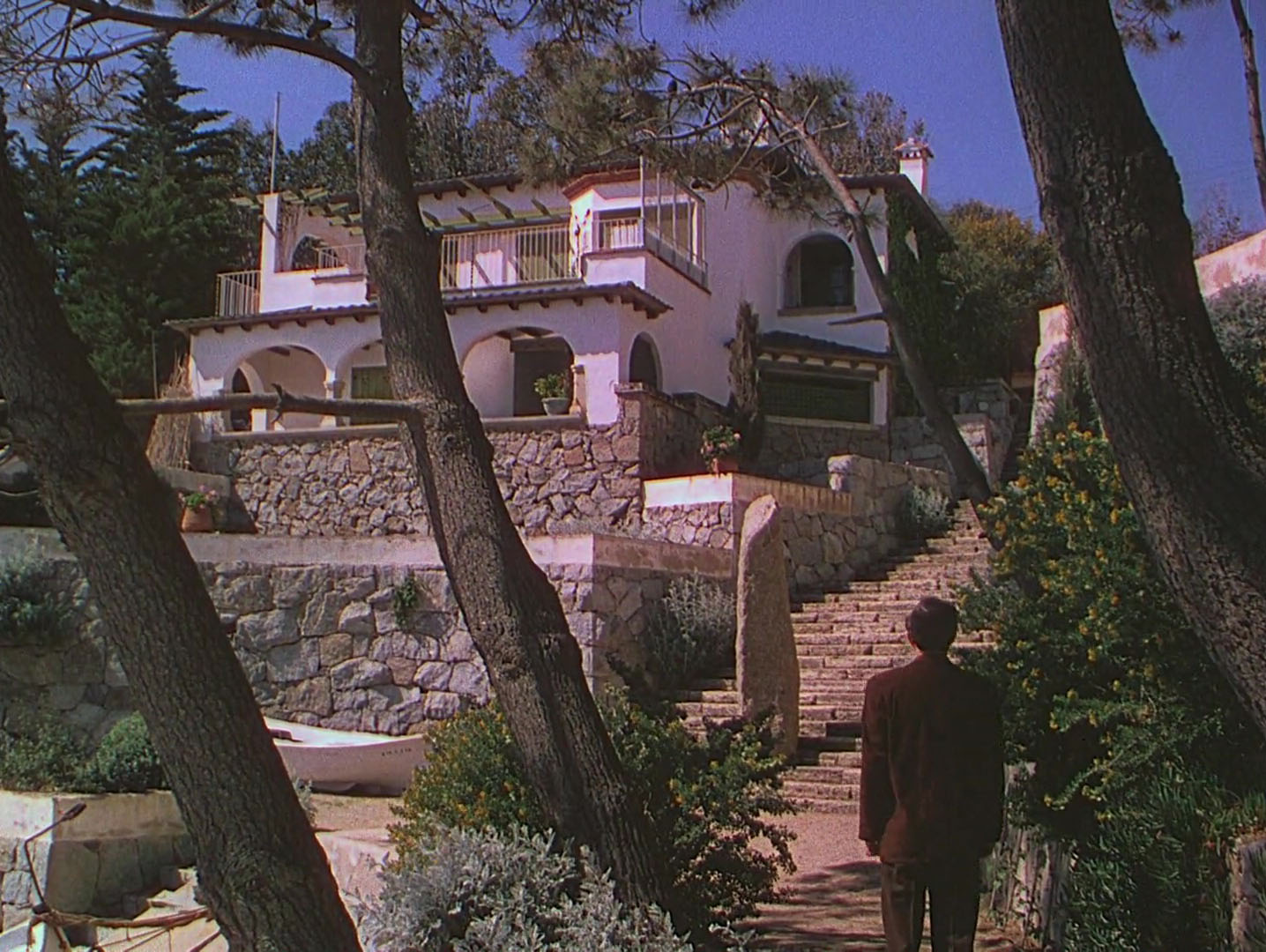
Esperanza or Vermilion Sands? Hendrik is lured by Pandora’s piano-playing.
The key connection to Ballard is Surrealist (or-pre-Surrealist) painting, a detail of Pandora and the Flying Dutchman that I’d forgotten all about. Albert Lewin only directed six films; he also wrote each one, and was very determined in his attempts to bring a touch of artistic class to Anglophone cinema. Pandora and the Flying Dutchman was his fourth feature after The Moon and Sixpence and The Picture of Dorian Gray—each an adaptation of a novel where painting is an important element of the story—and The Private Affairs of Bel Ami, a film that was promoted with a Surrealist painting competition on the theme of the temptation of St Anthony. Max Ernst won the competition, and his picture appears at the end of the film, a colour insert in an otherwise black-and-white feature. Lewin did the same for The Picture of Dorian Gray, another black-and-white film where the portrait paintings (including Ivan Albright’s unforgettably corrupted canvas) are shown in colour inserts.
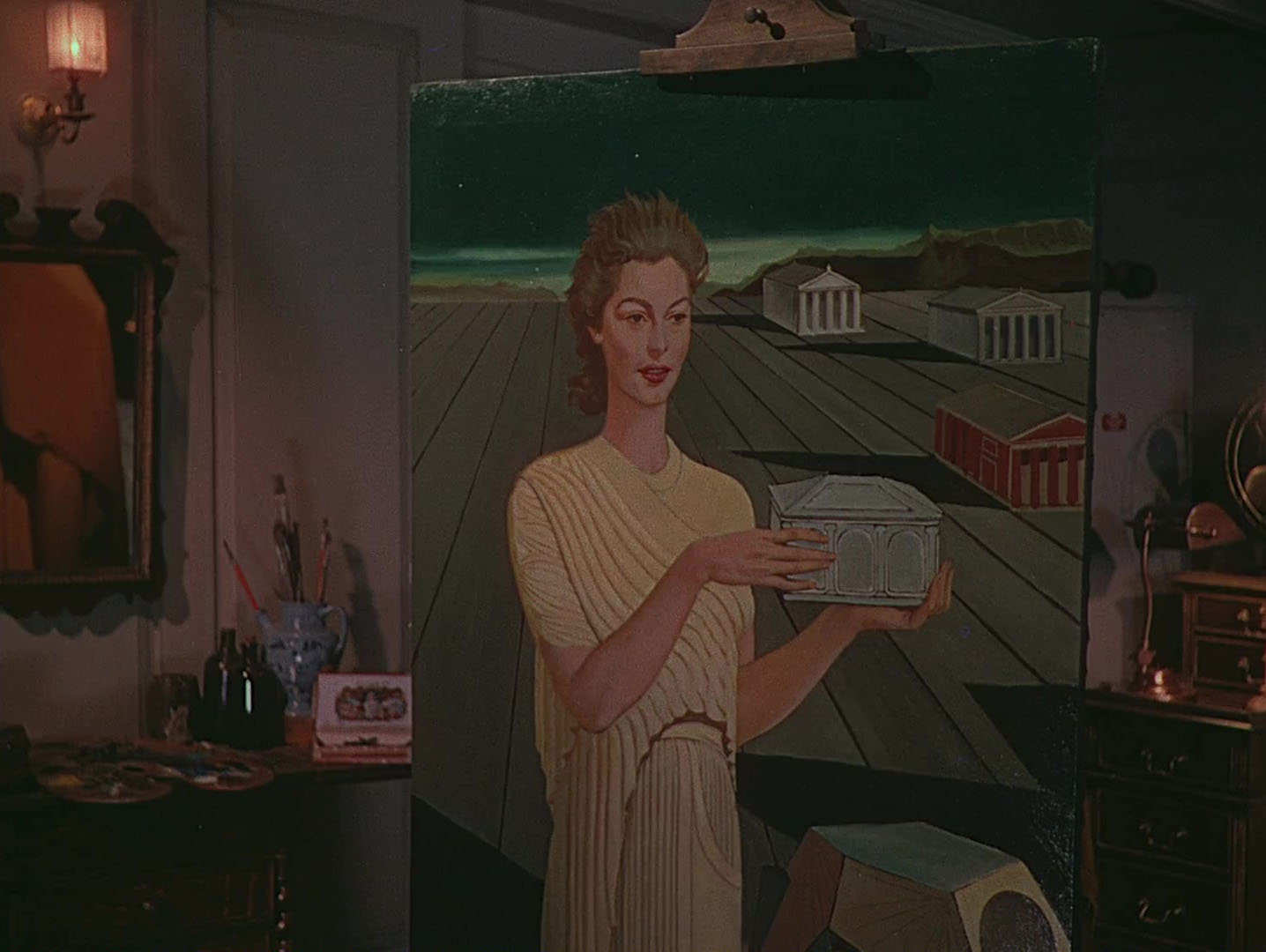
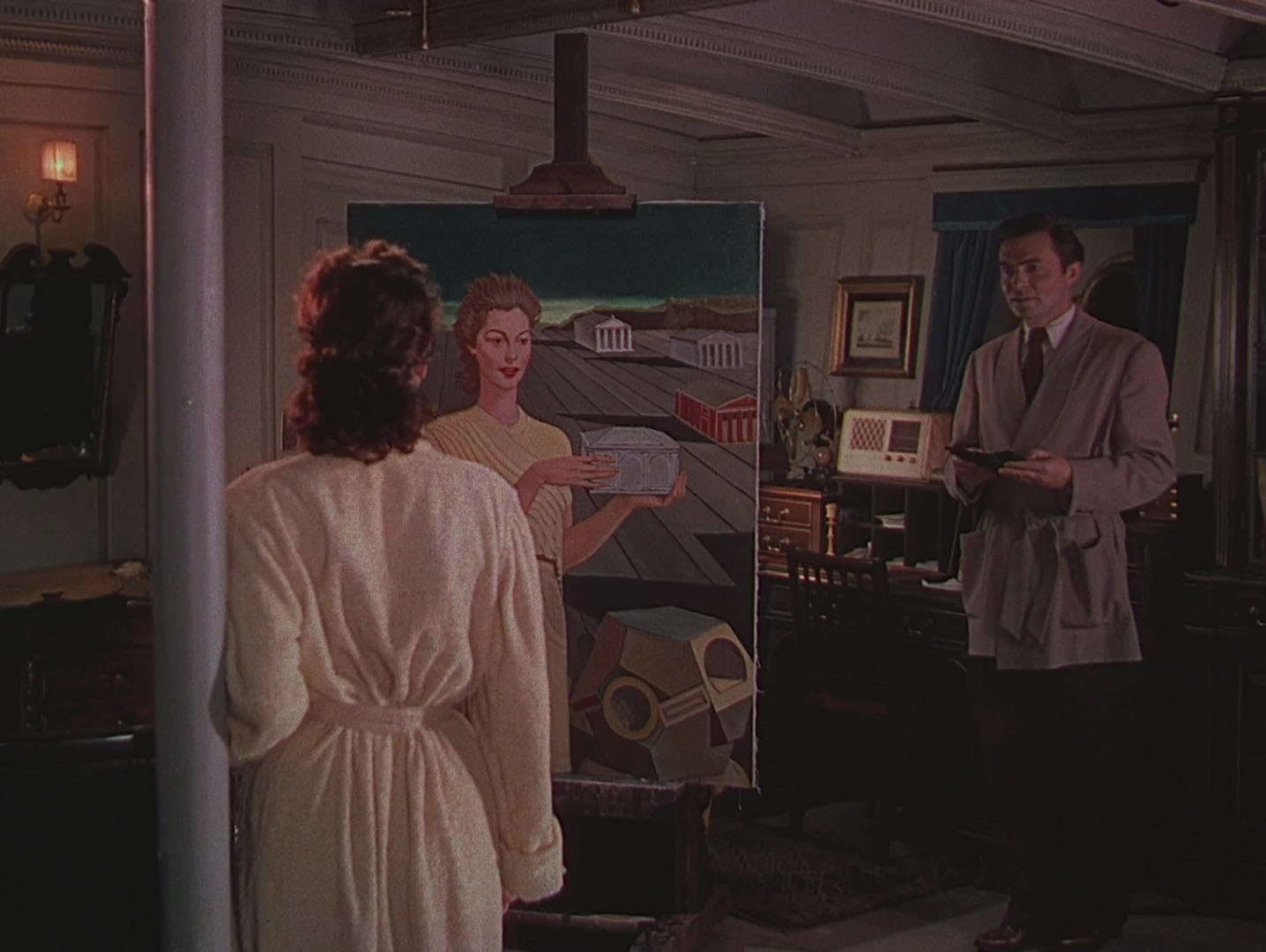
In Pandora and the Flying Dutchman it’s the doomed sea captain, Hendrik van der Zee, who creates the paintings, an understandable pursuit when he’s fated to sail the seas for eternity, and only allowed to visit the shore for a few weeks every seven years. He’s finishing a new picture when we first see him, after Pandora has swum naked to his yacht to find out who might be living there. She’s surprised to find the ship uncrewed, and even more surprised to find its sole occupant painting her portrait in his cabin. It later transpires that Pandora is the mirror image of van der Zee’s dead wife, a woman he killed after mistakenly believing her to have been unfaithful. The crime and his subsequent rejection of God is the origin of the curse he bears.
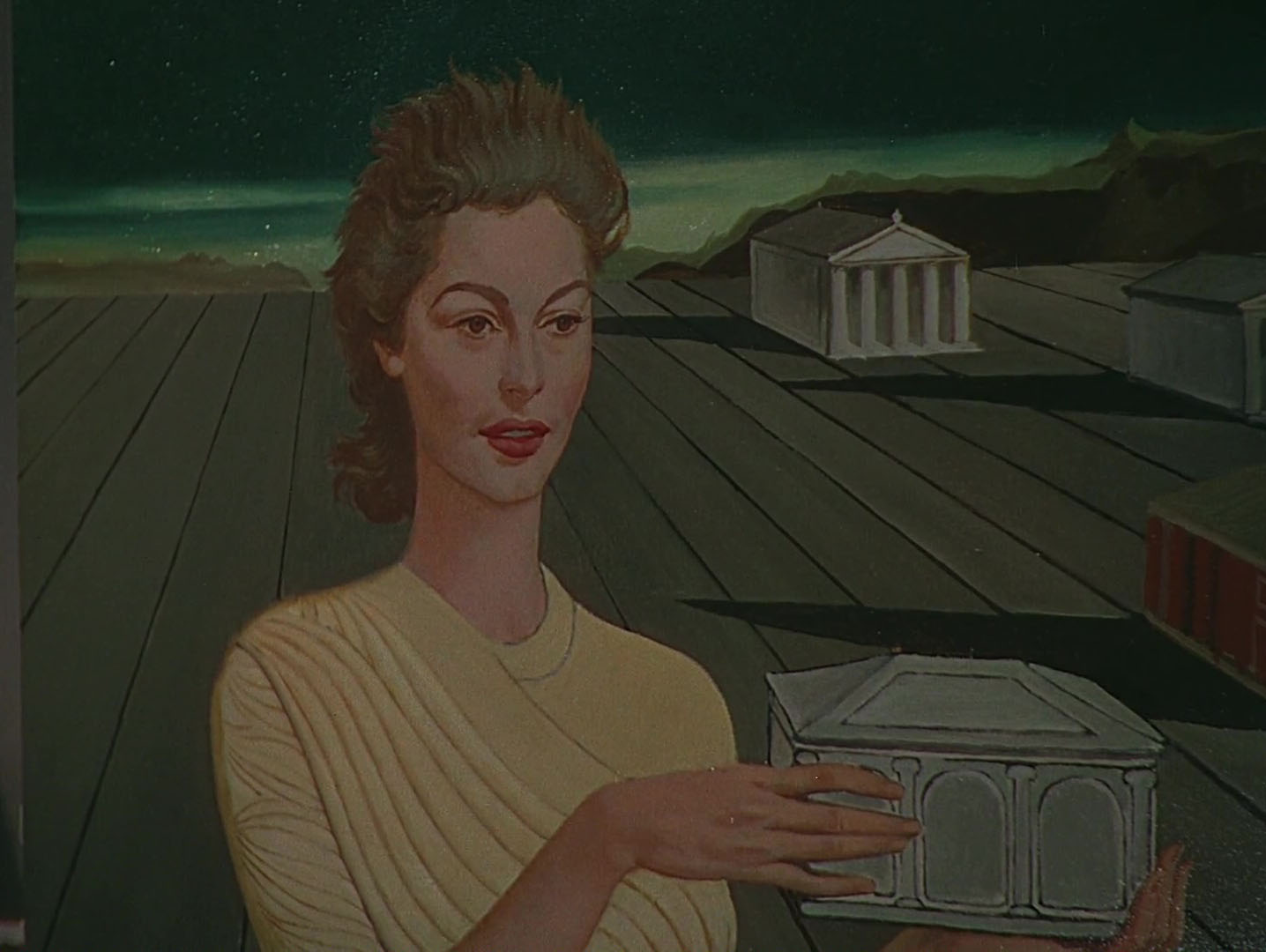
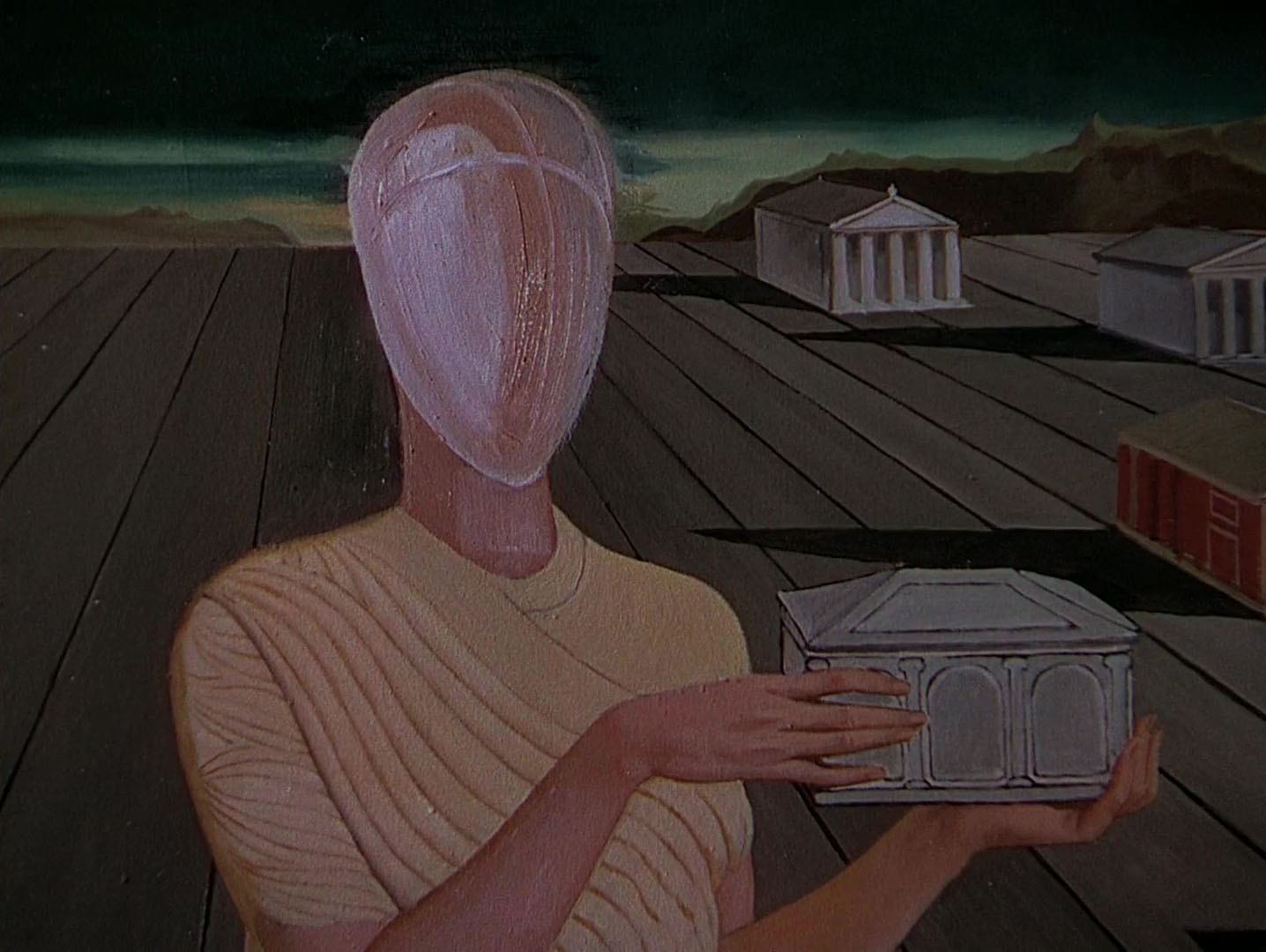
His portrait painting is an exercise in de Chirico’s pre-Surrealist “Metaphysical” style—the doomed man keeps up with the fashions of the ages he lives through—in which the painted woman bears the face of her real-life counterpart. The real Pandora is furious at the discovery, and immediately destroys the likeness with strokes from one of van der Zee’s brushes. The Dutchman accepts this calmly, then realises that Pandora has inadvertently improved the picture which he amends by remodelling the face to resemble one of de Chirico’s mannequins.
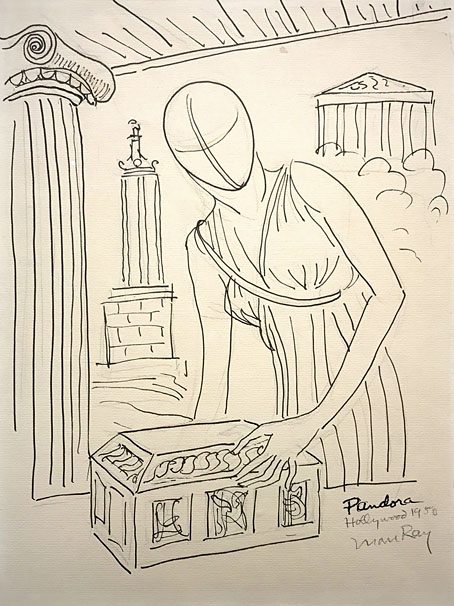
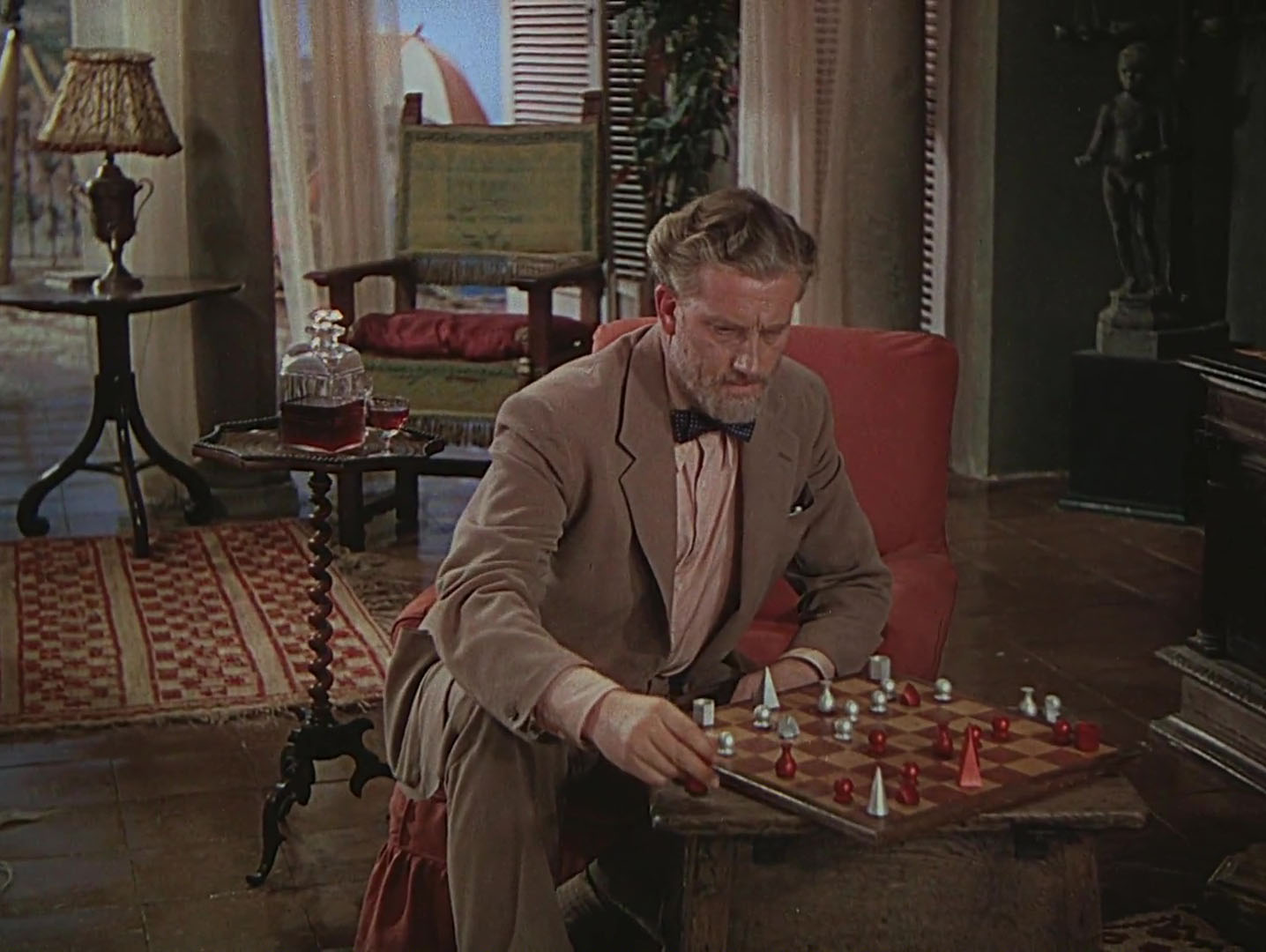
This is slight stuff but it makes a change from all those films where artist characters in 20th-century settings are either creating portraits that owe more to the previous century or Philistine caricatures of “modern art”, like the faux-Dalí painting that appears in Crack-Up. Man Ray was a friend of Albert Lewin, and is credited with having worked on the film although in what capacity isn’t entirely clear. This essay by Kimberly Lindbergs claims that the de Chirico-style portrait was the work of set artist Ferdinand Bellan; if so the picture was following a sketch by the artist. The same essay shows a promotional still with Ava Gardner and Man Ray posed with a different Pandora painting from the one in the film, which suggests that Man Ray’s portrait wasn’t a good enough likeness. The film does, however, feature an anachronistic photograph by Man Ray of van der Zee’s dead wife; also a brief glimpse of a Man Ray-designed chess set in the home of Geoffrey Fielding, a British archaeologist who discovers the true nature of van der Zee’s identity.
I was going to explore the Ballardian resonances a little more but this piece is sprawling enough as it is. The film is very Ballardian, and worth watching if you’re familiar with Vermilion Sands, or with stories like Prisoner of the Coral Deep and The Day of Forever, where the atmosphere is as much Symbolist as it is Surrealist. “Esperanza” means “hope” in Spanish, and the one Vermilion Sands story that mentions the Flying Dutchman (twice!), is Cry Hope, Cry Fury!, a piece littered with seafaring references in which the femme fatale is named “Hope Cunard”.
Watching Lewin’s film through the filter of Ballard’s fiction helps alleviate some of the longueurs. The director’s persistent art quotation makes him an outsider in the Hollywood of the 1940s and 50s but he was a better writer than he was a director. His film is over-long, and burdened with stretches of voiceover narration describing what we’re seeing on the screen. It doesn’t help that it also seems at times to be a lost Powell & Pressburger production; Lewin evidently favoured the films of Britain’s artiest cinematic team. Pandora and the Flying Dutchman was photographed by Jack Cardiff, and offers minor roles to P&P regulars Marius Goring and John Laurie. Abraham Sofaer played a doctor and a judge in A Matter of Life and Death, and turns up here as another judge in a flashback scene when van der Zee is being sentenced to death for the murder of his wife. It’s easy to imagine Powell & Pressburger presenting the same material with greater vivacity and none of the clumsy voiceover. If Ballard is unfamiliar you can always take the film the way Martin Scorsese described it on the recent posters, as “a strange and wonderful dream”.
Previously on { feuilleton }
• Art on film: Crimes of Passion
• Art on film: The Medusa Touch
• Art on film: Crack-Up
• Art on film: The Dark Corner
• Art on film: Je t’aime, Je t’aime
• Art on film: Space is the Place
• Art on film: Providence
• Art on film: The Beast
• Picturing Vermilion Sands
• Temptations
• The real Basil Hallwards
oooh now to see the film! thanks for the heads up!
Related: https://www.instagram.com/jonathanlethem/p/DXVpAVslK3E/