Mug-wump Specific

mugwump1.jpg

Mugwump (mŭg´ wŭmp). An Algonquin word meaning a chief; in Eliot’s Indian Bible the word “centurion” in the Acts is rendered mugwump. It is now applied in the United States to independent members of the Republican party, those who refuse to follow the dictum of a caucus, and all political Pharisees whose party vote cannot be relied on. —Brewer’s Dictionary of Phrase and Fable, 1954

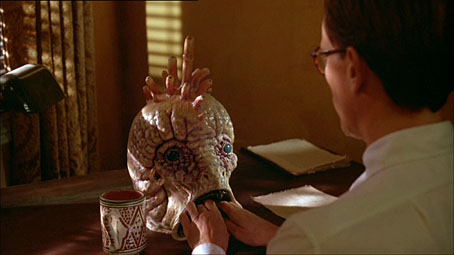
Such is the usual explanation given for the origin of the word “mugwump”, a term better known today, of course, for its use in Naked Lunch, and that mainly via David Cronenberg’s feature film. Why William Burroughs came to name his sinister creatures mugwumps is something I’ve never seen an explanation for although one may well exist somewhere.
mugwump2.jpg

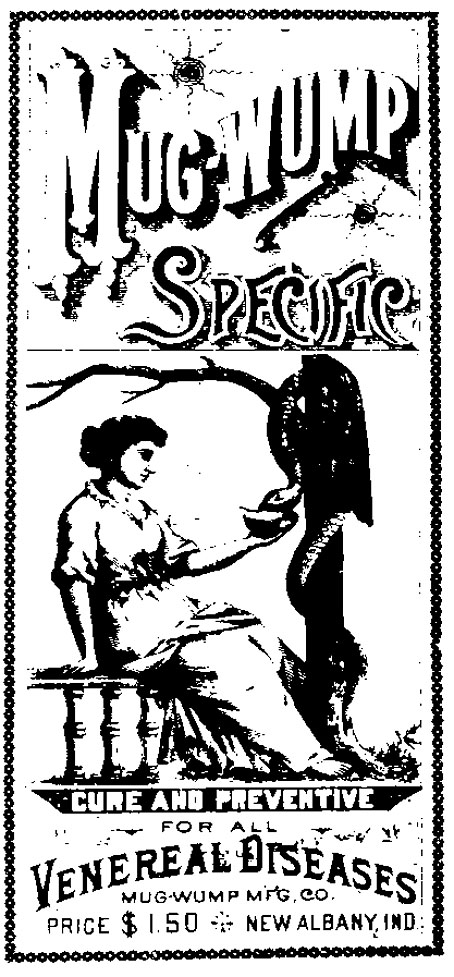
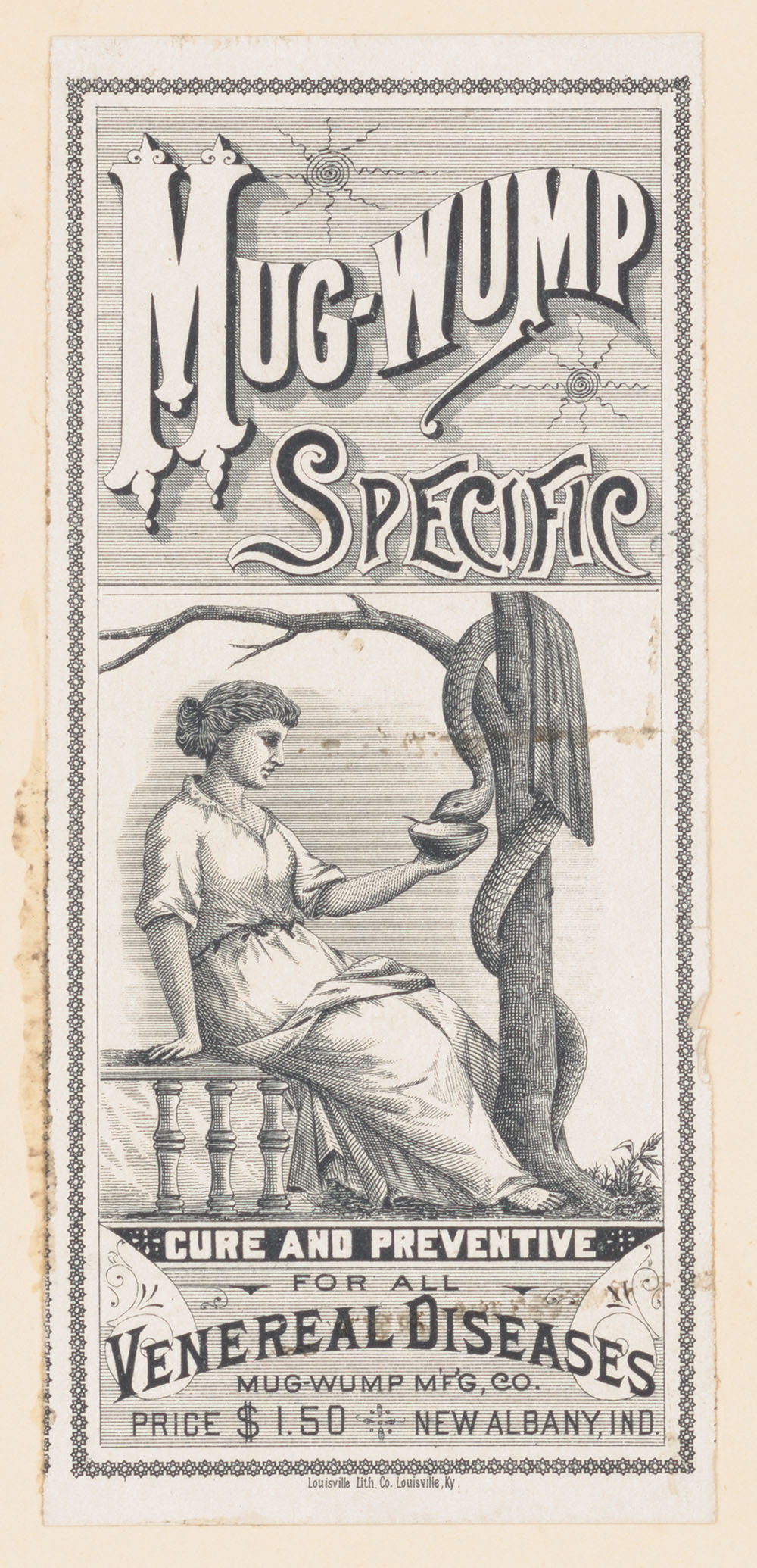
A few years ago I wrote a short post showing how the first description of the mugwumps in Naked Lunch was a kind of science-fictional rewrite of a similar passage from Junkie, a description a predatory character that a drug-user might encounter in the narcotic underworld of the 1940s. As an addendum to the post I added a crude image of a label for a 19th-century patent medicine, “Mug-wump Specific”, which had turned up at Wikipedia without any attendant information. At first sight the label seemed too good to be true in its Burroughsian combination of the mugwump name, sexual disease and—since it claims to be a cure—Dr Benway-style crank medicine. These associations were further compounded by the Freudian illustration of a woman offering a bowl to a very large snake. (The latter detail shouldn’t necessarily be taken as a reference to snake oil, however. The snake twined around a staff is a common medical symbol, derived from Asclepius, the Greek god of medicine.) Why a medicine manufacturer in Indiana should choose mugwump as the name for its alleged cure is yet another mystery, and one unlikely to be resolved. I’d guess it’s a result of the impulse that still prevails today when new products have to be named in a distinctive manner that’s both memorable and copyrightable.
mugwump3.jpg

This mass of conundrums was percolating through my mind last week as a result of which I embarked on a fairly determined search to find the image above, a first-generation printing of the medicine label affixed to a US trademark application. Ever since the cruder image had turned up at Wikipedia I’d been wondering why there wasn’t a better copy to be found anywhere. Surely something with so many cultural connections should be flying around the Tumblr labyrinth by now? I’d previously tried all the obvious sources like the image section of the Wellcome collection, where you’ll find a variety of medicine labels, as well as the product catalogues at the Internet Archive. Since Google has taken to ruining its search engine it’s become increasingly difficult to find uncommon images but I was lucky on this occasion when I found one of the trademark applications for sale at eBay. Knowing that the Library of Congress has an online archive of such things I zipped over there and immediately found the sample above. I’ve since seen the same image plastered with proprietorial watermarks at Etsy where someone is selling reproductions. This happens a lot in print-on-demand circles and at image-resellers like Alamy where ownership is claimed over material which is demonstrably in the public domain. Well, if you’re desperate to own a “Mug-wump Specific” T-shirt or poster you can save yourself some money by downloading a high-resolution tiff of the label here.

Elsewhere on { feuilleton }
The William Burroughs archive
Home of the Brave

hotb1.jpg

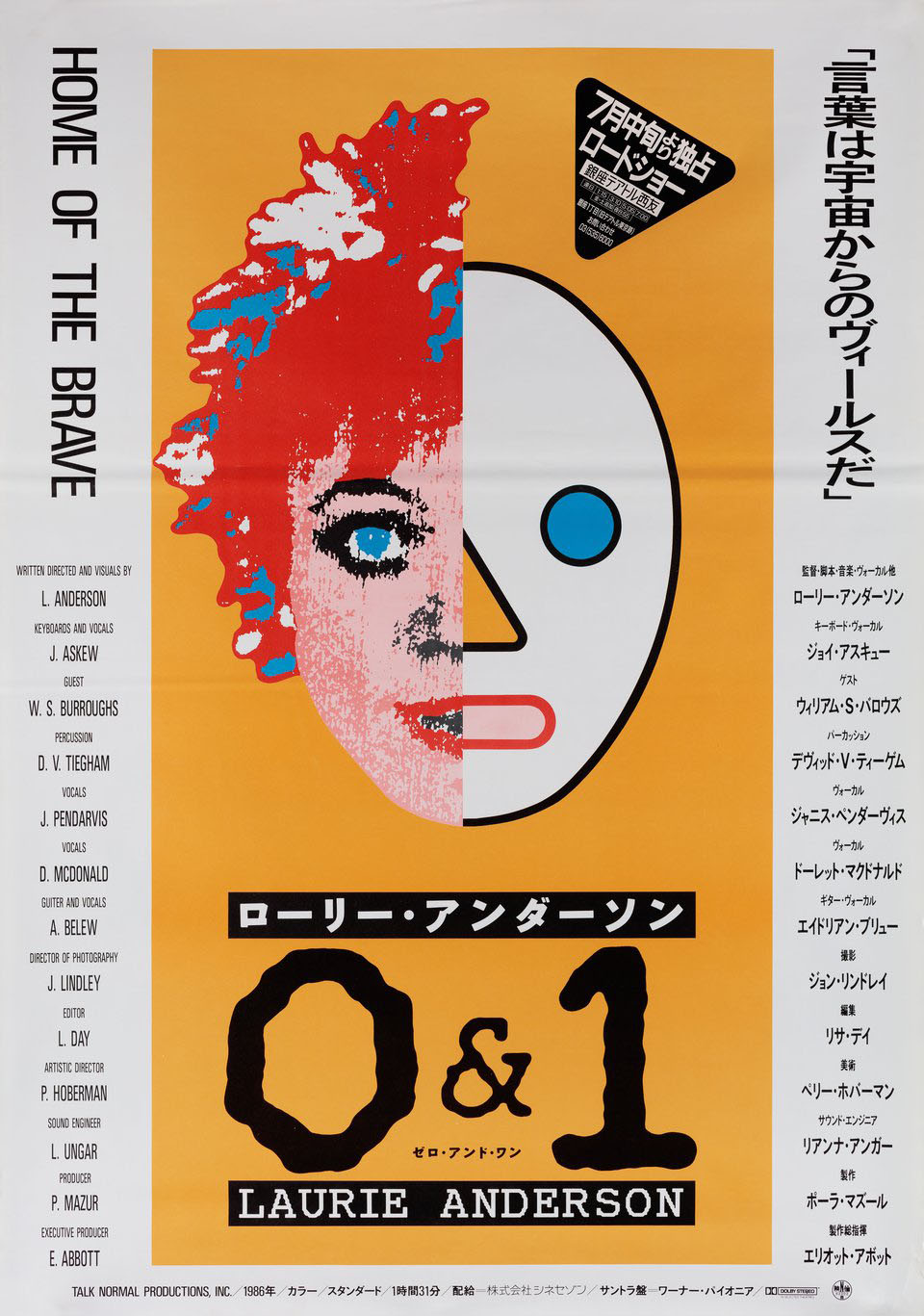
A Japanese poster.

Home of the Brave is a Laurie Anderson concert film from 1986 that more people might know about if it hadn’t been out of circulation for the past thirty years. The reason for the unavailability remains a mystery; Anderson announced a DVD release in 2007 but so far nothing has materialised. Whatever the explanation may be, this copy (which appears to be a Laserdisc rip) is better than the VHS transfers that circulate elsewhere.

hotb2.jpg

The concert itself is a 90-minute multimedia stage show built around the songs from Anderson’s second album, Mister Heartbreak. Between the album songs there are quirky, sketch-like interludes together with a reworked version of Language Is A Virus from her United States show, which was later reworked again for a single release. The album transcription extends to the projected visuals which incorporates graphics from Anderson’s design for the album cover, elements which show her to have been an early user of Macintosh computers. The Chicago font which was the default for the original Mac OS is a recurrent presence here, even being used for the title of the film on the posters and the cover of the soundtrack album. Another recurrent presence is William Burroughs, a friend of Anderson’s whose inimitable voice turns up on the last song on Mister Heartbreak, Sharkey’s Night. Burroughs’ first appearance in the film occurs when he and Laurie Anderson waltz across the stage, probably the first and last time that Burroughs was ever persuaded to dance in public.

hotb3.jpg

As for the music, if you’re as familiar as I am with Mister Heartbreak it’s good to see the songs from the album presented in live versions by some of the album’s musicians: Adrian Belew (playing guitar between stints in King Crimson), David Van Tieghem (percussion), and Dolette McDonald (backing vocals). This was Laurie Anderson’s first overtly pop-oriented outing (if you can call something “pop” that features William Burroughs and a song dedicated to Thomas Pynchon), but the stage show is filled with moments that aren’t so different to her earlier performances: solo keyboard spots, textual projections (one of which has her handwritten musings about the title of the show), unusual instruments (the tape-loop violin, body percussion, a keyboard tie), processed voices, and so on. The overall effect is simultaneously weird and playful, with the songs and general activity preventing the show from coming across like a low-key comedy act, the way United States often does. A proper reissue would be preferable but for now this is about the best you can get.

Previously on { feuilleton }
Going beyond the zero
Ear to the Ground

Weekend links 756

crane.jpg

A Diver (no date) by Walter Crane.

• At Worldbuilding Agency: The first part of a long interview with Bruce Sterling concerning “the pursuit of deliberate oxymorons as a creative strategy, worldbuilding in the context of history and futurity, Berlusconi on the moon and more”. With questions from Paul Graham Raven, and my cover art for Bruce’s Robot Artists and Black Swans.

• “With its focus on the 1970s career of Leonard Rossiter and its mordant metaphysics of the moist, Sophie-Sleigh Johnson’s Code: Damp might just be the most original book yet to emerge from Repeater publishing,” says Tim Burrows.

• “A definitive guide to the work of William S Burroughs’ on screen.” It’s a guide but it’s hardly definitive when there’s no mention of the four films Burroughs made with Anthony Balch.

• A catalogue of lots at the forthcoming After Dark: Gay Art and Culture online auction. Homoerotic art, photos, etc, also historic porn and a few garments worn by Divine.

• New music: Jay recommends the high-grade motorik en espanol dance-rock of Sgt Papers; Topology Of A Quantum City by Paul Schütze; Overtones by Everyday Dust.

• This week’s obligatory Bumper Book of Magic entry: Ben Wickey at Alan Moore World talks about his work on the book’s Great Enchanters comic strips.

• At Dennis Cooper’s it’s Malcolm Le Grice’s Day. Le Grice’s death was announced earlier this month.

• At The Wire: The magazine’s contributors’ charts showing their favourite music of the past year.

• A new website for the Sanborn Fire Maps and their decorated title pages.

• Mix of the week: DreamScenes – December 2024 at Ambientblog.

• At Public Domain Review: Albert Kahn’s autochromes.

Burroughs Called The Law (1960s) by William S. Burroughs | Language Is A Virus From Outer Space (Live) (1984) by Laurie Anderson | Burroughs Don’t Play Guitar (1996) by Islamic Diggers

The Japanese Sandman, a film by Ed Buhr

js1.jpg

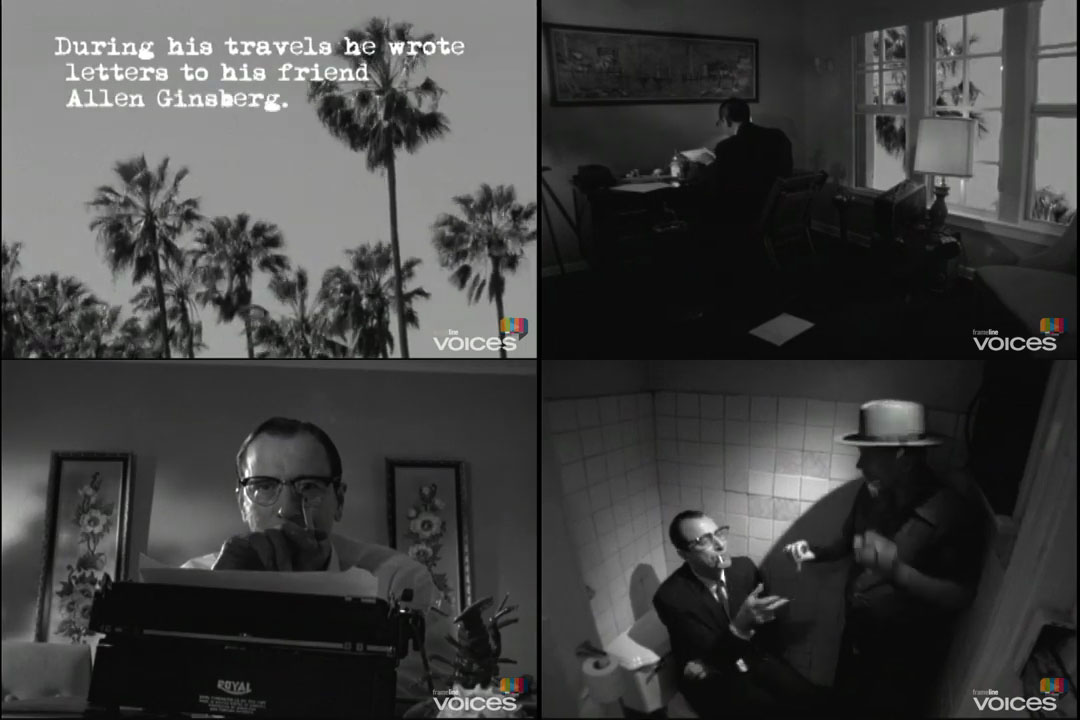
I upgraded my DVD of David Cronenberg’s Naked Lunch to blu-ray recently. The film is one of my favourites in the Cronenberg oeuvre even though its connection to the novel is minimal at best. After watching it again I was thinking (not for the first time) that one way to adapt either Naked Lunch or any of the books in the “Nova Trilogy”—The Soft Machine, The Ticket That Exploded, Nova Express—would be to commission ten or twenty very different film-makers to adapt portions of the novel in whatever manner they chose. The resulting short films could either be run in sequence or cut together to make a meta-film which, if nothing else, would be closer to the disjointed structure of William Burroughs’ early novels than the semi-biographical narrative that Cronenberg delivered .

js2.jpg

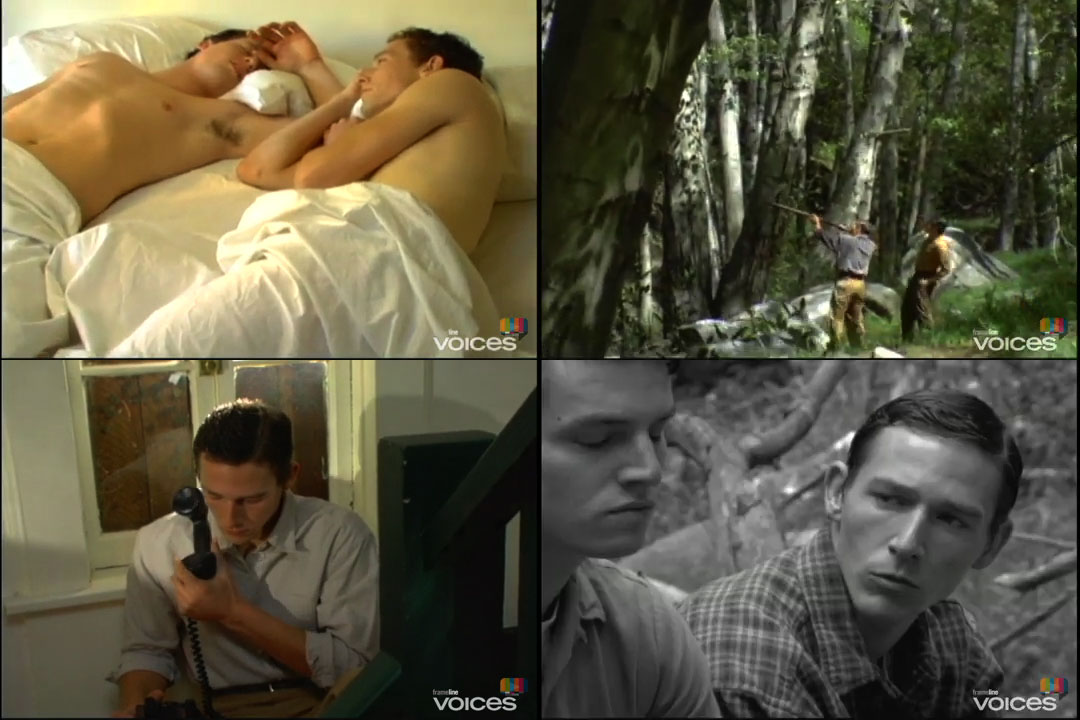
Which brings us to The Japanese Sandman, a 12-minute film made by Ed Buhr in 2008 which turned up recently on YouTube. Buhr’s short is a dramatisation of passages from the letters that Burroughs wrote to Allen Ginsberg in 1953, in which Burroughs recounts his experiences in Panama while searching for the yage vine, a plant which yields the hallucinogen known as ayahuasca. Narrator John Fleck is a decent Burroughs mimic (although the real Burroughs pronounced “Panama” with a distinct drawl at the end, more like “Panamawww”), and since Burroughs’ own words provide the text of the piece the film is closer to Burroughs’ books than many other short films. Black-and-white scenes in Panama rooms alternate with a colour sequence where Burroughs recalls a doomed love affair with a boy in the St Louis of the 1930s. It’s gratifying to see someone draw attention to an aspect of Burroughs’ writing that’s often ignored, the persistent thread of melancholy and regret for lost time/lost people which runs through so many of his novels. It’s a side of the fiction that would also have to be accounted for in any longer adaptation of Burroughs’ work.

Elsewhere on { feuilleton }
The William Burroughs archive
The art of Denton Welch, 1915–1948

welch04.jpg

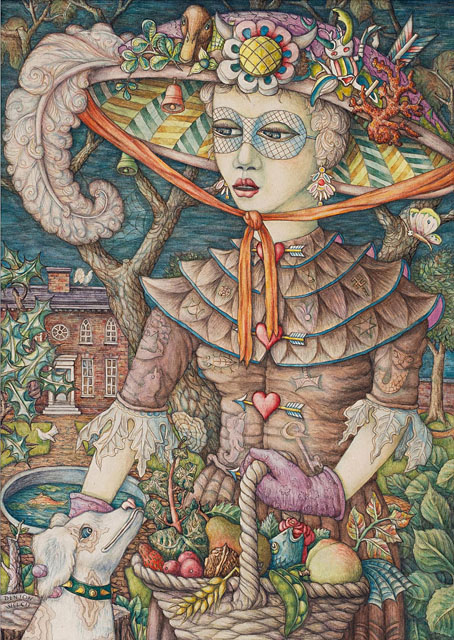
Symbolist Figure (1946).

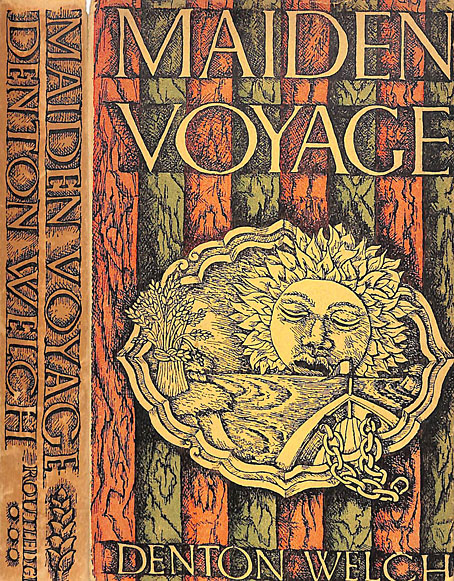
The visual art, that is, not the novels and short stories. Last month I finally got round to reading Denton Welch’s first two novels, Maiden Voyage (1943) and In Youth is Pleasure (1945). Finally, because I’ve known Welch’s name for a long time, mostly via William Burroughs—who dedicated The Place of Dead Roads to him—and John Waters—who often lists In Youth is Pleasure as one of his favourite novels. This was also the book that Burroughs favoured, and he wrote an introduction for a US reprint in 1983. At first glance, Welch would seem a surprising choice for the pair: the protagonist in each book is a thinly fictionalised avatar of the author—he’s even named Denton Welch in the first—an effete upper-middle-class English teenager who hates his school and most of the people he meets, and who spends as much time as possible wandering alone, looking for affordable antiques and any old buildings that may be of interest. The homosexual undercurrents in each book generate persistent tensions which are an obvious attraction for many readers, even though nothing is ever stated overtly and there’s no hand-wringing over unrequited passions. Welch’s boys are most passionate about the things they collect, and their determination to be left alone to pursue their interests when all the adults around them are trying to push them in different directions. Having been a similar school-hating, art-obsessed, introverted teenager, if I’d read In Youth is Pleasure when I was the same age as the beleaguered Orvil Pym it would have made a huge impression.

welch07.jpg

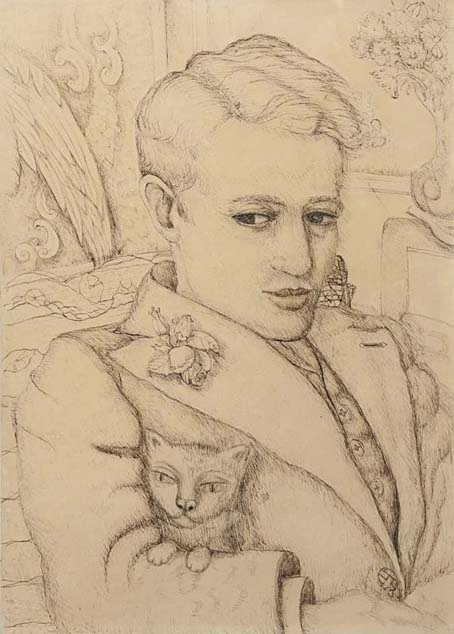
Self-portrait With Cat.

Art was the interest that Welch most wanted to pursue but it’s the writing for which he’s remembered. Few people have good things to say about his drawings and paintings but there’s a strange quality to many of them that I like, an atmosphere of menace that lurks beneath the often naive renderings. I was surprised how gloomy and claustrophobic many of them are. The refined sensibilities in the novels lead you to expect something lighter, frivolous even, like the paintings and illustrations of his contemporary, Rex Whistler, or other artists of the Neo-Romantic school of the 1930s. In fact looking at Whistler’s work again, it’s the Whistler style I most expected even though it’s unfair to compare the two. Welch and Whistler shared a taste for pictorial decoration, and a blithe indifference to the avant-garde trends of the day, but Whistler was a formidable talent, the kind of successful illustrator that Welch could only dream of being. (That said, both artists were commissioned by Shell for the company’s poster series showing views of Britain.) Yet lack of ability sometimes takes an artist into places that a professional wouldn’t reach. Whistler would have given us a perfect cat, not the strange creatures with almost human faces that Welch liked to draw. I’m curious to know which, if any, contemporary artists Welch preferred. His diaries are now earmarked for a future reading.

A Voice Through A Cloud: Discovering Denton Welch

welch05.jpg

Hadlow Castle, Kent (1937).

welch06.jpg

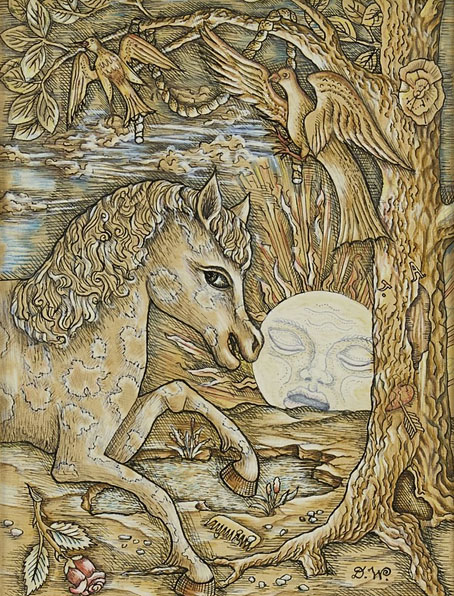
Horse and Moon (1943).

welch03.jpg

Continue reading “The art of Denton Welch, 1915–1948”