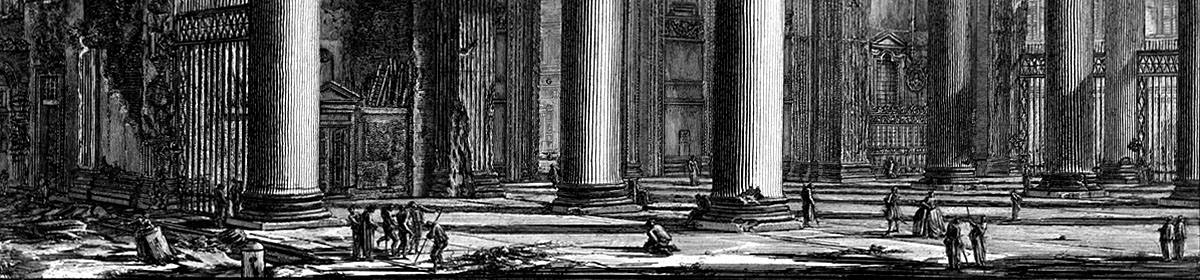
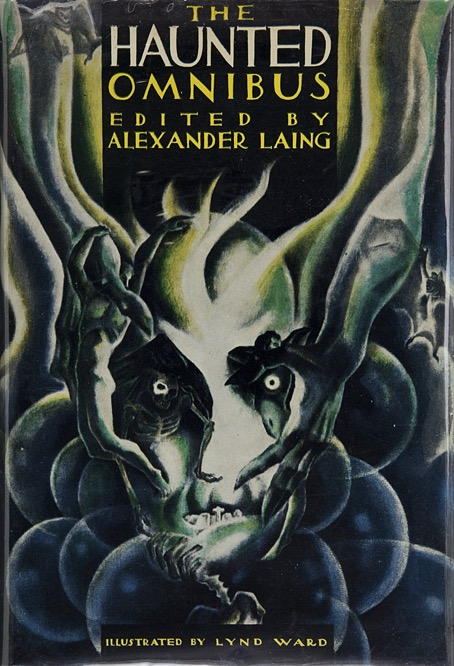
“The Haunted Omnibus” is a title that suggests some form of public transport filled with spooks, but all the spectres here are lodged in the pages of a story collection from 1937, edited by Alexander Laing and later reprinted in a truncated edition as Great Ghost Stories of the World. Both books were collections for American readers, with at least half the stories in The Haunted Omnibus originating in Europe. Many of the selections feature no ghosts at all; “weird tales” would be a better descriptor for any collection that includes entries as diverse as Guy de Maupassant’s The Horla, Arthur Machen’s The White People, Algernon Blackwood’s The Wendigo and an extract from Beowulf.
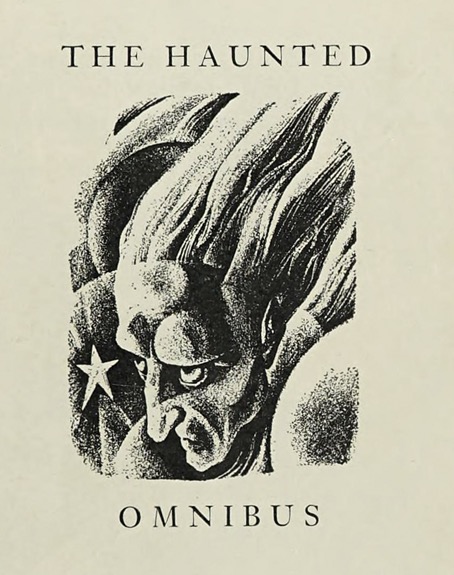
Grendel aside, if you’re familiar with 20th-century weird fiction there are few surprises, the main attraction is Lynd Ward’s copious illustrations which, for the longer stories, run to two illustrations a piece: a title vignette and a full page. With 42 stories in total that’s a lot of artwork; what you see here is a necessary selection. The ISFDB page for the book links to a PDF scan of the entire collection if you’d like to see how well the illustrations suit the stories; alternatively, this old blog post has nearly all of Ward’s interior illustrations. Laing’s collection wasn’t Ward’s first engagement with horror, his superb edition of Frankenstein was published in 1934. This was followed by covers and a frontispiece for two of Alexander Laing’s novels, The Cadaver of Gideon Wyck (1934) and The Motives of Nicholas Holtz, Being the Weird Tale of the Ironville Virus (1936), which no doubt led in turn to The Haunted Omnibus. Ward’s Frankenstein illustrations are all wood engravings, a medium at which he excelled, and one which gives his drawings a precise definition that’s lacking in the story collection. I can’t say for sure what medium he used here but they look like lithograph drawings. The textural roughness is useful for conveying a nebulous atmosphere but Ward’s predilection for Expressionist distortion makes some of his depictions difficult to read at first glance. On the plus side it’s good to see how he deals with something like The White People which was being reprinted for the first time outside Machen’s own The House of Souls collection. This makes Ward the first illustrator of the story, as he was with The Wendigo and (I’m guessing) several more of these pieces.
(Note: At the time of writing ISFDB is suffering problems with bots overloading its server resources but the PDF link directs to Alexander Laing’s entry on this page.)
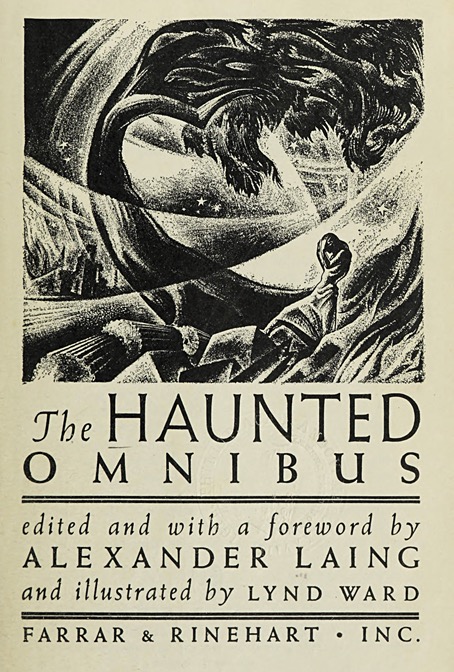
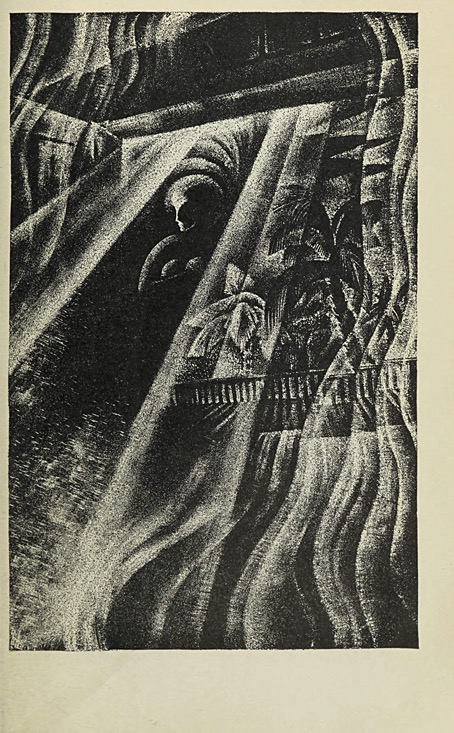
The Half-Pint Flask by DuBose Heyward.
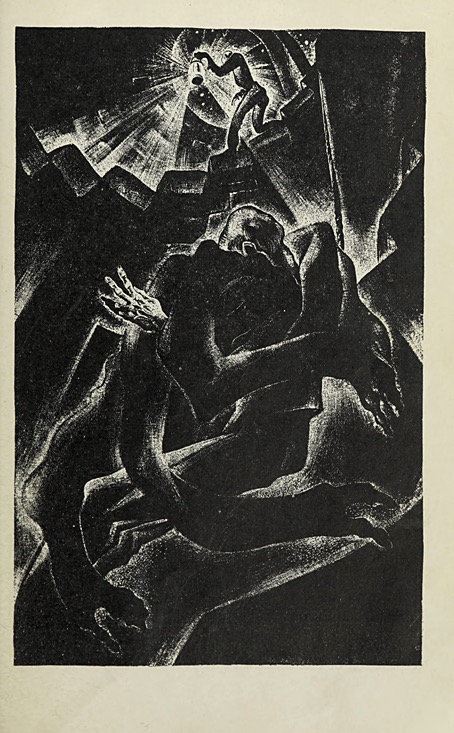
The Treasure of Abbot Thomas by MR James.
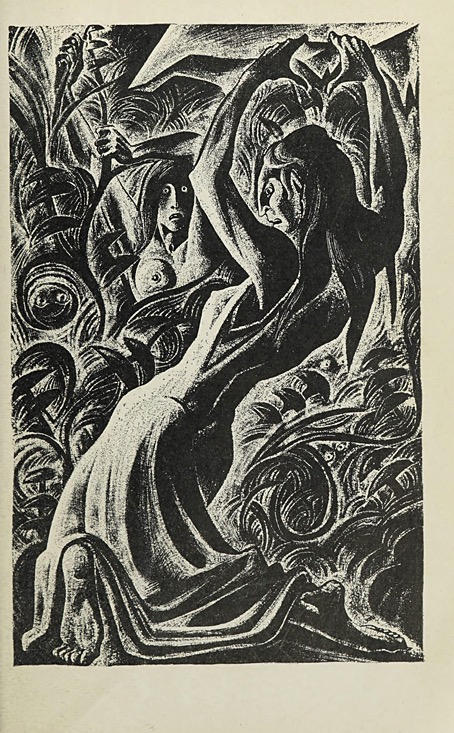
The Yellow Wall Paper by Charlotte Perkins Gilman.
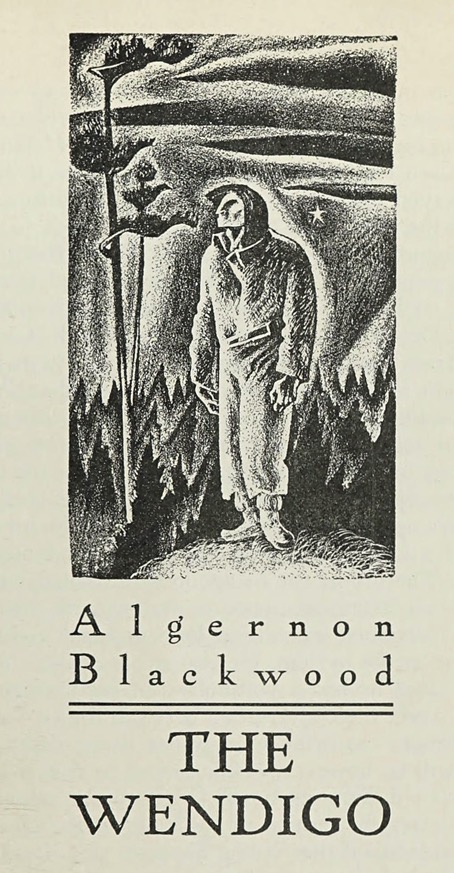
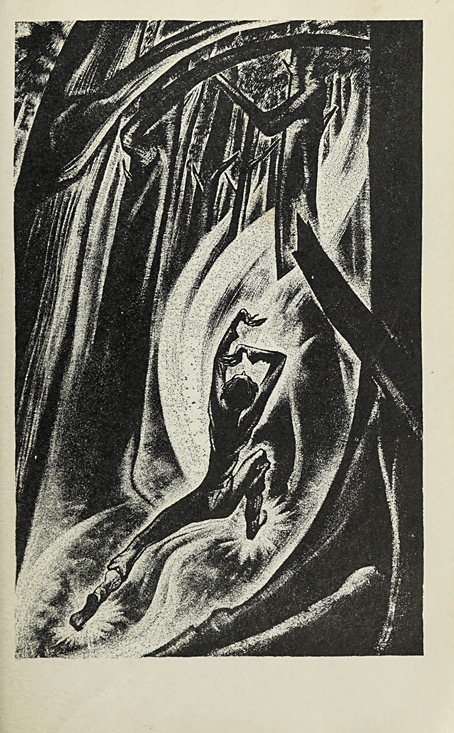
The Wendigo by Algernon Blackwood.
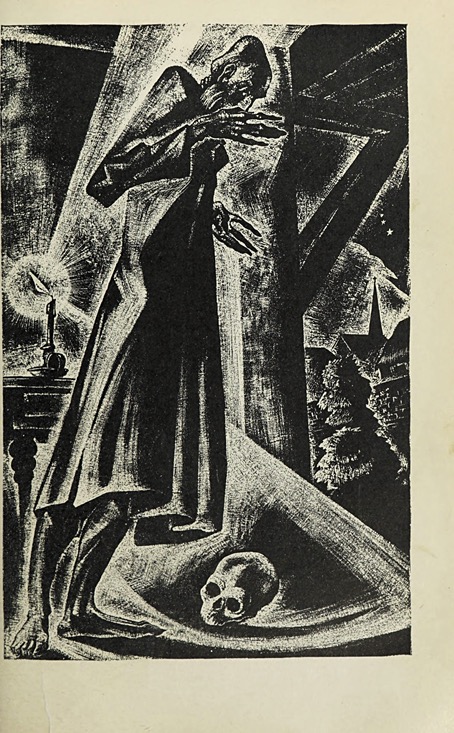
The Screaming Skull by F. Marion Crawford.
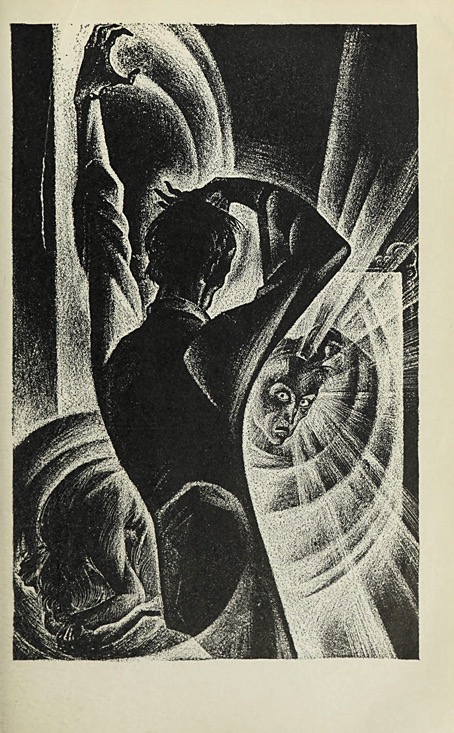
The Horla by Guy de Maupassant.
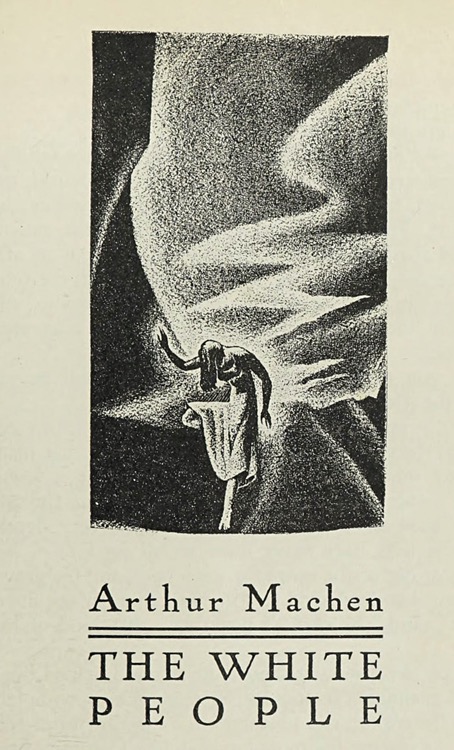
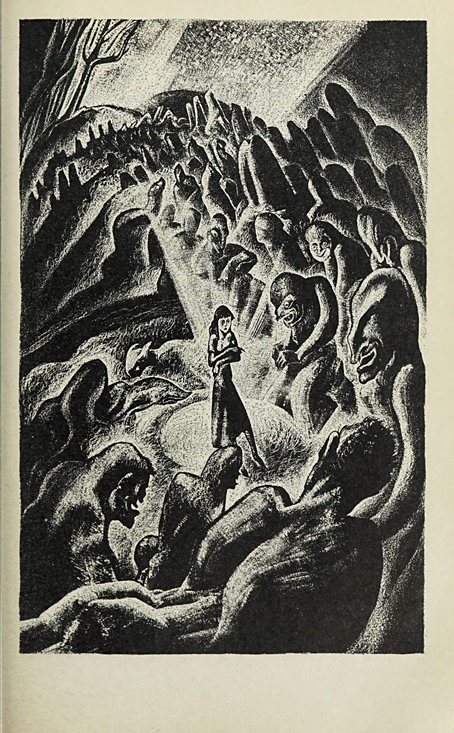
The White People by Arthur Machen.
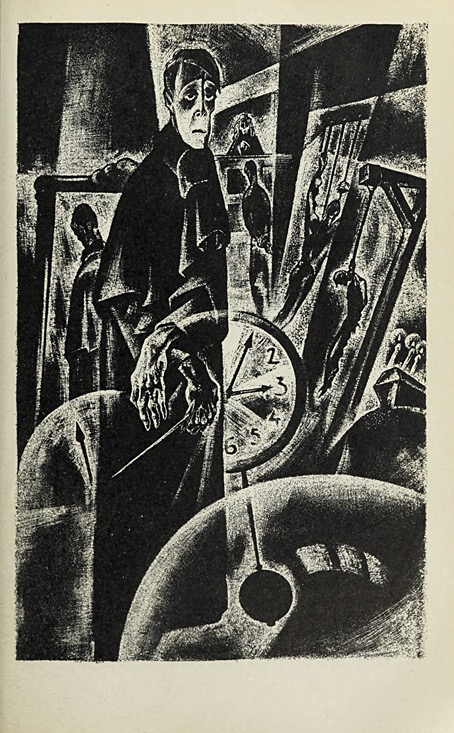
Markheim by Robert Louis Stevenson.
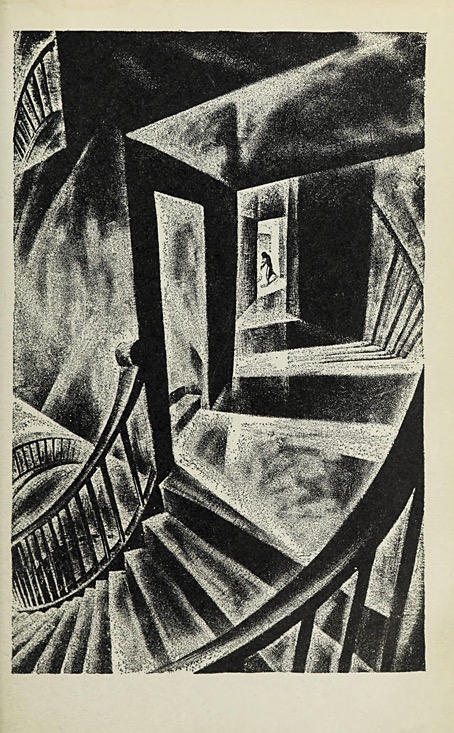
Where Their Fire Is Not Quenched by May Sinclair.
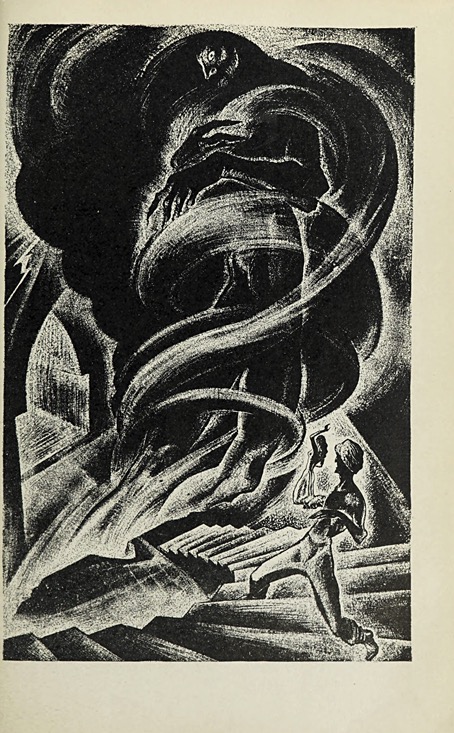
The Second Kalandar’s Tale from The Arabian Nights.
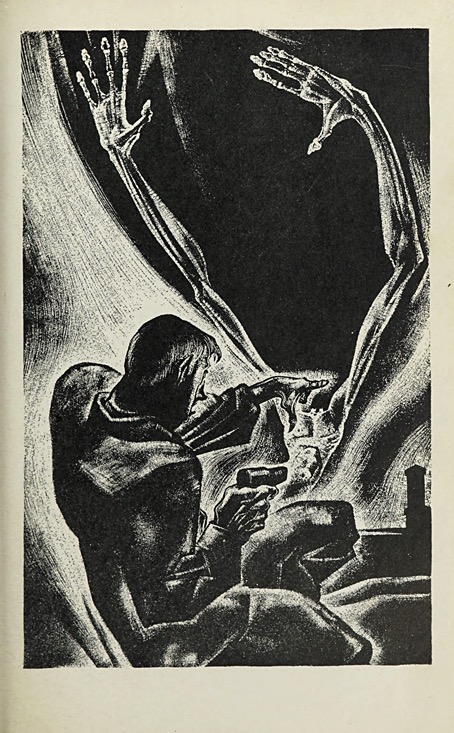
The Gentleman from America by Michael Arlen.
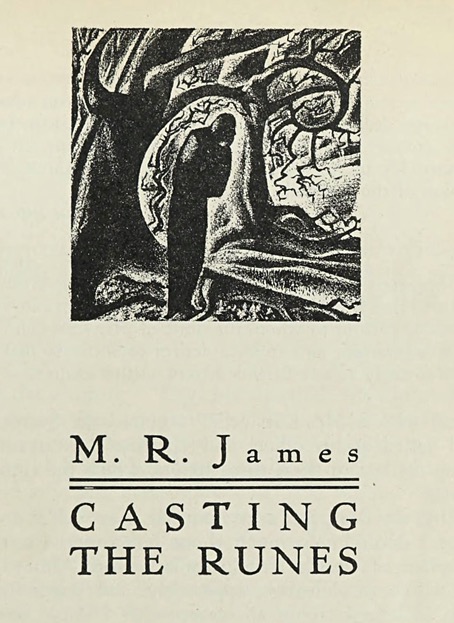
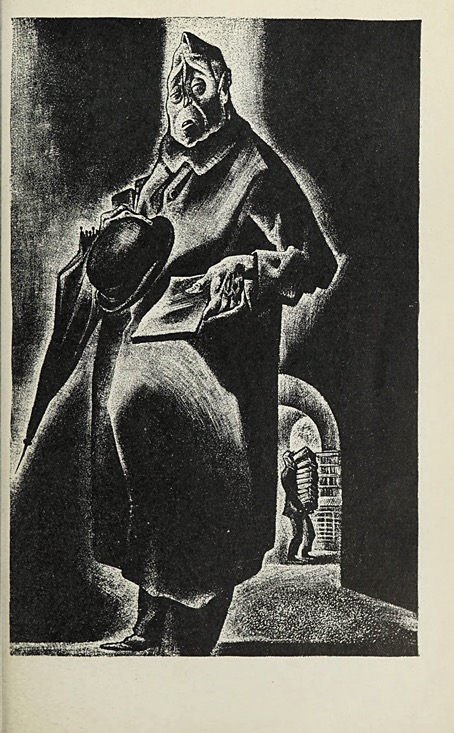
Casting the Runes by MR James.
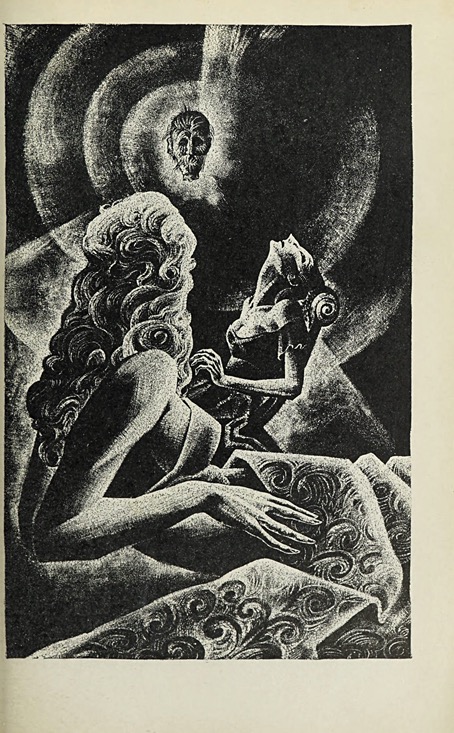
The Haunted Hotel by Wilkie Collins.
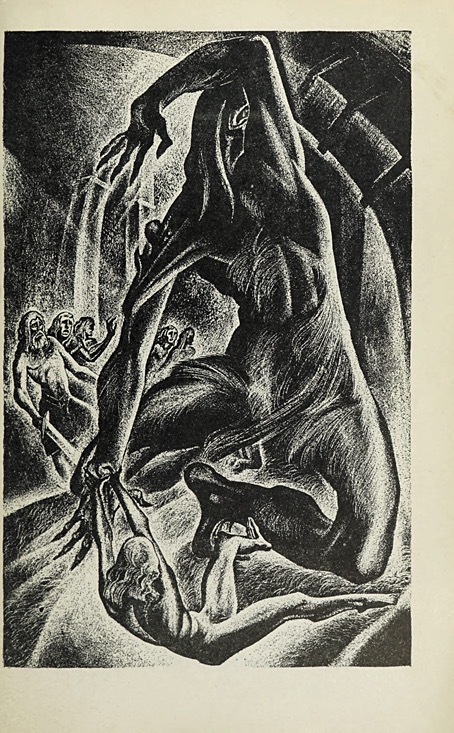
The Grendel Episode from Beowulf.
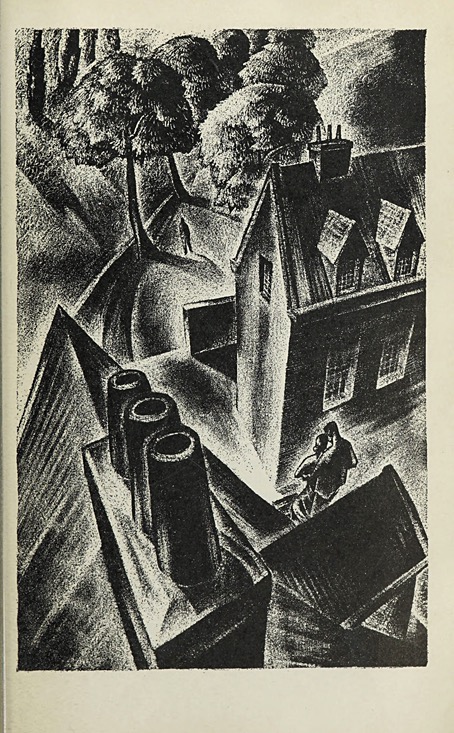
Afterward by Edith Wharton.
Elsewhere on { feuilleton }
• The illustrators archive
Previously on { feuilleton }
• Lynd Ward’s Beowulf
• August Heat
• Lynd Ward’s Frankenstein
• Cain’s son: the incarnations of Grendel
• Gods’ Man by Lynd Ward