Weekend links 847

magritte.jpg

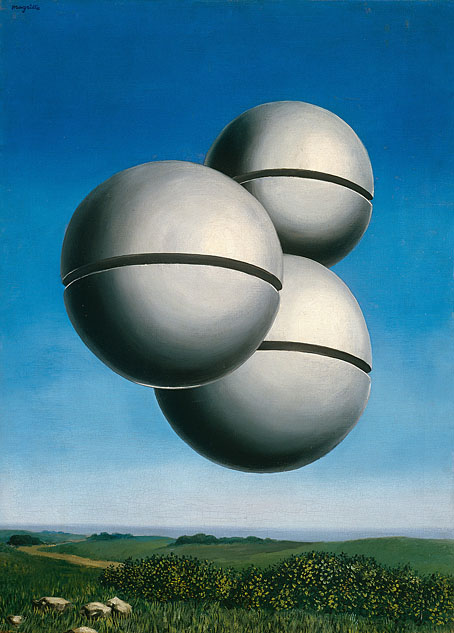
La voix des airs (1931) by René Magritte.

• “Gangsters is to the 1970s what The Prisoner was to the 1960s—a playful, knowing and mildly crazed production but today it bears an important warning from the past to us.” John Quin on the extraordinary vitality of Philip Martin’s Play For Today and the BBC drama serial spun-off from it.

• New music: Juxtapositions by Boddy | Scanner; Embodied Shadow Of Thy Secret Mind by Philippe Blache; Light on Water by Modern Apartments.

• At Public Domain Review: Metamorphosis: Transformations in the Early Modern Flap Book (early 19th century).

Maeterlinck would write of [The Great God Pan], “it is, I believe, the attempt had been made to combine the traditional, or diabolical Fantasy with the new scientific kind, and that such a mixture has produced the most disturbing work I have ever come across”. Maeterlinck’s description of Machen serves as a tidy introduction to the crux of Ray’s writings too. A writer equally perplexed, intrigued, and possessed by the “the terrifying, hypergeometric, fourth dimension”. Ray’s works span the thin fabric of reality, piercing through into other eternal worlds and abducted by its eternal horror. Ray’s worlds are numerous realities battling one another, overlapping, mimicking, and distorting; it is an evocation of time and space as a battle-field of alternativities, governed by strange supernatural forces, notably angels or the occult.

The London of the Imagination, an examination of the fictional metropolis as it manifests in the stories of Belgian writer, Jean Ray

• Mixes of the week: A Slomo mix for The Invisible College, and DreamScenes – September 2026 at Ambientblog.

• At Colossal: “Spanning 200+ works, a new book celebrates the world of fungi“.

The Electric Music Machine: Five Days at the BBC Radiophonic Workshop (1988).

• Steven Heller’s font of the month is Ege Basalt.

Matt Cargill’s favourite albums.

• RIP Jeremy Thomas.

Metamorphosis (1970) by Ananda Shankar | Metamorphosis (1995) by Pet Shop Boys | Metamorphosis (2012) by Demdike Stare

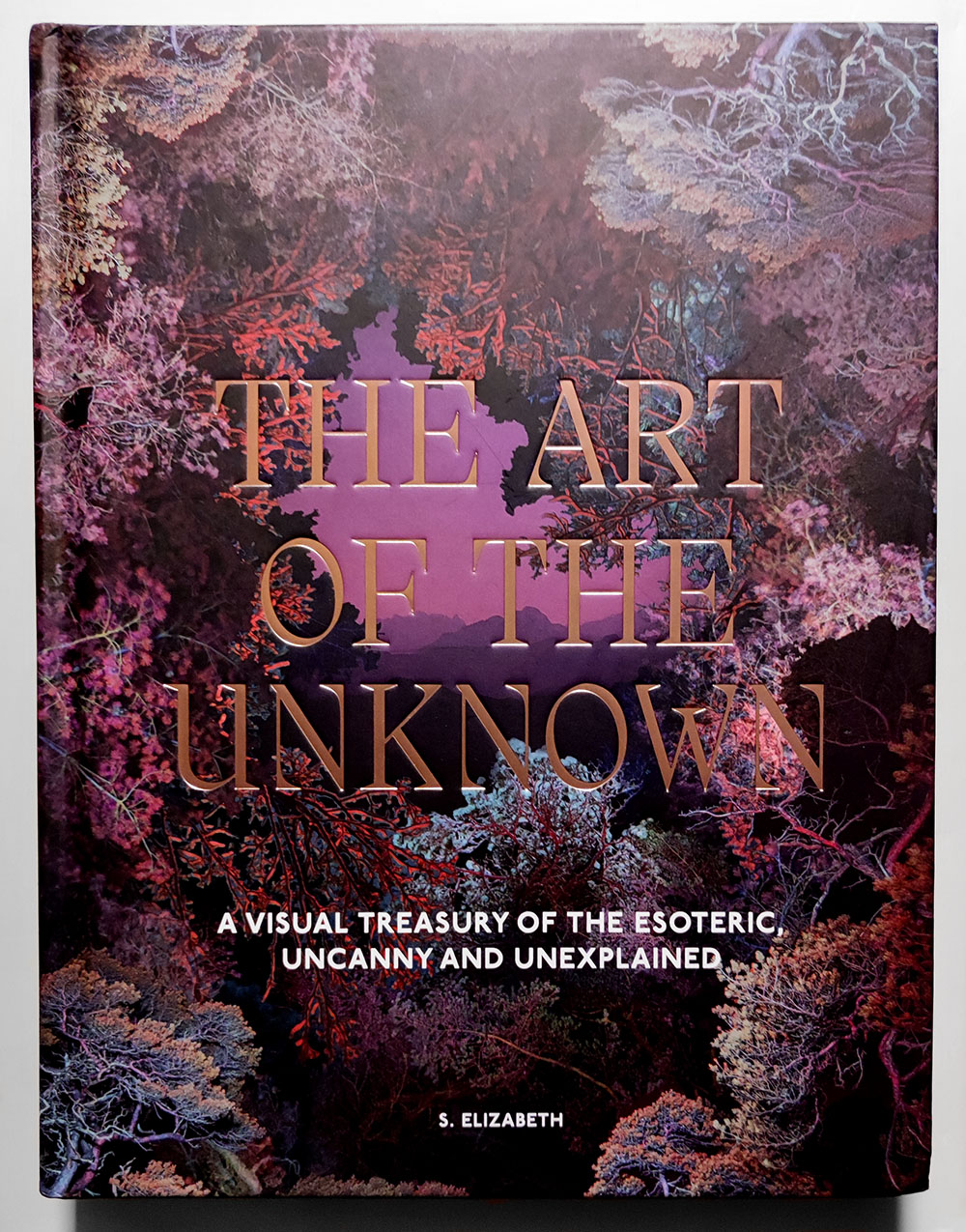
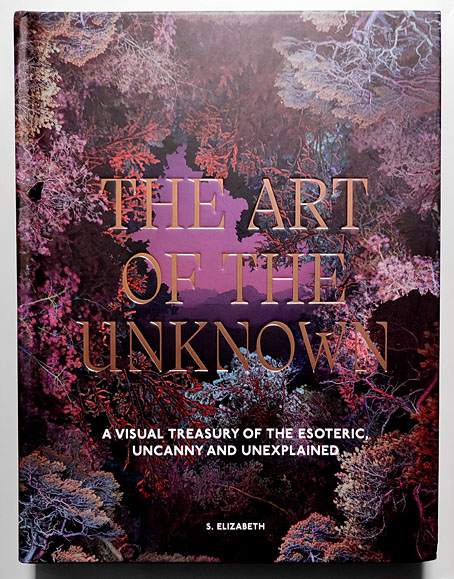
The Art of the Unknown by S. Elizabeth

unknown1.jpg

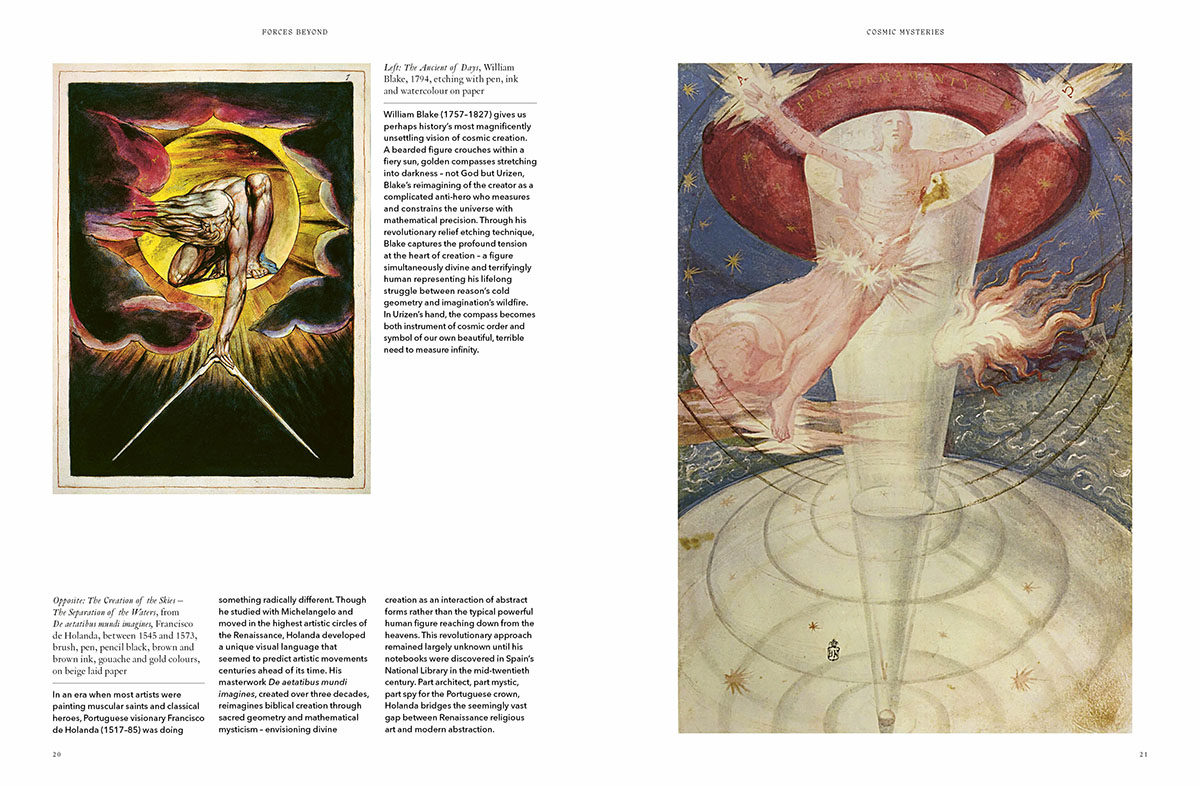
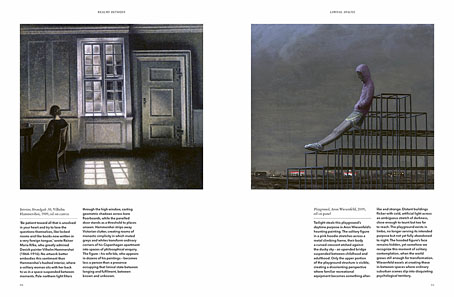
I was amused when I opened this new arrival to see a reproduction of the picture which is currently being used as this month’s blog header. The coincidence confirms that this is my kind of book, being a collection of paintings, drawings and engravings of the mysterious and recondite throughout the ages. The Art of the Unknown continues the format that S. Elizabeth began in 2020 with The Art of the Occult, then continued with The Art of Darkness and The Art of Fantasy. If you’ve followed any of the links I post here to Unquiet Things then you may already be familiar with Sarah’s writings and excellent pictorial tastes. I can’t be wholly objective when talking about any of these books, I’ve known their author at a distance for many years, and one of my own illustrations appears in The Art of the Occult. Caveats aside, this is still my kind of book.
unknown2.jpg

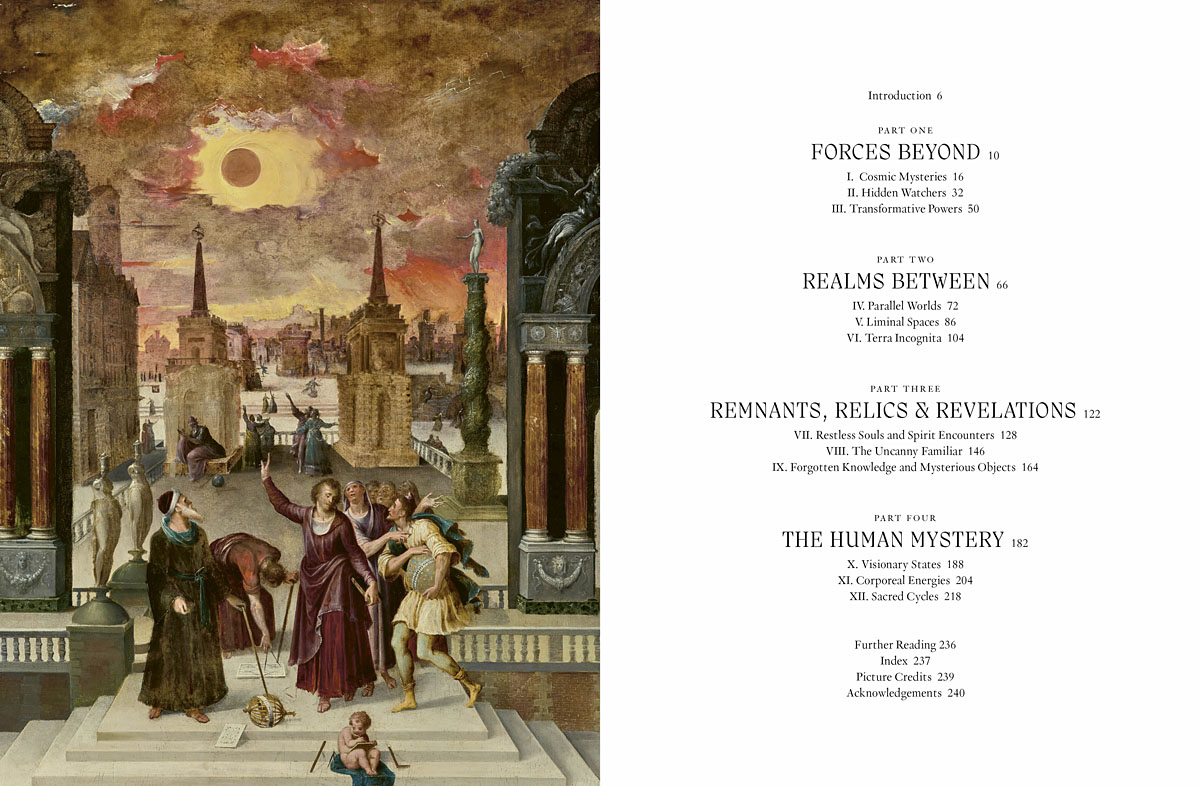
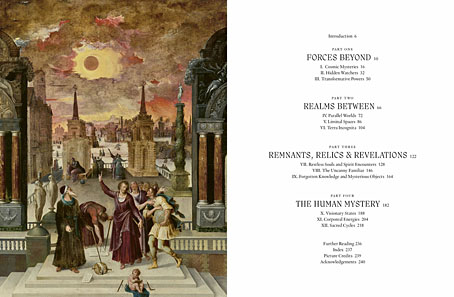
The Art of the Unknown opens with a paean to mystery, a quality which may be a more accurate descriptor of the book’s predominant theme even though “Art of the Unknown” makes a better title. The mysteries of alchemical symbolism, the enigmas of pictorial allegory, the poetic movement which called itself Symbolism, Surrealisms past and present: all these modes of artistic expression are explored and juxtaposed with works by contemporary artists who either continue to evolve the old mystery traditions or play new games with their themes and imagery.
unknown3.jpg

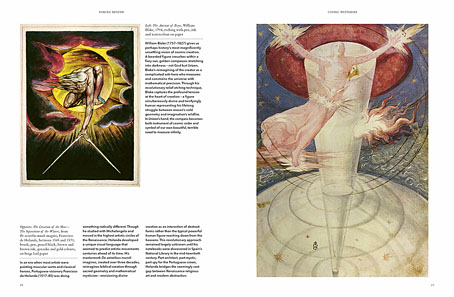
Mystery has been a recurrent attribute of painted art even when it isn’t necessarily the subject of the picture—think of the endless theorising about the Mona Lisa—while some degree of mystery is present any time a painting isn’t immediately explicable. But mystery, like fantasy, is one of those qualities which forms a parallel tradition within the body of art history, connecting a wide variety of otherwise unconnected works going back to the earliest examples of picture-making. The Art of the Unknown isn’t structured as a history of this tradition, however, the book is more a sampling of different eras and an examination of modes and sub-classes: cosmic mysteries, other dimensions, the spectral and the occult, dreams and visions.
durer.jpg

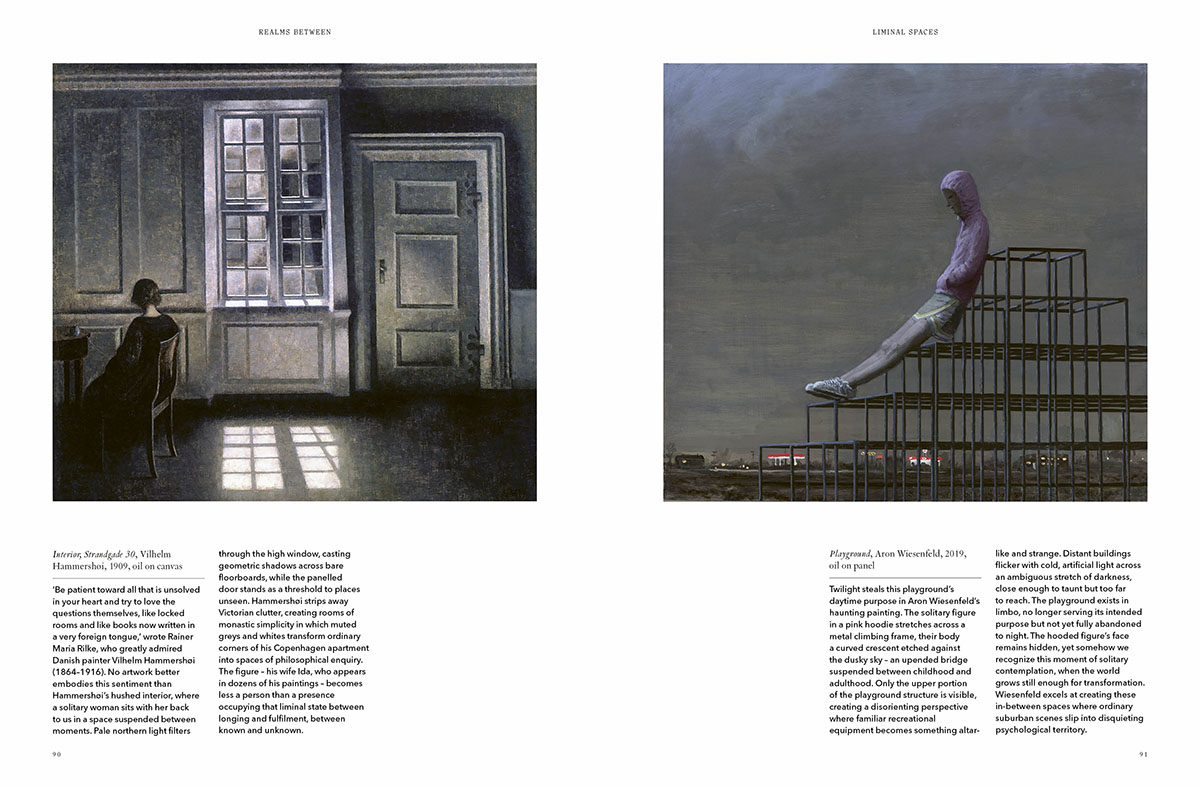
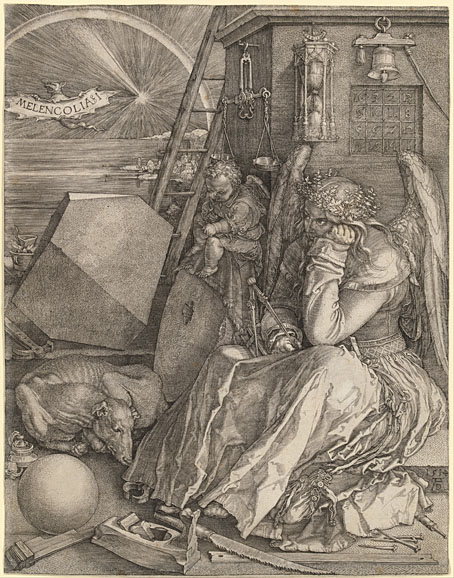
Albrecht Dürer’s Melencolia I (1514) is one of several early examples of pictorial enigma that appear in the book but the bulk of the pages are devoted to the mystery-enriched terrain of the 19th and 20th centuries. Rather than run everything in chronological order Sarah pairs complementary pictures to create rhymes of theme or pictorial content across the centuries. This is something you don’t see very often in art books even though the close juxtaposition of works from different eras has become increasingly common in exhibitions. Common but not always successful when deployed in a gallery where the space of the rooms can make it easy for you to direct your attention at a single picture while ignoring all the rest. Juxtaposition works better in a book spread, bringing two or more pictures to the reader’s attention simultaneously. The Art of the Unknown does this very effectively, much better than some of the attempts I saw in Tate Britain during one of my recent visits to London. To the Tate’s credit, the gallery shop did have a copy of The Art of Fantasy on one of their book tables.
unknown4.jpg

The unknown is a big subject for any book but, as with the previous titles in this series, The Art of the Unknown is a gateway work, and a signpost to areas worthy of deeper exploration. These books remind me of another gateway book I’ve mentioned many times in previous posts, The Fantasy Book by Franz Rottensteiner, which was published by Thames & Hudson in 1978. Rottensteiner’s study was concerned more with literature than with art but the pictures it contained were so wide-ranging and well-chosen I spent many years looking for further examples by the artists. Arthur Machen is one of the British authors whose stories Rottensteiner examines, and I think it was Rottensteiner as much as Lovecraft who helped push me towards Machen’s fiction. The unknown is a recurrent feature in Machen’s fiction, and he liked to say that whatever advances science may make in the future there will always be some aspect of the Universe left unexplained. The four words carved on his gravestone summarise this philosophy: “Omnia exeunt in mysterium“—”Everything ends in mystery”.

Previously on { feuilleton }
The Art of the Occult
Splendor Solis revisited
Melencolia details

The Greenwood Faun

antonia.jpg

Arthur Machen isn’t usually considered to be a Decadent author even though it was in the Mauve Decade of the 1890s that he first established himself as a writer. Machen knew Oscar Wilde well enough to recount an anecdote in later life, and two of Machen’s earliest books were published with covers designed by Aubrey Beardsley. But Machen outlived Wilde and Beardsley and all the other writers and artists who expired prematurely around the turn of the century, while Machen’s 20th-century stories are now so enmeshed with the evolution of weird fiction that the world of the weird has claimed him as one of its own.

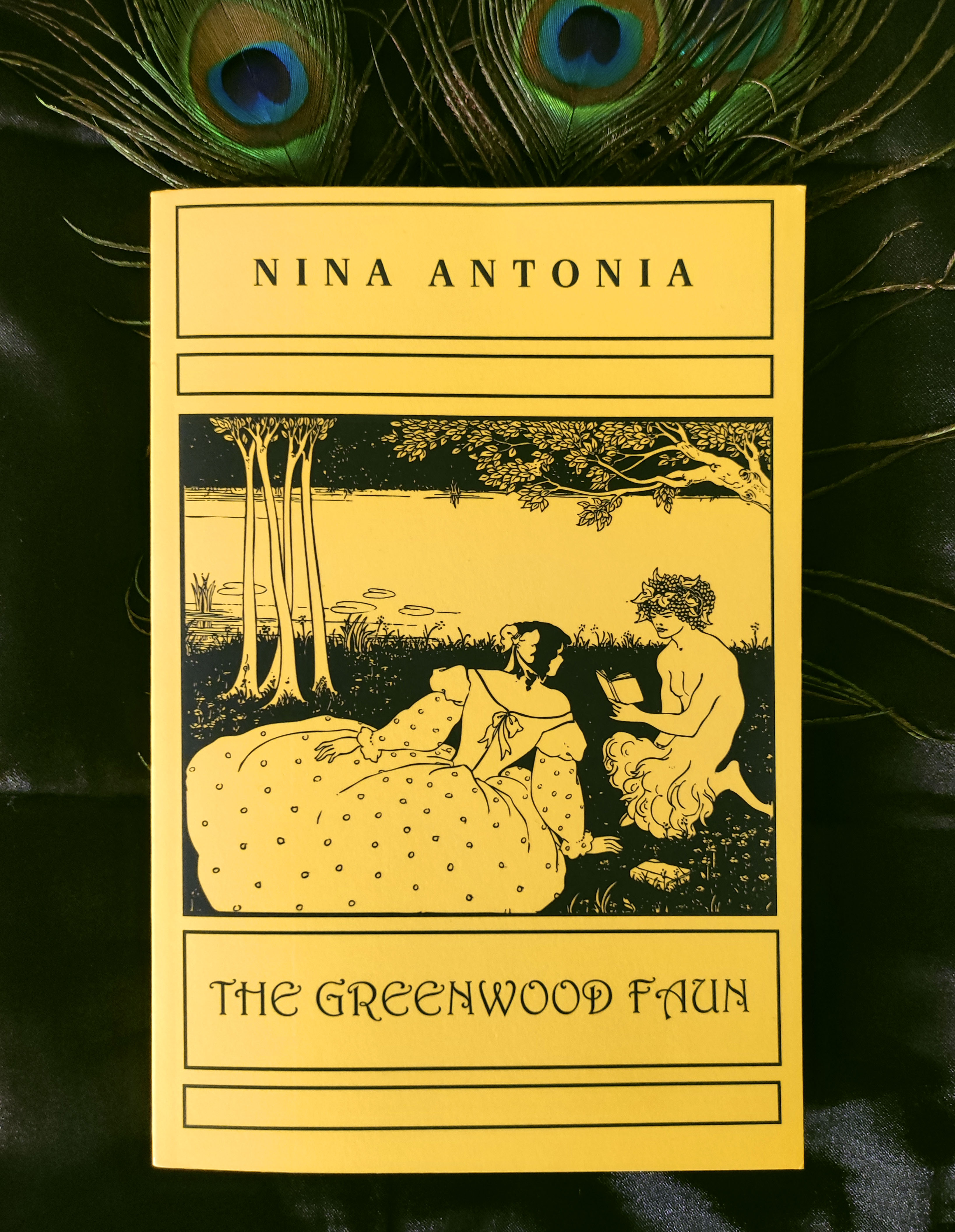
The Greenwood Faun is a novel by Nina Antonia which plays with both these phases of Arthur Machen’s career. This is a ghost story to some degree, in which the shade of Decadent poet Lionel Johnson wanders the streets of London in various stages of corporeality, as well as a tale of the dysfunctional Hartington Leacock-Jones family whose entanglements with a mysterious book—The Greenwood Faun by Lucian Taylor—comprise the main substance of the novel. Machen aficionados will recognise Lucian Taylor as being the central character of Machen’s semi-autobiographical The Hill of Dreams, a detail which makes Antonia’s story a novel about a novel from a novel.

It’s never entirely clear how the world of The Greenwood Faun manages to have Arthur Machen in it as the author of a novel called The Hill of Dreams while also containing the central character from that novel whose death has occurred before the story begins. The important element is Lucian Taylor’s unpublished book, discovered in manuscript form then printed in a limited edition (books like these are always limited editions) with faun-embossed boards and pages that exude a sylvan fragrance. Jorge Luis Borges would have enjoyed the intertextuality—he enjoyed inventing books, and also enjoyed Arthur Machen’s writing—which is paralleled to a small degree by Alan Moore’s The Great When in which we find another book from a Machen story—A London Walk by the Reverend Thomas Hampole—manifesting in the real world. (This isn’t to suggest any influence; Antonia’s book was first published in 2017.) The Greenwood Faun extends a fateful influence over the Hartington Leacock-Jones family, either chiming sympathetically with those receptive to its magical charm or repulsing those whose characters are blind to its visionary qualities. Roger, the oldest of the trio of siblings, is a worldly materialist who remains immune to the spell of the book, whereas Conrad, his dreamy younger brother, is a poète maudit in embryo, equally responsive to the lure of the novel and to the romantic seductions of the ghostly Lionel Johnson. The thorn in this world is Giles Gorse, a literary critic soon to be married to Violet, the brothers’ sister. Gorse has his own designs on The Greenwood Faun, seeing the novel as something he can republish as his own, if only the book would behave more like a book and less like an object endowed with magical life.

Nina Antonia’s novel is a treat for Decadent enthusiasts, littered with references and borrowings from the Mauve Decade, and to writers like Saki and Ronald Firbank who carried its spirit into the 20th century. Saki is a good match for Machen even though one of Saki’s most memorable characters, the waspish Clovis Sangrail, would be appalled to find himself repurposed here as one of the lower orders. The mysticism that surfaces now and then in Saki’s stories reaches a Machenesque peak in The Music on the Hill, another of those Edwardian tales in which Pan is encountered in the English countryside. The story is quoted in epigraph at the opening of The Greenwood Faun, and it’s to this vision of a pagan deity that the novel pays homage, not the annihilating terror of Machen’s Great God Pan.

The Greenwood Faun is published by Snuggly Books which also has a paperback edition of N by Arthur Machen, the story that concerns that other fateful volume, The London Walk.

Previously on { feuilleton }
A Czech Machen
Ibrahim Ineke’s The White People
The White People
The Bowmen by Arthur Machen
Rex Ingram’s The Magician
The Great God Pan

Weekend links 815

hawksmoor.jpg

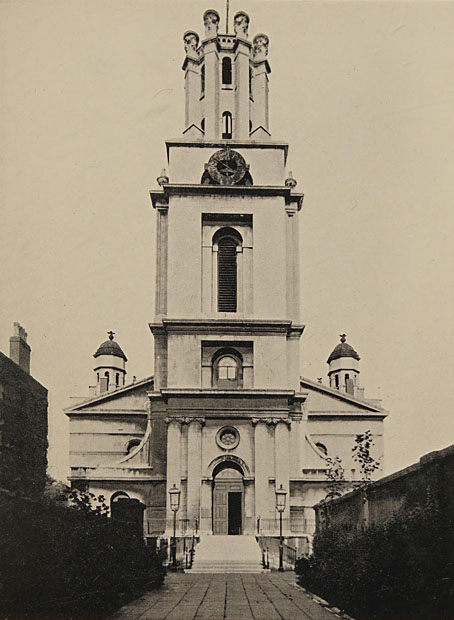
A photograph by FR Yerbury of St George’s-in-the-East, London. From Nicholas Hawksmoor (1924) by HS Goodhart-Rendel.

• “Sixty years later, the Spectacle saturates us in ways the Situationists never imagined. Online platforms structure our personal relationships; algorithms nudge us toward the platform owners’ preferred choices. ‘Intelligence’ is embedded into everything from our phones to our kitchen appliances. But back in the Sixties, the Situationists saw the physical environment of the city as an expression of the mass society created by consumerism and governed by the Spectacle, and they felt power closing in around them: ‘All space is occupied by the enemy. We are living under a permanent curfew. Not just the cops—the geometry.'” Hari Kunzru takes a psychogeographical dérive through the streets of London, encompassing the Hawksmoor churches, Iain Sinclair’s own peregrinations, Alan Moore’s Sinclair-influenced script for From Hell, Arthur Machen and more. (No mention of Alan’s ongoing Long London series, however, the first book of which is a deep dive into Machen territory.) Kunzru could be accused of being 30 years too late with his piece but for younger readers and many Americans these paths are worth retracing.

Enemies from Venus!: “The only surviving fragment of a Dutch science fiction series for children from the mid-sixties (that never was).” CGI animation by Ernst-Jan van Melle in the style of black-and-white puppet shows like Fireball XL5, Space Patrol, etc.

• “If this is a horror story, it’s a horror story about being desperate for love, and about the vulnerability, loneliness, and difficulty in understanding other people that might drive this state.” Olivia Laing on Jonathan Glazer’s second feature film, Birth.

• At the BFI: Rory Doherty selects 10 great British heist films.

• At The Daily Heller: Posting Posters about Fellini.

• RIP Sly Dunbar; James Sallis; Catherine O’Hara.

• At Dennis Cooper’s it’s Peter Whitehead’s Day.

• The Strange World of…Toumani Diabaté.

• New music: Errata by WF 98.

Birth (1971) by Keith Jarrett | Birth (1995) by Howie B | Birth (2013) by Roly Porter

The art of Wallace Smith, 1888–1937

smith14.jpg

Fantazius Mallare (1922).

One of the links this past weekend was to a lengthy essay about Ben Hecht’s censor-baiting novel, Fantazius Mallare: A Mysterious Oath (1922), a book illustrated by Hecht’s friend, Wallace Smith. I wrote a piece of my own about the novel in 2007, at a time when information about Hecht’s early fiction was much harder to find. Also hard to find was any other work by Wallace Smith, an artist of considerable accomplishment whose fine black-and-white illustration I hadn’t seen elsewhere. We now know that Smith devoted most of his energies to writing, working initially as a journalist. He later followed Hecht to Hollywood where he spent his remaining years writing novels and screenplays.

smith13.jpg

Illustration by “Vulgus” from the Chicago Literary Times.

There were a few other illustrations, however, including more ink drawings in the same flat style he used for Fantazius Mallare. Given the state of the US economy in the 1930s one can hardly blame Smith for going after the money but his painted work proves that he could easily have made a living as a book and magazine illustrator. What you see here is some of his other black-and-white art. There are no doubt more examples to be found in the back issues of the Hecht-edited Chicago Literary Times where Smith was a contributor of small illustrations under the name “Vulgus”. Also worthy of note is Smith’s facility with lettering design, something he shared with J. Allen St John who created many stylish title designs for his Edgar Rice Burroughs’ books.


The Florentine Dagger: A Novel for Amateur Detectives (1923) by Ben Hecht.

smith05.jpg

smith06.jpg

smith07.jpg

Continue reading “The art of Wallace Smith, 1888–1937”