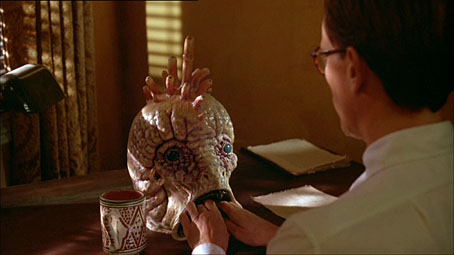
Mug-wump Specific

mugwump1.jpg

Mugwump (mŭg´ wŭmp). An Algonquin word meaning a chief; in Eliot’s Indian Bible the word “centurion” in the Acts is rendered mugwump. It is now applied in the United States to independent members of the Republican party, those who refuse to follow the dictum of a caucus, and all political Pharisees whose party vote cannot be relied on. —Brewer’s Dictionary of Phrase and Fable, 1954

Such is the usual explanation given for the origin of the word “mugwump”, a term better known today, of course, for its use in Naked Lunch, and that mainly via David Cronenberg’s feature film. Why William Burroughs came to name his sinister creatures mugwumps is something I’ve never seen an explanation for although one may well exist somewhere.
mugwump2.jpg

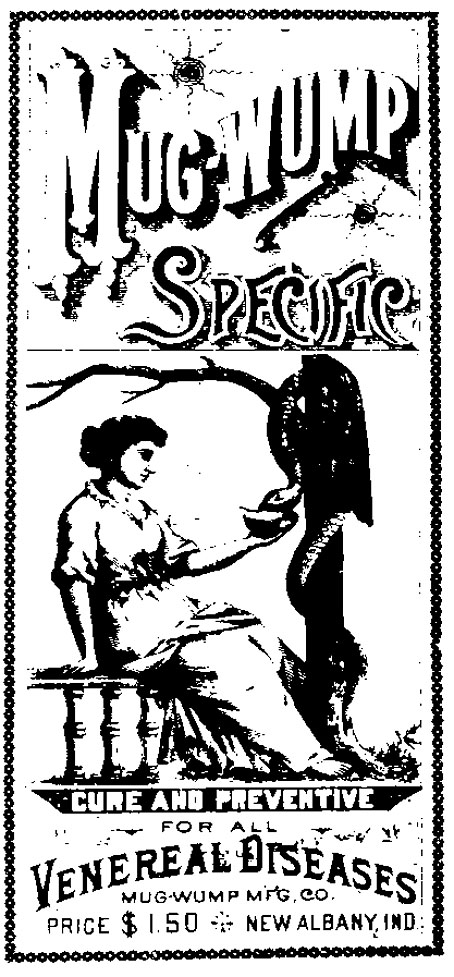
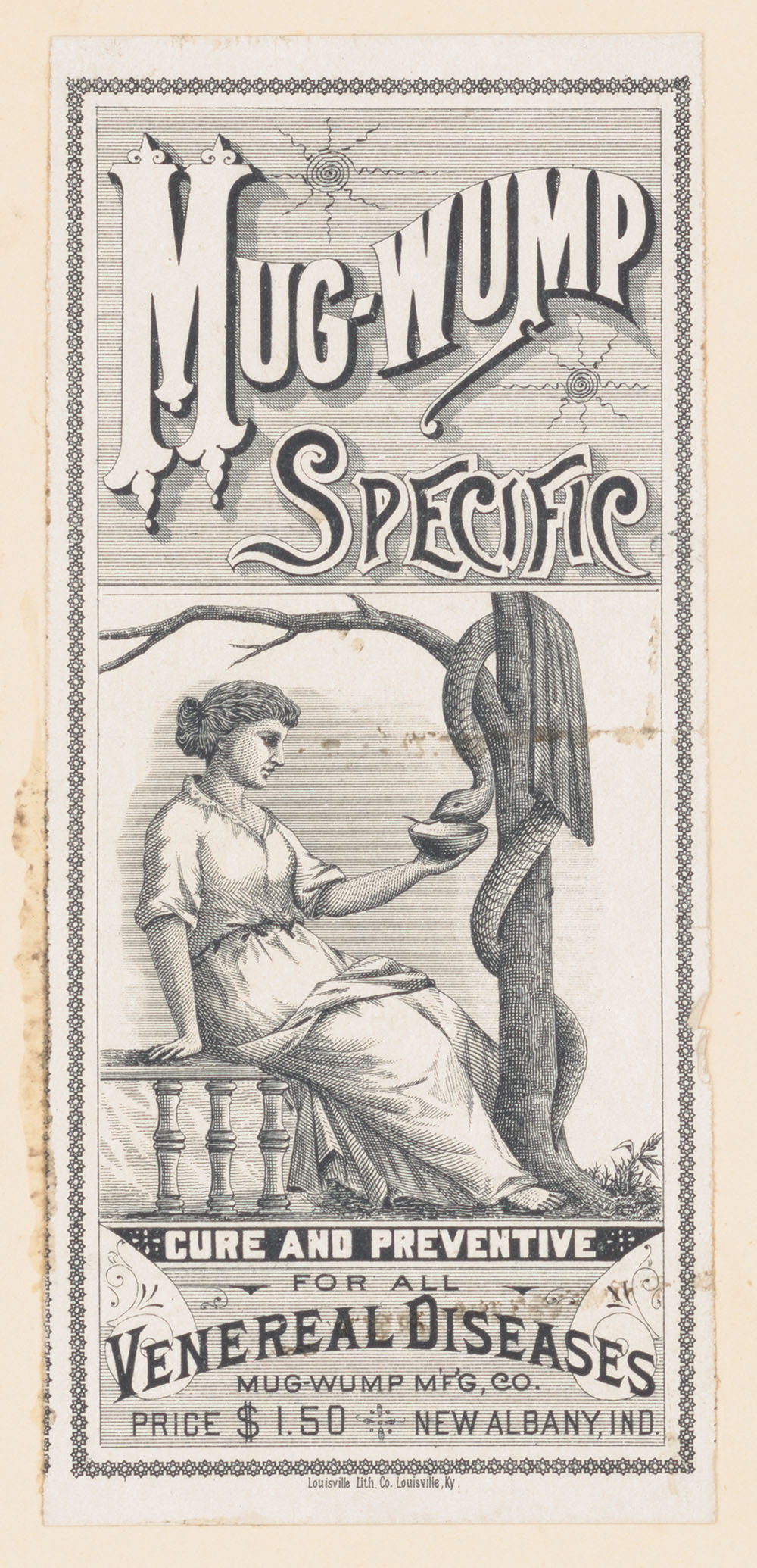
A few years ago I wrote a short post showing how the first description of the mugwumps in Naked Lunch was a kind of science-fictional rewrite of a similar passage from Junkie, a description a predatory character that a drug-user might encounter in the narcotic underworld of the 1940s. As an addendum to the post I added a crude image of a label for a 19th-century patent medicine, “Mug-wump Specific”, which had turned up at Wikipedia without any attendant information. At first sight the label seemed too good to be true in its Burroughsian combination of the mugwump name, sexual disease and—since it claims to be a cure—Dr Benway-style crank medicine. These associations were further compounded by the Freudian illustration of a woman offering a bowl to a very large snake. (The latter detail shouldn’t necessarily be taken as a reference to snake oil, however. The snake twined around a staff is a common medical symbol, derived from Asclepius, the Greek god of medicine.) Why a medicine manufacturer in Indiana should choose mugwump as the name for its alleged cure is yet another mystery, and one unlikely to be resolved. I’d guess it’s a result of the impulse that still prevails today when new products have to be named in a distinctive manner that’s both memorable and copyrightable.
mugwump3.jpg

This mass of conundrums was percolating through my mind last week as a result of which I embarked on a fairly determined search to find the image above, a first-generation printing of the medicine label affixed to a US trademark application. Ever since the cruder image had turned up at Wikipedia I’d been wondering why there wasn’t a better copy to be found anywhere. Surely something with so many cultural connections should be flying around the Tumblr labyrinth by now? I’d previously tried all the obvious sources like the image section of the Wellcome collection, where you’ll find a variety of medicine labels, as well as the product catalogues at the Internet Archive. Since Google has taken to ruining its search engine it’s become increasingly difficult to find uncommon images but I was lucky on this occasion when I found one of the trademark applications for sale at eBay. Knowing that the Library of Congress has an online archive of such things I zipped over there and immediately found the sample above. I’ve since seen the same image plastered with proprietorial watermarks at Etsy where someone is selling reproductions. This happens a lot in print-on-demand circles and at image-resellers like Alamy where ownership is claimed over material which is demonstrably in the public domain. Well, if you’re desperate to own a “Mug-wump Specific” T-shirt or poster you can save yourself some money by downloading a high-resolution tiff of the label here.

Elsewhere on { feuilleton }
The William Burroughs archive

Weekend links 754

picasso.jpg

The Remains of Minotaur in a Harlequin Costume (1936) by Pablo Picasso. Via.

• At Rarefilmm: Long Live the New Flesh: The Films of David Cronenberg, a TV documentary from 1987 which includes contributions from Martin Scorsese and Stephen King. I wrote about this one years ago but at the time the only available copy was chopped into 10-minute segments.

• Coming soon from Strange Attractor: Delinquent Elementals: A Pagan News Anthology, edited by Phil Hine & Rodney Orpheus.

• At Wormwoodiana: Mark Valentine explores the possible influence of the Sherlock Holmes stories on Arthur Machen’s early fiction.

Perhaps there was a Super-Sargasso Sea in the upper atmosphere into which were carried objects from earth—frogs, fish, leaves—and from which they later rained. Perhaps the universe was a living thing, rains of blood its bleeding. Perhaps in 1903 the earth, in its orbit about the sun, passed through the remains of a world destroyed in an interplanetary dispute, the particles falling as rains of dust and redness. Perhaps humanity was controlled. “I think we’re property”, Fort wrote. Or, perhaps not; so skeptical he could not accept even his own authority, he had given up theorizing. “We have expressions: we don’t call them explanations: we’ve discarded explanations with beliefs.”

Joshua Blu Buhs on how Charles Fort came to write The Book of the Damned

• More Alan Moore: “Magic is not this big, spooky, dark thing that’s full of nightmares,” he tells Séamas O’Reilly at the Irish Times.

High-resolution images of 14,000 woodblock illustrations and letterforms free to use at the Plantin-Moretus Museum, Antwerp.

• New music: Music For Bus Stations by Rod Modell; and Between Soil And Sky by Tarotplane.

• At Dennis Cooper’s: Spotlight on…Denton Welch In Youth is Pleasure (1945).

• At the Quietus: The Strange World of…Irena and Vojtech Havlovi.

Apollo Explorer

Pagan Love Song (1959) by Martin Denny | Pagan Lovesong (Vibeakimbo) (1982) by Virgin Prunes | Pagan Sun Temple (2022) by Hawksmoor

The Japanese Sandman, a film by Ed Buhr

js1.jpg

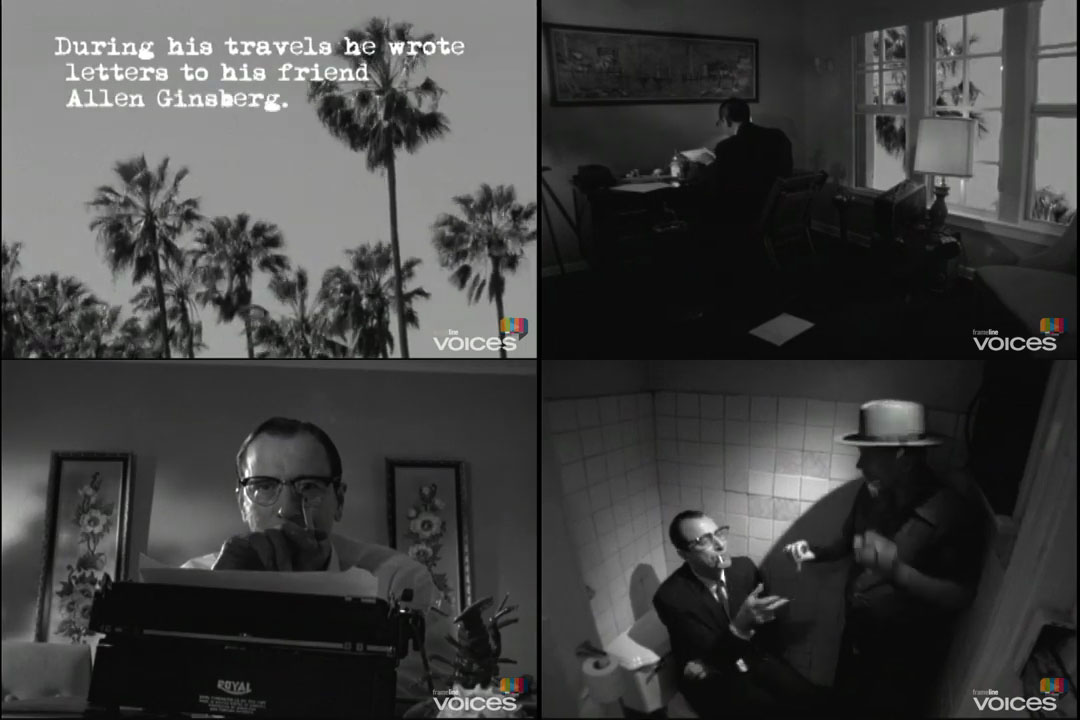
I upgraded my DVD of David Cronenberg’s Naked Lunch to blu-ray recently. The film is one of my favourites in the Cronenberg oeuvre even though its connection to the novel is minimal at best. After watching it again I was thinking (not for the first time) that one way to adapt either Naked Lunch or any of the books in the “Nova Trilogy”—The Soft Machine, The Ticket That Exploded, Nova Express—would be to commission ten or twenty very different film-makers to adapt portions of the novel in whatever manner they chose. The resulting short films could either be run in sequence or cut together to make a meta-film which, if nothing else, would be closer to the disjointed structure of William Burroughs’ early novels than the semi-biographical narrative that Cronenberg delivered .

js2.jpg

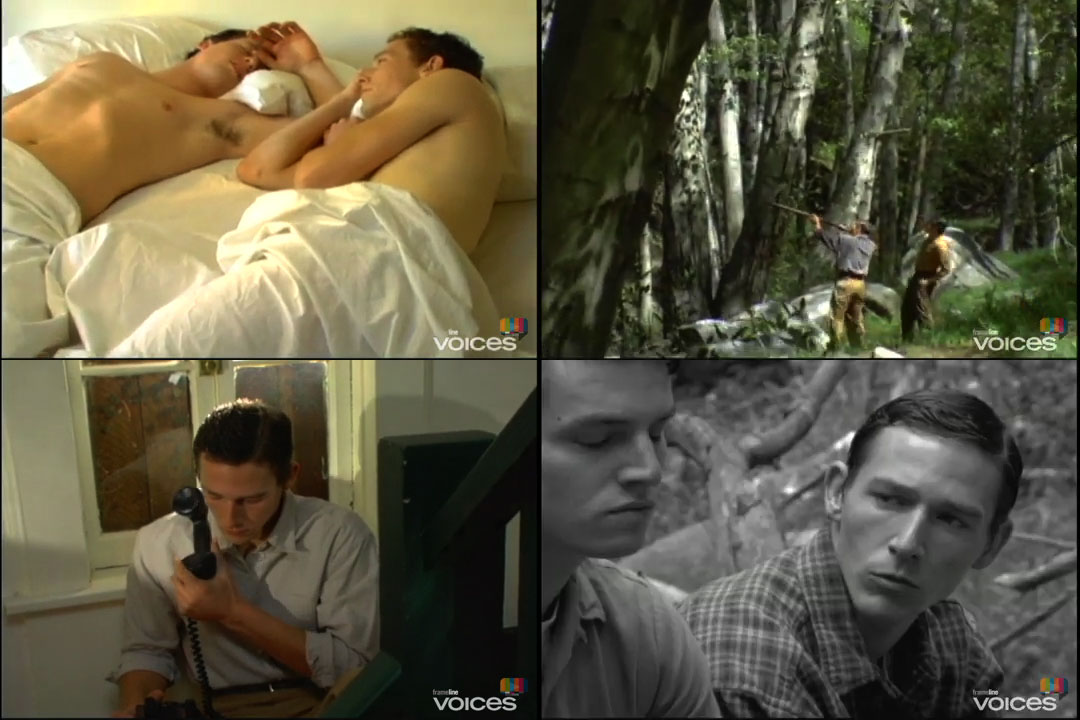
Which brings us to The Japanese Sandman, a 12-minute film made by Ed Buhr in 2008 which turned up recently on YouTube. Buhr’s short is a dramatisation of passages from the letters that Burroughs wrote to Allen Ginsberg in 1953, in which Burroughs recounts his experiences in Panama while searching for the yage vine, a plant which yields the hallucinogen known as ayahuasca. Narrator John Fleck is a decent Burroughs mimic (although the real Burroughs pronounced “Panama” with a distinct drawl at the end, more like “Panamawww”), and since Burroughs’ own words provide the text of the piece the film is closer to Burroughs’ books than many other short films. Black-and-white scenes in Panama rooms alternate with a colour sequence where Burroughs recalls a doomed love affair with a boy in the St Louis of the 1930s. It’s gratifying to see someone draw attention to an aspect of Burroughs’ writing that’s often ignored, the persistent thread of melancholy and regret for lost time/lost people which runs through so many of his novels. It’s a side of the fiction that would also have to be accounted for in any longer adaptation of Burroughs’ work.

Elsewhere on { feuilleton }
The William Burroughs archive

Weekend links 638

feherlofia.jpg

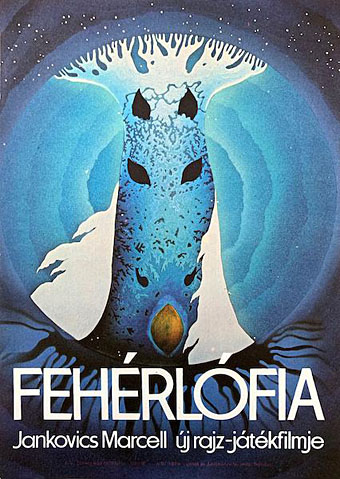
• After writing about Hungarian animator Marcell Jankovics back in January, I left a comment expressing the hope that Arrow or Eureka might give us a Region B blu-ray of Son of the White Mare (aka Fehérlófia), Jankovics’s “psychedelic” animated feature from 1982. Fast-forward nine months to Eureka’s announcement that they’ll be doing exactly this in November. Watch the trailer. The release will include some of the director’s short films plus his first feature, Johnny Corncob (1973), a historical tale presented in the “groovy” style (previously) popularised by Yellow Submarine. If idle wishes can be granted so easily then I’ll hope again that Eureka might do the same for René Laloux’s second and third animated features, the Moebius-designed Time Masters (1982) (made in the same studio as Son of the White Mare) and the Caza-designed Gandahar (1987). Fingers crossed.

• “I don’t think anybody copies me, but Harmony Korine, Todd Solondz, Bruno Dumont, Gaspar Noé, I like those kinds of directors. They’re sometimes not funny at all. They’re very serious and eerily melodramatic. I just like movies that surprise me.” John Waters (yet again) talking to Conor Williams about films, writing and a prayer for Pasolini.

• “There is something profoundly haunting about a master artist’s last painting left unfinished upon its easel…” Kevin Dann on The Mermaid (1910) by Howard Pyle.

• At Bandcamp: Navigating the Nurse With Wound List: A Gateway to Far-Flung Sounds.

• “Juicy With Meaning”: Alex Denney chooses five essential films by David Cronenberg.

• Mix of the week: Discovering 1970s jazz fusion with Kerri Chandler.

• Coming soon from Strange Attractor: Purgatory by Ken Hollings.

• Steven Heller’s font(s) of the month: Farandole & Lustik.

Dennis Cooper’s favourite albums.

• RIP Peter Straub.

White Horses (1968) by Jacky | Five White Horses (1968) by Sun Dragon | Ride A White Horse (2006) by Goldfrapp

Weekend links 481

gaussot.jpg

L’Hamestoque (1977) by Christine Gaussot.

• Another announcement from Strange Attractor Press: Of Mud & Flame: A Penda’s Fen Sourcebook edited by Matthew Harle and James Machin will be published at the end of October. Among the contents will be the screenplay of David Rudkin’s cult television play, an item that’s always been impossible to find in print.

• A trailer for Journey to the Beginning of Time (1955), another semi-animated fantasy film by Karel Zeman which will released on disc next month by Second Run.

• “There was craziness in getting lost and dizzy.” Stereolab choose favourite songs from their back catalogue.

E=MC² (1976), an album of spacey jazz-electronica by Teddy Lasry which has never been reissued.

• “Why do so many book covers look the same? Blame Getty Images,” says Cory Matteson.

• Mix of the week: The Ephemeral Man’s Teapot by The Ephemeral Man.

Masataka Nakano has been photographing a deserted Tokyo for almost 30 years.

• Beyond the bounds of depravity: an oral history of David Cronenberg’s Crash.

Woodblocks in Wonderland: The Japanese Fairy Tale Series.

• A new novel by M. John Harrison is always a good thing.

Hamid Drake‘s favourite music.

Warm Leatherette (1980) by Grace Jones | Crash (1980) by Tuxedomoon | A Crash At Every Speed (1994) by Disco Inferno