Weekend links 186

mutu.jpg

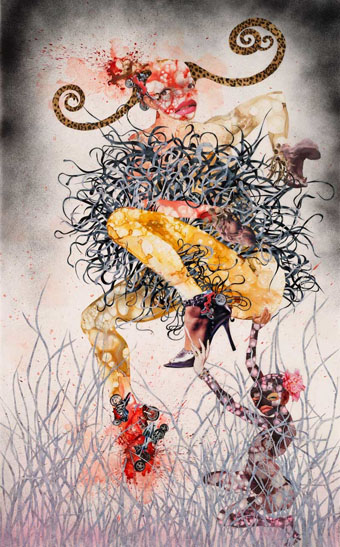
One Hundred Lavish Months of Bushwhack (2004) by Wangechi Mutu.

I wouldn’t be so bold as to call Benjamin Noys’ contribution to the recent The Weird conference at the University of London a highlight, but it was a surprise to find Lord Horror in general and the Reverbstorm book in particular being discussed alongside so many noteworthy offerings. Noys’ piece, Full Spectrum Offence: Savoy’s Neo-Weird, is now available to read online, a very perceptive examination of the tensions between the Old Weird and the New.

• Le Transperceneige is a multi-volume bande dessinée of post-apocalypse science fiction by Jacques Lob & Jean-Marc Rochette. Snowpiercer is a film adaptation by Korean director Bong Joon-ho featuring John Hurt, Jamie Bell, Chris Evans and Tilda Swinton. Anne Billson calls the director’s cut an “eccentric masterpiece” so it’s dismaying to learn that the film is in danger of being hacked about by the usual rabble of unsympathetic Hollywood distributors.

• This month marks the 100th anniversary of the publication of Proust’s À la recherche du temps perdu. Public Domain Review posted some of the paintings mentioned in Swann’s Way (or The Way by Swann’s as the latest translation so inelegantly has it).

How the Paris World’s Fair brought Art Nouveau to the Masses in 1900: a huge picture post about my favourite exposition.

• Mix of the week: “Sport of Kings” Mix by Ricardo Donoso. Related: Paul Purgas on five favourite records.

Ernst Reichl: the man who designed Ulysses. Related: Hear all of Finnegans Wake read aloud over 35 hours.

• “Why does Alain de Botton want us to kill our young?” A splendid rant by Sam Kriss.

• Love’s Secret Ascension: Peter Bebergal on Coil, Coltrane & the 70th birthday of LSD.

• Malicious Damage: Ilsa Colsell on the secret art of Joe Orton & Kenneth Halliwell.

• Just Say No to the Bad Sex Award, or the BS Award as Tom Pollock calls it.

• Lauren O’Neal’s ongoing PJ Harvey Tuesdays: One, Two, Three and Four.

Neville Brody on the changing face of graphic design.

A Brief History of the London Necropolis Railway.

Des Hommes et des Chatons: a Tumblr.

• At Pinterest: Androgyny

• Virgin Prunes: Pagan Lovesong (vibeakimbo) (1982) | Caucasian Walk (1982) | Walls Of Jericho (live at The Haçienda, Manchester, 1983; I’m in that audience somewhere)

Weekend links 182

iwami.jpg

Mirror of Water (1981) by Reika Iwami.

• The week in comics: Paul Gravett interviews Enki Bilal. | Paul Kirchner’s wordless and inventively surreal strip, The Bus, was republished in France last year but it’s been out-of-print for years everywhere else. Read it online here. | Bill Watterson has made the entire run of Calvin and Hobbes available for free.

• “…seek and learn to recognize who and what, in the midst of the inferno, are not inferno, then make them endure, give them space.” Leland de la Durantaye reviews Italo Calvino: Letters 1941–1985.

• Artist Charles Ross says “My interest in science is related to how mysterious it is.” Ross Andersen visited Ross’s Star Axis, “a masterpiece forty years in the making”.

There is a satirical intent at work here, as well as mordant humour, a potent mix that reminds one more of the absurdist fictions of the French jazz musician Boris Vian than of anything in the SF canon. Science fiction is not central in Harrison’s work – not even as a target of his sharp wit – and it is a mistake to regard him as being chiefly interested in demolishing a genre that is only one of several he has mastered.

John Gray on M. John Harrison’s Kefahuchi Tract trilogy. This week Harrison posted a new piece of fiction on his blog.

• Mixes of the week: Secret Thirteen Mix 091 by Sugai Ken, and Bride of the Abominable Marshman, an early Halloween mix by Hackneymarshman.

• Clive Hicks-Jenkins on Schandmasken (masks of shame), and the clay visage of Paul Wegener’s Golem.

• A version of Kraftwerk’s Trans Europe Express by Chicago band Disappears.

Postcards to the Curious: MR James-themed artwork by Alisdair Wood.

Clive Barker: Why I Once Gave Up Horror Movies Entirely.

• Artist Melinda Gebbie at Phantasmaphile.

Fragment, a new video from Emptyset.

38 photos of airships through the ages.

• This Much I Know: Kenneth Anger.

• Trans Europe Express (2000) by Señor Coconut Y Su Conjunto | Trans Europe Express (2007) by Receptors | Trans Europe Express (2012) by Daniel Mantey

Weekend links 181

eye.jpg

Cover of Eye no. 86 vol. 22, 2013, a type special. Detail from 1970s Letratone brochure, overprinted by character from the Marsh stencil alphabet.

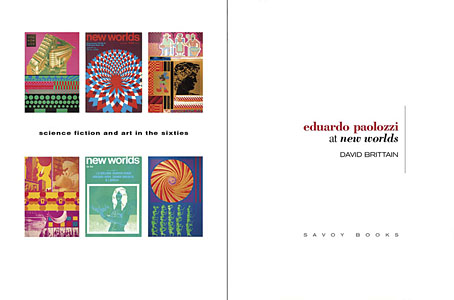
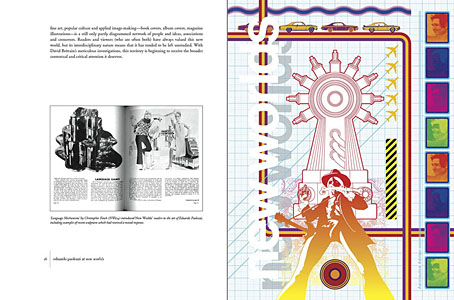
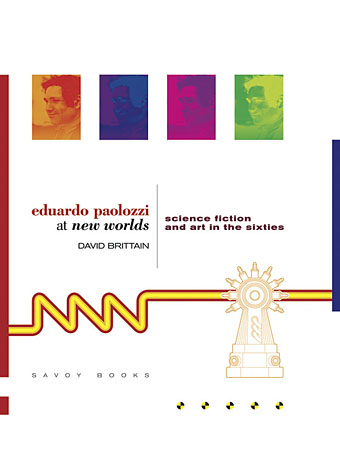
The new edition of Eye magazine includes my essay on the evolution and aesthetics of steampunk. In the same issue Rick Poynor’s feature on the prints of Eduardo Paolozzi mentions a forthcoming book by David Brittain about the artist’s associations with New Worlds magazine in the 1960s. I designed the Paolozzi volume which will be published by Savoy Books in a few weeks’ time. More about that later.

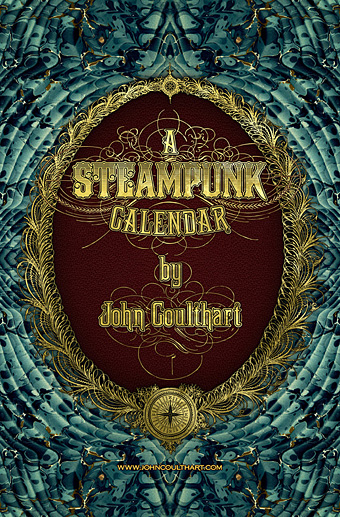
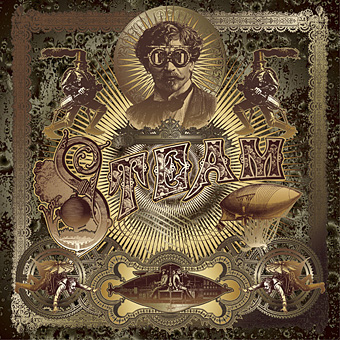
Still on steampunk, KW Jeter notes its popularity among the younger crowd: “If some old fogey peering through his smudged bifocals can’t discern the cool and important stuff going on, such as the tsunami of anarchic multiculturalists using the steampunk scalpel to dissect the past and reassemble it like a two-dollar watch, that’s his loss; the readers are picking up on it.”

• Musicians interviewed: Rhys Chatham: “The reason I got into trumpet playing is because I wanted to play like [Black Sabbath guitarist] Tony Iommi.” | James Ginzburg: “One of the strongest feelings I had was that the act of sitting down and making dance music was like playing a video game…I felt disconnected from it…” | Julia Holter: “I love working with the voice, I love mystery, I love creating atmosphere.” | Roly Porter: “I sit at home and listen to folk and blues from before I was born. I listen to a lot of dub and reggae and classical music. These are all genres which to me seem really interlinked and influential.”

• At Kickstarter: From the director of Lovecraft: Fear of the Unknown, a short film entitled Do Not Disturb. “Two men are forced to share a motel room on a dark & stormy night. One man’s snoring starts to summon creatures into our world.”

The Notting Hill of the 1960s – with Moorcock’s marriage, children, celebrity, the editorship of New Worlds, the collaboration with JG Ballard, Brian Aldiss and the rest – became the proving ground for the shape-shifting Carnaby Street dandy Jerry Cornelius. But all the numerous Moorcock characters, those undying and born-again clones, have a part to play in his “multiverse”, a concept he developed alongside the earlier model suggested by John Cowper Powys. Moorcock’s astonishing catalogue of speculative fiction works to prove his key equation, which is based on meta-temporal parallel worlds drawn from HG Wells, Chaos Theory, String Theory, the Edgar Rice Burroughs of John Carter of Mars and the William Burroughs of Nova Express and the “Interzone”. Publishing all the strange rafts and pods of Moorcock’s prodigious science fiction and fantasy output, as Gollancz have done, is like assembling a ghost fleet, under the joint command of Dr John Dee and Admiral John Ford, with which to invade that uncertain continent we know as the past.

Iain Sinclair on the new series of Michael Moorcock editions from Gollancz.

• “What does science tell us about the relative dangers of drugs? Alcohol is by far the No. 1 most dangerous drug.” Some graphs from the American Enterprise Institute who no one would accuse of being a bunch of stoners.

• “I loved Eudora Welty, Flannery O’Connor, Katherine Ann Porter, Carson McCullers. There was a feeling that women could write about the freakish, the marginal.” Alice Munro at The Paris Review.

Elena Smith on Literary Parkour: @Horse_ebooks, Jonathan Franzen, and the Rise of Twitter Fiction. Related: Boris Kachka has a list of Everything Jonathan Franzen currently hates.

• Mixes of the week: Joseph Burnett compiles Adventures in Modern Jazz while Kier-La Janisse puts together a British Horror mix for Fangoria.

Explore the planet Mars, one giant image at a time.

• At BibliOdyssey: The Turner’s Manual.

A Crimson Grail (for 400 Electric Guitars) (2007) by Rhys Chatham | Arrakis (2011) by Roly Porter | City Appearing (2013) by Julia Holter | Debris (2013) by Faint Wild Light

Weekend links 180

andrew.jpg

One of Jonathan Andrew‘s photos of coastal bunkers and concrete defences from the Second World War. In 2006 JG Ballard looked at the way these structures embody the functional nature of Modernist architecture.

• “Utamaro, whose prints of famous courtesans were regarded as the very models of sober beauty by 19th-century Western collectors, in fact produced more Shunga books and albums than non-erotic works.” Adrian Hamilton on the Shunga: Sex and Pleasure in Japanese Art exhibition.

• “…in Samoa, as in many traditional cultures around the world, androphilic males occupy a special transgendered category.” Alice Dreger on gay male couples and evolution.

• Robert Fuest’s film of Michael Moorcock’s first Jerry Cornelius novel, The Final Programme (1973), is out on (Region 2) DVD this month.

Masked by reticence and cloaked in tweeds, [Herbert] Read was the unexpectedly ardent and frighteningly prolific champion of nearly everything that was radical in the first half of the twentieth century: Imagism, Surrealism, abstraction, the Bauhaus, Marxism, anarchism, Freud and Jung, progressive education, Gandhian nonviolent resistance. Though now somewhat dimly remembered, he was, for decades, the Victoria Station of the arts, England’s primary explainer of the modern.

Eliot Weinberger introduces Herbert Read’s strange fantasy novel, The Green Child (1935).

• KW Jeter’s steampunk novel Fiendish Schemes is published (with my cover art) by Tor on the 15th. There’s an extract here.

• Mix of the week: An early Halloween mix (and interview) from Joseph Stannard of The Outer Church.

• At Dangerous Minds: Codex Seraphinianus: A New Edition of the Strangest Book in the World.

A trailer for the forthcoming Blu-ray release of Murnau’s Nosferatu: A Symphony of Horror.

• Kenneth Halliwell: lover, killer… artist? Philip Hoare on the collages of Joe Orton’s partner.

• Clive Hicks-Jenkins looks back at Cocteau’s La Belle et la Bête here, here and here.

Anastasia Ivanova‘s photo portraits of lesbian couples in Russia.

Christopher Fox on electronic music’s sound of futures past.

• At Strange Flowers: Melchior Lechter’s book designs.

Vaughan Oliver‘s favourite 4AD album covers.

Swinging Sixties Japanese film posters.

John Foxx’s favourite albums

Beauty And The Beast (1977) by David Bowie | Slow Motion (1978) by Ultravox | I Am The Green Child (2000) by Coil

Paris Qui Dort by René Clair

paris.jpg

A half-hour comic science fiction film made the same year as Clair’s much more experimental Entr’acte (1924):

The young keeper of the Eiffel Tower awakes one morning and, from his vantage point at the top of the tower, finds that the whole of Paris is at a standstill. On descending the tower, he finds the streets are filled with stationary cars and motionless people. He meets up with a group of tourists who have just landed in a biplane at Paris airport. Unable to explain what has happened, they waste no time profiting from their situation – acquiring new clothes, jewels and wads of bank notes. But they soon grow tired of their new-found freedom and return, bored, to the Eiffel Tower. There, they receive a radio message from a girl, asking to be rescued. She claims to know what has happened to Paris…

Scenes of empty cities are always fun although the effect here is rather hit-and-miss when you glimpse distant cars moving down the streets. The film has French intertitles but the copy at Ubuweb includes a translation. The idea of using temporary stasis to commit robberies reminds me of Arthur C Clarke’s short story All the Time in the World in which someone uses a time accelerator to plunder the British Museum. The story was filmed for American TV in 1952, and may be watched here.

Previously on { feuilleton }
Entr’acte by René Clair