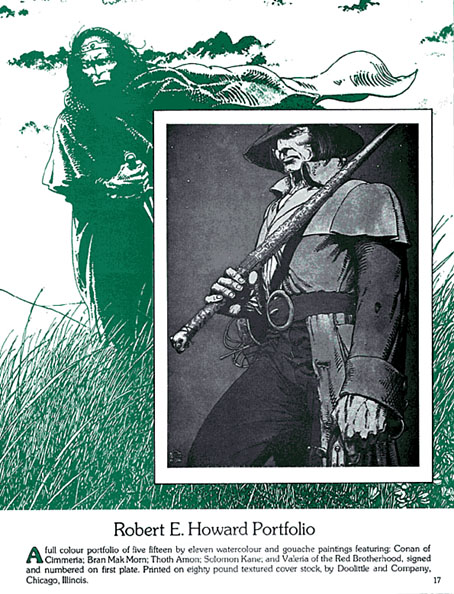
Since Barry Windsor-Smith was absent from the previous post (or there in spirit via the pages of The Studio) I thought I’d post a few of his prints from the mid-70s. As I said in the Snaps piece, Smith and co. set up The Studio in order to concentrate on art that was creator-owned and free of the constraints they were forced to work under in the comics field. This didn’t mean that they completely abandoned the subjects which had made them popular artists. Barry Smith’s work for his own Gorblimey Press oscillated between pastiches of the 19th-century artists he admired—mainly Alphonse Mucha and the Pre-Raphaelites—and characters from the stories of Robert E. Howard, Conan in particular.
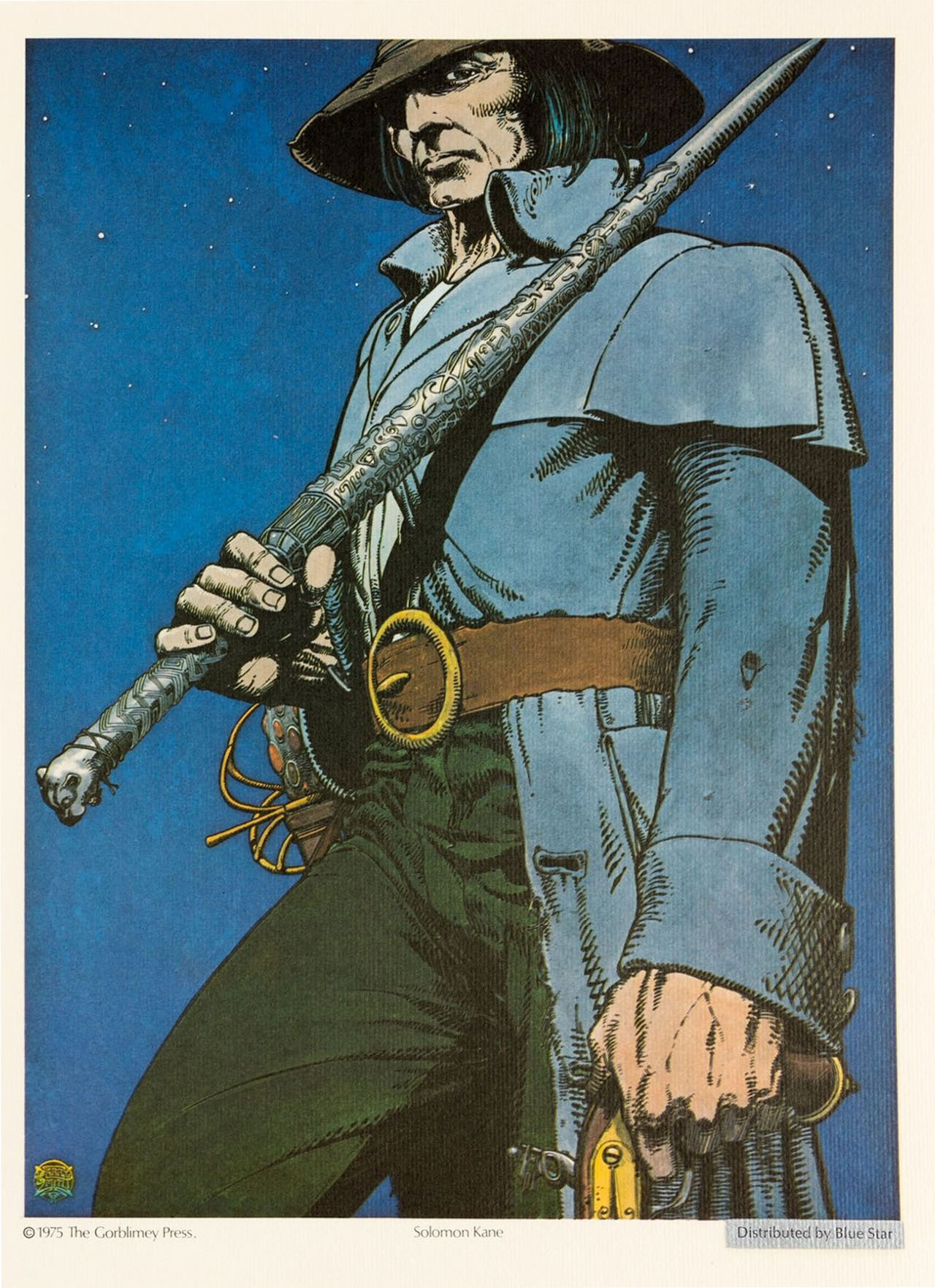
Solomon Kane (1975).
Smith’s work with Roy Thomas on the first run of Marvel’s Conan comics had given him access to a large audience of comic readers. Not all of these would have wanted to buy (or been able to afford) the Gorblimey Press run of signed and numbered prints but it made sense for Smith to offer some continuation with the previous phase of his career. My animus towards the Marvel comics format means I have little affection for the Smith and Thomas Conan comics. But it’s interesting watching Smith’s work there evolve within the restrictions of the production-line system when you know he’ll end up presenting a very different version of Conan and Howard’s other characters in his prints.
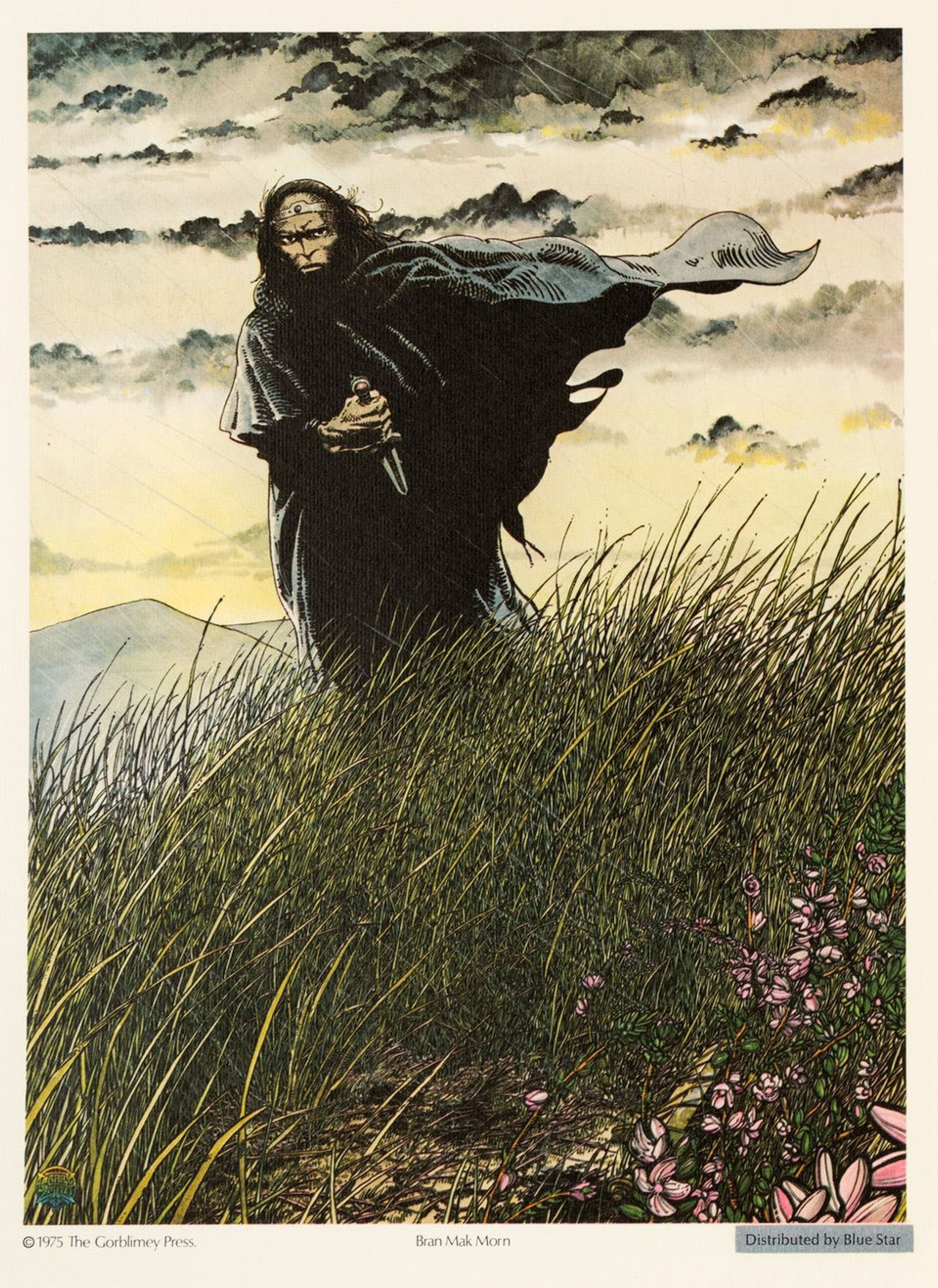
Bran Mak Morn (1975).
Most of the pieces here are from the Gorblimey Robert E. Howard portfolio, a collection of five prints presenting portraits of characters from Howard’s stories. Smith included three of these—Solomon Kane, Bran Mak Morn and Thoth Amon—in his section of The Studio.
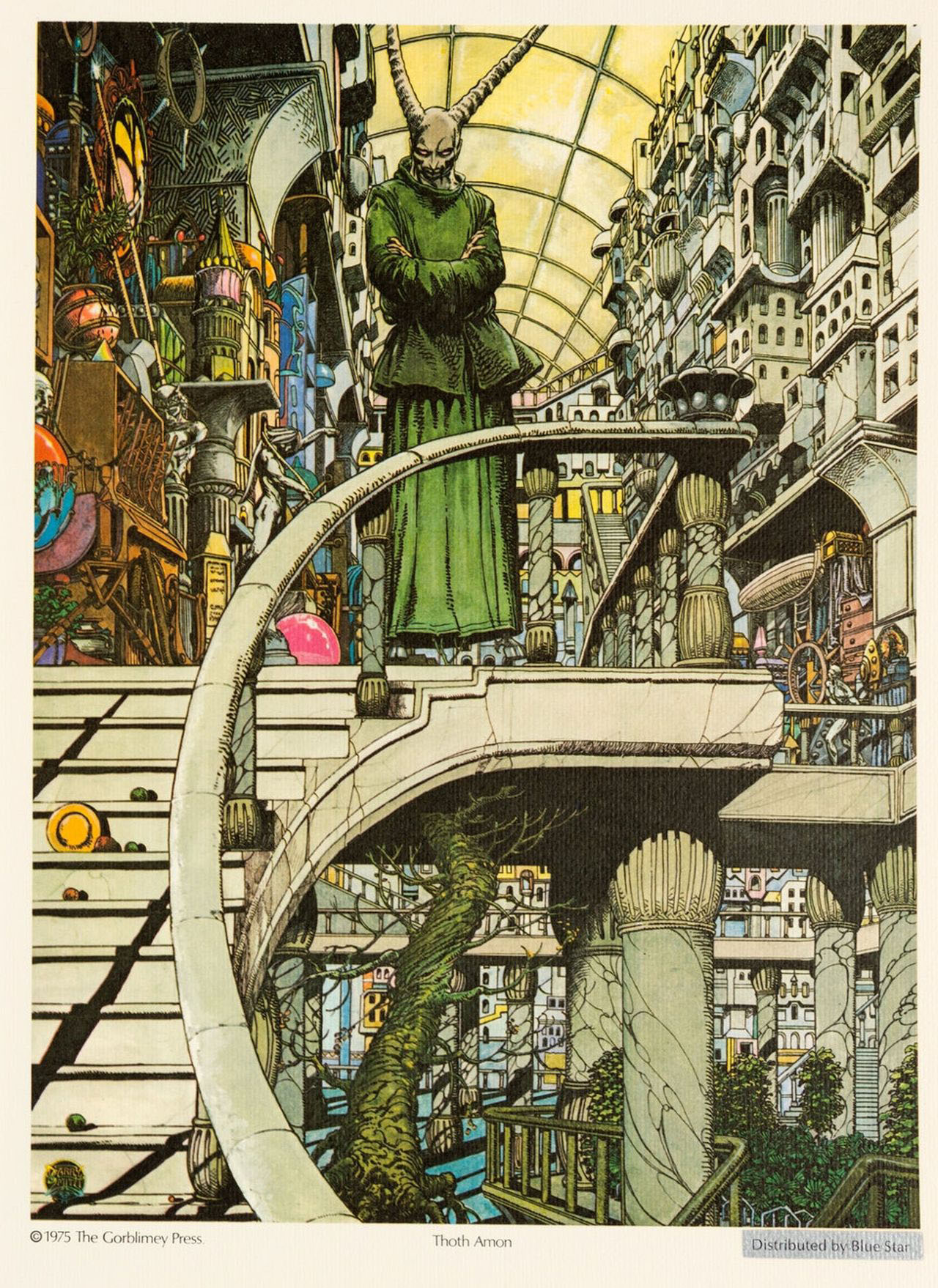
Thoth Amon (1975).
I’ve liked his portrait of the Stygian sorcerer Thoth Amon ever since I first saw it in PR Garriock’s Masters of Comic Book Art (1978), and it’s still my favourite of this quintet. Thoth Amon is a very minor character in the original Conan stories but Roy Thomas built him up for the comics into one of the barbarian’s principal enemies. One thing I enjoy about Smith’s portrait is the incongruous combination of a wizard from an ancient pre-industrial world in a setting which doesn’t seem of his time at all. Maybe this curious architectural space is a sorcerous illusion? And that’s before you start exploring all the tiny details in the background clutter which seem more suited to a Victorian junk shop than a wizard’s lair. Over on the far right there’s even a tiny picture on the wall that’s another Gorblimey print, the octagonal Pandora.
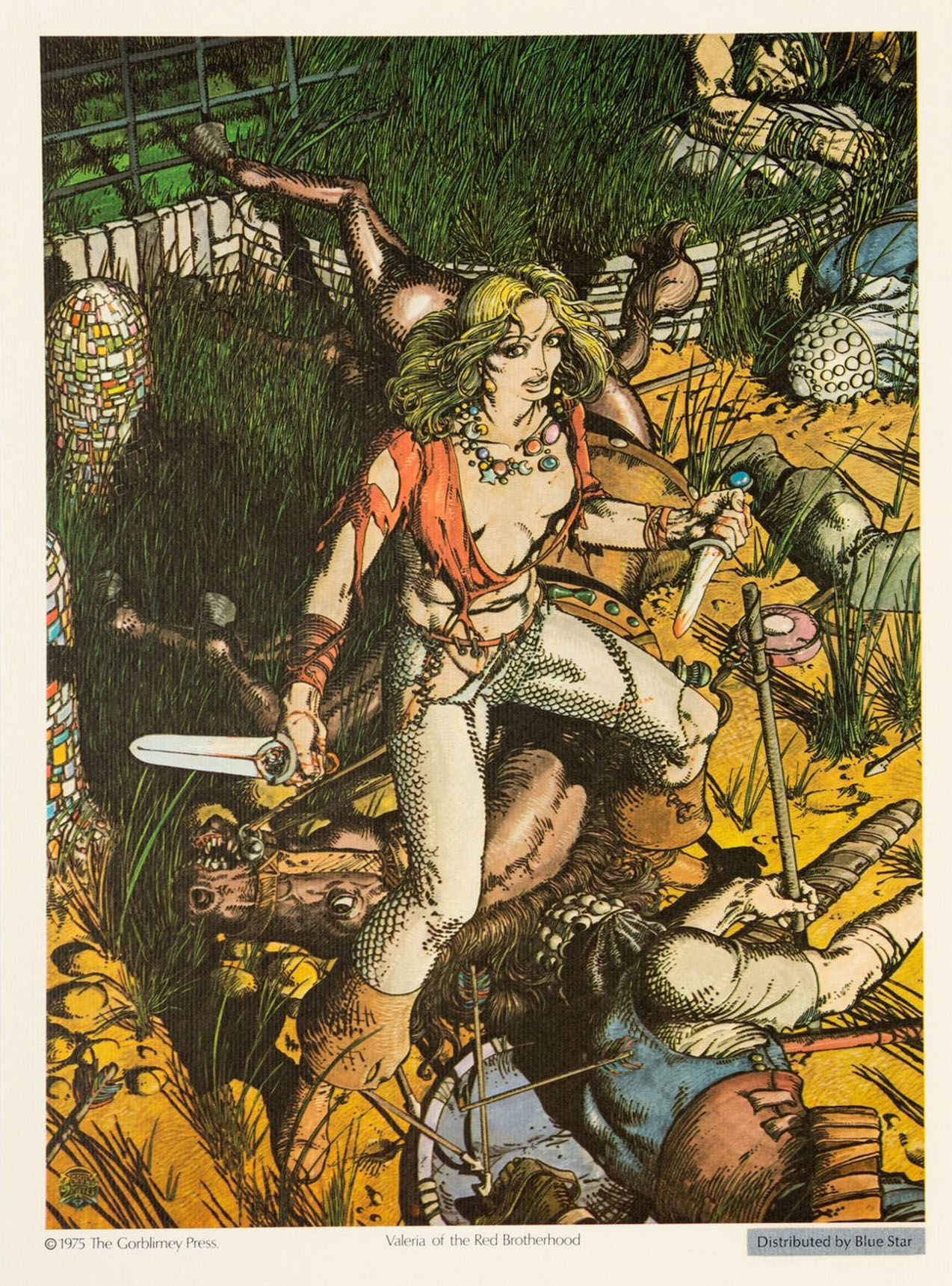
Valeria of the Red Brotherhood (1975).
Less successful than these are the portraits of Valeria, the Aquilonian mercenary, and Conan himself. In The Studio Smith admits that his picture of a ghostly figure walking along a forest path was mainly an exercise in drawing Constable-like trees; the ghost was there to turn the trees into a sellable print. I suspect the same might be true of some of these prints.
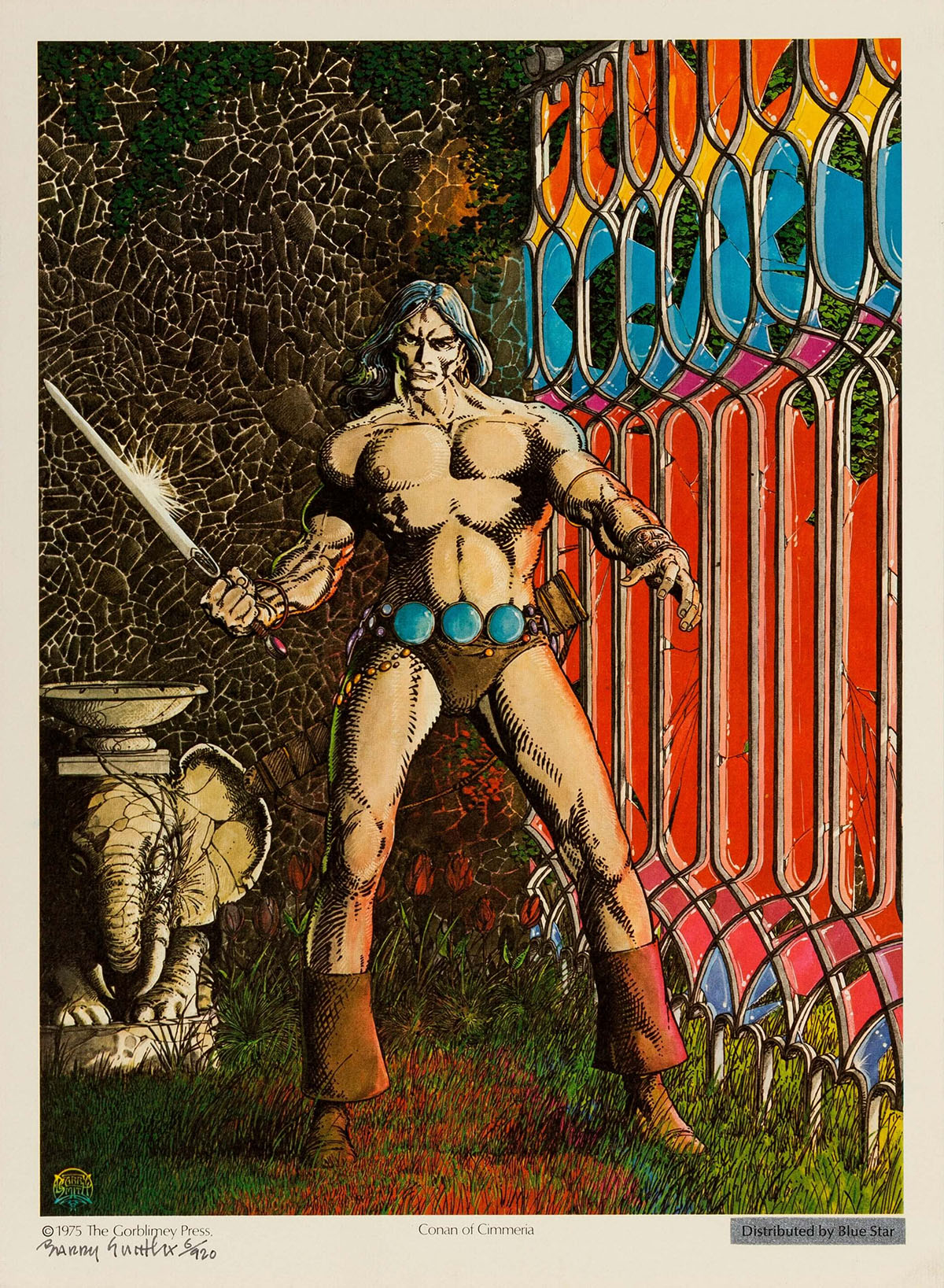
Conan of Cimmeria (1975).
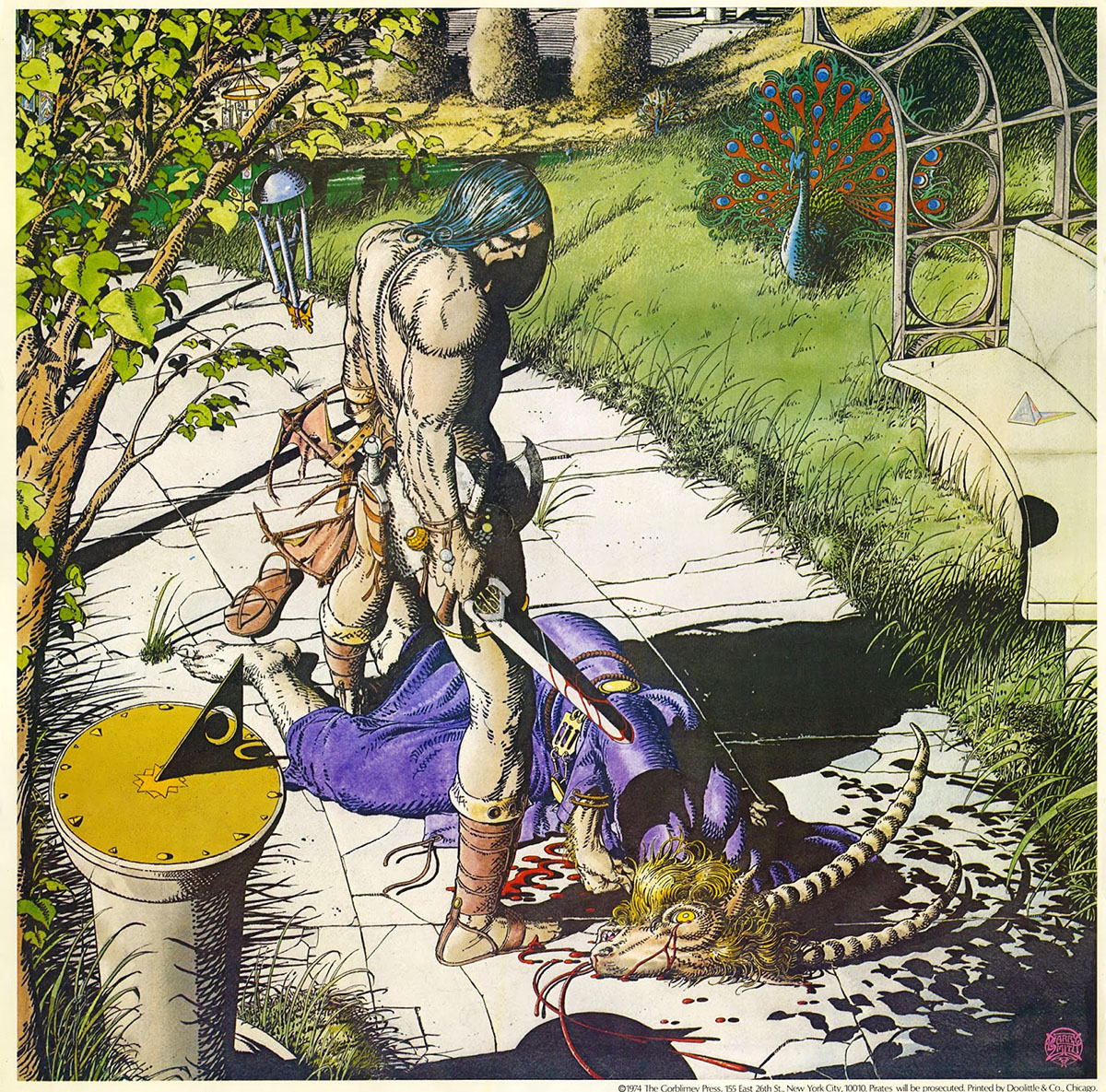
The Ram and the Peacock (1974).
Both The Studio and Masters of Comic Book Art include more Howard-related art from this period, with The Studio featuring this pair of prints with Conan-like central figures. Both are enigmatic pieces freighted with symbols for the viewer to decode; in both of them the warrior figure could easily have been replaced with a very different character but, as with the ghost and the Constable trees, the Conan connection was there to sell the symbolic scene. Smith wasn’t above biting the hand that had previously fed him, however. His attitude to the world of comics in the 1970s may be gauged by another incongruous detail in the bottom-right of The Enchantment where a crumpled Conan comic is lying on the stones.
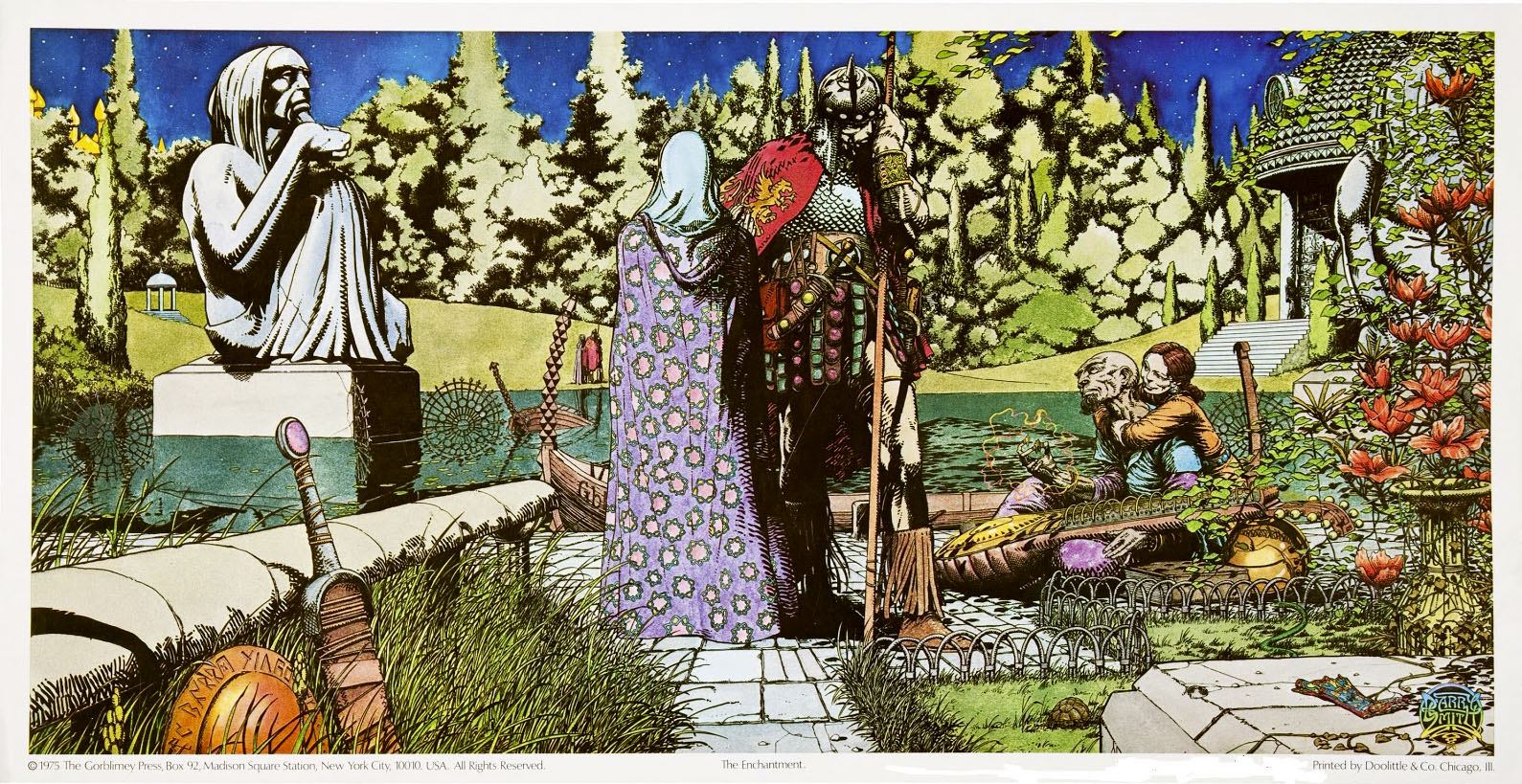
The Enchantment (1975).
Elsewhere on { feuilleton }
• The illustrators archive
Previously on { feuilleton }
• Snaps: The Studio tour, 1979
One thought on “BWS and REH”
Comments are closed.