BWS and REH

smith1.jpg

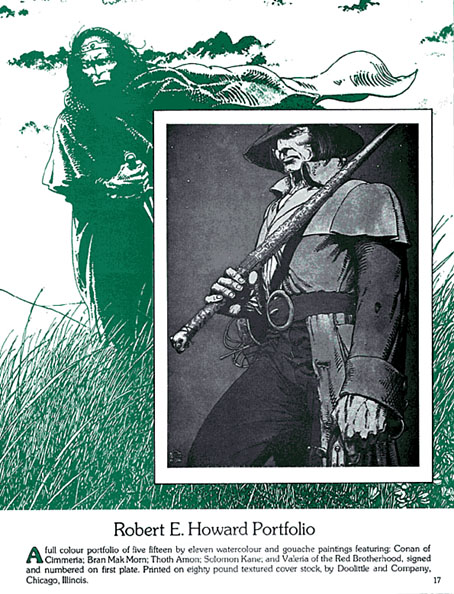
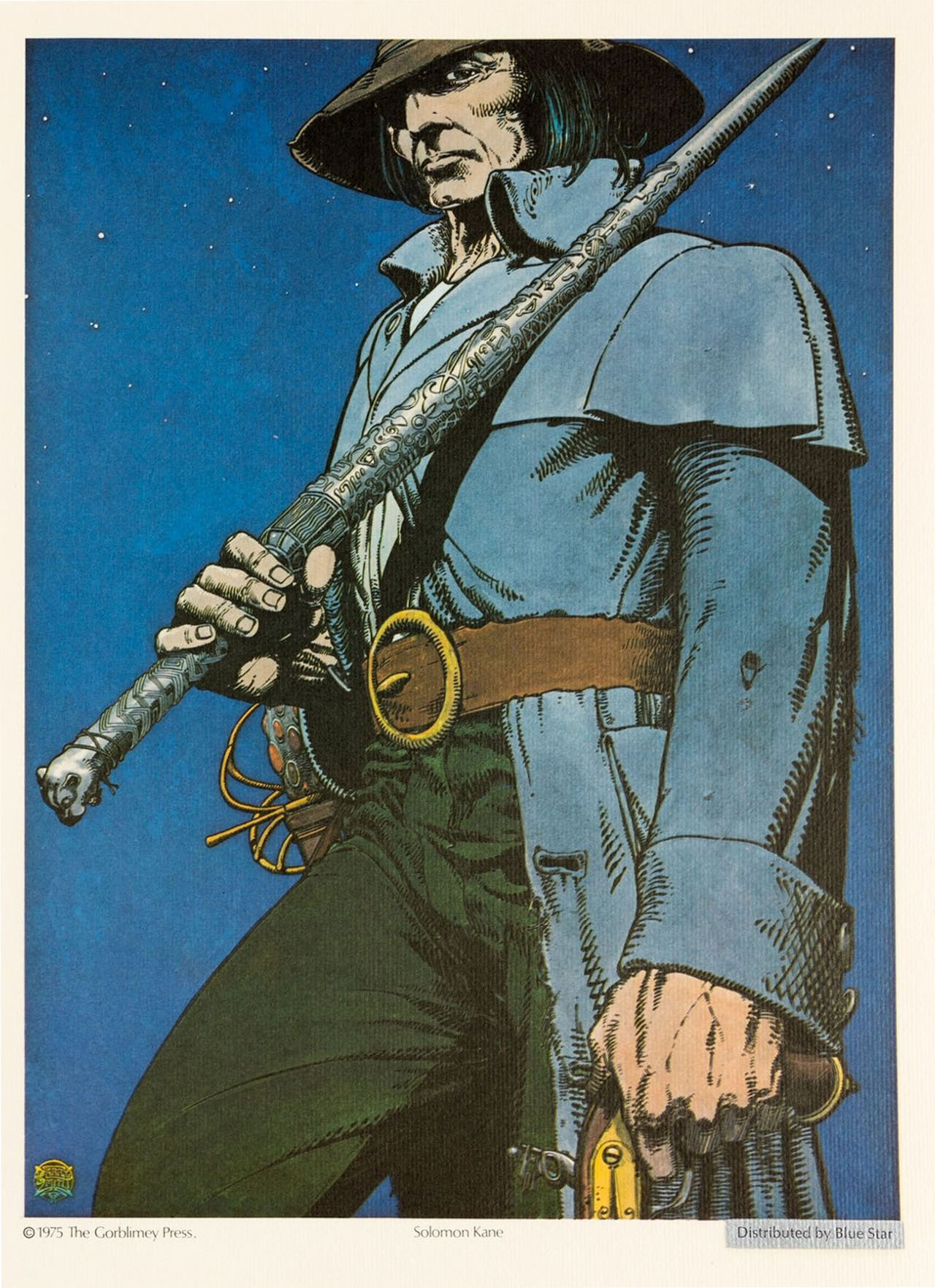
Since Barry Windsor-Smith was absent from the previous post (or there in spirit via the pages of The Studio) I thought I’d post a few of his prints from the mid-70s. As I said in the Snaps piece, Smith and co. set up The Studio in order to concentrate on art that was creator-owned and free of the constraints they were forced to work under in the comics field. This didn’t mean that they completely abandoned the subjects which had made them popular artists. Barry Smith’s work for his own Gorblimey Press oscillated between pastiches of the 19th-century artists he admired—mainly Alphonse Mucha and the Pre-Raphaelites—and characters from the stories of Robert E. Howard, Conan in particular.
smith3.jpg

Solomon Kane (1975).

Smith’s work with Roy Thomas on the first run of Marvel’s Conan comics had given him access to a large audience of comic readers. Not all of these would have wanted to buy (or been able to afford) the Gorblimey Press run of signed and numbered prints but it made sense for Smith to offer some continuation with the previous phase of his career. My animus towards the Marvel comics format means I have little affection for the Smith and Thomas Conan comics. But it’s interesting watching Smith’s work there evolve within the restrictions of the production-line system when you know he’ll end up presenting a very different version of Conan and Howard’s other characters in his prints.
smith4.jpg

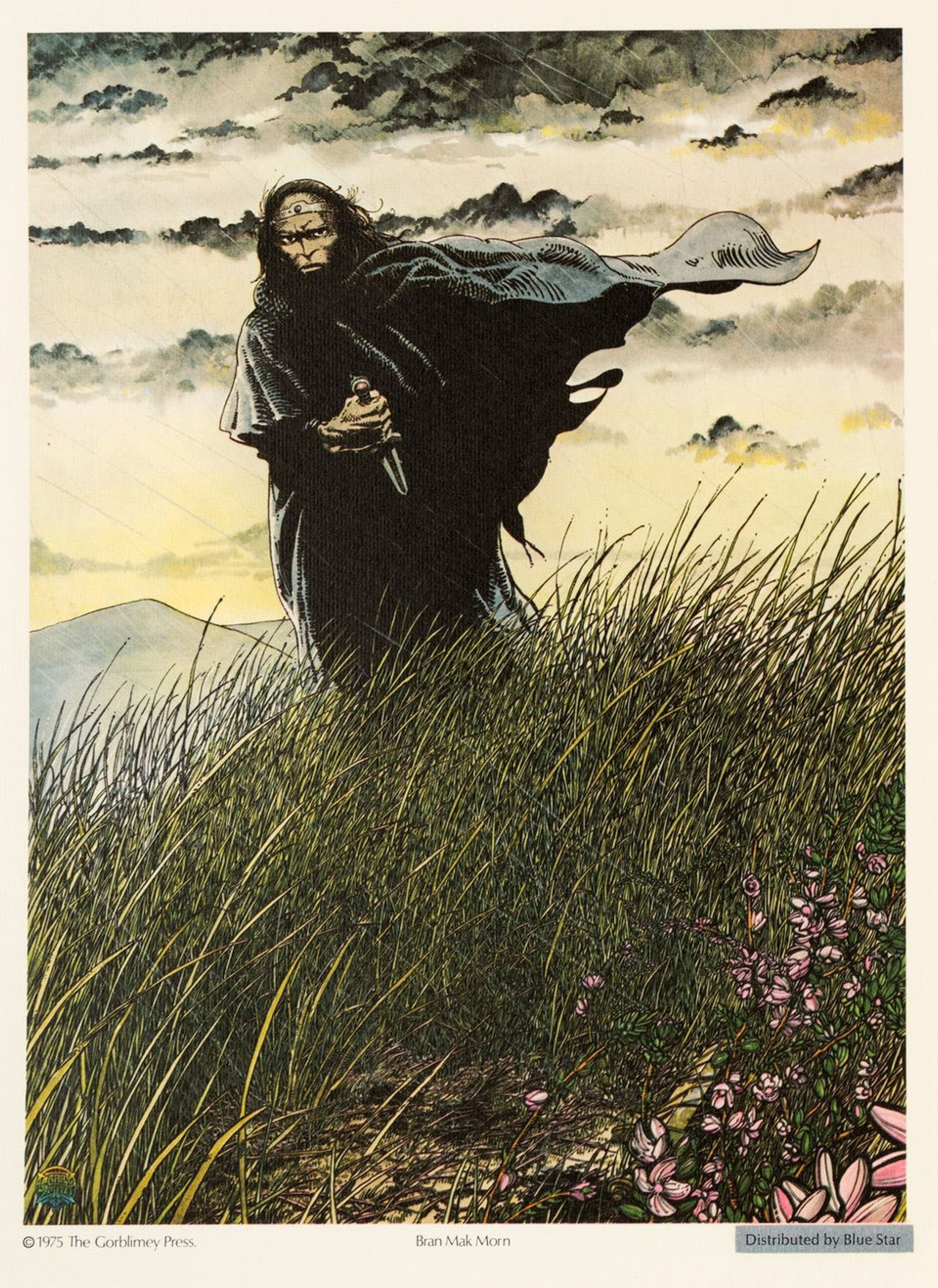
Bran Mak Morn (1975).

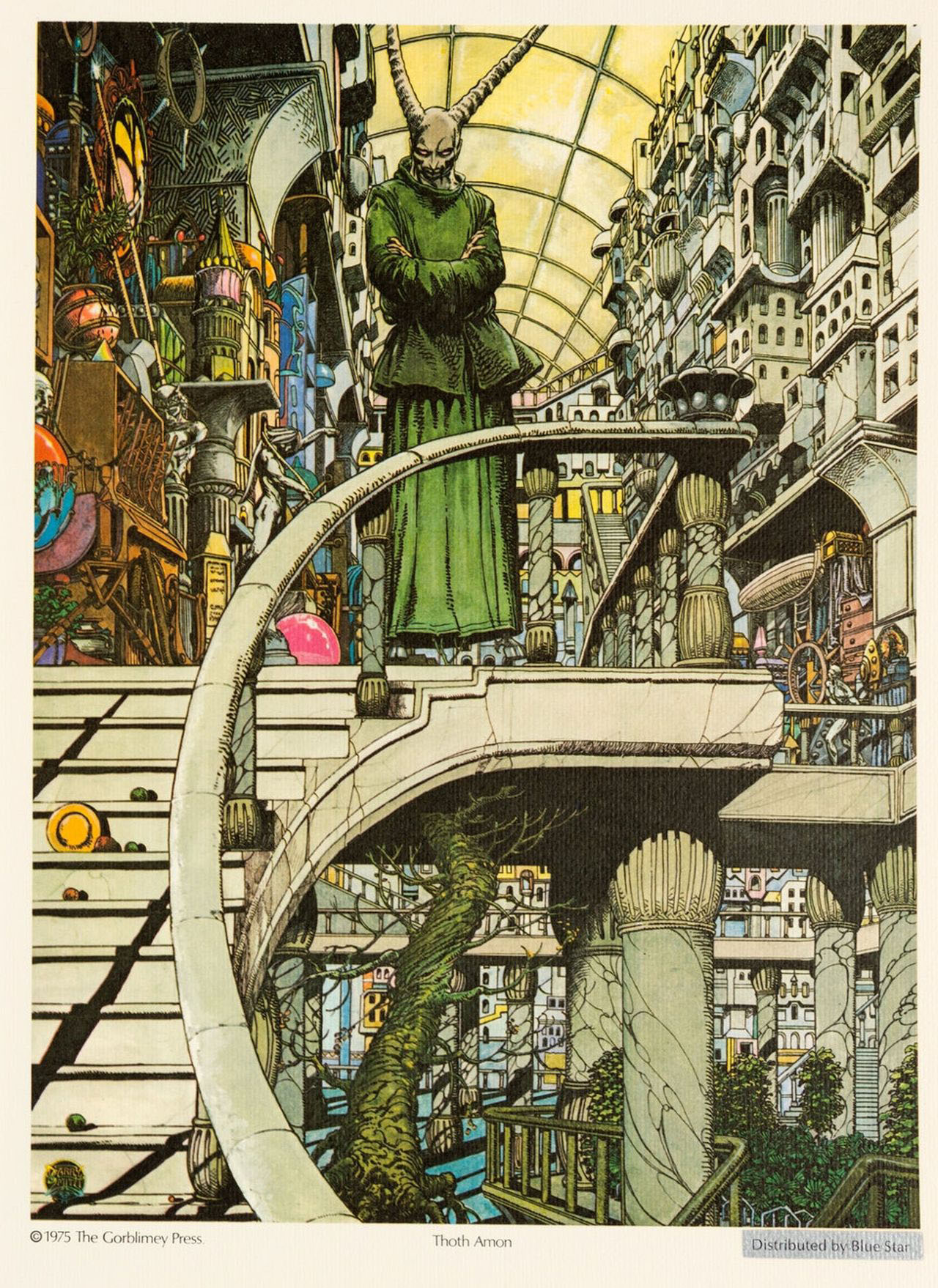
Most of the pieces here are from the Gorblimey Robert E. Howard portfolio, a collection of five prints presenting portraits of characters from Howard’s stories. Smith included three of these—Solomon Kane, Bran Mak Morn and Thoth Amon—in his section of The Studio.
smith2.jpg

Thoth Amon (1975).
Continue reading “BWS and REH”

Documents Décoratifs by Alphonse Mucha

mucha11.jpg

I’ve had a copy of the Dover edition of these plates for some time, but it’s good to find a digital copy at last, especially now I can see that Dover bleached all the subtle background tones to a solid white. The artwork looks much better in its original state. It was also a little surprising to discover that Documents Décoratifs was originally a collection of loose sheets in a portfolio, not a book as I always thought.

mucha01.jpg

The plates were Alphonse Mucha’s contribution to that small collection of publications intended to assist other designers and craftspeople in their decorative work. Mucha’s drawings break down his style into a series of isolated motifs and design elements: panels, borders, figures, flowers, lettering and other details, together with a few pages of more complete designs. He also offers several pages of suggestions for applying his Art Nouveau flourishes to jewellery, furniture and other household objects. I’ve used parts of these designs a few times in my own work, most recently in the Bumper Book of Magic. Even if you don’t have a practical use for the plates they’re all very beautiful pieces in themselves, especially the pencil drawings.

mucha03.jpg

mucha04.jpg

mucha05.jpg

Continue reading “Documents Décoratifs by Alphonse Mucha”

Les Maîtres de l’Affiche

affiche09.jpg

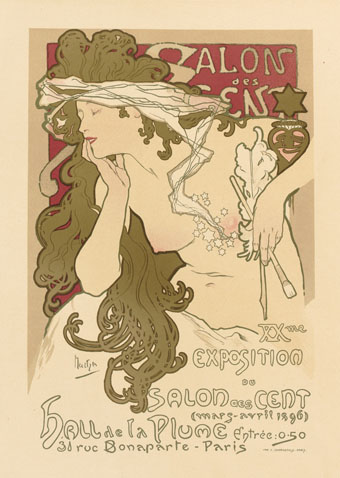
Alphonse Mucha.

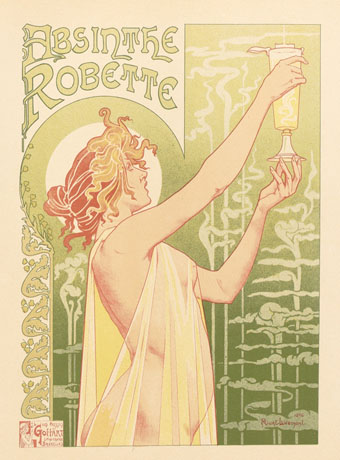
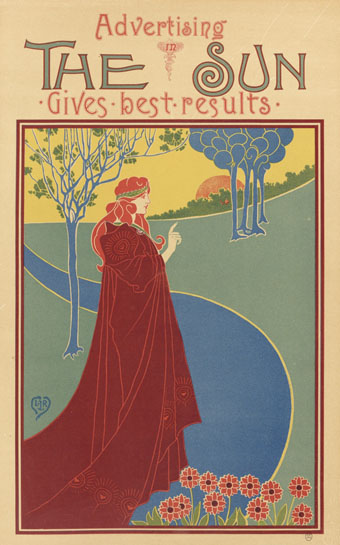
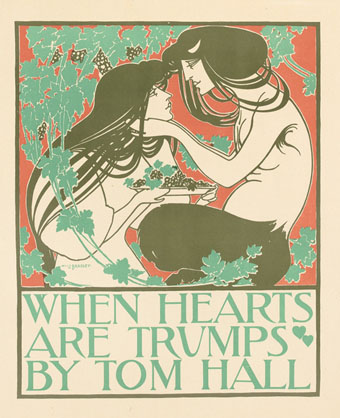
Les Maîtres de l’Affiche was a multi-volume guide to the state of poster art in the 1890s, published in five volumes from 1896 to 1900. Being a French publication, the contents are mostly by French artists but other nations are represented—Britain, Germany, Italy, the United States—although fewer contributions than you might expect given the quantity of pages to be filled. The chief attraction of these books is the attention they give to each design, all of which are printed in colour on a full page, and the time of publication which coincides with the birth of Art Nouveau. In addition to the great Alphonse Mucha there are designs by Eugène Grasset, Henri Privat-Livemont, Georges de Feure, Will Bradley, Louis Rhead and others. There’s also a lot of cabaret stuff from Montmartre which has never been to my taste (although I like the Steinlen posters) but those designs were the typical ones of the period.

affiche12.jpg

Henri Privat-Livemont.

The first four volumes in this set may be found at Gallica (Volume 1, Volume 2, Volume 3, Volume 4) but not the fifth volume—isn’t a national library supposed to be more thorough than this?—which may be seen at NYPL. For those who prefer paper reproductions, there’s a reprint in Dover Publications’ Pictorial Archive series, The Complete “Masters of the Poster: All 256 Colour Plates from “Les Maîtres de l’Affiche”.

affiche01.jpg

Louis Rhead.

affiche02.jpg

Will Bradley.

affiche04.jpg

Joseph Sattler.

Continue reading “Les Maîtres de l’Affiche”

Das Thier in der Decorativen Kunst

seder01.jpg

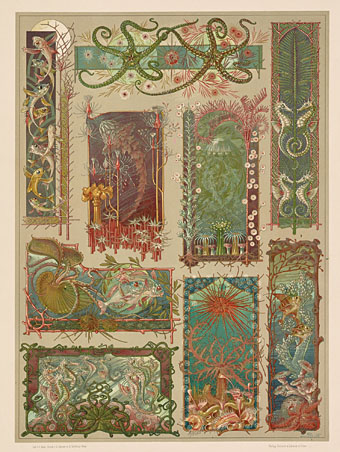
The development of the Arts and Crafts movement in the late 19th century led to the publication of many books and periodicals offering design suggestions to artists, craftspeople and decorators. The more popular examples, like the long-running Dekorative Vorbilder, comprised collections of plates by different artists, in styles that ran from imitations of rococo decoration to the latest Art Nouveau (or Jugendstil) graphics. Other books presented designs by single artists. Alphonse Mucha created two of these, Documents Decoratifs (1902) and Figures Décoratives (1905), while also collaborating with Maurice Verneuil and George Auriol on Combinaisons Ornementals (1901). Verneuil produced a book of his own designs, L’Animal dans la Decoration (1897), in which animals of all kinds were depicted in Verneuil’s precise and versatile Art Nouveau manner.

seder02.jpg

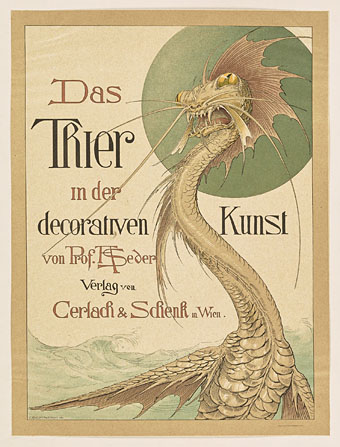
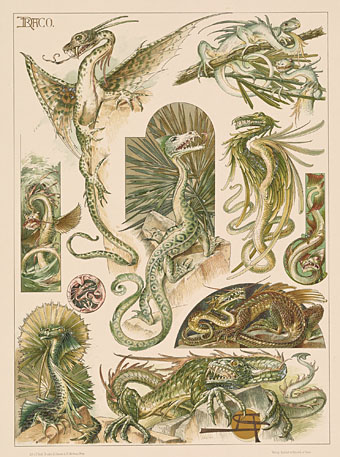
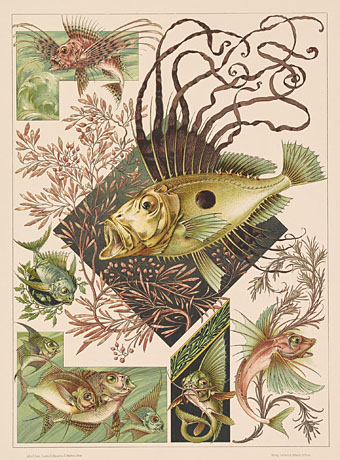
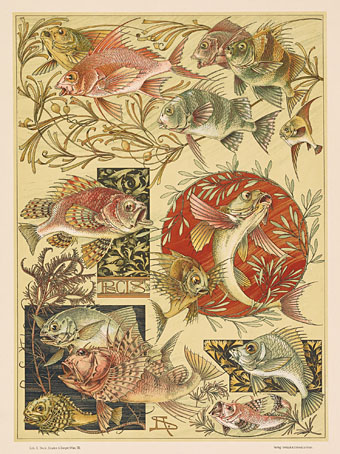
Das Thier in der Decorativen Kunst (The Animal in Decorative Art) is an Austrian equivalent of L’Animal dans la Decoration, and one in which artist Anton Seder didn’t feel as constrained as Verneuil by biological accuracy. Three of the plates in Seder’s book are devoted to a variety of snarling dragons that were probably more useful for illustrators than interior designers. The rest of the book is a combination of reality and fantasy, with fish in various states of pop-eyed alarm, a collection of piscine grotesques that I’ll be looking at if I ever have to draw the inhabitants of Innsmouth again, and many beautiful renderings of birds, reptiles, crustaceans, feathers and shells. Seder’s book was reprinted by Dover Publications as Fantastic Beasts of the Nineteenth Century but you can browse or download the original for free here. (The date given at the Internet Archive is 1896 but several of the plates show dates later than this.)

seder03.jpg

seder04.jpg

seder05.jpg

Continue reading “Das Thier in der Decorativen Kunst”

Alphonse Mucha et Son Oeuvre

mucha01.jpg

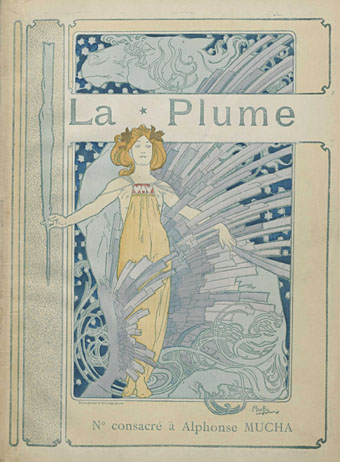
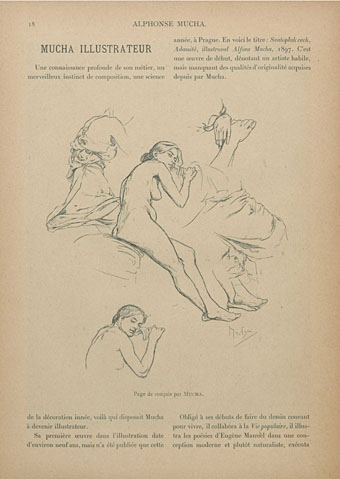
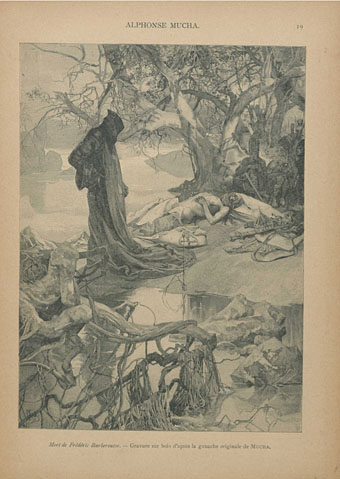
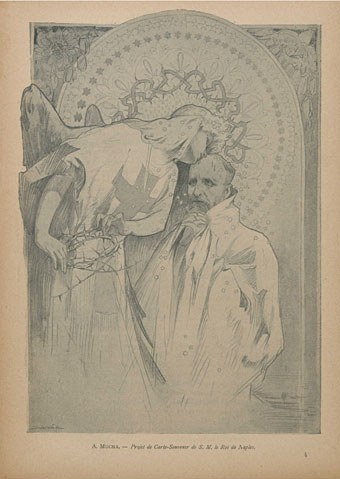
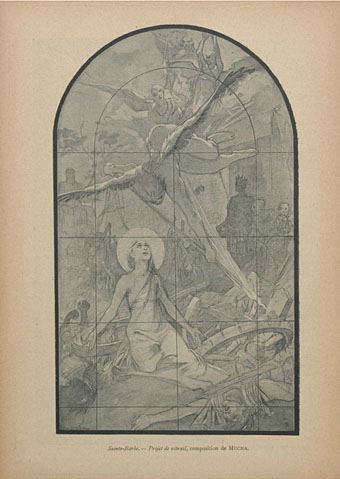
Alphonse Mucha was so wildly prolific, and his work maintained such a consistently high standard, that book collections tend to focus on the popular Art Nouveau prints and posters to the exclusion of everything else. This short study of Mucha’s career was published in 1897 when the Nouveau style was becoming a dominant trend in Continental Europe, thanks in part to the promotion of art journals like La Plume, as well as to Mucha himself. The reproductions are all monochrome halftones but they include many sketches, illustrations and smaller works that are either never seen elsewhere or are marginalised by his advertising graphics and the designs for Sarah Bernhardt. Browse the book here or download it here.

mucha02.jpg

mucha03.jpg

mucha04.jpg

mucha05.jpg

Continue reading “Alphonse Mucha et Son Oeuvre”