San Francisco angels

mouse_kelley.jpg

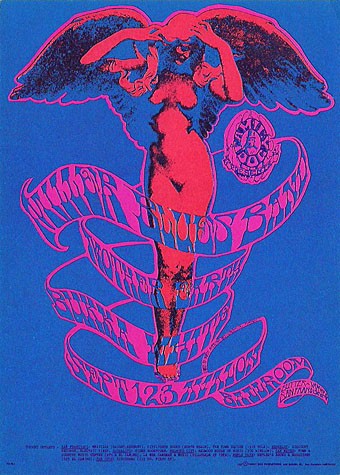
Miller Blues Band/Mother Earth/Bukka White by Alton Kelley & Stanley Mouse (1967).

I already had this piece roughed out before discovering that psychedelic artist Alton Kelley died last month, something that doesn’t seem to have been reported very widely. I posted the picture above last October then in January this year wrote something about San Francisco’s Panama-Pacific International Exposition of 1915. But it’s taken me until now to realise that these two things are connected.

The San Francsico poster artists of the Sixties, of which Mouse & Kelley were leading members, borrowed frequently from earlier sources, especially Art Nouveau stylists such as Alphonse Mucha and the Symbolist painters. A recent Thames & Hudson book, Off the Wall: Psychedelic Rock Posters from San Francisco traces some of the more obvious influences but this is one example which seems to have eluded them.
weinman.jpg

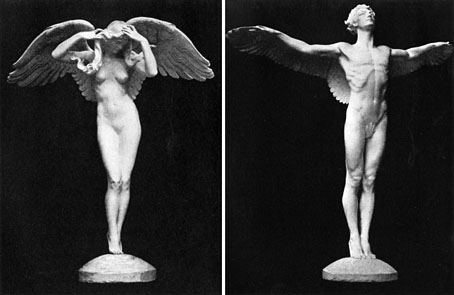
Descending Night and Rising Day by Adolph Alexander Weinman (1914).

The statue that Mouse & Kelley used was titled Descending Night and was, with Rising Day (aka The Rising Sun), one of a pair of symbolic works created by sculptor Adolph Alexander Weinman (1870–1952) for the Panama-Pacific Exposition. The photos above are from one of the books I linked to earlier, Sculpture of the Exposition Palaces and Courts by Juliet Helena Lumbard James. The identities of artists’ models are rarely preserved but in the case of Descending Night we know that one Audrey Munson was the model. And I know that thanks to a well-timed overview of Ms Munson’s career by Silent-Porn-Star.
weinman2.jpg

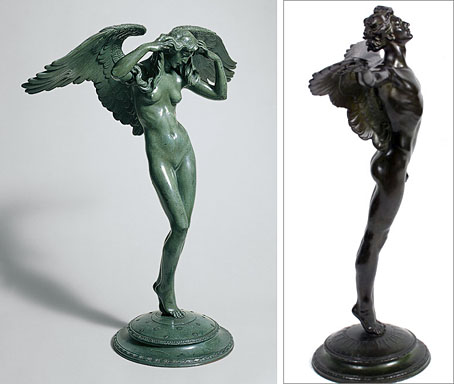
Weinman later worked his statue designs into these rather fine figurines which became his best-selling small bronzes. These pictures make visible the stars at the feet of Night and the sun at the feet of Day.
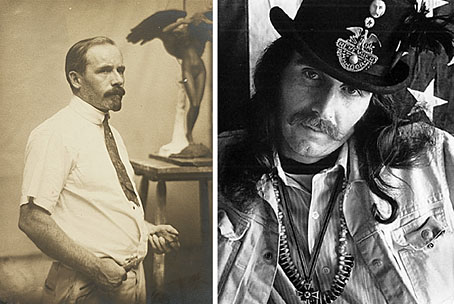
weinmann_kelley.jpg

left: Adolph Alexander Weinman in his studio with a study for Descending Night in the background; right: Alton Kelley in the Sixties.

Weinman didn’t live long enough to see his work exploited on a gaudy concert poster and given his adherence to a pre-Modern, Beaux-Arts style it’s perhaps just as well. He’s most remembered today for his Liberty design for the American Silver Eagle which also used Audrey Munson as the model. Ms Munson lived to 1996 so I can’t help wonder if she ever saw her youthful figure return on Mouse and Kelley’s poster. The same year as the San Francisco Exposition she played an artist’s model in Inspiration, a film by George Foster Platt which is only notable now for being the first American non-porn film to feature a nude woman. She stripped off again a year later for Rae Berger’s Purity. Audrey was 76 in 1967 but something tells me she that her free spirit would have identified with the Summer of Love more than many others of her generation.

Elsewhere on { feuilleton }
The illustrators archive

Previously on { feuilleton }
The Evanescent City
Family Dog postcards

Absinthe girls

absinthe11.jpg

The classic absinthe poster from 1896 by Henri Privat-Livemont (1861–1936), one of the best exponents of the post-Mucha style. Don’t let anyone tell you that using unclad women’s bodies in advertising is a new thing.

absinthe2.jpg

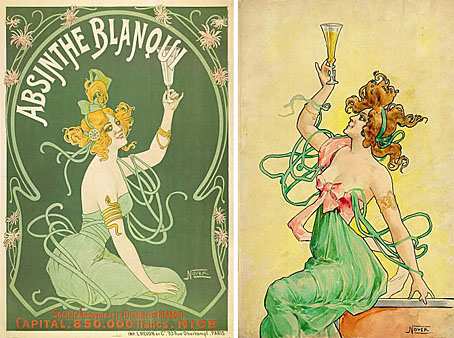
And a couple more Mucha-esque examples circa 1900, both credited to “Nover”, from the wide selection of absinthe graphics at the Virtual Absinthe Museum.

The printer was L. Revon et Cie, situated in Paris at 93 Rue Oberkampf. The artist’s signature “Nover” is a mystery—no designer by that name is recorded. Since however the word is a palindrome of Revon, the assumption must be that the artist was Revon himself, or alternatively an anonymous employee of the firm. The same artist was responsible for the well-known Absinthe Vichet poster, also printed by Revon et Cie.

Interesting that so many of these posters show the women holding the glasses aloft as though receiving a libation from the gods. Privat-Livemont’s painting adds to the sacred effect by putting a halo behind the absinthe-bearer’s head.

Also at the Virtual Absinthe Museum is this warning against the dangers of the Green Fairy which would make a good addition to the Men with snakes post.

Previously on { feuilleton }
8 out of 10 cats prefer absinthe
Smoke
Flowers of Love

The Divine Sarah

bernhardt11.jpg

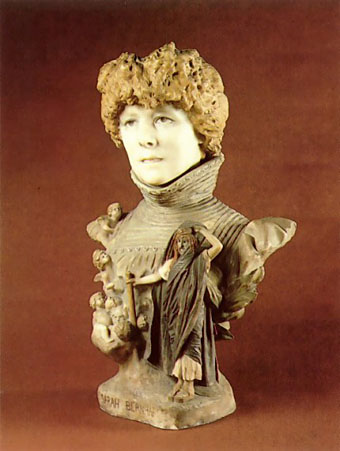
Sarah Bernhardt by Jean-Léon Gérôme (1895).

You can’t be a fin de siècle fetishist and not develop a fascination with actress Sarah Bernhardt, a woman who was muse to many of the era’s finest artists, most notably Alphonse Mucha, who she employed as her official designer. Mucha’s marvellous posters are endlessly popular, of course; less well-known is the sculpture by academic painter and Orientalist Jean-Léon Gérôme, a rare three-dimensional work inspired by the actress.

bernhardt2.jpg

Inkwell by Sarah Bernhardt (1880).

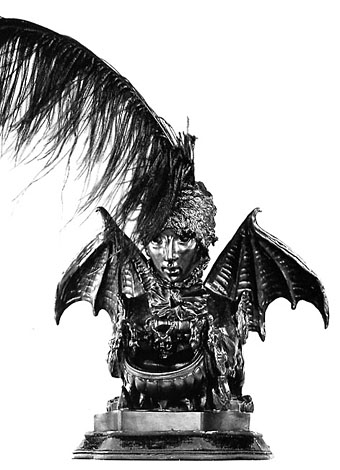
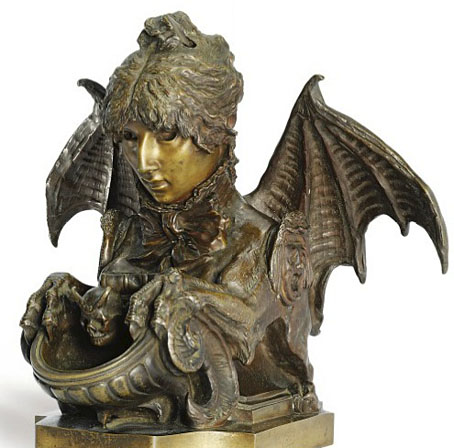
Even less well-known is Ms Bernhardt’s own design for a curious bat-winged inkwell. I’ve read of her having created other sculptural works but so far this is the only one I’ve seen a picture of. With something as decadent as this you’d really have to use peacock quills for pens, wouldn’t you?

bernhardt4.jpg

bernhardt3.jpg

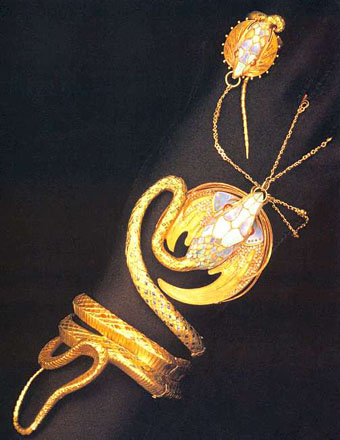
Bracelet by Alphonse Mucha & Georges Fouquet (1899).

And in a similar sinister vein to the inkwell there’s this serpentine bracelet and ring, a superb one-off, designed by Mucha and crafted by the jeweller Fouquet. After seeing works such as this and the Lalique dragonfly (which Ms Bernhardt once wore), most other jewellery seems timid and unadventurous in comparison.

Update: Added another photo of the inkwell.

Previously on { feuilleton }
The art of Philippe Wolfers, 1858–1929
Lalique’s dragonflies
Lucien Gaillard
Smoke
The Masks of Medusa

Smoke

smoke1.jpg

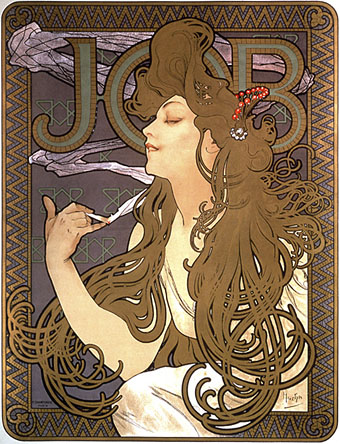
Advertising poster for Job cigarette papers by Alphonse Mucha (1898).

The law forbidding smoking in public places finally came into effect in England on Sunday, something that the nation’s smokers are still coming to terms with. I’ve never been a smoker but have always been easy-going about the activity, having had smoking parents and been around smokers for years. That said, it’ll be nice to go out now and not return home smelling like an ashtray.

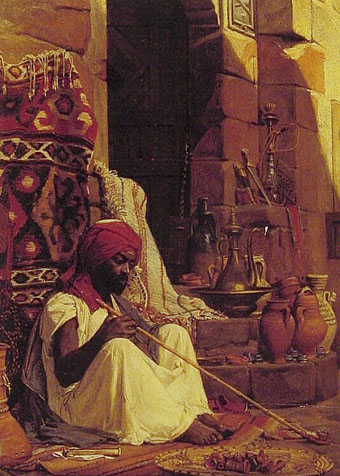
To mark the passing of a nicotine-stained era, here’s a few of the many representations of smoking in the art world. Until I started looking for pictures today I hadn’t realised how many paintings there are of people (and dogs!) having smoke blown in their faces, like this one and this one.

smoke2.jpg

The Opium Smoker by Jean-Jules-Antoine Lecomte du Noüy.

smoke3.jpg

A Voluptuous Smoke by Charles Edouard Edmond Delort.

Previously on { feuilleton }
Perfume: the art of scent
German opium smokers, 1900

Barney Bubbles: artist and designer

barney1.jpg

Image-heavy post! Please be patient.

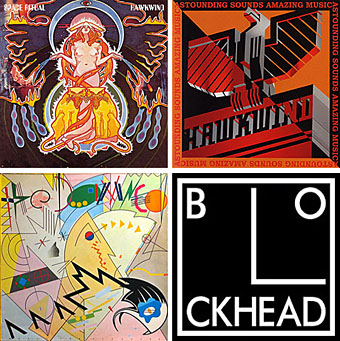
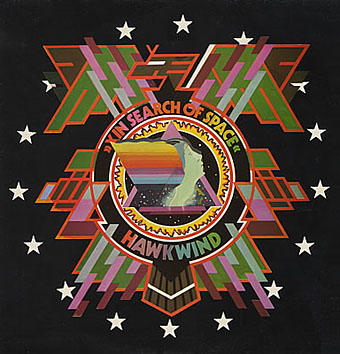
Four designs for three bands, all by the same designer, the versatile and brilliant Barney Bubbles. A recent reference over at Ace Jet 170 to the sleeve for In Search of Space by Hawkwind made me realise that Barney Bubbles receives little posthumous attention outside the histories of his former employers. Since he was a major influence on my career I thought it time to give him at least part of the appraisal he deserves. His work has grown in relevance to my own even though I stopped working for Hawkwind myself in 1985, not least because I’ve made a similar transition away from derivative space art towards pure design. Barney Bubbles was equally adept at design as he was at illustration, unlike contemporaries in the album cover field such as Roger Dean (mainly an illustrator although he did create lettering designs) and Hipgnosis (who were more designers and photographers who drafted in illustrators when required).

Colin Fulcher became Barney Bubbles sometime in the late sixties, probably when he was working either part-time or full-time with the underground magazines such as Oz and later Friends/Frendz. He enjoyed pseudonyms and was still using them in the 1980s; Barney Bubbles must have been one that stuck. The Friends documentary website mentions that he may have worked in San Francisco for a while with Stanley Mouse, something I can easily believe since his early artwork has the same direct, high-impact quality as the best of the American psychedelic posters. Barney brought that sensibility to album cover design. His first work for Hawkwind, In Search of Space, is a classic of inventive packaging.

Update: BB didn’t work with Mouse in SF, I’ve now been told.

in_search_of_space.jpg

Hawkwind: In Search of Space (1971).

It’s fair to say that Hawkwind were very lucky to find Barney Bubbles, he immediately gave their music—which was often rambling and semi-improvised at the time—a compelling visual dimension that exaggerated their science fiction image while still presenting different aspects of the band’s persona. In Search of Space is an emblematic design that opens out to reveal a poster layout inside. One of the things that distinguishes Barney Bubbles’ designs from other illustrators of this period is a frequent use of hard graphical elements, something that’s here right at the outset of his work for Hawkwind.

This album also included a Bubbles-designed “Hawklog”, a booklet purporting to be the logbook of the crew of the Hawkwind spacecraft. I scanned my copy some time ago and converted it to a PDF; you can download it here.

Continue reading “Barney Bubbles: artist and designer”