Cornell, 1965

cornell1.jpg

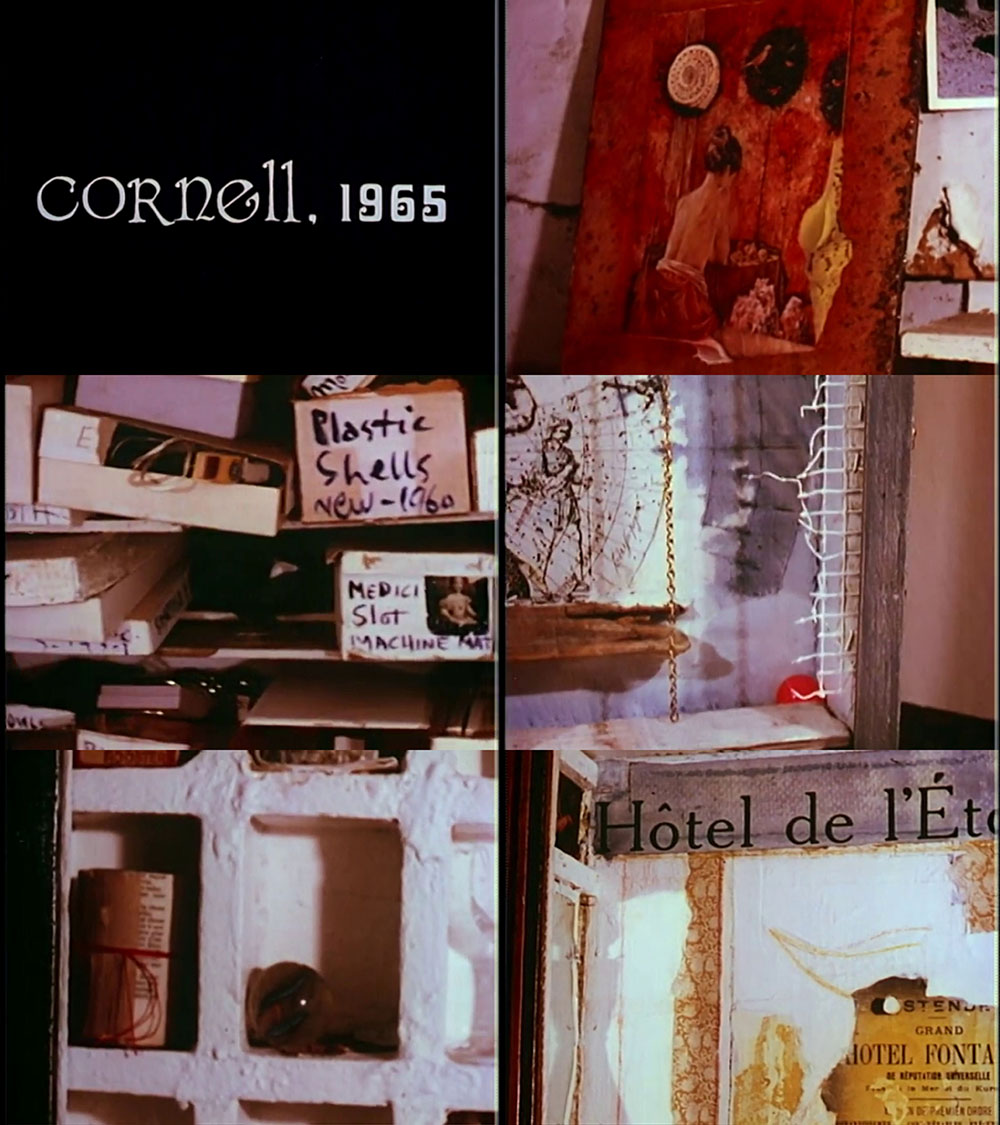
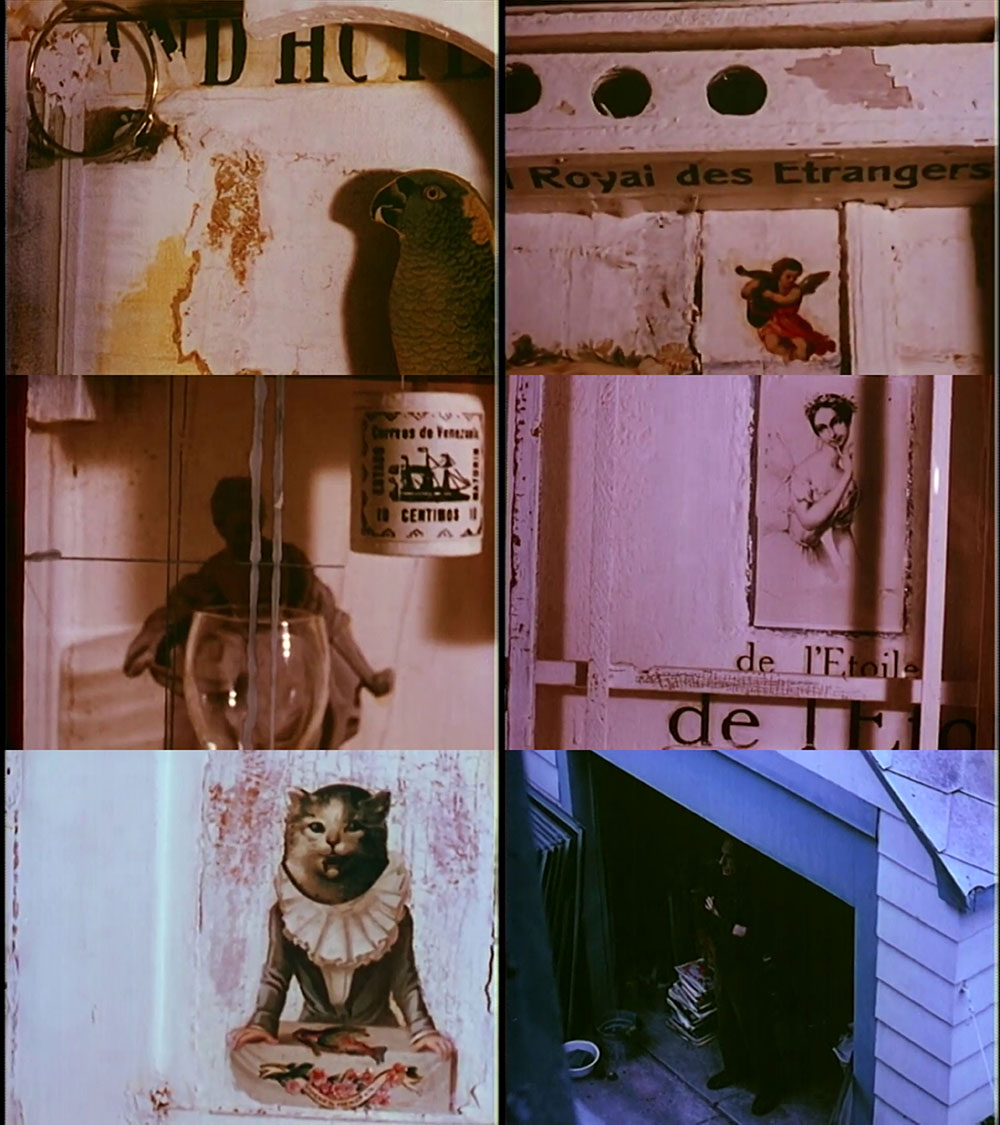
It’s the magus of Utopia Parkway again. As the title suggests, Cornell, 1965 was shot in the 1960s, although the footage wasn’t assembled as a film until 1978 when director Lawrence Jordan added his narration and a Debussy soundtrack. Jordan had been Joseph Cornell’s assistant in the 1960s, and his footage was meant to document details in the workroom where Cornell made so many of his boxes. The details are mostly of the boxes that didn’t get sent to the galleries, half-finished or damaged works which the camera explores in close-up. Jordan also managed to capture a few surreptitious shots of the camera-shy artist from an upstairs window. Cornell didn’t like to see himself on a screen but he loved the medium of cinema, using it to fuel his imagination—an early issue of View includes his star-struck paean to Hedy Lamarr—while also making short films of his own. Many of the latter, including the celebrated Rose Hobart, may be seen at Ubuweb.

cornell2.jpg

Elsewhere on { feuilleton }
The Surrealism archive

Previously on { feuilleton }
Cosmic Alchemy, a film by Lawrence Jordan
Hamfat Asar, a film by Lawrence Jordan
Cornell’s Constellations
Carabosse, a film by Lawrence Jordan
Joseph Cornell: Worlds in a Box
Joseph Cornell, 1967
Rose Hobart by Joseph Cornell

“Through the eyes of poets”: View magazine

viewcovers.jpg

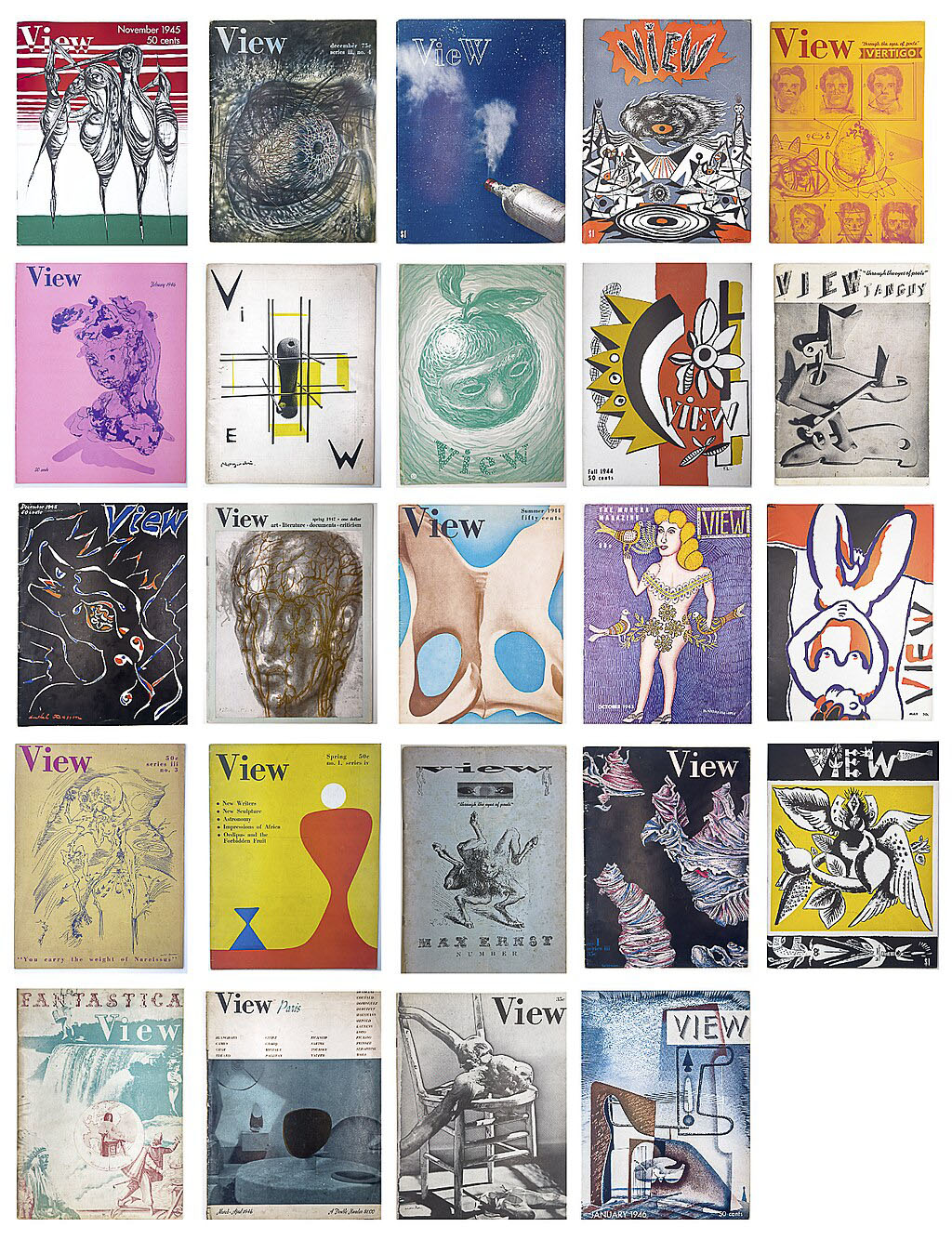
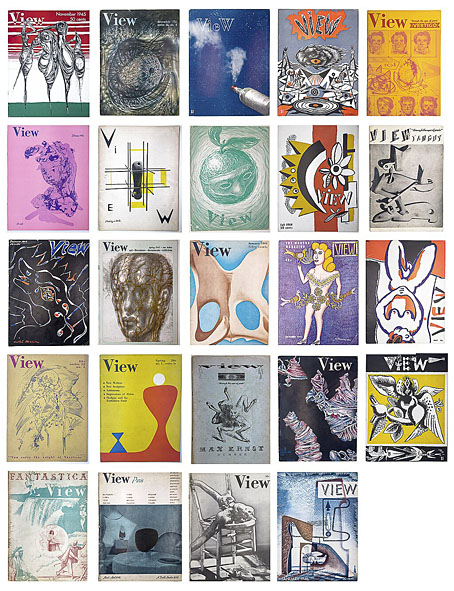
Charles Henri Ford’s avant-garde magazine has been a sporadic visitor to these pages over the past 20 years, the subject of occasional posts as well as my complaints about the difficulties of finding online sources for important magazines and journals. The difficulties are now over where View is concerned…or almost over because this cache is an incomplete run, with the last seven issues absent. That still gives us 30 complete issues to look through, however, so I’ll temper my complaints. The run is further compromised by being taken from a single-volume reprint which has reduced all the colour to black and white, but the covers at least are easy to find elsewhere. The first few issues of View were simple newsprint affairs, but the design soon became more ambitious and properly magazine-like, with coloured paper used for interior pages.
view-ernst.jpg

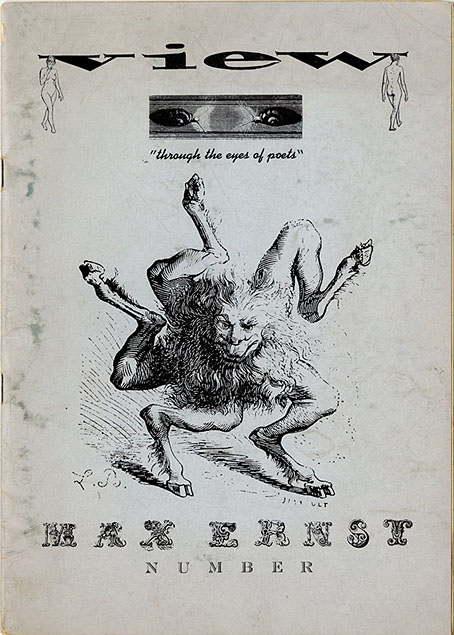
Vol 2, issue 1; April 1942.

View (1940–47) was an important arts magazine for a number of reasons, chief among them the title’s status as the leading American journal devoted to Surrealism. The Surrealist movement in Europe had been destroyed by the advent of war but Surrealism found itself revitalised in the United States when artists and writers fleeing the Nazis made their way to New York. In a very short space of time the movement went from being a European curiosity to a local novelty, with the same delayed impact that occurred when modern art was revealed to a bewildered American public by the Armory Show in 1913. View magazine took advantage of the wave of aesthetic immigration, positioning itself as a showcase and promoter of the new art of “the Marvellous”. The range of the magazine’s contributors is astonishing (per Wikipedia):

…writers like Wallace Stevens, an interview with whom was featured in the first number of View, William Carlos Williams, Joseph Cornell, Edouard Roditi, Henry Miller, Lawrence Durrell, Paul Bowles, Brion Gysin, Philip Lamantia, Paul Goodman, Marshall McLuhan, André Breton, Raymond Roussel, Albert Camus, Jean-Paul Sartre, Jean Genet or Jorge Luis Borges and artists like Pablo Picasso, Paul Klee, Fernand Léger, Georgia O’Keeffe, Man Ray, Joan Miró, Alexander Calder, Isamu Noguchi, Marc Chagall, René Magritte and Jean Dubuffet.
view-cornell.jpg

Volume 2, issue 4; January 1943. Cover collage by Joseph Cornell.

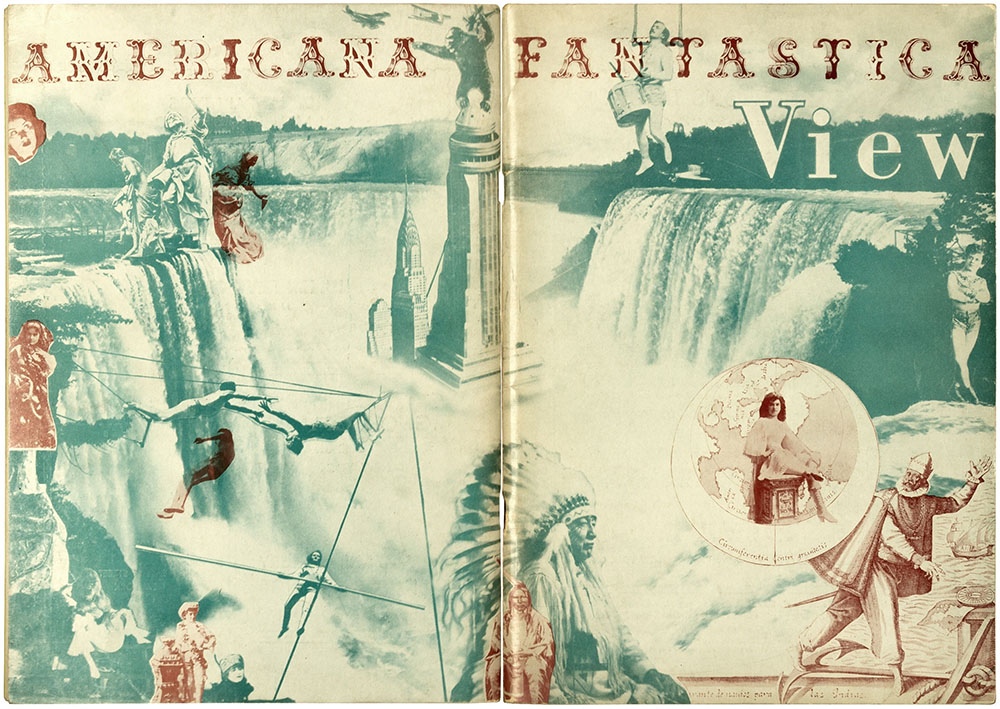
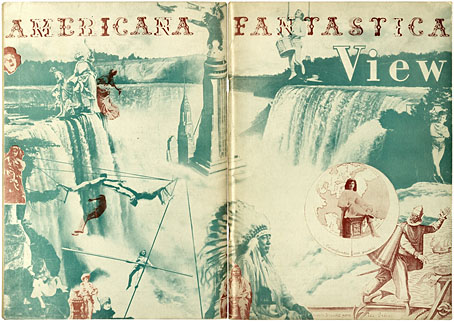
To the names above can be added Leonora Carrington and Leonor Fini. Several of the early issues were devoted to a single theme: Max Ernst was the subject of an entire issue, Yves Tanguy and Pavel Tchelitchew shared an issue, while other numbers explored specific subjects—“Vertigo”, “Americana Fantastica”, “Narcissus”, “Tropical Americana”, “America”, “Italy”, and “Surrealism in Belgium”. The magazine also helped promote Surrealism-adjacent Americans like Joseph Cornell and Morris Hirshfield. Cornell was a virtual unknown in the art world of the early 1940s; Charles Henri Ford helped him a great deal when he gave his collages and constructions an equal platform with the Europeans. “Americana Fantastica” is pretty much a Cornell issue, while elsewhere Cornell creates print works like the one-page “Story Without a Name” in the Max Ernst issue, a homage to Ernst using collaged engravings. Some of this material was reprinted in 1992 in Parade of the Avant-Garde, Ford’s book-length compilation of the magazine’s greatest hits, and a very commendable publication in itself. But magazines, especially ones as rich as this, have to be seen as entire issues, with all their minor pieces, decorative vignettes and advertising pages intact. What we have here is a compromised View but it’s still a sight worth seeing.

Elsewhere on { feuilleton }
The Surrealism archive

Previously on { feuilleton }
Minotaure, 1933–1939
The nightingale echo
Max Ernst’s favourites
Viewing View
Cornell’s Constellations
Joseph Cornell: Worlds in a Box
Joseph Cornell, 1967
Rose Hobart by Joseph Cornell
View: The Modern Magazine

Weekend links 838

amethyst.jpg

Amethyst geode by Sheila Sund.

• RIP Tony Rayns: A Supreme Cinephile Remembered – notes and observations by Geoff Andrew. The remembrance mentions Rayns’ Cinema Rising, a short-lived magazine he was editing in the 1970s. I posted an extract from the first issue here.

• The week in photo competitions: Hasselblad Masters 2026; ZWO Astronomy Photographer of the Year 2026 shortlist; International Aerial Photographer of the Year.

• At Colossal: Veks Van Hillik suspends fish, insects, and other objects in surreal murals.

• New music: The Crystal Suite by Paul Schütze; Vestiges by Olivier Alary.

• At AnOther: Inside James Turrell’s most ambitious Skyspace to date.

Off With His Head: A short story by David Rudkin.

The Cosmic Dope

The Crystal Ship (1967) by The Doors | Among Fields Of Crystal (1980) by Harold Budd / Brian Eno | Crystal Clear (1992) by The Grid

Gargoyles, Chimeres, and the Grotesque in French Gothic Sculpture

gargoyles01.jpg

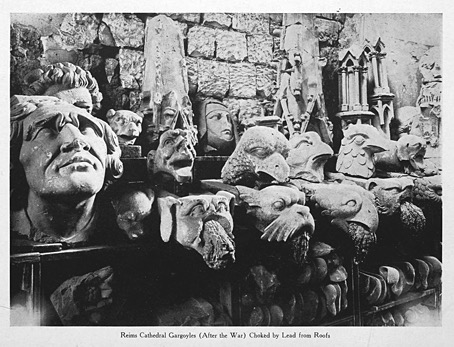
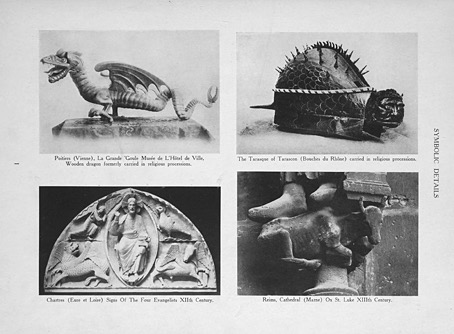
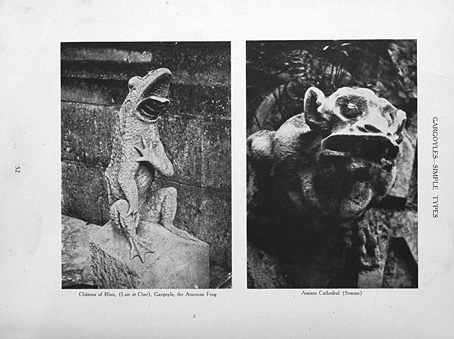
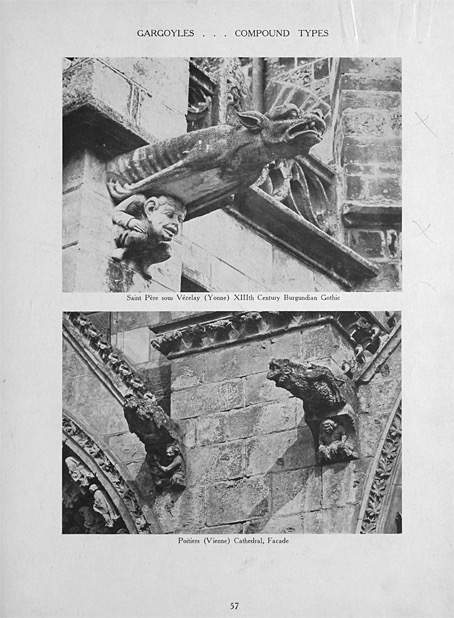
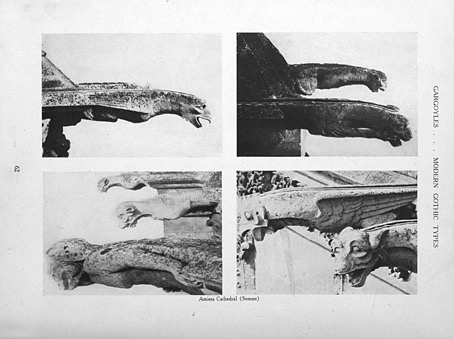
Good books about gargoyles aren’t easy to find but this one, edited by Lester Burbank Bridaham, is better than many I’ve seen. Gargoyles, Chimeres, and the Grotesque in French Gothic Sculpture was published in 1930, and is mostly a collection of photographs, with the text kept to a minimum at the front of the book. The nature of the subject—eroded soot-stained sculptures seen against eroded soot-stained walls—doesn’t always help the photographer but the book makes up in quantity what it lacks in quality. There are many photographs here, often four to a page over 200 pages. Dover reprinted the book in a large-format edition in 2006.

gargoyles02.jpg

These gargoyles and grotesques show very plainly the complete freedom under which the old craftsmen worked and the immense originality and variety that were the result. Here are hundreds of spontaneous creations, each as individual as possible, and not only this but many of them show a brilliancy of space composition and a fineness of line that would not shame a great sculptor. Craftsmen these, but also creative artists.

Ralph Adams Cram in the introduction

gargoyles03.jpg

The authors divide their study according to subject: Last Judgments, Gargoyles of different ages, Chimeras (or hybrid creatures), and Heads. Gargoyles are often hybrid creatures, of course, but the broad difference between a gargoyle and a chimera in the architectural sense would be that gargoyles often serve a purpose as a waterspout whereas chimeras are solely decorative. Gargoyles are a good example of an architectural solution that evolved into an element of architectural style. Spouts were required to direct rainwater away from the lower areas of the building; decoration helped incorporate the spouts into the building’s structure then the decoration became a traditional part of the Gothic style. For a time, anyway. You don’t see many gargoyles among the buildings designed by the rather pious English revivalists in the 19th century, but the great French revivalist and restorer, Eugène Viollet-le-Duc, enjoyed the grotesquery of the old cathedrals, and it’s he who was responsible for the famous chimeras that look down on Paris from the balconies of Notre Dame.

gargoyles04.jpg

gargoyles05.jpg

Continue reading “Gargoyles, Chimeres, and the Grotesque in French Gothic Sculpture”

Weekend links 836

narcissus.jpg

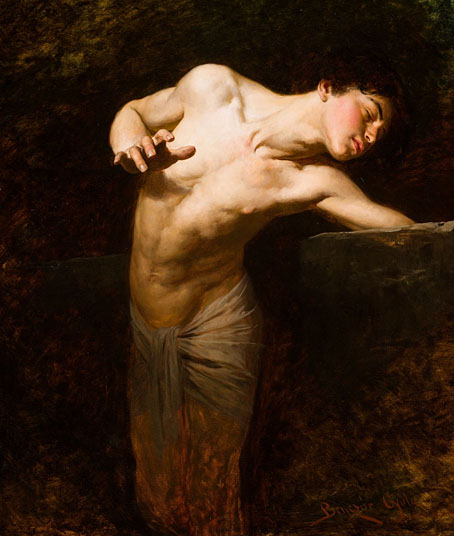
Narcissus (1881) by Gyula Benczúr.

• AnOther reposts an old interview with Dennis Bell of the Bob Mizer Foundation to coincide with an exhibition of homoerotic drawings from Physique Pictorial at JW Anderson Soho, London. The drawings by the pseudonymous (and still unidentified) “Spartacus” don’t bear comparison to those by Mizer’s celebrated discovery, Tom of Finland, but they’re part of a pioneering history. There’s more “Spartacus” at Wallpaper*.

• “Ever the deviant, Bidgood initiated a style that rebelled against the dominant sensibility of his physique-magazine peers, treating his subjects with the same love that a studio-era auteur may have bestowed upon his leading ladies.” Mayukh Sen on the tawdry, opulent world of James Bidgood’s underground classic Pink Narcissus.

• “Düsseldorf. Düsseldorf. Düsseldorf.” Samuel Cox on 50 years of La Düsseldorf by La Düsseldorf.

[Adrian] Sherwood argues that Perry’s antics often mask his genius. “What upset me in later years was people marvelling at him as some kind of joke,” says Sherwood. People saw a clown, when they should have seen someone who re-engineered music. From reimagining the studio as an instrument, pushing dub reggae to the sonic limits or inventing sampling, few producers have come anywhere close to matching Perry’s impact.

Lanre Bakari on the life and musical work of Lee “Scratch” Perry

• New music: Arles 75 Drei by Can; Voyager by PJ Harvey; Fantasy by Julia Holter.

• At the BFI: Adam Nayman chooses 10 great Canadian debut features.

• At Colossal: James Turrell’s 100th Skyscape opens in Aarhus.

• At The Daily Heller: Vector art by Catalina Estrada.

• A belated RIP for writer Sandy Robertson.

Sky – Rhythm (1972) by Dub Specialist | Skyliner (2006) by Boards Of Canada | The Sky Torn Apart (2018) by Paul Schütze