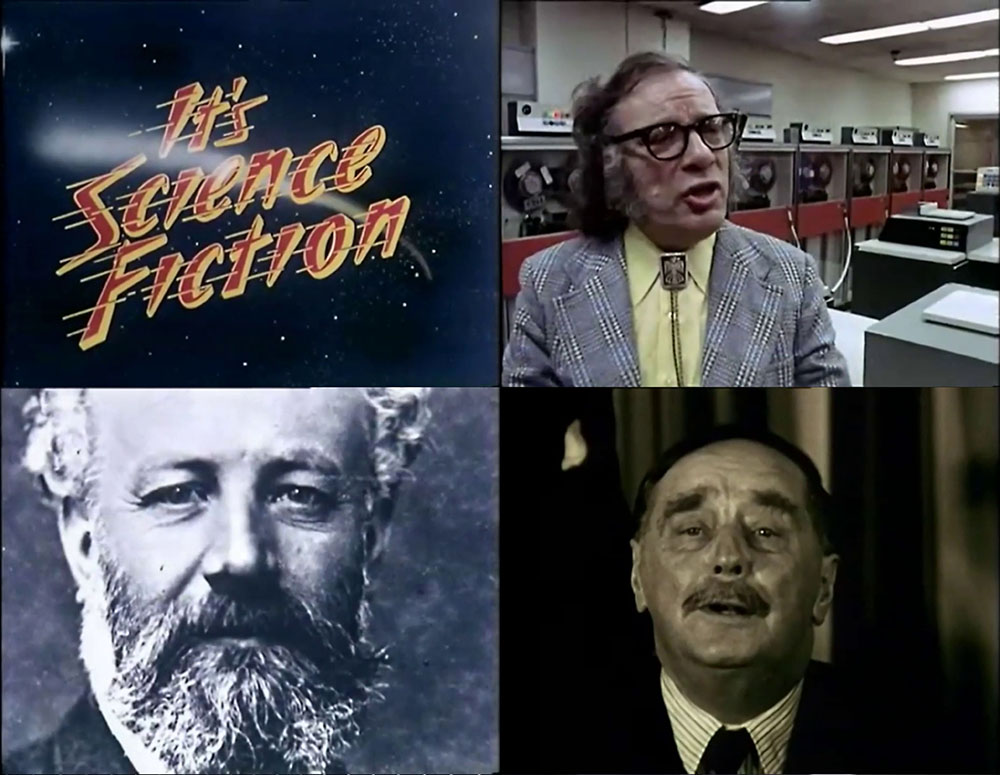
It’s Fantastic! It’s Futuristic! It’s Fatalistic! It’s Science Fiction!

SF1.jpg

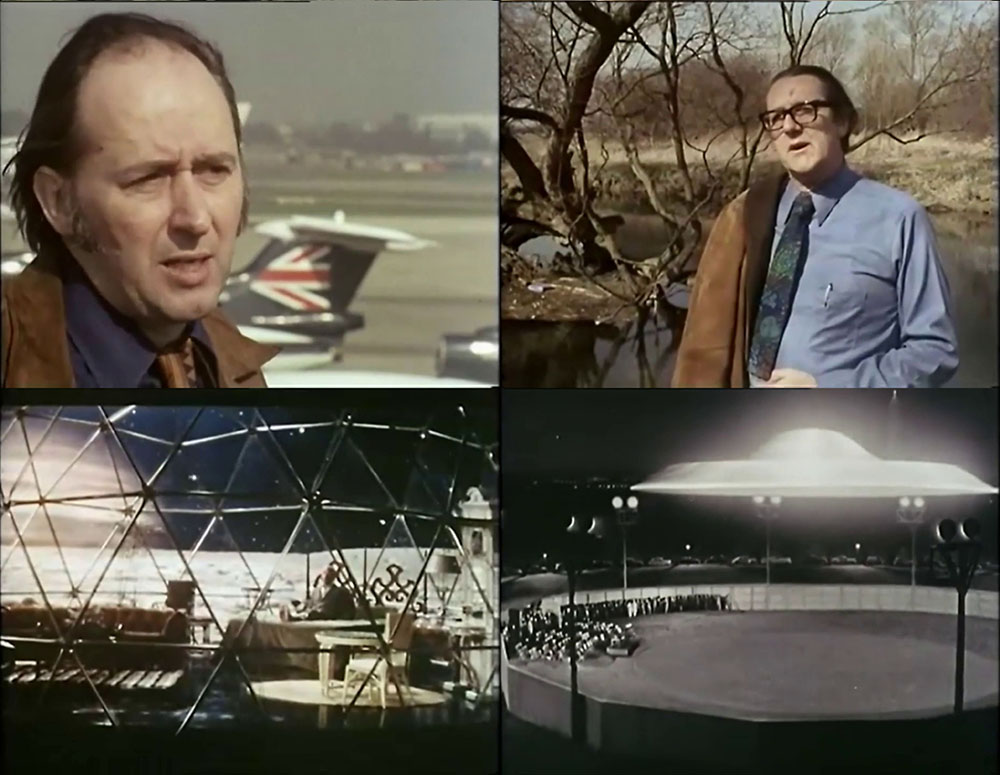
There’s a worthwhile documentary struggling to be born in this film which is compromised by its hyperbolic title and a running time of 48 minutes, not nearly enough to contain a history of science fiction, past and present. I’m not a media historian so I can’t say whether this was the first serious examination of written science fiction made for British TV but if it wasn’t there wouldn’t have been many that preceded it. It’s Fantastic! It’s Futuristic! It’s Fatalistic! It’s Science Fiction! was broadcast in 1973 as part of the BBC’s Omnibus art strand; Harley Cokeliss (credited here as “Cokliss”) was the director, and also the co-writer with Michael Abrams. Two years prior to this Cokeliss had made a shorter BBC film, Crash!, which explored JG Ballard’s ongoing preoccupation with automobile accidents via the rehearsals for Crash in The Atrocity Exhibition. Ballard turns up again here, theorising energetically about his usual concerns (mass advertising, the media landscape, etc) from a balcony overlooking Heathrow airport.
SF2.jpg

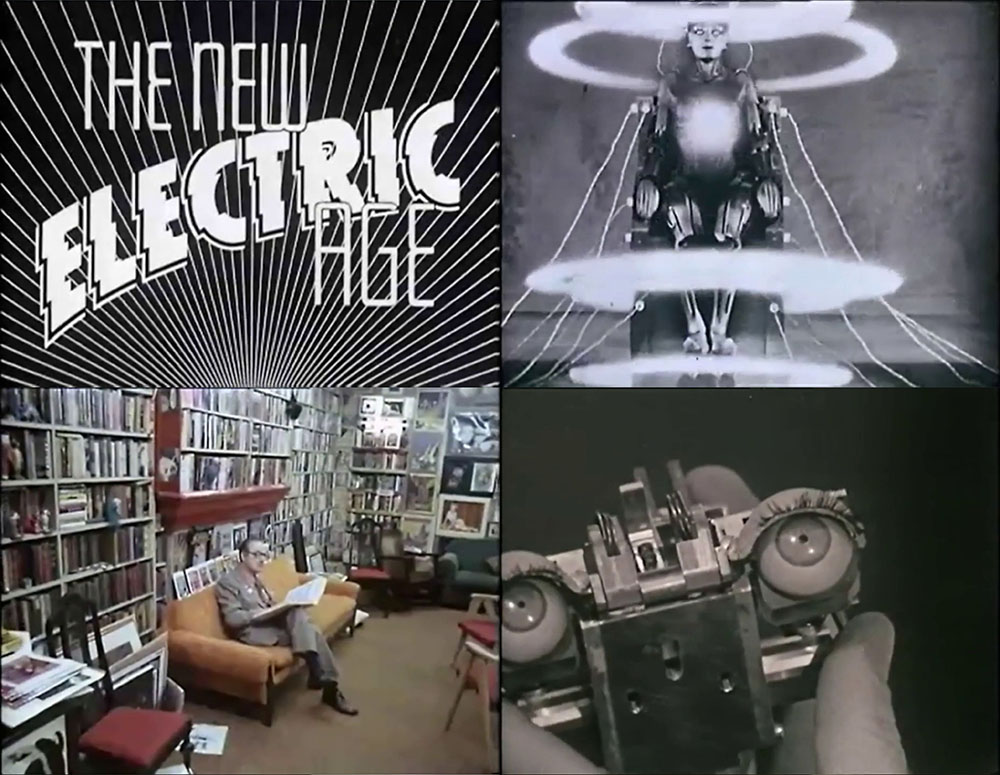
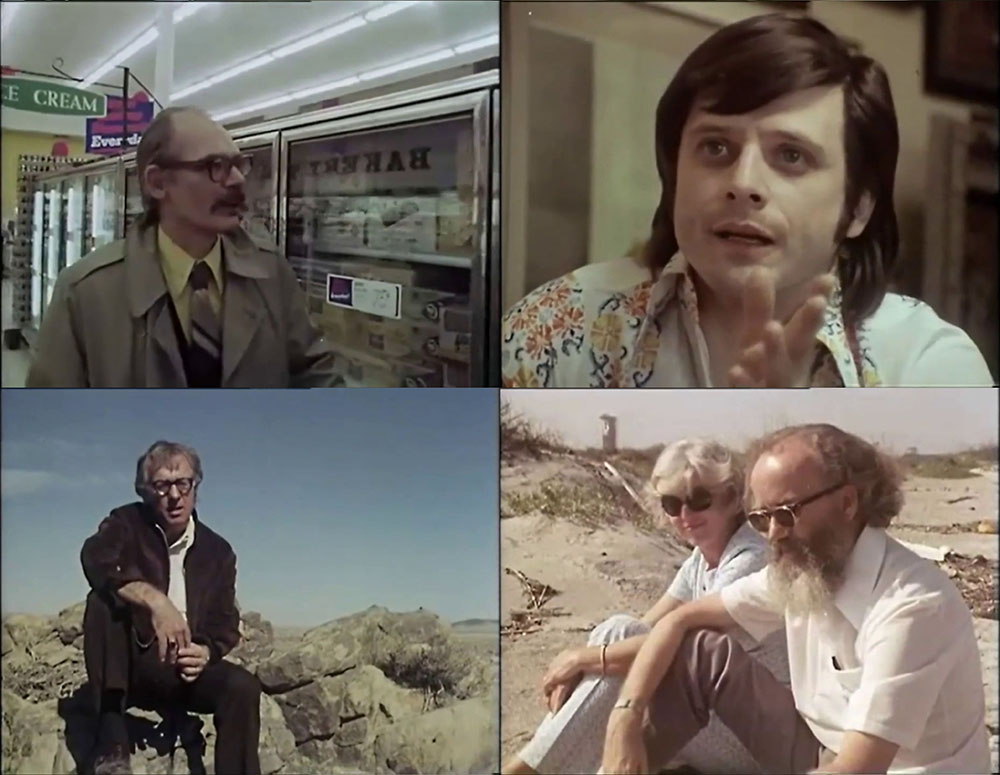
Cokeliss opens proceedings with the inevitable collage of clips from Flash Gordon and Hollywood films of the 1950s, most of which are appalling quality. If nothing else, this is a good reminder of how terrible feature films used to look when shown on TV. More interesting for today’s viewer is the record of a handful of writers who were seldom personally visible in the mass media even while their stories were being adapted by film and television. Ballard and Brian Aldiss are the representative Brits, all the other writers are Americans: Isaac Asimov, Ray Bradbury, Harlan Ellison, Damon Knight, Frederik Pohl and Kurt Vonnegut. Also interviewed is Fritz Lang, who repeats his anecdote about Metropolis being inspired by his visit to New York in the 1920s, and Forrest J. Ackerman is filmed inside his memorabilia-filled house. The absence of women interviewees is unfortunately typical of the time. Kate Wilhelm appears on camera with husband Damon Knight but it’s Knight that does all the talking.
SF3.jpg

All of the interviews are far too brief for such a wide-ranging subject but it’s still fascinating to see Harlan Ellison at his peak, talking (and typing) at speed. It’s also surprising to find JG Ballard and Frederik Pohl in near agreement when they both describe science fiction as being a reflection of the present as much as it is it is a look into the near or distant future, “a mythology of the Space Age” as Ballard liked to describe it. Science fiction is often both these things simultaneously, predictive and reflective, something its critics don’t always seem to appreciate.
SF4.jpg

Documentaries also reflect the times in which they’re made, and this is another arts documentary that plunders the prog-rock shelves for its soundtrack music, placing a few bars of Close To The Edge by Yes over shots of New York’s teeming crowds. Harley Cokeliss really should have been given a series instead of a single film in which he flies all over America to capture nothing more than a few brief soundbites. But in 1973 the genre was lucky to get this much attention from one of the BBC’s serious arts outlets. Managerial attitudes did change later in the decade, probably as a result of the resurgence in popularity of SF cinema. In 1979 the BBC made a five-part series about science fiction, Time Out of Mind, where four of the programmes were profiles of single writers—Arthur C. Clarke, John Brunner, Michael Moorcock, and Anne McCaffrey—with other writers appearing in each film. A fifth episode concerned the SF convention that took place in Brighton that year. Ray Bradbury was given the full Omnibus treatment a year later in The Illustrated Man, a typically fine David Wheatley profile, while Philip K. Dick received a posthumous appraisal from Arena in 1994.

Here in 2026 we find ourselves in the future being grasped at in the 1970s where television has now abandoned expensive author profiles unless the author in question is massively popular or the winner of a Nobel prize. With everyone owning a pocket-sized recording device anyone can now make their own television, and so YouTube fills up with hours of amateurish video of people talking into laptops and webcams with poor visuals and dreadful sound. A good documentary is always more than a stream of raw footage; contextualisation and editorial point-of-view are essential, as well as whatever artistry the director might bring to the material. The frame is important, in other words, however compromised that frame may be.

Previously on { feuilleton }
Future Life magazine
Science Fiction Monthly

Weekend links 753

brewer.jpg

Grow (1970) by Linda Brewer.Via.

• The week in work-related reviews: Raymond Tyler reviewed the Bumper Book of Magic at Religious Socialism, while James Palmer did the same at Foreign Policy. Meanwhile, Rob Latham at the Los Angeles Review of Books examined the legacy of the New Wave of science fiction with reviews of New Worlds 224, and The Last Dangerous Visions, Harlan Ellison’s long-delayed story collection.

• “Incline Press is a private fine press publisher in the UK, stubbornly printing with hand set, metal type on a collection of vintage machines, working with poets and artists to make limited edition books and ephemera.”

• New music: Horses In Your Blood, another dose of unhinged weirdness from Moon Wiring Club; The Source by Jon Palmer; and Ekkorääg by Tarotplane.

• At Dennis Cooper’s: Spotlight on…Rikki Ducornet The Fan-Maker’s Inquisition: A Novel of the Marquis de Sade (1999).

• At Smithsonian Magazine: “Rare atlas of astronomy from the Dutch Golden Age goes on display in England“.

• Old music: Jon Savage’s Space, a space-themed compilation on Caroline True Records.

• At The Daily Heller: Berman’s Book Boom is a boon to graphic design’s legacy.

• At Public Domain Review: Christoph Jamnitzer’s Neuw Grotteßken Buch (1610).

• Mix of the week: A Dungeon Synth mix by Flickers From The Fen for The Wire.

• At Heavy Metal Magazine: The HP Lovecraft Art of John Holmes.

• At The Quietus: The Strange World of…Laurie Anderson.

I Can Hear The Grass Grow (1967) by The Move | Grow Fins (1972) by Captain Beefheart | The Growing (2011) by The Haxan Cloak

The Dillons at Caedmon

dillons18.jpg

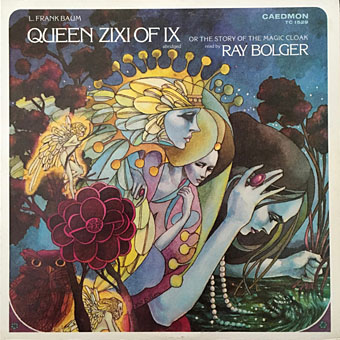
L. Frank Baum: Queen Zixi Of Ix (Or The Story Of The Magic Cloak) Read By Ray Bolger (1977).

There’s a lot you could write about illustrators Leo and Diane Dillon. They were very prolific for a start, creating many book covers and interior illustrations in a variety of styles and different media. They also maintained a long-running association with Harlan Ellison whose praise for the pair was never less than fulsome. Like Bob Pepper and other versatile illustrators, they created art for album covers as well as books, with regular commissions from Caedmon Records, a label that specialises in spoken-word recordings.

dillons12.jpg

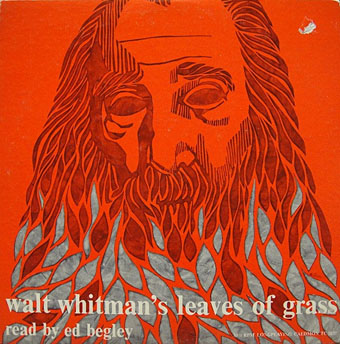
Walt Whitman’s Leaves Of Grass Read By Ed Begley (1959).

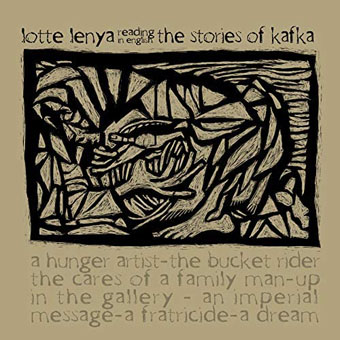
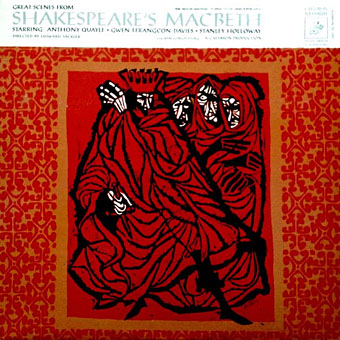
During the time the Dillons were working for Caedmon most of the label’s releases were on vinyl, a format that tended to restrict the readings to poetry, short stories or extracts from novels and plays. The format was limited for writers and listeners but beneficial for book illustrators, giving them a larger canvas to work on. These examples are a small selection of the Dillons’ output, more of which may be seen at Discogs. Not everything on Caedmon looked this good. I used to own the David McCallum reading of The Dunwich Horror, an album whose cover art was so amateurish it might have been drawn by Wilbur Whateley himself. The Dillons’ cover for The Rats in the Walls is much better, with a gnawing figure that resembles the woodcut-style illustrations the pair created for Harlan Ellison’s Dangerous Visions anthologies. I’ve never read anything about the Dillons’ techniques so can’t say whether their woodcut style was a product of actual wood engraving rather than linocut, a more convenient medium. I’d guess the latter since the end results look pretty much the same, but if anyone knows the answer then please leave a comment.

dillons01.jpg

The Stories Of Kafka Read By Lotte Lenya (1962).

dillons07.jpg

Great Scenes From Shakespeare’s Macbeth: Anthony Quayle, Gwen Ffrangcon-Davies, Stanley Holloway (1962).

dillons06.jpg

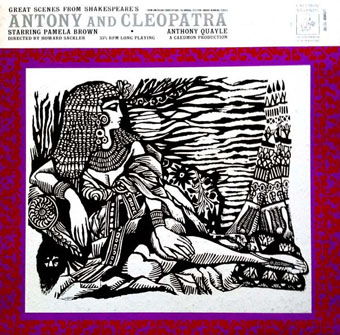
Great Scenes From Shakespeare’s Antony And Cleopatra: Pamela Brown And Anthony Quayle (1963).

Continue reading “The Dillons at Caedmon”

Weekend links 544

wright.jpg

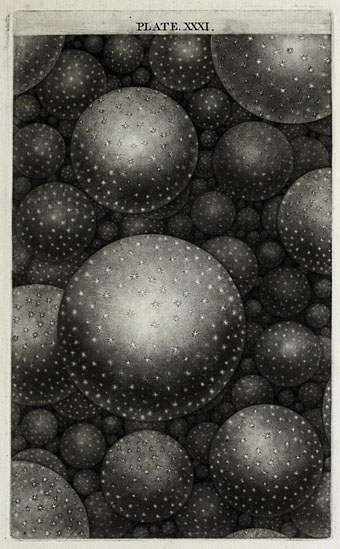
“You may if you please, call a partial View of Immensity, or without much Impropriety perhaps, a finite View of Infinity.” An illustration from Thomas Wright’s An Original Theory or New Hypothesis of the Universe (1750).

• If you read about electronic music for any length of time today you’ll eventually come across the term “pad”, referring to a feature of the music itself not the instrumentation. I’ve noticed increasing instances of this with no accompanying explanation of what the term actually refers to. Rob Wreglesworth has the answer.

• At Dangerous Minds: Richard H. Kirk talks to Oliver Hall about Cabaret Voltaire and Shadow Of Fear. No comment from Kirk as to why the new album warrants the CV name when the music is indistinguishable from his many solo works.

• Eyeball Fodder: The Art of the Occult Edition. S. Elizabeth presents artwork featured in her new book, together with links to artist interviews, including one to the interview we did for Coilhouse magazine a few years ago.

• More electronica: Music From Patch Cord Productions is a new compilation of music by Mort Garson that features some previously unreleased pieces. Great cover art by Robert Beatty as well.

• A trailer for Fireball: Visitors from Darker Worlds, a documentary film about meteorites by Werner Herzog and Clive Oppenheimer.

• From 2019: John Waters and Lynn Tillman in conversation. “The pair discussed Waters’s recent exhibitions and art career.”

Harlan Ellison’s The Last Dangerous Visions may finally be published, after a five-decade wait.

Turn your feline into a god with this cardboard Shinto shrine for cats.

• Mix of the week: XLR8R Podcast 670 by Dadub.

• At Dennis Cooper’s: Harry Dean Stanton Day.

John Cooper Clarke‘s favourite songs.

Meteor Storm (1994) by FFWD | The Third Chamber: Part 5 – 7pm Tokyo Shrine (1994) by Loop Guru | Fireball (1994) by Sun Dial

Weekend links 419

ellison.jpg

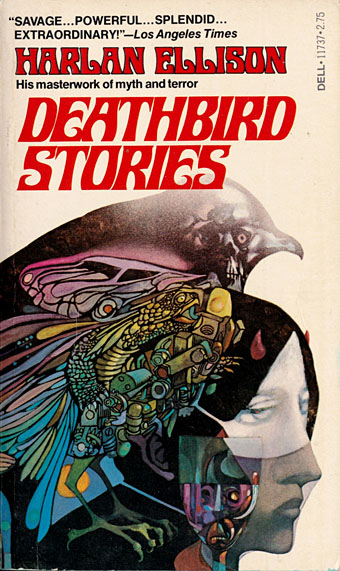
Cover art by Leo & Diane Dillon, 1975.

Art is not supposed to be easier! There are a lot of things in life that are supposed to be easier. Ridding the world of heart attacks, making the roads smoother, making old people more comfortable in the winter, but not Art. Art should always be tough. Art should demand something of you. Art should involve foot-pounds of energy being expended. It’s not supposed to be easier, and those who want it easier should not be artists. They should be out selling public relations copy.

Typical of the late Harlan Ellison to describe his vocation in terms of difficulty and struggle even when his prolific output made writing seem effortless. When my colleagues at Savoy Books published a Savoy issue of New Worlds magazine in 1979 one of the features they ran was an introduction by Michael Moorcock to an Ellison story collection. (They also published two books of Ellison’s around this time.) A copy of the magazine was duly sent to the subject of the essay since Ellison always liked to keep track of his print appearances. The back page of that particular issue is blank but for a few words in bold type from singer PJ Proby: “I am an artist; and should be exempt from shit.” Ellison cut this slogan from the magazine then glued it to his typewriter, no doubt transferring it to later models since it was still visible in the 2008 Ellison documentary, Dreams With Sharp Teeth.

My first encounter with Ellison’s work was also my first encounter with what became labelled the new wave of science fiction, via a reprint of I Have No Mouth, and I Must Scream in a book in the school library. I was only about 12 or 13 at the time, and found Ellison’s story so shocking and disturbing that it overpowered everything else in the collection. The only other story that made an equivalent impression at the time was The Colour Out of Space by HP Lovecraft, so it’s perhaps fitting that Ellison gave my work a favourable mention in his introduction to the huge Centipede Press collection of Lovecraft artwork, A Lovecraft Retrospective: Artists Inspired by HP Lovecraft. I still haven’t got over that one. After the initial encounter, the Ellison-edited Dangerous Visions and Again, Dangerous Visions were just as important for me as the paperback reprints of stories from the Moorcock-edited New Worlds: a handful of books that showed science fiction to be a literary form of limitless possibilities, as opposed to the stereotype of space adventure and future technology. The Ellison and Moorcock anthologies led me to William Burroughs, James Joyce and all points beyond; they also soured for me the preoccupation with space adventure and future technology which persists today.

My final connection with Ellison replayed his compliment in a small way, when editor Jill Roberts and I took extra care with the typesetting of Jeffty is Five for The Very Best of Fantasy & Science Fiction, Volume 2. Ellison was the only author I’ve encountered in the digital age whose corrections were still handwritten comments on printed sheets; these had to be faxed to San Francisco then scanned and emailed to me (to this day I still don’t know why the oft-reprinted story required so many adjustments). It was awkward but amusingly so, a benign taste of a legendary bloody-mindedness and insistence on precision.

• “Laughing about an acid trip with members of Can and opening up about some of the ‘scars’ left from his association with Brian Eno and David Byrne’s My Life In the Bush of Ghosts, [Jon] Hassell is candid in a way that comes naturally to those who’ve lived life on their own terms.”

• Drone Metal Mysticism: Erik Davis talks with music scholar and ethnographer Owen Coggins about amplifier worship, sonic pilgrimage, “as if” listening, metal humour, and his new book Mysticism, Ritual and Religion in Drone Metal.

Psychedelic Prophets: The Letters of Aldous Huxley and Humphry Osmond; “Letters between the men who coined the term ‘psychedelic’ and opened doors to a different way of thinking about human consciousness.”

Artaud 1937 Apocalypse: Letters from Ireland by Antonin Artaud; translated and edited by Stephen Barber.

• “I thought female sexuality was an OK thing?” says writer and porn performer, Stoya.

• “How did a major label manage to lose a John Coltrane record?” asks Ted Gioia.

• Welcome to the dollhouse: Alex Denney on a century of cinematic cutaways.

• The trailer for Mandy, a new (and much-awaited) film by Panos Cosmatos.

• Rest in Anger, Harlan Ellison (1934–2018) by Nick Mamatas.

• Mix of the week: FACT Mix 659 by BD1982.

Emily Gosling on library music design.

Record Label Logos

The Deathbird Song (1997) by The Forbidden Dimension | Eidolons (2017) by Deathbird Stories | Deathbird (2017) by Tempos De Morte