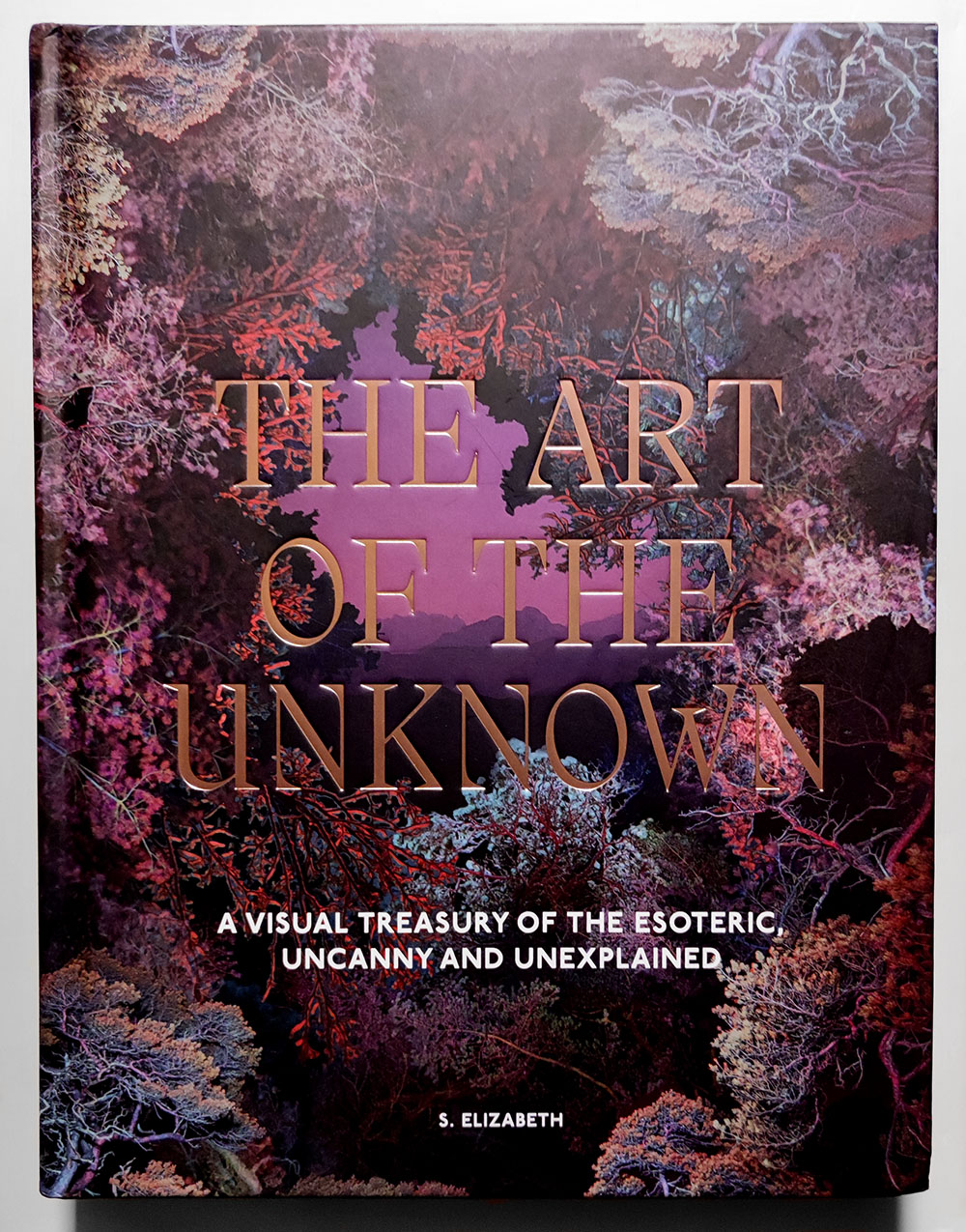
The Art of the Unknown by S. Elizabeth

unknown1.jpg

I was amused when I opened this new arrival to see a reproduction of the picture which is currently being used as this month’s blog header. The coincidence confirms that this is my kind of book, being a collection of paintings, drawings and engravings of the mysterious and recondite throughout the ages. The Art of the Unknown continues the format that S. Elizabeth began in 2020 with The Art of the Occult, then continued with The Art of Darkness and The Art of Fantasy. If you’ve followed any of the links I post here to Unquiet Things then you may already be familiar with Sarah’s writings and excellent pictorial tastes. I can’t be wholly objective when talking about any of these books, I’ve known their author at a distance for many years, and one of my own illustrations appears in The Art of the Occult. Caveats aside, this is still my kind of book.
unknown2.jpg

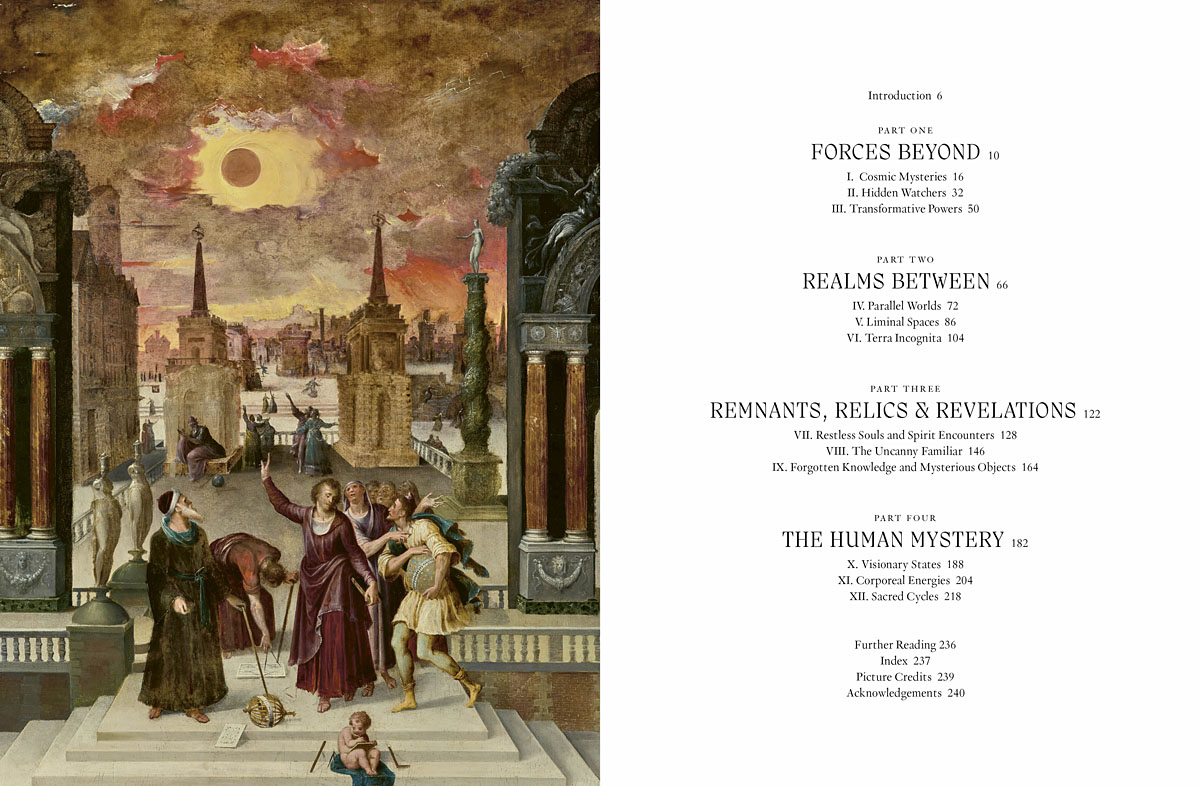
The Art of the Unknown opens with a paean to mystery, a quality which may be a more accurate descriptor of the book’s predominant theme even though “Art of the Unknown” makes a better title. The mysteries of alchemical symbolism, the enigmas of pictorial allegory, the poetic movement which called itself Symbolism, Surrealisms past and present: all these modes of artistic expression are explored and juxtaposed with works by contemporary artists who either continue to evolve the old mystery traditions or play new games with their themes and imagery.
unknown3.jpg

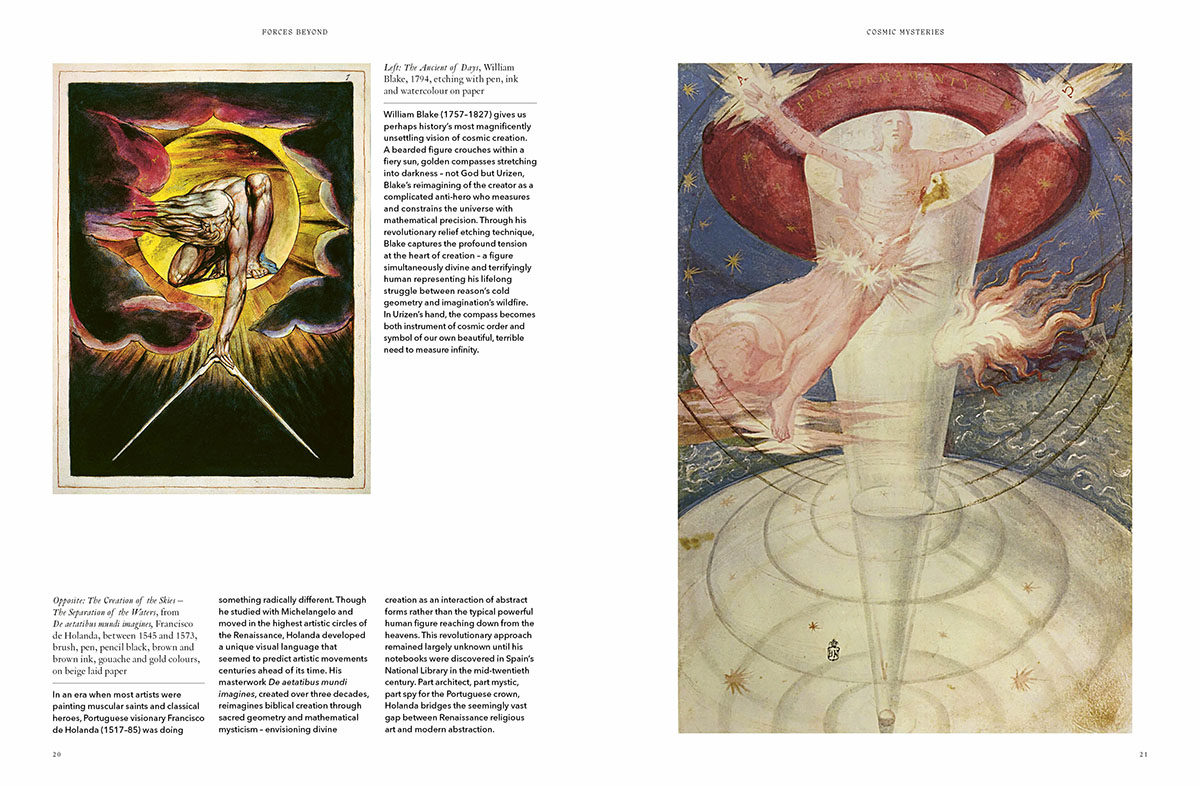
Mystery has been a recurrent attribute of painted art even when it isn’t necessarily the subject of the picture—think of the endless theorising about the Mona Lisa—while some degree of mystery is present any time a painting isn’t immediately explicable. But mystery, like fantasy, is one of those qualities which forms a parallel tradition within the body of art history, connecting a wide variety of otherwise unconnected works going back to the earliest examples of picture-making. The Art of the Unknown isn’t structured as a history of this tradition, however, the book is more a sampling of different eras and an examination of modes and sub-classes: cosmic mysteries, other dimensions, the spectral and the occult, dreams and visions.
durer.jpg

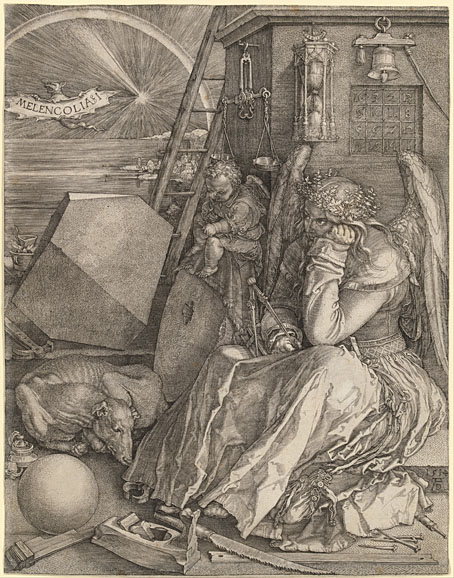
Albrecht Dürer’s Melencolia I (1514) is one of several early examples of pictorial enigma that appear in the book but the bulk of the pages are devoted to the mystery-enriched terrain of the 19th and 20th centuries. Rather than run everything in chronological order Sarah pairs complementary pictures to create rhymes of theme or pictorial content across the centuries. This is something you don’t see very often in art books even though the close juxtaposition of works from different eras has become increasingly common in exhibitions. Common but not always successful when deployed in a gallery where the space of the rooms can make it easy for you to direct your attention at a single picture while ignoring all the rest. Juxtaposition works better in a book spread, bringing two or more pictures to the reader’s attention simultaneously. The Art of the Unknown does this very effectively, much better than some of the attempts I saw in Tate Britain during one of my recent visits to London. To the Tate’s credit, the gallery shop did have a copy of The Art of Fantasy on one of their book tables.
unknown4.jpg

The unknown is a big subject for any book but, as with the previous titles in this series, The Art of the Unknown is a gateway work, and a signpost to areas worthy of deeper exploration. These books remind me of another gateway book I’ve mentioned many times in previous posts, The Fantasy Book by Franz Rottensteiner, which was published by Thames & Hudson in 1978. Rottensteiner’s study was concerned more with literature than with art but the pictures it contained were so wide-ranging and well-chosen I spent many years looking for further examples by the artists. Arthur Machen is one of the British authors whose stories Rottensteiner examines, and I think it was Rottensteiner as much as Lovecraft who helped push me towards Machen’s fiction. The unknown is a recurrent feature in Machen’s fiction, and he liked to say that whatever advances science may make in the future there will always be some aspect of the Universe left unexplained. The four words carved on his gravestone summarise this philosophy: “Omnia exeunt in mysterium“—”Everything ends in mystery”.

Previously on { feuilleton }
The Art of the Occult
Splendor Solis revisited
Melencolia details

Weekend links 824

earth.jpg

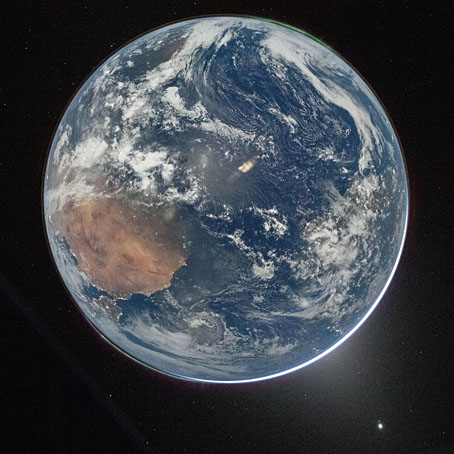
“A view of Earth taken by NASA astronaut and Artemis II Commander Reid Wiseman from one of the Orion spacecraft’s windows after completing the translunar injection burn on April 2, 2026. The image features two auroras (top right and bottom left) and zodiacal light (bottom right) is visible as the Earth eclipses the Sun.”

• I was surprised this week to find myself quoted by David Hudson at Criterion Current in an overview of the schedule for Cold War Visions: Nuclear Anxiety in Eastern Bloc Cinema, a short season of films that will be showing at the Barbican throughout this month. One of those films is Andrei Tarkovsky’s Stalker, a cult film round here, which a handful of lucky Londoners will be able to see on a big screen.

邪神三十六景 (Thirty-six Views of the Evil Gods) is collection of drawings by Takeki Yamada that combine Hokusai’s celebrated views of Mount Fuji with beings from Lovecraft’s Cthulhu Mythos. I’m a little underwhelmed by the results but the book is out there for those who want it.

• Among the new titles at Standard Ebooks, the home of free, high-quality, public-domain texts: Last and First Men by Olaf Stapledon. (Previously)

• Coming soon at Unquiet Things: The Art of the Unknown: A Visual Treasury of the Esoteric, Uncanny, and Unexplained by S. Elizabeth.

• At Public Domain Review: Elizabeth I’s manuscript copy of Pierre Boaistuau’s Histoires Prodigieuses (1559).

• New music: Enter the Nuummite Cosmos by Brotherhood Of Sleep.

• At the BFI: Where to begin with Peter Weir.

A Brief History of the Dust Jacket.

Out Of The Unknown (1984) by Died Pretty | Brian’s Nightmare / The Unknown, Part One (2005) by Robin Guthrie / Harold Budd | A Gift Of Unknown Things (2017) by Teleplasmiste

Weekend links 710

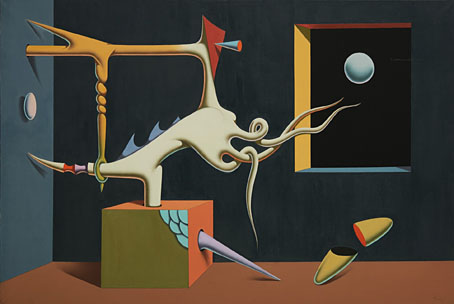
Menace (1974) by Ivan Tovar.

• “I find myself going back to Early Water more and more in recent years. It should be better known.” B. Sirota reviewing the one-off musical collaboration between Michael Hoenig and Manuel Göttsching. (Previously.) It should indeed be better known.

• At Unquiet Things: “Come for the cosmic awe, stay for the skeletons in spacesuits”; S. Elizabeth talks to Adam Rowe about the science-fiction art of the 1970s.

• “The architectural style wars have started all over again.” Owen Hatherley on the unending debate between traditionalists and modernists.

• At Public Domain Review: Clear Shadows (1867), a book of Japanese silhouette portraits by Ochiai Yoshiiku.

• New music: Flux Gourmet Original Motion Picture Soundtrack by Various Artists, and Volta by Loula Yorke.

• Meta machine mantras: Steve Barker on the birth of the Buddha Machine.

Cosmohedron, a short animated film by Duncan Hatch.

• Mix of the week: isolatedmix 125 by Sa Pa.

Chelsea Wolfe’s favourite music.

• At Dennis Cooper’s: Mirrorers.

A Silhouette Of A Man And A Wasp (1995) by Add N To (X) | A Silhouette Approaches (2005) by Robin Guthrie & Harold Budd | Silhouette (2015) by Julia Holter

Weekend links 708

nash.jpg

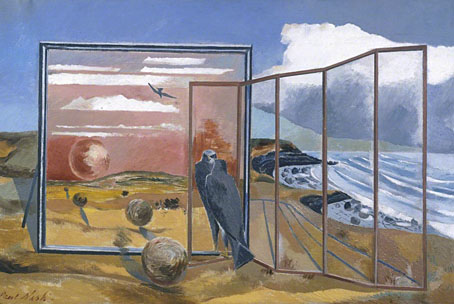
Landscape from a Dream (1936–38) by Paul Nash.

• “I was telling a close friend recently, ‘at my funeral, please play this record…’” Yu Su on her love of Laurie Anderson’s second album, Mister Heartbreak.

• “Surrealism is more of an attitude than an art movement,” says Mark Polizzotti, talking about his new book, Why Surrealism Matters.

• New music: Spinning by Julia Holter; The Night Dwells In The Day by Jozef Van Wissem; and The River Of Light And Radiation by Ben Frost.

• The late David J. Skal, author of Hollywood Gothic and others, is remembered at Swan River Press.

• At Colossal: Dizzying gifs by Etienne Jacob infuse mathematical equations into endless loops.

• At Public Domain Review: Charles Rabot’s Arctic photographs (ca. 1881).

• At Unquiet Things, S. Elizabeth says “Help me downsize my library!

Drone footage of the recent volcanic eruption in Iceland.

• Mix of the week is a mix for The Wire by Kavari.

• At Dennis Cooper’s: Robert Bresson Day.

Dance On A Volcano (1975) by Genesis | Volcano Diving (1989) by David Van Tieghem | Eye Of The Volcano (2006) by Stereolab

Weekend links 699

gartside.jpg

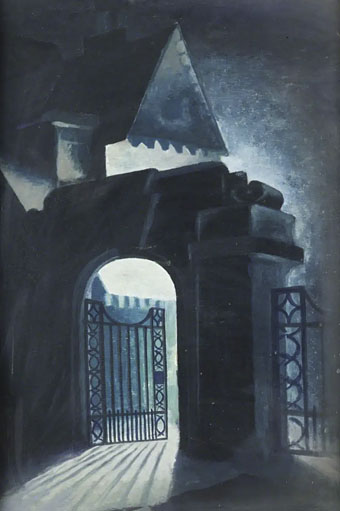
November Evening (1955) by Brian Gartside.

• The next Jon Savage compilation for Caroline True Records will be Jon Savage’s Ambient 90s, a dive into the side of rave culture that I always preferred, even while disputing the use of the “A” word. Anything with beats isn’t ambient by my definition, but I’ve been complaining about the nomenclature since 1991 to no avail. It’s on pre-order anyway.

• “They produced in me an infinity of new images and feelings, that sometimes raised me to ecstasy, but more frequently sunk me into the lowest dejection.” Thus Frankenstein’s monster during his reading of three books that happen to be important texts for the Romantic imagination. Hunter Dukes looks at the syllabus of Frankenstein’s monster.

• “Figure on Led Zeppelin IV cover identified as Victorian Wiltshire thatcher”. Last year I discovered the source for the lyrics and credits lettering designs used on the same album’s inner sleeve. Not as newsworthy, obviously, but I thought it was a good piece of cultural detective work.

• At Aquarium Drunkard: An interview with Morton Subotnick, now 90 years old. “Pioneer” is an over-used label, especially in electronic music, but Subotnick really does warrant the description.

• At Wormwoodiana: Mark Valentine on Unburied Bane, an EP by The Heartwood Institute based on a story by “the enigmatic N. Dennett”.

• At Unquiet Things: Art and captions that didn’t make the print version of The Art of Fantasy by S. Elizabeth.

• “Hidden demon revealed in the shadows of a Joshua Reynolds painting.”

• New music: Polygon by Galya Bisengalieva, and Saor by Claire M. Singer.

• Steven Heller’s font of the month is Letraflex.

• At Dennis Cooper’s: Arthur Lipsett’s Day.

Martin Carthy’s favourite music.

Little Demon (1956) by Screamin’ Jay Hawkins | Ballad Of Maxwell Demon (1998) by Shudder To Think | On Demon Wings (2000) by Bohren And Der Club Of Gore