Weekend links 825

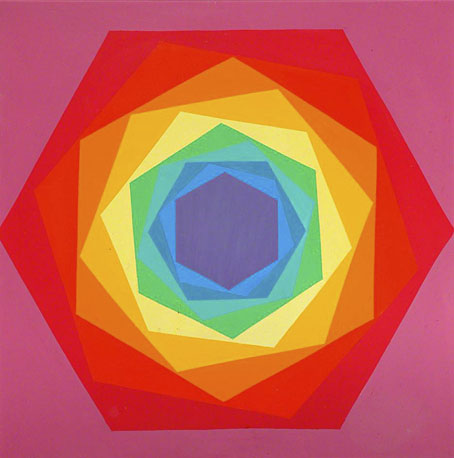
demeric.jpg

Hexagon Sequence II (c. 1970) by Rosalie de Meric.

• Boards Of Canada obsessives have been in a frenzy this week following the appearance of mysterious VHS cassettes sent at random to a small number of users of the Warp Records mail-order service. The contents of the tapes look like this. With the group having been silent for the past thirteen years there’s been an understandable flood of wild speculation on the BOC Reddit page, the supposition being that the tapes (and now an equally cryptic set of posters) mean that a new record release is on the way. We’ll find out soon enough. In the meantime, here’s DJ Food’s O Is For Orange 2025 (version 3), a Boards Of Canada-themed mix that I neglected to link to last year.

• “There is no artistic process that isn’t magical in that it’s an attempt to magically conjure an idea, something that is invisible and intangible, into material form…” Alan Moore (again) talking to Dominique Musorrafiti about art and magic. Also the comics business, which people really ought to stop asking him about when his reluctance to discuss his old work is so evident.

• “I’m not a commercial director—I’m not even a professional film-maker.” Jim Jarmusch talking to Amy Raphael about his career and his latest film, Father Mother Sister Brother. At Little White Lies, Claire Biddle examines the music in Jarmusch’s films and his collaborative albums.

• “Painting and sculpture influenced me greatly. You start to see the world, the outside, everything around you, the tone, with the eyes of seeing a picture that’s framed.” Irmin Schmidt talking to Adelle Stripe about his early life and Requiem, his new album.

• New music: All Clouds Bring Not Rain by Memorials; Afterlife Requiem by Those Who Walk Away; Where Light Pauses In The Silence Of The Sun by Abul Mogard & Rafael Anton Irisarri.

• At Colossal: Daniel Sackheim traverses Los Angeles’ noir side in The City Unseen.

• At Bandcamp Daily: Jim Allen on the sound of the ’70s French Underground.

• At the BFI: Rory Doherty selects 10 great Australian debut features.

NASA Johnson

Hexagon (1990) by Ruins | Octagon (1994) by Basic Channel | Triangles And Rhombuses (1998) by Boards Of Canada
Weekend links 824

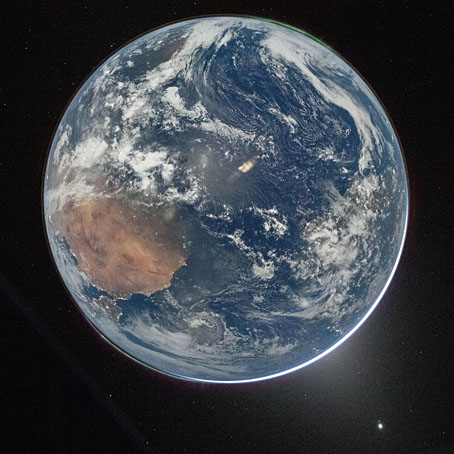
earth.jpg

“A view of Earth taken by NASA astronaut and Artemis II Commander Reid Wiseman from one of the Orion spacecraft’s windows after completing the translunar injection burn on April 2, 2026. The image features two auroras (top right and bottom left) and zodiacal light (bottom right) is visible as the Earth eclipses the Sun.”

• I was surprised this week to find myself quoted by David Hudson at Criterion Current in an overview of the schedule for Cold War Visions: Nuclear Anxiety in Eastern Bloc Cinema, a short season of films that will be showing at the Barbican throughout this month. One of those films is Andrei Tarkovsky’s Stalker, a cult film round here, which a handful of lucky Londoners will be able to see on a big screen.

邪神三十六景 (Thirty-six Views of the Evil Gods) is collection of drawings by Takeki Yamada that combine Hokusai’s celebrated views of Mount Fuji with beings from Lovecraft’s Cthulhu Mythos. I’m a little underwhelmed by the results but the book is out there for those who want it.

• Among the new titles at Standard Ebooks, the home of free, high-quality, public-domain texts: Last and First Men by Olaf Stapledon. (Previously)

• Coming soon at Unquiet Things: The Art of the Unknown: A Visual Treasury of the Esoteric, Uncanny, and Unexplained by S. Elizabeth.

• At Public Domain Review: Elizabeth I’s manuscript copy of Pierre Boaistuau’s Histoires Prodigieuses (1559).

• New music: Enter the Nuummite Cosmos by Brotherhood Of Sleep.

• At the BFI: Where to begin with Peter Weir.

A Brief History of the Dust Jacket.

Out Of The Unknown (1984) by Died Pretty | Brian’s Nightmare / The Unknown, Part One (2005) by Robin Guthrie / Harold Budd | A Gift Of Unknown Things (2017) by Teleplasmiste

Weekend links 823

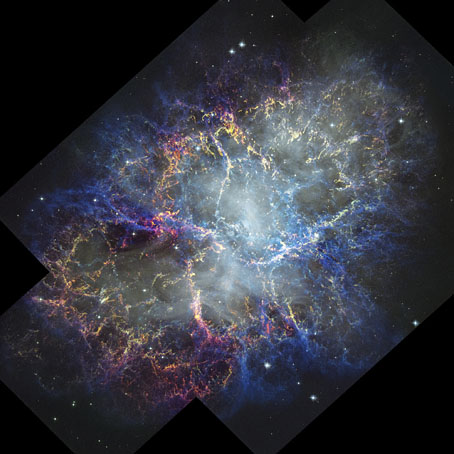
crab.jpg

NASA’s Hubble revisits Crab Nebula to track 25 years of expansion.

Snakes and Ladders is a video adaptation of the one-off Moon and Serpent performance presented by Alan Moore and Tim Perkins at Conway Hall, London, in 1999. With visual samples from Eddie Campbell’s comic-strip adaptation of the audio recording, plus my artwork from the CD release. (Thanks to Francis for the tip!)

• The spring catalogue of lots for the After Dark: Gay Art and Culture online auction. Homoerotic art, photos, historic porn, etc.

• New music: State Of Matter by Dobrawa Czocher; Plague Dogs by The Heartwood Institute.

• “Why we made a film about Mark Fisher called We Are Making A Film About Mark Fisher.

• At Colossal: “Ambiguity reigns in Olaf Hajek’s mysterious illustrations”.

• At Public Domain Review: Monet’s early caricatures (ca. late 1850s).

• At the BFI: George Orwell, film critic.

• The Strange World of…Ladytron.

The Plague (1967) by Scott Walker | A Plague Of Angels (2007) by Earth | The Plague (2014) by Cosmic Ground

Copyright-free images

images.jpg

In recent discussions about AI ethics I’ve been seeing the same question raised by commenters, something like the following: “Okay, this stuff is bad…but if we shouldn’t use it then what can I use instead for my book cover/album cover/Substack article…?” This post is intended to provide one answer to the question, a guide to some of the more substantial alternatives for those who complain they can’t afford to hire a human being to decorate their work. Many of these archives have been around for years but searching for single images doesn’t always bring you to a useful copyright-free solution right away, especially if you’re using Google’s deteriorated service.

Wikimedia Commons. An obvious yet indispensible resource, especially for illustration research, and one that’s continually updated and improved. I only noticed recently that Wikimedia now has very large scans of Ernst Haeckel’s Kunstformen der Natur that are much better quality than the books at the Internet Archive.

The Internet Archive. And speaking of which… The Internet Archive has its own images section but for years now I’ve been mining the texts section looking for illustrated books. This isn’t an ideal solution for most purposes, not when the best material is often hidden under blank library covers, but persistence can be rewarding, especially where old engravings are concerned. Many of the 19th-century illustrations sold by stock libraries may be found here for free.

Gallica. The public face of the Bibliothèque Nationale of France, and a very useful resource despite being cursed with a slow and buggy interface. There’s also a Gallica app but you’re better off using the website.

Library of Congress. Excellent for anything to do with US history. Also a great selection of photochromes, among other things.

NYPL Digital Collections. “Explore 1,060,155 items digitized from The New York Public Library’s collections.”

Public Domain Image Archive. “Explore our hand-picked collection of 10,046 out-of-copyright works, free for all to browse, download, and reuse. This is a living database with new images added every week.”

Smithsonian Open Access & Smithsonian Image Gallery

Biodiversity Heritage Library. Animals and plants.

Wellcome Collection. Public domain medical (and related) images.

Metropolitan Museum of Art Open Access.

The Getty Museum Open Content.

The British Library Flickr Albums. A shame it’s Flickr, they really ought to have a dedicated site of their own for images.

Europeana. “Discover Europe’s digital cultural heritage.”

David Rumsey Map Collection. Maps, maps and more maps.

NASA Image and Video Library. NASA materials have always been free to use so long as you also credit their source.

ESO. ESO is the European Southern Observatory which is housed at a number of sites in the Chilean Atacama Desert. As with NASA, the high-resolution images created there are free to use so long as credit is included.

National Library of Medicine. “Images from the history of medicine.”

Pixabay. “Stunning royalty-free images & royalty-free stock.”

Pexels. “The best free stock photos, royalty free images & videos shared by creators.”

Unsplash. “All images can be downloaded and used for personal or commercial projects.”

Exotic Animal Photo Reference Repository. “Artists creating derivative or transformative works without Generative AI have blanket permission to reference these photos.”

Heidelberg Universitäts-Bibliotek: Art and satirical periodicals. An invaluable resource for European periodicals of the late 19th/early 20th centuries, with downloadable of scans of The Studio, The Yellow Book, Ver Sacrum, Pan, Jugend, and many other titles. Heidelberg is only one of many university libraries which now make parts of their collection available as free downloads. I’d love to point the way to the best of the others but I don’t have a useful list to hand. A recent discovery, however, is Polona, the site for the National Library of Poland which has a large quantity of prints and photographs as well as whole books. Happy searching!

Update: Added a few more links.

Weekend links 736

jupiter.jpg

South Polar Map of Jupiter by the Cassini spacecraft, 2000.

• “A ghostly train journey on a forgotten branch line transports a son, Jozef, visiting his dying Father in a remote Galician Sanatorium. Upon arrival Jozef finds the Sanatorium entirely moribund and run by a dubious Doctor Gotard who tells him that his father’s death, the death that has struck him in his country has not yet occurred, and that here they are always late by a certain interval of time of which the length cannot be defined. Jozef will come to realise that the Sanatorium is a floating world halfway between sleep and wakefulness and that time and events cannot be measured in any tangible form.” The Quay Brothers have finished their third feature film, Sanatorium Under the Sign of the Hourglass, a combination of live action and animation which is being premiered next month at the Venice film festival. No sign of a trailer as yet but the curious can prime themselves by watching (or rewatching) the Quays’ Street of Crocodiles—their first adaptation of Bruno Schulz—or Hourglass Sanatorium, the first screen adaptation of Schulz’s stories by Wojciech Has.

• “No one is sure when the tremendous whirl—the largest and longest-lived storm in our current solar system, with a diameter wider than planet Earth and wind speeds of more than 260 miles per hour—began. Or why it’s red. Or even who first observed it…” Katherine Harmon Courage on Jupiter’s Great Red Spot.

• New music: Bórdice by Nestor, and Nightfall by Trentemøller, the latter with a video swiping shots from Maya Deren’s Meshes of the Afternoon. Nice song but musicians really need to stop plundering independent film-makers when they want some visual embellishment.

• At The Daily Heller: Steven Heller talks to Drew Friedman about Friedman’s new book of caricatures, Schtick Figures.

• Mixes of the week: A mix for The Wire by Miaux, and Isolatedmix 127 by David Douglas & Applescal.

• DJ Food’s latest psychedelic trawl is a collection of book covers, puzzles, etc, designed by Peter Max.

• At Unquiet Things: Vic Prezio’s Gothic book covers.

• At Dennis Cooper’s: Morgan Fisher Day.

Jupiter (1990) by NASA Voyager Space Sounds | Jupiter! (Feed Your Head Mix) (1994) by System 7 | Jupiter Collision (2002) by Redshift