Weekend links 822

tomaselli.jpg

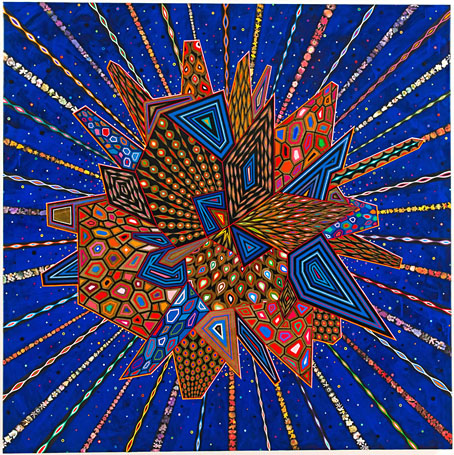
Untitled (2013) by Fred Tomaselli.

• The latest book from A Year In The Country is Ghost Signals: The Shadowlands of British Analogue Television 1968–1995, an exploration of “a shadowland of terrestrial TV hidden in plain sight across the unmediated and unmarketed corners of the internet”.

• New music: After The Rain, Strange Seeds by The Leaf Library; Music For Intersecting Planes by Leila Bordreuil + Kali Malone.

• RIP airbrush artist Philip Castle. Steve Mepstead talked to Castle in 2011 about his work for Stanley Kubrick and others.

Strassman began to see patterns in these encounters and created a typology: aliens; guides and helpers; clowns, jokers and jesters; elves and dwarves; or reptilian or insect-like figures. Variations and outliers notwithstanding, this spectrum remains remarkably consistent with DMT studies today. Strassman also looked into the historical literature and found similar descriptions as far back as Szára, who wrote that one of his subjects reported meeting “dwarfs or something.” Forty years later and a continent away, one of Strassman’s participants put it succinctly: “That was real strange. There were a lot of elves.”

A long read by Joanna Steinhardt on the history and nature of hallucinated spirit guides and “self-transforming machine elves”

• Jet Propulsion Laboratory: Ben Cardew on the pivotal role of Stereolab’s Super-Electric.

• At Colossal: Pejac transforms basic graph paper into detailed, trompe-l’œil tableaux.

Sixty finalists from the 23rd Annual Smithsonian Magazine Photo Contest.

• At BLDGBLOG: The landscape architecture of auroras on demand.

• Mix of the week: Float V mix by DJ Food.

We Have Always Been Here (1995) by ELpH vs Coil | 5-Methoxy-N,N-Dimethyl- (5-MeO-DMT) (1998) by Time Machines/Coil | Machine Elves (2024) by Polypores

Weekend links 689

cossard.jpg

Salammbô (1899) by Adolphe Cossard.

• At Unquiet Things: “A mystery that no longer exists: Wrinkle in Time cover artist revealed”. S. Elizabeth explains. I did a little research of my own into this enigma without success. Good to know that it’s been resolved.

• James Balmont’s latest guide to Japanese cinema is an examination of the transcendental oeuvre of Yasujiro Ozu.

• At Spoon & Tamago: Trains intersect with everyday life in nostalgic illustrations by Shinjiro Ogawa.

• DJ Food discovered a set of Zodiac posters by Bruce Krefting from 1969.

• At Wormwoodiana: John Howard on looking for misplaced Machens.

• At Vinyl Factory: Discovering Mort Garson with Hilary Wood.

• At Dennis Cooper’s: More Ozu in Yasujiro Ozu Day.

• New music: Multizonal Mindscramble by Polypores.

• Mix of the week is a mix for The Wire by Aho Ssan.

• Ioneye in conversation with Bill Laswell.

Train Song (1969) by Pentangle | Love On A Real Train (1984) by Tangerine Dream | Tokyosaka Train (2002) by Funki Porcini

Weekend links 576

haberfield.jpg

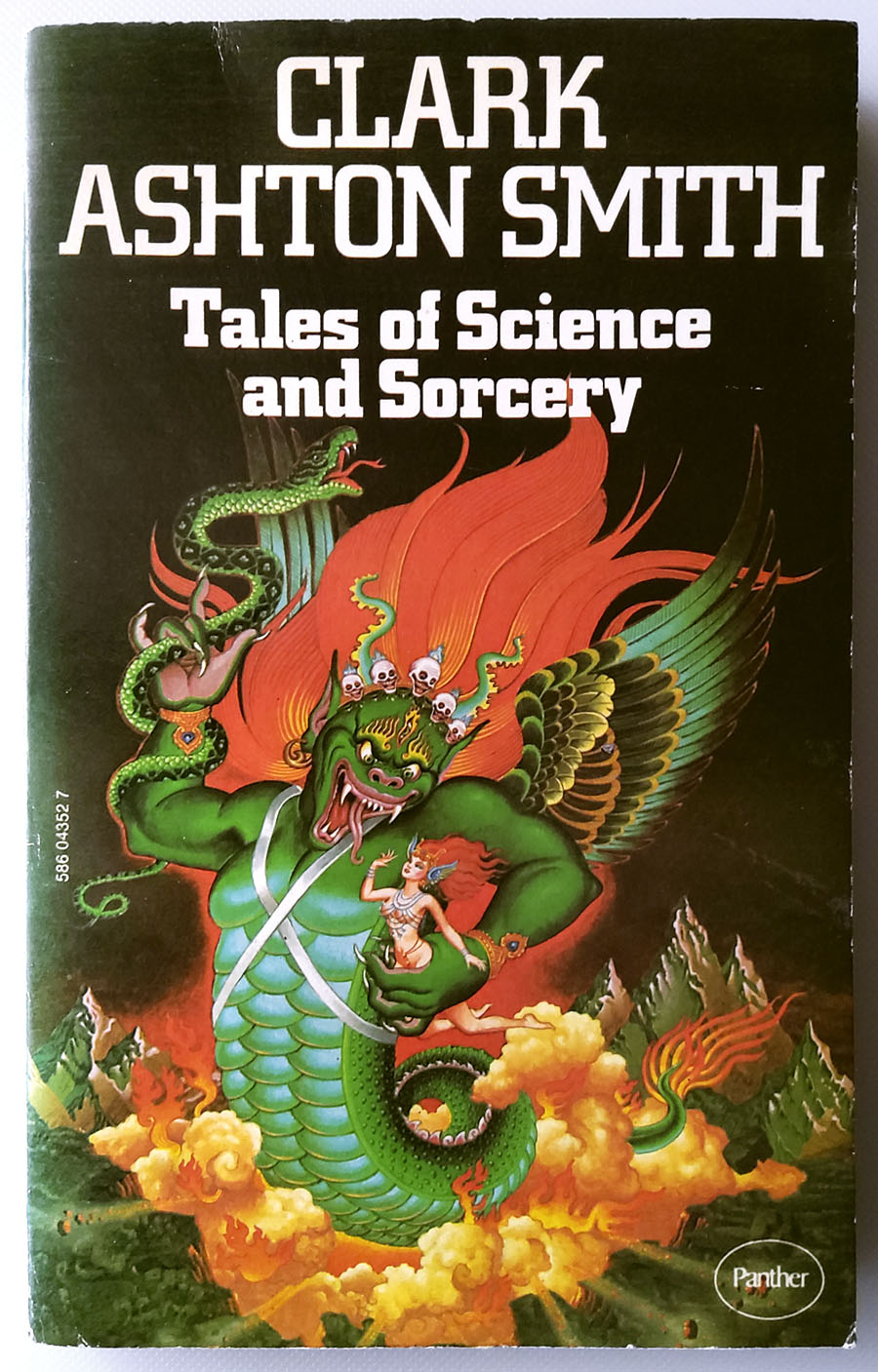
Cover art by Bob Haberfield, 1976.

• I’ve been reliably informed that Australian artist Bob Haberfield died recently but I can’t point to an online confirmation of this so you’ll have to take my word for it. “Science” and “sorcery” might describe the two poles of Haberfield’s career while he was working as a cover artist. His paintings made a big impression on British readers of fantasy and science fiction in the 1970s, especially if you were interested in Michael Moorcock’s books when they appeared en masse as Mayflower paperbacks covered in Haberfield’s art. Haberfield also appeared alongside Bruce Pennington providing covers for Panther paperbacks by HP Lovecraft, Clark Ashton Smith and others, although his work there isn’t always credited. Dangerous Minds collected some of his covers for a feature in 2017. (The US cover for The Iron Dream isn’t a Haberfield, however.)

• “Like Alice, who can only reach the house in Through the Looking-Glass by turning her back to it, Gorey reversed the usual advice to ‘write what you know’ and wrote the apparent opposite of his own situation.” Rosemary Hill reviewing Born to Be Posthumous: The Eccentric Life and Mysterious Genius of Edward Gorey by Mark Dery.

• “Orvil…wanders the countryside, visits churches, rummages in antique shops, and encounters strange men to whom he is no doubt equally strange.” John Self reviewing a new edition of In Youth Is Pleasure by Denton Welch.

• At the Wyrd Daze blog: Q&A sessions with Stephen Buckley (aka Polypores), Gareth Hanrahan, and Kemper Norton.

• “Fellini liked to say that ‘I fall asleep, and the fête begins’.” Matt Hanson on Federico Fellini’s phenomenal films.

• A Beautiful Space: Ned Raggett talks to Mick Harris about the thirty-year history of Scorn.

• Deep in the dial: Lawrence English on the enduring appeal of shortwave radio.

Clive Hicks-Jenkins on making a picture for Annie Darwin (1841–1851).

DJ Food looks at pages from Grunt Free Press circa 1970.

• Mix of the week: Fact Mix 814 by Loraine James.

• New music: Clash (feat. Logan) by The Bug.

• At BLDGBLOG: Terrestrial Astronomy.

LoneLady‘s favourite albums.

• At Dennis Cooper’s: Porn 2.

Tilings Encyclopedia

Betrayal (Sorcerer Theme) (1977) by Tangerine Dream | Science Fiction (1981) by Andy Burnham | Sorceress (2018) by Beautify Junkyards

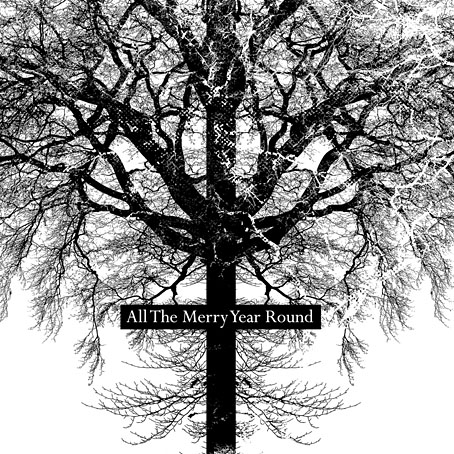
All The Merry Year Round

atmyr.jpg

The appearance of the word “merry” in the title of this, the last in a series of themed compilations by A Year In The Country, rang alarm bells now that the end of the year is approaching. Christmas wretchedness isn’t the theme of the collection, however, “merry” in this case owes more to its prevalence in British folk culture:

All The Merry Year Round is an exploration of an alternative or otherly calendar that considers how traditional folklore and its tales now sit alongside and sometimes intertwine with cultural or media based folklore; stories we discover, treasure, are informed and inspired by but which are found, transmitted and passed down via television, film and technology rather than through local history and the ritual celebrations of the more long-standing folkloric calendar.

Track list:
1) United Bible Studies — Towards The Black Sun
2) Circle/Temple — Rigel Over Flag Fen
3) Magpahi — She Became Ashes and Left With the Wind
4) Cosmic Neighbourhood — Winter Light
5) Field Lines Cartographer — Azimuth Alignment Ritual
6) Polypores — Meridian
7) A Year In The Country — Tradition and Modernity
8) Sproatly Smith — Moons (Part 1)
9) Pulselovers — Tales Of Jack
10) The Hare And The Moon & Jo Lepine — I’ll Bid My Heart Be Still
11) Time Attendant — In a Strange Stillness
12) The Séance — Chetwynd Haze

Some of the previous entries in the year-long series have been more concerned with interstellar space than traditions and customs so All The Merry Year Round may be regarded as a return home, even if the opening number by United Bible Studies is entitled Towards The Black Sun. As with some of the label’s earlier compilations, extended drones and atmospherics by regular contributors Polypores and Time Attendant alternate with contemporary takes on the folk idiom by Magpahi, Sproatly Smith, and The Hare And The Moon, the latter offering an excellent rendition by Jo Lepine of the Scottish ballad I’ll Bid My Heart Be Still. This is another potent collection which doesn’t ignore the sinister potential of winter time, a quality I appreciate when recent offerings from the Ghost Box label have tended to be more box than ghost. The final piece on All The Merry Year Round is Chetwynd Haze by The Séance, a title that refers to ghost-story writer Ronald Chetwynd-Hayes, and a recording that provides an eerie and startling close to a collection mercifully free of seasonal cheer.

All The Merry Year Round will be released at the end of the month but is available for pre-order now.

Previously on { feuilleton }
The Quietened Cosmologists
Undercurrents
From The Furthest Signals
The Restless Field
The Marks Upon The Land
The Forest / The Wald
The Quietened Bunker
Fractures

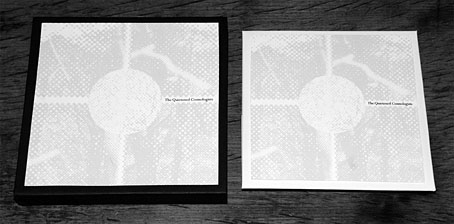
The Quietened Cosmologists

quietened.jpg

It was a coincidence, but the destruction last week of the Cassini probe in the atmosphere of Saturn parallels the theme of the latest music collection from A Year In The Country:

The Quietened Cosmologists is a reflection on space exploration projects that have been abandoned and/or that were never realised, of connected lost or imagined futures and dreams, the intrigue and sometimes melancholia of related derelict sites and technological remnants that lie scattered and forgotten.

It takes as its initial starting points the shape of the future’s past via the discarded British space program of the 1950s to 1970s; the sometimes statuesque and startling derelict artefacts and infrastructure from the Soviet Union’s once far reaching space projects; the way in which manned spaceflight beyond Earth’s orbit/to the moon and the associated sense of a coming space age came to be largely put to one side after the 1969 to 1972 US Apollo flights.

Track list:
1) Field Lines Cartographer — OPS-4
2) Pulselovers — Lonely Puck
3) Magpahi — Chayka
4) Howlround — Night Call, Collect
5) Vic Mars — X-3
6) Unit One — Voyages Of The Moon
7) A Year In The Country — The March Of Progress/Frontier Dreams
8) Keith Seatman — 093A-Prospero
9) Grey Frequency — Phantom Cosmonauts
10) Time Attendant — Adrift
11) Listening Center — Mlécný Perihelion Weekend
12) Polypores — The Amateur Astronomer
13) David Colohan — Landfall At William Creek

The Cassini expedition wasn’t a failed one, of course, but the destruction of the probe (planned from the outset to avoid space-junk wandering the Solar System) is a reminder of the realities of the Space Age, that this is a frontier with the same casualties and ruins as any other. The ruins of Britain’s own contribution to the Space Race—especially those like the abandoned launch-pad at High Down on the Isle of Wight—are all the more poignant for the gulf between their past ambition and present state of decay.

As you might expect, the entries on this collection tend towards the electronic, and there’s even an uptempo synth piece from Keith Seatman whose title—093A-Prospero—is a nod to one of the old British rockets. By way of contrast, David Colohan’s Landfall At William Creek sounds more pastoral unless you know that his title refers to the region of Australia where Britain’s rockets and nuclear missiles were tested during the 1950s and 1960s.

The Quietened Cosmologists will be released on 3rd October, and is available for pre-order now.

Previously on { feuilleton }
Undercurrents
From The Furthest Signals
The Restless Field
The Marks Upon The Land
The Forest / The Wald
The Quietened Bunker
Fractures