The Sound of Claudia Schiffer

socs1.jpg

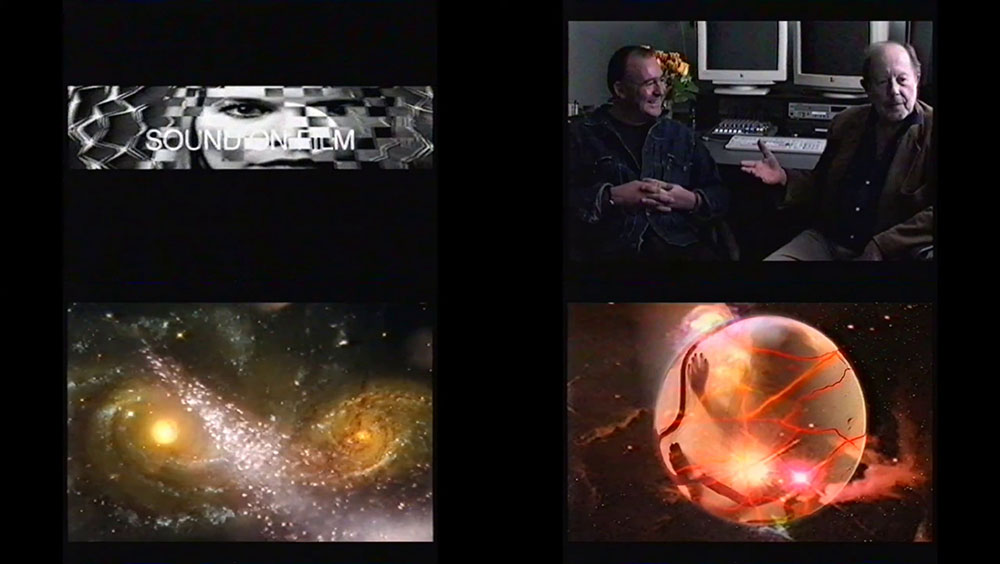
A minor entry in the Nicolas Roeg filmography that few people will have seen. In March 2001 the BBC broadcast four 15-minute films that the corporation had commissioned for an occasional arts strand, Sound on Film. Each episode featured a new piece of music by a living composer, with visual accompaniment by four very different directors. Pilgrimage was directed by Werner Herzog with music by John Taverner; The New Math was directed by Hal Hartley with music by Louis Andriessen; In Absentia was directed by the Quay Brothers with music by Karlheinz Stockhausen.
socs2.jpg

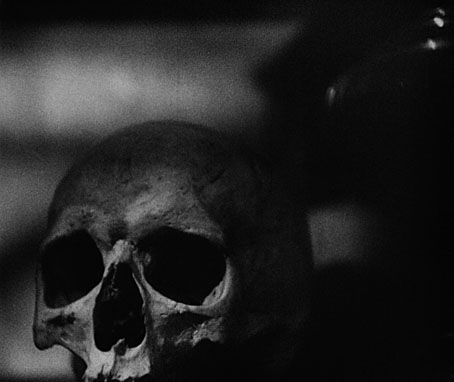
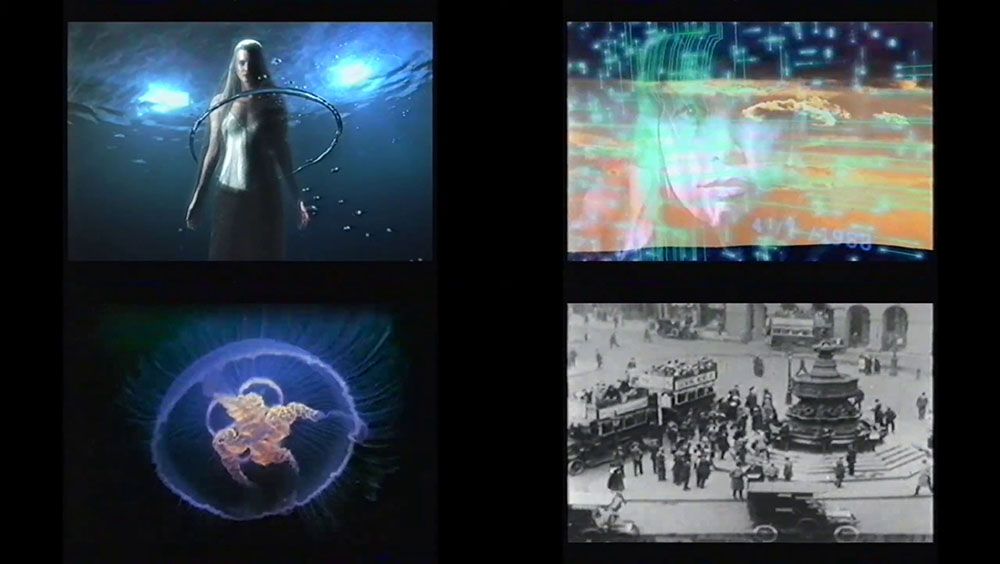
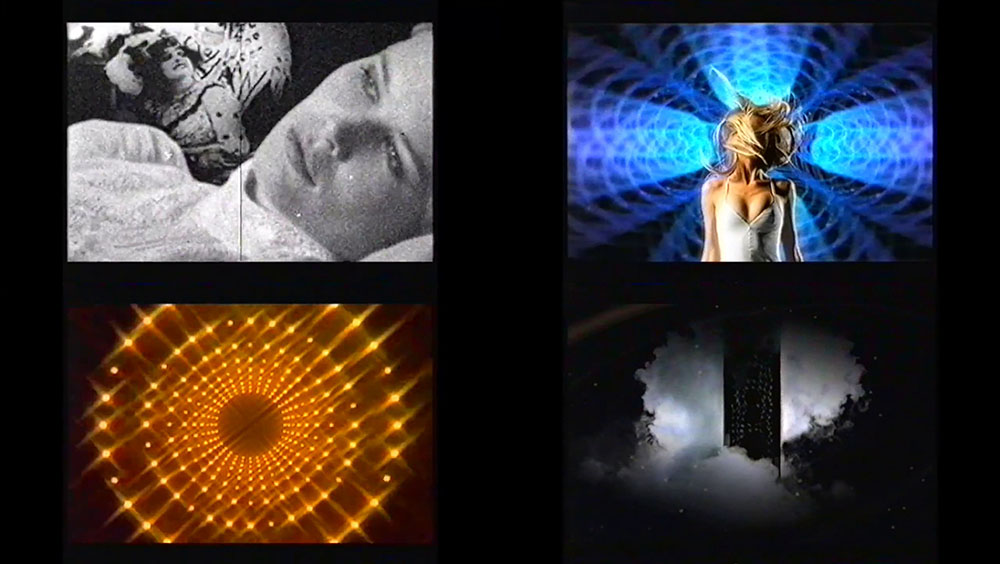
The second film in the series, The Sound of Claudia Schiffer had music by Adrian Utley, the guitarist/synth player in Portishead, with visuals by Nicolas Roeg. I can imagine many people bristling at Utley being described as a composer in a list that includes Stockhausen and Taverner—he may well dispute the term himself—but being the owner of many Portishead records I was happy enough with the pairing. I wasn’t so happy with the film, however, which seemed like an incoherent reprise of the more cosmic moments from Roeg’s earlier films combined with found footage and computer effects that were clunky at the time and look distinctly antiquated 25 years later. The BBC’s listing described The Sound of Claudia Schiffer as a film that “contemplates the nature of celebrity and memory, and how vision can be affected by sound”. In the short introduction Roeg admits to being unsure what any of it meant at all.
socs3.jpg

Watching the piece again I still don’t think it’s very good but it does reinforce my view of Roeg as the most cosmically aware of British directors, especially among the resolutely parochial crowd (Ken Russell excepted) who were his contemporaries. “Cosmic” in this sense is a quality that can easily devolve into vague mysticism or New Age kitsch but at his best Roeg was always looking beyond the immediate confines of space and time, whatever his films might be concerned with at the story level. You see this in his persistent cross-cutting, where visual and thematic rhymes turn everyday life into a web of intricate connections which his characters fail to notice. And his films are often cosmic in a stellar sense; watching Eureka again I was struck this time by the way the film opens with a shot of a pool of gold-infused water whose surface resembles a cloudscape over the sea as observed by an orbiting satellite. The shot which follows—only the second image in the film—is a view of the Earth from space, something which the film’s characters (in 1925 and 1945) could never see for themselves. The Sound of Claudia Schiffer goes overboard with this expansive tendency, turning the model’s narrated biography into something more suited to a description of a visitor from another planet.

Of the other films in this series, the Hartley/Andriessen doesn’t seem to be on YouTube but the Herzog/Taverner may be seen here. In Absentia has been available for many years now on the Quay Brothers’ DVD and blu-ray collections.

Previously on { feuilleton }
Roeg abroad
Landscape with the Fall of Icarus
The Nicolas Roeg Guardian Lecture, 1983
Beyond the Fragile Geometry of Space
Canal view

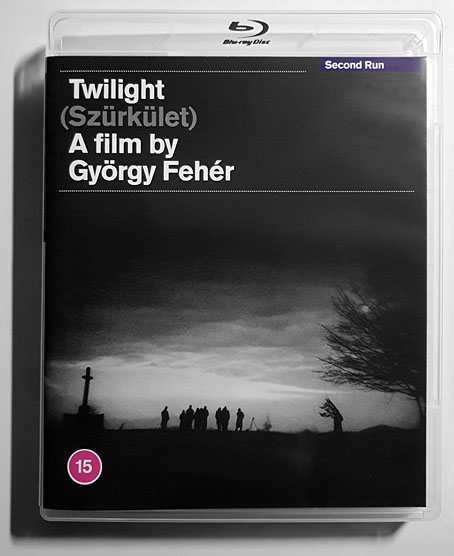
Twilight, a film by György Fehér

twilight1.jpg

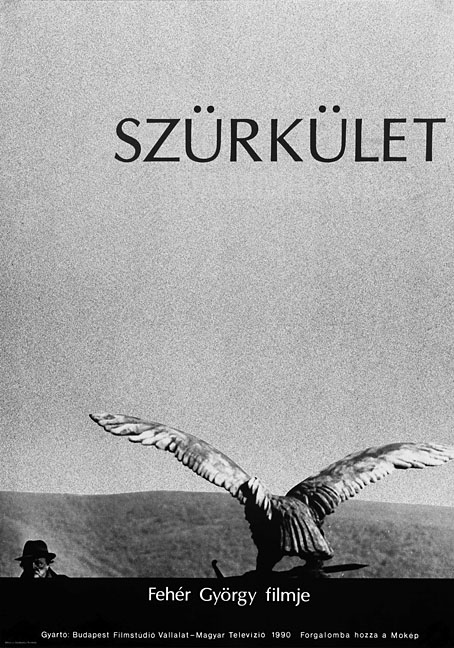
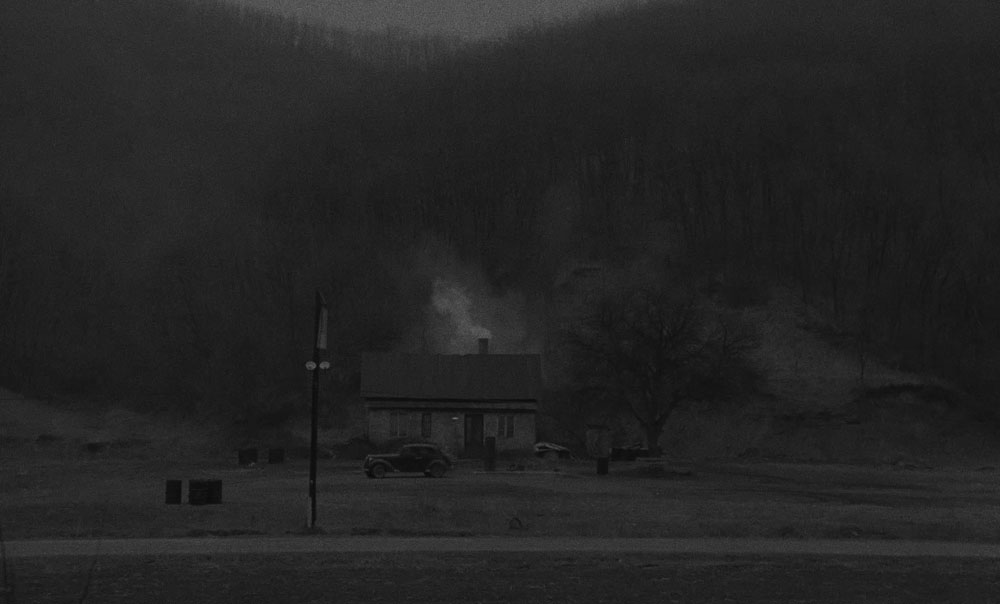
There’s a Thomas Ligotti story—you’ll have to forgive my not recalling the title—in which the world is suffused in an inexplicable and persistent twilight, a condition that you see manifested for real in this remarkable film by György Fehér. Twilight was released in 1990 but for a long time hasn’t been easy to see. Second Run announced their region-free blu-ray edition a couple of months ago, another film which, like Son of the White Mare, is a restoration presented by the National Film Institute of Hungary. The new disc arrives with filmed appreciations by the Quay Brothers, Peter Strickland and others. Mention in the publicity of the Quays, Strickland and Béla Tarr, who the film credits as a consultant, was enough to make me order this without knowing anything further.

twilight2.jpg

A seasoned detective investigates a series of child murders, succumbing to an all-consuming and tragic obsession with the case, finding empty solace in his quest for vengeance. What emerges is not a crime story, but a harrowing venture through the darkness of the human soul.

Twilight unfolds with breathtaking cinematography and haunting sound design, allowing the mystery to emerge in tantalisingly atmospheric and meditative fashion.

A police procedural, then, but not one like any you’ve seen before. The narrative is reduced to a skeletal trace, subsumed, like Ligotti’s world, by the twilight atmosphere. Tarr’s films are an obvious reference here; Fehér’s investigation takes place in the same misty, rain-sodden rural nowhere as Sátántangó (which Fehér helped produce), and shares with Tarr’s epic a similar approach to shot duration and camera movement. Fehér was a cinematographer before he became a director, so the shots may be long but they’re also mesmerising and perfectly choreographed. The film is placeless and also rather timeless, in that it’s evidently set in the past but the antique quality might equally be the product of an isolated backwater. All the cars and phones and typewriters look old, while the men wear big coats and big hats; the atmosphere isn’t so much film noir as film gris. (Fehér followed Twilight with an adaptation of The Postman Always Rings Twice which I now have to see.)

twilight3.jpg

There’s a lot more I could say about this but I hadn’t really intended to write a review. I ought to note, however, the three musical cues which sustain the sombre visuals, and which repeat throughout: the opening chords from Béla Bartók’s Bluebeard’s Castle; the opening chords of Brüder Des Shattens—Sohne Des Lichts by Popol Vu, which are slowed and muted to create a Thomas Köner-like drone; and (very surprisingly) the last minute or so of Hello Earth by Kate Bush, which seems to have been used mainly for the song’s borrowing of Tsintskaro, a Georgian folk song which most people know either from The Hounds Of Love or from its earlier appearance in the plague scenes in Werner Herzog’s Nosferatu. I recognised the Bush track immediately, and was a little disconcerted at first, but the music is as muted as the other pieces, and subtly looped to create a refrain which contrasts with Bartók’s ominous overture, something we may take as a leitmotif for the murdered girls.

As I was saying only a couple of weeks ago, “it’s a big cinematic world out there, and ‘world cinema’ is more than just a few shelves in an entertainment store”. It is indeed. Consider this Exhibit A.

Previously on { feuilleton }
The Cremator by Juraj Herz

Dreyer’s dark dreams

vampyr00.jpg

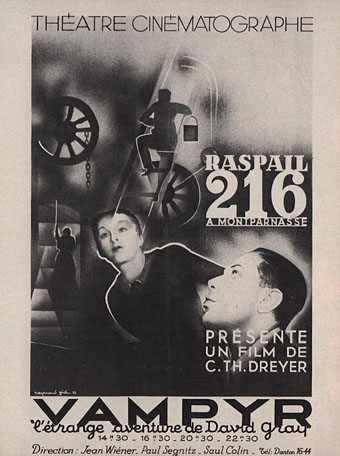
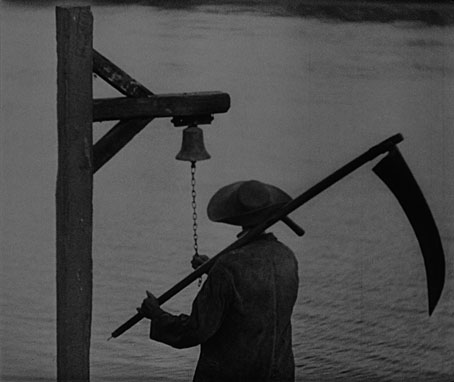
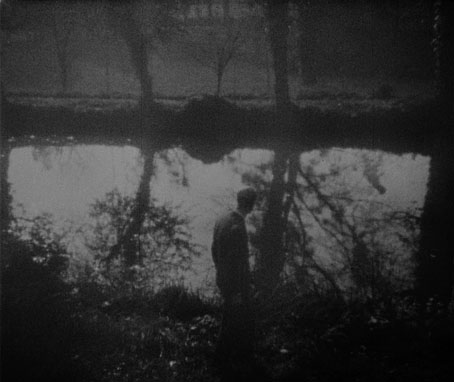
“Almost every time one takes a closer look at a film that is world-famous one has to face the sad fact that the film does not really exist in a form that seems acceptable.” Martin Koerber discussing the physical condition of Vampyr. Carl Dreyer’s film is now 90 years old, and has suffered more than most from the ravages of time and censorship, but after several years of restoration (or should that be resurrection?) by Koerber and others it looks as good today as it’s likely to get; not perfect, when many excisions remain lost, but still the best print I’ve seen.

vampyr01.jpg

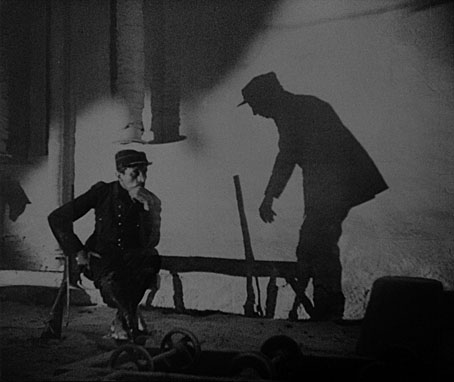
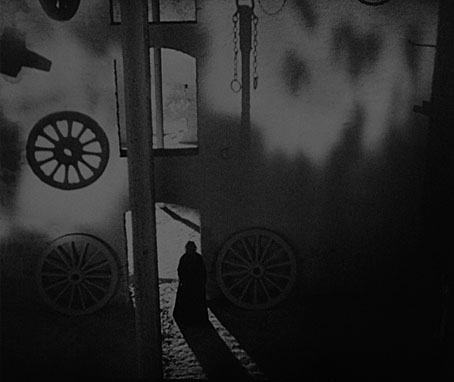
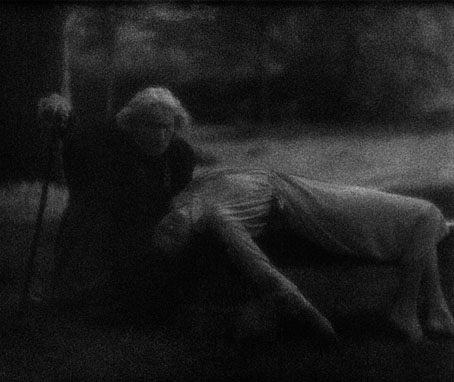
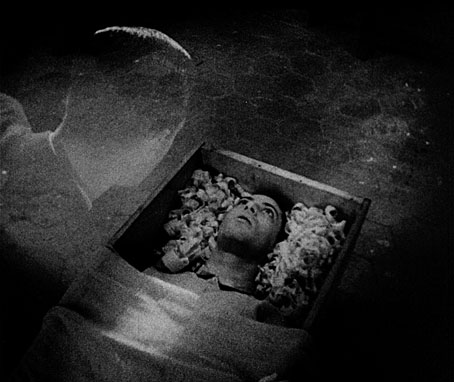
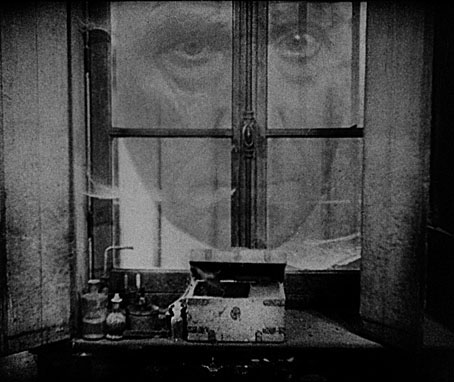
Watching this again I’d forgotten how deeply strange it all is, a sketch of conventional horror motifs borrowed from Sheridan Le Fanu’s In a Glass Darkly, overlaid with inexplicable events from the imaginations of Dreyer and screenwriter Christen Jul. “Surreal” is the word that comes to mind, not least because the film was being shot in locations around Paris while the Surrealists were busy creating their aesthetic scandals inside the city; the Surrealist quest for “the marvellous” and the iconography of dreams is fully realised in Dreyer’s revenants and ambulatory shadows. Vampyr manages to look as primitive as an early silent film—the diffuse photography and stilted acting—while also being sophisticated in its visual style and directorial technique; something else I’d forgotten was the restlessness of Rudolph Maté’s camera, continually moving about the actors or roaming the rooms and corridors. Dreyer’s shoot was almost finished when the Tod Browning version of Dracula was going into production, a film which is equally stilted but with few redeeming features. Where Browning’s film is inert and devoid of atmosphere Vampyr is thoroughly cinematic, with a startling, original score by Wolfgang Zeller that’s nothing like the classical pastiches of Hollywood in the 1930s.

vampyr02.jpg

Kim Newman compares Dreyer’s actors to the hypnotised cast of Werner Herzog’s Heart of Glass, an astute observation. I’ve never regarded the somnolent performances as a flaw, not when they suit the mood so well. More of a deficiency is Vampyr‘s title which raises expectations of a traditional tale of the undead that Dreyer never delivers. The English and French versions were originally titled The Strange Adventure of David Gray but it’s the German version that provides most of the materials for the restored print, and this was retitled Vampyr: The Strange Dream of Allan Gray. (The dual name of the central character is another complication.) The distributors held over the release in Germany until Universal’s Dracula and Frankenstein had opened there which must have pressured them to present the film (unsuccessfully as it turned out) as a conventional horror story. “Strange Dream” is evasive but also more accurate. It reminds me of the only description that David Lynch would provide when asked what Eraserhead was all about: “A dream of dark and troubling things”.

vampyr03.jpg

vampyr04.jpg

vampyr05.jpg

vampyr06.jpg

vampyr07.jpg

vampyr08.jpg

Previously on { feuilleton }
Universal horror
Undead visions
David Rudkin on Carl Dreyer’s Vampyr

Weekend links 544

wright.jpg

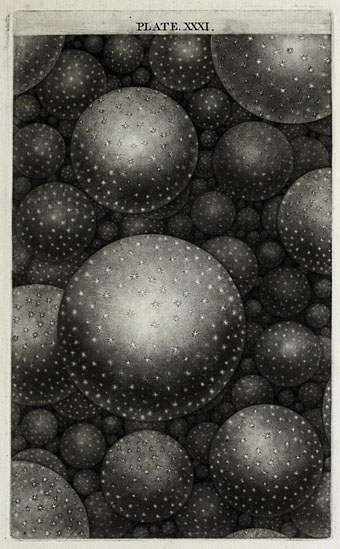
“You may if you please, call a partial View of Immensity, or without much Impropriety perhaps, a finite View of Infinity.” An illustration from Thomas Wright’s An Original Theory or New Hypothesis of the Universe (1750).

• If you read about electronic music for any length of time today you’ll eventually come across the term “pad”, referring to a feature of the music itself not the instrumentation. I’ve noticed increasing instances of this with no accompanying explanation of what the term actually refers to. Rob Wreglesworth has the answer.

• At Dangerous Minds: Richard H. Kirk talks to Oliver Hall about Cabaret Voltaire and Shadow Of Fear. No comment from Kirk as to why the new album warrants the CV name when the music is indistinguishable from his many solo works.

• Eyeball Fodder: The Art of the Occult Edition. S. Elizabeth presents artwork featured in her new book, together with links to artist interviews, including one to the interview we did for Coilhouse magazine a few years ago.

• More electronica: Music From Patch Cord Productions is a new compilation of music by Mort Garson that features some previously unreleased pieces. Great cover art by Robert Beatty as well.

• A trailer for Fireball: Visitors from Darker Worlds, a documentary film about meteorites by Werner Herzog and Clive Oppenheimer.

• From 2019: John Waters and Lynn Tillman in conversation. “The pair discussed Waters’s recent exhibitions and art career.”

Harlan Ellison’s The Last Dangerous Visions may finally be published, after a five-decade wait.

Turn your feline into a god with this cardboard Shinto shrine for cats.

• Mix of the week: XLR8R Podcast 670 by Dadub.

• At Dennis Cooper’s: Harry Dean Stanton Day.

John Cooper Clarke‘s favourite songs.

Meteor Storm (1994) by FFWD | The Third Chamber: Part 5 – 7pm Tokyo Shrine (1994) by Loop Guru | Fireball (1994) by Sun Dial

Weekend links 497

roma.jpg

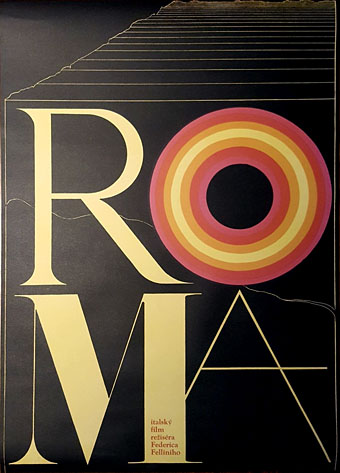
Poster by Zdeněk Ziegler for Roma (1972), a film by Federico Fellini.

• At Dennis Cooper’s: a short history of Straight to Hell, a long-running fanzine launched by Boyd McDonald in 1971 dedicated to true stories of men having sex with other men. The post gives an idea of the contents but for a deep dive I’d suggest Meat (1994) at the Internet Archive, a collection of the best of the early editions of STH. Related: “Straight to Hell was an immensely popular underground publication. John Waters, William S. Burroughs, and Robert Mapplethorpe were fans; Gore Vidal called it ‘one of the best radical papers in the country.'” Erin Sheehy on Boyd McDonald’s determination to kick against the pricks.

• RIP psychedelic voyager and spiritual guide Richard Alpert/(Baba) Ram Dass. The Alpert/Ram Dass bibliography includes The Psychedelic Experience: A Manual Based on the Tibetan Book of the Dead (1964), an acid-trip manual written in collaboration with Timothy Leary and Ralph Metzner from which John Lennon borrowed lines for the lyrics of Tomorrow Never Knows. But the most celebrated Ram Dass volume is Be Here Now (1971), a fixture of countless hippy bookshelves whose first editions were all handmade.

• “An Einstein among Neanderthals”: the tragic prince of LA counterculture. Gabriel Szatan talks to David Lynch, Devo and others about the eccentric songwriter, performer and voice of Lynch’s Lady in the Radiator, Peter Ivers.

• For the forthcoming centenary of Federico Fellini’s birth Stephen Puddicombe offers suggestions for where to begin with the director’s “exuberant extravaganzas”. Related: Samuel Wigley on 8½ films inspired by .

• “I met resident Tony Notarberardino for the first time in 2015 and entering his apartment was like crossing into another dimension.” Collin Miller explores the Chelsea Hotel.

• “More green tea, professor?” The haunted academic, a reading list by Peter Meinertzhagen. Related: Our Haunted Year: 2019 by Swan River Press.

• “30 July, Yorkshire. Thunder, which is somehow old-fashioned.” Alan Bennett’s 2019 diary.

• More acid trips: Joan Harvey on the resurgence of interest in psychedelic drugs.

• At Lithub: Werner Herzog’s prose script for Nosferatu the Vampyre.

Tief gesunken, a new recording by Bohren & Der Club Of Gore.

In Heaven (1979) by Tuxedomoon | Die Nacht Der Himmel (1979) by Popol Vuh | Roma (1981) by Steve Lacy