
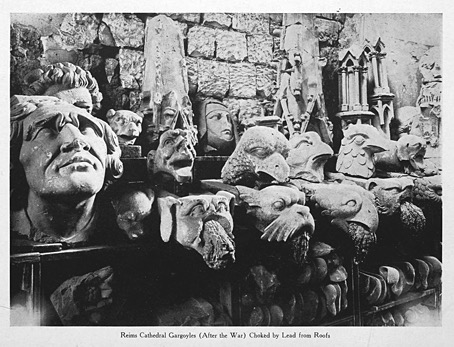
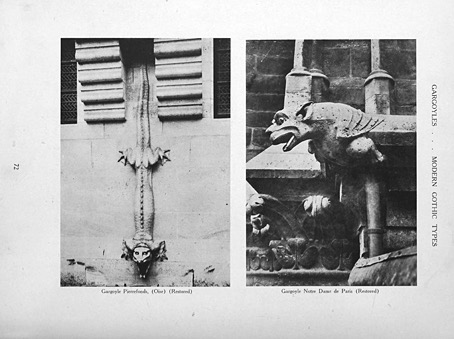
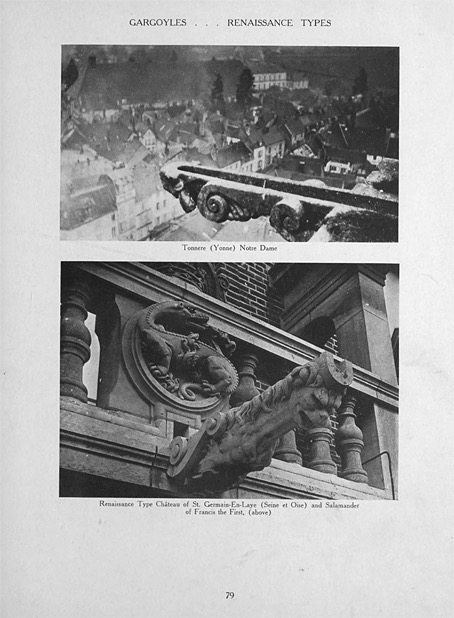
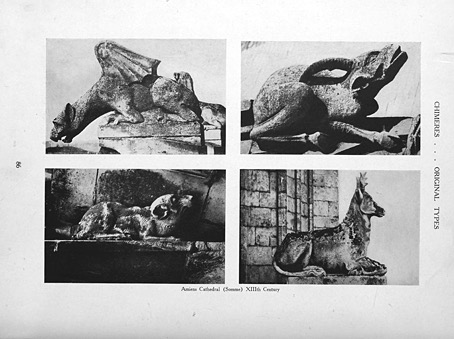
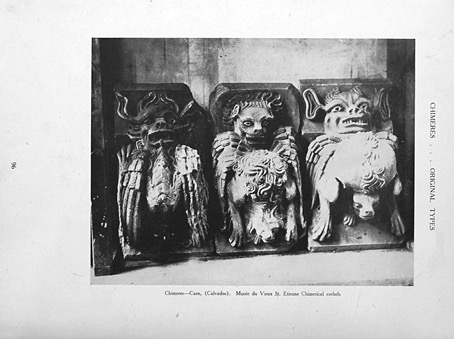
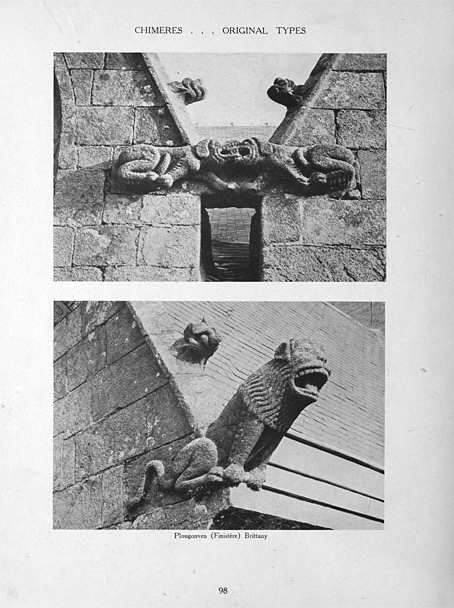
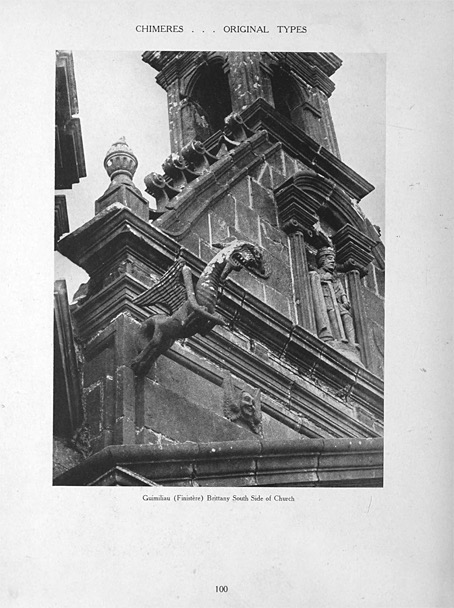
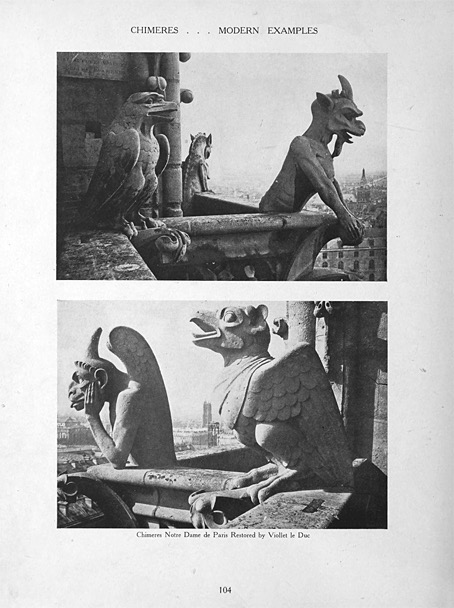
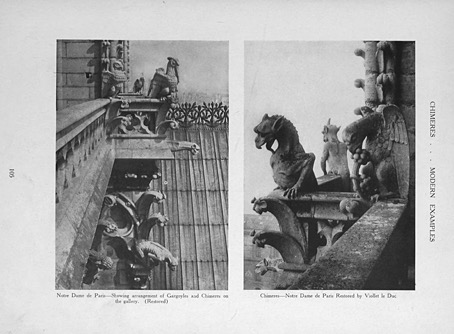
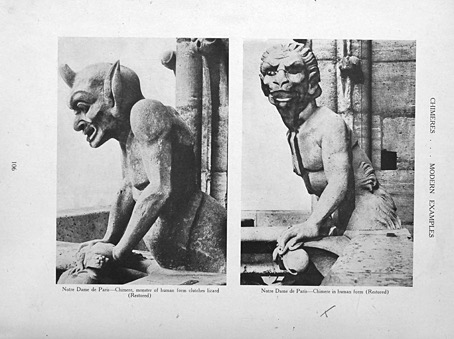
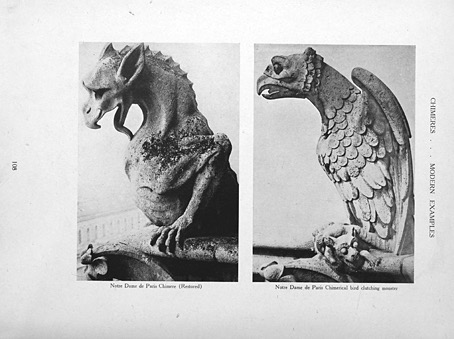
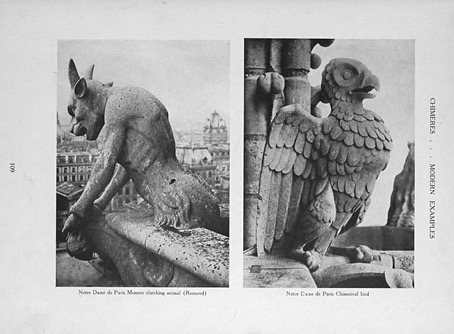
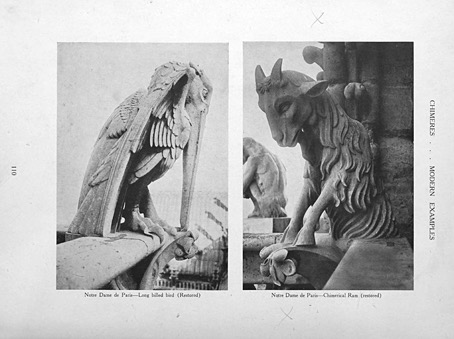
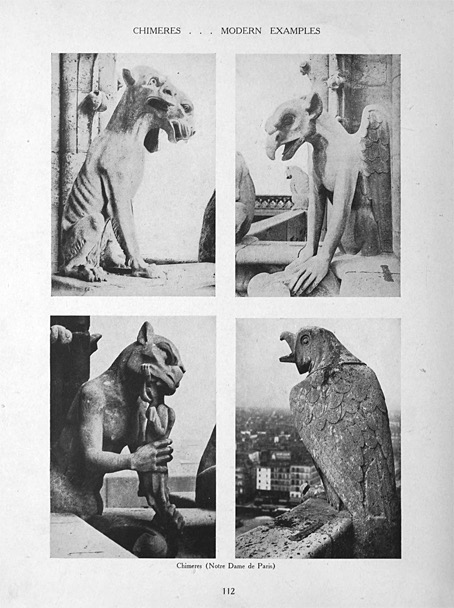
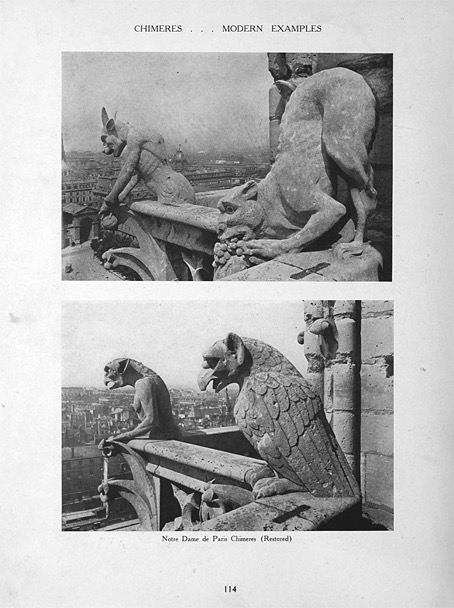
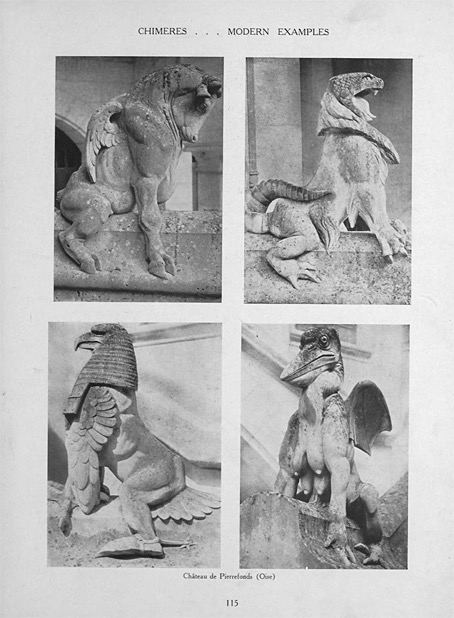
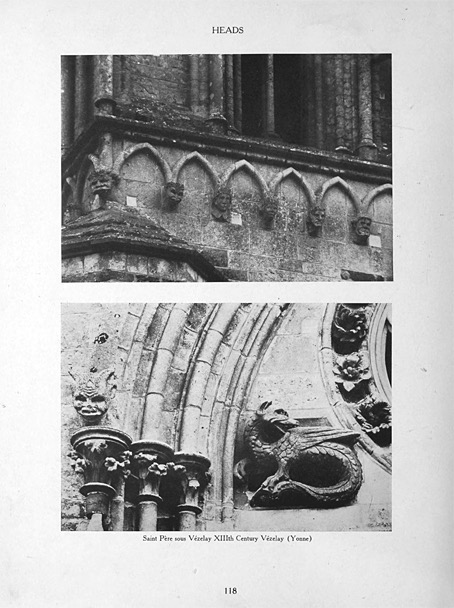
Good books about gargoyles aren’t easy to find but this one, edited by Lester Burbank Bridaham, is better than many I’ve seen. Gargoyles, Chimeres, and the Grotesque in French Gothic Sculpture was published in 1930, and is mostly a collection of photographs, with the text kept to a minimum at the front of the book. The nature of the subject—eroded soot-stained sculptures seen against eroded soot-stained walls—doesn’t always help the photographer but the book makes up in quantity what it lacks in quality. There are many photographs here, often four to a page over 200 pages. Dover reprinted the book in a large-format edition in 2006.
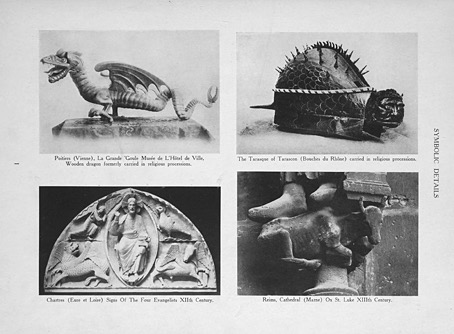
These gargoyles and grotesques show very plainly the complete freedom under which the old craftsmen worked and the immense originality and variety that were the result. Here are hundreds of spontaneous creations, each as individual as possible, and not only this but many of them show a brilliancy of space composition and a fineness of line that would not shame a great sculptor. Craftsmen these, but also creative artists.
Ralph Adams Cram in the introduction
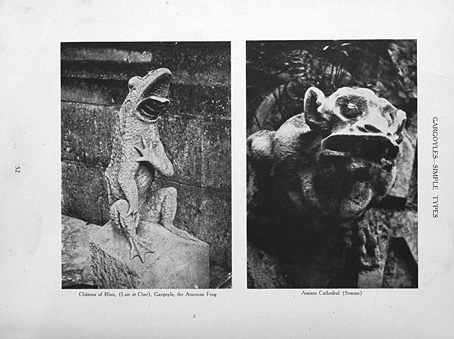
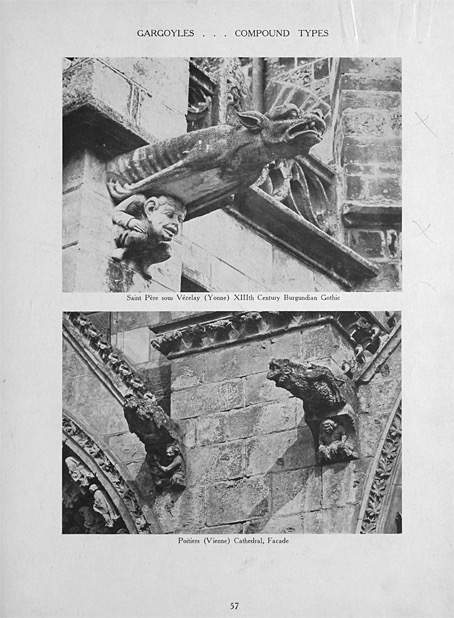
The authors divide their study according to subject: Last Judgments, Gargoyles of different ages, Chimeras (or hybrid creatures), and Heads. Gargoyles are often hybrid creatures, of course, but the broad difference between a gargoyle and a chimera in the architectural sense would be that gargoyles often serve a purpose as a waterspout whereas chimeras are solely decorative. Gargoyles are a good example of an architectural solution that evolved into an element of architectural style. Spouts were required to direct rainwater away from the lower areas of the building; decoration helped incorporate the spouts into the building’s structure then the decoration became a traditional part of the Gothic style. For a time, anyway. You don’t see many gargoyles among the buildings designed by the rather pious English revivalists in the 19th century, but the great French revivalist and restorer, Eugène Viollet-le-Duc, enjoyed the grotesquery of the old cathedrals, and it’s he who was responsible for the famous chimeras that look down on Paris from the balconies of Notre Dame.
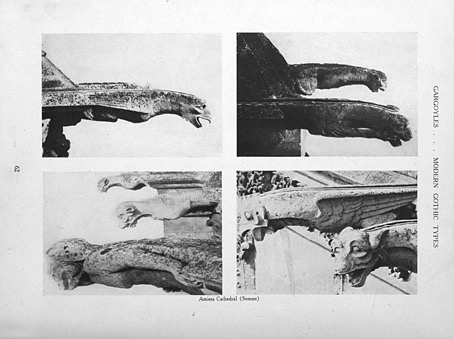
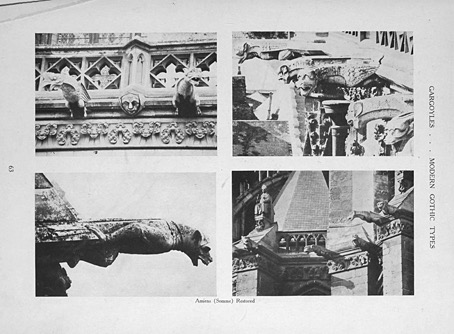
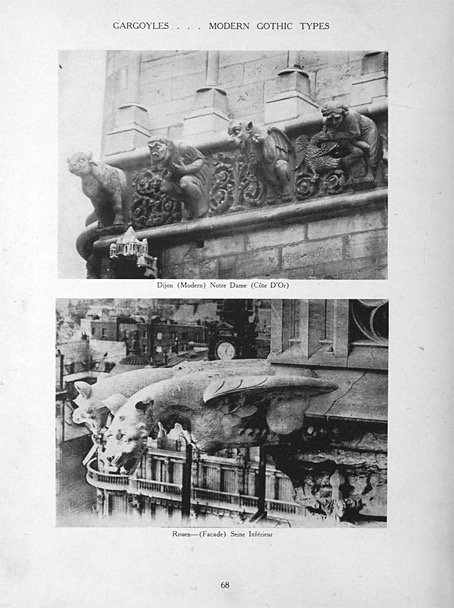
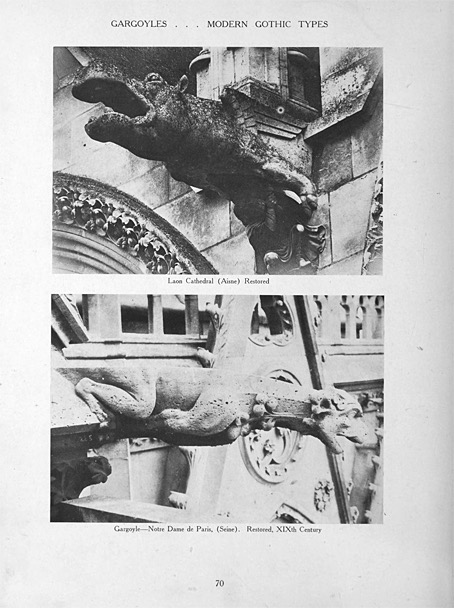

Previously on { feuilleton }
• Gothic details
• Monsters in art
Another, more recent addition to the gargoyle canon is NIGHTMARES IN THE SKY, text by Stephen King, photos by f-stop Fitzgerald (Viking, 1988), though it only includes some of the gargoyles of New York city.
Thanks, Michael, that’s one I hadn’t heard of. A book about New York details is valid, the city has a lot of great architecture. I’ve got a couple of books about the place myself.
Thanks for this! You’re probably well aware, but for the benefit of others, the author of the introduction Ralph Adams Cram — the leading Gothic revival architect in America, an American arch-conservative/monarchist (friends with Nock, Mencken etc), and most importantly for folks like us: author of The Dead Valley (one of HPL’s favorite stories) from his one and only collection of weird/ghost tales, Black Spirits and White.
FUnny to note too that the copy on internet archive is from the famous (once upon a time here in hollywood) Lilian Michaelson Research library at Paramount studios. Ah, those were the days, when studios kept vast research libraries filled with arcane books! Her library was saved and preserved by the Internet Archive folks:
https://blog.archive.org/2020/12/15/after-searching-for-a-decade-legendary-hollywood-research-library-finds-a-new-home/
Adam: Many thanks, I wasn’t aware of any of this, although I ought to have looked up Ralph Adams Cram before using his quote. I’d been searching for books of Gothic details earlier this week which is how the gargoyles book turned up. Good to know there’s a Lovecraft connection as well! I think I have a copy of ‘The Dead Valley’ somewhere, I’ll have to dig it out.
I used to own this book, but sadly, I gave it to a friend.
FYI, Tradd Street Press, a US based print-on-demand facsimile publisher issued a hardcover of this work back in February of this year. They have a good reputation for low cost high quality public domain reproductions. Can’t vouch for what international shipping might be though. It seems to be available at all the usual outlets.
ISBN-13: 978-1025673301