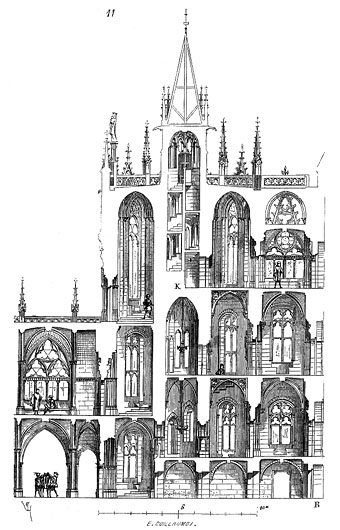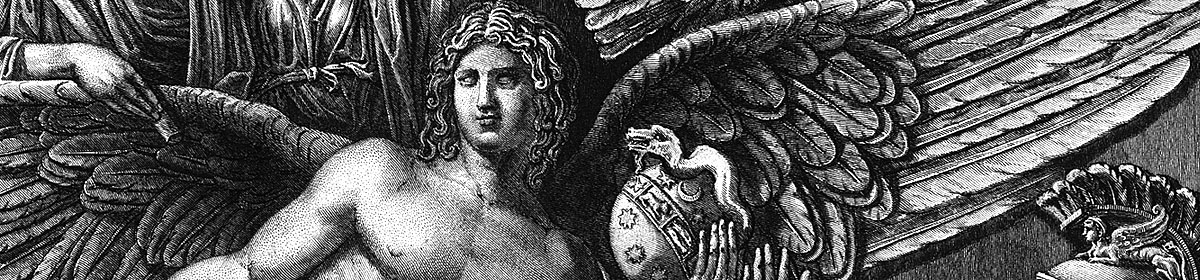
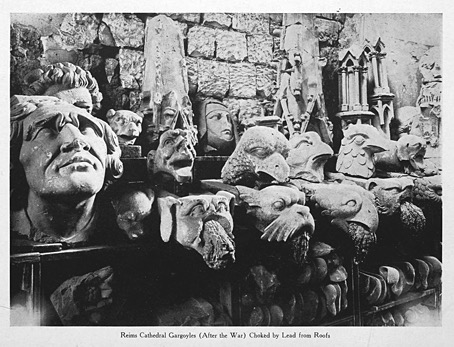
Gargoyles, Chimeres, and the Grotesque in French Gothic Sculpture

gargoyles01.jpg

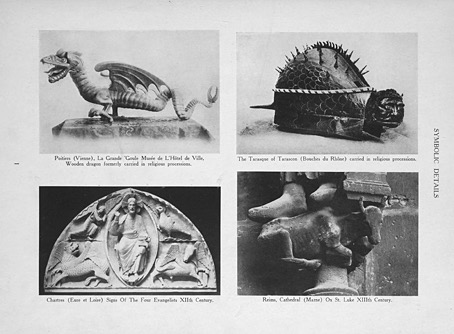
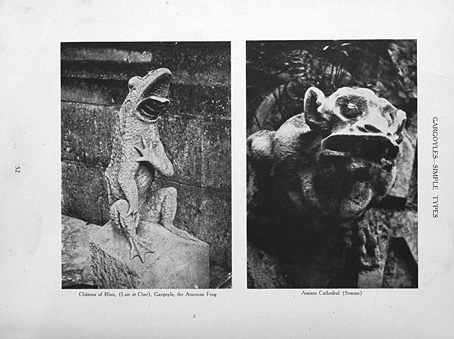
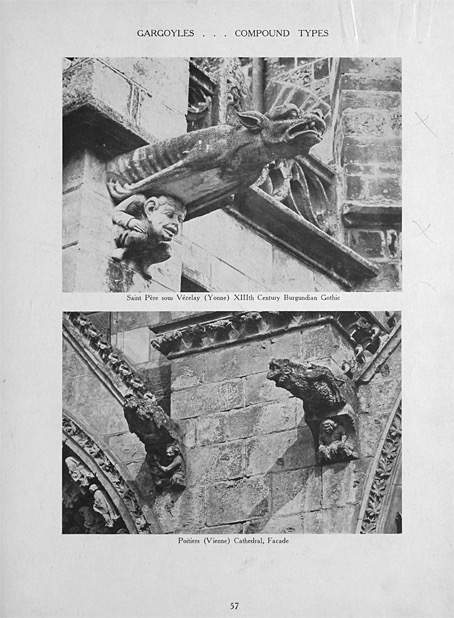
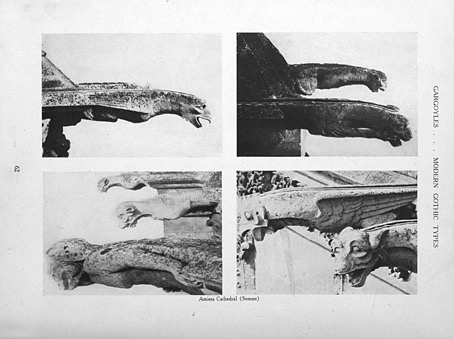
Good books about gargoyles aren’t easy to find but this one, edited by Lester Burbank Bridaham, is better than many I’ve seen. Gargoyles, Chimeres, and the Grotesque in French Gothic Sculpture was published in 1930, and is mostly a collection of photographs, with the text kept to a minimum at the front of the book. The nature of the subject—eroded soot-stained sculptures seen against eroded soot-stained walls—doesn’t always help the photographer but the book makes up in quantity what it lacks in quality. There are many photographs here, often four to a page over 200 pages. Dover reprinted the book in a large-format edition in 2006.
gargoyles02.jpg

These gargoyles and grotesques show very plainly the complete freedom under which the old craftsmen worked and the immense originality and variety that were the result. Here are hundreds of spontaneous creations, each as individual as possible, and not only this but many of them show a brilliancy of space composition and a fineness of line that would not shame a great sculptor. Craftsmen these, but also creative artists.

Ralph Adams Cram in the introduction
gargoyles03.jpg

The authors divide their study according to subject: Last Judgments, Gargoyles of different ages, Chimeras (or hybrid creatures), and Heads. Gargoyles are often hybrid creatures, of course, but the broad difference between a gargoyle and a chimera in the architectural sense would be that gargoyles often serve a purpose as a waterspout whereas chimeras are solely decorative. Gargoyles are a good example of an architectural solution that evolved into an element of architectural style. Spouts were required to direct rainwater away from the lower areas of the building; decoration helped incorporate the spouts into the building’s structure then the decoration became a traditional part of the Gothic style. For a time, anyway. You don’t see many gargoyles among the buildings designed by the rather pious English revivalists in the 19th century, but the great French revivalist and restorer, Eugène Viollet-le-Duc, enjoyed the grotesquery of the old cathedrals, and it’s he who was responsible for the famous chimeras that look down on Paris from the balconies of Notre Dame.
gargoyles04.jpg

gargoyles05.jpg

Continue reading “Gargoyles, Chimeres, and the Grotesque in French Gothic Sculpture”

The Heart of the Lost Star

loststar.jpg

Presenting my cover for the third book in Megan Derr’s gay fantasy series, Tales of the High Court. Since this cover follows a pattern established with the first book in the series, The High King’s Golden Tongue, I’ve posted volumes one and two below for comparison. In my post about the series last year I said that I appeared to have exhausted the Viollet-le-Duc illustrations which I was plundering for the (collaged) architectural frames. As things turned out I was able to work up a new one but if this series continues then further ingenuity will be required.

The Heart of the Lost Star will be published by Less Than Three Press later this month. Meanwhile, I have a number of other projects—most of them horror-related—waiting to be officially revealed. As always, watch this space.

derr1.jpg

derr2.jpg

Previously on { feuilleton }
Tales of the High Court

Tales of the High Court

derr1.jpg

I thought I’d already written something about my cover for Megan Derr’s gay fantasy novel, The High King’s Golden Tongue, but it seems not. This appeared last year from Less Than Three Press, and the next volume in the Tales of the High Court series, Pirate of Fathoms Deep, has been published this week. My earlier omission allows me to show both covers together.

derr2.jpg

When working on the first volume I didn’t expect I’d also be working on a sequel so there was no need to consider whether the design could be carried over. The architectural frame is from a book about French architect Eugène Viollet-le-Duc, taken from one of Viollet-le-Duc’s illustrations for a study of the architecture of old France. I added the windows and curtains before colouring the stones and providing shadows and highlights. This became a problem for the second cover because my Viollet-le-Duc book only had one example of this kind of stonework. After some lengthy searches at Gallica I was able to find enough scans of other pages from the books that Viollet-le-Duc illustrated to piece together a new frame. The Gothic window frames on both covers are from another French volume, and I’ve now exhausted all those examples so a third volume in this series will no doubt present further challenges.