
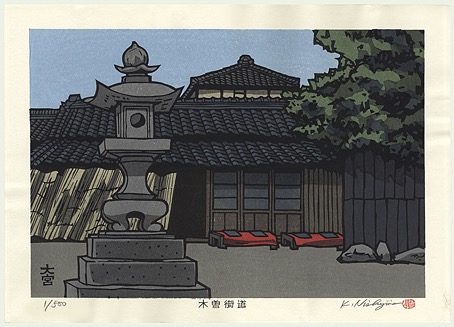
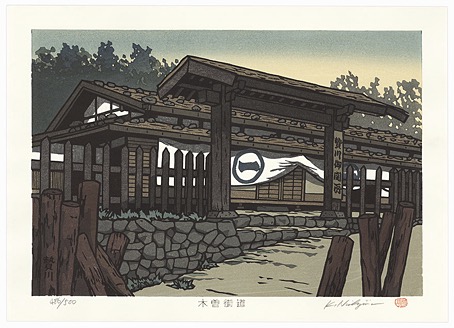
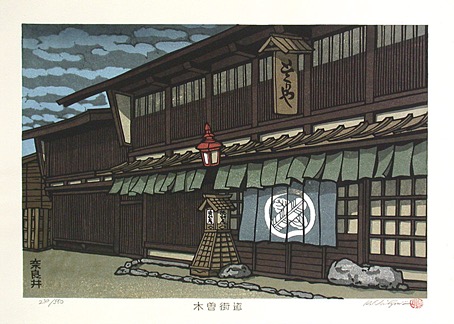
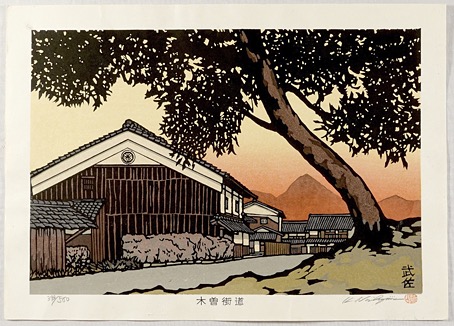
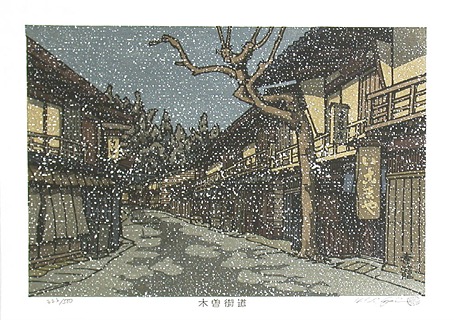
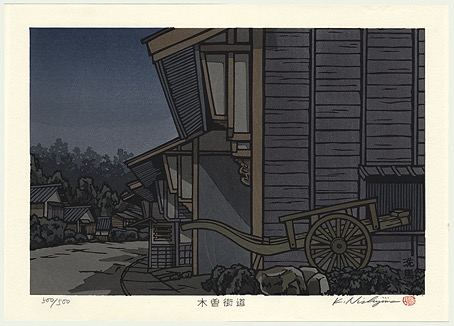
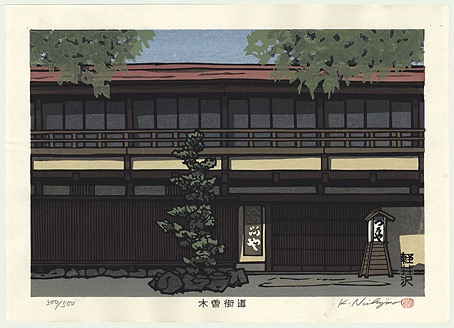
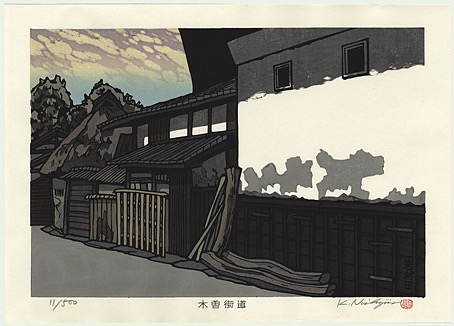
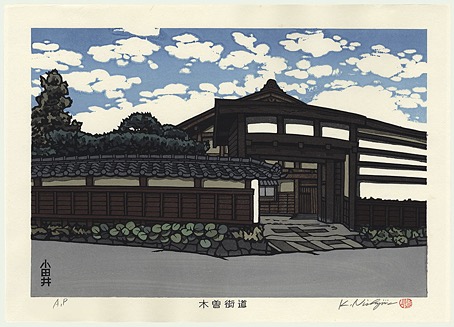
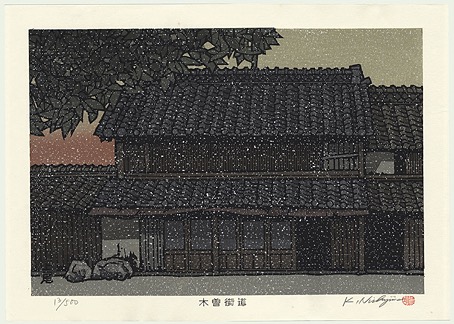
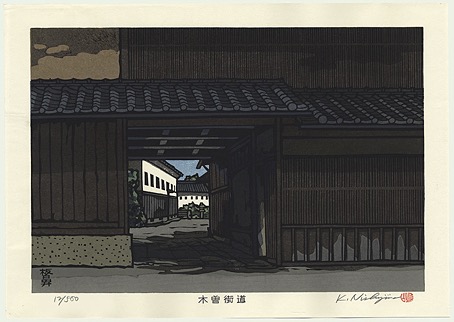
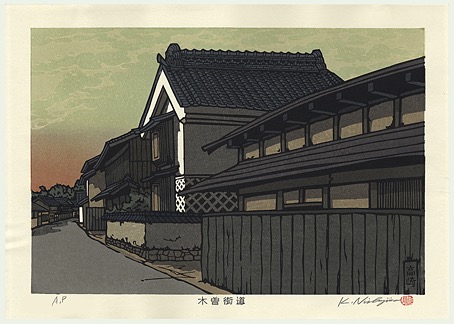
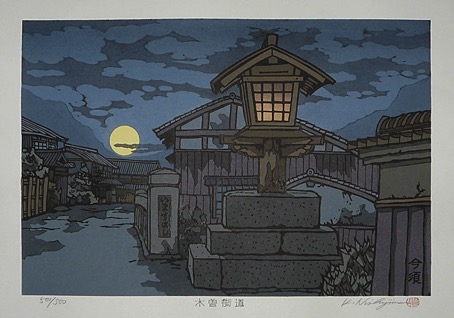
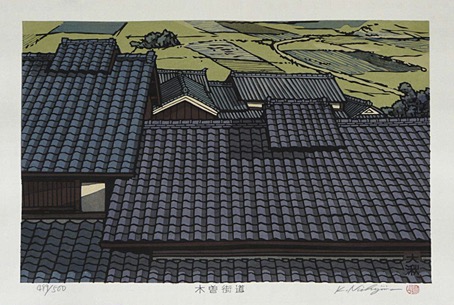
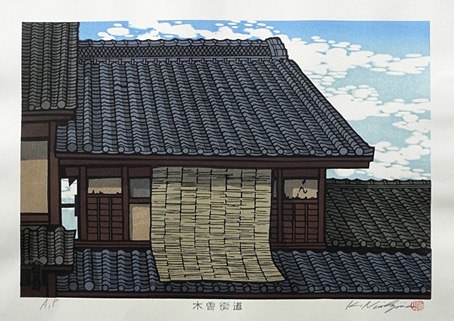
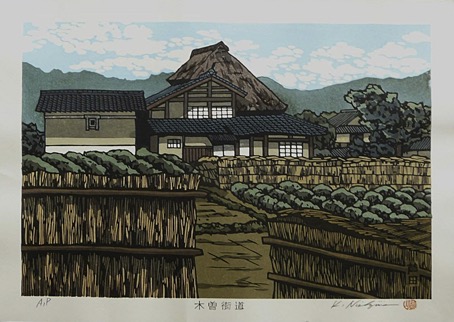
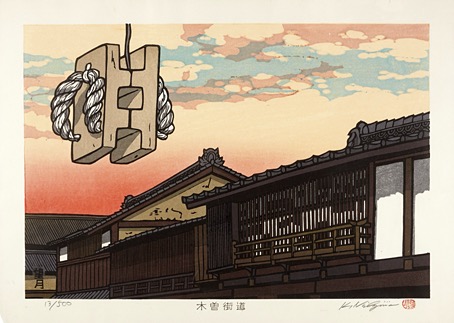
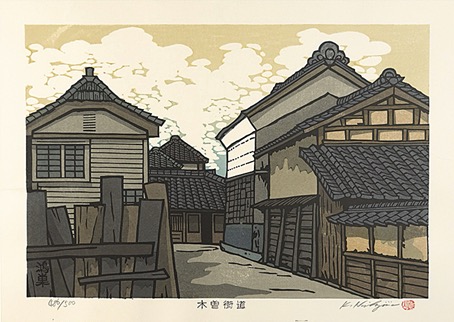
The Sixty-nine Stations of the Kiso Kaidō is a ukiyo-e print series by Keisai Eisen and Utagawa Hiroshige depicting notable places on one of the main roads leading from Edo (Tokyo) to Kyoto. A modern-day version of the series by Katsuyuki Nishijima follows a similar route (as much as it still exists) showing some of the old buildings seen along the way.
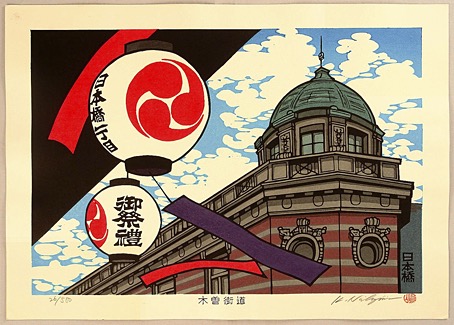
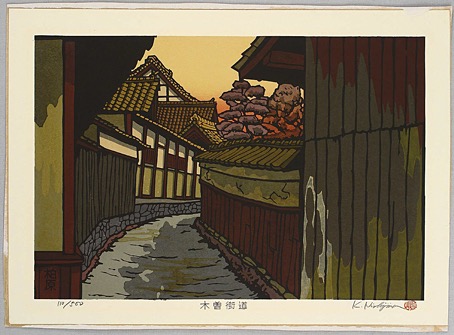
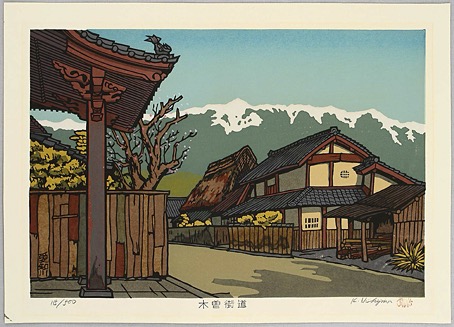
Nishijima’s prints have heavier lines than you find in their 19th-century equivalents but few of his scenes look immediately contemporary. In these and other prints he favours architectural views or details: thatched farmhouses, inns and shops, most of which are traditional timber buildings. What you don’t see in his prints of villages is recent buildings or even modern details like the electricity lines that follow Japanese roads. The Kiso Kaidō series is unusual for including a pre-war brick building, one of a handful still standing in Tokyo’s Nihonbashi district. People are also absent from these scenes. Hiroshige’s views of the Kiso Kaidō all feature groups of travellers but in Nishijima’s pictures any human activity is taking place out of our sight.
Previously on { feuilleton }
• Thirteen views of snow
• Koho Shoda’s nocturnes
• Cats and butterflies
• Twenty-four octopuses and a squid
• Seventeen views of Edo
• The art of Yuhan Ito, 1882–1951
• Eight Views of Cherry Blossom
• Fourteen views of Himeji Castle
• One Hundred Views of Mount Fuji
• The art of Kato Teruhide, 1936–2015
• Fifteen ghosts and a demon
• Hiroshi Yoshida’s India
• The art of Hasui Kawase, 1883–1957
• The art of Paul Binnie
• Nineteen views of Zen gardens
• Ten views of the Itsukushima Shrine
• Charles Bartlett’s prints
• Sixteen views of Meoto Iwa
• Waves and clouds
• Yoshitoshi’s ghosts
• Japanese moons
• The Hell Courtesan
• Nocturnes