Weekend links 77

farmer.jpg

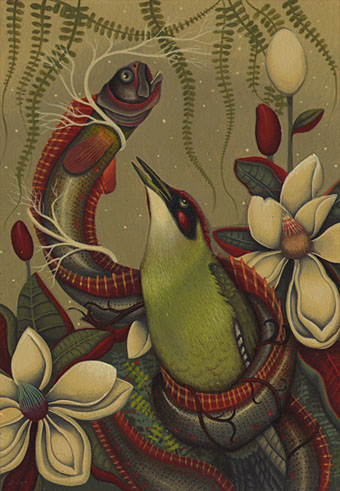
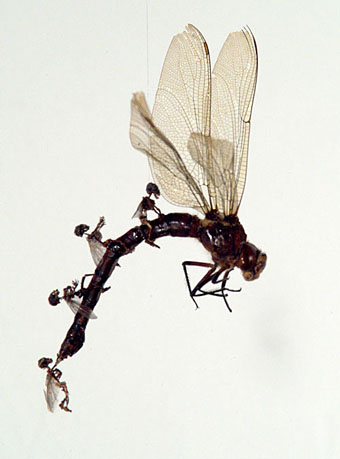
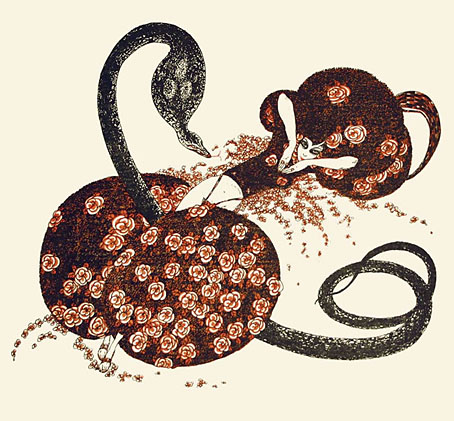
Art by Tessa Farmer.

• An exhibition of Tessa Farmer’s art is running at Viktor Wynd Fine Art, London, until October 30th. On Saturday, October 1st, Strange Attractor hosts Good Neighbours: Faeries, Folklore and the Art of Tessa Farmer also at Viktor Wynd.

Unearthing The Psychedelic Harp: “David Moats talks to harpist and songwriter Serafina Steer about her work with John Foxx and Patrick Wolf, being classically trained, the difficulties of doing live soundtracks and psychedelia.”

• And speaking of psychedelia, Arkhonia is still blogging up a storm here, here and here about the lost Beach Boys album, Smile, the farthest Brian and co. ventured into the tripped-out weirdness of 1967. The complete original recordings will finally be released in November.

• “‘We’ve arrived at a level of commodification that may have negated the concept of counterculture,’ Gibson says in the Paris Review.” William Gibson profiled by Thomas Jones.

One of the qualities I always stress when talking about this design work influenced by Surrealism is its enormous boldness and creative freedom, which is something of a paradox in many cases, since the Czech and Polish designs were created under communist regimes. So, while Uncanny documents a significant current in the history of 20th-century visual culture, the show also has a polemical intention aimed, quite deliberately, at our circumstances now. Students who encounter these images in lectures sometimes feel constrained by their conception of what they — or their teachers — regard as acceptable in today’s marketplace. At times, this has struck me as being a form of insidious self-censorship. (more)

Rick Poynor: Jan Švankmajer and the Graphic Uncanny.

• The exhibition curated by Mr Poynor last year, Uncanny: Surrealism and Graphic Design, is now showing at the Kunsthal in Rotterdam until early December. Related: MizEnScen’s somber, surrealist collages.

Howard Pyle’s Book of Pirates (1921) at Golden Age Comic Book Stories, the Urtext of buccaneer imagery.

bonnat.jpg

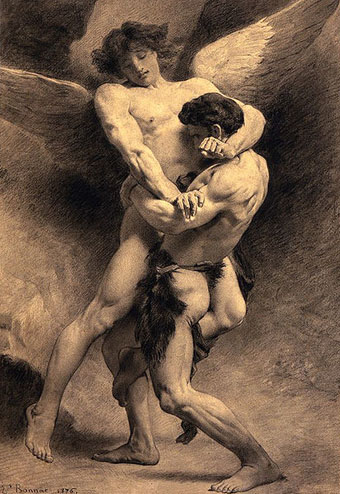
Another of those homoerotic religious pictures: Jacob Wrestling with the Angel (1876) by Léon Bonnat. Via Babylon Baroque.

• Celebrating the 250th anniversary of Laurence Sterne’s marbled page: Emblem of My Work.

John Martin’s Pompeii painting finally restored after 1928 Tate flood damage.

The Spectral Dimension: “where the paranormal and popular culture collide”.

The Writing of Stones (1970) by Roger Caillois at 50 Watts.

Mercury Arc Rectifiers.

• When silliness was an avant garde strategy: video from 1974 of Brian Eno performing China My China and (in better quality) The Seven Deadly Finns. (Go here for lyrics of the latter.)

The art of Robert Venosa, 1936–2011

venosa.jpg

A few years back, while experimenting with the hallucinogens, I experienced visions of a dynamic energy in constant high-velocity motion, crystallizing and manifesting in a form which could only be described as angelic. Potential energy, crystallizing energy and structured energy were all visible in the same instant…time and space transcended. These visions, and a new-found awareness of spirit brought about through worship and meditation, were too powerful not to be expressed: a translation had to be attempted.

Robert Venosa, Manas Manna, 1978.

I only discovered a few days ago that American artist Robert Venosa had died last month. As with the late Sibylle Ruppert there’s the inevitable wish for some wider acknowledgement of the passing of these unique talents.

santana.jpg

Millions of people have seen one of Venosa’s creations without being aware of it: in 1970 he designed the logo/title for Santana’s Abraxas album (the one with the amazing Mati Klarwein cover), a design which is still in use today. But it’s as a painter that he ought to be remembered. Manas Manna was the first collection of Venosa’s art published by Peter Ledeboer’s Big O imprint in 1978, and could be found on bookshelves that year with a pair of equally remarkable auto-monographs: Mati Klarwein‘s God Jokes and the first English edition of HR Giger‘s Necronomicon. All three artists were aware of each other (Venosa was friends with the other two), and all had managed the difficult feat of having their work sold in art galleries whilst also being visible to a much larger audience on album covers. All three books were eagerly plundered that year by the art team of OMNI magazine whose early issues made heavy use of paintings by Klarwein, Giger, Venosa, De Es Schwertberger and others. Of this Venosa has said:

OMNI was the first to give the artist equal credit with the author…something that to this day is still not seen in any other newsstand magazine. OMNI also put Fantastic Realism, Surrealism, Visionary, and every other type of ‘Fantasy’ art, square into the public’s eye. I and my colleagues owe OMNI a large measure of gratitude for its uncompromising stance and visionary concepts.

Venosa had been an art director at Columbia Records in the 1960s, a job he abandoned after he met Mati Klarwein and decided he’d rather devote his time to painting. Despite describing Klarwein in his book as his painting master, only a couple of his pictures are reminiscent of Klarwein’s distinctive style. Many of Venosa’s works are more loose and abstract than Klarwein’s tableaux, extending the processes of decalcomania which Max Ernst refined in works such as Europe After the Rain (1942) and The Eye of Silence (1944) to create stunning views of cosmic eruptions and vistas of crystalline beings rendered in a meticulous, hyper-realist manner. Many of his pictures could serve as illustrations for the later chapters of JG Ballard’s The Crystal World.

If the lazy definition of psychedelic art refers merely to shapeless forms and bright, clashing colours, Venosa’s art is psychedelic in the truest sense, an attempt to fix with paint and brush something revealed by a profound interior experience. This was deeply unfashionable by 1978, of course, but he carried on working anyway, and there are further book collections for those interested in his paintings. The Venosa website has a small selection of his extraordinary pictures although they really need to be seen at a larger size.

Elsewhere on { feuilleton }
The album covers archive
The fantastic art archive

Hive Culture and Shamanic Illuminations

bell.jpg

Apiphobia (2011) by Anonda Bell.

A couple of exhibitions opening this week for those in the New York area. Hive Culture: Captivated by the Honeybee is at the Glyndor Gallery at Wave Hill where 18 artists present works inspired by our favourite pollinating insects:

Painting, prints, sculpture, photography and video are featured, by artists Jennifer Angus, Anonda Bell, Deborah Davidovits, Anda Dubinskis, Cara Enteles, Rose-Lynn Fisher, Sally Gall, Hope Ginsburg, Talia Greene, Judi Harvest, Rob Keller, Andrea Lilienthal, Holly Lynton, Lenore Malen, Julia Oldham, Michelle Rozic, Jeanne Silverthorne and Draga Šušanj.

This isn’t solely an art exhibition. In October Wave Hill will be staging a series of bee- and honey-related events, details of which can be found on their press release (PDF).

amaringo.jpg

El Encanto de las Piedras by Pablo Amaringo.

Over at the ACA Galleries, Shamanic Illuminations which opens on Thursday will feature the art of Pablo Amaringo, Alex Grey and Mieshiel. There’s little detail at the moment on their website but they have a preview of the paintings including a number of Amaringo’s vivid, ayahuasca-inspired works which are psychedelic in every sense of the word. Shamanic Illuminations runs from September 15 to October 22. Via Phantasmaphile.

Initiations in the Abyss: A Surrealist Apocalypse

harter1.jpg

Among the many books inspired or influenced by the events of September 11th, 2001, Jim Harter’s Initiations in the Abyss: A Surrealist Apocalypse is one of the more obscure titles, and one you’re unlikely to hear about elsewhere. Harter is an American artist and archivist best known for his collections of wood engraving illustration published by Dover Publications, Harmony Books, Bonanza Books and others. I mentioned his work recently in a piece about steampunk illustration which will be appearing later this month at Tor.com. Harter’s books are invaluable source material for the style of collage popularised by Max Ernst and Wilfried Sätty. Harter was a friend of Sätty’s, with collages by the pair appearing in Harter’s Picture Archive for Collage and Illustration (1978).

harter5.jpg

The first collection of Harter’s collages, Journeys in the Mythic Sea: An Innerspace Odyssey, appeared in 1985. Initiations in the Abyss is the follow-up featuring work which dates from 1986, some of which was exhibited in 1988 at the Nicholas Roerich museum in New York. The book wasn’t published until 2003, however, and in his introduction Harter acknowledges the influence the events of the past two years had on his conception of the work as a whole. The book is reminiscent of Sätty’s Time Zone (1973), a book with a similar intent in its use of Surrealist collage techniques to make satirical or polemical points as well as to create striking and fantastic images. With both artists it’s the latter works which I find most successful. There’s a limit, for example, to how effectively our world can be represented using pictures which are over a hundred years old, and without the single-minded focus and attack of a John Heartfield the polemic can risk seeming diffuse or glib.

harter3.jpg

Harter’s book is divided into four parts—Mutant Faces of the Form Destroyer, The Holy Abattoir, The Archive of Dreams and Mystery Play—with 72 full-page plates printed on glossy paper. The quality of the printing is so good it makes me wish that Sätty and Ernst could receive the same treatment. In addition there’s a very long introductory essay by Harter which somewhat contradicts his Surrealist intent by explaining at great length some of the philosophy behind pictures whose interpretation he wants left to the reader. Near the end of his piece he says:

It could be said that the purpose of the collages in the present book’s first two sections is to ring an alarm bell. The canaries in the mine are dying and it is time to do something. At the same time, the images of the last two sections are intended as a kind of mystery play. They suggest a movement in another direction: a quest to seek a more universal vision, one where we can perhaps discard our religious fanaticism, ethnocentrism, and myths of apocalypse, and instead create a world of greater unity and harmony, eventually becoming one human family. On another level entirely, this work might be seen as a kind of shamanic soul journey, where all false attachments, beliefs, and illusions are destroyed through an ego death experience before the soil is allowed to proceed to dimensions of healing and revelation. Thus the first two sections might be seen as an encounter with what the Tibetans call the “wrathful deities,” spirits that mirror back one’s own unconscious darkness.

The last two sections of the book feature the best of his dream-like imagery, some of which are a match for Sätty’s superb creations. The examples here are mostly from the end sections. Further examples can be seen on this page where the plates have been coloured by the artist.

Initiations in the Abyss is available to buy direct from the publisher, Wings Press, while some of Harter’s psychedelic poster art can be seen here and here.

Continue reading “Initiations in the Abyss: A Surrealist Apocalypse”

Weekend links 73

sun2.jpg

Johnny Trunk of Trunk Records reissued the soundtrack to The Wicker Man in 1997. Mr Trunk’s latest delve into the cultural past is Own Label: Sainsbury’s Design Studio, a book from Fuel examining the supermarket chain’s packaging design of the 1960s and 1970s. Creative Review shows some examples while I have to note the uncanny similarity between one of the posters for The Wicker Man and an old Sainsbury’s corn flakes box. Now we see that the Old Weird Britain wasn’t only hiding in the fields and the folk songs but was also lurking on the supermarket shelves.

Related: a new DVD set from the BFI, Here’s a Health to the Barley Mow: A Century of Folk Customs and Ancient Rural Games. And let’s not forget the ley lines of Milton Keynes, and a new edition of Ritual by David Pinner, said to be the novel which inspired The Wicker Man.

• “He wrote me…” Sans Soleil (1983), Chris Marker’s beguiling accumulation of memories, dreams and reflections, is recalled in a Quietus piece entitled Things that Quicken the Heart. Not the first time on DVD as it says there (Nouveaux Pictures released it with La Jetée in 2003) but it’s good to know it’s being reissued.

• Marker’s film references Tarkovsky’s Stalker a couple of times, most notably in the comment, “On that day there will be emus in the Zone.” Geoff Dyer has what he describes as “a very detailed study” of Stalker out next year.

I don’t like those commentators who keep on saying that London will never be the same again. London is always the same again. I remember those comments were made very loudly after the [July 2005] terrorist attacks – “London will never be the same again, London has lost its innocence” – it was all nonsense. London was exactly the same again the following day. Rioting has always been a London tradition. It has been since the early Middle Ages. There’s hardly a spate of years that goes by without violent rioting of one kind or another. They happen so frequently that they are almost part of London’s texture. The difference is that in the past the violence was more ferocious, and the penalties were more ferocious – in most cases, death.

Peter Ackroyd, reminding us that the Four Horsemen of the Apocalypse don’t wear hoodies and ride bikes.

Wolf Fifth: “rare vinyl records from the golden era of avant garde and experimental music”. And in FLAC as well, not crappy mp3; I want to hear all those scratches uncompressed, dammit!

Another great mix at FACT, this time compiled by snd who throw together Morton Feldman, Siberian shamen, Einstürzende Neubauten, Dome, Oval and many others.

• Colin Marshall asks “how weird is Australia?” in an appraisal of Nicolas Roeg’s Walkabout.

A Comprehensive Solution to the Tokyo Umbrella Problem.

• More poster art from Hapshash and the Coloured Coat.

Morbid Excess, a series of drawings by May Lim.

Conrad Schnitzler (1937–2011) by Geeta Dayal.

Neopolitan cephalopods.

Willow’s Song (1973) by Paul Giovanni & Magnet | The Willow Song (1989) by The Mock Turtles | Wicker Man Song (1994) by Nature and Organisation.