Weekend links 61

knaus.jpg

Marbles and Butterflies (2011) by Jennifer Knaus.

• “Cutter’s Way is a cinematic masterpiece” says John Patterson. Yes, it is, and it’s often been difficult to see (although it’s now on DVD) being one of those cult films that rarely surfaced on TV or video. Another cult film surfacing at last is Jerzy Skolimowski’s Deep End (yes, again…) which will be out on DVD & Blu-ray next month. I missed this Telegraph piece about the film. You want more? Lint: The Movie is showing at the Kino Club, Brighton, later this month.

• This week’s Eno haul: Developing Your Creative Practice: Tips from Brian Eno; Eric Tamm’s 1995 study Brian Eno: His Music and the Vertical Color of Sound is now available for free at the author’s website; Imagine New Times is an outtake from Eno’s forthcoming Drums Between the Bells which can be downloaded here.

• Mixtapes of the week: Demdike Stare with a suitably sinister and eclectic mix are out-curated by Current 93’s David Tibet who mashes together a unique blend of folk, prog, riffs, choral works and glam rock.

I began to realize the hypocrisy about sexual freedom in the feminist establishment was as bad as it is in the religious right. They do whatever they want. They look at whatever they want, they masturbate to whatever they want, they fuck whoever and however they like. I couldn’t even say everything I know in the book because it would just be too cruel and personally invasive. But I’ve had it with their lying. I spent so long trying to have these earnest conversations and now I’m like, “Fuck you — you’re as bad as the Vatican!”

Susie Bright interviewed by Tracy Clark-Flory at Salon sounding as happy and positive as she always does.

The Gnostic #4 is out this month featuring Alan Moore’s essay on magic and related matters, Fossil Angels, and a piece examining the Gnostic influences on Cormac McCarthy’s Blood Meridian.

• “Nobody should be sent to prison for taking drugs,” says Richard Branson. Many politicians agree with him but they’re all too cowardly to do anything about it.

eng.jpg

Untitled work by Kilian Eng.

The Adventures of Jerry Cornelius, The English Assassin (1969–70). A comic strip written by Michael Moorcock & M John Harrison with art by Mal Dean & Richard Glyn Jones.

The Lavender Scare: The Cold War Persecution of Gays and Lesbians in the Federal Government by David K Johnson is available as a free ebook here.

• “If I was to try to write a mainstream book I would be constantly bumping my elbows up against the restrictions.” Tim Powers is interviewed by Alison Flood.

HOMO Online, Adventures in Homosexuality: Fiction, Fact, Art and Porn.

Your Rainbow Panorama, a new work by Olafur Eliasson.

Self Suck, a poem by Angelo Nikolopoulos.

Map Of Dusk (1987) by Jon Hassell | Lam Lam (1998) by Baaba Maal (with Jon Hassell & Brian Eno) | All Is Full Of Love (1999) by Björk (Guy Sigsworth mix featuring Jon Hassell).

Wild Salomés

wildesalome.jpg

So there’s a poster for Al Pacino’s forthcoming drama-documentary about the Oscar Wilde play but I’ve yet to see any release details. The tagline connects Salomé with The Ballad of Reading Gaol: “We kill the thing we love.”

salome1986.jpg

Searching around for posters turned up this item for an Italian-French co-production of the Wilde play directed by Claude d’Anna. I’ve not seen this but it can’t be any worse than Ken Russell’s version so it may be worth seeking out.

salome1953.jpg

Far better poster-wise is this splendid creation by Anselmo Ballester for the Italian release of the 1953 Hollywood film (which isn’t based on the play). Rita Hayworth was too old for the role, and the film is simultaneously lavish and dull in the way that so many sword-and-sandal epics manage to be, but the poster is a gem. This site has many more examples of Ballester’s poster art.

Elsewhere on { feuilleton }
The Oscar Wilde archive
The Salomé archive

Weekend links 60

fini1.jpg

Jean Genet (1950) by Leonor Fini.

• Bibliothèque Gay looks at a series of erotic engravings made by Leonor Fini for La Galère (1947) by Jean Genet. The author reciprocated with Mademoiselle: A Letter to Leonor Fini. At the hetero end of the erotic spectrum, Tate Liverpool will be showing a series of drawings by René Magritte produced for a proposed edition of Madame Eduarda by Georges Bataille. René Magritte: The Pleasure Principle opens next month.

George Clinton will be appearing with Nona Hendryx at the British Library on 18th June, to talk about “all things galactic”. In addition there’s a screening of John Akomfrah’s The Last Angel of History, a documentary about Afrofuturism and black science fiction. See an introduction to that here. Related: the Smithsonian’s National Museum of African American History and Culture has acquired the Parliament-Funkadelic Mothership for its collection.

• RIP Gil Scott-Heron. “Why does this colossus remain relatively unknown? Is he too political? Too uncompromising? Too angry? Too satirical? Too painful? Too playful? Too alive? Too black? Too human?” Jamie Byng in Gil Scott-Heron: poet, campaigner and America’s rough healer.

fini2.jpg

Le Fils du Maçon (1950) by Leonor Fini.

China Miéville examines alternative histories in Brian Aldiss’s The Malacia Tapestry, David Britton’s Lord Horror and Richard Curtis’s chilling dystopia, Notting Hill.

• What happened to Rolf-Ulrich Kaiser and Gille Lettmann when the Kosmische Musik dream collapsed? Find out here.

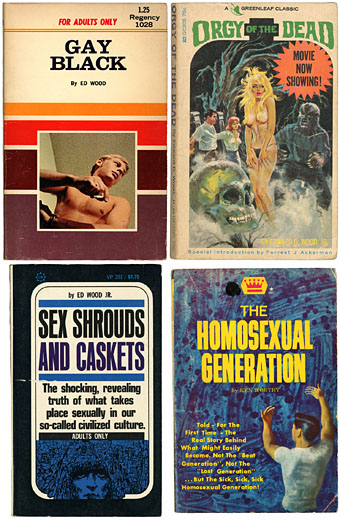
• Mlle Ghoul interviews Will Errickson of Too Much Horror Fiction about horror paperbacks, good and bad.

• Another Surrealist woman: Claude Cahun at Strange Flowers.

The Key of Hell: an eighteenth-century sorcery manual.

Partitura 001: realtime sound visualisation.

Scientific Illustration: a Tumblr.

Cosmic Slop (1973) by Funkadelic | Cosmic Slop (1991) by Material.

Passage 15

passage15.jpg

Directing your attention elsewhere again today, to the latest edition of Passage the Dutch webzine run by my good friend Ed Jansen. Number 15 is described thus:

Passage 15 is, with a few exceptions, entirely devoted to art. Images govern our lives, literally and figuratively. Gaudier-Brzeska nearly a hundred years ago and Antony Gormley today affect our way of looking. Odd Nerdrum does so with his painting on a very different way. The music of Polly Jean Harvey made us curious about her sources of inspiration. The piece about Gallipoli is actually a kind of enormous footnote to her latest cd “Let England Shake”. The photo section provides an overview of exhibitions and performances in the past few months in and around The Hague, Netherlands.

Seeing Gaudier-Brzeska’s sculptures reminds me that I haven’t seen Ken Russell’s film of the artist’s life, Savage Messiah, for many years. The large Antony Gormley work on the cover (Exposure) makes a welcome change from the artist’s cast-iron clones. I’m still waiting for Gormley to create the Ejaculating Man, a seawater-spurting statue he proposed for Seattle. It was rejected, of course, and it’s difficult to imagine any American city exhibiting something of that nature given the current climate. Maybe he should try Amsterdam.

futuro.jpg

Back at Ed’s work, his varied Flickr stream includes some recent views of Futuro, a mobile holiday home designed by Matti Suuronen in 1968. What was once futuristic now has a Jetsons-like retro glamour.

Previously on { feuilleton }
Passage 14
Passage 13
Passage 12
Passage 11
Passage 10

Weekend links: Apocalypse not now

apocalypse.jpg

The Kurtz compound prior to destruction. An Apocalypse Now storyboard, one of a number which will be included among the extras on the Blu-Ray release of Francis Coppola’s film when it appears in the UK next month. The film is given a new cinema release on May 27th.

Radio broadcaster Harold Camping, a man denounced by fellow Christians as a false prophet, achieved one thing at least this week by making himself and his followers a global laughing-stock after the Rapture failed to materialise. I would have put money on him blaming those terrible gays somewhere along the way, such complaints being so common among a certain brand of American fundamentalist that you could write their sermons for them. Sure enough, here’s the old fool blathering about “lespianism” and describing the beautiful city of San Francisco as a cesspool. Shall we chalk this up as another victory for the gays, Harold? Related: No dogs go to heaven.

The internet has always been a home for ridicule but occasions like this bring out the wags in droves. The Oatmeal showed us how God is managing the Rapture using a Windows Install Wizard, and also pointed to a selection of sarcastic tweets. Meanwhile, this page has a comprehensive catalogue of previous apocalypse dates; the biggy is next year, of course.

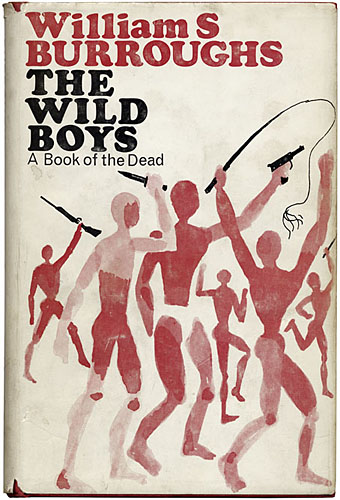
Burroughs himself was no stranger to prosecution. In 1962 he was indicted on grounds of obscenity. Naked Lunch was not available in the US until 1962 and in the UK until 1964. The writer Norman Mailer and the poet Allen Ginsberg had to defend the book in court before the ruling could be reversed. In Turkey, it is now our turn to stand up for the novel.

Turkish writer Elif Shafak criticising the paternalism of the Turkish state in trying to protect its people from troubling novels. Related: William Burroughs publisher faces obscenity charges in Turkey.

An A–Z of the Fantastic City by Hal Duncan. “This guidebook leads readers and explorers through twenty-six cities of yore (Yore, while included, is one of the shorter entries).” Illustrated by Eric Schaller.

• The creepiest Alice in Wonderland of all, Jan Švankmajer’s semi-animated Alice (1988), receives a very welcome re-issue on DVD this month. With Brothers Quay extras and other good things.

smith.jpg

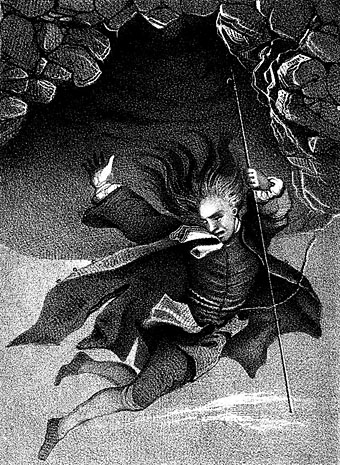
Robert E Howard’s sinister magus from the Conan stories, Thoth-Amon, as depicted by Barry Windsor-Smith. From a portfolio of five Robert E Howard characters, 1975.

What is computer music (or does it matter)? Related: A History of Electronic/Electroacoustic Music (1937–2001), 511 (!) downloadable pieces.

Unearthly Powers: Surrealism and SF: Rick Poynor explores the Tanguy-like strangeness of Richard Powers.

Magic Trip: Ken Kesey’s search for a kool place.

The Library of Congress National Jukebox.

Vladimir Nabokov’s butterflies.

Amy Ross’s Wunderkammer.

Rapture (1981) by Blondie | Apocalypse (1990) by William Burroughs | Rapture (2000) by Antony and the Johnsons.