Weekend links 835

kites.jpg

Kites of Fukuroi and Distant View of Akiba in Totomi Province, from the series One Hundred Famous Views in the Various Provinces (1859) by Utagawa Hiroshige II.

• Coming soon from Strange Attractor: International Freak: Robin Farquharson and the Dream of Psychedelic Revolt by M. Syd Rosen.

• At the Daily Heller: the Brooklyn Botanical Garden looks back at the psychedelic Sixties with Flower Power.

• At the BFI: Sophia Satchell-Baeza selects 10 great queer American underground features of the 1970s.

• At Colossal: “Surreal Figures Step from Leonora Carrington’s Paintings into Shape of Dreams”.

• At Unquiet Things: The Surreal Paperback Visions of Richard Powers.

• The Reinvention of the Guitar in 13 Albums by Simon Reynolds.

• At Public Domain Review: The Art of Kite Flying (1430–1929).

• Mix of the week: DreamScenes – June 2026 at Ambientblog.

• New music: Cloud Machines by Berndt / Schmidt.

Kites (1967) by Simon Dupree And The Big Sound | Kites I (1999) by Brian Eno | Nuclear Kites (2023) by Hawksmoor

Richard M. Powers album covers

powers10.jpg

Berlioz: Symphonie Fantastique (1958); Charles Munch, Boston Symphony Orchestra.

Continuing an occasional series about artists or designers whose work has appeared on record sleeves. Richard M. Powers is one of those illustrators whose work is remembered today for his many covers for SF books and magazines even though his commissions often took him away from the genre. Powers’ early paintings for record companies use the wiry illustration style that was popular during the 1950s, few of them resemble the X-ray views or amorphous, Tanguy-like forms that populate his cosmic vistas and alien worlds. The cover for Symphonie Fantastique is an exception, justified by the suite’s narrative thread which involves visions seen in an opium dream.

Powers is also unique, I think, in having an entire album of music dedicated to his SF covers, Powers (12 Sound Pieces Inspired By The Art Of Richard M. Powers) by Andy Partridge. This album doesn’t feature any of Powers’ own artwork but the illustrations are done in his style so the cover has been included in this list.

powers01.jpg

Mendelssohn: Symphony No. 3 in A Minor “The Scotch” (1955); Music Appreciation Symphony Orchestra.

powers02.jpg

Tchaikovsky: Symphony No.6 In B Minor, Op.74 – Pathétique (1956); Leonard Bernstein, Music Appreciation Symphony Orchestra, The Stadium Concerts Symphony Orchestra.

powers03.jpg

Verdi: Rigoletto (1956); The Metropolitan Opera Orchestra And Chorus conducted by Fausto Cleva, Robert McFerrin, Sr.

powers04.jpg

Johann Strauss: Die Fledermaus (1956); Tibor Kozma, The Metropolitan Opera Orchestra And Chorus.

powers05.jpg

Mozart: The Marriage Of Figaro (Highlights) (1956); Vienna Philharmonic Orchestra, Erich Leinsdorf, Giorgio Tozzi, Roberta Peters, Lisa Della Casa, George London, Rosalind Elias.

Continue reading “Richard M. Powers album covers”

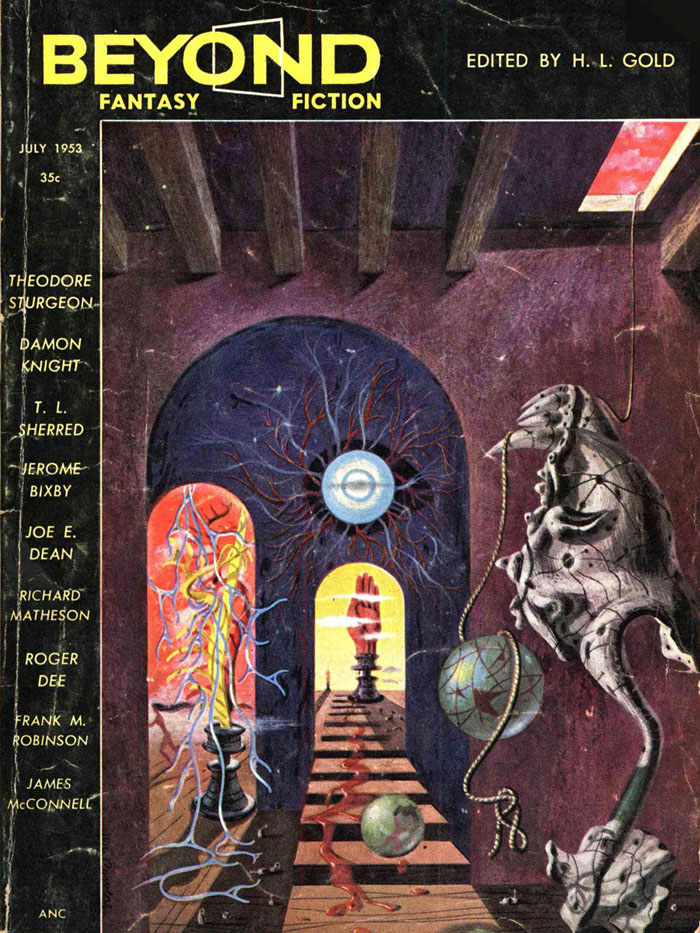
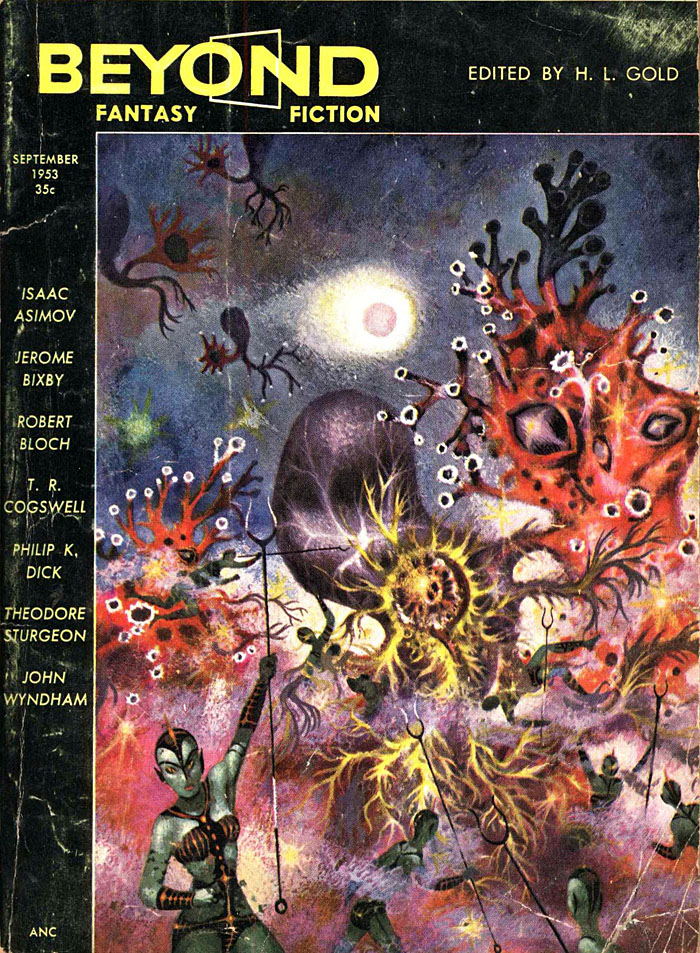
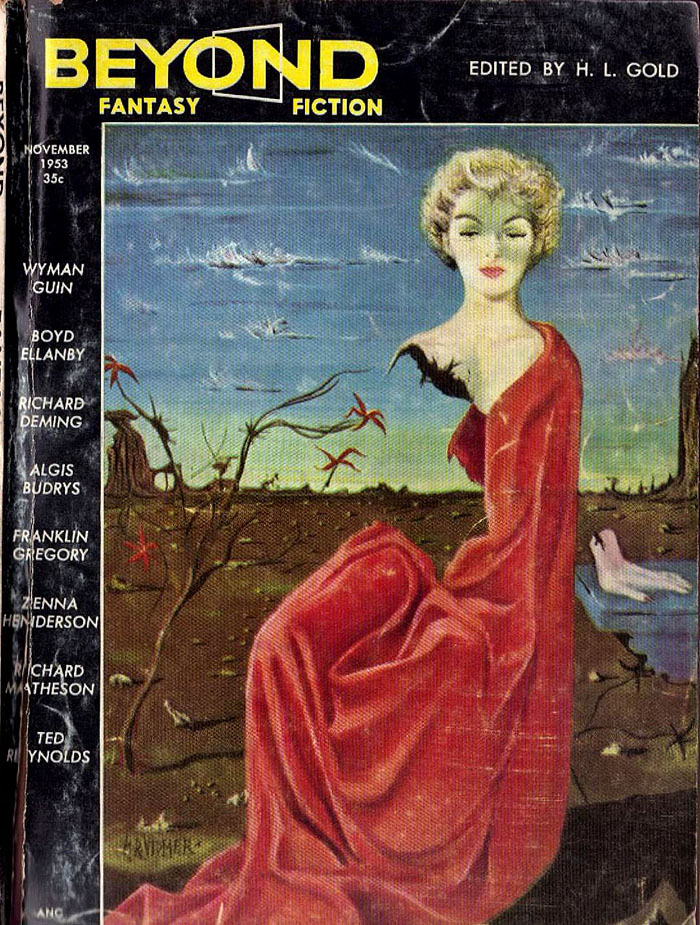
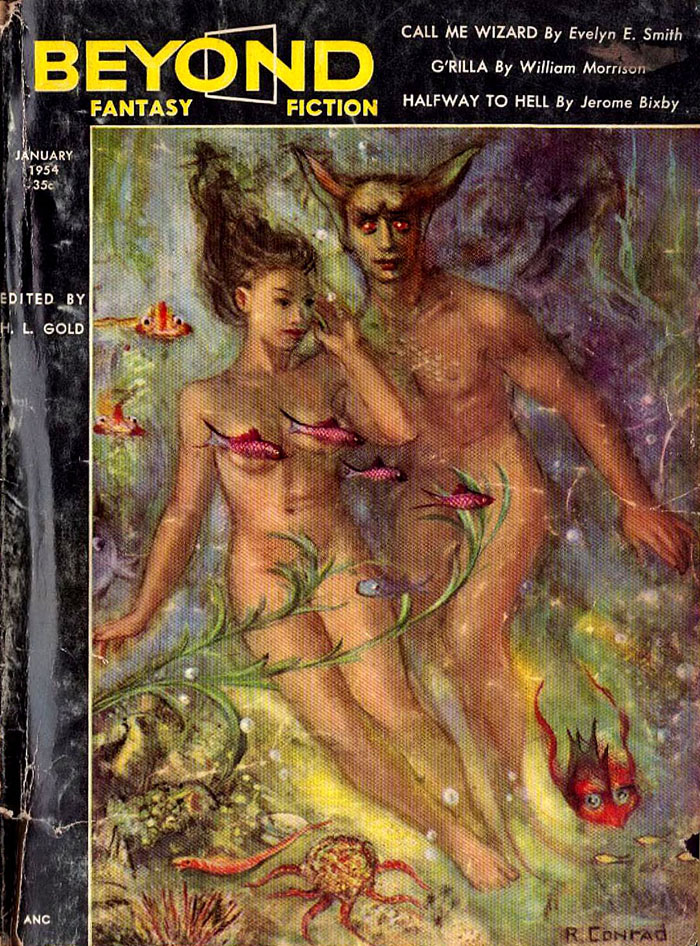
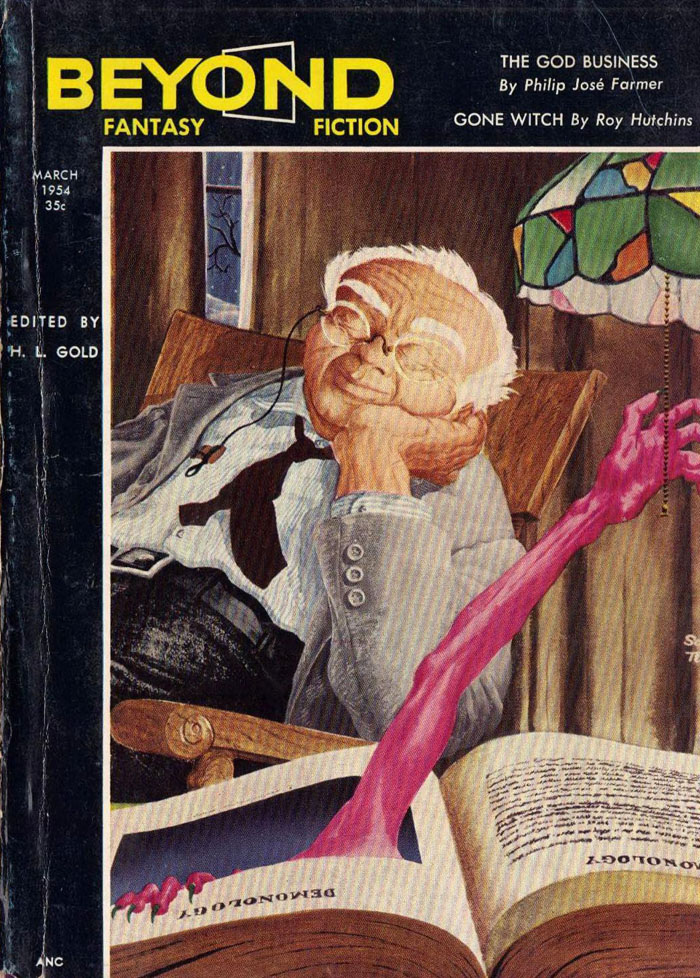
Covers for Beyond Fantasy Fiction

Beyond01.jpg

Cover by Richard Powers.

Beyond Fantasy Fiction was an American magazine edited by HL Gold that ran for only 10 issues, from July 1953 to January 1955. The title was intended to be a fantasy-oriented companion to Gold’s Galaxy Science Fiction, and with a similar design to its cover layouts. Beyond differed from Galaxy, however, by leaving its cover art consistently free of text, and it differed from other genre magazines by offering a range of art styles that were a little more adventurous than its contemporaries. Richard Powers could get away with semi-abstract weirdness on his book covers but the magazines forced him to be much more conventional. A few months before the first issue of Beyond, a very uncharacteristic painting by Powers appeared on the cover of Fantastic showing a naked woman being pawed by giant insects.

Beyond02.jpg

Cover by Richard Powers.

A couple of the other Beyond covers approach the diluted Surrealism that was still percolating through the US media in the 1950s, while the cover for July 1954 wouldn’t be out of place in a fashion magazine, at least until you notice all the witchy details. The cover by Arthur Krusz for May 1954 features the same combination of disjunctive perspectives you find in Hollywood dream sequences and Paul Julian’s designs for the 1953 animated version of The Tell-Tale Heart. If the magazine had lasted longer we might have seen more like this.

Beyond03.jpg

Cover by René Vidmer.

Beyond04.jpg

Cover by Rupert Conrad.

Beyond05.jpg

Cover by Scott Templar.

Continue reading “Covers for Beyond Fantasy Fiction”

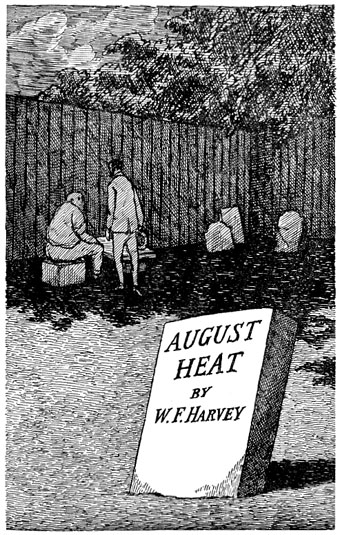
August Heat

powers.jpg

Richard Powers (no date) in Cavalier magazine.

Here in The North we may not be sweltering as much as they are in the infernal South but the temperature today is still reaching 28C. Anything higher than this and work becomes impossible when my brain starts to malfunction.

William F. Harvey (1885–1937) wrote two stories that have been anthologised many times: The Beast with Five Fingers is a tale of a disembodied hand; August Heat concerns a fateful encounter at the end of a day like today. Read it here.

ward.jpg

Lynd Ward (1937).

gorey.jpg

Edward Gorey (1959).

coye.jpg

Lee Brown Coye (1976).

Picturing Vermilion Sands

knight2.jpg

First UK edition, 1971. Art by Brian Knight.

Vermilion Sands (1971) is a story collection by JG Ballard which maintains a cult reputation despite being overshadowed by its author’s more popular novels. Most of the stories were written in the 1960s—a couple of them are among Ballard’s earliest works—but where many of his other short stories can read like the work of a writer with bills to pay, the tales of Vermilion Sands are much closer to Ballard’s core interests, filled with symbolic resonance and literary allusion.

Vermilion Sands, the place, is a near-future resort with a desert climate and an unspecified location; a region where the Côte d’Azur meets Southern California but the ocean is a sea of sand. While each story has a different artistic or cultural theme, all are populated by the idle midde-class types found in the rest of Ballard’s work. Ballard more receptive to visual art than many authors, especially the SF writers of his generation for whom art was less interesting than science and technology. There is science and technology in these stories—some of the latter is now inevitably dated—but it doesn’t dominate the proceedings. The stories derive less from scientific speculation than from Ballard’s desire to create a future he would have been happy to inhabit himself, an alternative to the grim dystopias which proliferate in science fiction. The background furnishings also reflect the author’s ideal, owing much to the Surrealist landscapes of Salvador Dalí and Max Ernst, a pair of artists whose works are often referenced in Ballard’s fiction. Given all of this you’d expect that cover artists might have risen to the challenge more than they have. What follows is a look at the most notable attempts to depict Vermilion Sands or its population, only a few of which are covers for the book itself.

Continue reading “Picturing Vermilion Sands”