
Boris Artzybasheff’s art was rediscovered in the 1980s by a new generation of American cartoonists who were delighted by his illustrations of anthropomorphic machinery and other technological artefacts. These were the illustrations which made Artzybasheff popular with advertisers and the commissioners of magazine covers in the 1940s and 50s, and their continued popularity today has tended to overshadow his earlier book illustrations, in the same way that W. Heath Robinson’s drawings of improbable inventions overshadow his own illustrated books.
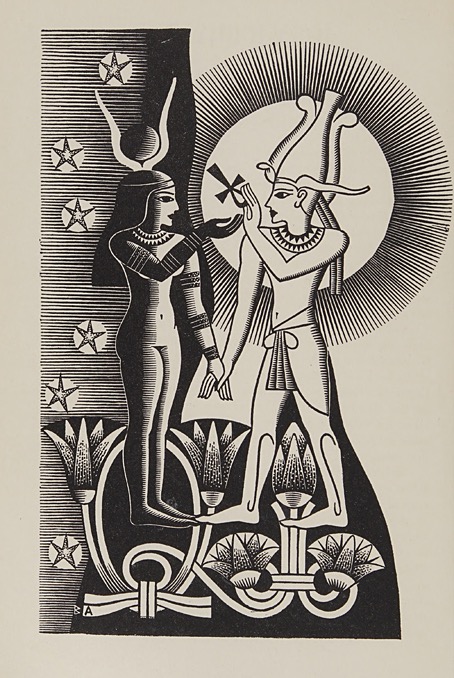
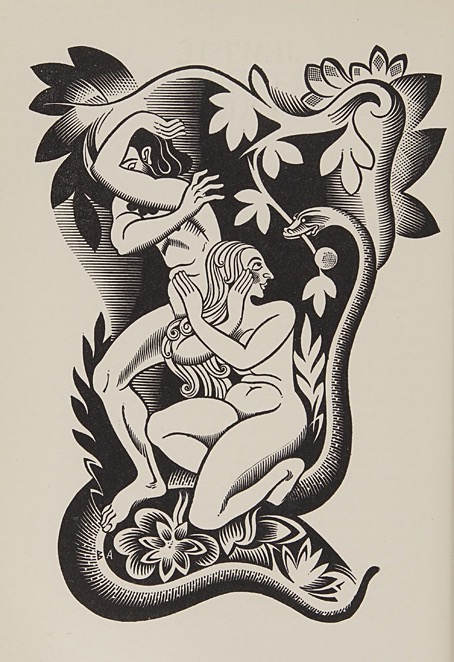
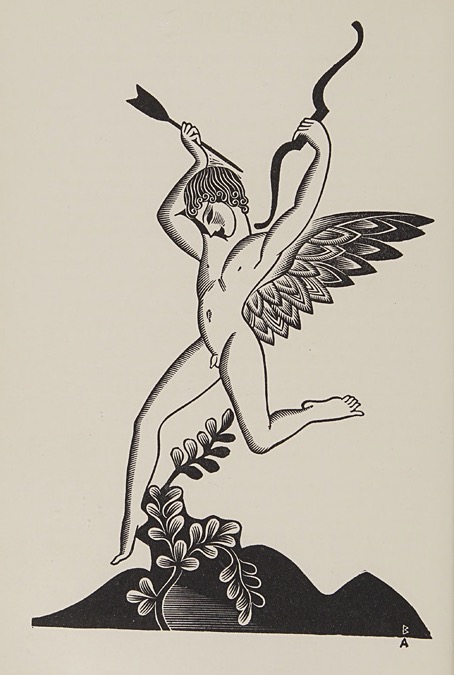
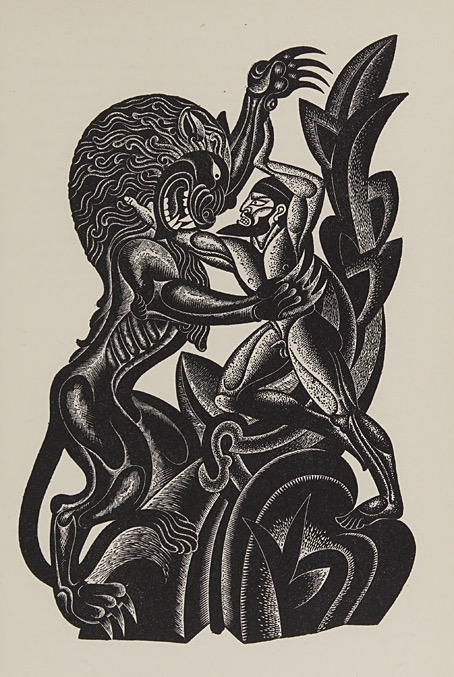
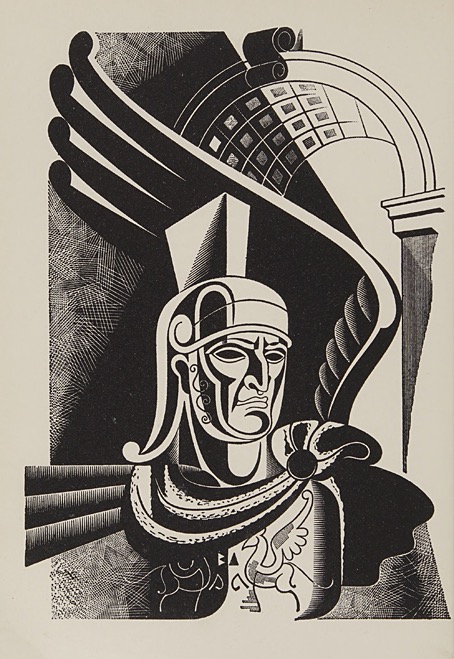
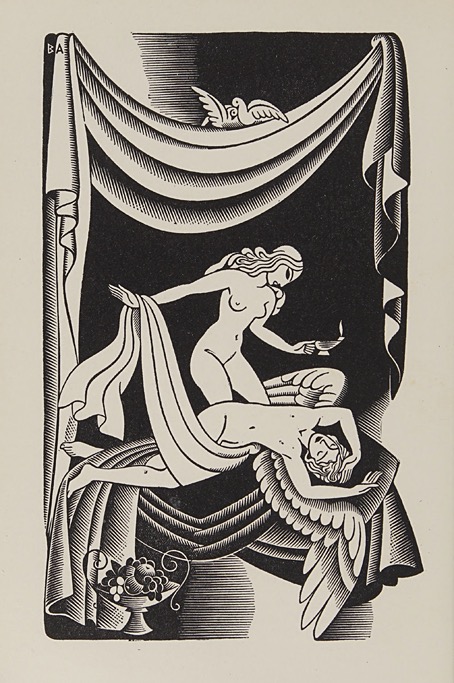
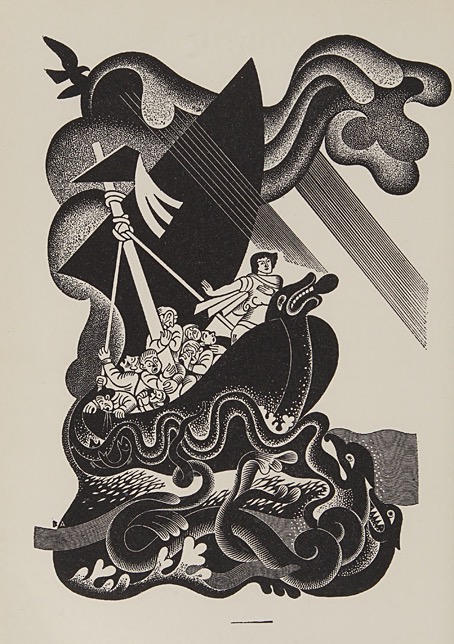
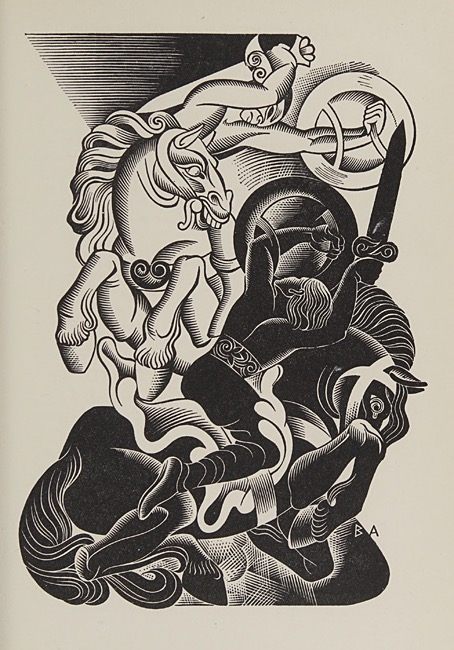
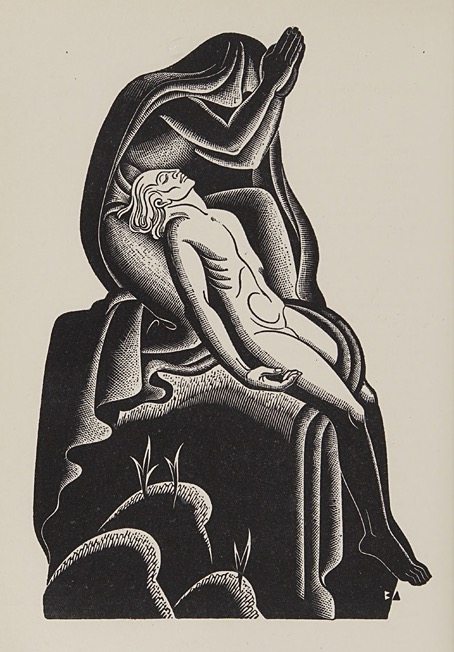
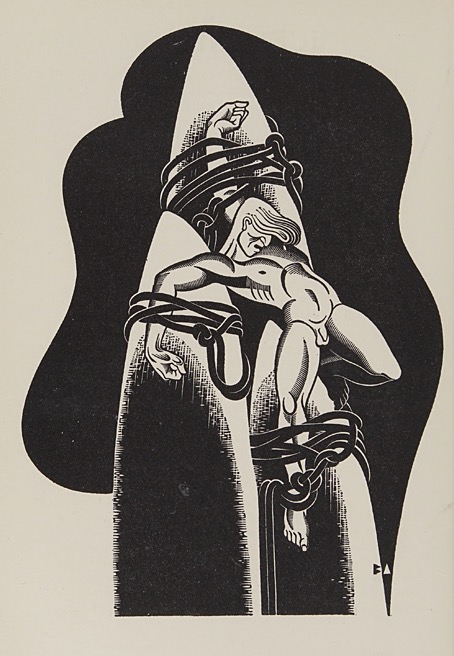
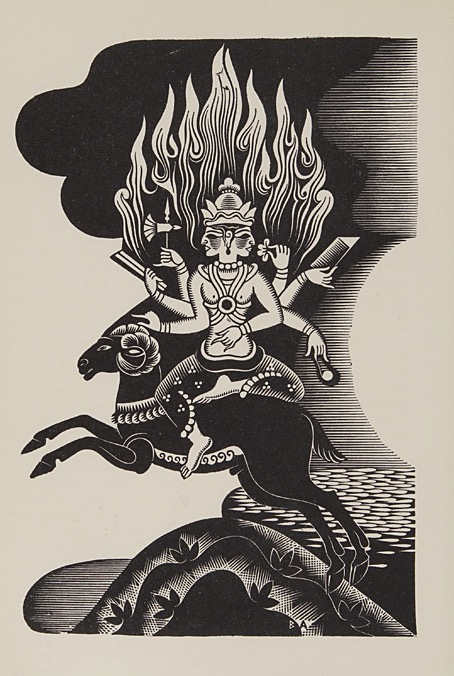
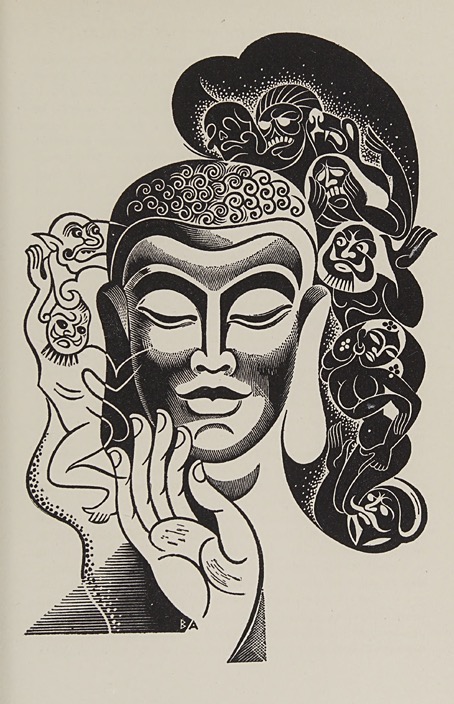
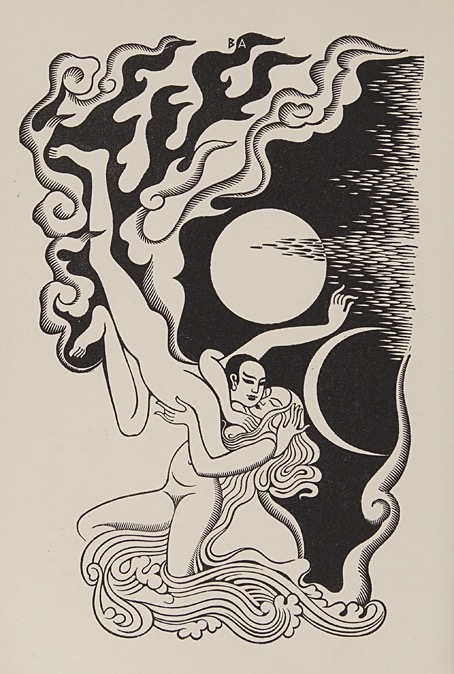
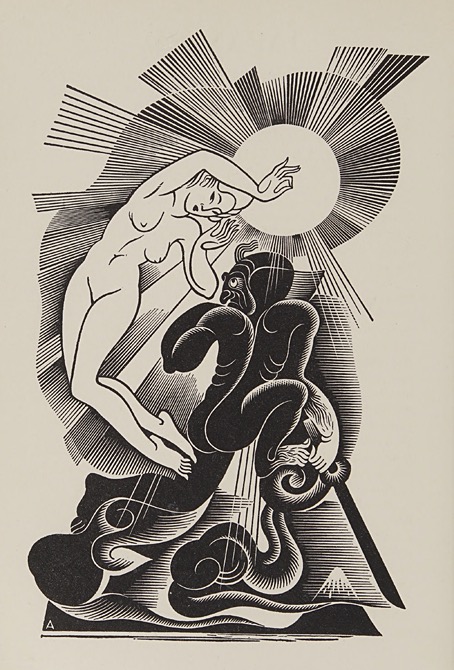
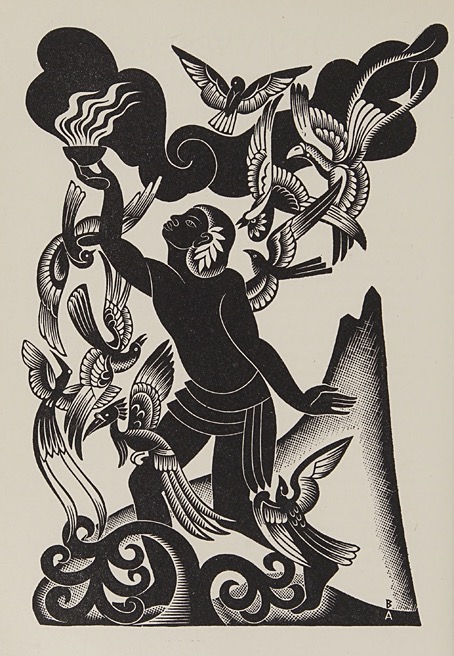
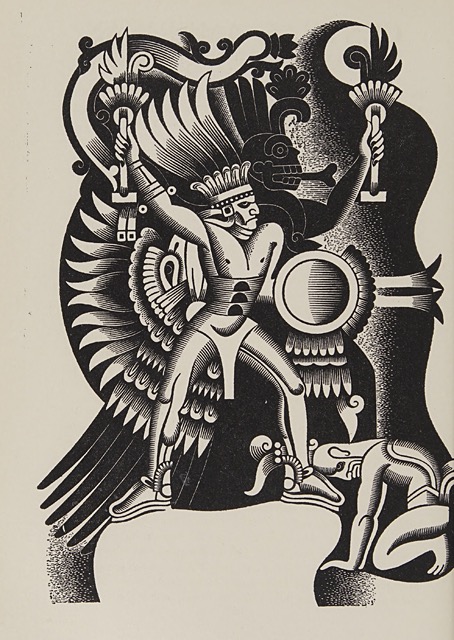
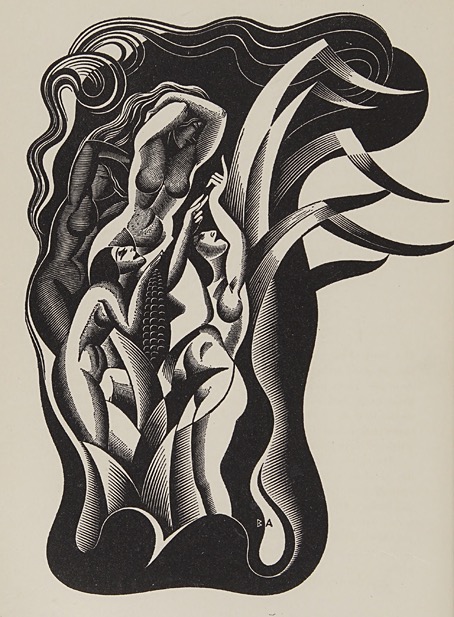
Anthropomorphic machines were still in Artzybasheff’s future when he produced twenty wood engravings for Orpheus: Myths of the World in 1930, one of several books by Padraic Colum which retell mythological stories. In the introduction Colum explains why he named a book about world mythology after a Greek icon:
I have called the collection “Orpheus,” naming it after the minstrel who, according to the poet of the Argonautica, sang “how the earth, the heaven, and the sea once mingled together in one form, after deadly strife were separated each from the other; and how the stars and the moon and the paths of the sun ever keep their fixed place in the sky; and how the mountains rose, and how the resounding rivers with their nymphs came into being, and all creeping things.”
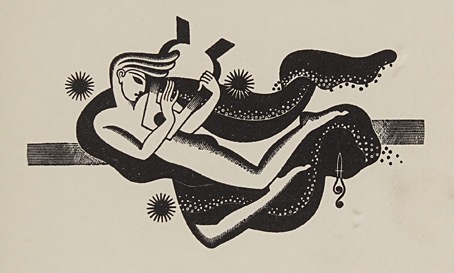
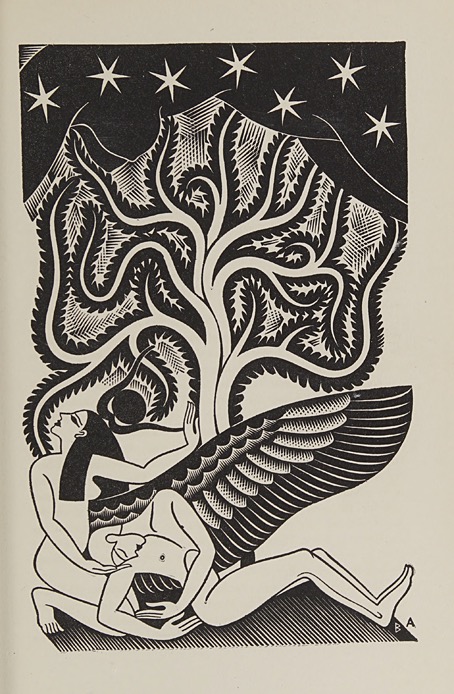
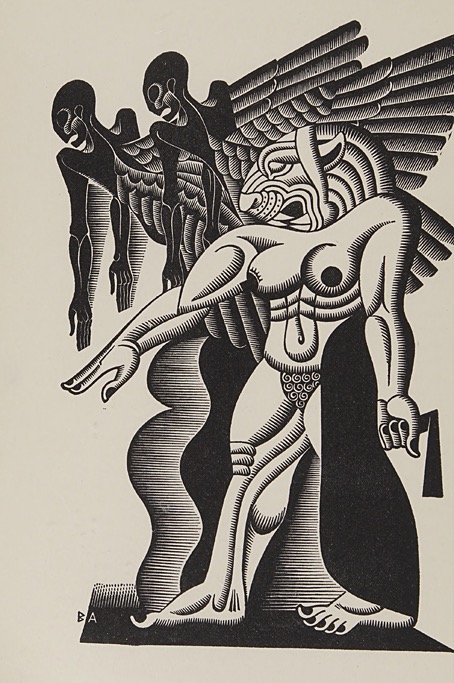
The art from Artzybasheff’s first decade of published illustration is so different to his later humourous drawings that it might be the work of another artist altogether. The Colum engravings are all very Deco-styled: bold, stylised, and generally flat, reminding me of some of the illustrations the Radio Times used to run. They’re also almost entirely serious until you spot the expression on Eve’s face when the Serpent offers her the forbidden apple. As with Heath Robinson, the humour crept in slowly until it became the dominant mode.
Elsewhere on { feuilleton }
• The illustrators archive
Previously on { feuilleton }
• The art of Boris Artzybasheff, 1899–1965