
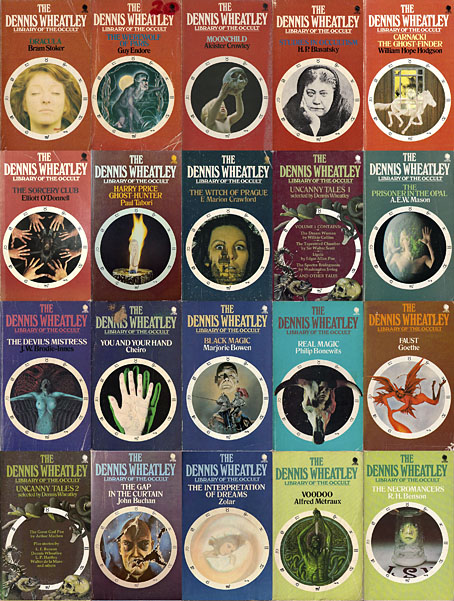
I ought to have been writing this in the run-up to Halloween but as I’ve said before, Halloween here is a state of mind, not a mere twenty-four hours. The Dennis Wheatley Library of the Occult received a mention in the recent post about Charles Williams, two of whose novels were included in the collection. The paperback series was brought to mind again last week when another of the titles, The Prisoner in the Opal by AEW Mason, turned up at Standard Ebooks, the home of high-quality, public-domain texts. This in turn gave me the idea of compiling a list of links to online sources of all the other titles which are now in the public domain. As you’ll see below, that list has sprawled into a guide to the entire series. When I’ve referred to these books in the past I’ve usually pointed to one of the Wheatley fan sites which are generally informative but also lacking in detail, especially when it comes to telling you anything about the individual titles. In this post I’ve satisfied my curiosity about the more mysterious books, listed all the public domain texts and also sought out the information that the Wheatley sites neglect to offer.
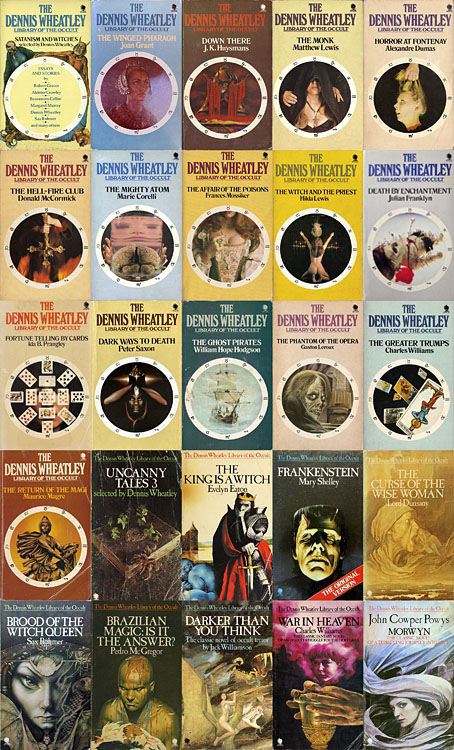
The Dennis Wheatley Library of the Occult was launched by Sphere Books in Britain in 1974. Unlike similar series which promote their titles with a well-known name, Wheatley himself was heavily involved, writing a promotional flyer which was sent to booksellers, and helping to choose the books. The flyer’s text suggests that Wheatley was eager to capitalise on the occult revival of the 1970s, a resurgence of popular interest which had been especially prominent in Britain thanks to our pagan past and the legacy of earlier revivalists like Gerald Gardner, the Golden Dawn and others. Each of the books in the Library series contains a brief introduction by Wheatley which is signed with his facsimile signature, while the four collections of short stories and non-fiction pieces include essays or fictional extracts by Wheatley himself. The introductions for all of the books may be read here and here.
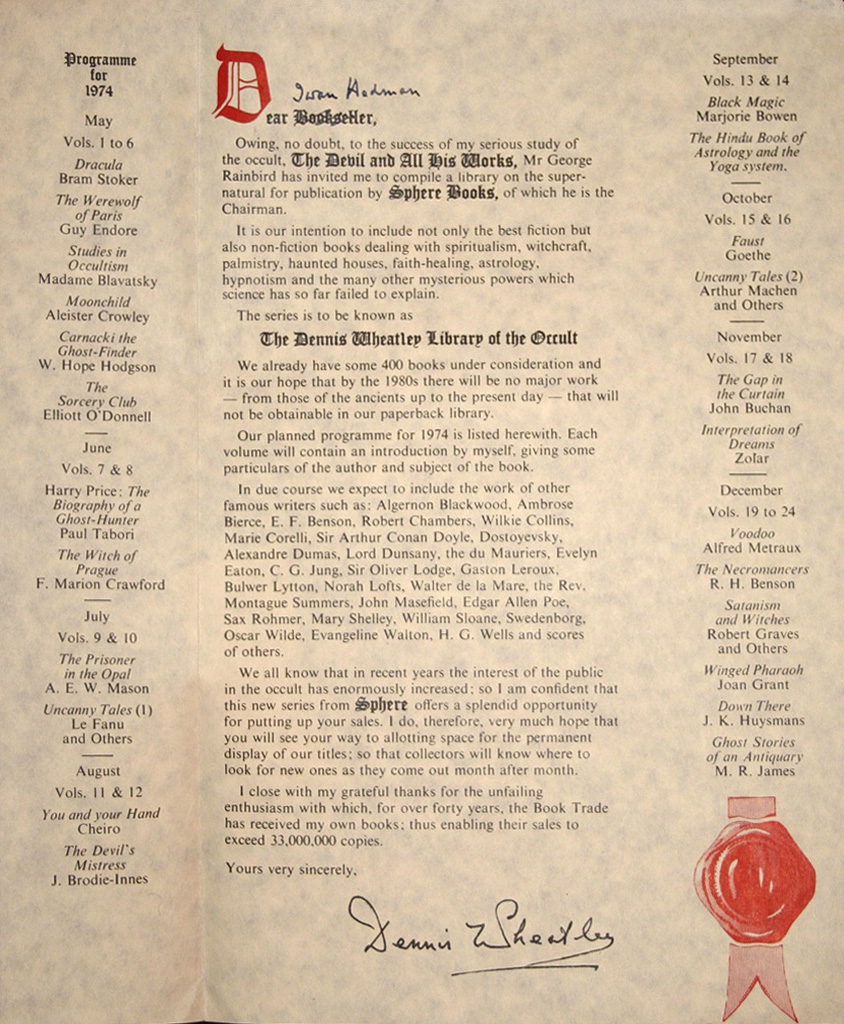
The flyer gives an idea of Wheatley’s ambitions, with a mention of 400 titles being under consideration. One of the books listed as forthcoming—Ghost Stories of an Antiquary by MR James—never appeared, possibly for copyright reasons. The list of prospective authors includes many who appeared in the series and a few more who didn’t, among them Robert Chambers (presumably the author of The King in Yellow), Carl Jung and—surprisingly—HG Wells; the list also manages to misspell Edgar Allan Poe’s middle name. The series as it was published is unusual in its mix of fiction and non-fiction, with magical guides and historical studies scattered among the weird tales; this really is a Library of the Occult, albeit a popular take on the subject, rather than another collection of horror stories. Sphere published 45 of the books in all, an impressive number that might have been greater if Wheatley hadn’t died in 1977. I bought the Library copy of Dracula in the same year, and subsequently managed to accumulate 23 of the titles during visits to secondhand shops. Many of these books were being published for the first time in paperback, and some of them remain obscure today. Even if Wheatley had lived a little longer I doubt the series would have sustained itself much further than 50 titles. The occult revival of the 1970s oscillates between poles of attraction and repulsion; an acknowledgement that this is dark and even dangerous material which is also attractive because of its previously forbidden nature. Wheatley’s fiction had been trading on the same attraction/repulsion since the 1930s, but by the end of the 1970s all the old “forbidden” grimoires were back in print and being joined on the bookshelves by invented ones like the two fake versions of the Necronomicon. The arrival of a new decade demanded a new sensibility. The darkness and witchiness didn’t vanish in the 1980s, when “occult” in its popular manifestations was diluted into “New Age”, it retreated to the shadows to fuel the Goth and metal subcultures while serious occultism began breeding something called Chaos Magic. But that’s another story…
1: Dracula by Bram Stoker
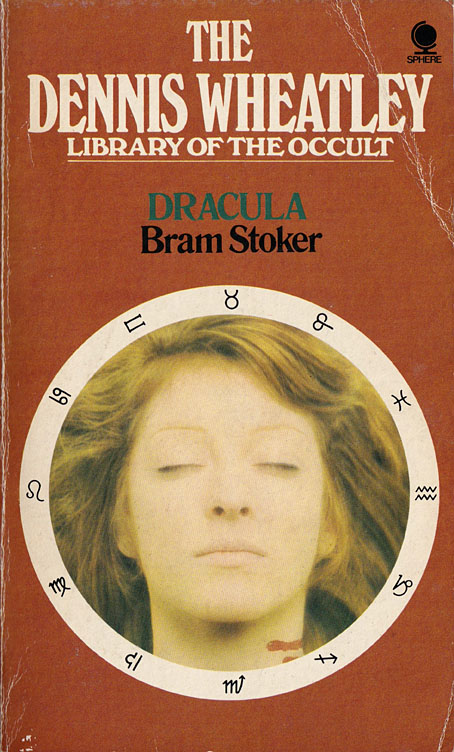
★ ★ ★ Dracula at Standard Ebooks ★ ★ ★
2: The Werewolf of Paris by Guy Endore
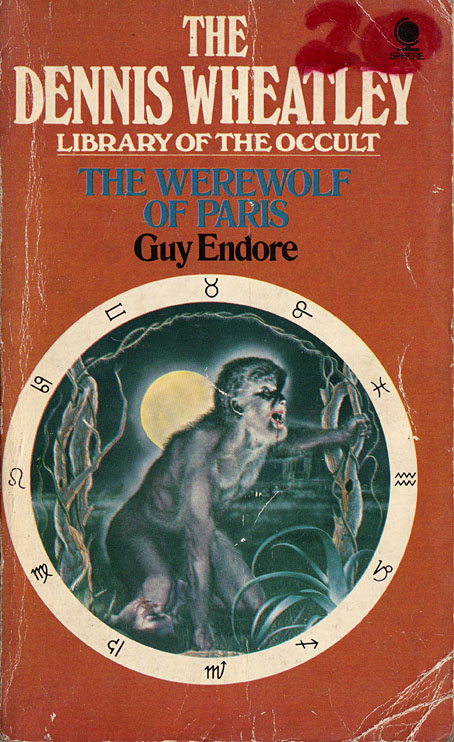
The novel follows Bertrand Caillet, the eponymous werewolf, throughout the tumultuous events of the Franco-Prussian War.
Still in copyright.
3: Moonchild by Aleister Crowley
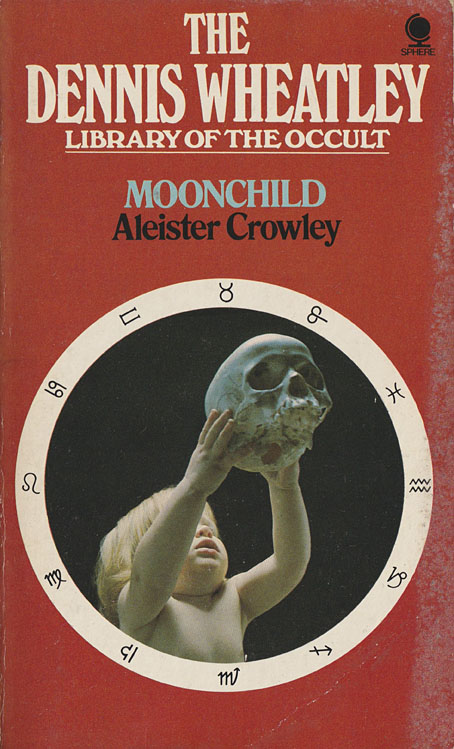
★ ★ ★ Moonchild at the Internet Archive. ★ ★ ★
Its plot involves a magical war between a group of white magicians, led by Simon Iff, and a group of black magicians, over an unborn child.
Crowley was a better poet than a novelist but this novel has been reprinted many times, with Sphere publishing it again a few years later. Wheatley met Crowley at least once, and in his introduction to this edition describes being in attendance one evening in Paris when Crowley performed a summoning which had tragic consequences. It’s a very Wheatleyan anecdote which doesn’t seem to have ever been confirmed by either Crowley himself or any of his biographers.
4: Studies in Occultism by Helena Blavatsky
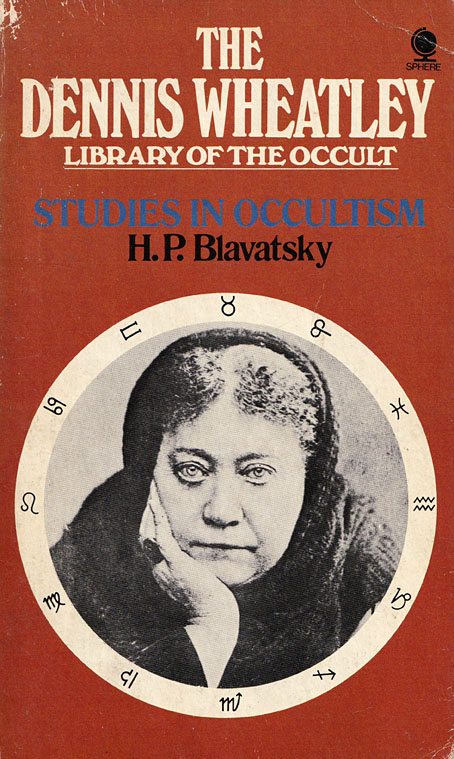
★ ★ ★ Studies in Occultism at Project Gutenberg. ★ ★ ★
…a collection of essays written in the early 20th century. This book delves into the foundational concepts and practices of occultism and theosophy, distinguishing between true spiritual knowledge and superficial magical practices.
The first non-fiction title of the series.
5: Carnacki the Ghost-Finder by William Hope Hodgson
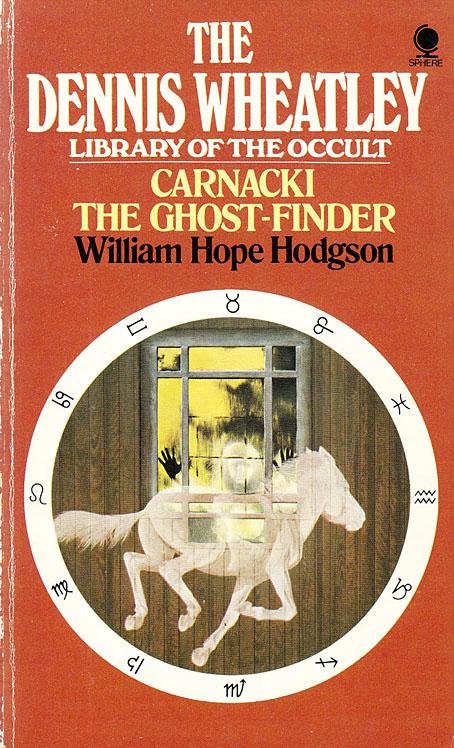
★ ★ ★ Carnacki the Ghost-Finder at Project Gutenberg. ★ ★ ★
…a collection of short stories published between 1910 and 1913. The work features Thomas Carnacki, an occult detective who investigates unusual hauntings using scientific methods, photography, and his fictional invention, the Electric Pentacle.
Wheatley was an early champion of William Hope Hodgson’s fiction, and in his introduction to this edition announces an intention to reprint all of Hodgson’s novels plus a collection of his sea stories. In the end only The Ghost Pirates was added to the series. One thing Wheatley doesn’t mention here is his borrowing of details from the Carnacki stories for his own occult novels. He swiped a lot more from Hodgson’s Sargasso Sea tales for a non-occult novel, Uncharted Seas.
6: The Sorcery Club by Elliott O’Donnell
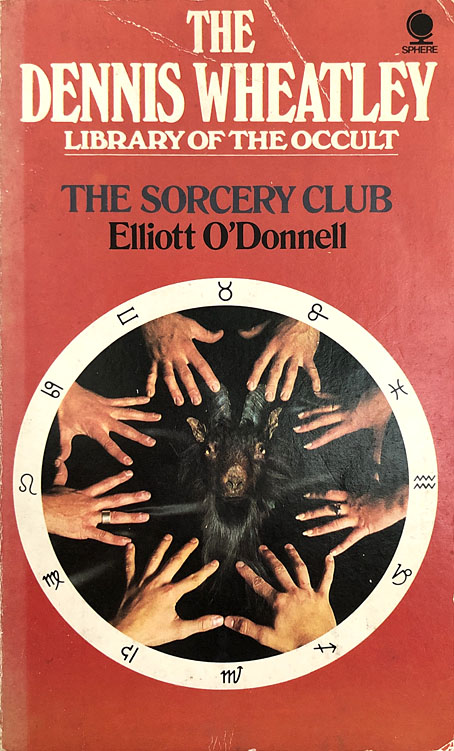
★ ★ ★ The Sorcery Club at Project Gutenberg. ★ ★ ★
…a novel set in the early 20th century. The story centres around Leon Hamar and his companions, Kelson and Curtis, who are struggling with poverty in San Francisco and eventually become entangled in the practice of sorcery after discovering a mysterious book about Atlantis and its dark arts.
7: Harry Price: The Biography of a Ghost-Hunter by Paul Tabori
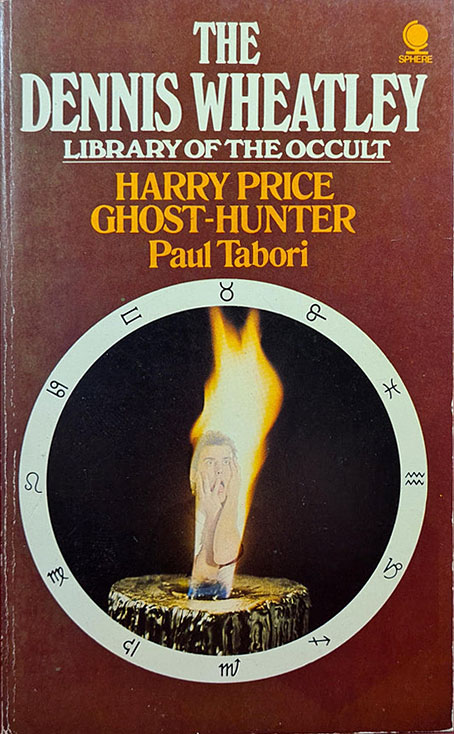
The second non-fiction title, and one that’s still in copyright.
8: The Witch of Prague by F. Marion Crawford
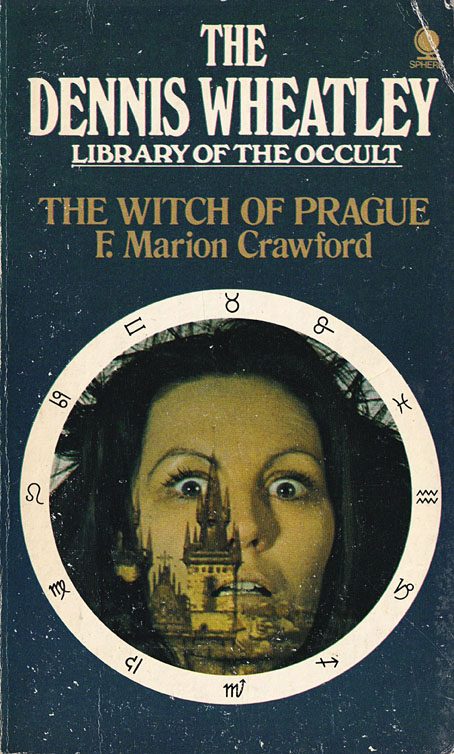
★ ★ ★ The Witch of Prague at Project Gutenberg. ★ ★ ★
This story weaves a tale of love, loss, and the supernatural, centring on a character known as the Wanderer, who searches for his beloved Beatrice, believed to be dead but whom he believes he has seen in a crowded church in Prague.
9: Uncanny Tales 1, selected by Dennis Wheatley
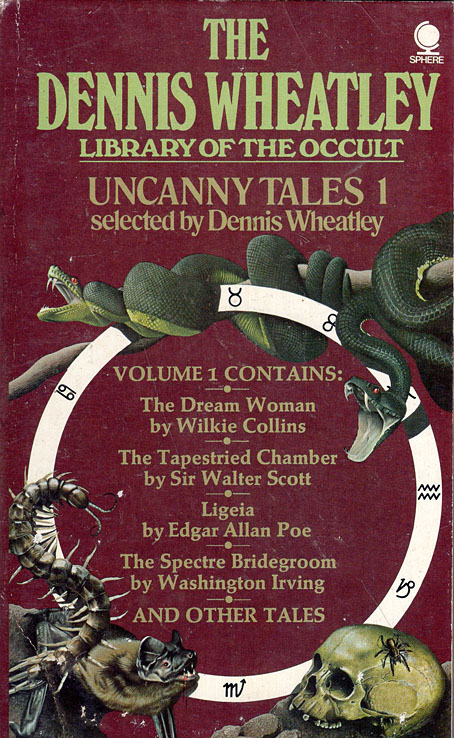
Cover art by Jim Burns.
Carmilla by Joseph Sheridan Le Fanu.
The Dream Woman by Wilkie Collins.
The Tapestried Chamber by Walter Scott.
The Open Door by Margaret Oliphant.
The Spectre Bridegroom by Washington Irving.
Ligeia by Edgar Allan Poe.
Clarimonde by Théophile Gautier (trans. of La morte amoureuse).
10: The Prisoner in the Opal by AEW Mason
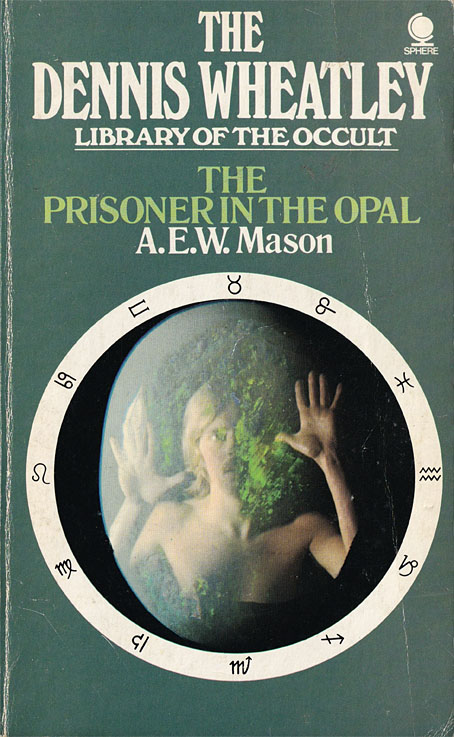
★ ★ ★ The Prisoner in the Opal at Standard Ebooks. ★ ★ ★
A pretty American implores wine enthusiast Ricardo to alter his plans for an upcoming visit to vineyards in France to protect her friend, who she fears is threatened by ominous occult forces. He tries to evade responsibility, only to find that his plans have been switched for him.
11: The Devil’s Mistress by JW Brodie-Innes
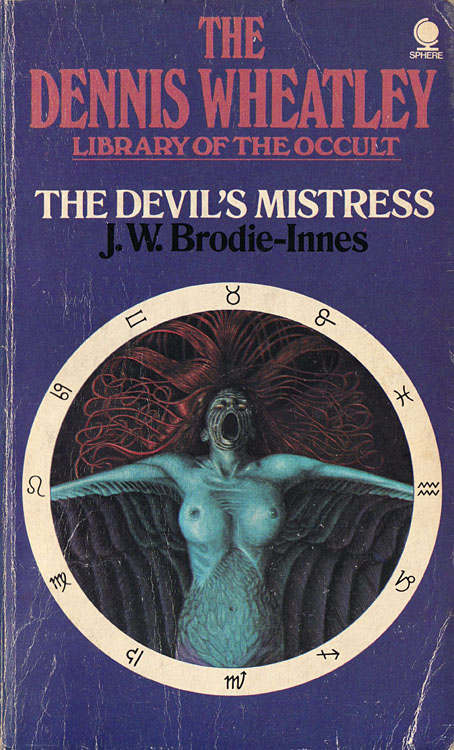
No artist credited but it may be the work of Jan Parker.
★ ★ ★ The Devil’s Mistress at Project Gutenberg Australia. ★ ★ ★
Isabelle Goudie has married dour farmer John Gilbert, and life is dull, drab and celibate. A beautiful, young woman, full of life, she dreams of love and excitement. How can she possibly find a way to realize her dreams? Enter the Devil…
12: You and Your Hand by Cheiro
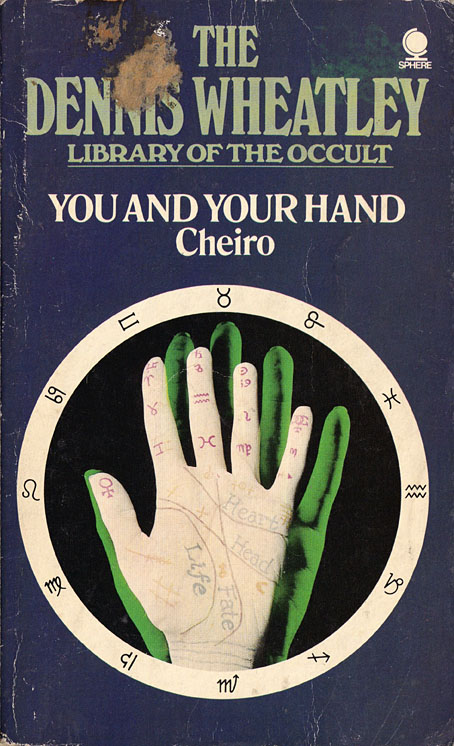
★ ★ ★ You and Your Hand at the Internet Archive. ★ ★ ★
The third non-fiction title, and one of the author’s many books about palmistry. “Cheiro” was an Irish astrologer, William John Warner.
13: Black Magic: A Tale of the Rise and Fall of the Antichrist by Marjorie Bowen
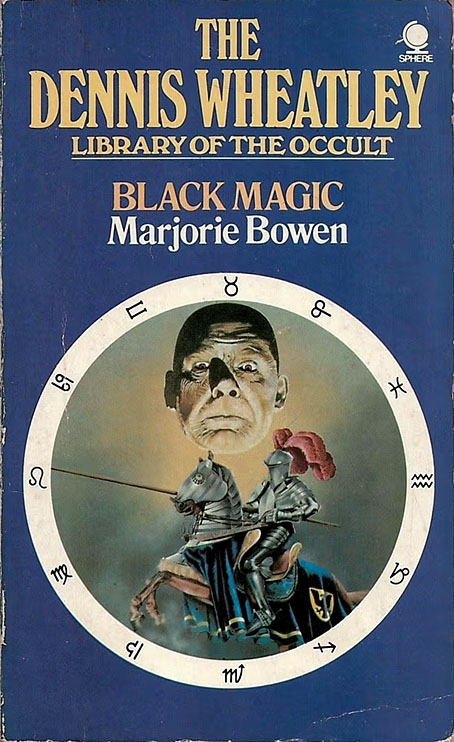
★ ★ ★ Black Magic at Project Gutenberg. ★ ★ ★
Set in a medieval European world of churches, workshops, and universities, it follows the intense bond between Dirk Renswoude and Theirry, two ambitious young men drawn to forbidden arts that promise power while imperilling their souls.
14: Real Magic by Philip Bonewits
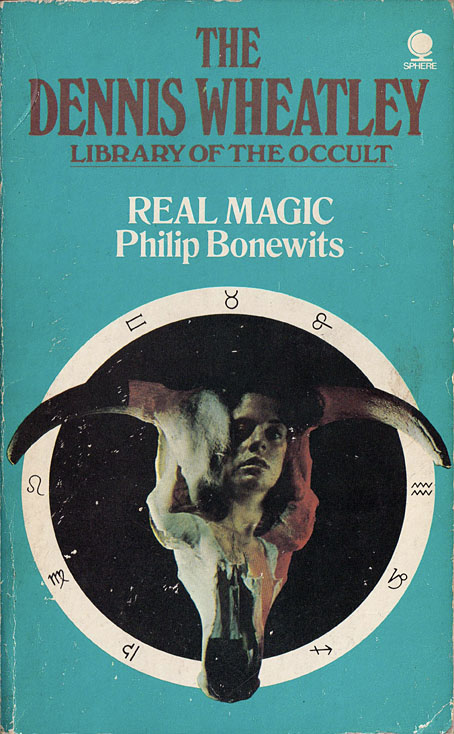
The fourth non-fiction title. Still in copyright.
15: Faust by Goethe
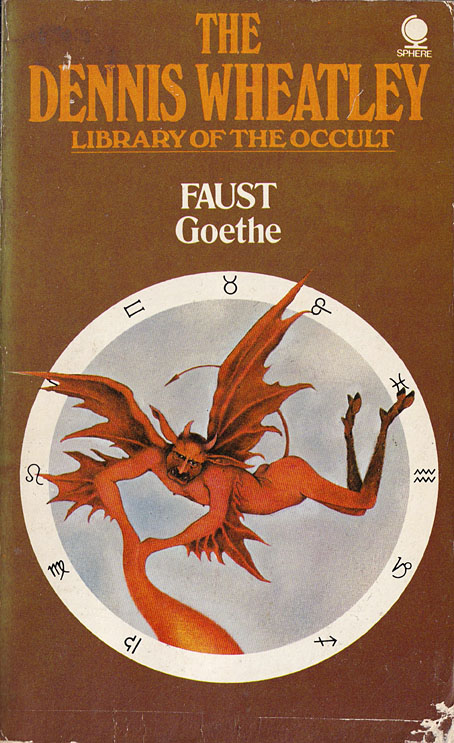
★ ★ ★ Faust at Project Gutenberg. ★ ★ ★
The oddest title in the entire collection, being 450 pages of dramatic verse. The translation is the same rhyming one by Bayard Taylor that was used by Harrap in the edition illustrated by Harry Clarke in 1925.
16: Uncanny Tales 2, selected by Dennis Wheatley
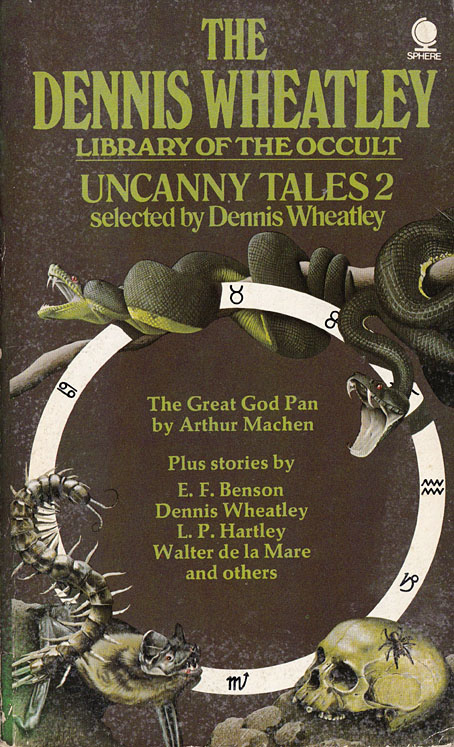
Cover art by Jim Burns.
The Great God Pan by Arthur Machen.
The Witch’s Vengeance by William B. Seabrook.
Gavon’s Eve by EF Benson.
Feet Foremost by LP Hartley.
All Hallows by Walter de la Mare.
Smee by AM Burrage.
The Angelus by William Younger.
A Life for a Life by Dennis Wheatley.
17: The Gap in the Curtain by John Buchan
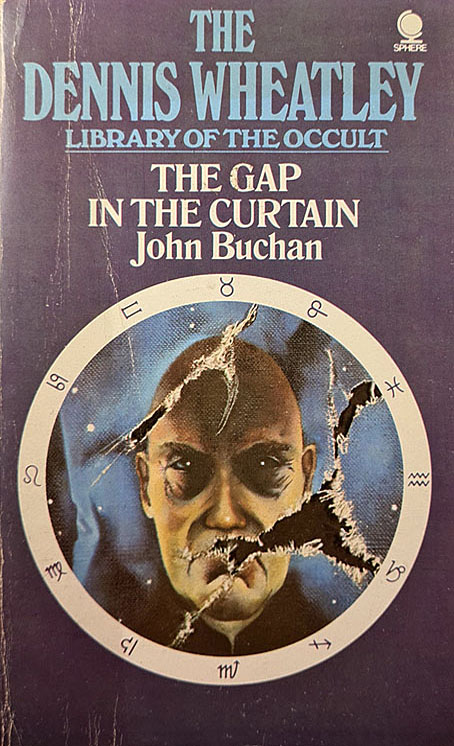
★ ★ ★ The Gap in the Curtain at Faded Page. ★ ★ ★
A fascinating tale about five men who get a glimpse of The Times newspaper a year in the future, and how what they read there affects their lives.
18: The Interpretation of Dreams by Zolar
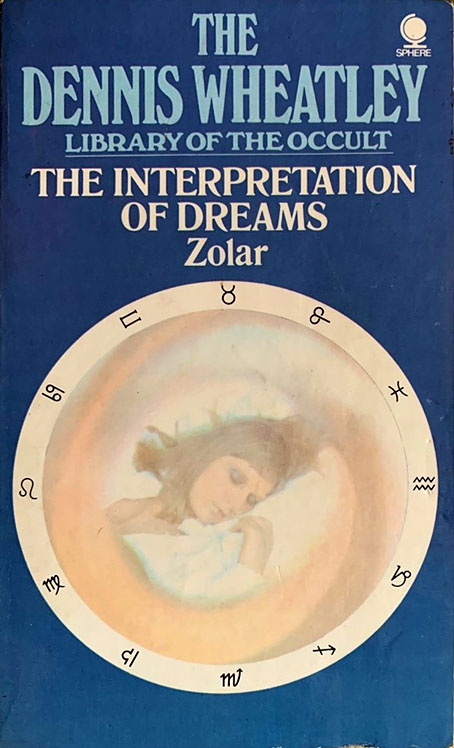
The fifth non-fiction title, and another book that’s still in copyright. “Zolar” was Bruce King.
19: Voodoo by Alfred Métraux
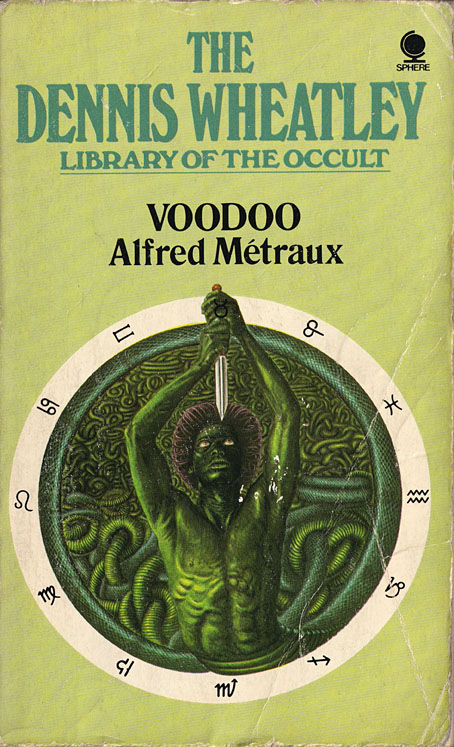
No artist credited but it may be the work of Jan Parker.
The sixth non-fiction title, and another book that’s still in copyright, being a reprint of Voodoo in Haiti (1959).
20: The Necromancers by RH Benson
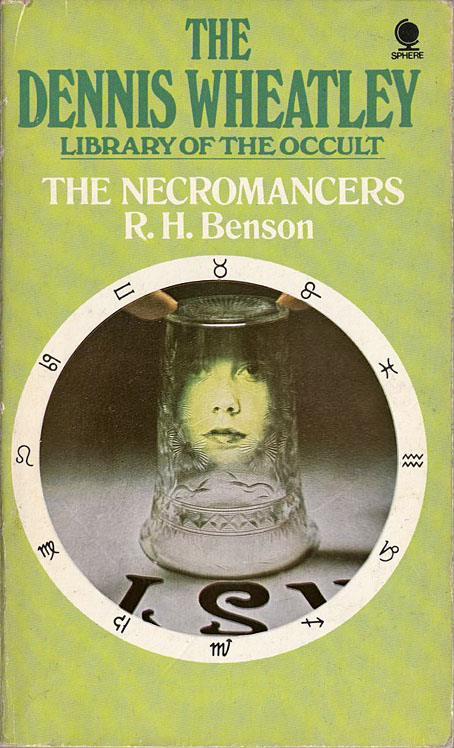
★ ★ ★ The Necromancers at Standard Ebooks. ★ ★ ★
In the wake of his fiancée’s death, Laurie Baxter is introduced to the Spiritualist movement of the early 20th century. As his grief pushes him to explore an underworld of trances and séances, he finds himself torn between many sets of separate worlds: his Catholic faith and Spiritualist skepticism, his home in the country and his life in the city, his departed fiancée and Maggie Deronnais, the adopted sister who longs to support Laurie through his suffering.
21: Satanism and Witches, essays and stories selected by Dennis Wheatley
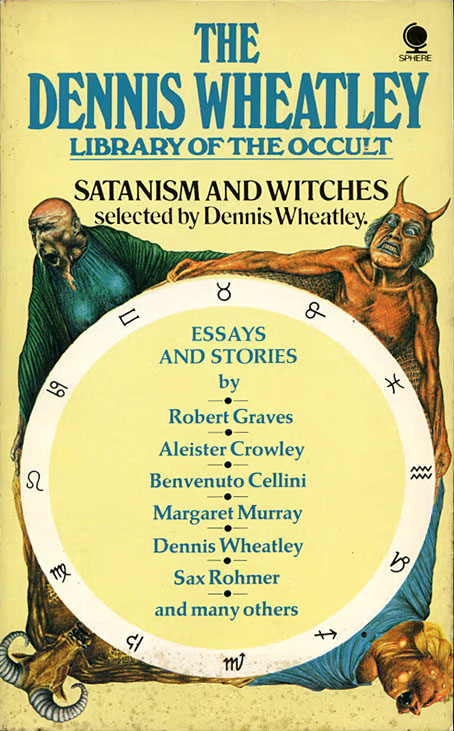
My Experiences in Necromancy, essay by Benvenuto Cellini.
The Witch Finders (excerpt), essay by Sax Rohmer.
The Lancashire Witches, essay by William Godwin.
The Witch Baiter, short story by Anthony M. Rud [as by Robert Anthony].
The Chambre Ardente Affair, short fiction by Ronald Seth.
The Initiation to Witchcraft (excerpt), essay by Margaret Murray.
The Spell of Witchcraft, essay by P. T. Barnum.
The Tryals of the New England Witches (excerpt), essay by Cotton Mather.
The Salem Mass, short story by Nathaniel Hawthorne (variant of Young Goodman Brown).
The Black Lodge, short fiction by Aleister Crowley.
The Sacrifice (excerpt), essay by Betty May.
Sylvan Horrors, essay by Elliott O’Donnell.
Vampires, Were-Wolves, Fox-Women, Etc., essay by Elliott O’Donnell.
Modern Witchcraft, essay by Robert Graves.
An Indictment for Witchcraft, essay by Anonymous.
A Pact with the Devil, essay by Anonymous.
How to Raise a Spirit, essay by Anonymous.
The Black Goat of Brandenburg, short story by Anonymous.
The Confession of the Witches of Elfdale, essay by Anonymous.
White and Black Magic, essay by Dennis Wheatley.
The Black Art and the Supernatural, essay by Dennis Wheatley.
The Witches’ Sabbath, essay by Dennis Wheatley.
The Black Mass, essay by Dennis Wheatley.
The Devil’s Secret Societies, essay by Dennis Wheatley.
Foretelling the Future, essay by Dennis Wheatley.
The Secret Grimoire of Turiel, essay by uncredited.
ISFDB says: “A partial (and uncredited) reprint of Peter Haining’s The Necromancers with the addition of 8 essays from Elliott O’Donnell & Wheatley himself.” The Secret Grimoire of Turiel is apparently a very recent (post-1960) text which claims to be far older.
22: The Winged Pharaoh by Joan Grant
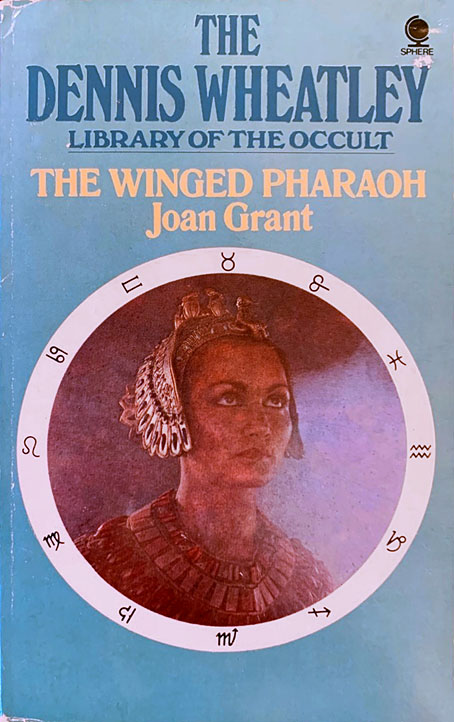
The story is narrated by Sekhet-a-Ra, familiarly known as Sekeeta. Most of the story takes place in the city of “Me’n-atetiss”, Memphis, Egypt, founded by Sekeeta’s ancestor “Meniss” (Menes).
Still in copyright. Joan Grant was a reincarnationist whose first novel (which has here gained a definite article) is based on a trance-dictated account of a life she believed she lived herself.
23: Down There by JK Huysmans
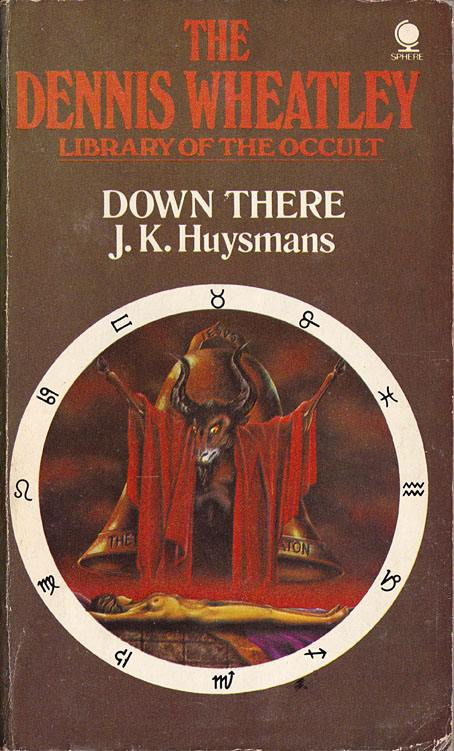
★ ★ ★ Là-bas at Standard Ebooks. ★ ★ ★
The Parisian author Durtal is hard at work on his biography of the French knight and notorious child-murderer Gilles de Rais, but the question of how a confidant of Joan of Arc became such a figure of depravity is difficult to answer. Turning to his friend and confidant Des Hermies, he gradually discovers that the Satanism of de Rais’ time is not only still active in the Paris of the 1890s, but that there are practitioners in his social circle.
“Down There” is the accurate but seldom used translation of Là-bas.
24: The Monk by Matthew Lewis
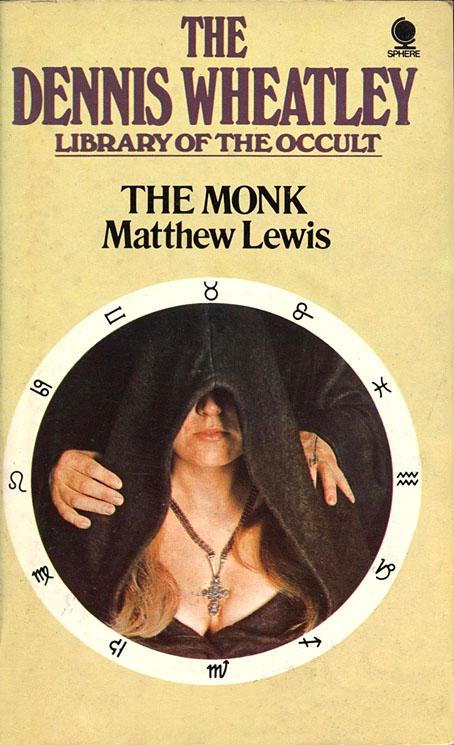
★ ★ ★ The Monk at Standard Ebooks. ★ ★ ★
The novel was shocking for its time in its frank depiction of sexuality and sexual violence, demons, spirits, and scenes of raw horror; but just as shocking was its anti-religious sentiment and thesis that evil often triumphs over good.
25: Horror at Fontenay by Alexandre Dumas
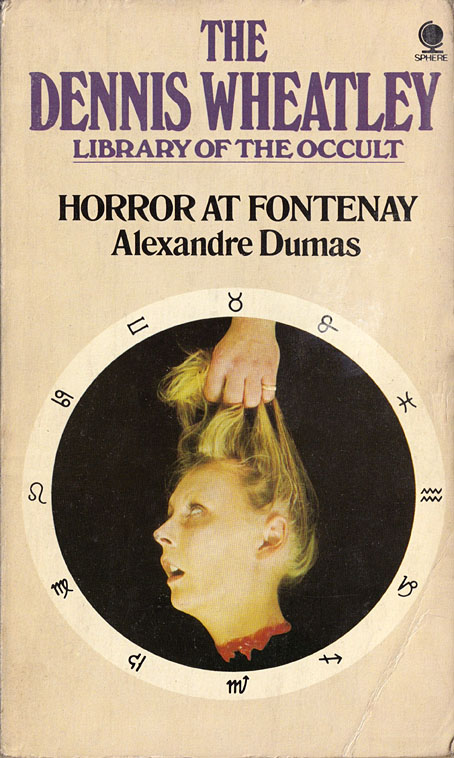
Les mille et un fantômes by Alexandre Dumas is a collection of tales published in 1849. This work presents a series of fantastic stories framed by a central narrative. The author himself appears as narrator, drawn into a mysterious murder case involving a man who claims his beheaded wife spoke to him. This leads to a dinner where guests share increasingly strange tales. Dumas ventures into the supernatural, departing from his historical fiction to explore the shadowy boundary between reality and imagination.
An abridged translation of the above by Alan Hull Walton which is still in copyright.
26: The Hell-Fire Club by Donald McCormick
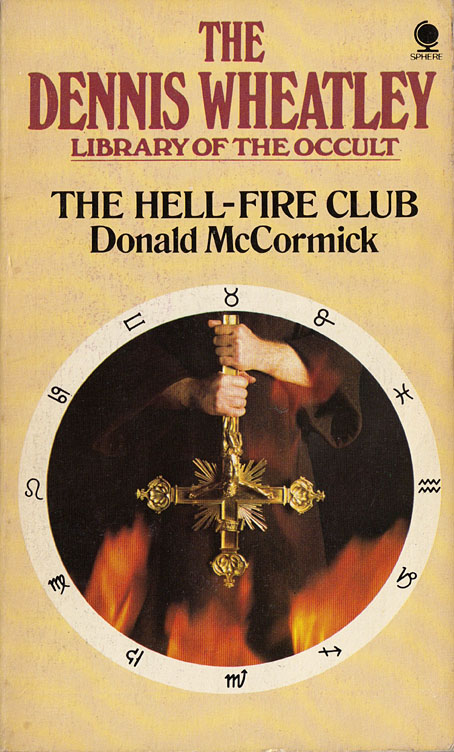
The seventh non-fiction title, “the story of the amorous Knights of Wycombe”, and another one that’s still in copyright. I think this is the only book in the Library which includes a central section of pictorial plates. The film adaptation of Wheatley’s To the Devil a Daughter features scenes filmed at the Dashwood Mausoleum and the Hellfire Caves in Wycombe.
27: The Mighty Atom by Marie Corelli
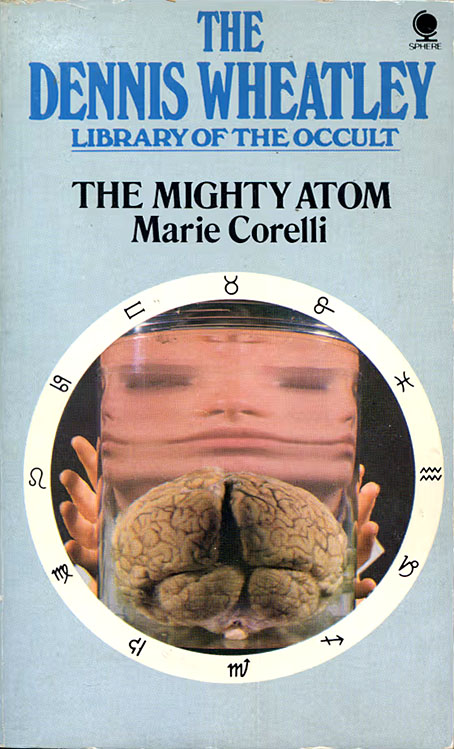
★ ★ ★ The Mighty Atom at the Internet Archive. ★ ★ ★
The spirit, or soul, of a person is non-material, and so a factor “beyond the range of ordinary knowledge”; which quotation comes from the definition of the word “occult” as given in the Oxford Dictionary. Upon these grounds I feel justified in including this book by Marie Corelli in our Library; for it is the story of a young boy grappling with the problem of whether he has, or has not, a soul.
Queen Victoria’s favourite writer. I can’t decide whether Corelli would be flattered by the posthumous attention or appalled to find herself in such disreputable company.
28: The Affair of the Poisons by Frances Mossiker
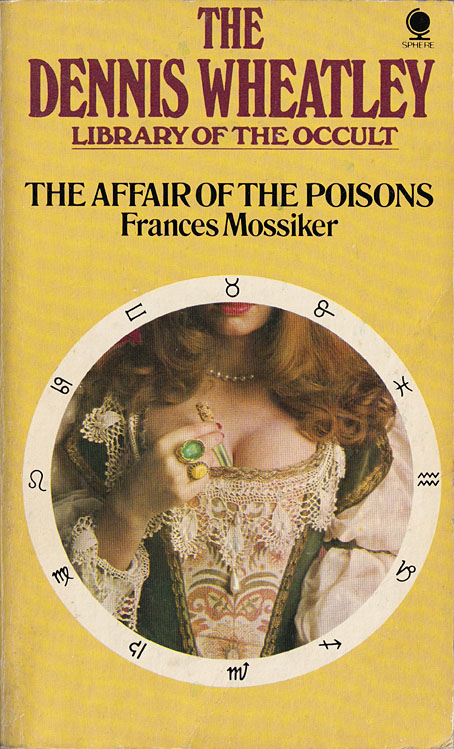
The Affair of the Poisons was a major murder scandal in France during the reign of King Louis XIV. Between 1677 and 1682, a number of prominent members of the aristocracy were implicated and sentenced on charges of poisoning and witchcraft. The scandal reached into the inner circle of the King. It led to the execution of 36 people.
The eighth non-fiction title. Still in copyright.
29: The Witch and the Priest by Hilda Lewis
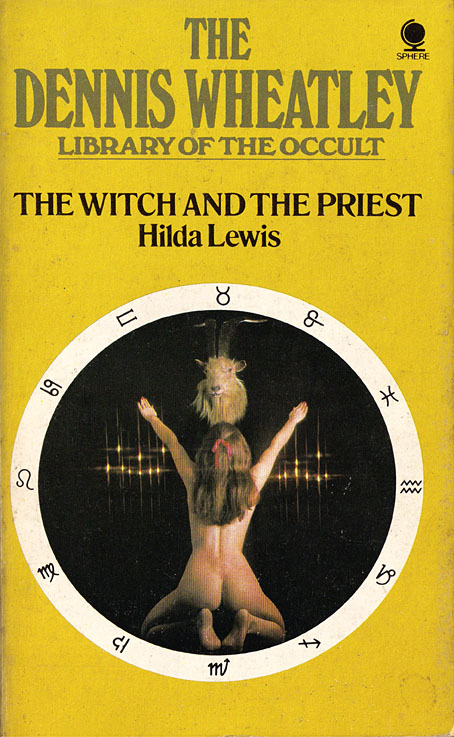
…a horror novel about the seventeenth century Lincolnshire witch trials.
Still in copyright.
30: Death by Enchantment by Julian Franklyn
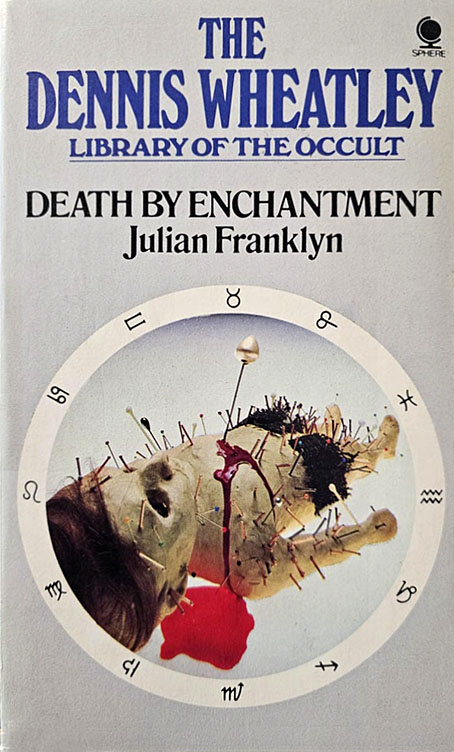
If there is any fault in Mr. Franklyn’s book it is only in the similarity of the enormous number of witch trials that he records. But it is a triumph of erudition and abounds with fascinating particulars about witchcraft.
The ninth non-fiction title, “an examination of ancient and modern witchcraft”. Still in copyright.
31: Fortune Telling by Cards by Ida Prangley
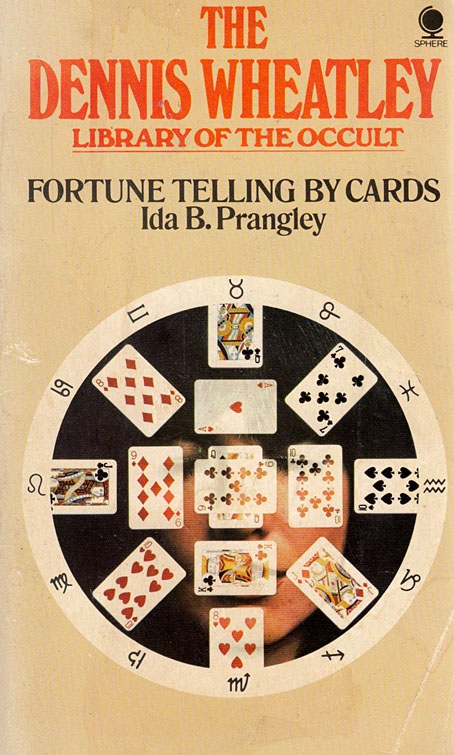
★ ★ ★ Fortune Telling by Cards at the Internet Archive. ★ ★ ★
The tenth non-fiction title. A reprint of Ye Booke of Ye Cards by “Zuresta”, as Ida Prangley was also known.
32: Dark Ways to Death by Peter Saxon
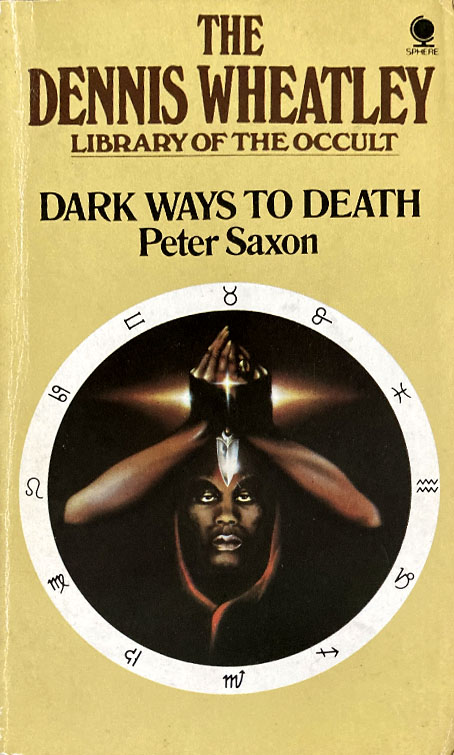
Black magic, satanism, necromancy, witchcraft, sorcery, voodoo, vampirism…wherever and whatever the agents of occult Evil are, The Guardians are there to combat them with their own more-than-mortal powers. In this second thrilling exploit, The Guardians meet their most fateful and perilous challenge in a nightmare maze beneath the city streets—where the Dark God meets his worshippers and lures The Guardians to a doom beyond death!
Still in copyright. One of a series of novels about The Guardians, a modern-day team of occult detectives. “Peter Saxon” was a pen name used by several British thriller writers, this volume being the work of W. Howard Baker and Wilfred McNeilly.
33: The Ghost Pirates by William Hope Hodgson
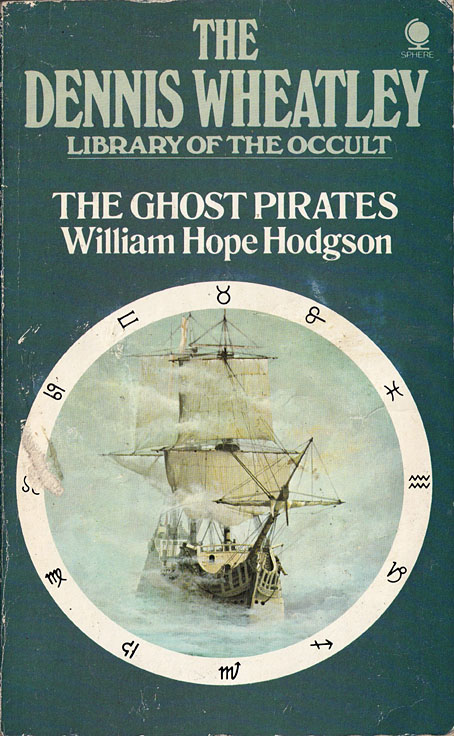
★ ★ ★ The Ghost Pirates at Project Gutenberg. ★ ★ ★
Told as the testimony of Jessop, sole survivor of the doomed ship Mortzestus, the story chronicles strange events that escalate in frequency and terror. Mysterious beings—never clearly described—gradually commandeer the vessel as the crew struggles between disbelief and mounting dread.
34: The Phantom of the Opera by Gaston Leroux
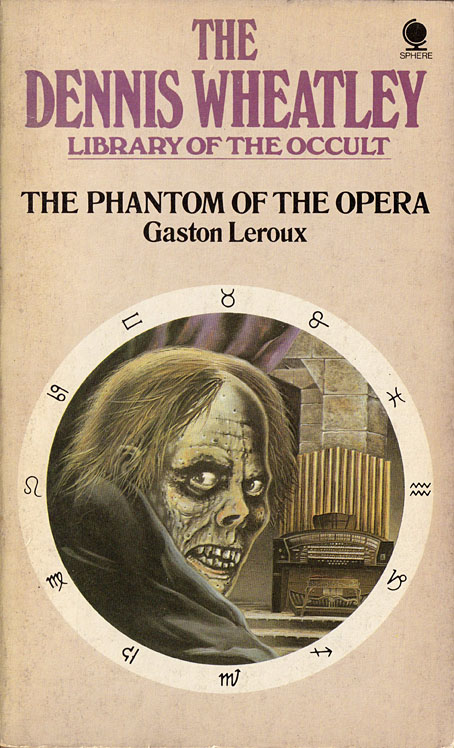
★ ★ ★ The Phantom of the Opera at Standard Ebooks. ★ ★ ★
The copy linked above is the translation by Alexander Teixeira de Mattos.
35: The Greater Trumps by Charles Williams
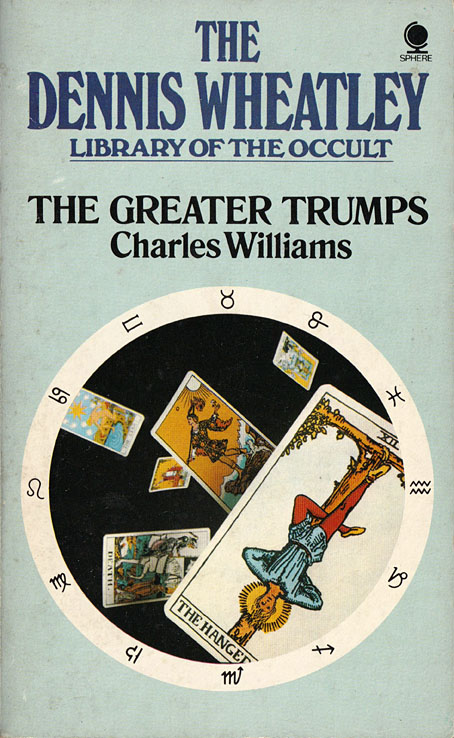
★ ★ ★ The Greater Trumps at Faded Page. ★ ★ ★
The original Tarot deck is used to unlock enormous metaphysical powers by allowing the possessors to see across space and time, create matter, and raise powerful natural storms.
The copy linked above includes a preface by William Lindsay Gresham which isn’t present in the Library of the Occult edition.
36: The Return of the Magi by Maurice Magre
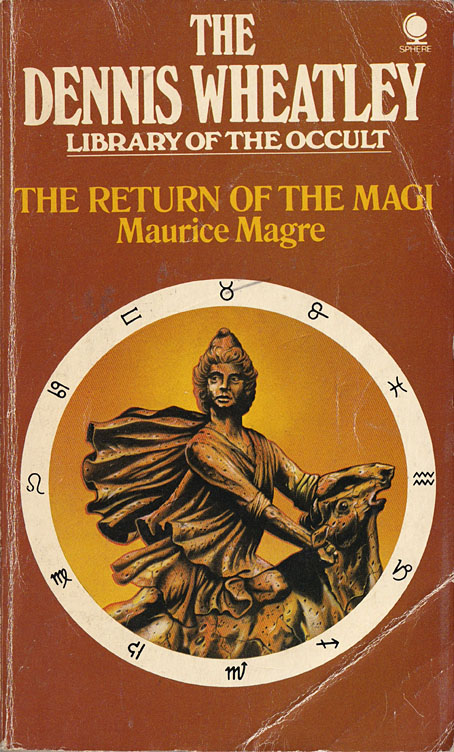
It explores the lives and legends of esoteric “messengers” and occult figures—ancient and modern—while arguing that Eastern wisdom has repeatedly flowed to the West and been resisted, distorted, or persecuted.
The eleventh non-fiction title, and still in copyright in this edition which was translated by Reginald Merton. Magre’s original text, Magiciens et illuminés, is freely available.
37: Uncanny Tales 3, selected by Dennis Wheatley
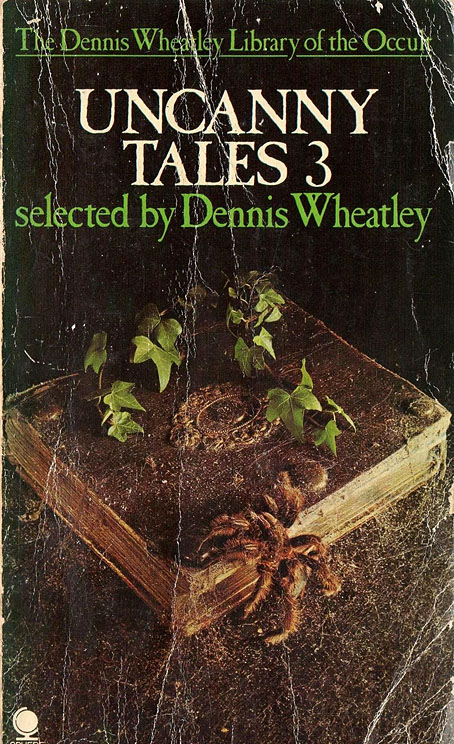
Playing with Fire by Arthur Conan Doyle.
The Canary by F. Tennyson Jesse.
The Hand by Theodore Dreiser.
The Call of the Hand by Louis Golding.
The Snow by Hugh Walpole.
Lucky’s Grove by H. Russell Wakefield.
Afterward by Edith Wharton.
The Monkey’s Paw by WW Jacobs.
The Snake by Dennis Wheatley.
The Miracle of the Stigmata by Frank Harris.
The Trod by Algernon Blackwood.
A change of design for the series. All the covers from here to the end of the run are set in Caslon Antique, a typeface that would become very popular with Goths in the 1980s.
38: The King Is A Witch by Evelyn Eaton
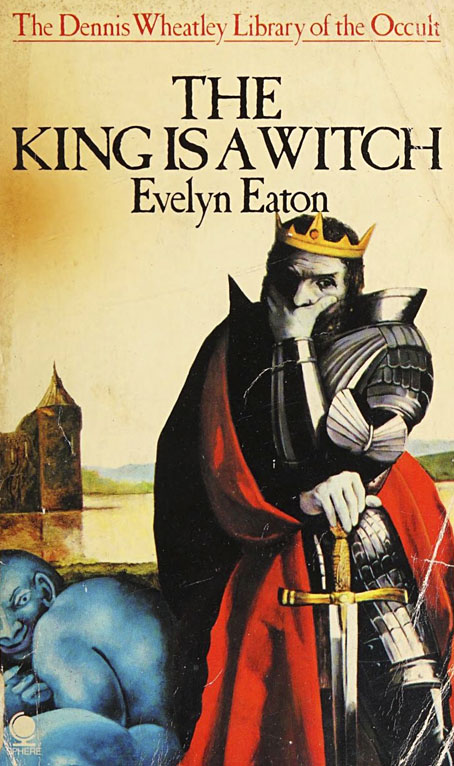
On his foam-flecked horse, sweating from fear and the urgency of his mission, a messenger rode in frantic haste towards Nottingham. He must warn the young King Edward that his life was in danger, the upstart Mortimer—the “Scapegoat”—planned to murder him. Among the King’s retinue was the beautiful Lady Montague, highest ranking in England. With the Inquisition looming on the horizon, it would be dangerous to admit allegiance to her goddess, Diana, as the King well knew. But secretly he remained loyal to the Old Religion; and it was there he would find allies to fight Mortimer’s threat.
Still in copyright.
39: Frankenstein by Mary Shelley
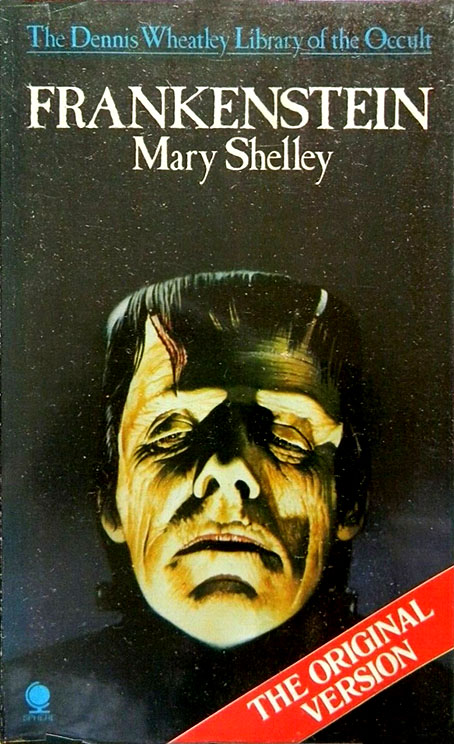
★ ★ ★ Frankenstein at Standard Ebooks. ★ ★ ★
“The Original Version” yet they insist on having the flat-skulled Universal monster on the cover.
40: Curse of the Wise Woman by Lord Dunsany
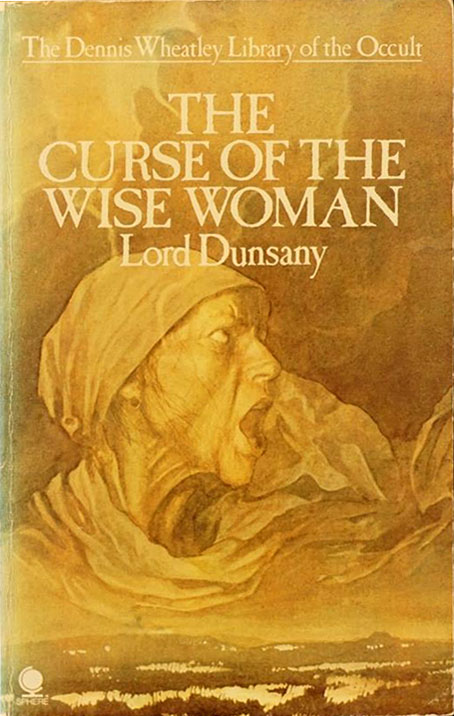
No cover artist credited but it may be the work of Alan Lee.
The plot concerns a motherless teenaged Anglo-Irish gentleman of the 1890s whose father has been forced to flee the country. Left in charge of the family estates, he uses his freedom to indulge his love of field sports, focusing especially on wildfowl-shooting on a nearby peat bog. […] When he discovers that the existence of the bog is threatened by an industrial peat-cutting syndicate he finds no effective ally except an old woman who believes herself to be a “wise woman”, or witch.
Still in copyright.
41: Brood of the Witch Queen by Sax Rohmer
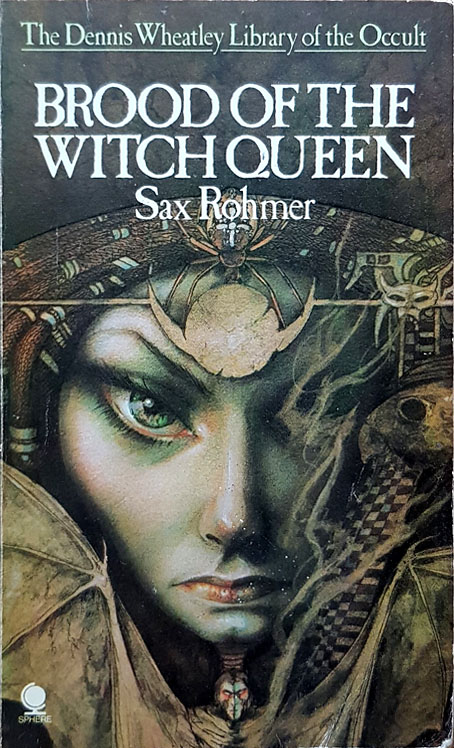
★ ★ ★ Brood of the Witch Queen at Standard Ebooks. ★ ★ ★
This novel follows Robert Cairn, his father, Dr. Bruce Cairn, and their suspicion of one Antony Ferrara. After witnessing the strange and violent death of a swan, Robert Cairn suspects that Ferrara may be involved with the death of the bird. Soon after two murders, Dr. Bruce Cairn arrives in London and warns Robert that he suspects Ferrara is using ancient Egyptian magic to accomplish his evil deeds.
42: Brazilian Magic: Is It The Answer? by Pedro McGregor
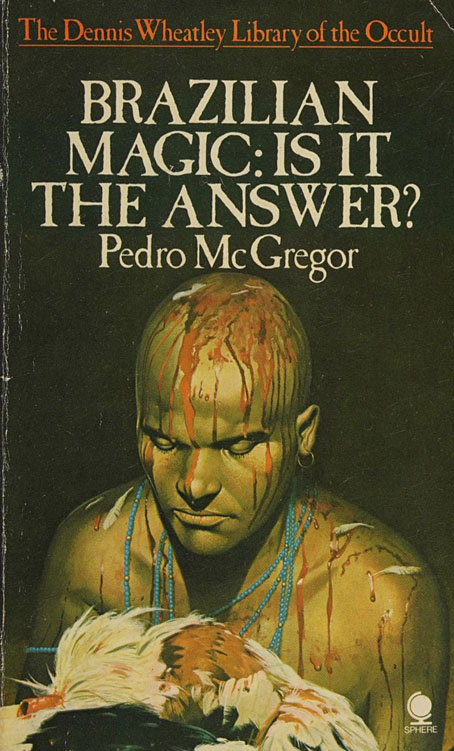
The twelfth non-fiction title, and one that’s still in copyright. Originally published as The Moon and Two Mountains (1966).
43: Darker Than You Think by Jack Williamson
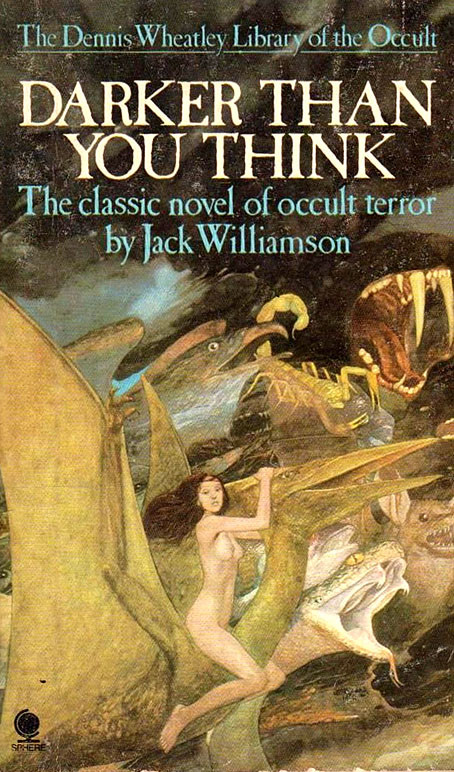
The novel begins with the announcement from an ethnological expedition to Mongolia that among humanity exist people who can turn themselves into animals. However, the expedition’s spokesman dies of a sudden mysterious seizure in the midst of a press conference, just as he was about to provide detailed proof of his assertions…
Still in copyright.
44: War In Heaven by Charles Williams
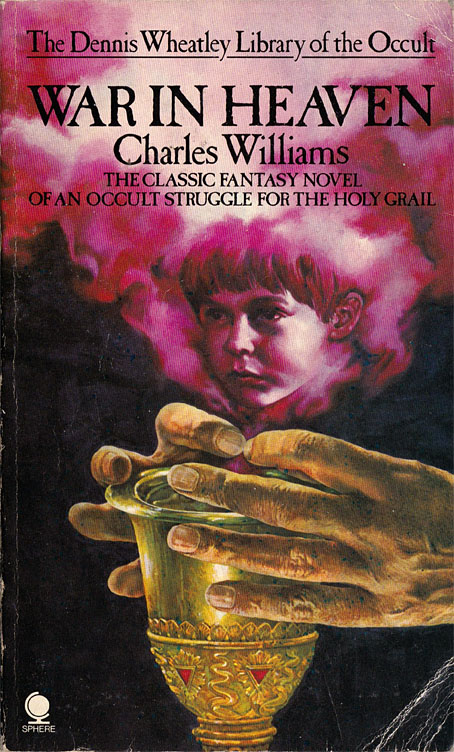
Cover art by Philip Hood.
★ ★ ★ War in Heaven at Faded Page. ★ ★ ★
The novel traces a humble Anglican priest’s struggle with a satanic cabal who are bent on stealing the Holy Graal and using it for dark magic.
45: Morwyn by John Cowper Powys
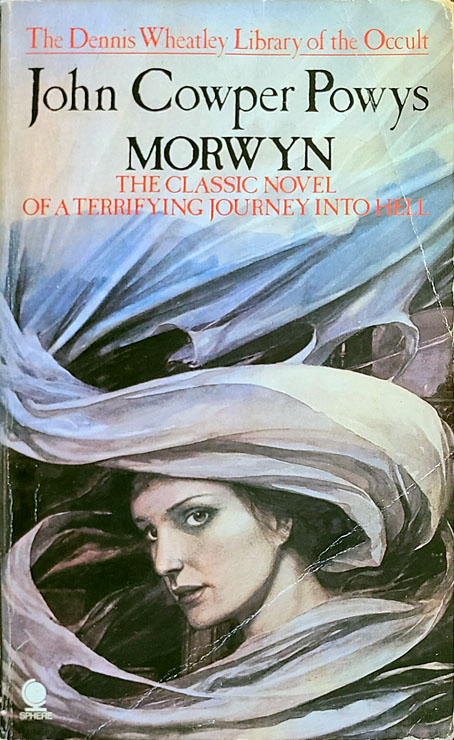
First published in 1937, John Cowper Powys originally wanted to call this novel Hell. One can see why. Powys was a fervent opponent of vivisection, “man’s most vicious cruelty”, and here, in this strange fantasy, he gives full vent to his feelings. The main adventures are set in Hell where the narrator, not named but clearly based on Powys himself, his dog, Black Peter, Morwyn, his new love and her father, a vivisector find themselves hurled after a cataclysm on a Welsh mountain-side. The infernal adventures and encounters are virtuoso displays of Powys’s extraordinary knowledge of the mythical underworld.
Still in copyright.
Previously on { feuilleton }
• Jim Lamb covers Charles Williams
• Occult rock: The Devil Rides In
• The most unusual magazine ever published: Man, Myth and Magic
• Jan Parker’s witches
• Llewellyn occult magazine and book catalogue, 1971
• André Castaigne’s Phantom of the Opera
• The South Bank Show: Dracula
• Typefaces of the occult revival
• Dreaming Out of Space: Kenneth Grant on HP Lovecraft
• MMM in IT
• Nightmare: The Birth of Horror
• The Occult Explosion
• Wilfried Sätty: Artist of the occult