Weekend links 118

owczarek.jpg

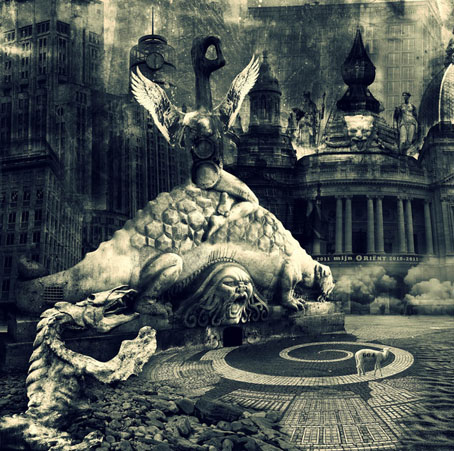
The Garden of Urban Delights (2010) by Marcin Owczarek.

His protagonists are misfits: alienated, implicitly gay, longing for love, frequently hard to be around, always fixated on small pleasures that compensate for an essential feeling of not belonging. […] His patroness Edith Sitwell termed him “that rare being, a born writer.” William Burroughs dedicated The Place of Dead Roads to him, declaring Welch “certainly the writer who most directly influenced my work.” John Waters has called In Youth is Pleasure “so precious, so beyond gay, so deliciously subversive, [it] is enough to make illiteracy a worse social crime than hunger.”

Sadie Stein on Denton Welch, a writer I’m embarrassed about still not having read. Edith Sitwell and William Burroughs had a famously disputatious correspondence in the pages of the TLS over The Naked Lunch. An appreciation of Welch’s work was one of the few things they had in common.

• Don’t mention guitars: Robert Hampson on acousmatic music, the curse of Loop and the rebirth of Main.

• No Straight Lines: A Collection Of Queer Comics part one, part two, part three. A history by Justin Hall.

Pieces Of Gold by The Aikiu: shots from gay porn videos repurposed via some smart editing.

• RIP İlhan Mimaroğlu, electroacoustic composer. Ubuweb has a selection of his recordings.

“A good ground rule for writing in any genre is: start with a form, then undermine its confidence in itself,” he says. “Ask what it’s afraid of, what it’s trying to hide – then write that.” For Harrison, the most satisfying writers are “at odds with their cultural context. They’re trying to fit in and failing, or they’re trying to remove themselves and failing. The attempt to resolve the conflict is an angle – a frame or a context – in itself.”

The Guardian’s A Life in Writing profiles M. John Harrison. His new novel, Empty Space, was published on Thursday. There’s also this recent video interview with Arc magazine.

• Stephen Usery interviews editor Russ Kick about The Graphic Canon: Volume One.

At home with Prince Zaleski, the “most decadent and imperial detective in fiction”.

• A Visit with Magritte: photographs by Duane Michals.

Loitering airships could dispense drones on demand.

• Creating a Forever Object: Ian Schon’s Pen Project.

• A Tumblr for the late, lamented Arthur Magazine.

• “Few cities can boast a railway line for the dead.”

The Lost Tapes by Can: An Oral History.

Space Reflex (1963) by Dick Hyman & Mary Mayo | Space Is Deep (1972) by Hawkwind | Space Is The Place (1973) by Sun Ra | Space Moment (1995) by Stereolab | Space Pong (2006) by T++
Weekend links 117

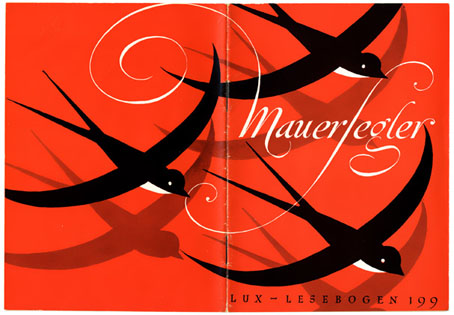
lux1.jpg

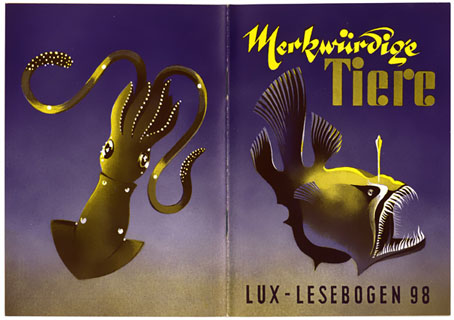
Illustration and design by Karlheinz Dobsky.

Above and below: samples from Die Lux-Lesebogen-Sammlung, an exhibition of booklets for young people published by Sebastian Lux from 1946–1964. All were designed and illustrated by Karlheinz Dobsky.

• At The American Scholar: “Vladimir Nabokov’s understanding of human nature anticipated the advances in psychology since his day,” says Nabokov biographer Brian Boyd, and An Unquenchable Gaiety of Mind: “On visits to Cambridge University late in life, Jorge Luis Borges offered revealing last thoughts about his reading and writing,” says George Watson.

• The British Library releases The Spoken Word: “A rare collection of recordings featuring the American writer William S Burroughs and the British-born artist Brion Gysin.” Related: Interzone – A William Burroughs Mix by Timewriter.

• Charting the Outlaws: Christopher Bram (again) talking to Frank Pizzoli about his recent study Eminent Outlaws: The Gay Writers Who Changed America.

• The BBC asks “Where are you on the global fat scale?” I’ve always been thin but was still surprised to find my BMI at the very bottom of the scale.

The “otherness” of Ballard, his mesmeric glazedness, is always attributed to the two years he spent in a Japanese internment camp in Shanghai (1943–45). That experience, I think, should be seen in combination, or in synergy, with the two years he spent dissecting cadavers as a medical student in Cambridge (1949–51). Again the dichotomy: as a man he was ebulliently social (and humorous), but as an artist he is fiercely solitary (and humourless). The outcome, in any event, is a genius for the perverse and the obsessional, realised in a prose style of hypnotically varied vowel sounds (its diction enriched by a wide range of technical vocabularies). In the end, the tensile strength of The Drowned World derives not from its action but from its poetry.

Martin Amis on The Drowned World by JG Ballard.

The Chickens and the Bulls: “The rise and incredible fall of a vicious extortion ring that preyed on prominent gay men in the 1960s.”

• It’s that Zone again: Jacob Mikanowski on Andrei Tarkovsky’s Stalker and Geoff Dyer’s Zona.

• Scans of the rare film programme for London screenings of Fritz Lang’s Metropolis.

lux2.jpg

Illustration and design by Karlheinz Dobsky.

• “The web is a Library of Babel that could go the way of the Library of Alexandria.

Fila Arcana: alchemy- and occult-themed embroidery by Mina Sewell Mancuso.

A Very Edgy Alice In A Very Weird Wonderland: illustrations by Pat Andrea.

Malka Spigel reveals a new track from her third solo album.

John Martin and the Theatre of Subversion.

Olafur Eliasson: Little Sun at Tate Modern.

• Meanwhile, back in 1972: Mahavishnu Orchestra live at the BBC (30 mins), and the complete performance of the MC5 on Beat Club (29 mins).

Lucifer Rising posters

lucifer1.jpg

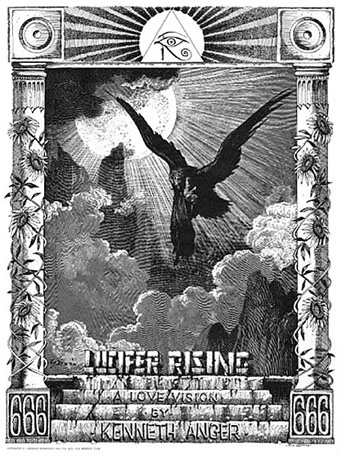
Lucifer Rising: A Love Vision by Kenneth Anger (1967) by Rick Griffin.

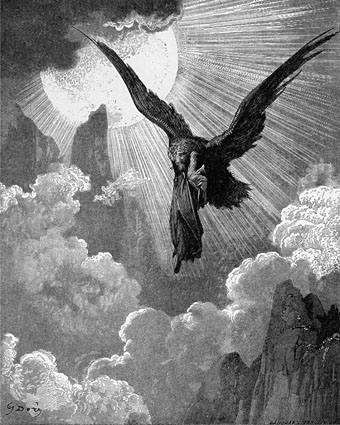
The status of Kenneth Anger’s Lucifer Rising as a kind of poly-cultural crossroads even extends to its poster art. The original poster by Rick Griffin dates back to the earliest drafts of the film, and with its swipe from Gustave Doré makes me think it’s the kind of thing Wilfried Sätty might have produced for Anger had he been asked. (They were both living in San Francisco at this time.)

dore.jpg

The San Francisco poster artists happily plundered the past for unusual images; Doré was a popular choice since his images are frequently striking and copies of the books (or reprints) would have been easy to find. This is one of the illustrations from the Purgatorio section of his illustrated Divine Comedy (1867) showing Dante being ferried up Mount Purgatory (“like Ganymede”) by a giant eagle.

lucifer2.jpg

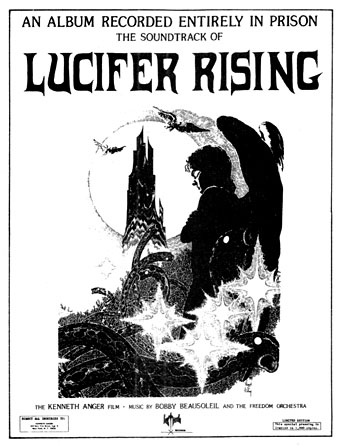
From Dante and Virgil to Virgil Finlay, one of whose illustrations was used on this promo sheet advertising a limited run of Bobby Beausoleil’s soundtrack for the film.

finlay.jpg

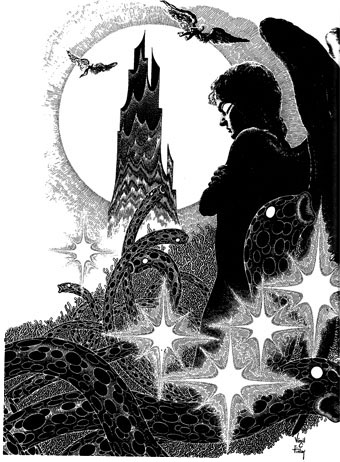
Earth’s Last Citadel (1950) by Virgil Finlay.

The illustration this time is for a reprint of Earth’s Last Citadel by CL Moore and Henry Kuttner in Fantastic Novels Magazine for July 1950. I’ve never seen any mention of William Burroughs meeting Kenneth Anger which is a shame since they had acquaintances in common and Burroughs occasionally showed an interest in some of Aleister Crowley’s ideas. The Henry Kuttner connection in this case would provide a link to some of the borrowings Burroughs himself made from Kuttner’s writing. But no, it’s too much of a reach.

lucifer3.jpg

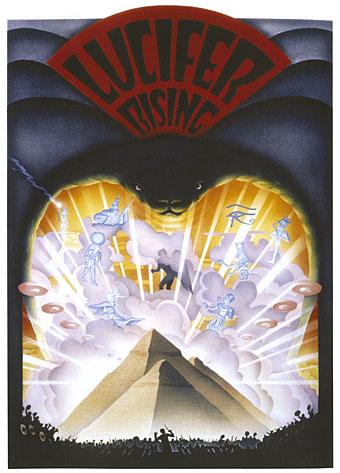
Lucifer Rising (1980) by Page Wood.

After all that the final poster is an original piece of work by Page Wood for a premier screening at the Whitney Museum, New York in 1980. The art avoids the overt occultism in favour of making a resolutely low-budget piece seem like a Hollywood epic. Given Anger’s lifelong obsession with Hollywood’s myths and tragedies I think he would have appreciated that.

Previously on { feuilleton }
Externsteine panoramas
San Francisco by Anthony Stern
The art of Alia Penner
Missoni by Kenneth Anger
Anger in London
Arabesque for Kenneth Anger by Marie Menken
Edmund Teske
Kenneth Anger on DVD again
Mouse Heaven by Kenneth Anger
The Man We Want to Hang by Kenneth Anger
Relighting the Magick Lantern
Kenneth Anger on DVD…finally

Wilfried Sätty album covers

gandharva.jpg

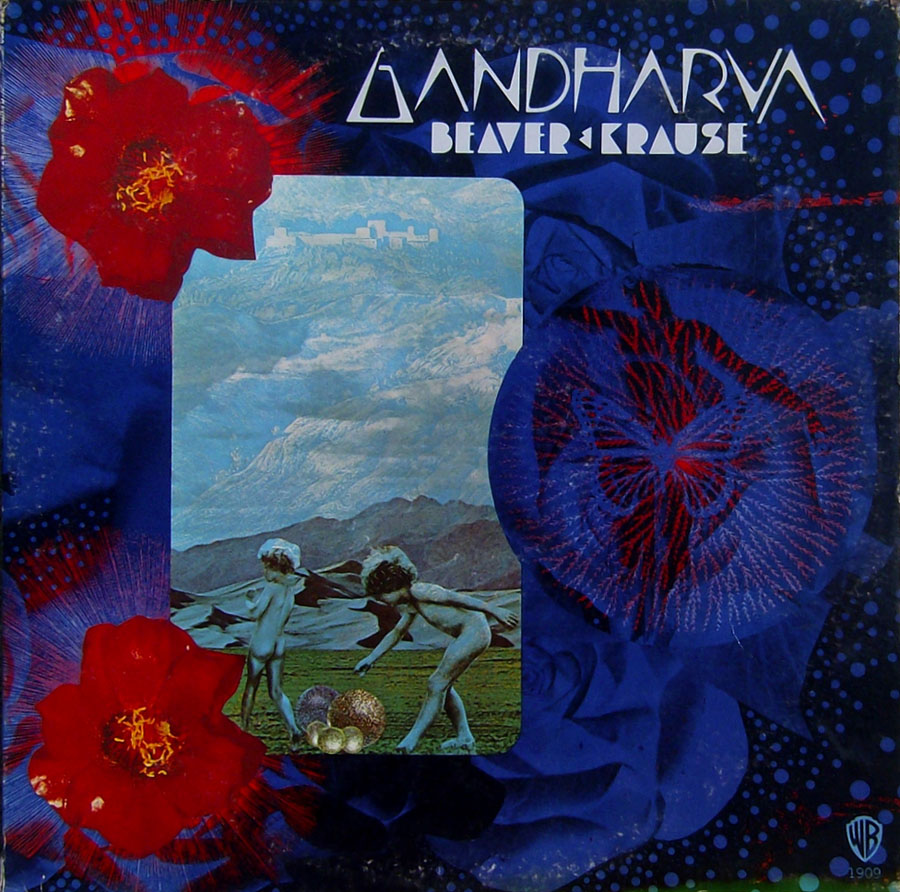
Gandharva (1971) by Beaver & Krause. Cover art by Sätty, lettering by David Singer.

There aren’t many, unfortunately, and half the ones here have already featured in previous posts, but since I’m often referring people to Sätty’s work it seems worthwhile gathering them together. His album cover art shows he was equally adept at working with colour as with black-and-white, and might have done a lot more in this line had he been given the opportunity. (Sätty’s first book, The Cosmic Bicycle, does include some colour plates.)

The Gandharva album is the oddest in this small collection, one side being a blend of blues, gospel and Beaver & Krause’s Moog doodlings while the other side comprises an improvised Moog-inflected jazz suite recorded live in Grace Cathedral, San Francisco. The setting of the latter is apt since cover artists Sätty and David Singer both came to prominence among San Francisco’s psychedelic poster designers in the late 1960s. Film director Robert Fuest liked Gandharva so much he hired Paul Beaver, Bernie Krause and Gerry Mulligan to play similar music for the soundtrack of The Final Programme.

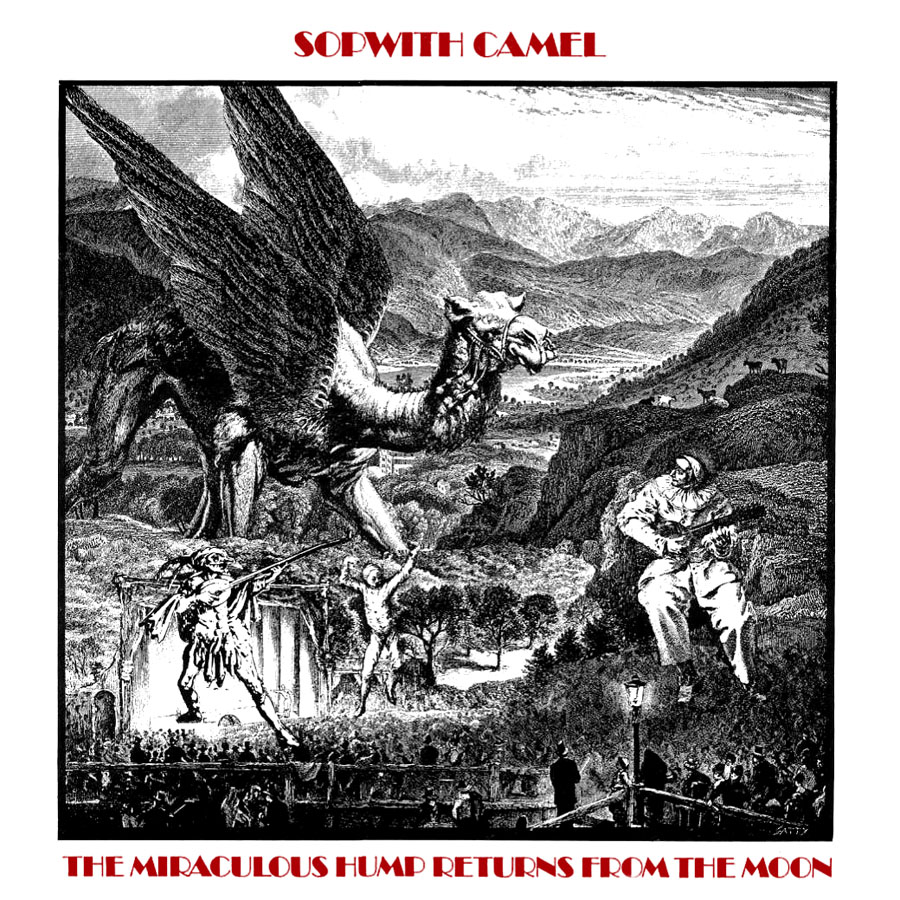
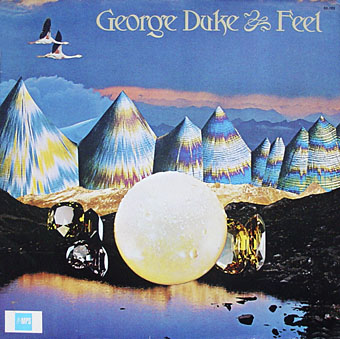
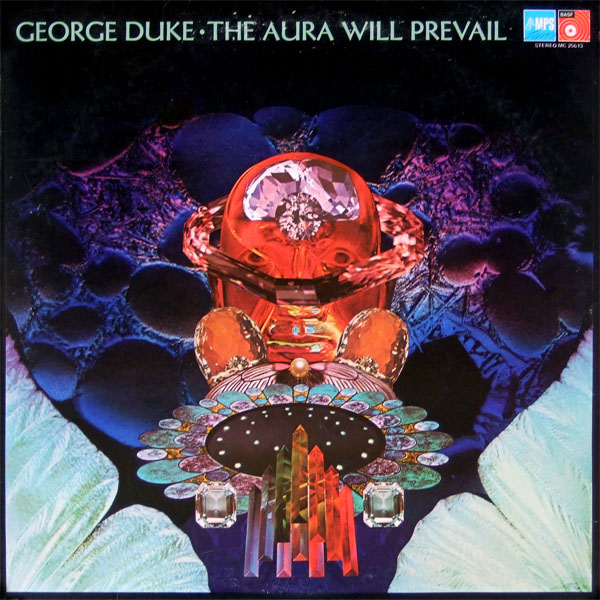
Of the other albums the Sopwith Camel is obviously closest to Sätty’s familiar style. The covers for George Duke suit the mid-70s trend of jazz/funk albums with “cosmic” sleeve art exemplified by Tadanori Yokoo’s fantastic (in all senses) collage for Agharta by Miles Davis. Documentation of Sätty’s non-book work is still sparse so if anyone knows of any other covers please leave a comment.

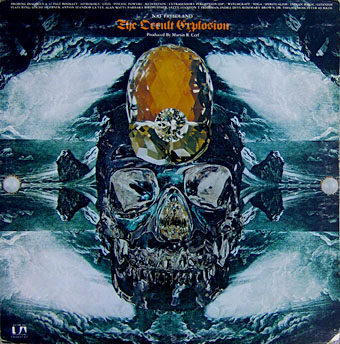
Update: Added The Occult Explosion. See this later post.

sopwith.jpg

The Miraculous Hump Returns From The Moon (1973) by Sopwith Camel.

occultsatty.jpg

The Occult Explosion (1973) by Various Artists.

duke2.jpg

Feel (1974) By George Duke.

duke1.jpg

The Aura Will Prevail (1975) by George Duke.

Elsewhere on { feuilleton }
The album covers archive

Previously on { feuilleton }
Nature Boy: Jesper Ryom and Wilfried Sätty
Wilfried Sätty: Artist of the occult
Illustrating Poe #4: Wilfried Sätty

Weekend links 115

vandamme.jpg

Untitled painting by Suzanne Van Damme (1901–1986).

Eric Berkowitz, author of Sex and Punishment: 4000 Years of Judging Desire, chooses five books for The Browser.

Venus febriculosa is running another competition: Design a new cover for Brian Eno’s Music For Films.

• Paul Mayersberg and Tony Richmond on making The Man Who Fell to Earth.

When a good idea occurs, it has been prepared by a long time of reflection. But you have to be patient. We all have what I call the invisible worker inside ourselves; we don’t have to feed him or pay him, and he works even when we are sleeping. We must be aware of his presence, and from time to time stop thinking about what we are trying to do, stop being obsessed about answers, and just give him the room, the possibility, to do his work. He is tenacious, you see. He never loses hope.

Screenwriter Jean-Claude Carrière discusses his remarkable career. Related: The Discreet Charm of the Bourgeoisie revisited.

Tragic Time Capsules: Capturing the Decay of Forgotten Olympic Venues.

Louis Menand on “The Puns and Detritus in James Joyce’s Ulysses“.

• Saul Bass’s original ending for Phase IV unearthed in Los Angeles.

Katherine Lanpher uses witchcraft to find a New York apartment.

Italo Calvino’s adolescence – that in-between time.

• The early film posters of Waldemar Swierzy.

Psychedelic nano-art in oils and ferrofluids.

David Toop has a blog.

Callum James Paper.

Bodies of Water (1995) by David Toop