Wilfried Sätty and the Cosmic Bicycle

satty1.jpg

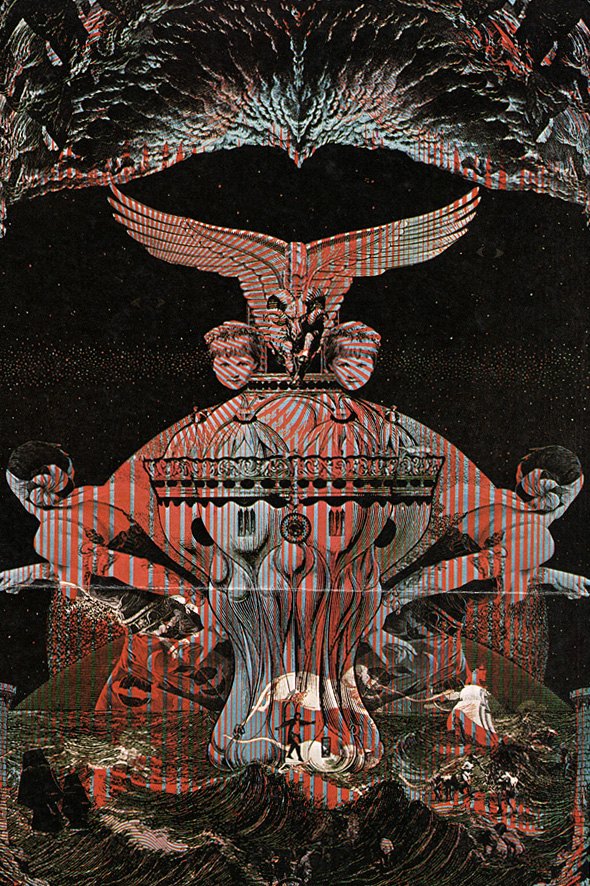
Listen, Sleep, Dream (1967), a poster by Wilfried Sätty.

Continuing the San Francisco theme, twenty years ago today I was visiting the city myself. Jay Babcock, Richard Pleuger and I had driven up there from Los Angeles to research some of the history of Wilfried Sätty (1939–1982), master collagist, psychedelic poster artist, record cover designer and book illustrator. We spent 24 hours driving around the Bay area: up to Petaluma, where we met Sätty’s friend and artistic collaborator, David Singer, a fine collage artist in his own right; then to Berkeley to talk to Walter Medeiros, custodian of the Sätty estate and one of the leading scholars of the psychedelic poster scene; finally to North Beach, where we found the house in Powell Street where Sätty was living and working in the 1960s and 70s.

satty2.jpg

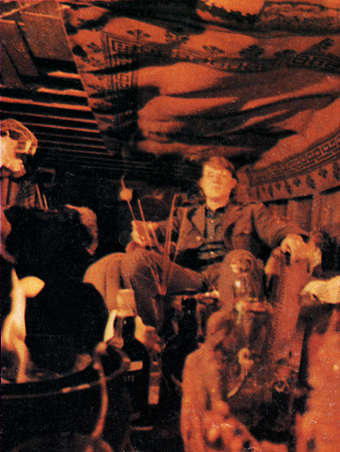
Sätty and an unknown woman in the artist’s basement pad/studio at Powell Street, a place he referred to as “the North Beach U-boat”. This was from a magazine feature that I photographed at David Singer’s house. I forget the source, it may have been from a 1972 TIME article about San Francisco artists.

The trip was a dizzying experience, but fascinating for what it revealed about Sätty and his work. From David Singer we learned, among other things, that the name “Sätty” had been chosen as a pseudonym by the former Wilfried Podriech for its echo of Ancient Egypt; the pronunciation, when you pay attention to the umlaut, conjures the word “Seti”. Walter Medeiros showed us stacks of original Sätty artwork, including all the collages intended for the artist’s final book, Visions of Frisco, a visionary history of the city which was published in 2007. Medeiros later emailed me a few additional notes which I have filed somewhere, correcting my guesswork in the piece I’d written about Sätty for Strange Attractor Journal earlier in 2005. At the time the only information I had to hand was the scant biographical information in Sätty’s books, the interview that he gave to Man, Myth and Magic in 1970, and a few web pages devoted to the artist which someone had put together in the late 1990s then never updated.

satty3.jpg

The house at 2143 Powell Street as it was in 2005. Those trees have grown considerably in the past 20 years.

All of which had me looking last week to see whether Sätty had a more substantial web presence today. Happily, he does, with this dedicated site maintained by Ryan Medeiros, Walter’s son. I’m saddened to read that Walter Medeiros is no longer with us but it’s gratifying to discover his family continuing his efforts to preserve Sätty’s legacy. Sätty is often reduced to a minor figure in the history of San Francisco poster art but he was more than this: a book creator as well as an illustrator, and a collage artist who extended Max Ernst’s engraving collage into new dimensions, using printing presses to multiply and overprint his assemblages.

satty4.jpg

Sätty’s first book, The Cosmic Bicycle, was published in 1971 by Straight Arrow Books, the publishing imprint of Rolling Stone magazine. This is a collection of collages, a few of them in colour, in which the compositions have a distinctly Surrealist quality. Sätty’s subsequent work downplayed the wild juxtapositions in favour of greater compositional control. His subsequent collection, Time Zone (1973), is a wordless “novel” in the manner of Max Ernst’s collage books.

satty5.jpg

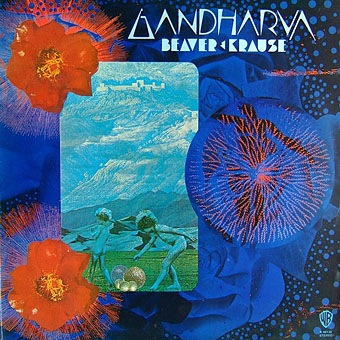
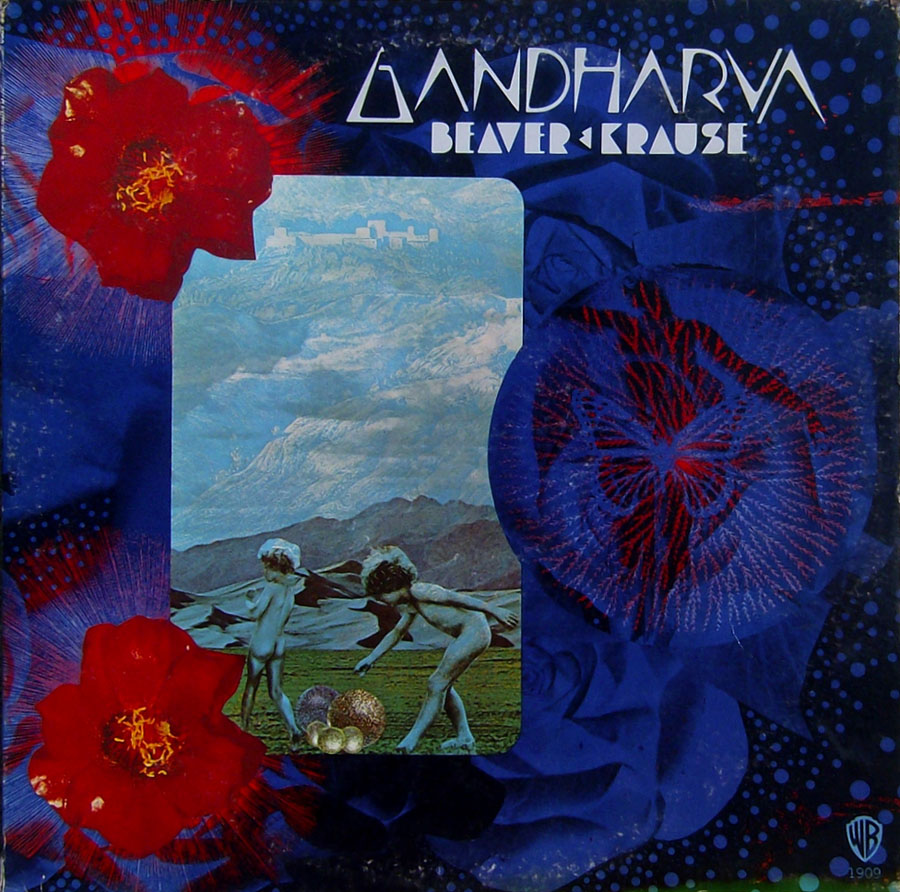
The Cosmic Bicycle is also the title of a 4-minute animated film which brings to life some of Sätty’s pictures from the book. I linked to a copy of this years ago but that link is now defunct so here it is again, an odd little film which runs the artwork through a solarisation process then moves pieces of them around to the accompaniment of an electronic score. (As usual with Vimeo today, you have to log in to see it.) The film was directed by Les Goldman, an animation producer who was mentioned here recently in relation to The Hangman (1964), a short film he made with Paul Julian. Goldman’s own film seems almost amateurish in comparison but the music is by Moog pioneers Paul Beaver and Bernie Krause, credited here as Parasound Inc. Beaver and Krause’s Gandharva album features one of Sätty’s finest cover designs, with title lettering by David Singer. The film score isn’t the duo’s finest by any means—I’d even describe it as rather annoying—but it’s good to see their Sätty connection reinforced.

Previously on { feuilleton }
The original Gandharva
The Occult Explosion
Wilfried Sätty album covers
Nature Boy: Jesper Ryom and Wilfried Sätty
Wilfried Sätty: Artist of the occult
Illustrating Poe #4: Wilfried Sätty

The original Gandharva

gandharva1.jpg

Cover art by Wilfried Sätty. Lettering by David Singer.

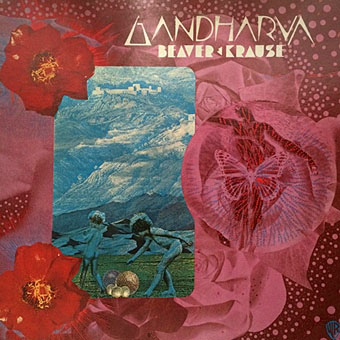
Collage artist Wilfried Sätty has been in my thoughts this month, it being ten years ago that Jay Babcock, Richard Pleuger and I drove up to San Francisco and Petaluma to talk to Walter Medeiros and David Singer about Sätty’s life and work. Looking today at the Sätty cover art for Gandharva (1971) by Beaver & Krause reminded me that the original pressing of this album came with the sleeve in a predominantly pink colouration rather than the more familiar blue. I have three copies of the album—vinyl and two CDs, one of which pairs it with Beaver & Krause’s In A Wild Sanctuary (1970)—but I’ve never seen one of the pink variations, and didn’t even know they existed until they started appearing on the web. The CD reissues favour the blue version, as do I, although this may only be a result of familiarity. I’ve enthused about Sätty’s cover a couple of times already but the music is worth hearing for its connections backwards to Cammell & Roeg’s Performance (for which B&K provided the ominous synthesizer tones), and forwards to Robert Fuest’s The Final Programme. Fuest asked Gerry Mulligan to score his film after hearing the Gandharva suite (described in the sleeve notes as “a score from a non-existent film”) which occupies side two of the album.

gandharva2.jpg

Elsewhere on { feuilleton }
The album covers archive

Previously on { feuilleton }
The Occult Explosion
Wilfried Sätty album covers
Nature Boy: Jesper Ryom and Wilfried Sätty
Wilfried Sätty: Artist of the occult
Illustrating Poe #4: Wilfried Sätty
Gandharva by Beaver & Krause

Wilfried Sätty album covers

gandharva.jpg

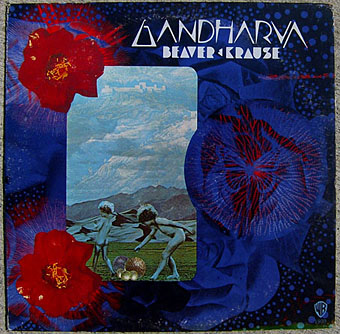
Gandharva (1971) by Beaver & Krause. Cover art by Sätty, lettering by David Singer.

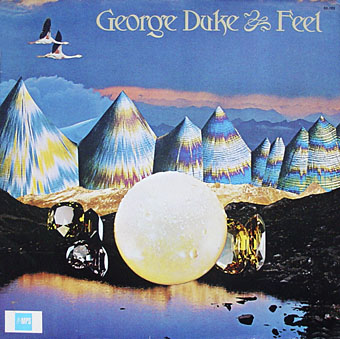
There aren’t many, unfortunately, and half the ones here have already featured in previous posts, but since I’m often referring people to Sätty’s work it seems worthwhile gathering them together. His album cover art shows he was equally adept at working with colour as with black-and-white, and might have done a lot more in this line had he been given the opportunity. (Sätty’s first book, The Cosmic Bicycle, does include some colour plates.)

The Gandharva album is the oddest in this small collection, one side being a blend of blues, gospel and Beaver & Krause’s Moog doodlings while the other side comprises an improvised Moog-inflected jazz suite recorded live in Grace Cathedral, San Francisco. The setting of the latter is apt since cover artists Sätty and David Singer both came to prominence among San Francisco’s psychedelic poster designers in the late 1960s. Film director Robert Fuest liked Gandharva so much he hired Paul Beaver, Bernie Krause and Gerry Mulligan to play similar music for the soundtrack of The Final Programme.

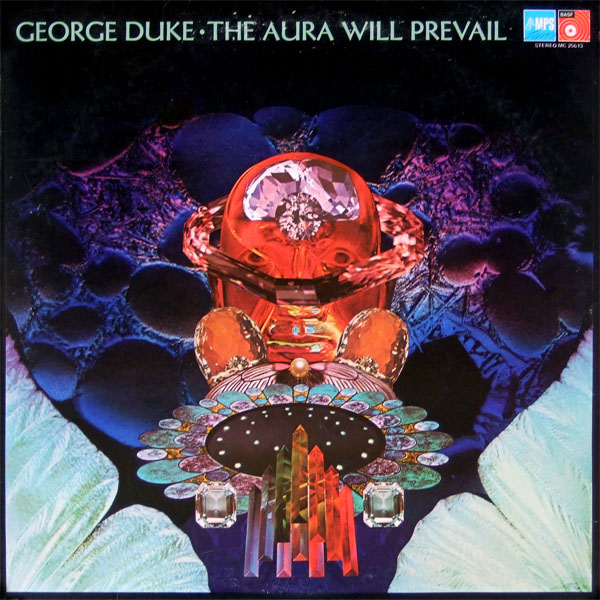
Of the other albums the Sopwith Camel is obviously closest to Sätty’s familiar style. The covers for George Duke suit the mid-70s trend of jazz/funk albums with “cosmic” sleeve art exemplified by Tadanori Yokoo’s fantastic (in all senses) collage for Agharta by Miles Davis. Documentation of Sätty’s non-book work is still sparse so if anyone knows of any other covers please leave a comment.

Update: Added The Occult Explosion. See this later post.

sopwith.jpg

The Miraculous Hump Returns From The Moon (1973) by Sopwith Camel.

occultsatty.jpg

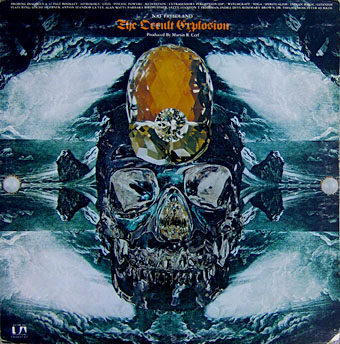
The Occult Explosion (1973) by Various Artists.

duke2.jpg

Feel (1974) By George Duke.

duke1.jpg

The Aura Will Prevail (1975) by George Duke.

Elsewhere on { feuilleton }
The album covers archive

Previously on { feuilleton }
Nature Boy: Jesper Ryom and Wilfried Sätty
Wilfried Sätty: Artist of the occult
Illustrating Poe #4: Wilfried Sätty
Wilfried Sätty: Artist of the occult

satty1.jpg

After last week’s post about Wilfried Sätty‘s illustrated Poe, I thought I’d follow it up with this 1970 interview from Man, Myth & Magic, a part-work publication which built weekly into a seven-volume “illustrated encyclopedia of the occult”. In the back of each issue there was a two-page feature, Frontiers of Belief, usually featuring more topical material, and issue 36 had Sätty as its subject. The interview captures him just after he’d been building his reputation as one of San Francisco’s psychedelic poster artists and just before the book collections of his collage work started to appear. The description of his working methods inevitably plays up the occult associations but helps to give a little insight into the artist. The first two pictures here are from the published article to which I added a couple of the album covers he produced in the 1970s. There’s also a poster for an exhibition with friend and fellow artist David Singer whose lettering adorned many of Sätty’s posters.

A note about Sätty’s name: he was known as Wilfried Podriech when he came to America but changed his name to Sätty thereafter. This surname is often reproduced without an umlaut over the “a” which I regard as an error. When Jay Babcock, Richard Pleuger and I visited David Singer to discuss Sätty’s work (and see some of Singer’s own) we were informed that Sätty’s adopted name was intended to be reminiscent of the Egyptian Pharaohonic name Seti. The umlaut over the “a” gives the pronunciation setty; without it would be satty.

*   *   *

ARTIST OF THE OCCULT by Robert W. Neubert

Alchemy can be a state of being according to Sätty, a German-born artist who now lives in San Francisco; and he believes that this concept can be extended to art. In his attempts to plumb the depths of the subconscious he makes use of his collection of occult works, including a 17th century alchemical text and a book of healing and magic published in 1648.

Blue and orange flames flicker from an ancient urn and throw dancing shadows about a dimly-lit subterranean chamber in San Francisco, California. Old, dark-hued tapestries hang from the walls and low ceiling, and occult art objects are crammed into every corner. Baroque harpsichord music filters through the incense-scented air.

Descending a wooden ladder into the nearly black chamber is a tall, lanky man with flowing brown hair, a dark blue Western-styled shirt, and grey flared slacks. He carries under his arm a mystical-looking montage he has recently created and run off on a lithograph press.

The montage is in poster form, and it is a haunting collection of Renaissance and medieval themes, incredible in its intensity, colour and creativity.

satty_photo.jpg

Sätty photographed for Man, Myth & Magic (1970).

The artist is Sätty, a German-born montage-maker with a dream—a dream of plumbing the depths of the subconscious by utilizing alchemy and mysticism in his work.

Alchemy is essential to his creativity, he says. But the 31-year-old artist’s definition of alchemy has a broader meaning than the classic textbook definition of transmuting base metals into gold. He is one of the first non-commercial poster makers, and his work far transcends the psychedelic art used to advertise San Francisco rock and roll dances.

“Alchemy can be a state of being,” he says. “There is such a thing as visual or intellectual or artistic alchemy. The undeveloped mind may be considered akin to lead, the fully-realized mind as gold. And the same is true of art. Much of contemporary art is lead.”

Continue reading “Wilfried Sätty: Artist of the occult”

Gandharva by Beaver & Krause

gandharva.jpg

I mentioned Wilfried Sätty’s collage work last week and this album sports one of his few cover designs. A cult object for several reasons, not least Sätty’s involvement. The title lettering was by fellow psychedelic artist David Singer who I had the good fortune to meet in California in 2005 whilst researching Sätty’s career. That chunky Seventies lettering style now looks distinctly contemporary having come back into fashion over the past couple of years.

Beaver & Krause were among the pioneers of Moog-based electronic music in the 1960s and notably provided the throbs and drones which Jack Nitzsche mixed into the soundtrack for Donald Cammell & Nicolas Roeg’s Performance. Gandharva was released in 1971 and one of the few all-electronic pieces on the album, Nine Moons in Alaska, is an outtake from those sessions. The first side is very uneven, with a blues jam and a gospel piece that don’t sit well with each other, never mind with the Moog tracks. Side two, however, is a far more successful suite of improvisations with organ, electronics, guitar, harp and saxophone (played by Gerry Mulligan) recorded live in Grace Cathedral, San Francisco.

Cover photo from the Psychedelic Music Flickr pool which features many fine examples of cover design from the late Sixties on.

Elsewhere on { feuilleton }
The illustrators archive

Elsewhere on { feuilleton }
The album covers archive

Previously on { feuilleton }
Ginsberg’s Howl and the view from the street
Further back and faster
Quite a performance
Borges in Performance