Wilfried Sätty and the Cosmic Bicycle

satty1.jpg

Listen, Sleep, Dream (1967), a poster by Wilfried Sätty.

Continuing the San Francisco theme, twenty years ago today I was visiting the city myself. Jay Babcock, Richard Pleuger and I had driven up there from Los Angeles to research some of the history of Wilfried Sätty (1939–1982), master collagist, psychedelic poster artist, record cover designer and book illustrator. We spent 24 hours driving around the Bay area: up to Petaluma, where we met Sätty’s friend and artistic collaborator, David Singer, a fine collage artist in his own right; then to Berkeley to talk to Walter Medeiros, custodian of the Sätty estate and one of the leading scholars of the psychedelic poster scene; finally to North Beach, where we found the house in Powell Street where Sätty was living and working in the 1960s and 70s.

satty2.jpg

Sätty and an unknown woman in the artist’s basement pad/studio at Powell Street, a place he referred to as “the North Beach U-boat”. This was from a magazine feature that I photographed at David Singer’s house. I forget the source, it may have been from a 1972 TIME article about San Francisco artists.

The trip was a dizzying experience, but fascinating for what it revealed about Sätty and his work. From David Singer we learned, among other things, that the name “Sätty” had been chosen as a pseudonym by the former Wilfried Podriech for its echo of Ancient Egypt; the pronunciation, when you pay attention to the umlaut, conjures the word “Seti”. Walter Medeiros showed us stacks of original Sätty artwork, including all the collages intended for the artist’s final book, Visions of Frisco, a visionary history of the city which was published in 2007. Medeiros later emailed me a few additional notes which I have filed somewhere, correcting my guesswork in the piece I’d written about Sätty for Strange Attractor Journal earlier in 2005. At the time the only information I had to hand was the scant biographical information in Sätty’s books, the interview that he gave to Man, Myth and Magic in 1970, and a few web pages devoted to the artist which someone had put together in the late 1990s then never updated.

satty3.jpg

The house at 2143 Powell Street as it was in 2005. Those trees have grown considerably in the past 20 years.

All of which had me looking last week to see whether Sätty had a more substantial web presence today. Happily, he does, with this dedicated site maintained by Ryan Medeiros, Walter’s son. I’m saddened to read that Walter Medeiros is no longer with us but it’s gratifying to discover his family continuing his efforts to preserve Sätty’s legacy. Sätty is often reduced to a minor figure in the history of San Francisco poster art but he was more than this: a book creator as well as an illustrator, and a collage artist who extended Max Ernst’s engraving collage into new dimensions, using printing presses to multiply and overprint his assemblages.

satty4.jpg

Sätty’s first book, The Cosmic Bicycle, was published in 1971 by Straight Arrow Books, the publishing imprint of Rolling Stone magazine. This is a collection of collages, a few of them in colour, in which the compositions have a distinctly Surrealist quality. Sätty’s subsequent work downplayed the wild juxtapositions in favour of greater compositional control. His subsequent collection, Time Zone (1973), is a wordless “novel” in the manner of Max Ernst’s collage books.

satty5.jpg

The Cosmic Bicycle is also the title of a 4-minute animated film which brings to life some of Sätty’s pictures from the book. I linked to a copy of this years ago but that link is now defunct so here it is again, an odd little film which runs the artwork through a solarisation process then moves pieces of them around to the accompaniment of an electronic score. (As usual with Vimeo today, you have to log in to see it.) The film was directed by Les Goldman, an animation producer who was mentioned here recently in relation to The Hangman (1964), a short film he made with Paul Julian. Goldman’s own film seems almost amateurish in comparison but the music is by Moog pioneers Paul Beaver and Bernie Krause, credited here as Parasound Inc. Beaver and Krause’s Gandharva album features one of Sätty’s finest cover designs, with title lettering by David Singer. The film score isn’t the duo’s finest by any means—I’d even describe it as rather annoying—but it’s good to see their Sätty connection reinforced.

Previously on { feuilleton }
The original Gandharva
The Occult Explosion
Wilfried Sätty album covers
Nature Boy: Jesper Ryom and Wilfried Sätty
Wilfried Sätty: Artist of the occult
Illustrating Poe #4: Wilfried Sätty
Weekend links 589

mackintosh.jpg

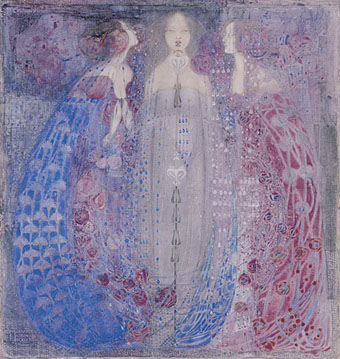
The Three Perfumes (1912) by Margaret Macdonald Mackintosh.

• “…we have empowered this monopoly to strike fear into the hearts of authors. And that may be unprecedented in history. Through our own complicity as consumers, their market share only grows.” Dave Eggers talking to Rachel Krantz about the dominance of Amazon, and his new novel, The Every.

• “People will readily flock to yoga and Pilates classes, but how many show up for soundscape therapy or take a sound-walk?” Bernie Krause on the healing powers of quietude, the Ba’Aka tribe, and Japanese forest bathing.

• “Difficulty is my drug of choice, I guess.” Dennis Cooper (again) talking to Troy James Weaver about his new novel, I Wished.

• At Wormwoodiana: Mark Valentine reviews Shadows of London by Jonathan Wood.

• Robert Fripp’s drive to 1981: Joe Banks on Discipline and the return of King Crimson.

• End times and rapture: Ken Hollings remembers Richard H. Kirk.

• Daniel Spicer on The Strange (Parallel) World of Miles Davis.

• Mix of the week: XLR8R Podcast 715 by Uffe.

• Steven Heller’s font of the month is Oposta.

Perfumed Metal (1981) by Chrome | Ode To Perfume (1982) by Holger Czukay | Perfume (2006) by Sparks

Switched-On… hits and misses

so01.jpg

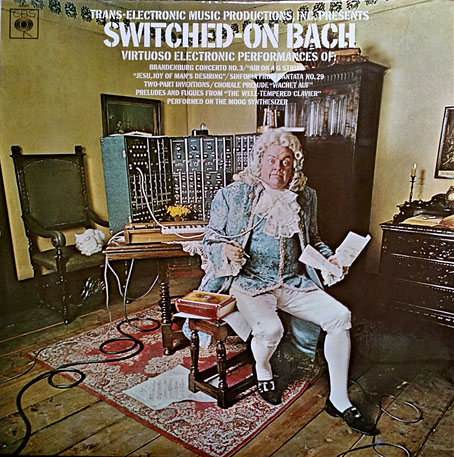
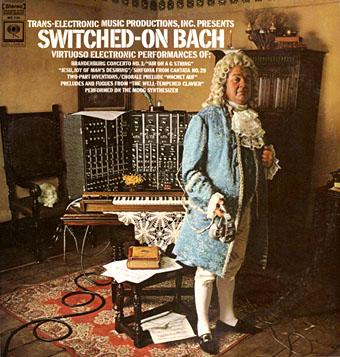
The first pressing of Switched-On Bach with a cover showing a Bach-alike confounded/dismayed by the sounds issuing from the machine behind him. The cover was soon swapped for the one below.

After mentioning the proliferation of Switched-On… synthesizer albums in the previous post, curiosity impelled me to see how many of these things were out there. A lot more than I expected is the answer, almost enough to make this cul-de-sac of novelty exploitation into a sub-genre of its own. As mentioned earlier, it was the huge success of Switched-On Bach (1968) by Wendy Carlos that began the trend. The album had a rare crossover appeal so that it could be sold to classical listeners as well as to a younger audience interested in electronic sounds, those for whom the words “switched on” echoed the druggy/erotic intersection of “turned on”. Carlos had an advantage over other musicians thanks to a long association with Robert Moog which meant she had a head start in exploring the recording potential of the new Moog synthesizer and innovations like Moog’s touch-sensitive keyboard. In 1968 few people could afford a Moog system; those who could usually needed to hire technicians like Paul Beaver and Bernie Krause to help them operate the thing. For a brief while it was enough to simply use the instrument to make strange noises, hence Mick Jagger’s droning score for Kenneth Anger’s Invocation of my Demon Brother (1969), and George Harrison’s preposterous Electronic Sound (1969), 44 minutes of very amateurish Moog-doodling. Switched-On Bach sounds a little primitive today—it sounds primitive next to its follow-up albums, The Well-Tempered Synthesizer (1969) and Switched-On Bach II (1973)—but Carlos and collaborators Rachel Elkind and Benjamin Folkman spent much more time refining their recording techniques than the knob-twiddling horde who rushed to capitalise on their success.

so02.jpg

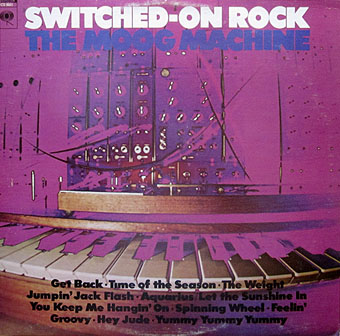
The rules of the Switched-On… idiom are as follows: a title that begins with the words “Switched-On”, obviously, although there’s a subset of the form in which an album may have a different title while a subtitle mentions something about “switched-on recordings”; the music must be cover versions of familiar songs or compositions, originality here is surplus to requirements; and it’s not essential but the cover art often alludes in some way to synthesizer technology and/or “the future”, with the latter represented by Space Age typefaces such as Amelia, Computer, Countdown or Data 70. I’ve not heard many of these albums, and I’m fairly certain that I don’t want to hear most of them, but I’ve heard enough Carlos cash-ins to know that the cover designs are often the best thing about them. The remastered CDs that Wendy Carlos released in the 1990s feature additional tracks that give some idea of the amount of work involved in the creation of each album. The early cash-ins, by contrast, tend to avoid time-consuming multi-track composition in favour of using a synthesizer as though it’s merely an expensive keyboard. The success of these albums musically may be gauged by the lack of reissues. They may be of interest to the so-bad-it’s-good “Incredibly Strange Music” crowd but I prefer to spend my time listening to other things. Beware.

so03.jpg

Switched-On Rock (1969) by The Moog Machine.

so04.jpg

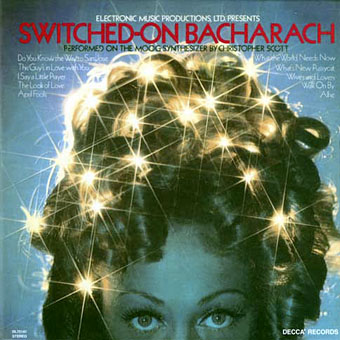
Switched-On Bacharach (1969) by Christopher Scott.

so05.jpg

Switched-Off Bach (1969) by Various Artists.

CBS exploits the success of the electronic album by packaging a collection of earlier non-electronic recordings.

Continue reading “Switched-On… hits and misses”

Future Life magazine

future1.jpg

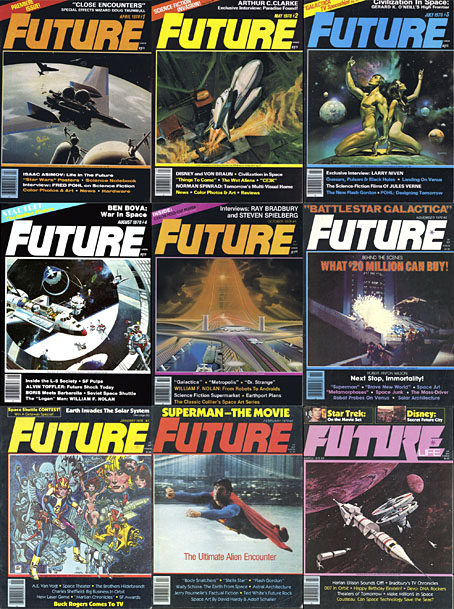
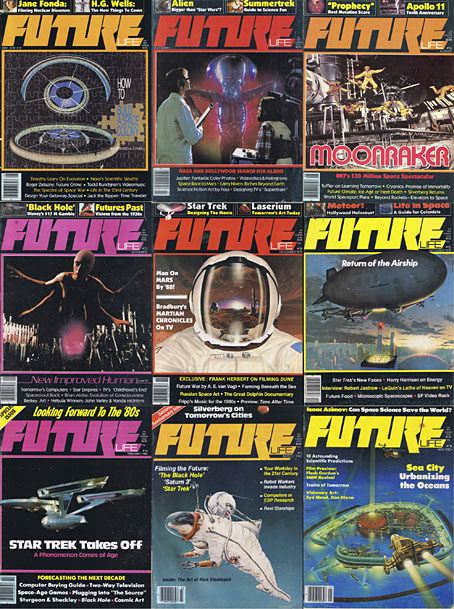
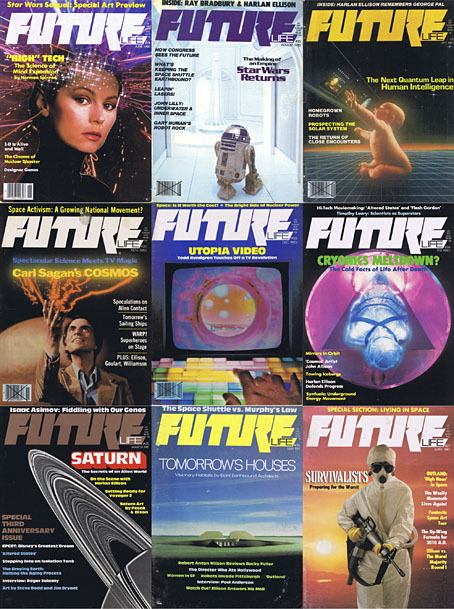
One thing I never expected about the future was that so many of my youthful enthusiasms would keep rising from the past, but here’s another, stumbling into the room reeking of cemetery earth and old newsprint. Future Life was a spinoff from Starlog magazine, and where the parent title concerned itself with science fiction and fantasy in film and television, the focus of Future Life was technology, popular science, scientific speculation, and written science fiction (all from an American perspective, of course); film and TV productions were there to attract general readers but never dominated the proceedings. Future Life ran for 31 issues from 1978 to 1981, and in many ways the magazine was a kind of OMNI-lite: not as lavish as its rival but not as expensive either. For a while this was a magazine I always looked out for (together with Heavy Metal, with whom it shared a music writer, Lou Stathis) but I missed the first nine issues, and many of the later ones before it vanished altogether, so it’s gratifying to find the complete run available as a job lot at the Internet Archive.

future2.jpg

It’s become commonplace today to regard Generation X as the first generation with no optimistic future to look forward to, but Future Life shows how much optimism there was at the beginning of the 1980s. The mood darkened just as the magazine expired, with genuine fears of a nuclear war persisting through much of the decade, and the Challenger disaster reminding everyone that leaving the planet was still a hazardous business. Future Life wasn’t blind to the problems posed by technology—there were features about the dangers posed by nuclear power and climate change—but it remained upbeat about the potentials, especially where space colonies were concerned. Most issues carried an art feature although these were generally about realistic space artists or spaceship painters, with none of the eye-popping weirdness favoured by OMNI. But this magazine was my first introduction to the work of Syd Mead, a few years before Blade Runner made him deservedly famous. On the writing side, many of the articles were by popular science fiction writers—Roger Zelazny on computer crime, Norman Spinrad on a pet theme, the future of drug-taking—which you can now read with the full benefit of hindsight. In later issues there was Harlan Ellison filing a succession of lengthy and inimitable film essays; several pieces by Robert Anton Wilson; and some good music articles with features on Larry Fast (issue 12) and Robert Fripp (issue 14), while Lou Stathis profiled and interviewed Bernie Krause (issue 18), The Residents (issue 19), Patrick Gleeson (issue 22), Jon Hassell (issue 24), Captain Beefheart (issue 25), and everyone’s favourite robots, Kraftwerk (issue 31).

future3.jpg

The Internet Archive currently has all the files stuck on a single page so most people will either have to download everything at once (I’d advise using the torrent file) or sample issues at random. Fortunately there’s a very thorough breakdown of the entire run of magazines here for those who prefer to pick through the detail. In the universe next door we’re reading these back issues while floating above the earth in our L5 space colonies.

Previously on { feuilleton }
Science Fiction Monthly

Weekend links 170

macarthur.jpg

Owl portrait by Iain Macarthur.

• “Ghost Box is a glance through a window seeing something running alongside our version of reality. Like, what if Paul McCartney had made records with the Radiophonic Workshop?” Ghost Box designer and Mr Focus Group, Julian House is interviewed.

• “…that book with the girl with the hatchet in her head…” Dave Tompkins remembers Denis Gifford’s A Pictorial History of Horror Movies (1973), a formative influence of mine, and that of many other people, it seems.

Salvador Dalí’s 1946 illustrated edition of Macbeth. Related: From Macbeth to the Wizard of Oz: New exhibition explores the erotic side of witchcraft.

I do not want to live in a world where the government and a select few conservative feminists get to decide what we may and may not masturbate to, and use the bodies of murdered women or children as emotional pawns in that debate. It is supremely difficult to achieve radical ends by conservative means. Feminists and everyone who seeks to end sexual violence should be very cautious when their immediate goals seem to line up neatly with those of social conservatives and state censors.

Laurie Penny on the recent Tory policy of attempting to limit online pornography.

The Facebook page for The Wicker Man has details of the pursuit for a complete print of the film. A Blu-ray edition will be released in October.

Anne Billson visited the Hotel Thermae Palace in Ostend, the columnated location of Daughters of Darkness.

Kenneth Anger on how he made Lucifer Rising. The ICA in London is screening his films this weekend.

krenkel.jpg

Roy Krenkel illustrates Tales of Three Planets by Edgar Rice Burroughs, 1964.

The Electric Banana Blows Your Mind: The soundtrack library alter ego of The Pretty Things.

• Mix of the week: an ambient (in the 90s’ sense of the word) DJ set by Surgeon.

Bernie Krause shares the happiest sounds he’s heard in nature.

• RIP Walter De Maria, sculptor and musician.

Sexodrome by Asia Argento with Morgan.

• Metabolist: Identify (1980) | Curly Wall (1980) | Ymuzgo/Pigface (1981)