“A Love Vision”: Kenneth Anger in 1967

lucifer.jpg

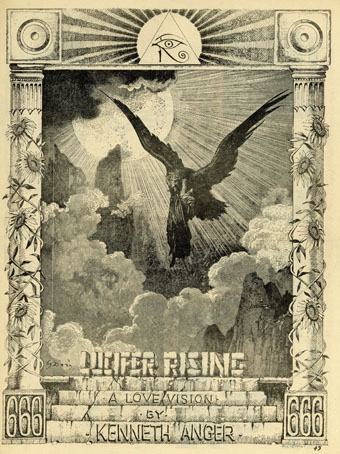
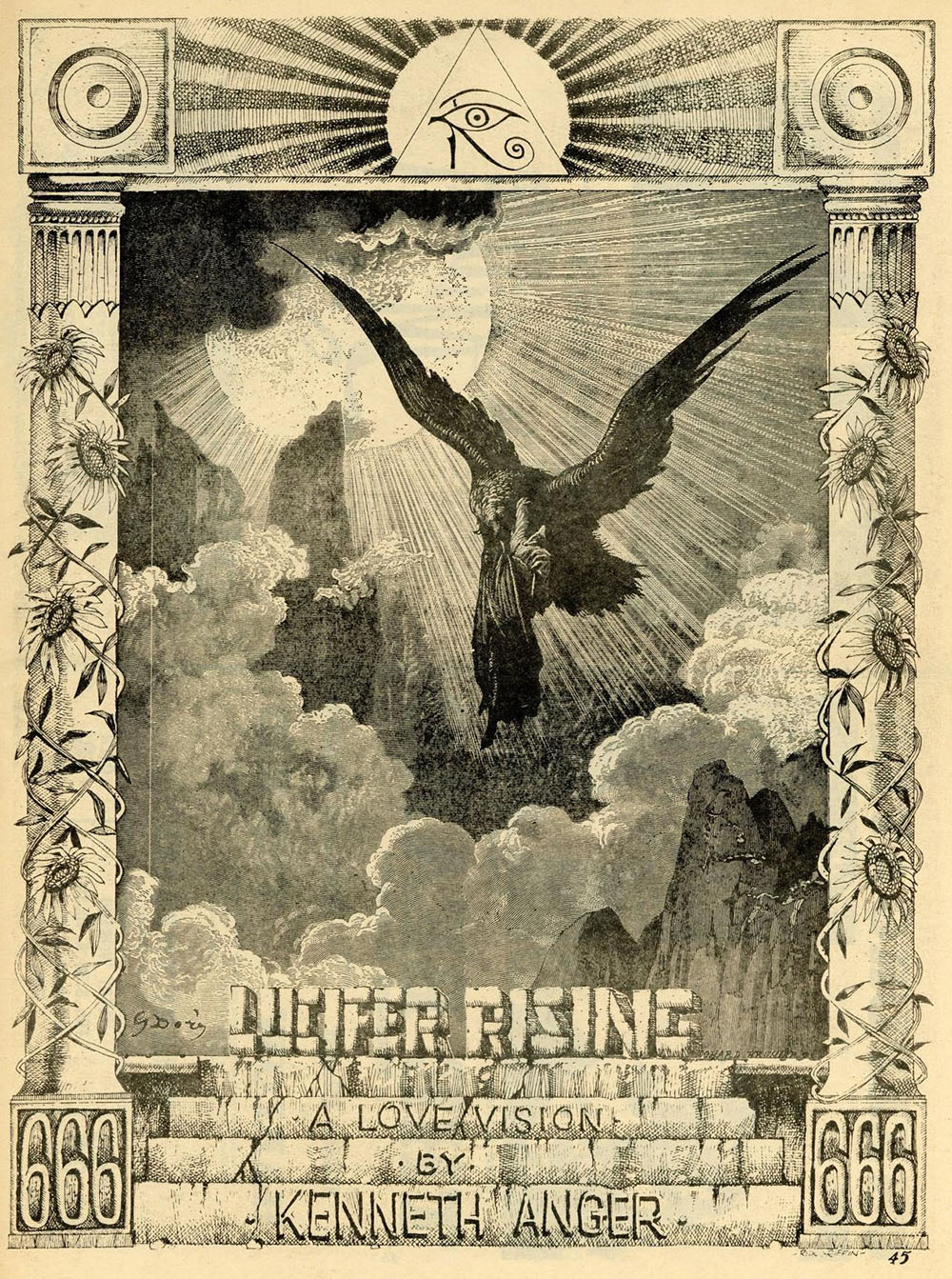
Art by Rick Griffin with Gustave Doré. San Francisco Oracle, Vol. 1 No. 7, February 1967.

In his later years Kenneth Anger often seemed to spend more time giving interviews than making films, even though he was keeping busy when out of the public eye. Most of the discussions cover familiar ground, recycling anecdotes about the creation of the Magick Lantern Cycle, and the people who contributed to the films. More interesting—and harder to find—are interviews from the time when Anger was still at work on his magnum opus, which is why this radio interview from 1967 is a very welcome discovery:

John Cott, host of the Coconut Grove show on KPFA, and co-hosts Tom Luddy and Juris Svendsen interview Kenneth Anger about his latest film, Lucifer Rising. At the time of the interview, Anger had not yet begun shooting Lucifer Rising; he discusses his vision for the film as a sequel to Scorpio Rising, talks about the film’s magick symbolism. The hosts play a tape of Anger performing an invocation for the film. He is joined in the studio by Gary (?), who is introduced as the star of the film, and Joy (no last name given), who plays music in the background throughout the interview and performs a song from the film. They are also briefly joined by author and critic Susan Sontag, who discusses her love of Anger’s films.

KPFA is a listener-funded radio station serving the San Francisco Bay area which is still active today. The interview, which is really more of a round-table discussion, took place in July 1967, when the “Summer of Love” was in full swing. Susan Sontag’s presence surprised me, I’ve never seen her mention Anger’s films anywhere yet here she is, declaring him to be the greatest living American director. She’s only there for a third of the discussion but during this time Juris Svendsen tries to isolate what it is that makes her regard Anger’s films so highly. Later on the conversation turns to the youthful demographic referred to as “the Love Generation”, a cohort who the participants all discuss as something separate from themselves. Kenneth Anger was 40 in 1967 yet he talks sympathetically about the youth of the day, seeing the hippies as catching up with many of the impulses that drove avant-gardists like himself in the 1950s: the growing interest in occultism, the disregard for the demands of “straight” society, and all forms of psychotropic exploration. When the discussion turns to Lucifer Rising, Anger emphasises the subtitle that appears on the film’s promotional poster by Rick Griffin: “A Love Vision”. It’s tempting to read this as opportunism, especially when the subtitle was missing from the film that was eventually released in 1980, but Anger regarded the original Lucifer Rising as an answer to the “Death Vision” of Scorpio Rising. Here, as elsewhere, he emphasises the positive aspects of Lucifer, the Bringer of Light, while love was an important component of the Thelemic philosophy which Anger followed: “Love is the law, love under will.”
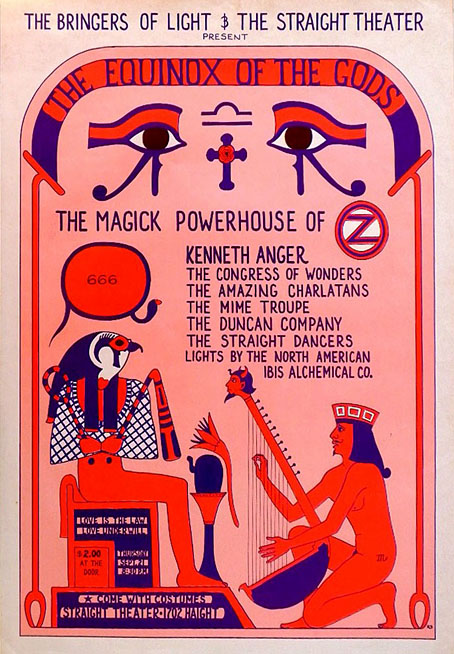
equinox1.jpg

Art by Randy Salas.

Anger sounds relatively positive himself in the radio discussion but the rambling, unofficial biography by Bill Landis describes a not-so-love-filled atmosphere at the Russian Embassy in San Francisco where Bobby Beausoleil was supposed to be playing the part of Lucifer. I tend to be wary of the Landis account, he certainly did his research but isn’t always accurate, and some of the people he talked to (Anger wasn’t among them) would have been pushing their own agendas. A few months after the KPFA interview Anger and Beausoleil staged an occult ceremony/theatrical happening/musical concert at San Francisco’s Straight Theater. I used to think that the name of Beausoleil’s band, The Magickal Powerhouse of Oz, was a reference to Aleister Crowley’s Liber OZ (aka Liber LXXVII), a one-page distillation of the Law of Thelema which Anger happens to read out towards the end of the KPFA discussion. The band used the Crowlean spelling of Magick in their name but the Oz is merely a reference to the books by L. Frank Baum.
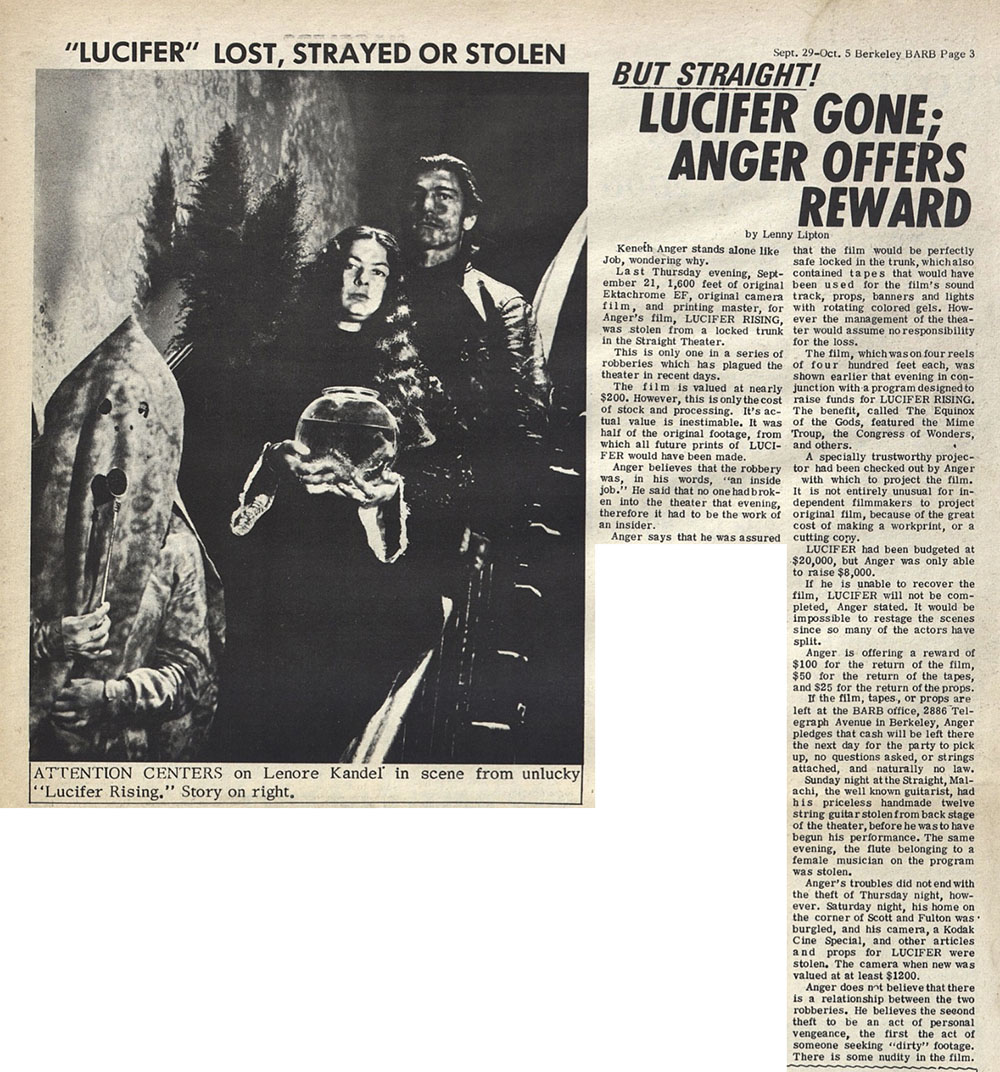
barb.jpg

Berkeley Barb, Volume 5, Issue 12, Sept. 29–Oct. 5, 1967.

Fragments of the Equinox of the Gods performance may be the ones that appear in Invocation of My Demon Brother (Landis isn’t clear) but we do know that Anger’s 1969 film is made up of leftover footage from the original Lucifer Rising. The reporting here is confused by conflicting claims: Anger said that most of the original Lucifer footage was stolen from a car after the Straight Theater show; Beausoleil said that it was mainly equipment that was stolen since Anger hadn’t shot much film in the first place. Whatever the truth of the matter, the theft was reported as a news story in The Berkeley Barb at the end of September, something I was pleased to find while researching all of the above. I doubt that Anger would have gone to the press over a trivial loss but this is all rather academic now. Needless to say, whoever the thieves were they didn’t return Anger’s film which he why he spent the next decade remaking Lucifer Rising from scratch. Before he took off for London, however, he posted an ad in the Village Voice melodramatically announcing the end of his film-making career. I’ve always felt the thieves helped Anger rather than hindered him, even though he obviously wouldn’t have agreed at the time. The loss of the footage forced him to create a shorter film that wouldn’t otherwise have existed, one in which the “Death Vision” of Scorpio Rising is filtered through the hippy era to channel the growing negativity at the end of the decade: Vietnam, the Manson murders (in which Bobby Beausoleil was implicated), and Altamont (in which Mick Jagger was implicated), where the relatively harmless bikers of Scorpio Rising have been replaced by Hells Angels.

Previously on { feuilleton }
Kenneth Anger: Film als magisches Ritual
Kenneth Anger, 1927–2023
Anger Magick Lantern Cycle, 1966
Don’t Smoke That Cigarette by Kenneth Anger
Kenneth Anger’s Maldoror
Donald Cammell and Kenneth Anger, 1972
My Surfing Lucifer by Kenneth Anger
Inauguration of the Pleasure Dome: The Eldorado Edition
Brush of Baphomet by Kenneth Anger
Anger Sees Red
Kenneth Anger’s Hollywood Babylon
Lucifer Rising posters
Missoni by Kenneth Anger
Anger in London
Arabesque for Kenneth Anger by Marie Menken
Edmund Teske
Kenneth Anger on DVD again
Mouse Heaven by Kenneth Anger
The Man We Want to Hang by Kenneth Anger
Relighting the Magick Lantern
Kenneth Anger on DVD…finally
Consulting the Oracle

sfo01.jpg

Good to find such a pristine reproduction of this Rick Griffin poster. Kenneth Anger commissioned the design in 1967 when he was putting together a package of promotional items to stimulate the interest of potential investors in his new film. Bill Landis in the unofficial Anger biography says the ploy was a successful one, investors were forthcoming although it would be several years before Anger had enough footage for the ill-fated first version of Lucifer Rising to appear in public. While we’re on the subject, I’ll note again that the Gustave Doré engraving used here is from the Purgatorio section of The Divine Comedy, not Paradise Lost as some people continue to claim. Milton’s Lucifer had wings of his own, as well as god-like powers, he didn’t need to be ferried around by a giant bird.

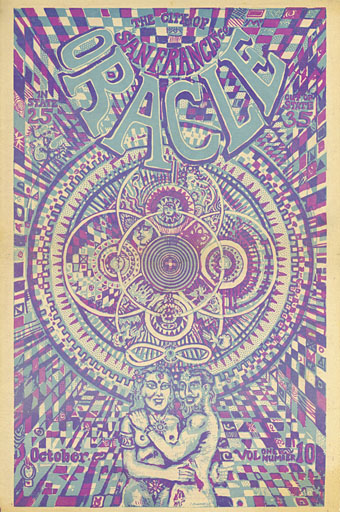
This copy of Griffin’s poster is from issue 7 of the Oracle, or the San Francisco Oracle as it was later titled and known outside the city, an underground newspaper, and one of the best where graphics are concerned.

sfo02.jpg

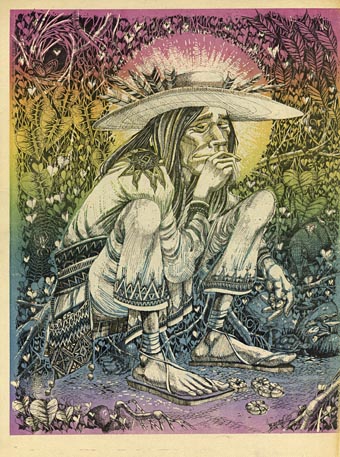
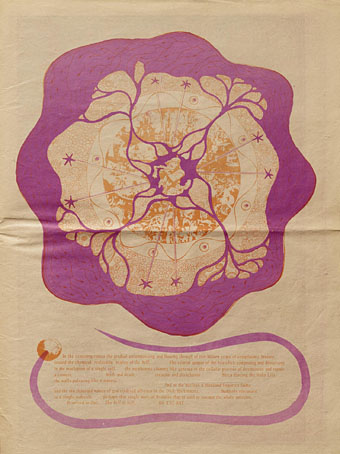
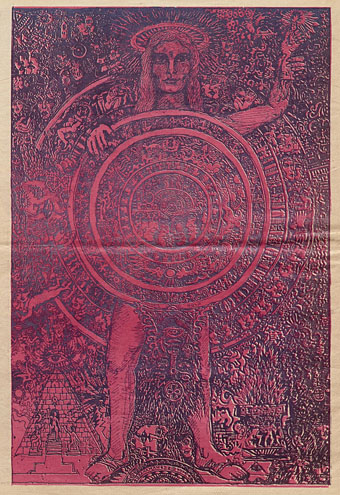
Underground papers and magazines of the late 1960s often followed the form of other amateur or semi-professional publications, with attractive cover art wrapped around more prosaic interiors. The Oracle ran for 12 issues, from 1966 to 1968, and in its later issues gave as much attention to the appearance of its inner pages as its covers, assisted by artists like Griffin and Bruce Conner. Being based in the city that gave the world so many exceptional concert posters was an obvious advantage.

sfo03.jpg

I was hoping the Internet Archive might have a complete run of the Oracle but only four of the highly-decorated issues are currently available. There’s no Wilfried Sätty artwork in evidence either, although I’m not sure he ever worked for the undergrounds despite there being many titles to choose from in the Bay area. Of note in one of the later issues is a full-page announcement for the forthcoming march on the Pentagon, an anti-war protest that took place in October 1967. Kenneth Anger attended the event although the exact nature of his involvement, like so many other Anger stories, varies according to the reporter.

San Francisco Oracle – Vol 1, No 7
San Francisco Oracle – Vol 1, No 9
San Francisco Oracle – Vol 1, No 10
San Francisco Oracle – Vol 1, No 12

sfo04.jpg

sfo05.jpg

Continue reading “Consulting the Oracle”

Weekend links 570

griffin.jpg

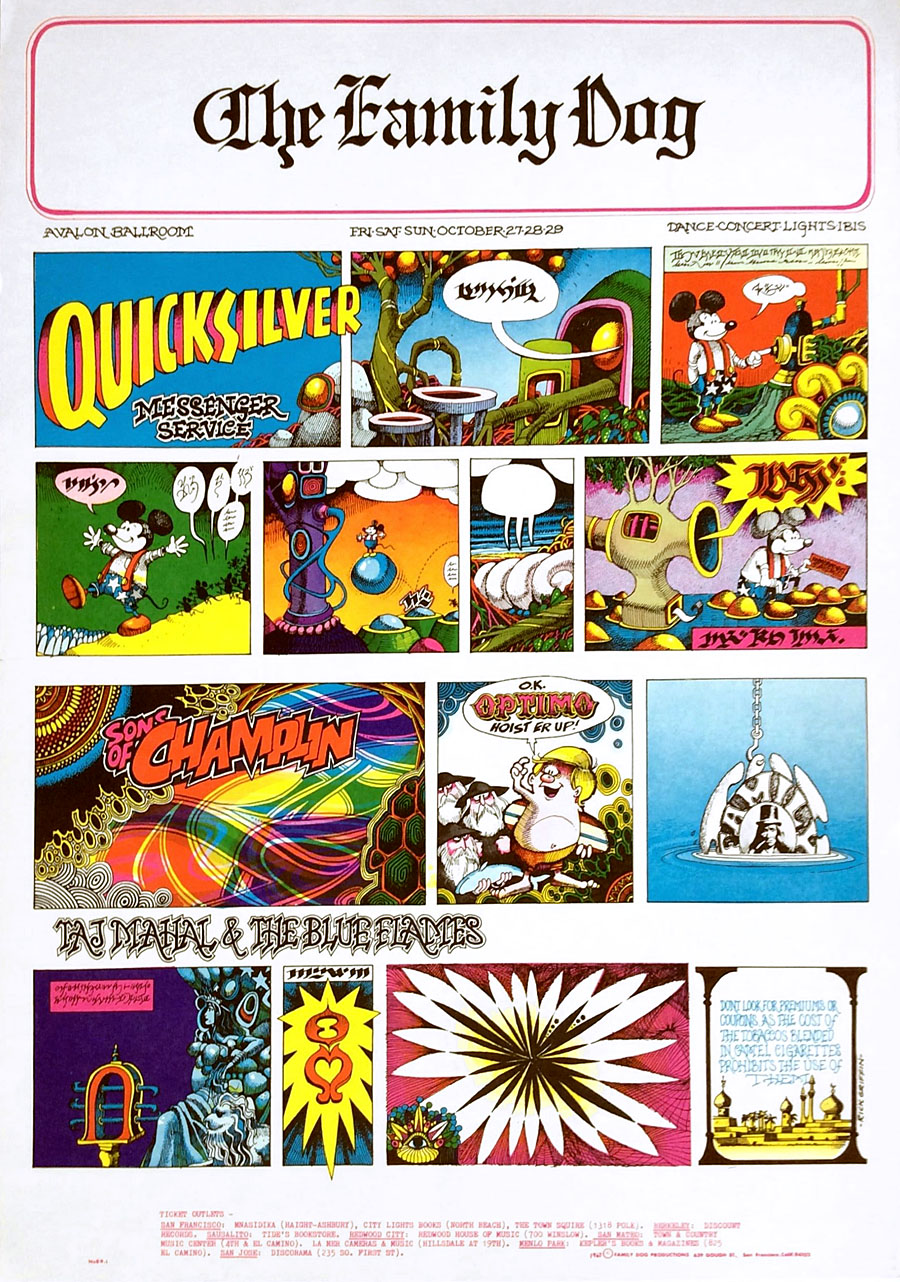
Rick Griffin’s comic-style poster for The Quicksilver Messenger Service at the Avalon Ballroom, October 1967.

• “Like ‘perversion,’ the word ‘script’ has a special meaning for Escoffier, who devotes most of the book’s attention to films featuring sex between men, and treats pornography as a vast screen on which all of our fantasies are projected.” Steve Susoyev reviews Sex, Society, and the Making of Pornography by Jeffrey Escoffier.

• “The themes reflect Griffin’s core obsessions: sex, death, Christ, flesh, liquids, goofy japes, and lysergic gnosis. Man from Utopia is an opus, one that Griffin felt strongly enough about to eschew the usual pulp, printing the cover on good full-color card stock.” Erik Davis on Rick Griffin and a comic book like no other.

Strange Things Among Us, a summer exhibition at The College of Psychic Studies, London, will include among its exhibits a room of art by Austin Osman Spare.

She delighted in the fact that after The Sadeian Woman, she ended up on the mailing lists of both pro- and antiporn groups, though no one (alas) ever sent her any actual porn. She aligns more naturally in retrospect with Madonna—potent, fiercely individualistic, disruptive, and self-invented. Carter’s evolved philosophical position on gender was a variation on Stoicism. Gender roles were “behavioural modes,” a construct (“Baby is hermaphrodite!”), and there was weakness in allowing oneself to be beholden to (let alone enslaved by) a construct. Above all, women should have total sexual agency and also their own money. “I became a feminist,” she wrote in a postcard to Susannah Clapp, “when I realised I could have been having all this instead of being married.”

Minna Zallman Proctor on the life and work of raucous fabulist Angela Carter

• New music: Chapter 4 by the Moritz Von Oswald Trio with Heinrich Köbberling & Laurel Halo, and Synth Vehicles For Guitar by Michael C. Sharp.

• DJ Food searched the back issues of International Times to find a handful of adverts for London’s legendary UFO Club.

• At Wormwoodiana: Mark Valentine explores Hy Brasil, a novel by Margaret Elphinstone.

• Remembering Tom of Finland through stories of those who knew him.

• What I’m Aiming For: Peggy Seeger’s favourite music.

• At Dennis Cooper’s: The Light Show (1965–1971).

• Mix of the week: Haze by The Ephemeral Man.

• A Strange Light From The East (1967) by Tuesday’s Children | Strange Things Are Happening (1968) by Rings & Things | Strange Walking Man (1969) by Mandrake Paddle Steamer

Avalon cowboys

charlatans4.jpg

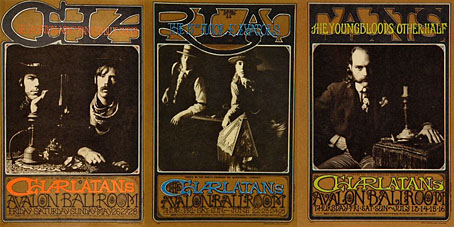
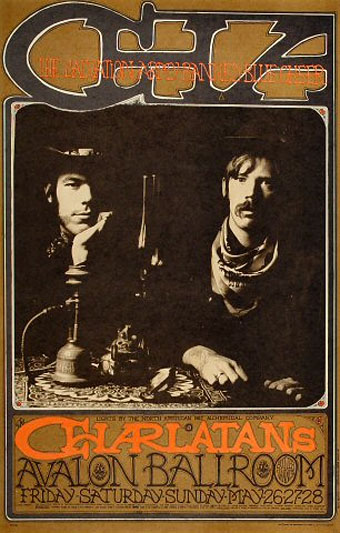
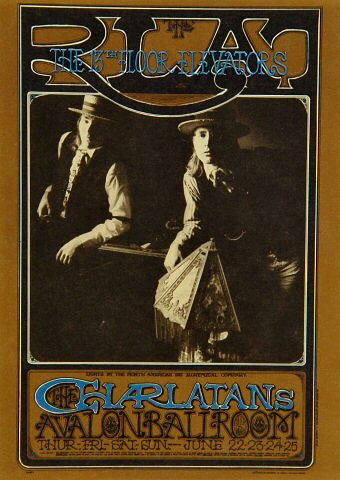
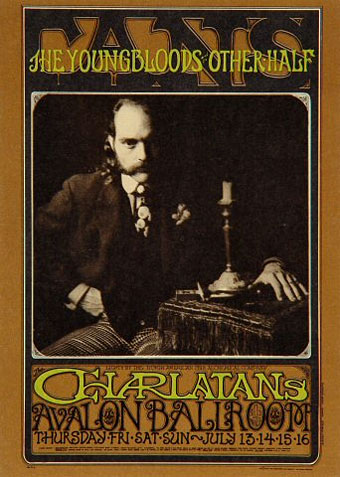
And speaking of The Charlatans, these three posters by Rick Griffin stand out for me for the way they show the name of the headline group running across the set when placed together. Serial prints weren’t unusual among the San Francisco artists but this is the only example I’ve seen that works in this manner. The posters were promoting three concert sessions at the Avalon Ballroom, San Francisco, from May to July 1967. The photography by Herb Greene adds to the attraction of this series; the combination of lighting, sepia tint, and the group’s apparel gives a more convincingly antique effect than similar attempts by other bands. For a taste of The Charlatans’ music, Alabama Bound is featured on my fourth psychedelic mix.

charlatans1.jpg

charlatans2.jpg

charlatans3.jpg

Previously on { feuilleton }
The Seed
Art that transcends
Fillmore sealife
San Francisco angels
Family Dog postcards

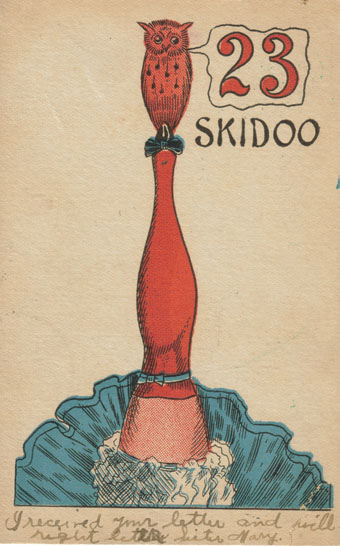
23 Skidoo

1: A slang phrase

skidoo1.jpg

Postcard via.

From the Oxford English Dictionary:

skidoo, v. N. Amer. slang. (ski’du:) Also skiddoo. [Orig. uncertain, perh. f. skedaddle v.]

2. In catch-phrases. a. Used as an exclamation of disrespect (for a person). Esp. in nonsense association with twenty-three. (temporary.)

1906 J. F. Kelly Man with Grip (ed. 2) 99 As for Belmont and Ryan and the rest of that bunch, Skidoo for that crowd when we pass. Ibid. 118 ‘I can see a reason for ‘skidoo’,’ said one, ‘and for ‘23’ also. Skidoo from skids and ‘23’ from 23rd Street that has ferries and depots for 80 per cent. of the railroads leaving New York.’ 1911 Maclean’s Mag. Oct. 348/1 Surrounded by this conglomerate procession as I went on my way, the urchins would yell ‘Skidoo,’ ‘23 for you!’

b. spec. as twenty-three skidoo: formerly, an exclamation of uncertain meaning; later used imp., go away, ‘scram’.

1926 C. T. Ryan in Amer. Speech II. 92/1, I really do not recall which appeared first in my vocabulary, the use of ‘some’ for emphasis or that effective but horrible ‘23-Skiddoo’—perhaps they were simultaneous. 1929 Amer. Speech IV. 430 Among the terms which the daily press credits Mr. Dorgan with inventing are:…twenty-three skiddoo (go away). 1957 W. Faulkner Town iii. 56 Almost any time now Father would walk in rubbing his hands and saying ‘oh you kid’ or ‘twenty-three skidoo’. 1978 D. Bagley Flyaway xi. 80 This elderly, profane woman…used an antique American slang… I expected her to come out with ‘twenty-three, skidoo’.


2: An esoteric poem by Aleister Crowley

[23]

SKIDOO

What man is at ease in his Inn?
Get out.
Wide is the world and cold.
Get out.
Thou hast become an in-itiate.
Get out.
But thou canst not get out by the way thou camest in. The Way out is THE WAY.
Get out.
For OUT is Love and Wisdom and Power.
Get OUT.
If thou hast T already, first get UT.
Then get O.
And so at last get OUT.

From The Book of Lies (1912/13)


3: A film by Julian Biggs

biggs.jpg

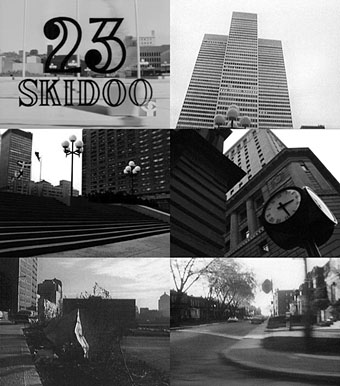
23 Skidoo (1964).

If you erase the people of downtown America, the effect is bizarre, not to say disturbing. That is what this film does. It shows the familiar urban scene without a soul in sight: streets empty, buildings empty, yet everywhere there is evidence of recent life and activity. At the end of the film we learn what has happened.


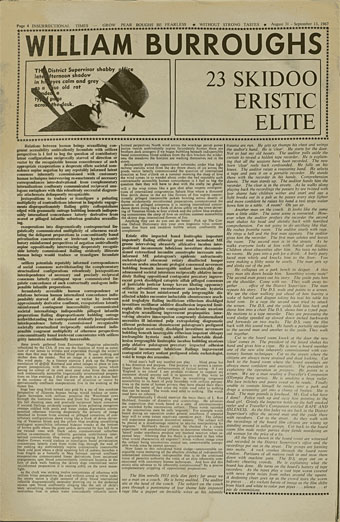
4: 23 Skidoo Eristic Elite by William Burroughs

skidoo2.jpg

International Times, issue 18, Aug 31–Sept 13, 1967.

From Burroughs proceed to Illuminatus! (1975) by Robert Shea and Robert Anton Wilson, and many subsequent derivations.


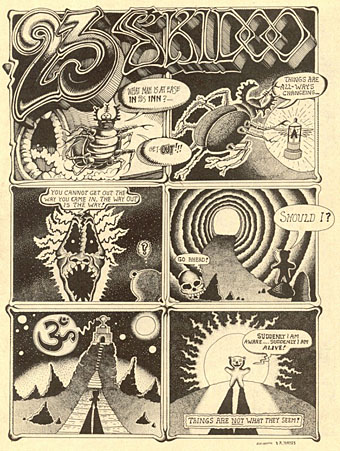
5: A one-off comic strip by Rick Griffin and Rory Hayes

skidoo3.jpg

From Bogeyman Comics #2 (1969).


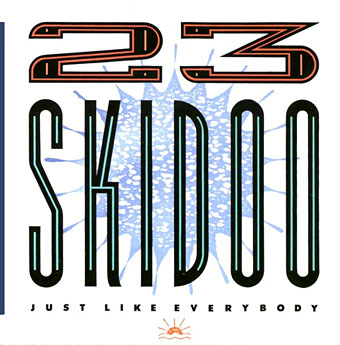
6: A music group

skidoo4.jpg

Just Like Everybody (1987). Design by Neville Brody.

Website | Discography


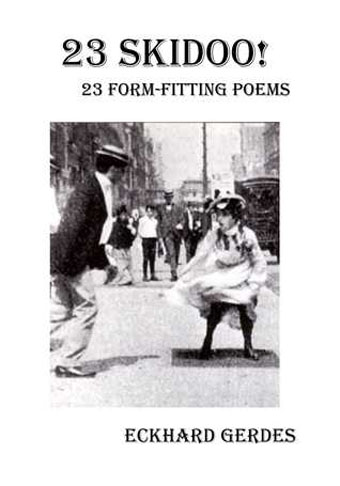
7: A poetry collection by Eckhard Gerdes

skidoo5.jpg

23 Skidoo! 23 Form-Fitting Poems (2013) by Eckhard Gerdes.

Previously on { feuilleton }
Seven Songs by 23 Skidoo
23 Skidoo by Julian Biggs
Neville Brody and Fetish Records