Weekend links 844

ayers.jpg

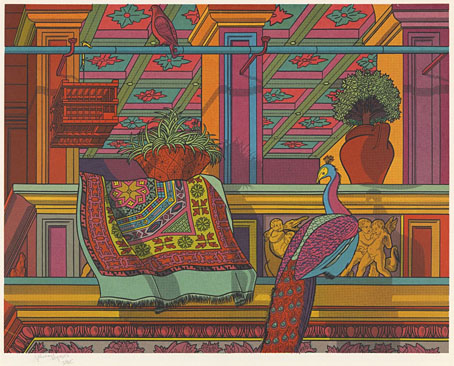
Crivelli’s Room I (1967) by Gillian Ayers.

• “This is the first film ever made about HP Lovecraft—and almost no one has seen it. Shot in 1989–90, it features unique interviews with Lovecraft’s friends and colleagues. It has sat unfinished for more than thirty-five years. We need your help to complete it and release it for the first time.” Lovecraft: When the Stars are Right, a documentary directed by Seán Martin, is asking for funding assistance to help digitise the extant footage. Watch the crowdfunding trailer.

• New music: Oblique by Ghost Dubs; Serpentine by Christer Bothén / Oren Ambarchi / Johan Berthling / Andreas Werliin; The Cardboard Falcon by Mico Nonet.

• Among the new titles at Standard Ebooks, the home of free, high-quality, public-domain texts: The Lost Stradivarius, by John Meade Falkner.

• At Nautilus: Kristen French talks to Devon Stoliker about the latest researches into psilocybin experiences using an fMRI scanner.

• At Colossal: “On vintage boards, Lou Benesch conjures the fantastic world of The Magician”.

Amazonie (2020): music by Jonathan Fitoussi; animation by Jules Guérin.

• The Strange World of…Adam Curtis.

• RIP Frank Beard.

Rolling Stone

The Pink Room (1988) by Seigen Ono | The Darkened Room (1995) by David Toop | The Room Of Accidental Geometry (2000) by Harold Budd

Weekend links 816

rossignol.jpg

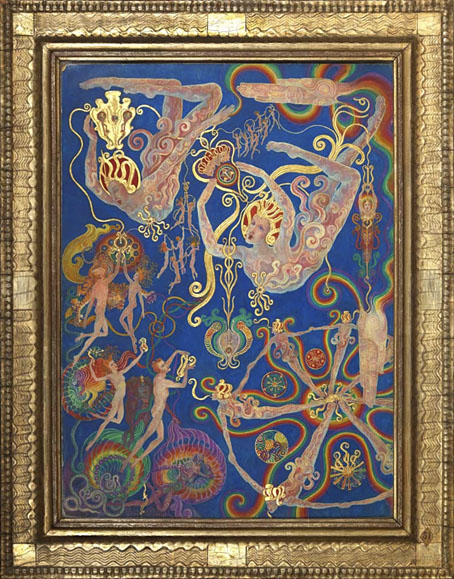
The Creative Power of the Spirit, No. 31 of A Goodly Company series, 1920–1933 by Ethel le Rossignol.

• “One moment it was a little blip. The next, our friends are dying”: the gay porn soundtrack composers lost to the Aids crisis. More gay porn: Pink Narcissus, James Bidgood’s micro-budget homoerotic fantasy, will receive a UK blu-ray release later this year.

• Old music: Thirst by Clock DVA gets a very welcome reissue later this year, having been unavailable in any form since 1992. I’m not so happy about the changes to Neville Brody’s original cover design but the album itself is a major post-punk statement.

• “Graphic design was thought to be a man’s discipline,” she says. “So I think it was quite a surprise for people to find me there.” A profile of Margaret Calvert, designer of (among other things) Britain’s road signs.

• At Colossal: A major survey in Paris chronicles Leonora Carrington’s esoteric Surrealism.

• At Public Domain Review: Sara Weiss’ Journeys to the Planet Mars (1903).

• At the BFI: The mystery music video for The Beatles’ Penny Lane.

Winners and entrants for Close-up Photographer of the Year 7.

• “Cats to blame for octopus deity enshrinement delay.”

• Steven Heller’s font of the month is Cattivo.

• At Dennis Cooper’s it’s Jack Arnold’s Day.

Pink Noir (1996) by David Toop | Pink Dust (2013) by Sqürl | The Pink Room 2 (2024) by Seigen Ono

Weekend links 791

transparent.jpg

Cover design by Marian Bantjes for a 2009 series of Nabokov reprints.

• “It is quite unlike the bland featurelessnesses of the current fiction in which dull creative writing students chat to dull creative writing students (there is today a generalised fear of imaginative invention and giving offence).” Jonathan Meades on late style and Vladimir Nabokov’s Transparent Things.

• Cathi Unsworth remembers the late Roger K. Burton, founder of London’s unique exhibition and venue space, The Horse Hospital.

• New music: Interior of an Edifice Under the Sea by Pan American & Kramer; Glass Colored Lilly by Yuki Fujiwara.

• Mixes of the week: DreamScenes – August 2025 at Ambientblog, and Bleep Mix 307 by On-U Sound.

• At the BFI: Michael Brooke chooses 10 great Eastern European science-fiction films.

• At The Wire: David Toop and Ania Psenitsnikova on moving beyond music and dance.

• At Colossal: Weird Buildings celebrates architects who think outside the box.

Verbal #12 includes new fiction by Michael Moorcock, among others.

• At Unquiet Things: Exquisite incantations in clay by Forest Rogers.

• Steven Heller’s font of the month is Experimo.

Dale Cornish’s favourite albums.

Tenth Letter of the Alphabet

Ecstasy Symphony/Transparent Radiation (Flashback) (1987) by Spacemen 3 | Almost Transparent Blue (1996) by David Toop | Transparent (1997) by Reflection

Weekend links 744

borges-stamp.jpg

Postage stamp design by Dario Canovas celebrating Argentina as guest of honour at the 2010 Frankfurt Book Fair.

Sideways Through Time, Joe Banks’ book of Hawkwind interviews, was initially available as an exclusive supplement with the special edition of Days of the Underground, Joe’s essential history of Hawkwind’s first decade. From the end of October both books will be available as separate editions from Strange Attractor, with the interview collection being republished in a revised and expanded edition.

• “Two heads are better than one”: Another extract from Two-Headed Doctor: Listening For Ghosts In Dr John’s Gris-Gris by David Toop.

• “Rammellzee was an electric presence”: Thurston Moore on NYC’s graffiti-writing hip-hop pioneer.

• New music: Long Tail Of The Quiet Gong by Robert Rich, and Neostalgia by Heiko Maile, Julian Demarre.

• At Colossal: Postage stamp designs by Tùng Nâm showing portraits of endangered animals.

• At Public Domain Review: Edwin D. Babbitt’s Principles of Light and Color (1878).

• At Print magazine: An interview with design anthropologist Keith Murphy.

• At Unquiet Things: Tristan Elwell’s visual spellcraft.

• Mix of the week: Bleep mix 287 by Sarah Davachi.

Mariam Rezaei’s favourite music.

Over Under Sideways Down (1966) by The Yardbirds | Stepping Sideways (2003) by John Foxx & Harold Budd | Trip Sideways (2010) by The Time And Space Machine

Weekend links 740

severin.jpg

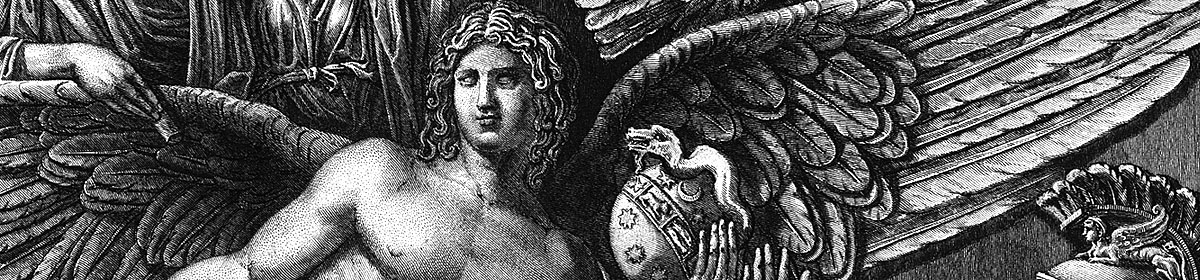
Winged Figure (no date) by Mark Severin.

• At Wormwoodiana: News of the publication of two uncollected early stories by Cormac McCarthy. I happen to be reading McCarthy’s penultimate novel, The Passenger, at the moment. Very enjoyable and very different to what I was expecting.

• At Smithsonian Magazine: Yayoi Kusama‘s largest permanent public sculpture arrives in London.

• At Colossal: A futuristic 150-foot installation imagines Chicago’s never-built architecture.

The record sounded like nothing else, seemingly came from nowhere and related to nothing I could identify with any confidence: whistling, whispering, mumbling, pig grunts, exhalations of breath, chants and vocal imitations of nocturnal forest sounds, arco double bass and electric bass, nursery rhymes, impenetrable accents and languages, tambourines, unidentifiable tuned percussion imprecisely struck, mandolin, banjo, flutes, congas, bottleneck guitar, second line drumming with virtually no cymbals, dense percussion, organ bass, harpsichord, reed instruments played through electronic effects and organ lines sounding like anything but themselves. There was no piano, despite what some later commentators have claimed, and in fact very little harmonic underpinning in the majority of tracks. Instead of piano or guitar chords to fill out the ensemble sound there is the celebrated Gold Star echo chamber, into which instruments and voices sank as if dropping away into the abyss.

Zozo la Brique, Jump Sturdy, Coco Robichaux, Queen Julia Jackson, Mama Roux, Tit Alberta—questions flared like fireworks. Who were these characters who populated the lyrics. Were they voodoo practitioners, alive or dead, fictitious or real? Ishmael Reed’s visionary novel, Yellow Back Radio Broke-Down, was published not long after, in 1969. Years later I read it and was startled to bump into Zozo la Brique once more. So these were real people, or named phantoms, or figures of legend at least. “O Doc John,” Reed wrote, “Doc Yah Yah and Zozo Labrique Marie Laveau the Grand Improvisers if I am not performing these rites correctly send the Loa anyway and allow my imagination to fill the gaps.”

David Toop in an extract from Two-Headed Doctor: Listening For Ghosts In Dr. John’s Gris-Gris

• New music: Hidden Structures by Time Being, and Buried (Your Life Is Short) by The Bug.

• At Spoon & Tamago: Minimal and tranquil charcoal drawings by Masahiko Minami.

• New weirdness: Cat Location Conundrum by Moon Wiring Club.

• At Unquiet Things: The art of Dylan Garrett Smith.

• At Dennis Cooper’s: Toshio Matsumoto Day.

• RIP Alain Delon.

Gris-Gris Gumbo Ya Ya (1968) by Dr John | Gumbo (1971) by Santana | Roochoo Gumbo (1976) by Harry “The Crown” Hosono