Art that transcends

ca56.jpg

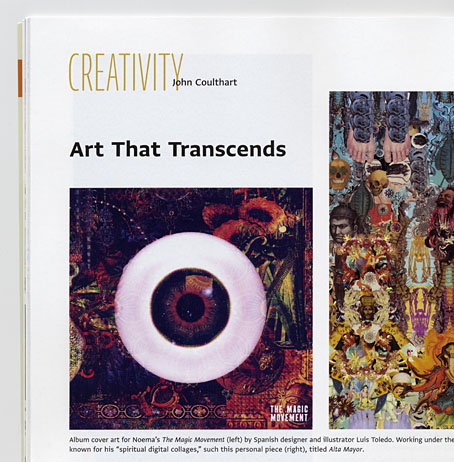
Late last year, US design magazine Communication Arts asked me to write a piece about psychedelic art, past and present. The resulting feature has been out for a couple of weeks in the May/June issue (no. 56) but I hadn’t seen it in print until a copy turned up today. Attempting to wrangle discussion of a very wide-ranging and amorphous field into 1500 words isn’t an easy task but I managed to sketch a history of psychedelic art beginning with Aldous Huxley and Humphrey Osmond’s mescaline experiments in the 1950s. Art that can be considered psychedelic goes back into prehistory but Huxley’s The Doors of Perception (1954) is the first book that considered art in general from a psychedelic viewpoint. That book, and the later Heaven and Hell (1956), are still valuable for their aesthetic meditations however much Huxley’s optimism may have been tainted by the ferment of the 1960s.

earth.jpg

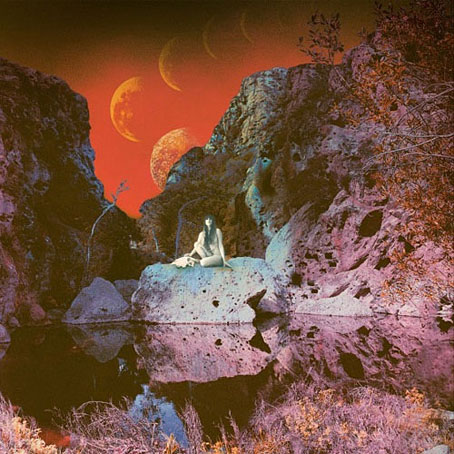
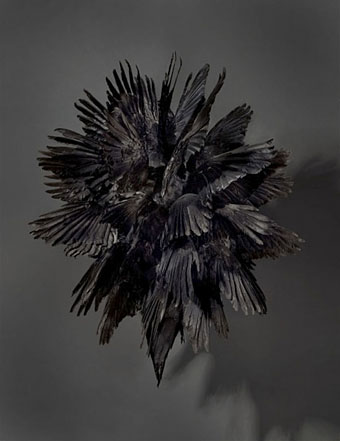
Primitive And Deadly (2014) by Earth. Art by Samantha Muljat.

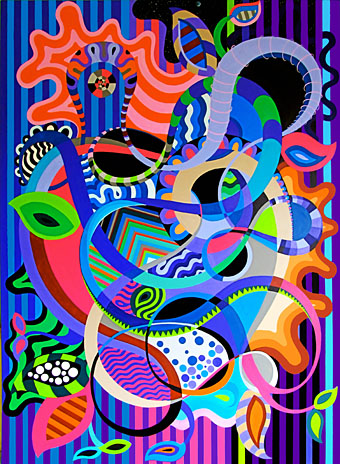
The psychedelic art of the 60s isn’t exactly overlooked so I paid more attention to tracing the influence of the psychedelic style, and also mentioning painters such as Ernst Fuchs, Alex Grey, Martina Hoffmann and Mati Klarwein. Among the more recent artists, I was pleased that Samantha Muljat‘s album cover for Earth was featured. I’ve been listening to this album a great deal over the past few months, and loved that cover as soon as I saw it. One of the other contemporary names, Brazilian artist Duda Lanna, works in a very different style: bold, vivid, and often abstract. There seems to be a lot of this kind of work around at the moment, so much so that I kept spotting new examples after the article had been delivered. It’s difficult to say whether this is a developing trend or simply a case of there being more of everything around these days. I’ll play safe and suggest it’s probably a bit of both although, as I say at the end of the article, if the movement to legalise drugs gains momentum we can expect to see a lot more psychedelic art.

lanna.jpg

Garden of Psychedelic Delights by Duda Lanna.

Weekend links 258

stalenhag.jpg

Simon Stålenhag‘s SF artwork will be published in book form if funding is secured. In the future everything will be crowdfunded for 15 minutes.

• Mixes of the week: FACT Mix 494 is a fantastic dub selection by Colleen; Secret Thirteen Mix 151 is by Sally Dige; Stephen Mallinder‘s return to the doom-laden Industrial music of the 1980s suits the post-election mood. Mallinder’s mix is helping promote Industrial Soundtrack for the Urban Decay, a documentary by Amélie Ravalec.

• “…it felt more like real life to me than the average hour-long television show.” Sopranos creator David Chase on what he enjoyed about Twin Peaks. Related: Twin Peaks Tarot cards.

Sound & Song in the Natural World edited by Tobias Fischer & Lara Cory. A book about animal music and communication with a 60-minute CD of field recordings.

• “The psychedelic renaissance has already begun, and for the most part I welcome it,” says Erik Davis in a wide-ranging interview with Sean Matharoo.

• It rumbles on: Brown Pundits on “An Embarrassment at PEN”. A useful collection of stories, reactions and polemic from the past two weeks.

Fanny and Stella: The Shocking True Story, a play by Glenn Chandler about Victorian London’s scandalous pair of cross-dressing men.

• Artist Charles Ray causes a problem for the Whitney Museum of American Art with his sculpture of a naked Jim and Huckleberry Finn.

• “Don’t believe Orson Welles,” says his biographer Simon Callow, “especially when he calls himself a failure.”

• A return to Adolph Sutro’s Cliff House features several photos I’d not seen before.

• More Tarot: Arcana: The Tarot Poetry Anthology is looking for funding.

• At Dangerous Minds: The ancient magic of the record label.

Foreign Movie Posters

Tarot (Ace of Wands theme, 1970) by Andy Bown | Distant Dreams (Part Two) (1980) by Throbbing Gristle | The Devil In Me (1982) by Stephen Mallinder

White Hole, a film by Toshio Matsumoto

whitehole.jpg

Another short film by Matsumoto. This one was made in 1979, and seems to employ video effects, but the results are cosmic and psychedelic enough to have appeared ten years earlier. The electronic score is by Joji Yuasa. An entrancing 6-minute trip. Watch it here.

Previously on { feuilleton }
Atman, a film by Toshio Matsumoto
Metastasis, a film by Toshio Matsumoto

Weekend links 254

scdc.jpg

Gatefold sleeve for Love, Death and the Lady (1970) by Shirley & Dolly Collins. Photo by Allan Willmoth. No designer credited.

• “When you look at a lot of modern album covers, the art school obsession with the Helvetica kind of undermines it. So instead of looking at an artefact that comes from another place entirely, you are looking at an artefact that has been caught and tamed and made corporate.” Roger Dean talking to Liv Siddall about cover design in the 1970s.

• Erik Davis talks to Stephen Finley, author of Esotericism in African American Religious Experience, about hoodoo and metaphysical blackness. Related: Sun Ra’s Afrofuturist masterwork, Space Is The Place, has been reissued by Harte Recordings as a limited DVD, CD and hardcover book.

• “…she has managed to unearth a coal-seam of neglected songs and stories, incantations of the working people from across the English-speaking planet with their edge of discord left intact, the harmonies frayed by hard-won experience.” Alan Moore on the great Shirley Collins.

[MR] James’s influence, or his example, has rarely been more strongly with us than now. For there is presently apparent, across what might broadly be called landscape culture, a fascination with these Jamesian ideas of unsettlement and displacement. In music, literature, art, film and photography, as well as in new and hybrid forms and media, the English eerie is on the rise. A loose but substantial body of work is emerging that explores the English landscape in terms of its anomalies rather than its continuities, that is sceptical of comfortable notions of “dwelling” and “belonging”, and of the packagings of the past as “heritage”, and that locates itself within a spectred rather than a sceptred isle.

Such concerns are not new, but there is a distinctive intensity and variety to their contemporary address. This eerie counter-culture—this occulture—is drawing in experimental film-makers, folk singers, folklorists, academics, avant-garde antiquaries, landscape historians, utopians, collectives, mainstreamers and Arch-Droods alike, in a magnificent mash-up of hauntology, geological sentience and political activism. The hedgerows, fields, ruins, hills and saltings of England have been set seething.

Robert Macfarlane on the eerieness of the English countryside

• Lots of mixes to choose from this week: Songs from a Railway Station at Dusk by Abigail Ward; mix series The Ivy-Strangled Path by David Colohan is now up to Volume IV; a trove of occult psychedelia from The Ghost of the Weed Garden.

• “Blood Meridian was released on April 28, 1985 to little initial acclaim, but would later gain recognition as one of the most significant novels of the late 20th century.” Ted Gioia on the rise and fall of the Western.

• From the past week’s zones of research: the Gregory Pendennis Library Of Black Sorcery, and Vault Of Evil: Brit Horror Pulp Plus!

• At Dangerous Minds: Zappa meets claymation in the wonderful VHS rarity The Amazing Mr. Bickford.

Synthesizer manuals at the Internet Archive.

• Pages from The Graphic Canon at Pinterest.

Sabbath, a new song by Jenny Hval

French book covers

The Cruel Mother (1967) by Shirley Collins | The Unquiet Grave (1968) by Shirley Collins | Go From My Window (1970) by Shirley & Dolly Collins

More Alberto Solsona

solsona01.jpg

Opus 5 (1968).

It’s dismaying to learn that Alberto Solsona, the creator of the wonderful Agar-Agar, was only 41 when he died in 1988. It’s also a little disappointing to discover that his work for comics is the least part of an artistic career begun in the late 1960s; I’d been hoping there might be other work in the same style. Solsona’s early paintings are very much in the Pop Art sphere which makes them more attractive to me than his later shift into a form of Abstract Expressionism. Between painting he was working as a book illustrator and a comic artist in magazines for children. Among the examples of the latter the page from Strong (1971) is the closest to Agar-Agar, unsurprisingly when they both date from the same period. This museum page has examples of many more paintings and prints.

solsona02.jpg

Strong (1971).

solsona03.jpg

El asombroso doctor Zas (1971).

Solsona also had a humorous strip about King Arthur in Strong but I prefer the drawing style in this one, yet another example of the diluted psychedelic graphics that filtered into children’s stories in the early 70s. (See this post.)

solsona04.jpg

Símbolos (1971).

Not very surprising seeing American symbols mixed with swastikas—the war in Vietnam provoked many such responses—but I wonder how much of a risk it was to do the same with the Spanish flag when the Franco regime was still in power. This painting also refers to Superman, a character that Agar-Agar takes a dig at.

Continue reading “More Alberto Solsona”