Weekend links 54

starowieyski.jpg

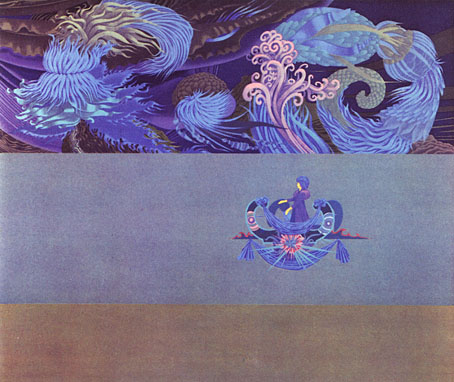
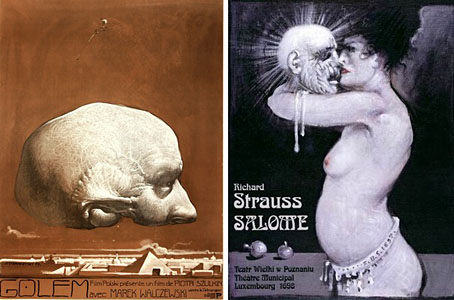
Film and opera posters by Franciszek Starowieyski (see below).

• At first glance, Jerzy Skolimowski’s new film, Essential Killing, sounds like Joseph Losey’s Figures in a Landscape (1970) reworked for our era of renditions, torture and war without end. The trailer is here; Sight & Sound liked the film and dismissed any Losey comparisons. The Quietus interviewed the director this week, and there’s also a video interview here.

“He was trying to tell the truth about war. In the 1950s the US was telling itself a mythic, grandiose, heroic story about the second world war and GI Joe saving the world. [James] Jones was saying, ‘That wasn’t the war I saw, I want to write something more honest and realistic. Whatever the mid-America myth, one of the things men were doing was giving blow jobs for money.'”

From Here to Eternity is published in an uncensored edition.

Edogawa Rampo‘s sinister short story The Human Chair concerns a man who conceals himself inside a chair. Taiwanese artist Lan Hungh may have had Rampo’s story in mind for his Demolished Chair art piece about which we’re told “Hungh’s flaccid penis is the only body part that’s visible, and becomes hard as soon as anyone starts discussing the chair or sitting on it.” BUTT magazine spoke to the artist.

…unaware of their double standards, the police objected to the portrayal of men in Harrison’s work as demeaning. There was Hugh Hefner squeezed into a bunny girl costume, a beefy but emasculated Captain America wearing false breasts and a stars ‘n’ stripes-patterned basque, and Valerie Solanas, the radical feminist who tried to murder Andy Warhol, stamping on his Brillo box artwork.

A piece about artist Margaret Harrison whose work is on show at Payne Shurvell, London.

Connecting Science and Art: “Novelist Cormac McCarthy (!), filmmaker Werner Herzog, and physicist Lawrence Krauss discuss science as inspiration for art and Herzog’s new film on the earliest known cave paintings.”

• At Tumblr: Gurafiku, “a collection of visual research that encompasses the history of Japanese graphic design”, and Archidose.

• “Michael Moorcock’s Modem Times 2.0 is a good introduction to the literary legend.”

• The Spring 2011 edition of Periwinkle Journal (Queer Art + Creativity) is now live.

• Rick Poynor (again) on [Franciszek] Starowieyski’s Graphic Universe of Excess.

• Coudal now have a page of links for the great Terrence Malick.

Wake in Progress is Finnegans Wake illustrated.

Brown Study, a blog by Jay Babcock.

• RIP Sidney Lumet.

Ry Cooder & The Moula Banda Rhythm Aces: Let’s Have a Ball is a film by Les Blank of a fantastic performance by Cooder’s band in Santa Cruz, California, in 1987. It’s not available on DVD but most of it can be seen on YouTube.
Weekend links 52

judd.jpg

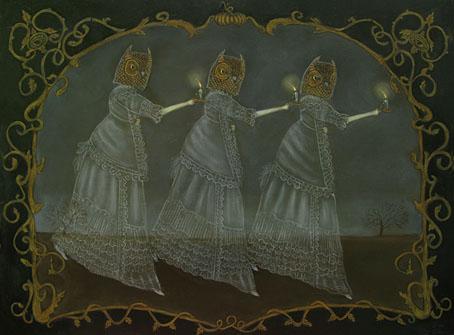
Three Seekers (2009) by Kelly Louise Judd.

Kevin Sessums talked to Elizabeth Taylor in 1997 about Tennessee Williams, her AIDS activism and related matters. Other related matters: Catholics lead the way on same-sex marriage and Mahatma Gandhi was in love with a German body-builder named Hermann.

• Cray porn (the computer, that is) at Barnbrook Design as the CD package for Interplay by John Foxx and The Maths is unveiled.

Michael Rother and Friends Play the Music Of Neu! A stream of an hour-long concert from August 2010.

One of the tragedies of drug prohibition is that we have never developed a culture in which young people can learn how to use powerful drugs properly from older, wiser and more experienced psychonauts. I count myself lucky to have encountered such good teachers to guide me with such drugs as LSD, psilocybin, DMT, MDMA and mescaline.

Dr Susan Blackmore on using LSD.

Another Dispatch in a World of Multiple Veils, a new release by Arkhonia.

Micromachina by Scott Bain “examines what makes the insect world tick”.

Down with art!: the age of manifestos. Related: The Manifesto Manifesto.

• John Patterson: “We’re all living in the future as seen by Philip K Dick.”

Music To Play In The Dark: A Wake For Peter ‘Sleazy’ Christopherson.

Albert Einstein, Radical: A Political Profile.

Was “God’s Wife” edited out of the Bible?

Porn made for women, by women.

Hallogallo (1972) by Neu! | Opa-Loka (1975) by Hawkwind | Jenny Ondioline (1993) by Stereolab | Hallogallo (1997) by Porcupine Tree.

Weekend links 51

narcissus.jpg

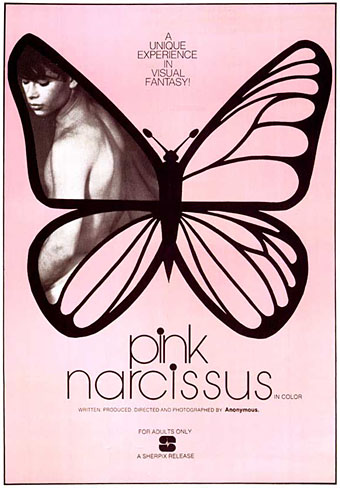
James Bidgood’s luscious and erotic micro-budget masterpiece Pink Narcissus (1971) receives a screening at the IFC Center Queer/Art/Film festival, NYC, on Monday. The film is presented by Jonathan Katz, curator of the Hide/Seek gay art show whose controversial history was recounted here in December. The NYT ran a short piece about Bidgood, now 77 and not the first artist to be disappointed by his past work; they also have a Bidgood slideshow. Hide/Seek, meanwhile, is now a touring exhibition.

• Related: the delightful Drew Daniel of Matmos (and Soft Pink Truth) posing in a jockstrap at the Club Uranus, San Francisco circa 1990; he also used to go-go dance wearing a fish.

• The Isle of Man may have one of the oldest parliaments in the world but its laws have often been out of step with its neighbour across the Irish Sea. This week the island joined the rest of the UK in granting civil partnerships to its citizens. Now the name whose punning appeal so delighted James Joyce doesn’t seem as inappropriate.

Howard Jacobson: “The novelist Yukio Mishima posed pointing a Samurai sword to his chest and ultimately had himself beheaded in public. This is what’s called taking your art seriously.”

hutter.jpg

The Realm of the Queen of the Night (1974) by Wolfgang Hutter from Zauberflote at 50 Watts.

The revelatory operations of the chance encounter lie at the heart of le merveilleux (“the marvelous”)—the Surrealist conception of beauty. You find something marvelous in the world (an object, an image, a person, a place) that corresponds, like a piece clicking into a puzzle, to a deep inner need.

Slicing Open the Eyeball: Rick Poynor on Surrealism and the Visual Unconscious by Mark Dery.

Boy from the Boroughs: Alan Moore interviewed by Pádraig Ó Méalóid; Michael Moorcock interviewed at Suicide Girls.

• Illustrations from Quark, the anthology of speculative fiction edited by Samuel Delany & Marilyn Hacker in 1970.

The Residents, sans masks, filmed at their San Francisco home in the 1970s.

• Bach’s Toccata and Fugue in D minor played on a glass harp.

What art can do for science (and vice versa).

• You can never have too much Virgil Finlay.

• Lydia Kiesling reviews Lolita.

Alain Resnais film posters.

Red Mug, Blue Linen.

No GDM (dub version) (1979) by Gina X | L. Voag’s Kitchen (2004) by Soft Pink Truth.

Weekend links: fifth anniversary edition

demuth.jpg

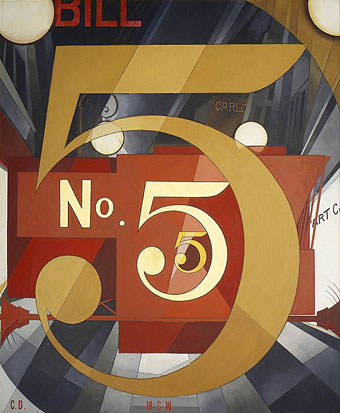
The Figure 5 in Gold (1928) by Charles Demuth.

It’s a little surprising to find I’ve been doing this for five whole years yet here we are. Having seen a number of blogs call it quits at the five-year point I should note that I don’t feel quite that exhausted although maintaining a discipline of daily posting can be a chore at times, especially when you’re pressured by work. On the whole the advantages continue to outweigh the disadvantages. Some of the discoveries here have fed back into things I’ve been working on or opened avenues for future exploration. Researching something for an audience (however slight that audience or the resulting post) encourages you to look more deeply into a given subject; sometimes you learn more as a result and occasionally make surprising discoveries. Obsessions are teased out which might otherwise have lain dormant. Yes, it’s an extra bout of work but I’ve spent much of my life saying to people “if you like that, you may like this”, and that’s all many of these posts are doing.

This year promises to be an interesting one so watch this space. And, as always, thanks for reading!

John x

On to the links…

Cathedral Scan translates the architectural plans of Gothic cathedrals into open-ended musical scores via custom software. There’s more at Blake Carrington‘s website.

Forty-three William Burroughs recordings (tape experiments and readings) at the Ubuweb archives.

• The opening scene of Deadlock (1970), an obscure German film with a theme by the mighty Can.

Strange Lands: A Field-Guide to the Celtic Otherworld, a new book by Andrew L Paciorek.

• The enduring nature of Frankenstein, currently on stage at the National Theatre, London.

shimojo.jpg

Owl One (2004) by Yuri Shimojo.

¡Activista! by Sonny Smith: Drag Queens, Borders, Rivers, Death and Transformation.

• Estonian sculptor Mati Karmin makes furniture out of Russian anti-submarine mines.

Alan Moore’s contribution to the Save Our Libraries campaign.

• Innsmouth Free Press is raising funds for their running costs.

A history of queer street art (Facebook link, unfortunately).

Illuminated book design for Heston’s Fantastical Feasts.

Physica Sacra, an engraving set at Flickr.

Egypt (1985) by Tuxedomoon | Egyptian Basses (1998) by Coil | Soleil D’Egypte (2001) by Natacha Atlas.

Weekend links 46

finalprogramme.jpg

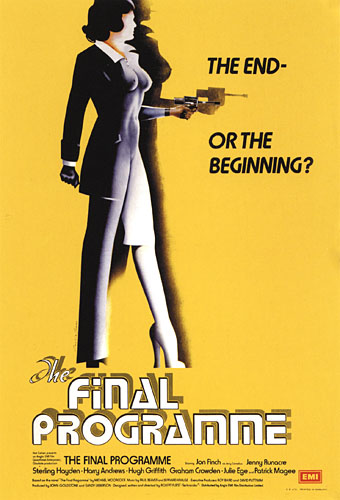
The Final Programme (1973). Philip Castle’s poster art implied the androgynous finale of Moorcock’s novel which the film itself evaded.

They were musty-smelling 10p messages from the futuristic past, complete with cover designs (and content) that were unlike anything I’d seen before. I’m fairly certain that this was how I first came across Michael Moorcock, in an early-70s Mayflower paperback, with a psychedelic cover by Bob Haberfield.

(…)

Moorcock steered New Worlds towards a set of concerns that chimed with the times; this was the period ruled by Marshal McLuhan and RD Laing, and the exploration of “inner space” seemed just as interesting as the “outer space” of satellites and moonshots. This turn was controversial, not just with die-hard pulp fans, but, surprisingly, with people such as the pop artist Richard Hamilton, another denizen of the London scene. “He thought we were turning science fiction into something namby-pamby, losing its roots,” Moorcock says. “He wanted explosions and spaceships and robots.”

When Hari Kunzru met Michael Moorcock, a major feature on a great writer and cultural catalyst. Kunzru posted the full transcript of their conversation here. Jovike’s Moorcock Flickr set has many of the lurid Mayflower covers.

• Moorcock is among the contributors to the forthcoming Thackery T. Lambshead Cabinet of Curiositities. io9 posted a list of contents (and one of my pics) while co-editor Jeff VanderMeer added some detail.

• So long to The White Stripes whose dissolution was announced earlier in the week. We know they’ll be back one day. Jay Babcock gave them their first major interview for the LA Weekly in 2000 which he’s reposted here.

Mister Blues (1962) by Lasry-Baschet aka Structures Sonores, a rare 7″ single showcasing the unique glass-and-metal sounds of the Cristal Baschet. Young Teddy Lasry on clarinet was playing in prog-jazz outfit Magma a few years later. Related: John Payne on Magma and The Mars Volta.

Here’s one thing that changed me: a close reading of Flannery O’Connor’s Mysteries and Manners. In it, she says that, “it is the business of fiction to embody mystery through manners,” manners being those concrete details — depictions of the real — in story. “Mystery through manners…” I had never heard a modern author seeking deep metaphysical mystery through realism before. Well, sure, Robert Musil, Bruno Schulz, Robert Walser, and a handful of other personal faves. By deep mystery I mean, mystery about our relationship with the planet, not anthropocentric mystery. I get sick of thinking about humans quickly, as we only constitute about 1% of what’s happening in our universe, if that much, and it was refreshing to me to hear O’Connor critiquing Henry James’ idea that modern people should aspire to know nothing of mystery, to be completely rooted in humanity. That notion makes me feel like hurling myself off a cliff. In her opinion, great literature seeks to embrace and express mystery through its mimicry of actual mannerisms. Mystery — fantasy — through the real. And with that, the borders between fantasy and realism were completely transgressed in my brain. Suddenly, I saw them as two good means to the same end. This made me excited to write real human situations again.

Trinie Dalton is interviewed here.

• And speaking of mystery through the real, there’s London Intrusion, a sequence of metropolitan adumbrations by China Miéville. Am I the only person to spot an intrusion of a different kind in the presence there of one of Eugène Atget’s Parisian views? There’s a doorway to Viriconium in that curious wedge of buildings but nobody can tell you where.

Rupert Murdoch—A Portrait of Satan. Adam Curtis on top form looking at the Dirty Digger’s career and a reminder of why some of us have always called one of his rags The Scum. A key point for me: Murdoch’s insecure railing against “elites”, a favourite term of aspersion on his Fox News network.

• Rick Poynor asks What Does JG Ballard Look Like? Related: “…only two people in Bucharest are going to read this.” Eduardo Paolozzi in conversation with JG Ballard and Frank Whitford, 1971.

How many days does Bill Murray’s character really spend reliving Groundhog Day?

• Silent Porn Star explores The Translucent Beauty of Androgyny.

Ballets Russes brought back to life on film, and also here.

Dewanatron Electronic Music Instruments.

RIP Tura Satana. Remember her this way.

Warm Leatherette (1978) by The Normal | Warm Leatherette (1982) by Grace Jones | Warm Leatherette (1998) by Chicks On Speed.