Weekend links 347

kubin.jpg

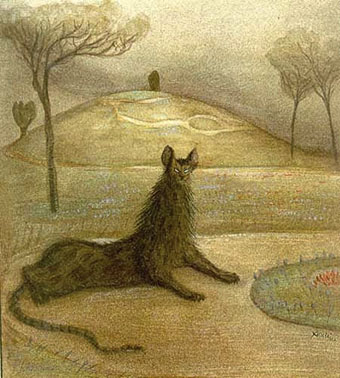
Dream Animal (1903) by Alfred Kubin.

• The week in Finland: A set of Finnish emojis includes icons for notable cultural exports such as Tom of Finland and Moominmamma. Tove Jansson’s creations have received fresh attention this month with the debut release of the electronic soundtrack music for The Moomins, an animated TV series made in Poland in 1977, and first broadcast in the UK in 1983. Andrew Male talked to Graeme Miller and Steve Shill about creating Moomins music with rudimentary instrumentation.

• Russian company Mosfilm has made a new copy of Andrei Tarkovsky’s science-fiction masterpiece, Stalker (1979), available on their YouTube channel. Tarkovsky’s films have been blighted by inexplicable flaws in their home releases, as Stalker was when reissued on a Region B Blu-ray last year. The new Mosfilm upload looks better than my old DVD so for the moment this is the one I’ll be watching.

• Before straight and gay: the discreet, disorienting passions of the Victorian era. Deborah Cohen reviews A Very Queer Family Indeed by Simon Goldhill. Related: Kevin Killian reviews Murder in the Closet: Essays in Queer Clues in Crime Fiction Before Stonewall, edited by Curtis Evans.

• “How many graphic designers owe their introduction to typography to a teenage encounter with the typefaces and lettering found on album covers?” asks Adrian Shaughnessy.

• Mixes of the week: Secret Thirteen Mix 210 by Ascion, FACT Mix 587 by Seekersinternational, and The Séance, 4th February 2017.

• Pankaj Mishra on Václav Havel’s lessons on how to create a “parallel polis”. Related: The Power of the Powerless by Václav Havel.

• Hans Corneel de Roos on Dracula‘s lost Icelandic sister text: How a supposed translation proved to be much more.

• “I live outside the world in a universe I myself have created, like a madman or a holy visionary.” — Michel de Ghelderode.

• The Metropolitan Museum of Art makes 375,000 images of public art freely available under Creative Commons Zero.

• Richard H. Kirk on Thatcherite pop and why Cabaret Voltaire were like The Velvet Underground.

• Emily Gosling on what David Lynch’s use of typography reveals (or doesn’t).

• White Noise Sounds of Frozen Arctic Ocean with Polar Icebreaker Idling.

• John Gray on what cats can teach us about how to live.

• At Dennis Cooper’s: Day of the Mellotron (Restored).

• The Warburg Institute Iconographic Database.

• Sastanàqqàm by Tinariwen.

• Tanz Der Vampire (1969) by The Vampires of Dartmoore | Dracula (1983) by Dilemma | Vampires At Large (2012) by John Zorn
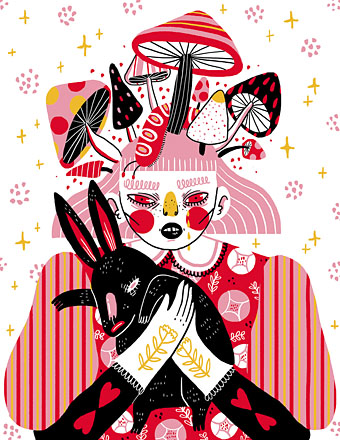
Weekend links 346

brocklehurst.jpg

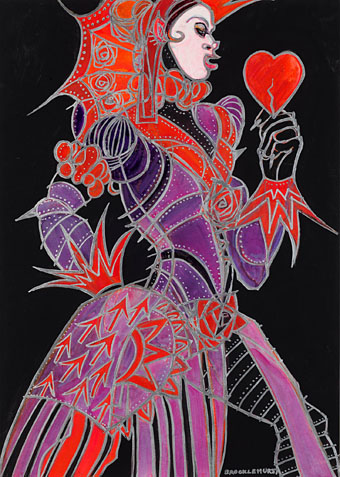
Red Queen (no date) by Jo Brocklehurst.

• Happy birthday to Kenneth Anger, 90 years old this week. In 2008 Anger was interviewed by Nicolas Winding Refn at the National Gallery of Denmark, Copenhagen.

• “Fabeness be to the Auntie, and to the Homie Chavvie, and to the Fantabulosa Fairy”. “Church ‘regret’ as trainees hold service in gay slang.”

• Andrew Male on Michael Chapman, an exceptional guitarist, and “the man who connects Elton, Bowie, Nick Drake and Sonic Youth”.

• A trailer for A Life In Waves a documentary about synth composer Suzanne Ciani by Brett Whitcomb and Bradford Thomason.

• The website for design company Barnbrook has been relaunched, as has the site for Jonathan Barnbrook‘s personal work.

• Mixes of the week: Secret Thirteen Mix 209 by Umwelt, and XLR8R Podcast 475 by Melina Serser.

• Ryan Gilbey: “From Sean Connery to Harrison Ford: actors who secretly played roles gay.”

• Writer and editor Russ Kick is selling his huge book collection.

• Lucifer Sam (1967) by Pink Floyd | Lucifer (1968) by The Salt | Lucifer Rising (2002) by John Zorn

Weekend links 345

lazo.jpg

Wasted Alice (2017) by Sonia Lazo.

• Brian Eno: “We’ve been in decline for 40 years—Trump is a chance to rethink.” An equivocal headline, and the usual misinterpretation from the hard-of-thinking, prompted Eno to issue a clarification. More Trumpery: Jonathan Meades wonders what kind of wall “The Lout” might want to build. Related: almost all of Meades’ smart and witty television essays may be viewed at MeadesShrine (click through to Vimeo for download links).

• “Once you’ve turned entire buildings into instruments as on Medium, and then you’ve made the ionosphere itself an instrument as on Signal, where do you go next?” Emptyset discuss their forthcoming album, Borders, and a change in their working methods.

• Christopher Burke & David Davis at Weird Fiction Review talk to Valancourt Books about reprinting neglected works of horror and gay fiction.

• At the BFI this week: All about Jim Jarmusch’s leading men, from Tom Waits to Bill Murray, and John Hurt (RIP): 10 essential films.

• “Claude Arnaud’s biography of Jean Cocteau shows how the artist lived a life nourished by infinity,” says Ricky D’Ambrose

• Sukhdev Sandhu on John Berger: “a pathfinder who was alive to the present”.

• Theodore Carter on Doll Part Art: Visual Feasts Made of Plastic Bodies.

• Count Backwards from Ten: Peter Bebergal‘s Top 10 Occult in Media.

• Books from Strange Attractor will now be distributed by MIT Press.

• Eero Saarinen, the architect who saw the future.

• Mix of the week: FACT Mix 585 by Niagara.

• RIP Maggie Roche.

• Hammond Song (1979) by The Roches | Losing True (1982) by The Roches | Keep On Doing What You Do / Jerks On The Loose (live, 1990) by The Roches

Jaki Liebezeit times ten

jaki11.jpg

Jaki Liebezeit.

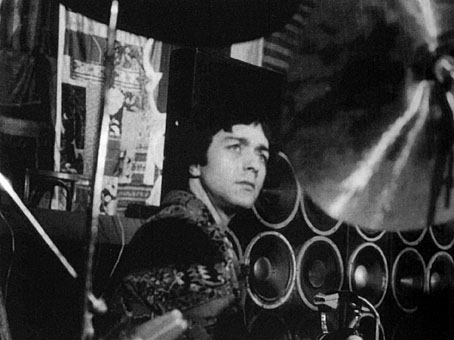
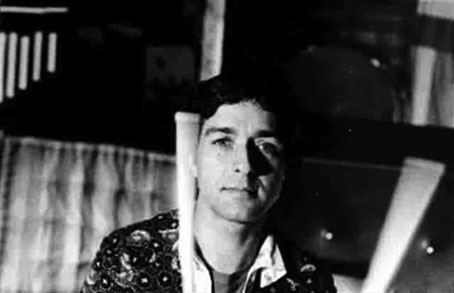
One thing to note about the late Jaki Liebezeit is that everyone liked Can in the 1970s, which means that everyone liked Jaki Liebezeit’s drumming. When the music wars were raging in 1976, Can were one of the few groups from the hippy side of the barricade given a pass by the punks. Prog-heads liked Can because of the rock grooves and complex improvisations; punks enjoyed the muscular insistence of songs like Father Cannot Yell and Halleluwah. David Bowie liked Can; Brian Eno liked Can enough to let Jaki Liebezeit guest on Before And After Science (Eno also made this tribute video for the Can DVD); John Lydon when he was still Johnny Rotten played Halleluwah on his Capital Radio show in 1977 together with other favourite records; a year later, Pete Shelley wrote a sleeve note for a Can compilation (and the first Can album I bought), Cannibalism; Mark E. Smith liked Can (of course); Siouxsie called Jaki Liebezeit “the best drummer in the world,” while Jah Wobble would go on to work with Liebezeit on numerous recordings under his own name and as a guest on other albums. Some of the Wobble recordings appear below. If there’s a minimum of Can music in the following list that’s mainly because Mute/Spoon keep the back catalogue away from British users of YouTube. I don’t mind that; the absence of the prime stuff means I can draw attention to some examples of Jaki Liebezeit’s post-Can work which might otherwise be overlooked.

jaki01.jpg

Mother Sky/Deadlock (1970) by Can.

Two numbers from the fantastic live set the group played on German TV for an audience of ecstatic/bored/stoned hippies.

jaki02.jpg

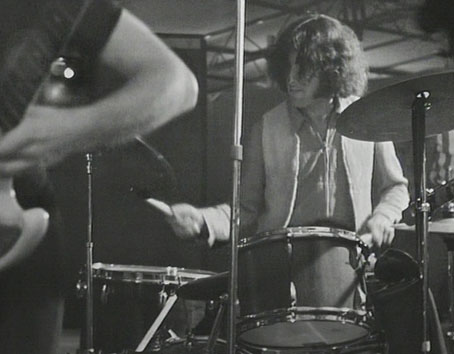
Jaki Liebezeit drum solo (1970).

In the Can Book Liebezeit says he never played drum solos but he was forgetting about this example from the group’s early days.

jaki03.jpg

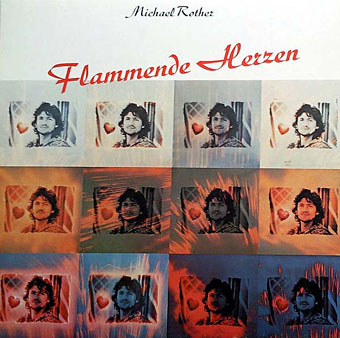
Flammende Herzen (1977) by Michael Rother.

Michael Rother’s first solo album was also his best after leaving Neu! The album is essentially a duet between Rother and Liebezeit, with Rother playing all instruments apart from the drums.

jaki04.jpg

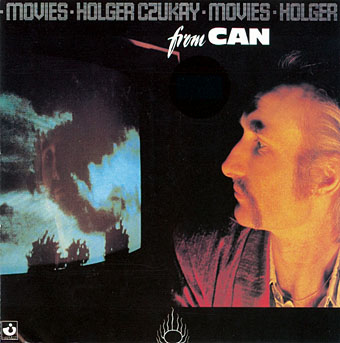
Oh Lord Give Us More Money (1979) by Holger Czukay.

In which Holger Czukay takes the Can song Hunters And Collectors, removes the vocals then extends and remixes the whole thing into a 13-minute collage blending the music with BBC sound effects and vocal samples taken from radio and TV. Samplers didn’t exist in 1979, this was all done with tape, and it’s incredible. I forget whether it was Jaki Liebezeit or Michael Karoli who said they didn’t recognise their playing afterwards (probably the latter) but Leibezeit’s drums sustain the entire piece. He also plays on the rest of the album. Movies is Czukay’s masterpiece, and more true to the questing, inventive spirit of Can than the albums the group made after Landed. Another track, Persian Love, samples Middle Eastern vocalists two years before My Life In The Bush Of Ghosts. Eno was paying attention.

Continue reading “Jaki Liebezeit times ten”

Weekend links 344

axiomdub.jpg

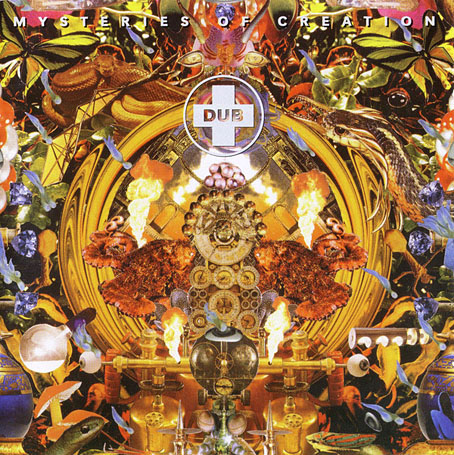
Axiom Dub – Mysteries Of Creation (1996), a Bill Laswell production. Art by James Koehnline.

• As noted earlier, the great Bill Laswell has made some of his sprawling back catalogue available at Bandcamp, news of which has prompted Vinyl Factory to put together a recommended listening guide. Judging by the comments I’m not the only Laswell-head deploring the absence of the masterpiece from Material, Hallucination Engine. Linked here before, and happily still being updated, the comprehensive Bill Laswell discography at Silent-Watcher. Related: An ESP-Disk Primer by Marc Masters.

• Listen to the Voice of Fire, a symposium concerning alchemy in sound art, takes place at the National Library of Wales at the beginning of March. Phil Legard offers some thoughts on alchemy, music and John Dee.

• The guilty cinematic pleasures of John Carpenter. Related: Director and actor Alice Lowe chooses seven favourite horror films.

• The Broomway, Essex, a tidal path known as “The Doomway” for its reputation as the most dangerous walk in Britain.

• Mixes of the week: K-Punk presents Return to the Fourth World, and FACT Mix 584 by Lawrence English.

• “There was more to the late John Berger than that TV series and art book”, says Richard Turney.

• “Music’s cassette-tape revival is paying off,” says John Paul Titlow.

• Diamanda Galás announces two new albums.

• Bob Dylan paints a Blackpool pier.

• Pixel art by Uno Moralez

• One Letter Words

• Reduction (1980) by Material | Ghost Light/Dread Recall (1996) by Material | No Guts No Galaxy (1999) by Material (feat. Ramm Ell Zee & phonosycographDISK)