Weekend links 322

quays.jpg

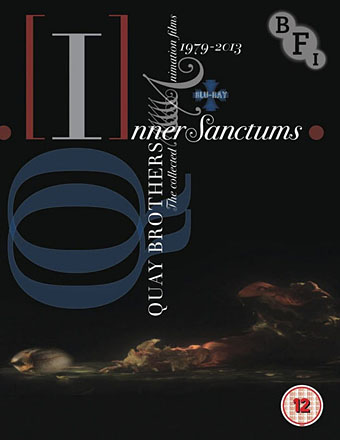
• Cover art by the Quays for Inner Sanctums—Quay Brothers: The Collected Animated Films 1979–2013, a Blu-ray collection which will be released by the BFI next month. Being something of an obsessive where the Quays are concerned I have a lot of this material already (some of the films in multiple copies), but I’ve been hankering for a BR collection for some time. The new set will include everything that’s on the BFI’s DVD collection plus more recent films, some of which have been the subject of previous { feuilleton } posts.

• Aubrey Beardsley: “The subjects were quite mad and a little indecent. Strange hermaphroditic creatures wandering about in Pierrot costumes or modern dress; quite a new world of my own creation.” Alan Hollinghurst reviews the catalogue raisonné of Beardsley’s work.

• How to find the spirit of HP Lovecraft in Providence. Related: there’s now a funding page for the statue of Lovecraft by Gage Prentiss being proposed for downtown Providence. Read about it here.

• At The Quietus: Robert Barry on KPM and the history of library music, and James De Carteret on Mike Hodges’ underrated The Terminal Man (1974).

Michael Newton reviews Erica Wagner’s First Light, “a festschrift of essays, reminiscences, poems and stories dedicated to Alan Garner and his work”.

Cosey Fanni Tutti‘s forthcoming memoir Art Sex Music should prove more interesting than some of the recent music business autobiographies.

• Mixes of the week: A New Age mix by Matthewdavid, FACT mix 563 by Deerhoof, and Secret Thirteen Mix 193 by Nite Fields.

Underground music, echoes of war: using the vast Inchindown storage chamber for its resonant properties.

Totally Lost: a photographic and video exploration of abandoned European totalitarian architecture.

• More animation: Nonsense, Cartoons, and My Post-Soviet Adolescence by Naré Navasardyan.

Annie Rose on the allure of the predatory lesbian vampire in film.

• “Let’s write an encyclopedia of things blue,” says Bernd Brunner.

• Ferrets can be gods: Katherine Rundell on the inimitable Saki.

• The Mystery of Hieronymus Bosch by Ingrid D. Rowland.

iO-808: A TR-808 drum machine for browsers.

A Good Book

Terminal Hotel (1981) by Synergy | Sataan Is Real (1992) by Terminal Cheesecake | Terminal (1999) by Monolake
Weekend links 319

hibert.jpg

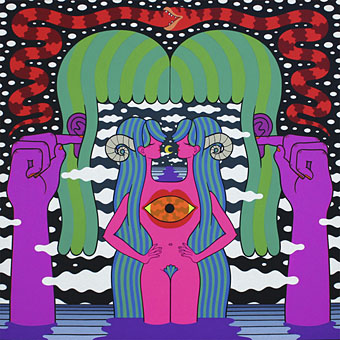
The Sapphic Sleep Web by Oliver Hibert.

• “Google isn’t willing to say whether or not it’s censorship. That they don’t have to even address this is what’s so shocking, It seems like cowardice.” Dennis Cooper talking to Andrew Durbin at Frieze about Google’s unexplained deletion of his long-running blog. Cooper’s case has been covered by arts sites and some newspapers but I’ve yet to see any mention at all on the main US gay news sites despite Cooper being a notable gay author. I’ve cast aspersions at those sites in the past for their obsession with terrible pop acts and off-topic trivia (one site still reports every last fart of Britain’s Royal Family as “news”); this recent issue only reinforces their irrelevance.

• Creating Jerusalem: Alan Moore on the most important book he has written. Related: Alan Moore uses nine-year-old’s fan letter on new book’s cover.

• “Whatever side of the aisle you’re on, HL Mencken is as relevant as ever,” says Paula Marantz Cohen.

To say that Goodbar is an obsessive and symbolically overdetermined film would be an understatement: the film compulsively reiterates themes, visual motifs and parallel narratives, a relentless and repetitive reiteration of ideas that lends that film the aspect of a Freudian dream landscape, a baroque, Boschian sequence of fantasies, projections and illusions.

Bruce LaBruce on Richard Brooks’ film of Looking for Mr. Goodbar

Mare Teno by Michel Redolfi, performed by Thomas Bloch, Susan Belling & Michel Redolfi.

• From 2015: Suicide’s Alan Vega Talks Fiery Record With Big Star’s Alex Chilton.

• Mix of the week: The Takeover with Front & Follow & The Geography Trip.

• Psychic Spaces & Neon Nirvana: The Art of Oliver Hibert by S. Elizabeth.

• How William Burroughs‘s drug experiments helped neurology research.

Yello, absurdist Swiss pop pioneers, return with a new video, Limbo.

• Morphologies Masterclass: Ramsey Campbell on HP Lovecraft.

Cliff Martinez on horror, homage and The Neon Demon.

• A City of Dust: photos of London by Lewis Bush.

Dust To Dust (1986) by Ginger Baker | Neon Sisters (1992) by Thomas Dolby | Limbo (1992) by Sandoz

Out of Tune: Book 2

outoftune01.jpg

Respawn, Reboot by Allison Pang.

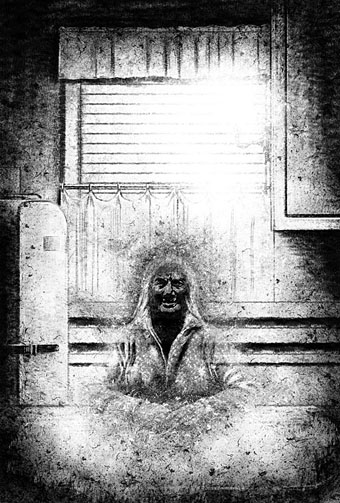
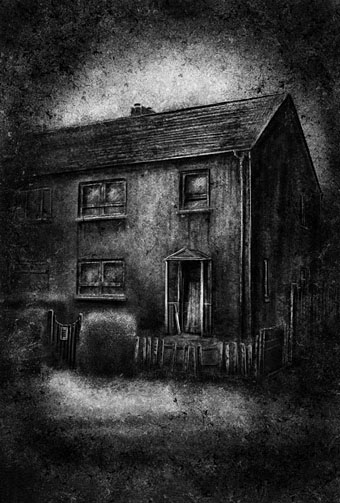
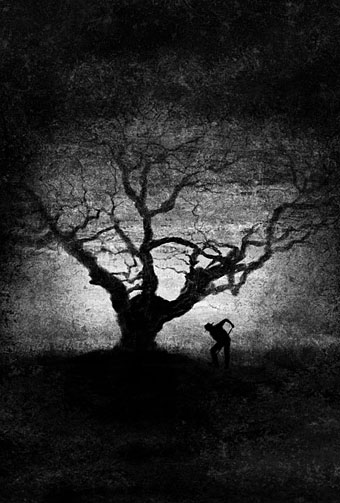
Out of Tune: Book 2 is an anthology of original fiction edited by Jonathan Maberry that’s just been published by JournalStone. Last year I contributed six illustrations to JournalStone’s The Gods of HP Lovecraft, and would have done more if I hadn’t been busy with other work. For this new collection I’ve illustrated all the stories in a slightly sketchier style than usual (see larger views here), the brief being to provide something similar to the illustrations that appeared in the first volume.

outoftune02.jpg

The Knoxville Girl by Cherie M. Priest.

Both books in the Out of Tune series feature short stories based on folk songs or murder ballads, some of which are very familiar if you listen to folk, blues or country music. Almost all the songs are from an American perspective even though a number of them use songs that are derived from old English and Scottish folk songs. Each story ends with a commentary by Nancy Keim-Comley that reveals the song that the story was based on (some are more obvious than others), and also gives a brief history of the song. Not all the stories take an obvious route: Nik Vincent-Abnett’s piece based on The Two Corbies concerns people trying to survive in a near-future dystopia.

outoftune03.jpg

The Beams of the Sun by Dan Abnett.

As to the drawing style, all these illustrations are digital works produced with a collection of Photoshop brushes I’ve had lying around for a while. It’s taken me some time to get used to using brushes that do more than draw straight lines or imitate an airbrush but this book acted as a kind of crash course in their application. Once I’d finished the work I felt quite at home using them so I’m looking forward to doing more in this looser style.

outoftune04.jpg

The Ghost Rider by David Mack.

Continue reading “Out of Tune: Book 2”

Weekend links 308

trochut.jpg

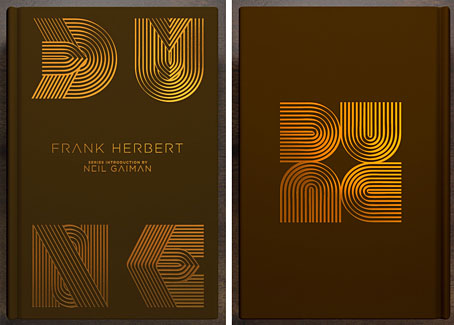
Frank Herbert’s Dune receives a new cover design by Alex Trochut together with other notable works of science fiction and fantasy for a new series from Penguin.

• “…poet, scholar and biographer Sandeep Parmar…has raised the possibility that a long poem by Hope Mirrlees, titled Paris and published by the Hogarth Press in 1919, was a strong influence on The Waste Land.” Alfred Corn on new TS Eliot scholarship.

• “[Evolution‘s] strain of body horror brings to mind an ethereal HP Lovecraft mixed with David Cronenberg.” Rachel Bowles talks to the film’s director, Lucile Hadžihalilović.

• Library music “is a sonic world of ‘weird beats, odd instrumentations, albums full of dark jazzy interludes or bizarre garage rock.'” Adrian Shaughnessy on innovation in banality.

Italy, which EM Forster called “the beautiful country where they say ‘yes’”, became another resort, especially the island of Capri, where a French poet staged a ceremonial flogging of his teenage Italian lover before the boy departed to do his military service and became the subject of a novel by his compatriot Roger Peyrefitte. In the Egyptian city of Alexandria, Forster observed the Greek poet Constantine Cavafy “standing absolutely motionless at a slight angle to the universe”, and the Australian novelist Patrick White met a local man who became his lifelong companion. For decades, the novelists Paul and Jane Bowles presided in Tangier, which Jack Kerouac was to call a “sinister international hive of queens”. William Burroughs arrived in 1954 with a teenage Spaniard named Kiki who, Woods writes, “was, famously, the boy who would blow smoke into his pubic hair and say ‘Abracadabra’ as his hardening cock emerged from the cloud”. Tangier was to figure in Burroughs’s novel Naked Lunch as a phantasmagoric, rubbery walled sex market called the Interzone.

Caleb Crain reviewing Homintern by Gregory Woods

• Beardsley biographer Matthew Sturgis reviews Aubrey Beardsley: A Catalogue Raisonné, a two-volume collection edited by Linda Gertner Zatlin.

• “He was the Bresson of Birkenhead.” Andrew Collins reviews the forthcoming collection of BBC dramas directed by Alan Clarke.

• “The postwar Hollywood western was more content to let strangeness be strange,” says Michael Newton.

• “Bosch’s work has always caused trouble for interpreters and critics,” says Morgan Meis.

Misplaced New York: a project by Anton Repponen and Jon Earle.

Wyrd Daze, Lvl2 Issue 6, is out, and as before is a free download.

Lessons we can learn from Robert Altman’s 3 Women.

• Mix of the week: FACT Mix 548 by Peder Mannerfelt.

Paris 1971 (1971) by Suzanne Ciani | Paris II (1987) by Jon Hassell | Dreaming Of Paris (2013) by Van Dyke Parks

Weekend links 307

chew.jpg

Demon (2014) from the Witch Series by Camille Chew.

• Released next month, Machines Of Desire is the first album of new music by Peter Baumann since Strangers In The Night in 1983. Baumann’s first two solo albums, Romance 76 (1976) and Trans Harmonic Nights (1979), are exceptional works of analogue electronica that frequently outmatch his former colleagues in Tangerine Dream. Both albums have been unavailable for over 20 years so it’s good to know that Cherry Red are reissuing them at the end of May (see here and here).

• RIP Jenny Diski whose death from cancer wasn’t a surprise when she’d been writing about her condition for many months. Linked here in 2013 was this pre-diagnosis meditation on death that takes in Nabokov, Beckett and Francis Bacon (philosopher, not artist). “Jenny offered a living example of how, sometimes, compassion can be born of misanthropy,” says Justin EH Smith. The LRB’s archive of Diski writings is currently free to all.

Murder by Remote Control, a graphic novel by artist Paul Kirchner and writer Janwillem van de Wetering that “resembles a Raymond Chandler-esque noir ‘whodunnit,’ viewed through the psychotropic lens of filmmaker Alejandro Jodorowsky”.

Inspired by Gore Vidal’s 1968 satirical novel, Myra Breckinridge which was denounced as obscene by conservatives, [Boyd] McDonald embarked on a radically, offensive publication, one that avoided the sexless influence of middle class gay mores that sought to whitewash the homosexual experience in order to present a more palatable image of assimilated gays to the general society. This political strategy was successful in achieving gay marriage and more tolerance, but, in the opinion of McDonald, came at a cost. Straight to Hell was in fact the first queer zine. Utilizing erotic photos, interviews and news, McDonald saw it as a “newsletter for us,” the small group of deviates who were its earliest subscribers.

Walter Holland reviewing True Homosexual Experiences: Boyd McDonald and Straight to Hell by William E. Jones

• “HP Lovecraft’s…fascination with all things tentacular and aquatic is unmistakably imprinted on Evolution“, a new film by Lucile Hadžihalilović. Watch the trailer.

• At Dangerous Minds: Broken, the notorious Nine Inch Nails video collection with “snuff movie” interludes by Peter Christopherson, is available online (again).

BEAK> (Geoff Barrow & Billy Fuller) make “claustrophobic, hypnotic music, drawing…on krautrock, post-punk and Interstellar-Overdrive psychedelia”.

• Mixes of the week: Bacchus Beltane 3 : The Age of Abrasax by The Ephemeral Man, and Secret Thirteen Mix 183 by December.

Tease by Jan Rattia, photographs of male strippers on display at ClampArt, NYC.

Wu Zei (2010), a sea-monster sculpture by Huang Yong Ping.

• “I was born weird,” says Robert Crumb.

Sacred Revelation by Susanna

Broken Head (1978) by Eno, Moebius & Roedelius | Broken Horse (1984) by Rain Parade | Broken Harbours (Part 1) (2001) by Stars Of The Lid