William E. Jones on Fred Halsted

halsted1.jpg

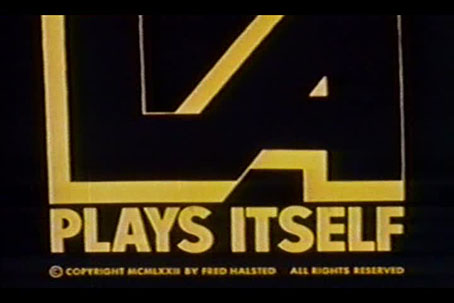
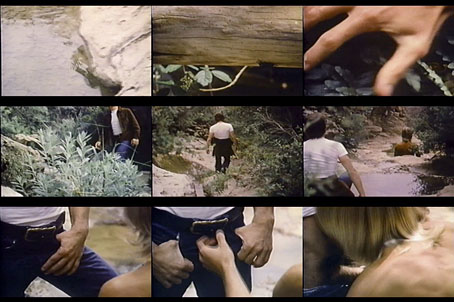
Presenting an interview by John Wisniewski with William E. Jones, author of Halsted Plays Himself (2011). The subject is gay filmmaker and performer Fred Halsted (1941–1989) whose 1972 film LA Plays Itself was a pioneering piece of low-budget cinema which combined a fragmented view of Los Angeles with explicit liaisons between several men, one of them portrayed by Halsted himself. Halsted took advantage of the period between 1970 and 1975 when porn in the US was no longer illegal but hadn’t yet been industrialised. As with Genet’s Un Chant d’Amour, what you get on the screen isn’t a product, it’s the representation of an obsession. It’s this that makes LA Plays Itself a still surprising and provocative piece of work.

I arrived at this film and Halsted somewhat belatedly, in fact I don’t think I’d read anything about him at all until William E. Jones was interviewed when his book was published. (Matters haven’t been helped in this country by the way hardcore porn of any kind was still illegal into the 1990s.) LA Plays Itself fascinates for the view it gives of the LA cruising scene which John Rechy described in considerable detail in The Sexual Outlaw. It’s a curiously hybrid film, neither straightforward porn—many of the sex scenes are fragmented—nor is it narrative fiction or outright documentary. Together with the recently reissued films of Peter de Rome, it’s the kind of thing that few people would be likely to make today, despite the easier access to film technology and the relaxing of censorship. And like all porn films of this era, it now has a unique look simply because it’s been shot on film.
halsted2.jpg

None of Halsted’s films appear to be on DVD at the moment, and as William Jones notes below, Sextool (1975), the film Halsted regarded as his major work, may only exist as a single fading print.

Here’s John and William.

* * *

John Wisniewski: Why did you choose to write your book on filmmaker Fred Halsted?

William E. Jones: For several years I made money in the adult video industry, producing budget DVD compilations (4 hours for $10) sold in adult video stores. Before technological innovation rendered my job redundant, I watched over 700 hours of gay adult film and video produced between 1969 and 1999. In such vast quantities, the material, especially from the second half of the period, began to seem nightmarish in its ugliness. I would relish the opportunity to see any earlier title, produced before 1985, directed more or less like a movie, shot on location, and sometimes even acted fairly well. I can say without hesitation that Fred Halsted’s films were my favorites of all the videos I saw during those years in the porn industry.

Fred Halsted’s films have many fans but few advocates, and I thought my book could intervene in a decisive way before his legacy – the films and the memories of those who knew him personally – disappears completely. I also chose him as my subject because of his connection to Los Angeles. He lived and worked in neighborhoods I pass through nearly every day. But there was something else that drew me to his films, the uncanny power of work by a novice, and a self-taught one at that. His films are crude, idiosyncratic, and at their best have the force of a revelation.
Continue reading “William E. Jones on Fred Halsted”

Flamboyant excess: the art of Steven Arnold

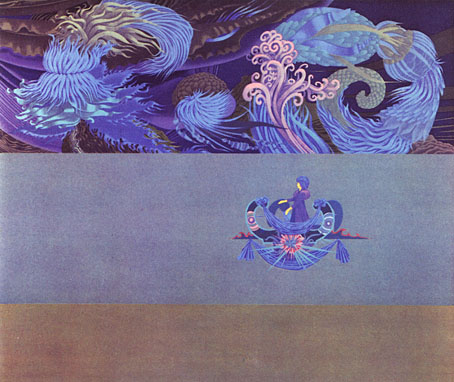
arnold1.jpg

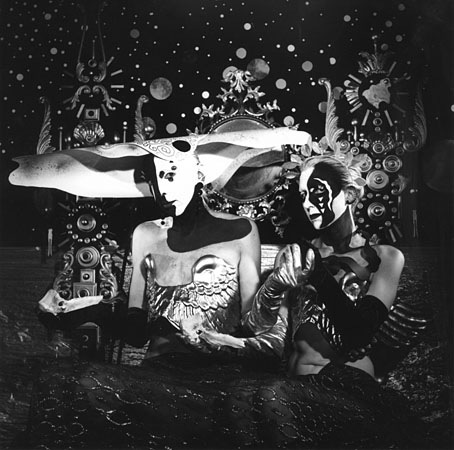
Invitation to Yin and Yang by Steven Arnold.

“Less is NOT more, MORE is more, less is less.”

Steven Arnold

Thanks to Monsieur Thombeau for pointing the way to The Steven Arnold Archive, a respository of biographical and career detail about Steven Arnold (1943–1994):

…a California-based multi-media artist, spiritualist, gender bender, and protégée of Salvador Dalí. His work consisted of drawings, paintings, rock and film posters, makeup design, costume design, set design, photography, and film.

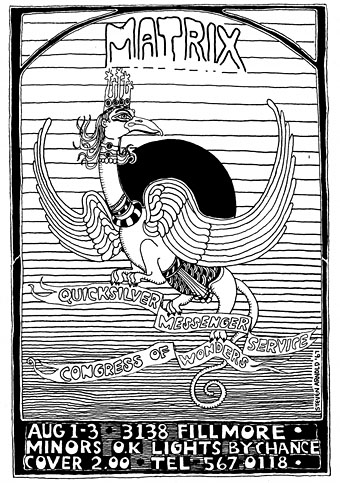
Arnold’s work with outrageous performance troupe The Cockettes seems to receive more attention today than his other creations so it’s good to see the balance being redressed. It was a surprise, for instance, to find he’d drawn a poster in 1967 for The Matrix club, San Francisco. Similar works are mentioned but the site doesn’t have any examples and I’ve yet to see any elsewhere.

arnold2.jpg

arnold3.jpg

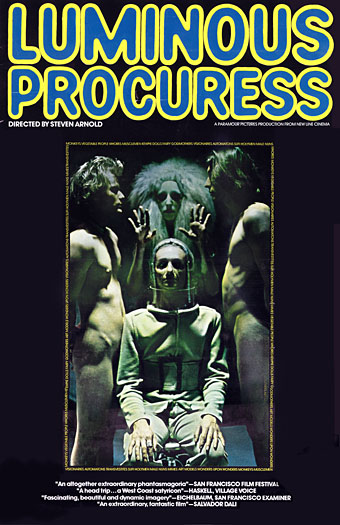
And I haven’t seen the Cockettes film, Luminous Procuress (1971) either. Salvador Dalí unsurprisingly responded with enthusiasm to its atmosphere of androgynous weirdness:

Luminous Procuress is an altogether extraordinary, individualistic phantasmagoria. It was filmed entirely in San Francisco over a two-year period, and describes the adventures of two wandering youths in San Francisco who visit the home of a mysterious woman, the Procuress. She is an elegant emblem of sorcery, her vivid features glowing under bizarre, striking maquillage, and one is not certain who she is or where she intends to lead the protagonists. Although the language she speaks is vaguely Russian, it appears that the Procuress has psychic powers. She discerns a sympathetic response to her on the part of the youths, and by magical means, conducts them through fantastic rooms, on a psychic journey… (more)

Definitely one for the future viewing list. Meanwhile, one of Arnold’s tableaux photos, The Advantages of Modern Marriage, is currently on display in Cruising the Archive: Queer Art and Culture in Los Angeles, 1945–1980 at the ONE National Gay & Lesbian Archives, Los Angeles. The exhibition runs to April 1st, 2012.

Previously on { feuilleton }
James Bidgood

Weekend links 84

enok.jpg

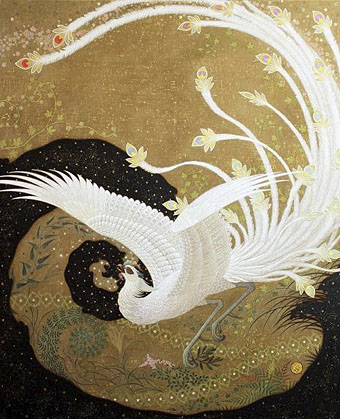
Regeneration (2011) by Toshiyuki Enoki. Via.

HIDE/SEEK: Difference and Desire in American Portraiture, the art exhibition that caused such a fuss last year at the Smithsonian Institution, opens at the Brooklyn Museum, NYC, on November 18th. Among the events associated with the show is a screening of James Bidgood’s lusciously erotic Pink Narcissus. David Wojnarowicz’s video piece, A Fire in My Belly, is still a part of the exhibition so the New York Daily News reached for the outrage stick to prod some reaction from people who’d never heard of the artist or his work before. Will history repeat itself? Does the Pope shit in the woods? Watch this space…

Magic is not simply a matter of the occult arts, but a whole way of thinking, of dreaming the impossible. As such it has tremendous force in opening the mind to new realms of achievement: imagination precedes the fact. It used to be associated with wisdom, understanding the powers of nature, and with technical ingenuity that could let men do things they had never dreamed of before. The supreme fiction of this magical thinking is The Arabian Nights, with its flying carpets, hidden treasure and sudden revelations…

Marina Warner, whose new book, Stranger Magic: Charmed States and the Arabian Nights, is reviewed here and here.

• Those Americans who adore big business but loathe the idea of gay marriage will be dizzy with cognitive dissonance at the news that 70 major US companies—including CBS, Google, Microsoft and Starbucks—have signed a statement saying the Defense of Marriage Act (DOMA) is bad for business. Mark Morford at SFGate says this now means that real homophobes don’t Google.

Divining with shadows and dreams, tears and blood: S. Elizabeth talks to JL Schnabel of BloodMilk about her “supernatural jewels for surrealist darlings“.

Earth: Inferno (2003), a short film by Mor Navón & Julián Moguillansky based on the book by Austin Osman Spare. Via form is void.

finlay.jpg

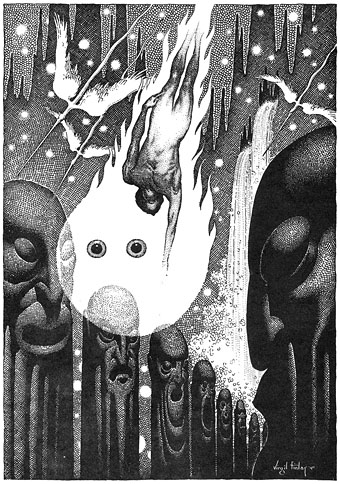
Illustration by Virgil Finlay for A. Merritt’s The Face in the Abyss. From a 1942 Finlay portfolio at Golden Age Comic Book Stories.

The Mute Synth as created by Dirty Electronics & designed by Adrian Shaughnessy.

Phil Baker reviews two new Aleister Crowley biographies at the TLS.

A Brief Rant on the Future of Interaction Design

The Most Amazing Room In Queens, NYC.

Brian Eno on composers as gardeners.

Alan Turing is Alan Garner’s hero.

• Paintings by Guy Denning.

Static (1998) by Redshift | The Owl Service (2000) by Pram | Lover’s Ghost (2010) by The Owl Service.

Weekend links 51

narcissus.jpg

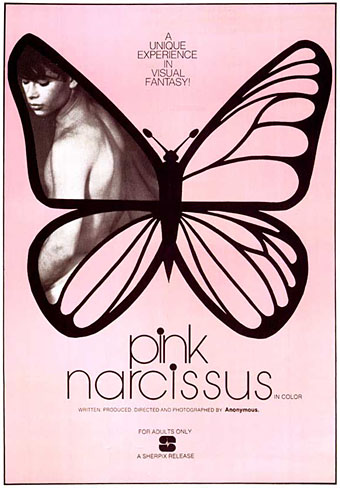
James Bidgood’s luscious and erotic micro-budget masterpiece Pink Narcissus (1971) receives a screening at the IFC Center Queer/Art/Film festival, NYC, on Monday. The film is presented by Jonathan Katz, curator of the Hide/Seek gay art show whose controversial history was recounted here in December. The NYT ran a short piece about Bidgood, now 77 and not the first artist to be disappointed by his past work; they also have a Bidgood slideshow. Hide/Seek, meanwhile, is now a touring exhibition.

• Related: the delightful Drew Daniel of Matmos (and Soft Pink Truth) posing in a jockstrap at the Club Uranus, San Francisco circa 1990; he also used to go-go dance wearing a fish.

• The Isle of Man may have one of the oldest parliaments in the world but its laws have often been out of step with its neighbour across the Irish Sea. This week the island joined the rest of the UK in granting civil partnerships to its citizens. Now the name whose punning appeal so delighted James Joyce doesn’t seem as inappropriate.

Howard Jacobson: “The novelist Yukio Mishima posed pointing a Samurai sword to his chest and ultimately had himself beheaded in public. This is what’s called taking your art seriously.”

hutter.jpg

The Realm of the Queen of the Night (1974) by Wolfgang Hutter from Zauberflote at 50 Watts.

The revelatory operations of the chance encounter lie at the heart of le merveilleux (“the marvelous”)—the Surrealist conception of beauty. You find something marvelous in the world (an object, an image, a person, a place) that corresponds, like a piece clicking into a puzzle, to a deep inner need.

Slicing Open the Eyeball: Rick Poynor on Surrealism and the Visual Unconscious by Mark Dery.

Boy from the Boroughs: Alan Moore interviewed by Pádraig Ó Méalóid; Michael Moorcock interviewed at Suicide Girls.

• Illustrations from Quark, the anthology of speculative fiction edited by Samuel Delany & Marilyn Hacker in 1970.

The Residents, sans masks, filmed at their San Francisco home in the 1970s.

• Bach’s Toccata and Fugue in D minor played on a glass harp.

What art can do for science (and vice versa).

• You can never have too much Virgil Finlay.

• Lydia Kiesling reviews Lolita.

Alain Resnais film posters.

Red Mug, Blue Linen.

No GDM (dub version) (1979) by Gina X | L. Voag’s Kitchen (2004) by Soft Pink Truth.

Weekend links 20

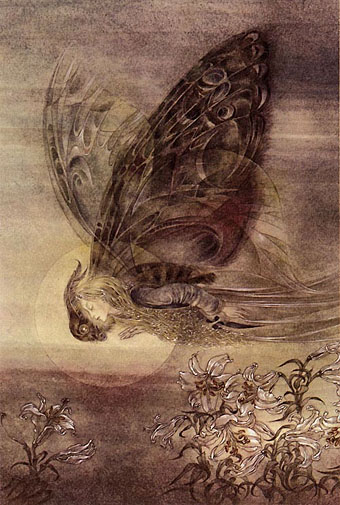
wulfing.jpg

Transfiguration (1952) by Sulamith Wülfing.

• Observatory posted photos of its Lovecraft art exhibition; see if you can spot my pics. Related: Write Club has more photos. Also, A Word From Our Sponsor.

Taking the broooooaaaaad view of things: A Conversation with James Grauerholz on William S. Burroughs and Magick. Related: Beat Memories—The Photographs of Allen Ginsberg.

• Adam Curtis on BP and the Axis of Evil; how the the Anglo-Iranian Oil Company became British Petroleum and helped give Iran over to the Ayatollahs.

• The Quietus interviews Peter Christopherson (TG, Coil, etc) and Dr John.

The Strange World of Adolf Hoffmeister at A Journey Round My Skull.

An Artists’ Dialogue On CocoRosie’s Grey Oceans at Stereogum.

Werner Herzog and David Lynch combine their talents.

Jon Savage on The Residents versus The Beatles.

• BUTT magazine interviews James Bidgood.

• The Daily Drop Cap.

The Gay Rub.

Can on German TV in 1971.