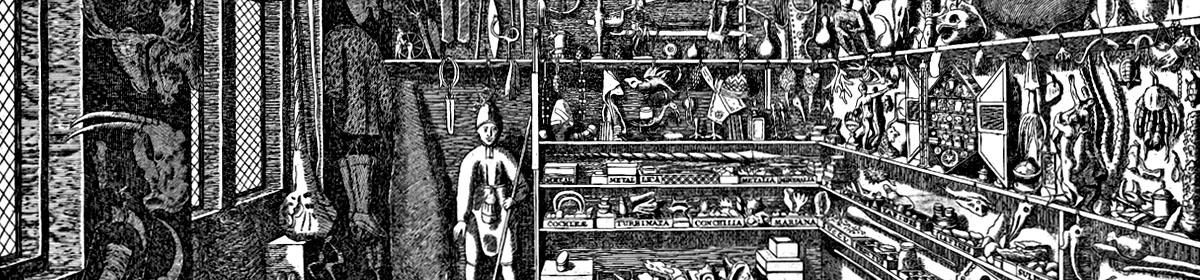
Tuxedomoon: some queer connections

roques18.jpg

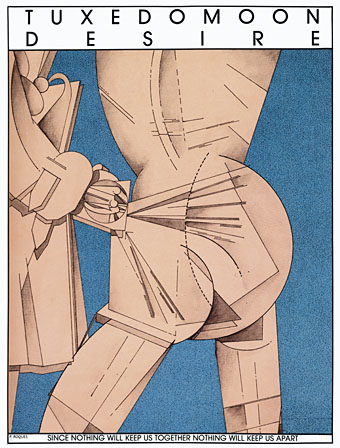
UK poster insert by Patrick Roques for Desire (1981).

Yes, more Tuxedomoon: there’s a lot to explore. It’s always a pleasure when something that you enjoy one medium connects to things that interest you elsewhere. From the outset Tuxedomoon have had more than their share of connections to gay culture—to writers especially—but it’s more of an ongoing conversation than any kind of proselytising concern. This post teases out those connections some of which I hadn’t spotted myself until I started delving deeper.

The Angels of Light: Not the Michael Gira group but an earlier band of musicians and performers in San Francisco in the early 1970s. The Angels of Light formed out of performance troupe The Cockettes following a split between those who wanted to charge admission for their shows, and those who wanted to keep things free to all. Among the troupe there was Steven Brown, soon to be a founding member of Tuxedomoon:

The group began as an offshoot of The Angels of Light, ‘a “family” of dedicated artists who sang, danced, painted and sewed for the Free Theater’, says Steve Brown. ‘I was lucky to be part of the Angels—I fell for a bearded transvestite in the show and moved in with him at the Angels’ commune. Gay or bi men and women who were themselves works of art, extravagant in dress and behaviour, disciples of Artaud and Wilde and Julian Beck [of the Living Theater] … we lived together in a big Victorian house … pooled all our disability cheques each month, ate communally … and used the rest of the funds to produce lavish theatrical productions—never charging a dime to the public. This is what theatre was meant to be: a Dionysian rite of lights and music and chaos and Eros.’

Rip it Up and Start Again: Postpunk 1978-1984 by Simon Reynolds

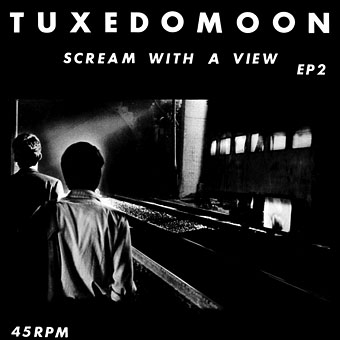
(Special Treatment For The) Family Man (1979): A sombre commentary from the Scream With A View EP on the trial of Dan White, the assassin of Harvey Milk and George Moscone. White’s “special treatment” in court led to a conviction for manslaughter which in turn resulted in San Francisco’s White Night riots in May, 1979.

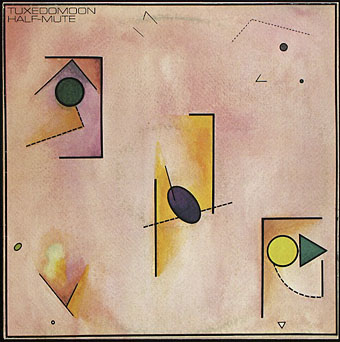
James Whale (1980): An instrumental on the first Tuxedomoon album, Half-Mute, all sinister electronics and tolling bells as befits a piece named after a director of horror films. Whale’s Bride of Frankenstein (1935) is not only the best of the Universal horror series, it’s also commonly regarded as a subversive examination of marriage and the creation of life from a gay perspective. (Whale’s friends and partner disagreed, however.)
joeboysf.jpg

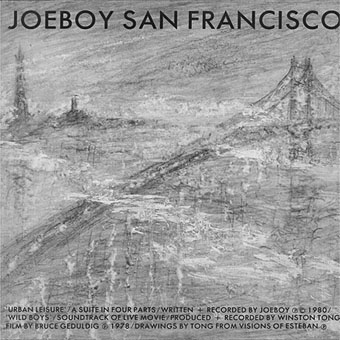
Cover art by Winston Tong.

Joeboy San Francisco (1981): The Joeboy name was lifted from a piece of San Francisco graffiti to become a name for Tuxedomoon’s DIY philosophy. It’s also a record label name, the name of an early single, and a side project of the group which in 1981 produced Joeboy In Rotterdam / Joeboy San Francisco. The SF side features a collage piece by Winston Tong based on The Wild Boys by William Burroughs, a key inspiration for the band which first surfaces here.

In one piece, the band cites its influences as: “burroughs, bowie, camus, cage, eno, moroder”. Can you say what you admired or drew on vis-à-vis these artists?

William S. Burroughs — ideas concerning use of media — tapes, projections, his radical anti-control politic in general as well as his outspoken gayness. Early on we duplicated on stage one of his early experiments projecting films of faces onto faces.
Simon Reynolds interview with Steven Brown

Continue reading “Tuxedomoon: some queer connections”

Made To Measure

mtm1.jpg

When you’ve sated yourself on a group’s back catalogue there’s always the solo albums. In the case of Tuxedomoon there are a number of these to choose from, thanks to several of the band members being both multi-instrumentalists and talented songwriters. Some of the more offbeat solo outings may be found among the albums released as part of the Made To Measure series, an offshoot of the excellent Belgian record label, Crammed Discs. Crammed have been Tuxedomoon’s label for some time, and seem increasingly unique in a world where independent labels tend to cater to narrow genres and small, select audiences. Crammed’s roster of artists is extremely eclectic, ranging from the expected Euro-pop and dance releases to a wide range of traditional and contemporary music from around the world.

mtm2.jpg

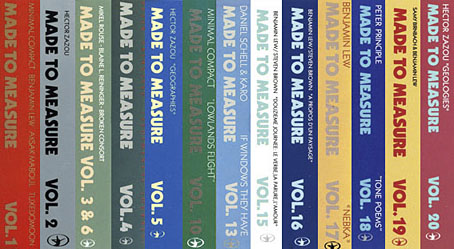
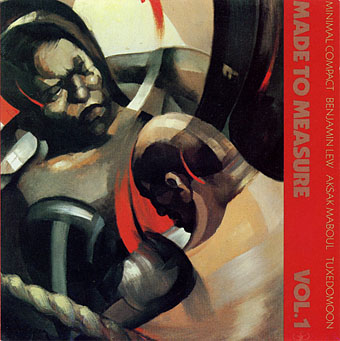
Made To Measure Vol. 1 (1984). Painting by Fernand Steven.

From 1984 to 1994 the Made To Measure series released over 30 albums that represent the more esoteric side of an already fairly esoteric label. All of the early releases were numbered, and Tuxedomoon happen to be on the first release, Made To Measure Vol. 1, together with Minimal Compact, Benjamin Lew, and Aksak Maboul. The series title refers to all of the music being “made to measure” some pre-existing work—film, theatre, dance performance, etc—although some of the later releases were simply an excuse to put out new music by an established Crammed artist. In addition to the first release, Tuxedomoon members Blaine L. Reininger, Peter Principle and Steven Brown were regular contributors to subsequent albums. Two of the Steven Brown albums, A Propos D’Un Paysage (MTM 15, 1985) and Douzième Journée: Le Verbe, La Parure, L’Amour (MTM 16, 1988) are marvellous instrumental collaborations with Benjamin Lew that are very different in tone to Tuxedomoon but well worth seeking out. Brown also recorded a soundtrack album, De Doute Et De Grace (MTM 22, 1990), with readings by actress Delphine Seyrig. The series has been discontinued in recent years but the MTM numbering was resurrected for the latest Tuxedomoon album, Pink Narcissus, which is MTM 39.

mtm3.jpg

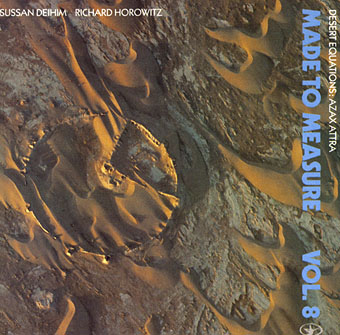
Desert Equations: Azax Attra (1986). Photography by Georg Gerster.

I’ve still not heard all of the Made To Measure series, and I don’t like everything I have heard—I have to be in the mood for Hector Zazou’s quirkier moments. Aside from those mentioned above, the notable releases for me would include Desert Equations: Azax Attra (MTM 8, 1986) by Sussan Deyhim (here credited as Deihim) & Richard Horowitz, an album that led me to acquire almost everything Sussan Deyhim has recorded; If Windows They Have (MTM 13, 1986) by Daniel Schell & Karo; Nekonotopia Nekonomania (MTM 29, 1990) by Seigen Ono; Water (MTM 31, 1992) by David Cunningham; Sahara Blue (MTM 32, 1993) by Hector Zazou; Glyph (MTM 37, 1995) by Harold Budd & Hector Zazou. Sahara Blue exemplifies in miniature the eclecticism of Crammed Discs, being a tribute to Arthur Rimbaud featuring (among others) John Cale, Ryuichi Sakamoto, Gérard Depardieu, Khaled, David Sylvian, Bill Laswell, Lisa Gerrard, Sussan Deyhim and Tim Simenon.

mtm4.jpg

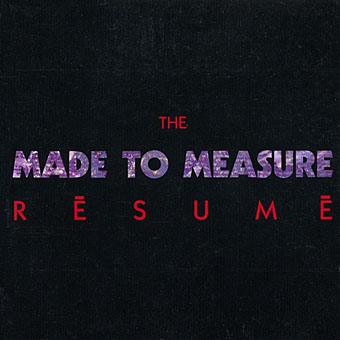
For those wishing to explore further without shelling out on mysterious, unknown quantities, I’d recommend The Made To Measure Résumé (1987), a compilation of tracks from the first 16 MTM releases, and an ideal introduction to the series.

Previously on { feuilleton }
Subterranean Modern: The Residents, Chrome, MX-80 Sound and Tuxedomoon
Tuxedomoon on La Edad de Oro, 1983
Tuxedomoon designs by Patrick Roques
Pink Narcissus: James Bidgood and Tuxedomoon

Tuxedomoon on La Edad de Oro, 1983

tuxedomoon1.jpg

La Edad de Oro (The Golden Age) was a Spanish television show which only ran from 1983 to 1985 but during that time it managed to cause a considerable stir, first by showcasing in lengthy programs many musical groups that would have been unknown to the Spanish public (or the public of their native countries, for that matter), and secondly by scandalising that public with irreligious performances from some of those bands. La Edad de Oro was part of a general attempt to bring Spain up to speed with the rest of European culture following the end of the Franco regime, as a result of which a number of leftfield groups were given far more attention than they would have received in the UK. Psychic TV were one of the groups offered a carte blanche two-hour slot, and I remember Genesis P Orridge mentioning this with some surprise in interviews.

tuxedomoon2.jpg

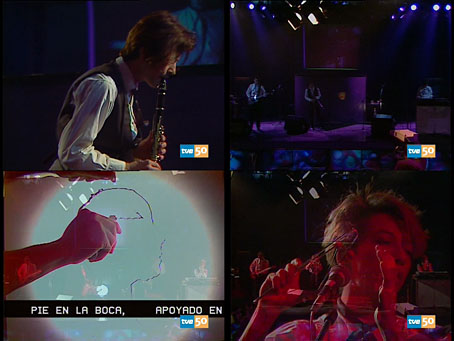
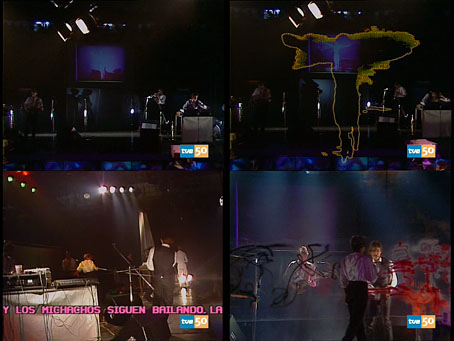
Tuxedomoon’s own edition of La Edad de Oro was broadcast on May 24, 1983. I’ve been fortunate to acquire a pristine copy of a later screening from one of the tape trading sites, and it’s a remarkable thing, cutting between couch interviews with the band members and a complete studio performance of their songs. The latter can been seen on YouTube, of course, so there’s no need to go hunting down rare files. This is the first Tuxedomoon concert I’ve seen, I don’t recall them ever being on British TV although some of their videos must have been screened somewhere. What’s fascinating is seeing how theatrical their performance is. In addition to screening some of Bruce Geduldig’s films on a backdrop, there are shadow vignettes and bits of stage play such as the ropes that bind each of the band members together during The Cage. Later on, Blaine Reininger and Winston Tong graffitise a sheet of film stretched over the stage. (Tuxedomoon’s “Joeboy” designation originated in some San Francisco street art.) I’m wondering if the rope business was borrowed from David Bowie: in the Cracked Actor film he does a similar thing during the Young Americans tour.

Wikipedia has a list of La Edad de Oro‘s artistas invitados not all of which are essential—China Crisis…please—but I’d love to see some of the other editions, the Cabaret Voltaire one especially. Time to go hunting.

Previously on { feuilleton }
Tuxedomoon designs by Patrick Roques
Pink Narcissus: James Bidgood and Tuxedomoon

Tuxedomoon designs by Patrick Roques

roques01.jpg

Scream With A View 12″ EP (1979) by Tuxedomoon. Design credited to Belfer/Roques.

I’m pursuing a Tuxedomoon obsession at the moment so this gives me the opportunity to examine some of the group’s early record sleeves, all of which are designed by Patrick Roques. Tuxedomoon are an American group, and their early releases were on The Residents’ Ralph Records label which is where they first encountered Roques. When the group later decamped to Europe and began releasing material on a variety of European labels they still commissioned Roques for their cover designs.

Many of the independent labels of the late 70s and early 80s have been over-examined when it comes to graphic design but I’ve yet to see anything written about Ralph Records. On the Residents albums in particular the label established their own very distinctive brand of bold graphics and cartoony illustration (Gary Panter worked on some of the sleeves). Patrick Roques’ designs are less eccentric than those on The Residents’ covers, such an approach wouldn’t have suited Tuxedomoon’s music. His designs for the group are closer to the styles seen among the independent labels in the UK which is one reason I find them attractive. The following represents a small and very selective fraction of Roques’ work as a designer.

roques02.jpg

Half-Mute (1980) by Tuxedomoon.

The first Tuxedomoon album.

roques03.jpg

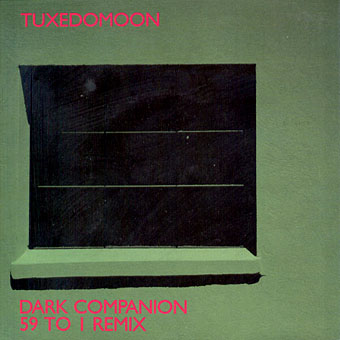
Dark Companion / 59 To 1 Remix (1980) by Tuxedomoon. Photography by Mark Sangerman.

roques04.jpg

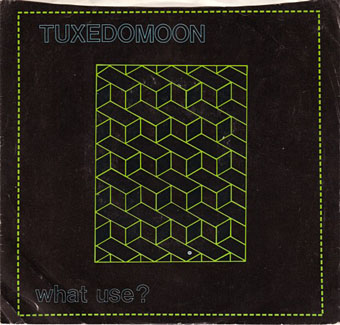
What Use? (front, 1980) by Tuxedomoon.

roques05.jpg

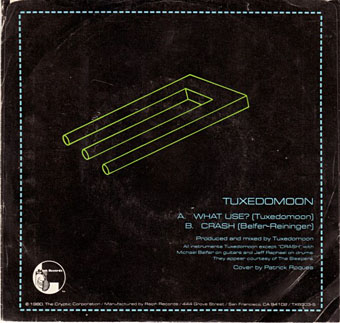
What Use? (back, 1980) by Tuxedomoon.

Continue reading “Tuxedomoon designs by Patrick Roques”

Pink Narcissus: James Bidgood and Tuxedomoon

tuxedomoon.jpg

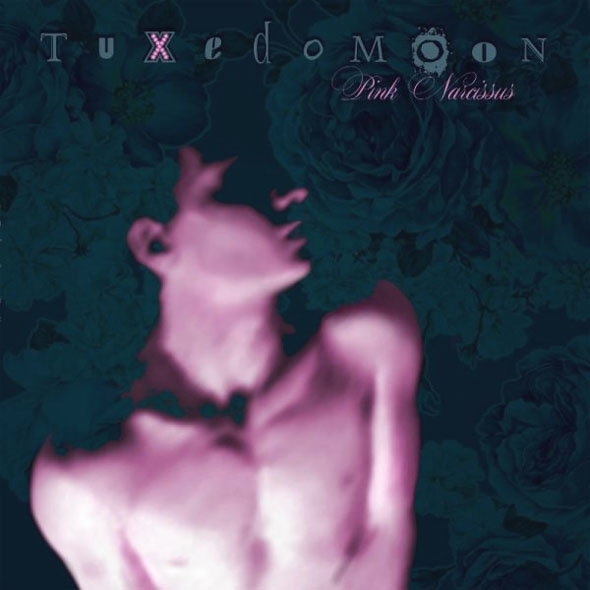
Pink Narcissus (2014) by Tuxedomoon. Design by Flavien Thieurmel.

I’ve never paid much attention to Record Store Day, despite promoting it here on a couple of occasions, and paid even less attention this year now that the event has turned into an opportunity for some of the larger labels to fleece the punters. Consequently, I missed any mention of a new release from Tuxedomoon which Crammed Discs put out as part of this year’s vinyl deluge. I’ve been listening to Tuxedomoon for years so any new release is worthy of attention, especially when their last studio album, Vapour Trails (2007) was a particularly good one, with the added bonus of packaging by Jonathan Barnbrook.

bidgood.jpg

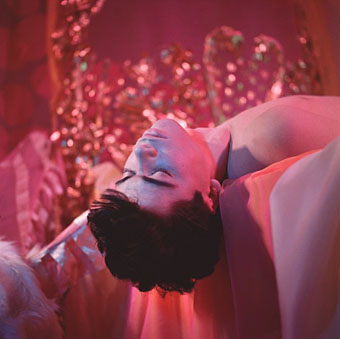
Hanging Off Bed, a still from Pink Narcissus, mid- to late 1960s.

The new album, Pink Narcissus, is a recording of the group’s live soundtrack performance for the film of the same name by James Bidgood, a luscious micro-budget, homoerotic labour-of-love filmed in the 1960s on 8mm in the cramped confines of Bidgood’s New York apartment. The original soundtrack comprises selections of romantic classical music by Mussorgsky and Prokofiev so the replacing of the score isn’t as much of an imposition as it can be when bands co-opt old films. I already liked Bidgood’s film a great deal so Tuxedomoon’s score is like a marriage made in heaven (and they once recorded their own version of In Heaven). Having watched the film synched to the new album I was impressed by how well the group matched the shifting moods. From their earliest releases Tuxedomoon’s music has tended towards the cinematic so you’d expect them to provide a sympathetic treatment; they’ve also recorded a few scores in the past, including one for their own ambitious film/stage performance, Ghost Sonata. But Pink Narcissus matches the scenes much more effectively than the classical selections, the group even work in a pause then a shift to a new style when Bidgood’s star boy, Bobby Kendall, puts a record on his wind-up gramophone. The only drawback in running the music with the film is that the album is 10 minutes short, possibly because of the limitations of the vinyl format. YouTube user bigniouxx has a few brief clips of the live performance at the L’Etrange Festival in Paris.

bidgood2.jpg

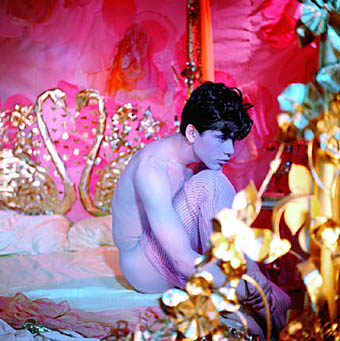
Blue Boy, a still from Pink Narcissus, mid- to late 1960s.

If the BFI ever reissues the film I hope they consider using the full Tuxedomoon score as an alternative soundtrack the way they did on the Peter de Rome porn films, some of which are scored by Stephen Thrower. Bidgood’s film is still available on DVD with a detailed booklet and a great interview with the director; the BFI also has it on their video-on-demand service. Despite its age and its campy glamour Pink Narcissus is still pretty pornographic in places, not as much as Peter de Rome’s films (or today’s porn, for that matter) but there’s enough wanking and erections to keep it off many TV networks. The album, housed in a great sleeve designed by Flavien Thieurmel, may be bought direct from Crammed Discs.

James Bidgood’s photography at ClampArt

Previously on { feuilleton }
William E. Jones on Fred Halsted
Flamboyant excess: the art of Steven Arnold
James Bidgood