
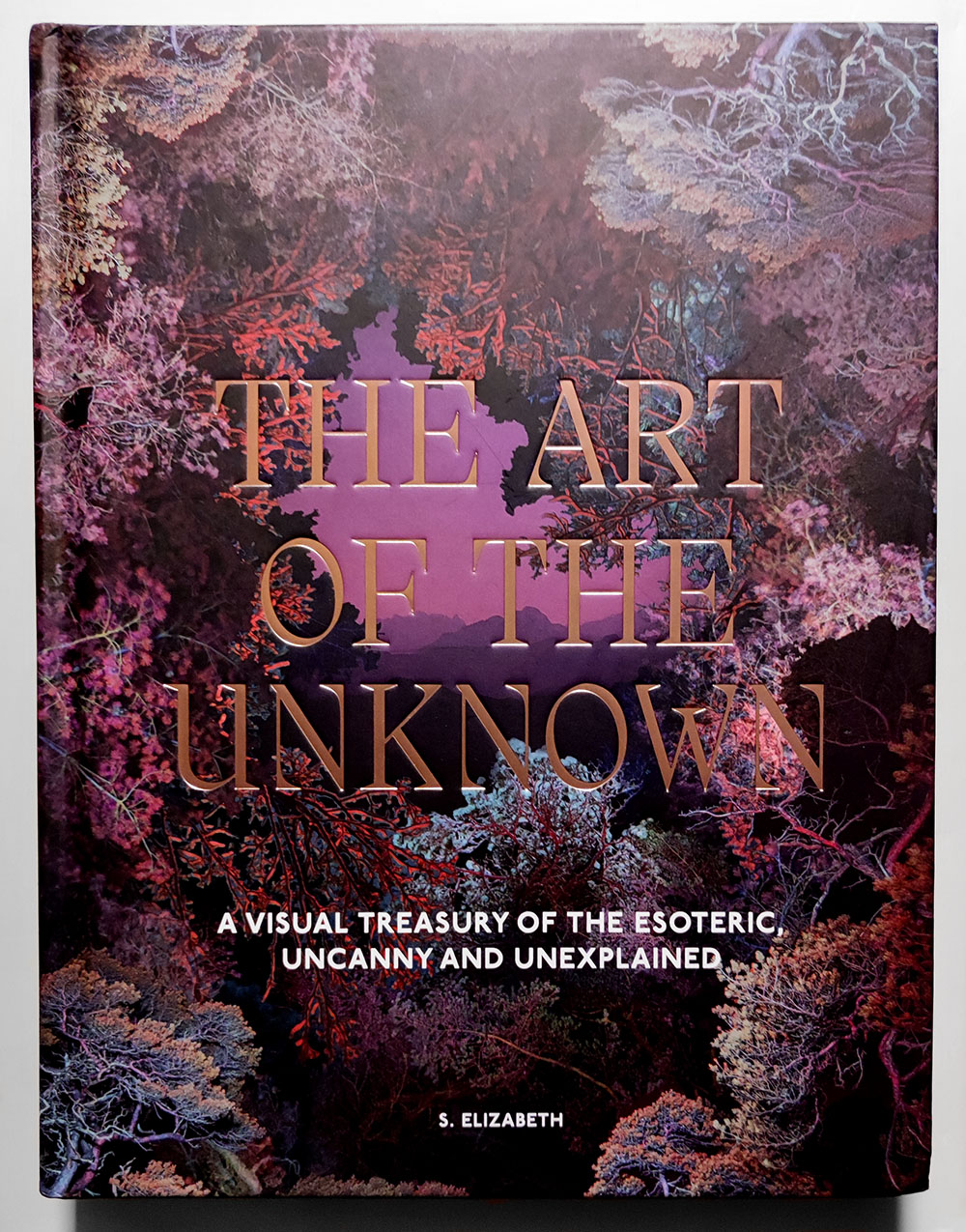
I was amused when I opened this new arrival to see a reproduction of the picture which is currently being used as this month’s blog header. The coincidence confirms that this is my kind of book, being a collection of paintings, drawings and engravings of the mysterious and recondite throughout the ages. The Art of the Unknown continues the format that S. Elizabeth began in 2020 with The Art of the Occult, then continued with The Art of Darkness and The Art of Fantasy. If you’ve followed any of the links I post here to Unquiet Things then you may already be familiar with Sarah’s writings and excellent pictorial tastes. I can’t be wholly objective when talking about any of these books, I’ve known their author at a distance for many years, and one of my own illustrations appears in The Art of the Occult. Caveats aside, this is still my kind of book.
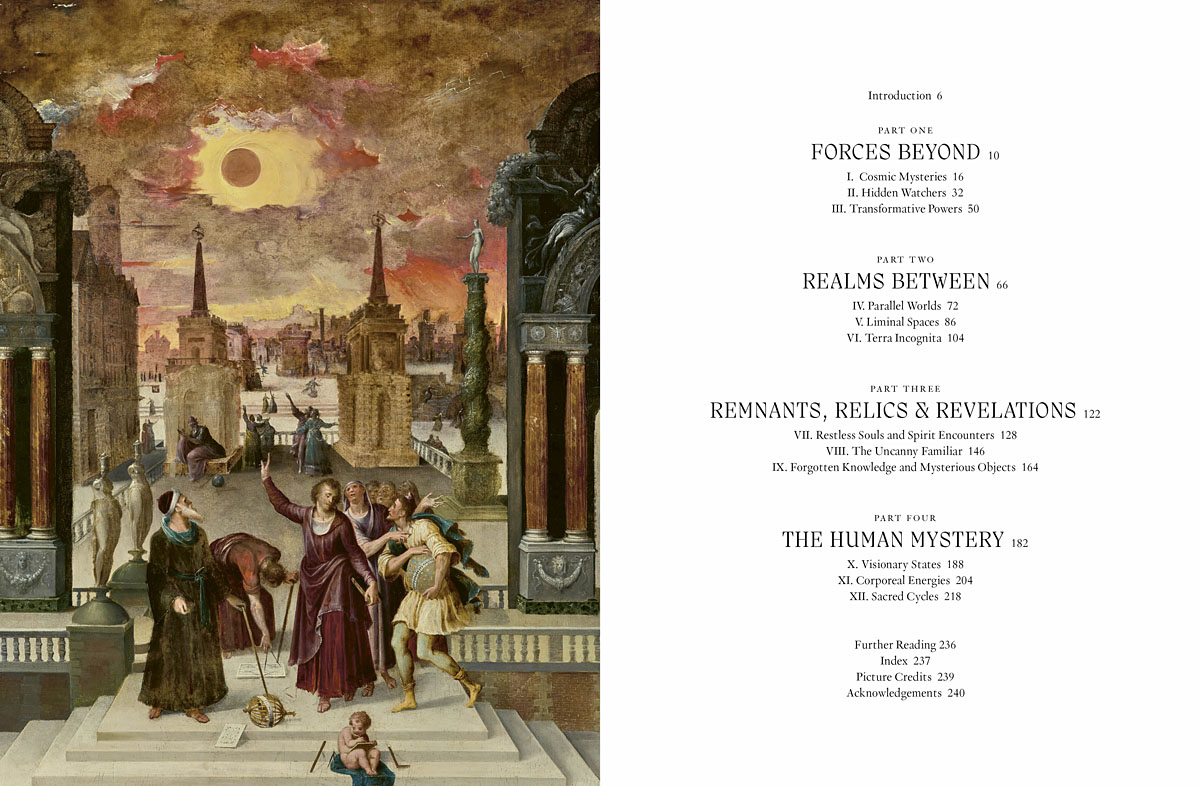
The Art of the Unknown opens with a paean to mystery, a quality which may be a more accurate descriptor of the book’s predominant theme even though “Art of the Unknown” makes a better title. The mysteries of alchemical symbolism, the enigmas of pictorial allegory, the poetic movement which called itself Symbolism, Surrealisms past and present: all these modes of artistic expression are explored and juxtaposed with works by contemporary artists who either continue to evolve the old mystery traditions or play new games with their themes and imagery.
Mystery has been a recurrent attribute of painted art even when it isn’t necessarily the subject of the picture—think of the endless theorising about the Mona Lisa—while some degree of mystery is present any time a painting isn’t immediately explicable. But mystery, like fantasy, is one of those qualities which forms a parallel tradition within the body of art history, connecting a wide variety of otherwise unconnected works going back to the earliest examples of picture-making. The Art of the Unknown isn’t structured as a history of this tradition, however, the book is more a sampling of different eras and an examination of modes and sub-classes: cosmic mysteries, other dimensions, the spectral and the occult, dreams and visions.
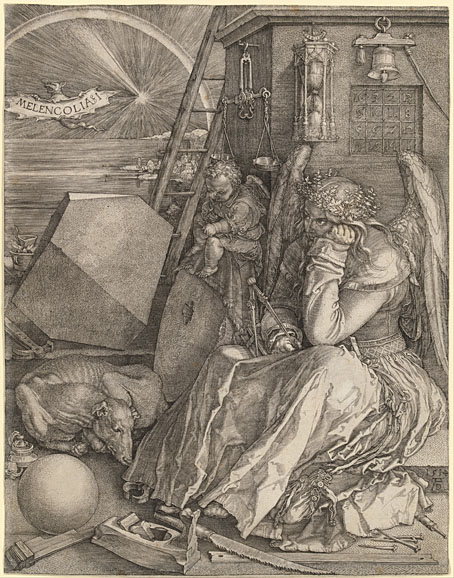
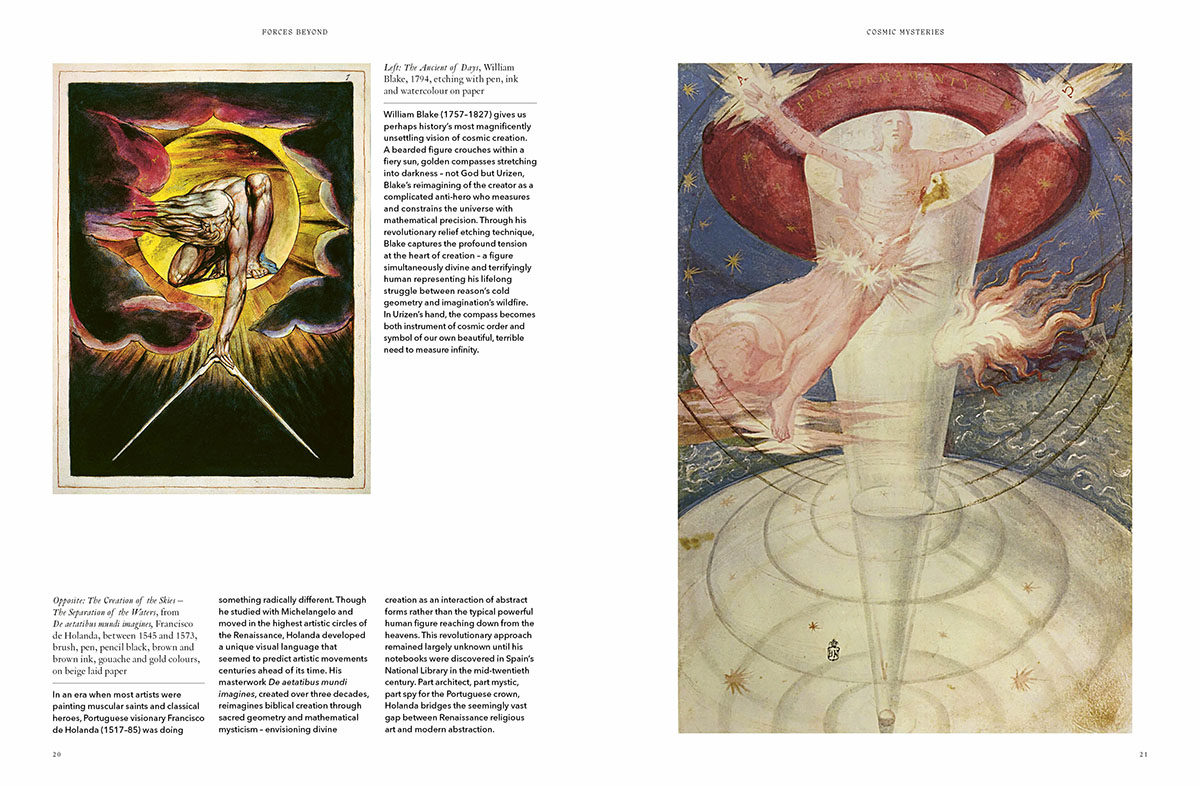
Albrecht Dürer’s Melencolia I (1514) is one of several early examples of pictorial enigma that appear in the book but the bulk of the pages are devoted to the mystery-enriched terrain of the 19th and 20th centuries. Rather than run everything in chronological order Sarah pairs complementary pictures to create rhymes of theme or pictorial content across the centuries. This is something you don’t see very often in art books even though the close juxtaposition of works from different eras has become increasingly common in exhibitions. Common but not always successful when deployed in a gallery where the space of the rooms can make it easy for you to direct your attention at a single picture while ignoring all the rest. Juxtaposition works better in a book spread, bringing two or more pictures to the reader’s attention simultaneously. The Art of the Unknown does this very effectively, much better than some of the attempts I saw in Tate Britain during one of my recent visits to London. To the Tate’s credit, the gallery shop did have a copy of The Art of Fantasy on one of their book tables.
The unknown is a big subject for any book but, as with the previous titles in this series, The Art of the Unknown is a gateway work, and a signpost to areas worthy of deeper exploration. These books remind me of another gateway book I’ve mentioned many times in previous posts, The Fantasy Book by Franz Rottensteiner, which was published by Thames & Hudson in 1978. Rottensteiner’s study was concerned more with literature than with art but the pictures it contained were so wide-ranging and well-chosen I spent many years looking for further examples by the artists. Arthur Machen is one of the British authors whose stories Rottensteiner examines, and I think it was Rottensteiner as much as Lovecraft who helped push me towards Machen’s fiction. The unknown is a recurrent feature in Machen’s fiction, and he liked to say that whatever advances science may make in the future there will always be some aspect of the Universe left unexplained. The four words carved on his gravestone summarise this philosophy: “Omnia exeunt in mysterium“—”Everything ends in mystery”.
Previously on { feuilleton }
• The Art of the Occult
• Splendor Solis revisited
• Melencolia details
In the early 90’s I worked on a vast exhibit to do with the Age of Discovery at the Hood Museum at Dartmouth College called the Age Of The Marvelous.
One of the rooms was a reproduction of a wunderkammer as shown in this reproduction. There was also an original of the print. The catalogue was amazing!
https://upload.wikimedia.org/wikipedia/commons/f/f3/RitrattoMuseoFerranteImperato.jpg?utm_source=commons.wikimedia.org&utm_campaign=index&utm_content=original
I preordered this one and just received it. John your review is spot on. I do like that she kept the “classics” to a minimum and concentrated on later images. It would have been interesting to gaze over her shoulder as she winnowed down to her final selection of images. What did she leave out? (Imagine having to pick only one sample from Nicholas Roerich!) I must say Elizabeth has excellent taste. This matches anything I’ve seen from Taschen or the Public Domain Review.
Federico: Exhibition catalogues often function as gateway books even if you never saw the exhibition. I have a small collection.
Stephen: I don’t envy anyone trying to put together a book like this. There’s an additional difficulty in that all the images have to be cleared for publication which means someone has to track down the rights holders. I agree that it’s good to concentrate on the present, there’s been an explosion of interesting imaginative art creation in recent years.
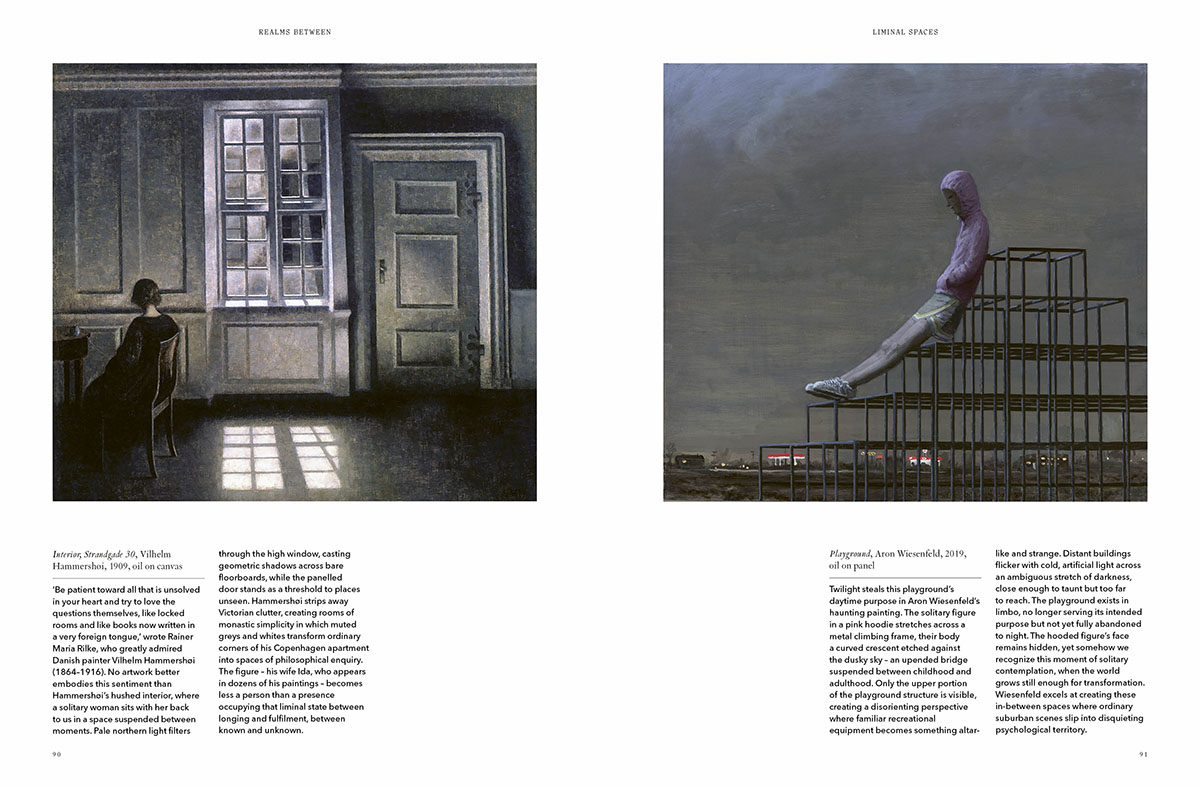
It charms me how Aron Wiesenfeld has ascended from *terrible* Image comix of the late 90s to popping up on one of my favourite art blogs.