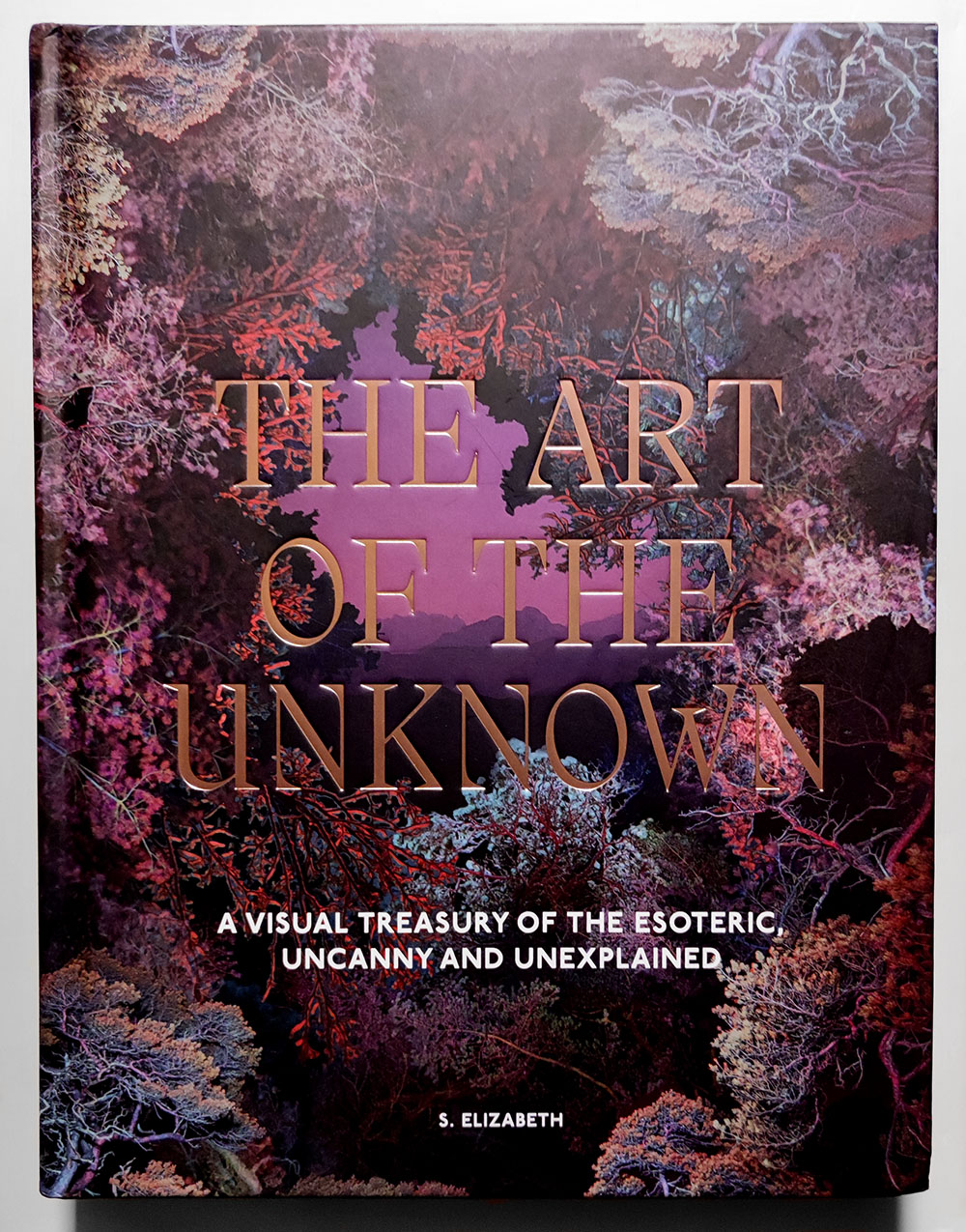
The Art of the Unknown by S. Elizabeth

unknown1.jpg

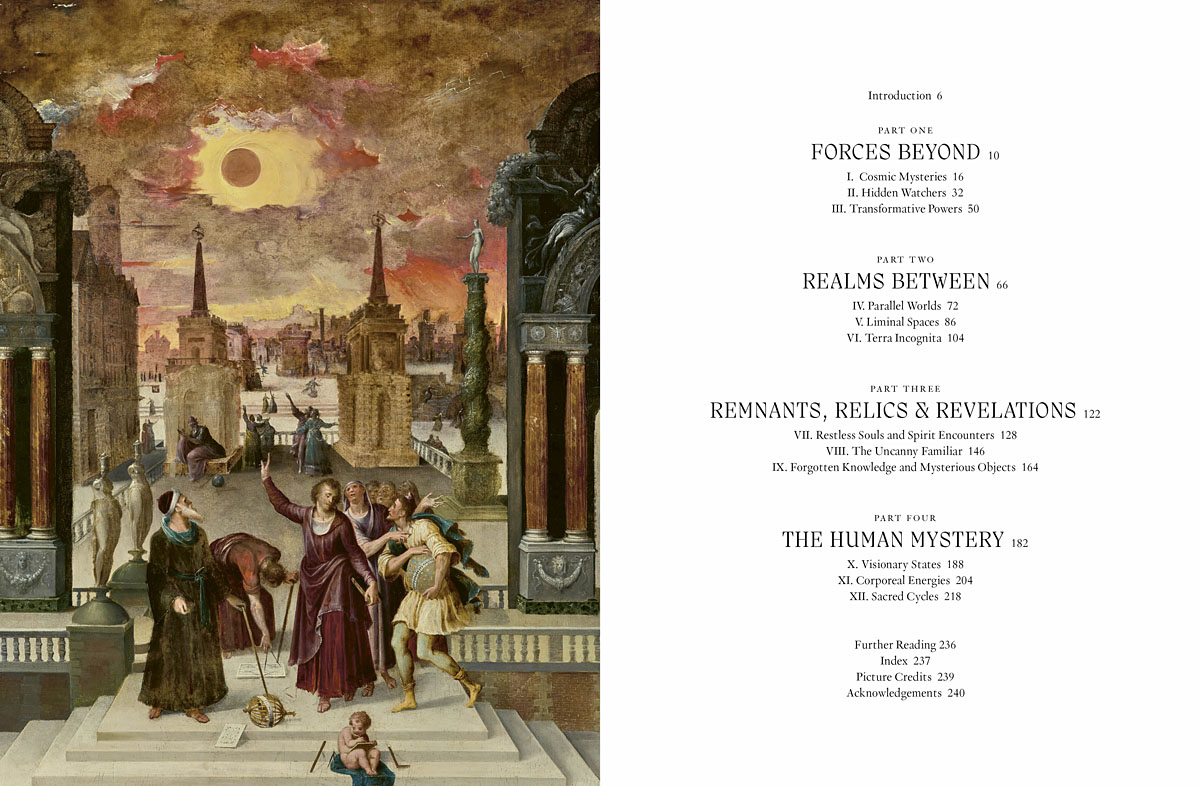
I was amused when I opened this new arrival to see a reproduction of the picture which is currently being used as this month’s blog header. The coincidence confirms that this is my kind of book, being a collection of paintings, drawings and engravings of the mysterious and recondite throughout the ages. The Art of the Unknown continues the format that S. Elizabeth began in 2020 with The Art of the Occult, then continued with The Art of Darkness and The Art of Fantasy. If you’ve followed any of the links I post here to Unquiet Things then you may already be familiar with Sarah’s writings and excellent pictorial tastes. I can’t be wholly objective when talking about any of these books, I’ve known their author at a distance for many years, and one of my own illustrations appears in The Art of the Occult. Caveats aside, this is still my kind of book.
unknown2.jpg

The Art of the Unknown opens with a paean to mystery, a quality which may be a more accurate descriptor of the book’s predominant theme even though “Art of the Unknown” makes a better title. The mysteries of alchemical symbolism, the enigmas of pictorial allegory, the poetic movement which called itself Symbolism, Surrealisms past and present: all these modes of artistic expression are explored and juxtaposed with works by contemporary artists who either continue to evolve the old mystery traditions or play new games with their themes and imagery.
unknown3.jpg

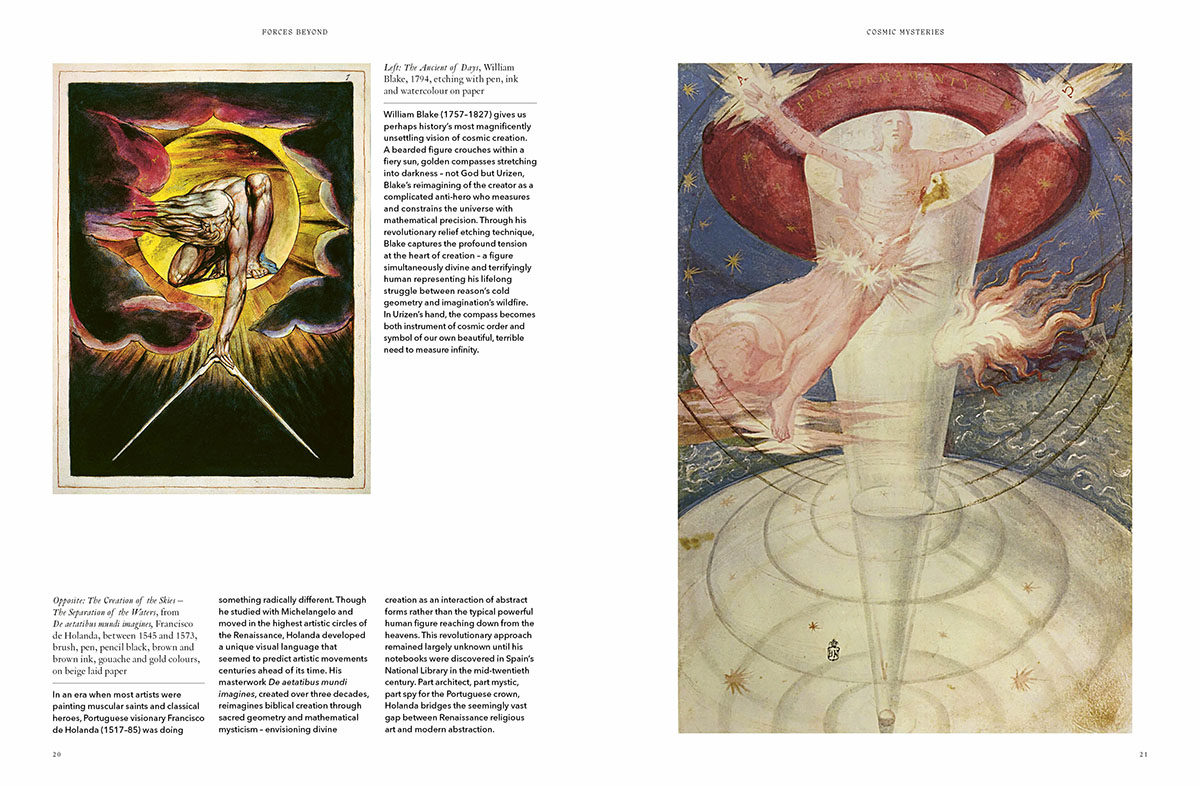
Mystery has been a recurrent attribute of painted art even when it isn’t necessarily the subject of the picture—think of the endless theorising about the Mona Lisa—while some degree of mystery is present any time a painting isn’t immediately explicable. But mystery, like fantasy, is one of those qualities which forms a parallel tradition within the body of art history, connecting a wide variety of otherwise unconnected works going back to the earliest examples of picture-making. The Art of the Unknown isn’t structured as a history of this tradition, however, the book is more a sampling of different eras and an examination of modes and sub-classes: cosmic mysteries, other dimensions, the spectral and the occult, dreams and visions.
durer.jpg

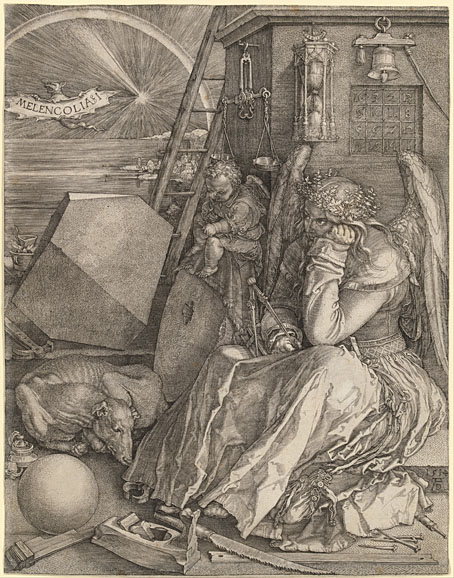
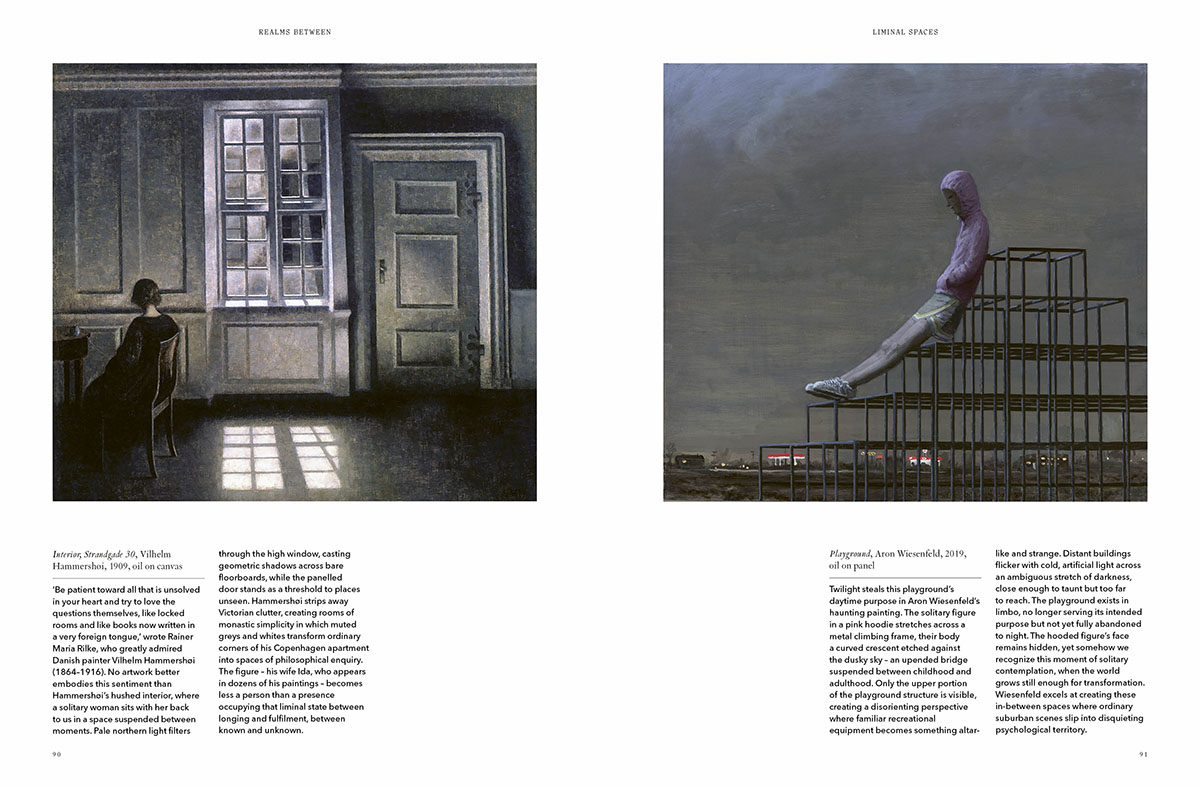
Albrecht Dürer’s Melencolia I (1514) is one of several early examples of pictorial enigma that appear in the book but the bulk of the pages are devoted to the mystery-enriched terrain of the 19th and 20th centuries. Rather than run everything in chronological order Sarah pairs complementary pictures to create rhymes of theme or pictorial content across the centuries. This is something you don’t see very often in art books even though the close juxtaposition of works from different eras has become increasingly common in exhibitions. Common but not always successful when deployed in a gallery where the space of the rooms can make it easy for you to direct your attention at a single picture while ignoring all the rest. Juxtaposition works better in a book spread, bringing two or more pictures to the reader’s attention simultaneously. The Art of the Unknown does this very effectively, much better than some of the attempts I saw in Tate Britain during one of my recent visits to London. To the Tate’s credit, the gallery shop did have a copy of The Art of Fantasy on one of their book tables.
unknown4.jpg

The unknown is a big subject for any book but, as with the previous titles in this series, The Art of the Unknown is a gateway work, and a signpost to areas worthy of deeper exploration. These books remind me of another gateway book I’ve mentioned many times in previous posts, The Fantasy Book by Franz Rottensteiner, which was published by Thames & Hudson in 1978. Rottensteiner’s study was concerned more with literature than with art but the pictures it contained were so wide-ranging and well-chosen I spent many years looking for further examples by the artists. Arthur Machen is one of the British authors whose stories Rottensteiner examines, and I think it was Rottensteiner as much as Lovecraft who helped push me towards Machen’s fiction. The unknown is a recurrent feature in Machen’s fiction, and he liked to say that whatever advances science may make in the future there will always be some aspect of the Universe left unexplained. The four words carved on his gravestone summarise this philosophy: “Omnia exeunt in mysterium“—”Everything ends in mystery”.

Previously on { feuilleton }
The Art of the Occult
Splendor Solis revisited
Melencolia details

The art of Helmut Wenske

wenske19.jpg

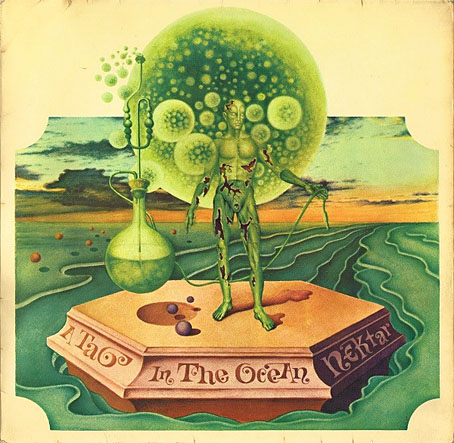
A Tab in the Ocean (1972) by Nektar.

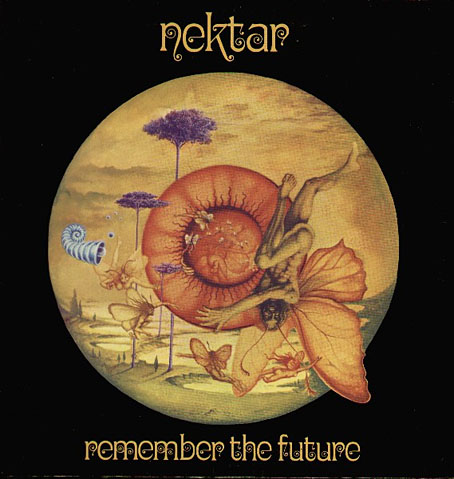
This is another post in which I refer to Franz Rottensteiner’s The Fantasy Book: The Ghostly, the Gothic, the Magical, the Unreal (Thames & Hudson, 1978) as a source of discovery. Rottensteiner is Austrian which no doubt explains why his study of fantasy and horror in art and fiction had a broader reach than you would have found in a similar study from a British or American editor. Some of the writers whose work he discusses—Stefan Grabiński, for example—hadn’t been translated into English at that time. Among the artists whose work appeared as illustration Helmut Wenske was one of several whose paintings were seldom seen in Anglophone publications, although a few album covers that featured Wenske art—those for Nektar in particular—were a common sight in British record shops in the 1970s.

wenske20.jpg

Remember The Future (1973) by Nektar.

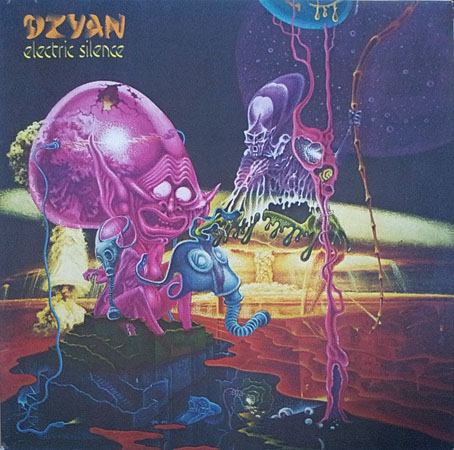
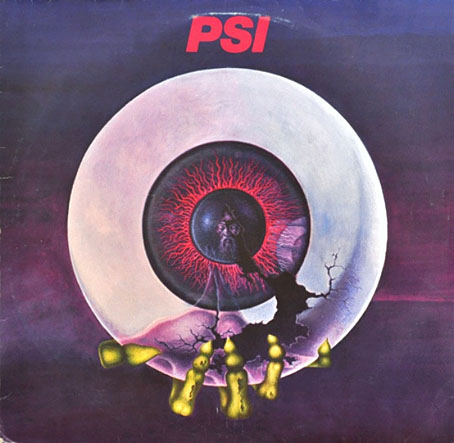
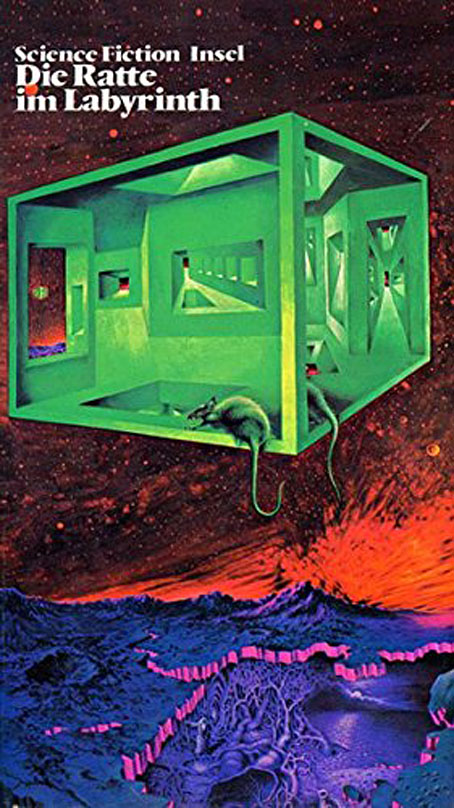
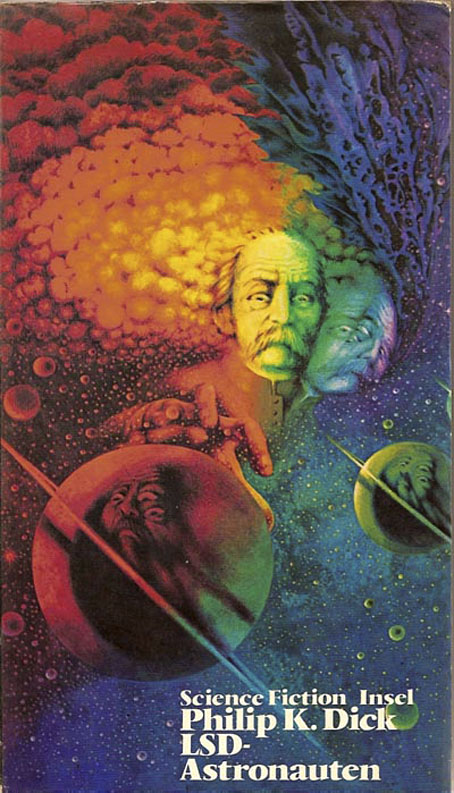
Wenske is a German artist with a penchant for Dalí-like Surrealism that might have been strained through a psychotropic filter. Most of his work in the 1970s was as an album cover designer for the Bellaphon label, and most of those covers are designs rather than paintings. There are a number of book covers, however, some of which are recycled from his album covers. From 1971 to 1975 Wenske painted the covers for a series from Insel Verlag, “Phantastische Wirklichkeit: Science Fiction der Welt”, a collection of reprints edited by Franz Rottensteiner. Wenske’s ISFDB credits list a few horror covers along with these, a small percentage of which are Lovecraft-related. In the past I’ve drawn attention to many different Lovecraft illustrators but Wenkse is one of a small number of these to have also written Lovecraftian fiction of his own (Die Krypta von Shaggay’h, 1974). He enjoys the work he’s being asked to illustrate, in other words, which isn’t something you can always expect from illustrators.

wenske22.jpg

Electric Silence (1974) by Dzyan.

The covers below aren’t the best quality but better copies have proved hard to find. For those who’d like to see more Wenske art there’s at least one German catalogue that collects his work from the early 70s on.

• Related reading: View From Another Shore: An Interview with Franz Rottensteiner.

wenske21.jpg

Horizonte (1977) by PSI.

wenske01.jpg

wenske02.jpg

Continue reading “The art of Helmut Wenske”

Der Orchideengarten translated

derorchideengarten.jpg

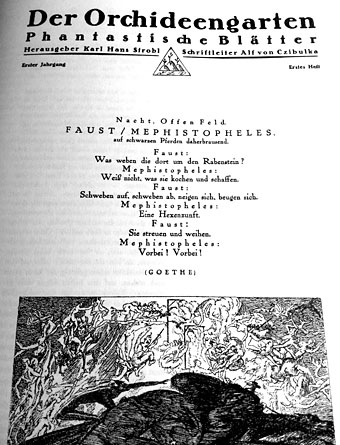
Via the latest mailing from Side Real Press, news that the world’s first magazine devoted to fantastic art and literature, Der Orchideengarten (1919–1921), is being translated into English. This isn’t the first time the magazine’s contents have been translated—Zagava printed a facsimile edition of the first issue in 2017 that included translated inserts by Helen Grant—but the latest efforts by Joe E. Bandel are going beyond the first issue with the intention of translating the entire run. Each issue will be available for purchase at Lulu.

It’s been a pleasure watching Der Orchideengarten creep out of the shadows over the past few years. When Will at A Journey Round My Skull posted interior illustrations from back issues of the magazine in 2009 the title was barely mentioned outside German genre histories or the tantalising feature in Franz Rottensteiner’s The Fantasy Book (1978). Since then, the entire run of the magazine has been made available for free by the University of Heidelberg’s invaluable scanning programme, after which we had the Zagava facsimile. If the new translations are successful then the next stage may be the publication of an introductory collection that gathers the best work from the magazine.

Previously on { feuilleton }
• An unseasonable bloom
• Covers for Der Orchideengarten
• Der Orchideengarten illustrated
• Der Orchideengarten

Demons by rail-light: Stefan Grabiński’s weird fiction

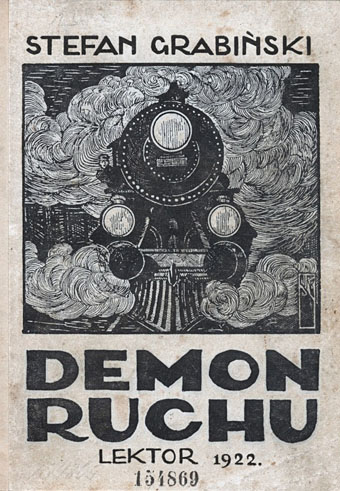
grabinski.jpg

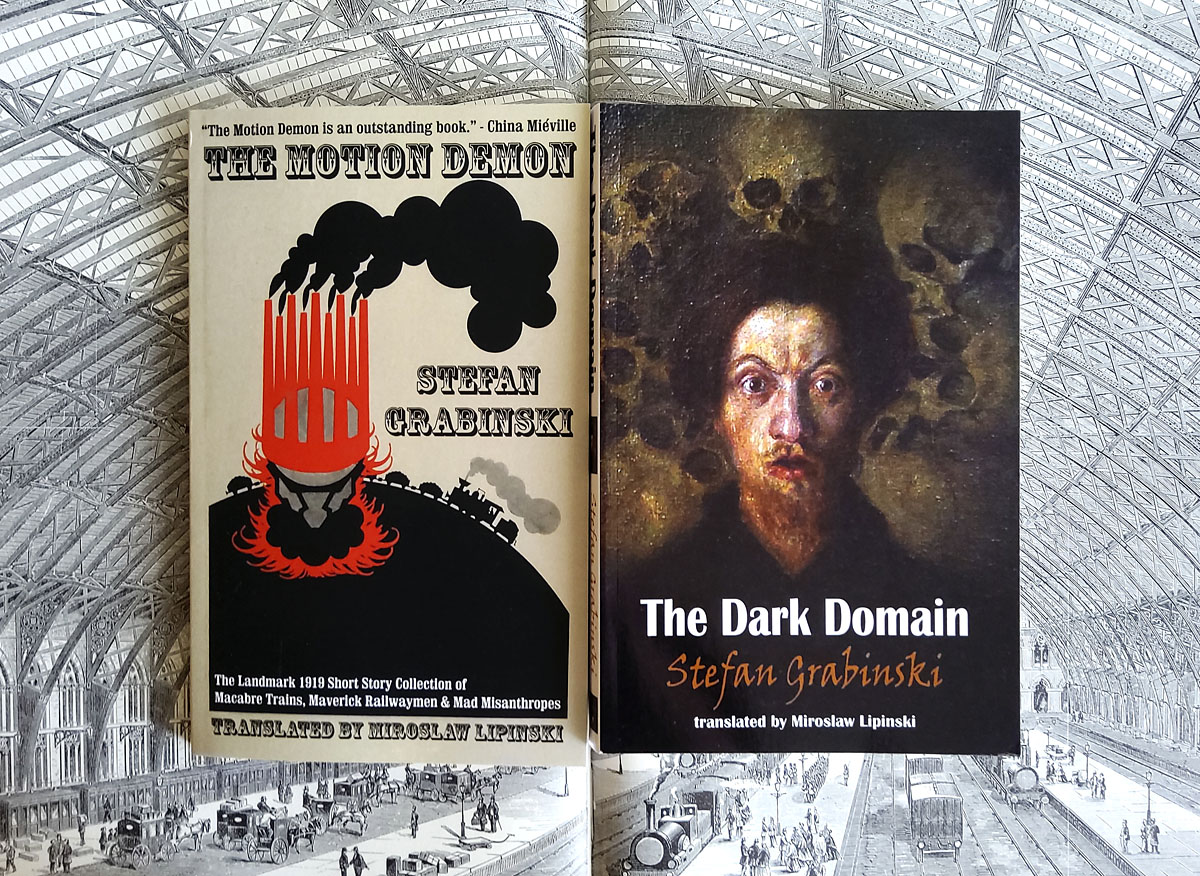
Thanks to the demons of distraction it’s taken me a long time to find my way to these books by Polish author Stefan Grabiński (1887–1936) but I’m very pleased to have done so at last. Grabiński was one of several writers first drawn to my attention by Franz Rottensteiner’s The Fantasy Book: The Ghostly, the Gothic, the Magical, the Unreal (1978), a lavishly illustrated popular study that charted the history of fantasy and horror fiction. The book is inevitably dominated by Anglophone authors but Rottensteiner was looking at the genres from a global perspective, to an extent that some of the writers in the sections devoted to Continental Europe were either difficult to find or, as with Grabiński, hadn’t yet been translated into English. Robert Hadji’s Grabiński entry in the Penguin Encyclopedia of Horror and the Supernatural (1986) further stoked my curiosity. Neither Rottensteiner nor Hadji mention how they came to read these obscure tales but I’d guess it was in the two collections published in Germany under the Bibliothek des Hauses Usher imprint, Das Abstellgleis (1971) and Dunst und andere unheimliche Geschichten (1974); several covers from the imprint appear in Rottensteiner’s book. Wherever it was that they read the stories, both writers praised Grabiński as an overlooked master of weird fiction. Rottensteiner notes that he was a contemporary of HP Lovecraft, and with a similar biography—briefly married and suffering artistic neglect during his lifetime—but neither Rottensteiner nor Hadji use the common shorthand descriptions of Grabiński as “the Polish Poe” or “the Polish Lovecraft”. These labels are intriguing but misapplied.

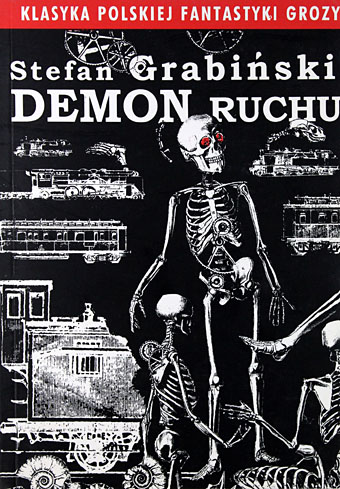
grabinski2.jpg

Bearing in mind that these stories are translated works, one of the surprises of finally reading them is how fresh they seem compared to so many British ghost stories from the same period. Grabiński was writing during the birth of Modernism but the stories of his Anglophone contemporaries can often read like the products of an earlier epoch. His economical prose lacks the ornamentation of Poe and Lovecraft, just as it lacks Poe’s morbid Romanticism and has nothing of Lovecraft’s cosmic scale. But there are recurrent themes, particularly that of possession, whether by the spirits of the dead, by inhuman elementals, or by idée fixe. The latter provides the subject of The Glance, a story that also demonstrates Grabiński’s knack of finding horror in the most mundane situations: a man whose wife died prematurely is troubled by the sight of an open door, the same door through which she walked out of his life, and subsequently, out of her own. The man’s obsession with the door grows into a fear of closed doors and the implicit tragedies they may conceal, an obsession that soon extends itself to anything that hides too much of the world: curtains, rugs, the sharp corners of city streets… Edgar Allan Poe was fond of cataloguing madness in this manner but Grabiński’s stories go beyond glib formulations of insanity. “Metaphysical” is a word often used in discussion of the Grabiński oeuvre; the fixations of his protagonists reveal truths about the world to which others are blind.

grabinski3.jpg

Continue reading “Demons by rail-light: Stefan Grabiński’s weird fiction”

Weekend links 499

konoike.jpg

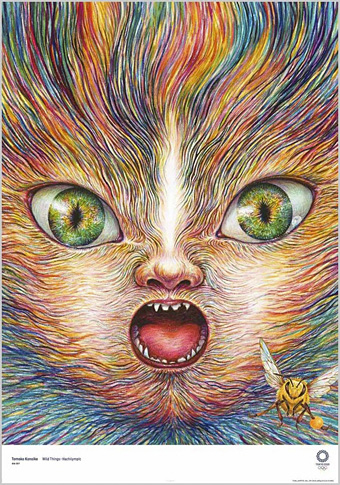
Wild Things – Hachilympic, a poster by Tomoko Konoike for the Tokyo 2020 Olympics.

• Hidden Jewels in ‘The Garden of Orchids’: Steve Toase on Der Orchideengarten (1919–1921), the German magazine of fantastic art and literature. Since the article doesn’t mention it, I’ll note again that the first Anglophone appraisal of the magazine (and also the place where it was drawn to the attention of myself and 50 Watts) was in Franz Rottensteiner’s The Fantasy Book (Thames & Hudson/Collier, 1978).

• “In its furtive, sotto-voce way, Gorey’s work is in conversation with gay history, gay literary influences, and, now and then, the gay-straight tensions of his time.” Mark Dery on the attempts by Edward Gorey’s readers and critics to ignore the obvious signs of a personal sexuality in his work.

• The Apotheosis of the Grotesque: illustrator Sidney Sime interviewed by Arthur H. Lawrence in The Idler, January 1898.

Goff would experiment with form, material, structure and ornament to almost absurd degrees. Materials he used in his buildings included aviation parts, goose feathers, oil rig equipment, orange artificial turf (on the roof), lumps of coal, and any kind of glass he could get his hands on. His 1948 Ledbetter House, also in Oklahoma, features a recurring motif of vertical lines of diamond-shaped glass studs set into doors and columns. In fact they are dime-store glass ashtrays.

Steve Rose on the restoration of “outsider architect” Bruce Goff

• At the BFI: Adam Scovell on where to begin with Delphine Seyrig; Kat Ellinger on giving Fellini’s later films their due; and Matthew Thrift on 10 great Acid Westerns.

• RIP Ivan Passer and Neil Peart. A reminder that John Patterson described Passer’s Cutter’s Way as a cinematic masterpiece. So it is.

Geeta Dayal on musician/composer Arthur Russell and yet another posthumous release.

Haunted And Known, a new recording by Six Organs Of Admittance.

• At Dennis Cooper’s: Hidden.

2112 (1976) by Rush | Xanadu (1977) by Rush | La Villa Strangiato (1978) by Rush