Albrecht Dürer’s Apocalypse

durer01.jpg

Revelation of St. John.

In Robert Shea and Robert Anton Wilson’s Illuminatus! trilogy, John of Patmos, the author of the Book of Revelation, is referred to as “Saint John the Mushroom-head”, the suggestion being that the bizarre and grotesque scenes listed at the end of the Bible were the result of hallucinogenic frenzy. Mushroom-derived or not, John’s apocalyptic visions have fuelled the imagination of artists for a very long time, and in a wide variety of media. The earlier chapters of the New Testament are the more popular ones when it comes to adaptations but only the Book of Revelation has inspired two monuments of progressive rock: the 666 album by Aphrodite’s Child, and Supper’s Ready by Genesis.

durer02.jpg

Martyrdom of Saint John the Evangelist.

Die Offenbarung St. Johannis (1900) is a recent upload at the Internet Archive which presents Albrecht Dürer’s magnificent set of Apocalypse woodcuts in a single volume. Multiple copies of the same prints may be found at Wikimedia Commons but sets of pictures there are always divided into separate pages; where possible, I prefer to have a book to leaf through. I love to pore over Dürer’s prints, they’re always crowded with tiny details rendered with great precision. The fifth plate in this series, showing the arrival of the Four Horsemen, is the one you see reproduced most often, and it’s a typically cramped composition; Dürer was an artist who often seemed to want to cram as much as possible into the available space. Some of the later plates in the series have the same powerful sense of occult strangeness that you find in the best alchemical engravings, especially plate eleven which shows John being instructed by an angel with a blazing face to eat a book. The Biblical text describes the angel as appearing suspended over columns of fire, but Dürer shows the columns as a pair of architectural limbs that happen to be burning at their terminations. It’s an example of proto-Surrealist imagery that makes me wonder what a set of Albrecht Dürer Tarot cards might have looked like.

durer03.jpg

Vision of the Seven Candlesticks.

durer04.jpg

Saint John Before God and the Elders.

durer05.jpg

Four Horsemen of the Apocalypse.

Continue reading “Albrecht Dürer’s Apocalypse”

Weekend links 777

sevenwonders.jpg

The Seven Wonders of the World (1886). 1: Lighthouse on the Island of Pharos, Alexandria; 2: Statue of the Olympian Jupiter; 3: The Colossus at Rhodes; 4: The Temple of Diana at Ephesus; 5: The Mausoleum of Artemisia; 6: The Pyramids of Egypt; 7: The Walls and Hanging Gardens of Babylon.

• “The space of possible languages is vast, and full of exotic languages that are much weirder and stranger than any we have yet imagined.” Nikhil Mahant on the many possible forms of alien language.

• Among the new titles at Standard Ebooks, the home of free, high-quality, public-domain texts: Steppenwolf by Hermann Hesse (translated by Basil Creighton).

• At Alan Moore World: A new interview with Mr Moore about Long London, magic and the future of humanity.

• New music: The Reverent Sky by Steve Roach; and Contrary Motion by Scanner & Nurse With Wound.

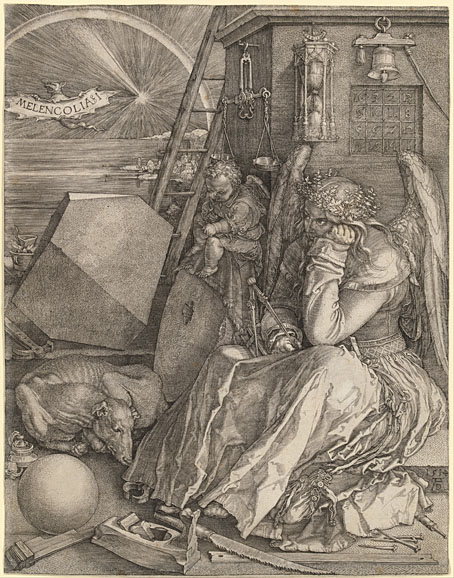
• At Public Domain Review: Tangled Dürer: The Six Knots (ca. before 1521).

• At The Daily Heller: A Typographer’s Mother Goose by Louise Fili.

• At Colossal: Woodblock prints by Utagawa Hiroshige.

• At Dennis Cooper’s: Jud Yalkut’s Day.

• The Strange World of…Steve Aylett.

Seven And Seven Is (1966) by Love | Seven By Seven (1973) by Hawkwind | Seven, Seven, Seven (1995) by Money Mark

Weekend links 610

durer.jpg

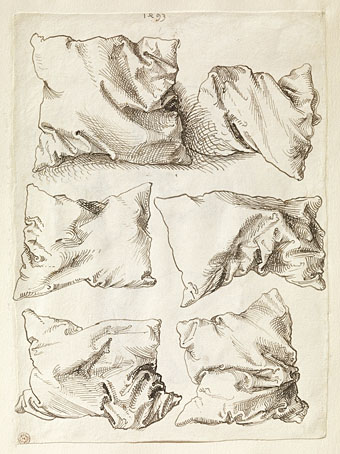
Pillow Studies (1493) by Albrecht Dürer.

• “Without ever writing a song, without ever fronting a group, Khan changed the face of British music.” Michael Hann talks to Morgan Khan about bringing New York Electro to the UK with his Streets Sounds label.

James Balmont offers “an introduction to Japan’s visceral cyberpunk cinema in five cult films”. This reminds me that I’ve not seen Shinya Tsukamoto’s Tetsuo films for years. Time to reacquaint myself.

• At Aquarium Drunkard: 15-minutes of Alice Coltrane from 1970, talking about her music and performing with Pharoah Sanders et al. Amazing.

Clive Hicks-Jenkins presents Beauty & Beast, an animated fairy tale made to showcase his toy theatre design.

• Carl Dreyer’s horror masterpiece, Vampyr (1932), is released on blu-ray by Eureka in May.

• At Wormwoodiana: Mark Valentine explores the mysteries of the Egg Language.

• DJ Food unearths paintings by Syd Mead for a Celcon Steel brochure, 1965.

• Jamie Sutcliffe enters The Strange World of Junji Ito.

• Mix of the week: Isolatedmix 117 by Refracted.

Keeley Forsyth‘s favourite music.

Electrocharge (1980) by Blackbeard | Electrodub1 (1980) by Chris Carter | Ano Electro (Andante) (1993) by The Sabres Of Paradise

Weekend links 597

okazaki.jpg

Untitled art by Toshio Okazaki from JCA Annual 5, 1984.

• “Yeah, when I first started writing it, nobody knew what to call it at all. I mean, the publishers didn’t know what to call it. They thought that Tolkien was (writing about) a post-apocalyptic nuclear world. That’s the only way they could perceive an alternate world, in other words. And it was the same with Mervyn Peake… they’re all interpreted that way. The idea of putting ‘fantasy’ on a book meant usually meant that it was a children’s book. And if you put fantasy as the genre, they usually put ‘SF’ larger than ‘fantasy’ to show that it was what it was.” Michael Moorcock (again) talking to Derek Garcia about fiction, games, and (of course) Elric.

• “Non-payment, low payment, late payment and promises of jam tomorrow, or at some unspecified future date, bedevil the freelance life as they did five centuries ago.” Indeed. Boyd Tonkin on Albrecht Dürer, patron saint of stroppy freelancers.

• “All at once, Non-Stop Erotic Cabaret is tender, outrageous and daft.” Patrick Clarke compiles an oral history of Soft Cell’s debut album.

Yeah, it was kind of a media hype. In January [1967], the media said, [breathless] ‘Oh my god, San Francisco is the place to be. Come to San Francisco, wear flowers in your hair.’ So we had a meeting of the people in the Haight-Ashbury about how we were going to deal with so many people coming. The Diggers decided to kind of make it a university of the streets, an alternative anarchist culture.

We knew that all these people were coming to San Francisco, and we knew they weren’t going to stay. And we thought, well, the best thing we could do would be to kind of educate them about the kinds of things that are possible in society, and then let them go back to where they’re from, and they would carry these ideas. And that is what happened. We were quite successful in that.

Judy Goldhaft of the San Francisco Diggers talking to Jay Babcock for another installment of Jay’s verbal history of the hippie anarchists

• “What ‘impossible’ meant to Richard Feynman; what I learned when I challenged the legendary physicist,” by Paul J. Steinhardt.

• At Strange Flowers: part one of James Conway’s essential end-of-year shopping list, Secret Satan.

• Mixes of the week: Part II and Part III of the three-part At The Outer Marker series by David Colohan.

• At Dennis Cooper’s: Olivia Duval presents…Suave: A History of Les Disques du Crépuscule.

Mystery and Truth of the Cthulhu Myth, a Japanese guide to the Cthulhu Mythos.

• Intimacy, Loss and Hope: Inside Florian Hetz’s beautiful 2020 photo diary.

• New music: The Tower (The City) by Vanessa Rossetto/Lionel Marchetti.

Nite Jewel’s favourite albums.

• RIP Stephen Sondheim.

Nothing Is Impossible (1974) by The Interns | Mission Impossible Theme (1981) by Ippu-Do | Impossible Guitar (1982) by Phil Manzanera

Weekend links 528

durer.jpg

The Rhinoceros (after 1620) by Albrecht Dürer.

• “Today—Tolkien, Lovecraft, Miéville and M John Harrison!” Paul StJohn Mackintosh at Greydogtales explores HP Lovecraft’s lack of interest in fictional worldbuilding. The piece includes one of my book covers (ta!) plus a link to an earlier post I wrote about the cover designs of M. John Harrison’s Viriconium books. Since I’m connected to the thesis I’ll suggest that Lovecraft was resistant to the worldbuilding impulse in part because he was almost always writing horror stories. Having studied the genre at length he was well aware of the need to leave suggestive voids for the reader’s imagination.

• RIP Denise Johnson. All the obituaries mention the big names she worked with, notably New Order and Primal Scream, but being in the pool of Manchester session artists she also appeared on a couple of records by my colleagues at Savoy. Her voice is one of those you first hear on the PJ Proby cover of I’m On Fire, while with friend Rowetta she improvised her way through a Hi-NRG original (and a favourite of Anohni’s), the scurrilous Shoot Yer Load.

• At the BFI: Axel Madsen interviews Fritz Lang in 1967; Serena Scateni on where to begin with Nobuhiko Obayashi; and Roger Luckhurst reviews the spomenik-infested  Last and First Men by Jóhann Jóhannsson.

• “Be more aware of the rest of the world!” says Jon Hassell, talking to Alexis Petridis about a life spent making music.

John Boardley on the Renaissance origins of the printed poster. Worth it for the selection of engraved details alone.

• “What Ever Happened To Chicken Fat?” Jackson Arn on a tendency to over-abundance in Jewish humour.

Erik Davis has a new writing home at Substack that he calls The Burning Shore. Bookmarked.

• Mix of the week: The Ivy-Strangled Path Vol. XXII by David Colohan.

• Garry Hensey on The Strange World of John Foxx.

• At Dennis Cooper’s: Sergei Parajanov Day.

Romantic Rhino (1981) by Ananda Shankar | The Lone Rhinoceros (1982) by Adrian Belew | Blastic Rhino (2000) by King Crimson