
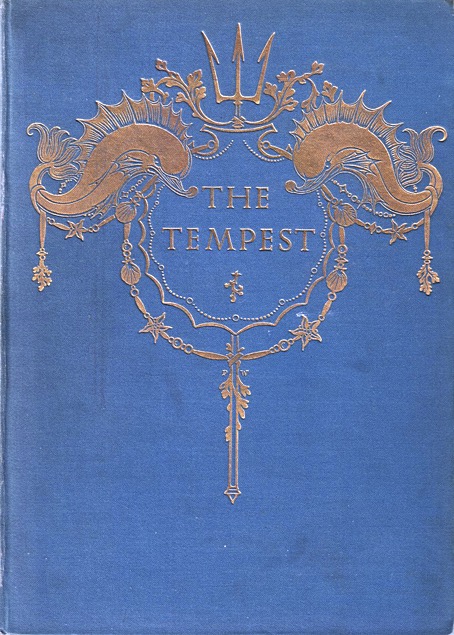
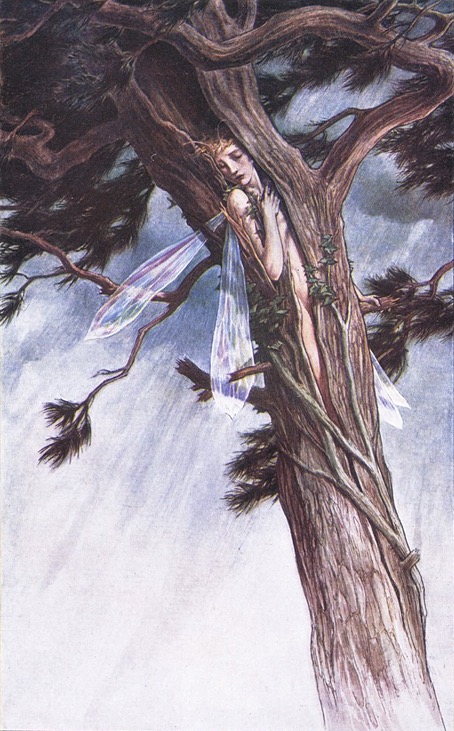
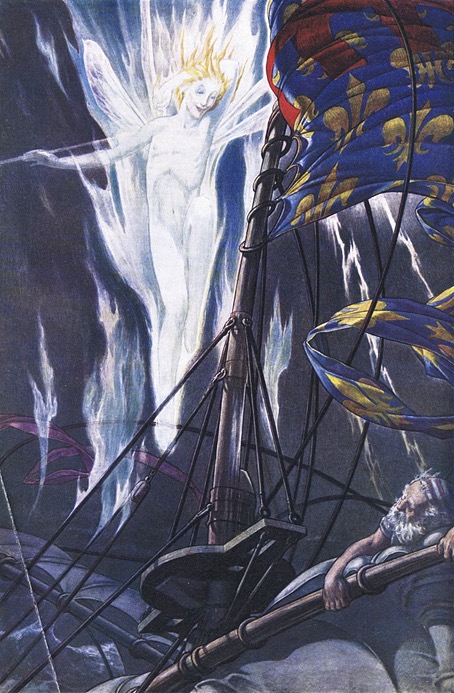
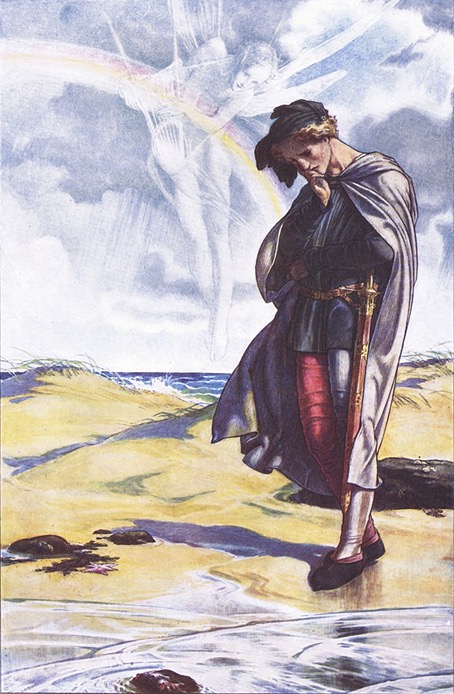
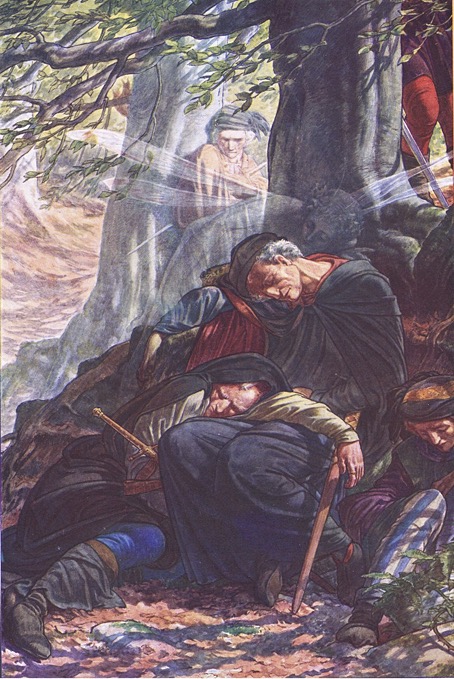
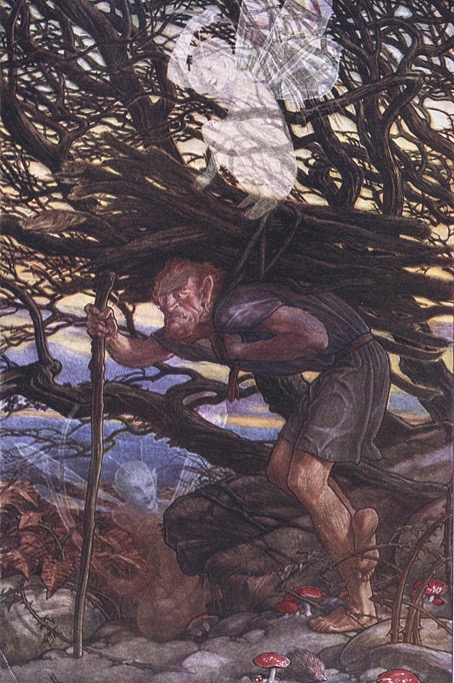
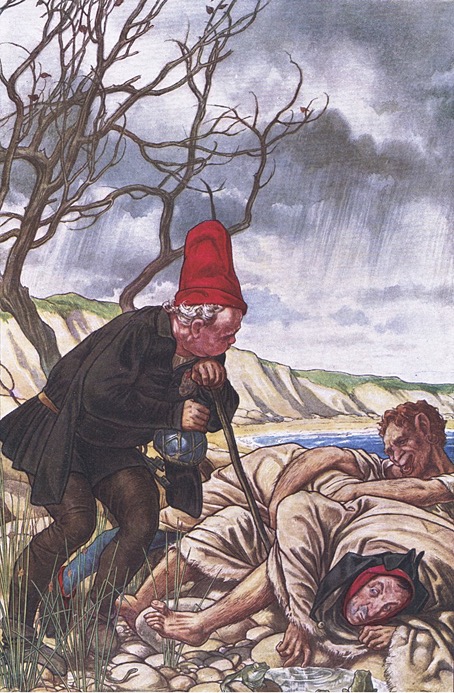
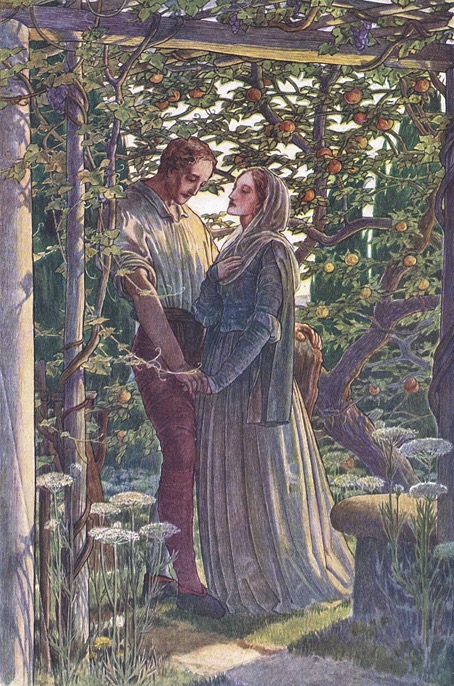
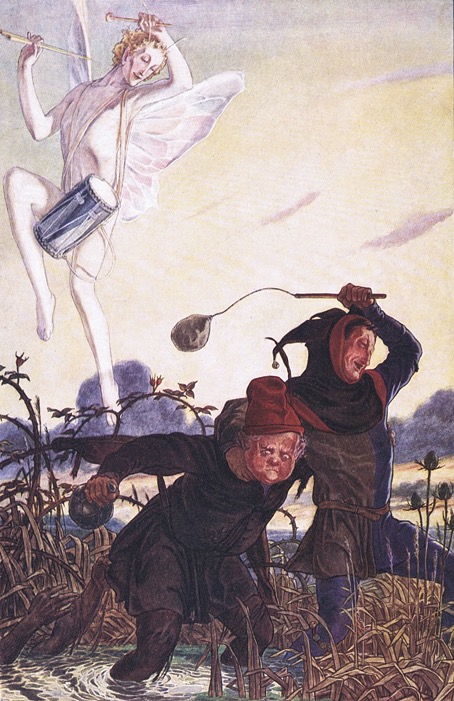
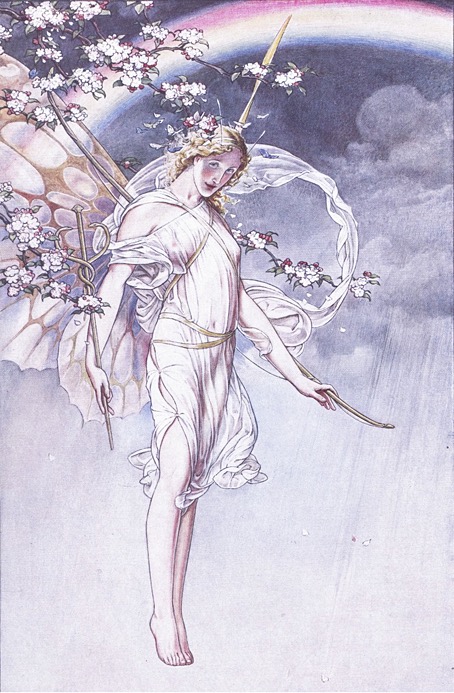
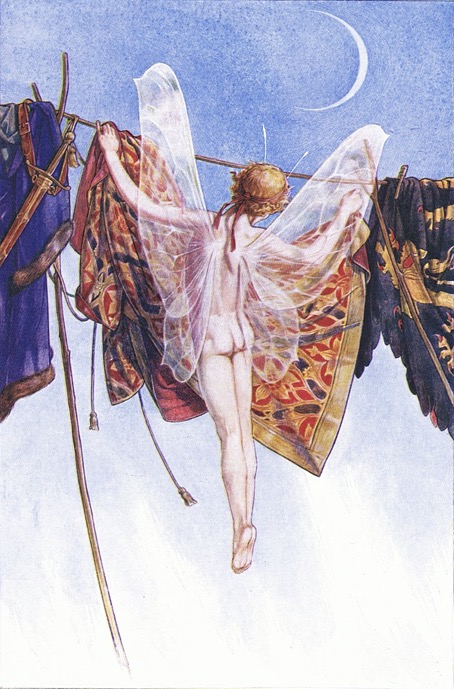
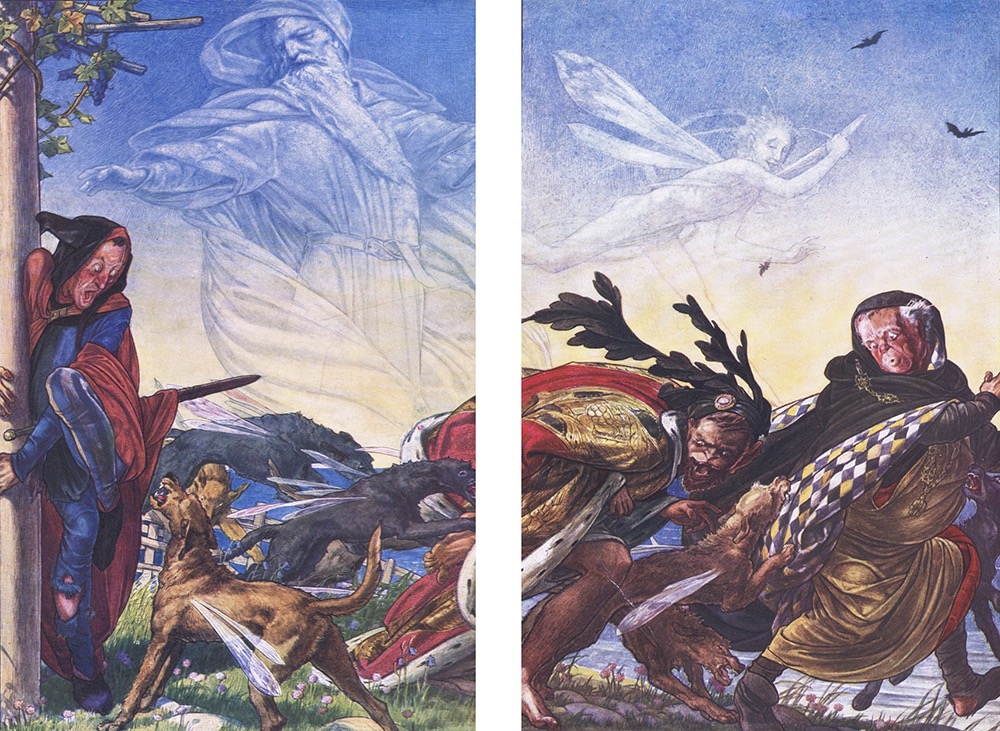
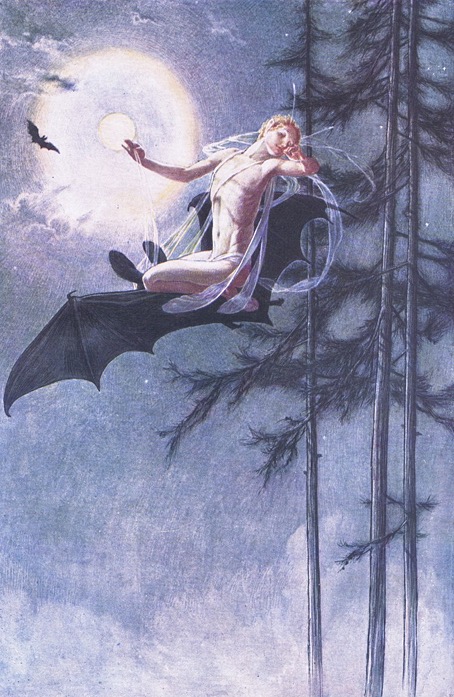
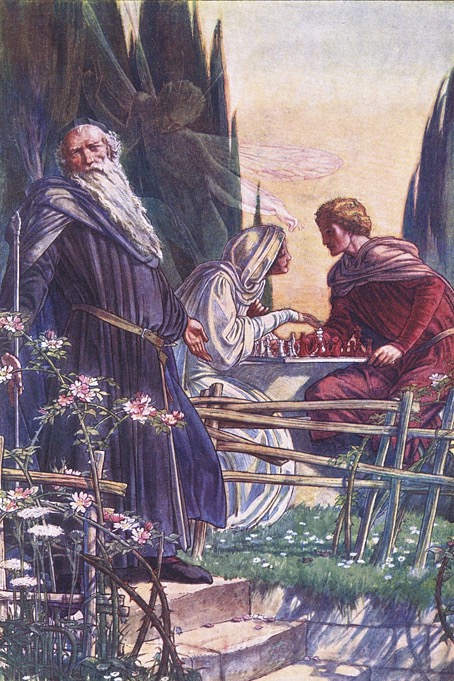
Paul Vincent Woodroffe (1875–1954) was a British illustrator and stained-glass artist, a kind of British equivalent of Harry Clarke in that he seems to have spent more time creating stained glass than he did illustrating books. Woodroffe was also an exact contemporary of Aubrey Beardsley, and both artists provided illustrations in 1897 for The Parade, a heavily-illustrated gift book of stories for children. I’ve known about Woodroffe’s illustrated Tempest for some time but I’ve had to wait to find a decent collection of all the colour plates. Woodroffe was an excellent watercolourist whose nebulous effects are so delicate they might easily be spoiled by poor reproduction. I’m at a loss to say exactly how some of these effects were achieved. He evidently used washes to fill in the sky, a technique where the paint can’t be manipulated before it dries, yet he still has the translucent figures of Ariel and Prospero hovering over some of the scenes. What he seems to have done is painted the transparent figures in very diluted white tones over the backgrounds, a difficult process when you don’t want any pencil outlines showing underneath.
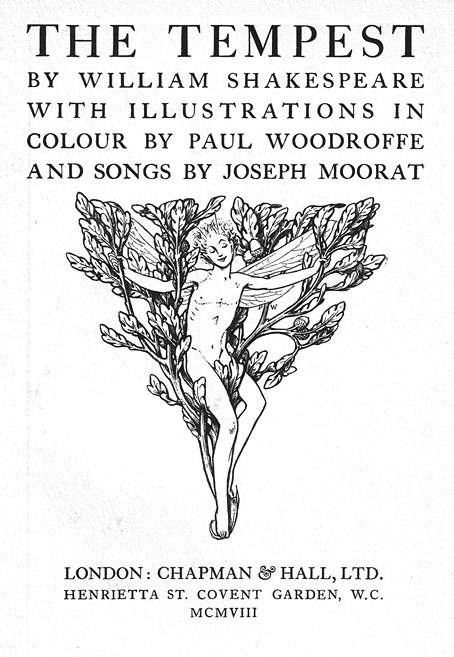
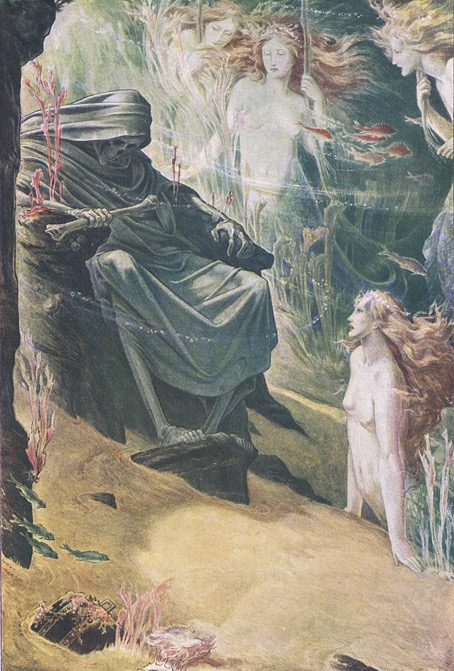
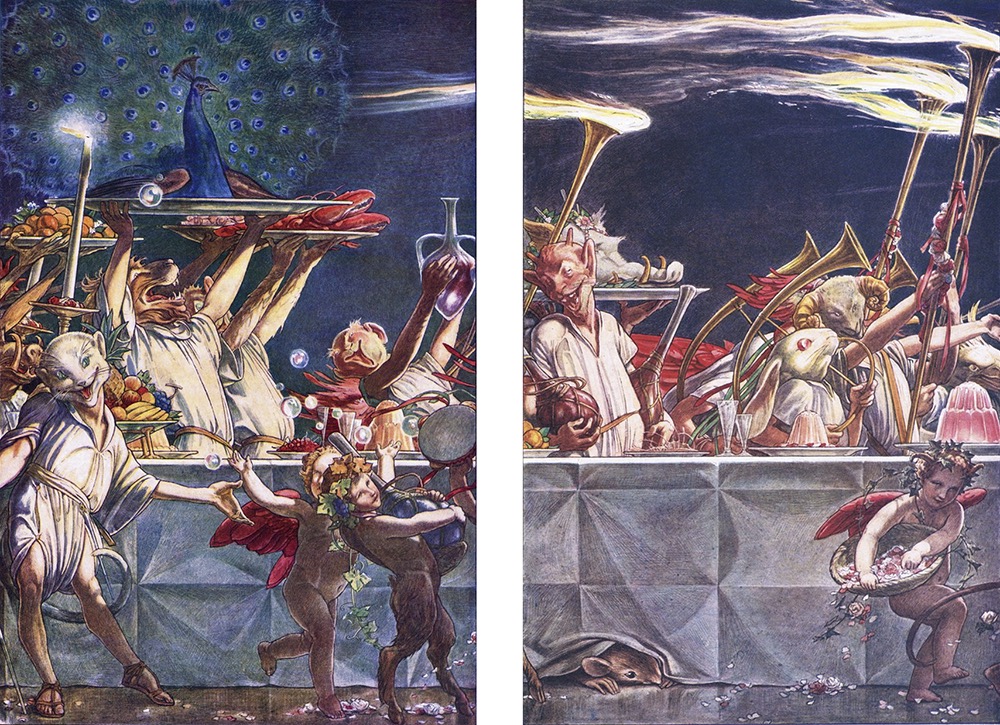
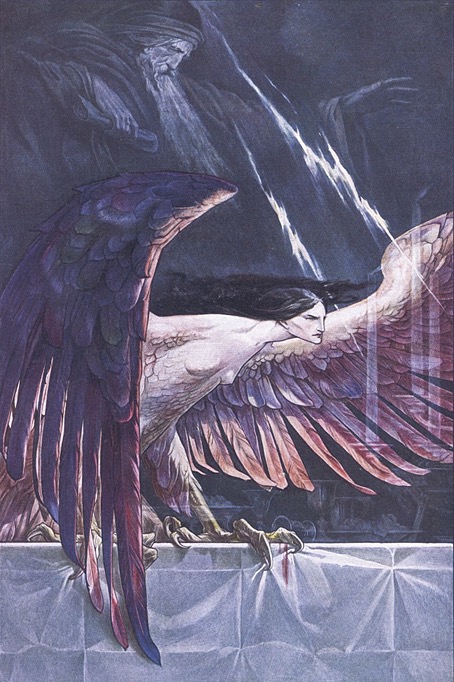
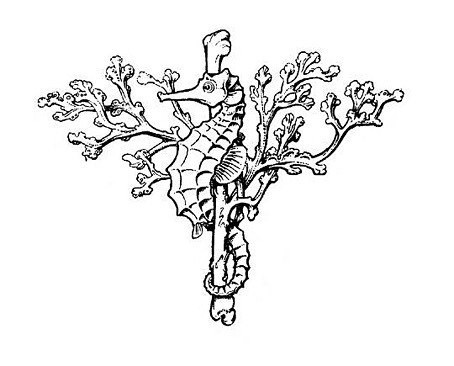
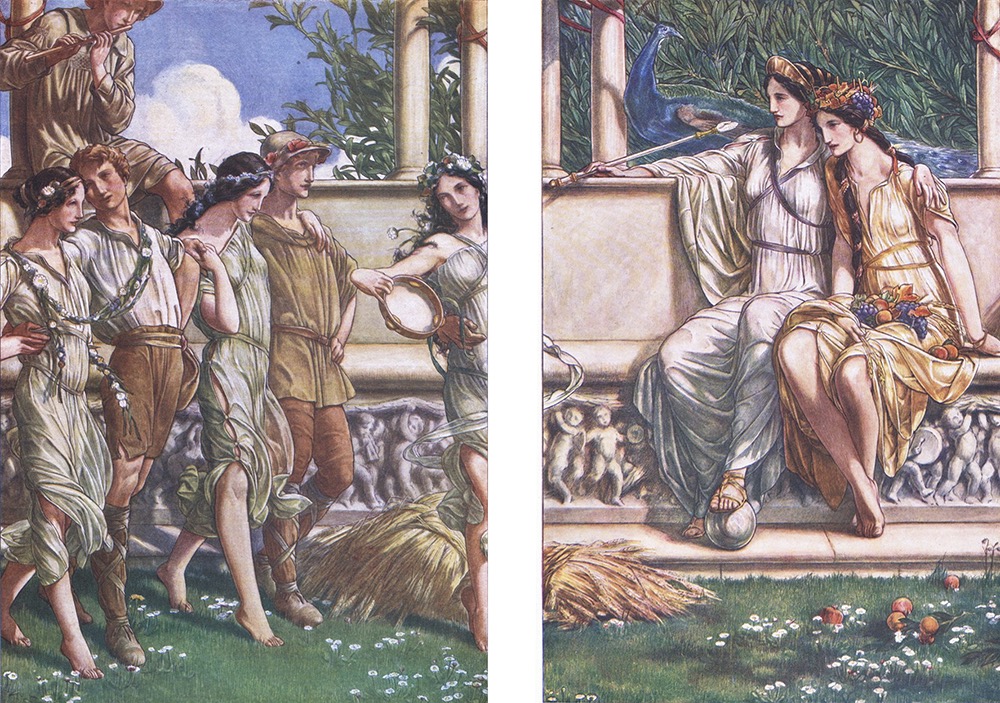
Where the subtance of the text is concerned, Woodroffe adds more to some of the familiar scenes than you find with other artists. For the scene where Ariel is transformed into a harpy Edmund Dulac shows the spirit as an eagle-sized bird; Woodroffe’s Ariel is a larger creature with a fearsome pair of claws. For Ariel’s Song he shows a cowled and enthroned skeletal figure sitting at the bottom of the sea, like Death waiting to make an appearance in The Rime of the Ancient Mariner. Woodroffe’s human figures are less interesting although still well-drawn, a parade of statuesque types with similar faces and a distinctly Pre-Raphaelite appearance. His book also features three double-page scenes, something you don’t find so often in these coloured editions.
Elsewhere on { feuilleton }
• The illustrators archive
Previously on { feuilleton }
• Edmund Dulac’s Tempest
• The Tempest illustrated
• Robert Anning Bell’s Tempest
Wonder if he was related to the artist Patrick Woodroffe?
I had the same thought but there’s no mention of any such lineage in Patrick Woodroffe’s first book, Mythopoeikon.
These are great, thanks. Is there a link to the source ?
All the colour plates were from Meisterdrucke:
https://www.meisterdrucke.ie/artist/Paul-Vincent-Woodroffe.html
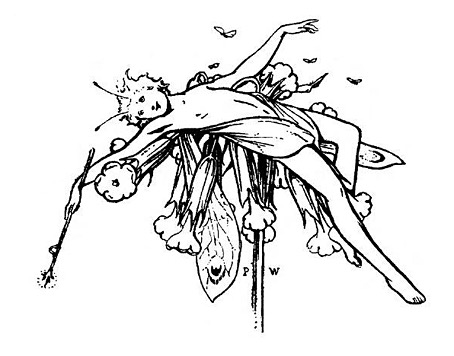
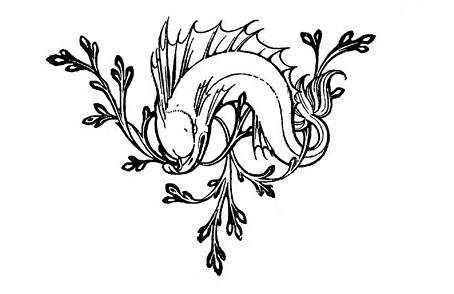
Most of the b&w vignettes were from this book scan at the Internet Archive:
https://archive.org/details/McGillLibrary-108900-56/page/n11/mode/2up
Go Nonclassified artists! These are wonderful colour plates, ethereal and sublime.