Weekend links 435

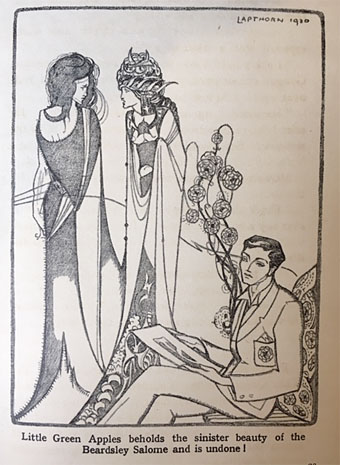
moss.jpg

An illustration by “Lapthorn” for Little Green Apples: the Chronicle of a Fallen Man (1930) by Geoffrey Moss.

Jean-Michel Jarre & Michel Granger: how we made Oxygène. “[It] was initially rejected by record company after record company. They all said: ‘You have no singles, no drummer, no singer, the tracks last 10 minutes and it’s French!’ Even my mother said: ‘Why did you name your album after a gas and put a skull on the cover?'”

• “When we ignore or demean consensual BDSM erotica, or stories about female sexual submission, we inadvertently contribute to a cultural legacy that routinely pathologizes, demeans, or erases women’s sexual desires.” Hayley Phelan on why we need erotica.

• “More than a literal reconstruction of an imagined collaboration between Eno and Morricone, Ghost Box opens a door onto a world where ambient music and country-western make for natural bedfellows.” Ghost Box (Expanded) by Suss.

Peter Bebergal and Janaka Stucky discuss Bebergal’s new book, Strange Frequencies: The Extraordinary Story of the Technological Quest for the Supernatural. There’s more at the Occulture podcast.

Great Noises That Fill The Air (1988), an album by Bow Gamelan Ensemble, receives its first release on CD next month. Related: the group in 1987 staging one of their pyrotechnic performances.

• Mixes of the week: Bleep Mix #45 by Lawrence English & William Basinski – Casting Voices Mixtape, DJ Food Solid Steel mix by Matt Berry, and The Séance – 13th October 2018.

• “…the social position filled by art and aesthetics is increasingly best understood in terms of magic.” Marina Warner and Eleanor Birne discuss forms of enchantment.

• From 2104: Ten little tales of terror for late of a Halloween night by Levi Stahl.

Words I Heard by Julia Holter.

The Cosmodrome Futurists

Urban Gamelan (Pt. 1) (1984) by 23 Skidoo | Chez Les Futuristes Russes (1984) by Aksak Maboul | Oxygen (1997) by Gas
Weekend links 340

zagorski.jpg

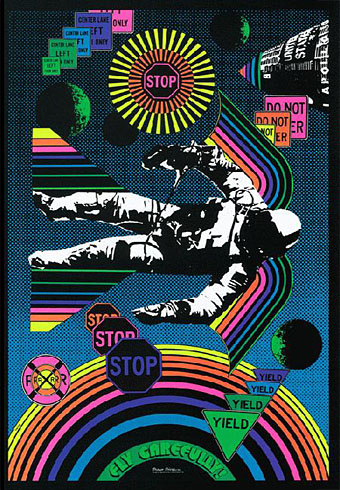
Fly Carefully (1969) by Stanisław Zagorski.

• Video of Tuxedomoon live in San Francisco, Rotterdam and Paris, 1983 (or try this copy), and a late-night German TV broadcast from 1985. The first Tuxedomoon album, Half-Mute, has been reissued by Crammed Discs with an accompanying album, Give Me New Noise: Half-Mute Reflected, featuring cover versions of the songs by various artists.

• More end-of-year reviews: Dennis Cooper’s recommendations are always eclectic (and thanks again for the blog shout!); not necessarily the best ambient and space music of 2016 by Dave Maier; a review of the year by graphic designer Jonathan Barnbrook; the 15 finalists of the 2016 Art of Building architectural photography competition.

The Complete Stories of Leonora Carrington will be published in April 2017 by Dorothy. Related: Letters, Dreams, and Other Texts by Remedios Varo will be published next year by Wakefield Press. Also of interest on that page is a new edition of Haschisch by Oscar AH Schmitz illustrated by Alfred Kubin.

• The week in Things (see this post): John Carpenter’s The Thing: The Story of an SF Horror Game-Changer. Ennio Morricone’s score will be infecting the vinyl world next year. Meanwhile, Matthew Thrift recommends “10 great films set in the Arctic and Antarctica”.

• Mixes of the week: FACT mix 581 by Pan Daijing, XLR8R podcast 468 by Jan Jelinek, and Secret Thirteen Mix 203 by Blood Sport.

A Year In The Country on Monumental Follies (1972), a book about architectural eccentricity by Stuart Barton.

• William Burroughs reads 23 random paragraphs from Naked Lunch each time you load this page.

• “The world is terrifying and destructive and dehumanising and tragic,” says Charlie Kaufman.

• Scents and sensuality: William Dalrymple on the perfumes of India, past and present.

• Brenda S G Walter on Hill House: The haunted soul of Shirley Jackson.

• A trailer for Dome Karukoski’s Tom of Finland. There’s more here.

Illustrating the Sixties: Paintings by Italian artists in London.

Michael Rother and Cavern Of Anti-Matter live in Berlin.

Cinemetal

Network 23 (1981) by Tangerine Dream | Exit 23 (1989) by Psychick Warriors Ov Gaia | Studio 23 (2012) by The Time And Space Machine

Weekend links 336

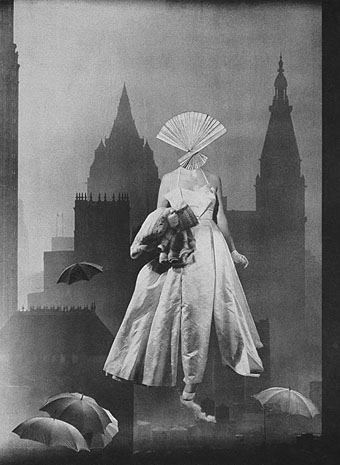
okanoue.jpg

Visit in Night (1951) by Toshiko Okanoue.

• Rhythms of the World: Bombay and All That Jazz; a 60-minute BBC documentary featuring Trilok Gurtu, L. Shankar, Don Cherry, Alice Coltrane, Zakir Hussain and others. The quality of the full-length copy is a little rough so it’s worth noting the six-part version here.

Adam Scovell talks to Leah Moore and John Reppion about adapting the ghost stories of MR James for the comics medium. Related: The Corner of Some Foreign Field, a short piece of folk horror written by Martin Hayes with art by Alfie Gallagher.

Callum James on the overtly gay nature of Films and Filming magazine (1959–1990). Having seen a few copies over the years I’d always suspected this but didn’t realise it was so persistent. Related: The Boy and the Wolf by Callum James.

• At Dangerous Minds: Lucifer Rising live in concert: Bobby Beausoleil and the Freedom Orchestra perform their Kenneth Anger soundtrack, 1978.

Simon Says: A rare cassette tape of instructions by Peter Levenda for using the Simon Necronomicon (1977) as a grimoire.

• Mixes of the week: Fact Mix 577 by Outer Space, and Incantations and Manifestations by Melmoth_The_Wanderer.

• At Dennis Cooper’s: _Black_Acrylic presents … Art Sex Music: A Cosey Fanni Tutti Day.

• Up from the Abyss: Brenda SG Walter on Rammstein, Lovecraft and Sea Zombies.

• Cinematic Alchemy: Christopher Gibbs on designing sets for Performance (1970).

• Magic carpets: the art of Faig Ahmed‘s melted and pixellated rugs.

• Drips, pop and Dollars: the music that made Ennio Morricone.

• At Bibliothèque Gay: Cocteau et quelques autres.

• “Sleepers Awake!” says Moon Wiring Club.

Can your city change your mind?

The Paul Laffoley Archive

The Ambivalent Abyss (2001) by Lustmord | Byss And Abyss (2004) by Espers | Dark Bullet From The Abyss (2010) by Pleq

Weekend links 289

hermes.jpg

Fathomless Sounding (1932) by Gertrude Hermes.

• Over at Greydogtales (“weird fiction, weird art and even weirder lurchers”) I talk about art, design, the writing of this blog, and I also reveal more about my ongoing Axiom project. The latter currently stands at two novels, a couple of half-finished stories and a few pieces of artwork. I may be unveiling some of the art in the new year so watch this space.

• Howard Brookner’s Burroughs: The Movie (1983), a definitive film portrait of William Burroughs, is released at last on DVD/Blu-ray. US-only for the moment but further releases elsewhere are promised. The director’s nephew, Aaron Brookner, has a documentary about his uncle released next year.

• “…beautifully articulated bawdiness, perverse pleasures and a radical, though nondidactic, political view.” Melissa Anderson reviews Boyd McDonald’s Cruising the Movies: A Sexual Guide to Oldies.

The crisis, as Ellis and Silk tell it, is the wildly speculative nature of modern physics theories, which they say reflects a dangerous departure from the scientific method. Many of today’s theorists — chief among them the proponents of string theory and the multiverse hypothesis — appear convinced of their ideas on the grounds that they are beautiful or logically compelling, despite the impossibility of testing them. Ellis and Silk accused these theorists of “moving the goalposts” of science and blurring the line between physics and pseudoscience. “The imprimatur of science should be awarded only to a theory that is testable,” Ellis and Silk wrote, thereby disqualifying most of the leading theories of the past 40 years. “Only then can we defend science from attack.”

Natalie Wolchover on A Fight for the Soul of Science

• Mixes of the week: A mix by Front & Follow, and The Ivy-Strangled Path Vol. XIV by David Colohan.

• “Psychedelics can’t be tested using conventional clinical trials,” says Nicolas Langlitz.

• At Dangerous Minds: Ralph Steadman illustrates Ray Bradbury’s Fahrenheit 451.

• Why does Moby-Dick (sometimes) have a hyphen? Erin Blakemore investigates.

• My thanks again to Dennis Cooper for including this blog on his year-end list.

• Cian Traynor was given 20 minutes to ask Ennio Morricone some questions.

Lolita at 60: Ten writers reconsider Nabokov’s novel, page by page.

• At Ballardian: High-Rise: Wheatley vs Cronenberg.

Poison Ivy: The Queen of Psychobilly Punk

The Cinema of Hotels: a list

Solo intimacy DIY

Moby Dick (1970) by Led Zeppelin | William Burroughs Don’t Play Guitar (1996) by Islamic Diggers | Physical (2001) by Goldfrapp

Two sides of Liška

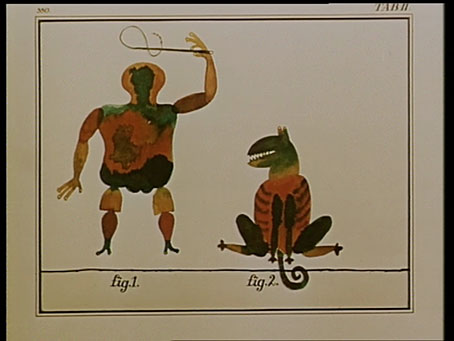
svankmajer1.jpg

Et Cetera (1966).

A little more on the music of Czech soundtrack composer Zdeněk Liška (1922–1983). Liška seems to stand in relation to Czech cinema as Ennio Morricone does to that of the cinema of Italy, being similarly prolific, highly regarded, and idiosyncratic to a degree that makes his work immediately recognisable. Both men could also draw on their experience outside the film world to fuel their scores: Morricone for many years was a performer with Gruppo di Improvvisazione di Nuova Consonanza, a group of Italian free improvisers, while Liška’s work with electro-acoustic composition and early electronic music explains the frequent eruptions in his lush orchestrations of tape effects, exaggerated echoes and other forms of artificial processing. This kind of cross-pollination doesn’t seem so surprising today but it’s striking and surprising in soundtracks from the 1960s.

Good examples of the opposite poles of Liška can be found in two of Jan Švankmajer’s early shorts. Et Cetera (1966) is one of the director’s most formal exercises, a series of crude drawings (or cut-outs) coming to life to perform a repetitive routine before being interrupted by the words “ET CETERA”. The film plays with the audience by beginning with a title card that states “The End”, and the piece as a whole could easily be screened as an endless loop. Liška’s score is a combination of fairly minimal orchestration with a variety of electro-acoustic effects which are closer to Pierre Henry or İlhan Mimaroğlu than other Eastern European composers.

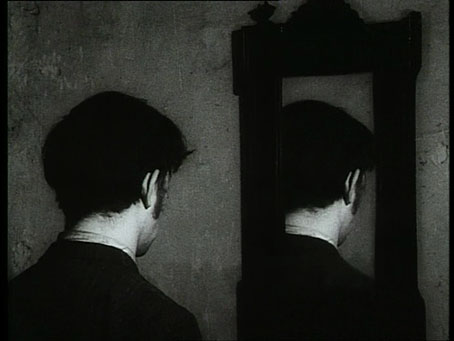
svankmajer2.jpg

Shade of Magritte: The Flat (1968).

At the opposite end of the scale there’s the score for The Flat (1968), a typical piece of Švankmajer Surrealism with an unfortunate individual locked in a room where everything, from walls to furniture, contradicts his expectations. René Magritte casts a long shadow over this one, with director Juraj Herz making a brief appearance as a bowler-hatted man carrying a chicken. Liška’s score has a driving and reverberent choral rhythm that always makes me think of Krzysztof Komeda’s similar music for Roman Polanski’s Dance of the Vampires (1967). For such a short film it’s a remarkable piece of orchestration. The Brothers Quay are great Liška enthusiasts, and used some of the score from The Flat (and two other Liška pieces) for their 1984 film The Cabinet of Jan Švankmajer, an animated portrait of the director.

Previously on { feuilleton }
Liška’s Golem
The Cremator by Juraj Herz