Weekend links 214

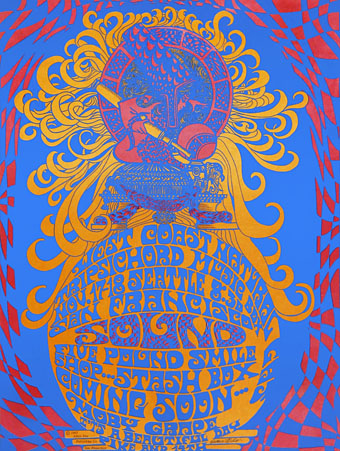
/sfsound.jpg

San Francisco Sound (1967). Art by Wallace Studio, Seattle.

• RIP gay porn pioneer Peter de Rome. BUTT posted de Rome’s surprisingly daring Underground (1972), a film in which two men have an unfaked sexual encounter on a New York subway train. That film and others are available on the BFI’s DVD collection. Related: Brian Robinson remembers a director of films whose supporters included Andy Warhol, William Burroughs and John Gielgud.

• “My stuff is implicitly critical of television as it is now,” explains Jonathan [Meades], “Television used not to be as openly moronic as it has become…” A lengthy and typically pugnacious Meades interview with Remy Dean.

Thurston Moore remembers the Burroughs-themed Nova Convention staged in New York in 1978. William Burroughs 100—Nova Convention is a retrospective exhibition running at Red Gallery, London, next month.

How are we expected to take seriously…any work which appears to have engaged less than the whole passionate attention of its author? To be fobbed off, at the last, with something which we feel to be less true than the author knew it to be, challenges the importance of the whole art of writing, and instead of enlarging the bounds of our experience, it leaves them where they are.

Katherine Mansfield was also a book reviewer.

• JG Ballard’s Crash is reissued in August by Fourth Estate with an introduction by Zadie Smith. There’s a tantalising extract from the intro at the NYRB or you can read the whole thing if you’re a subscriber.

• “Between 1959 & 1980 Shirley Collins changed the course of folk music in England & America. Thirty years after disappearing, she’s back.”

Photos by Anne Billson of one of the more attractive Parisian arcades. Related (in a flâneur sense): Christina Scholz‘s Vancouver dérive.

• “Why did Borges hate soccer?” asks Shaj Matthew. Related: George Orwell on the same subject.

• Mixes of the week: FACT mix 447 by Forest Swords, and Programme 13 from Radio Belbury.

• At Dangerous Minds: Roland Topor’s cheerfully violent illustrations from Les Masochistes.

• Rainy Day Psychedelia: Ben Marks on Seattle’s neglected 1960s poster scene.

• Strange Flowers looks at Oskar Schlemmer‘s Triadic Ballet designs.

• A Journey to Avebury: Stewart Lee interviews Julian Cope.

It’s All Over Now (1963) by The Valentinos featuring Bobby Womack | It’s All Over Now (1964) by The Rolling Stones | It’s All Over Now (1974) by Ry Cooder
Weekend links 213

munro.jpg

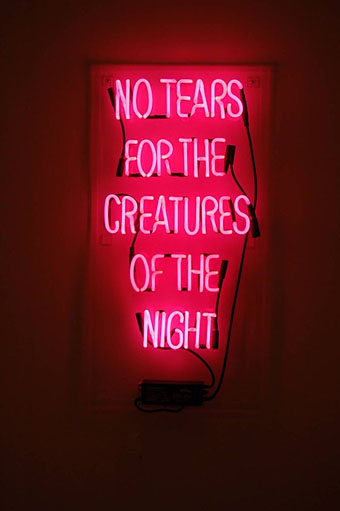
No Tears for the Creatures of the Night (2005) by Will Munro.

• Steve Barker’s On The Wire show on BBC Radio Lancashire is one of the longest-running music shows on British radio but it’s not broadcast in London so you seldom hear it mentioned at all. (It’s also the only radio show I’ve appeared on, oddly enough.) Some of Barker’s shows, which predominantly feature dub and reggae artists, can now be heard at Mixcloud.

• “As protagonist after protagonist is undone by temptation and lust, one can’t help but divine a sinister double entendre in the book’s title – something nocturnal and obscene.” James Lovegrove on the reissue of Robert Aickman’s 1964 collection of “strange stories”, Dark Entries.

Coil vs. Kenny Loggins sounds like no contest, and so it proved in 1988 at the Mike Tyson/Michael Spinks fight. There’s another surprising connection between Tyson and Industrial culture with the poster that Neville Brody designed for the boxer’s Tokyo bout.

Ventriloquism: Unheimlich manoeuvres: Sarah Angliss (who performs as Spacedog) on the history of ventriloquist dummies. With a bonus appearance from the great Ray Alan and Lord Charles. Related: the Vent Haven Museum.

• I’ve been wanting to read Proust’s À la recherche du temps perdu for years but always hesitate over which translation to choose. As Leland de la Durantaye shows, the arguments about translating Proust into English are still unresolved.

Music For A Good Home 3: a collection of 31 rare or unique tracks by a variety of artists including Belbury Poly, Pye Corner Audio, and Grumbling Fur. All proceeds go to Shelter.

David Cronenberg – The Exhibition is running throughout the summer at the EYE Film Institute in Amsterdam showing props and other materials from the director’s films.

• “’I’m in pictures,’ John Wayne explained when Nabokov cordially inquired about his line of work.” Blake Bailey on Vladimir Nabokov’s unpublished Lolita screenplay notes.

• Original artwork for the Linweave Tarot (1967) at Sweet Jane’s Pop Boutique. As noted before, the full set of cards is probably the grooviest ever created.

• Mixes of the week: Secret Thirteen Mix 118 by Ensemble Economique, and a Wyrd Daze Solstice mix from The Ephemeral Man.

• At One With Chaos & Abandonment: The Irrepressibles’ Jamie McDermott talks to Joseph Burnett about his music.

From the Zodiacal Light, a new track from Earth with vocals by Rabia Shaheen Qazi.

• The Ultimate Chinatown Filming Location Map of Los Angeles.

Tuxedomoon at Pinterest.

Dark Companion (1980) by Tuxedomoon | Dark River (1990) by Coil | Dark Turn Of Mind (2011) by Gillian Welch

Weekend links 201

kettelwell.jpg

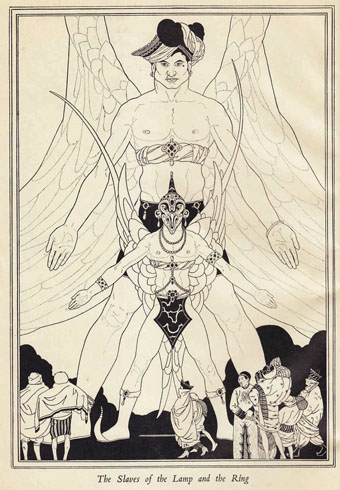
An illustration by John Kettelwell for The Story of Aladdin and the Wonderful Lamp (1928).

• “The strain in everything I write, of not being taken with the bounteousness of humankind, was also the attitude of both my parents.” Jonathan Meades talking to James Kidd about his forthcoming memoirs.

• 7 Trumps From the Tarot Cards and Pinions (1969), and album of electronic music by Ruth White, is being given a limited vinyl reissue. Related: Ruth White—An American Composer.

• 82 minutes of Michael Moorcock talking in 1972 to Jean-Pierre Turmel, co-founder of the Sordide Sentimental record label.

If Verne’s protagonists often seem to stop short of revelation, it’s because the revelation is not meant to be known. Revelation has a way of putting man back at the front of the evolution chart, moving neatly toward a happily progressing future, out of the darkness and into the light. The characters who embark upon the Voyages Extraordinares move backward and forward and all about, spun around like blindfolded children trying to pin the tail on the donkey. The point of the adventure, after all, is not to have a conclusion; it is to get knocked off your feet.

Stefany Anne Golberg on Journey to the Center of the Earth at 150.

• Photographs of pre-Haussmann Paris by Charles Marville, and photographs by Amy Heiden of industrial ruins.

• Mixes of the week: FACT Mix 427 by Wild Beasts, and Secret Thirteen Mix 108 by Kangding Ray.

• Hear Italo Calvino read selections from Invisible Cities, Mr Palomar and others.

William S. Burroughs in Dub conducted by Dub Spencer & Trance Hill.

• Cycles, Returns & Rebirth: Alexander Tucker on Derek Jarman.

Harold Budd: the composer with no urge to make music.

The Museum of Imaginary Musical Instruments.

• 80 minutes of Monolake playing live in 1999.

• At 50 Watts: Dyl’s Dance.

Owls And Flowers (2006) by Belbury Poly | Learning Owl Reappears (2011) by The Advisory Circle | The Owls (2013) by Félicia Atkinson

The weekend artists, 2013

fournier.jpg

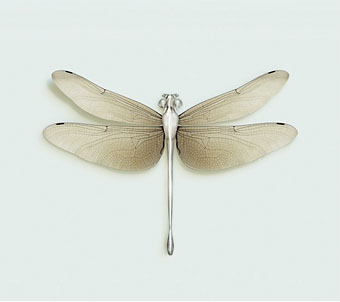
“Chloromgonfus detectis, a dragonfly that can detect volatile pollutants.” A speculative insect by artist Vincent Fournier.

The annual review of artists/designers/photographers featured in the weekend posts should have run at the end of December but MR James got in the way. Big thanks, and happy new year to Form is Void and Beautiful Century for pointing the way to many of these people.

strongowski.jpg

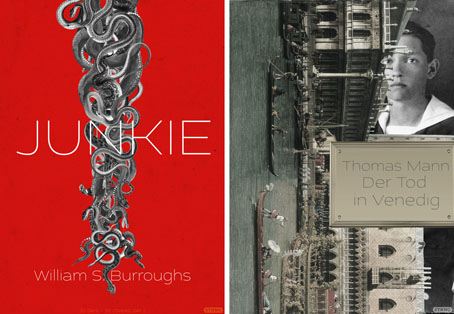
Two cover designs from Eliash Strongowski’s 30 Days—30 Covers project.

gebbie.jpg

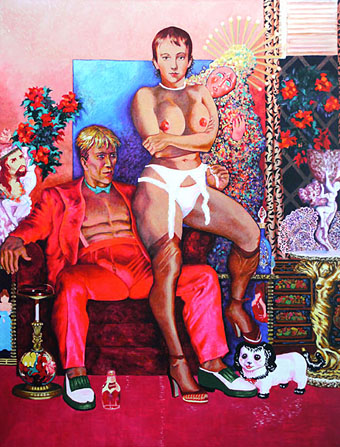
Pink Boy by Melinda Gebbie.

lipton.jpg

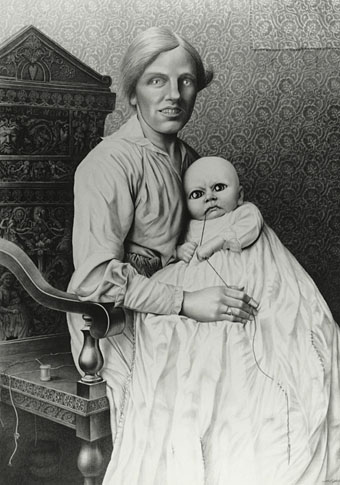
Seam Stress (1987) by Laurie Lipton. The Drawings of Laurie Lipton is out now from Last Gasp.

blackwell.jpg

The Baron in the Trees (2011), a book-cut sculpture by Su Blackwell.

Continue reading “The weekend artists, 2013”

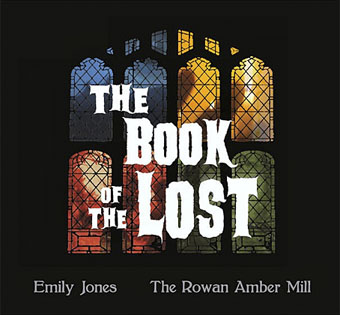
The Book of the Lost

botl.jpg

A recurrent feature of the music landscape of the late 80s and early 90s was the “soundtrack for an imaginary film”, a sub-genre that proved especially popular among the electronica crowd when DJs realised they needed a description to justify their collections of downtempo instrumentals. Two of my favourite examples were produced away from the dance world: John Zorn’s Spillane (1987), and Barry Adamson’s solo debut Moss Side Story (1989), both of which took their thematic cues from crime novels and film noir. The artists on the Ghost Box label haven’t gone down the imaginary film route but many of the tracks on the Belbury Poly and Advisory Circle albums are reminiscent of TV theme tunes from the 1970s. The closest you get to an imaginary film in the Belbury sphere is the unseen giallo horror in Peter Strickland’s Berberian Sound Studio with its score by Ghost Box allies Broadcast, and a title sequence by Julian House.

Given all of this, The Book of the Lost, a collaboration between Emily Jones and The Rowan Amber Mill, is a logical next step: a CD collection offering a theme from a forgotten TV series “shown on Sunday nights in the late ’70s and early ’80s” which broadcast four of the equally forgotten horror films upon which the accompanying songs are based. Between each song you hear a brief snatch of dialogue, just enough to whet the appetite without getting too involved. One of the films referred to, The Villagers, belongs to that current of British folk-horror that runs through Witchfinder General, and Blood on Satan’s Claw, to Ben Wheatley’s intoxicatingly weird A Field in England. Pastiching aside, all projects of this kind depend upon the quality of the music, and the folk-inflected songs here are very good, as is the Book of the Lost theme itself which is as spookily evocative as Jon Brooks’ Music for Thomas Carnaki.

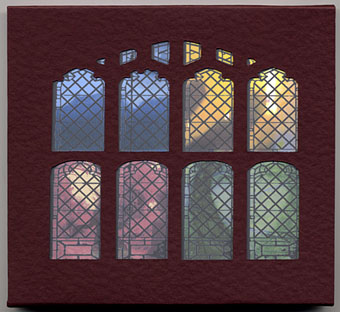
botl2.jpg

If that wasn’t enough, there’s a special numbered edition of the CD which comes packaged in a die-cut slipcase (above) containing cards giving details of each of the films. In addition to promotional artwork there’s also a synopsis, a production history and even a cast list. Other films are mentioned in passing—The House that Cried Wolf, Ghosts on Mopeds—that imply there was a lot more happening in Wardour Street in the 1970s than we previously suspected.

The Book of the Lost isn’t officially released until January but it’s available for purchase now at the project website.

Previously on { feuilleton }
The Outer Church
The Ghost Box Study Series
A playlist for Halloween: Hauntology
The Séance at Hobs Lane
Ghost Box