
Weekend links 303

belbury.jpg

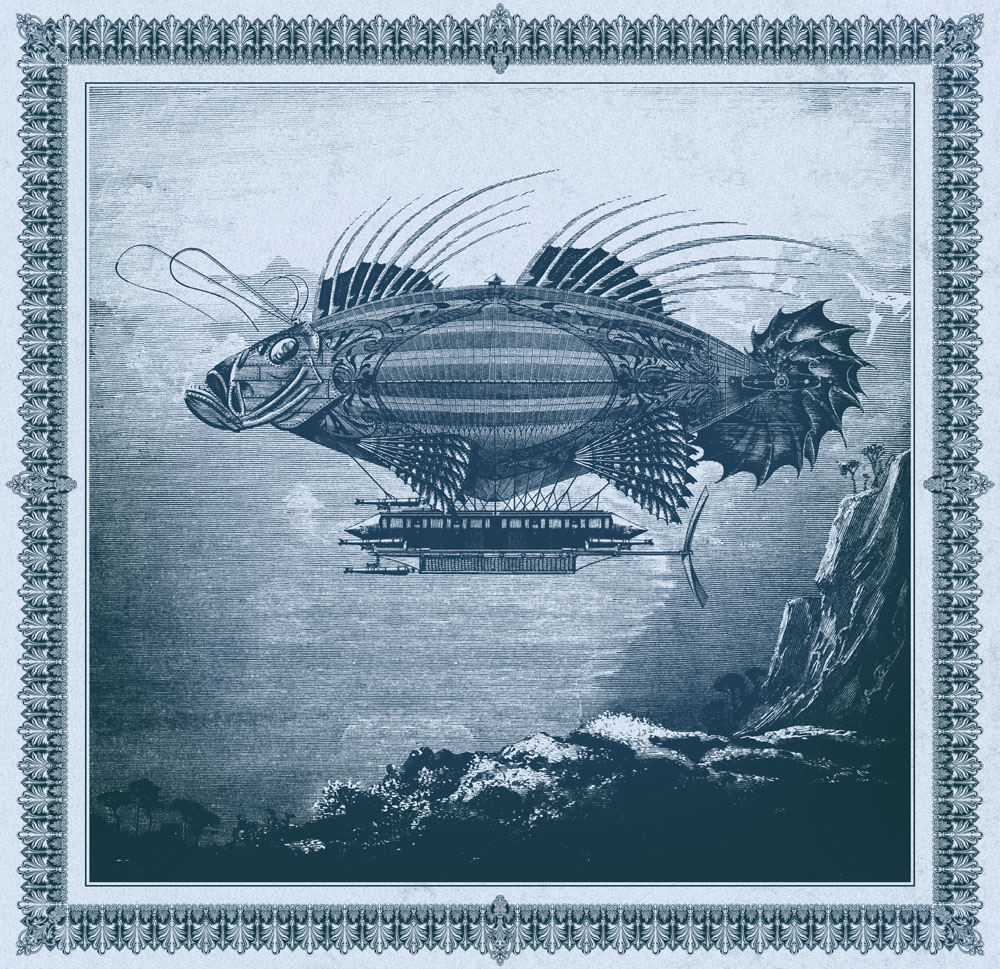
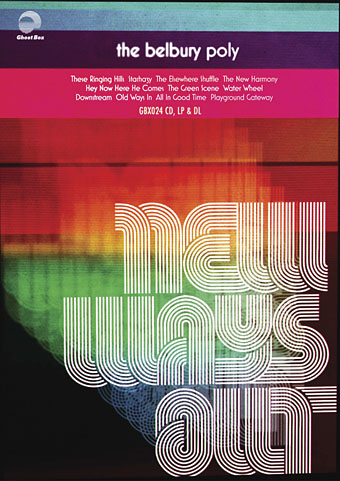
Design by Julian House.

• The last major release by Ghost Box recording artists Belbury Poly was The Belbury Tales in 2012, so news of a new album is most welcome. New Ways Out by The Belbury Poly (that definite article is a fresh addition) will be released next month. The Belbury Parish Magazine has links to larger copies of Julian House’s artwork for this and the recent release from Hintermass, The Apple Tree.

But before New Ways Out appears there’s a compilation album from A Year In The Country released at the end of April. The Quietened Village is “a study of and reflection on the lost, disappeared and once were homes and hamlets that have wandered off the maps or that have become shells of their former lives and times. Audiological contents created by Howlround, Time Attendant, The Straw Bear Band, Polypores, The Soulless Party, The Rowan Amber Mill, Cosmic Neighbourhood, A Year In The Country, Sproatly Smith, David Colohan and Richard Moult.” I’ve been fortunate to hear an advance copy, and it’s an excellent collection.

• “London’s architecture has become laughably boorish, confidently uncouth and flashily arid,” says Jonathan Meades in a review of Slow Burn City: London in the Twenty-First Century by Rowan Moore.

I feel very ill, physically and mentally ill when I hear Christmas carols. I feel so angry, so much like getting out a sniper’s rifle when I hear that kind of music. And Broadway shows with their sentimental songs, those kinds of things are terrifying for me because they call up memories from far back and I don’t necessarily know what they are but they just break me, they break my heart, they break my soul. Iannis Xenakis, the great Greek composer, he said the same thing. He couldn’t listen to the music his mother had played to him when he was young, because it was akin to thinking of someone who was disemboweled. And so for me, if I do a song that’s what you’d say is pretty, my interpretation takes it to another place because it shows the death of the virgin, the animal that goes out in the spring and then gets shot by a hunter. It is prettiness that is very alarming to me, so I tend to do a juxtaposition of something that might be pretty with something that is harsh, just because I feel that they occur in life together.

Diamanda Galás talking to Louise Brown about her work

The Fantastical Otherworlds of Adam Burke: S. Elizabeth talks to the artist behind Nightjar Illustration.

• “I try to frighten myself”: Master musician and curator David Toop on his extraordinary cassette tape archives.

• Silver Machine: Hawkwind’s Space Rock Journey throughout Science Fiction and Fantasy by Jason Heller.

• Mixes of the week: Secret Thirteen Mix 179 by Mesmeon, and a new Italian Occult Psychedelia Festival Mix.

• Offset Identities: Kenneth FitzGerald on graphic designer Barney Bubbles.

The Cine-Tourist lists some of the many cats in the films of Chris Marker.

John Patterson on Ran (1985), Akira Kurosawa’s last great masterpiece.

• Britain’s scarecrows photographed by Colin Garratt.

Strange Flowers explores the city of Turin.

The Museum of Talking Boards

Giallo-themed playing cards

Origami bookmarks

Silver Machine (1972) by Hawkwind | Silver Machine (1973) by James Last | Silver Machine (1988) by Alien Sex Fiend

Weekend links 302

bacchus.jpg

Nymphs of Bacchus by Lozzy Bones.

• “[Jonathan Meades] has a horror of explanation and an even greater one of manifestos, the artless moron’s medium of choice.” The writer turns artist with an “exhibition of Treyfs and Artknacks” at Londonewscastle.

Robert Aickman: Author of Strange Tales is a 50-minute introduction to the writer and his works by RB Russell and Rosalie Parker.

A second volume of  Cosmic Machine: A Voyage Through French Cosmic & Electronic Avantgarde will be landing in May.

Amelia Mangan talks to Kattomic Energy about her horror fiction, and mentions these pages in passing. (Thanks!)

• The Interpretation of Screams: AS Hamrah on David Lynch: The Man from Another Place by Dennis Lim.

• “People thought we were on drugs – and we were!” Minimalist musician Tony Conrad interviewed.

• Two 1975 Buchla concerts by Suzanne Ciani are released for the first time by Finders Keepers.

• Inspiration from above and below: The strange world of… Sunn O))).

• At Dangerous Minds: HR Giger’s ads for the Pioneer Corporation.

• At Dennis Cooper’s: New Queer Cinema (1985–1998).

Graphic Stamps, a history by Iain Follett and Blair Thomson.

Ramsey Campbell’s “Thirteen Novels on the Edge of Horror”.

• The occult artwork of David Chaim Smith.

Easter Woman (1980) by The Residents | Easter Parade (1984) by The Blue Nile | Easterfaust (2014) by The Cosmic Dead

Futurismo!

pirateutopia.jpg

It’s good to finally have some new work posted on the front page of this website. I’ve been busy since before Christmas but everything I’ve been working on for the past few months is waiting to be revealed until the scheduling wheels have turned their revolutions.

And speaking of revolutions… Pirate Utopia is a novel by Bruce Sterling that will be published by Tachyon later this year. The cover was made public this week so I can post it here. I’m also designing and illustrating the interior but it’ll be a while before I can show off any of the rest of the design, especially since I’m still working on it. Bruce Sterling is a well-known writer and futurist (with a small “f”) who was one of the leading cyberpunk authors in the 1980s; with William Gibson he collaborated on The Difference Engine (1990), an early steampunk novel. Pirate Utopia is shorter and less ambitious than The Difference Engine although both books are alternate histories, the new title being a dieselpunk affair set in the Free State of Fiume, (now Rijeka, Croatia) in 1920. The story concerns the exploits of a torpedo engineer and his gang of rude mechanics, and features appearances from some real-life characters whose identities I won’t spoil. It’s a fun book to read, and it’s great fun to work on. The brief from Tachyon was for a cover design riffing on classic Soviet propaganda posters, hence the vaguely Constructivist style. There will be more of the same inside although I’ve been poring over the works of the Italian Futurists recently, and borrowing motifs and typographic cues from designers like Fortunato Depero. Stock up on the Campari for this one.

Foreign appearances

steam1.jpg

My work has appeared in a couple of foreign collections recently, each approaching popular culture from very different directions. The volume above is called Steampunk Japan Fashion Book according to a German bookseller although the title may read differently to Japanese speakers. This was published at the end of last year, and features my ever-popular covers for the Angry Robot editions of two steampunk novels by KW Jeter, Infernal Devices and Morlock Night. The book is the work of a collective who call themselves The Japanese Steampunkers.

steam2.jpg

popculture1.jpg

Meanwhile in France, Imaginaires #19: Les cultures populaires aujourd’hui is a collection of academic pieces about popular culture published by ÉPURE, Éditions et Presses universitaires de Reims. Inside there’s an essay by Xavier Giudicelli (University of Reims Chamapgne-Ardenne), The Picture of Dorian Gray et la culture populaire: du texte à la bande dessinée, which compares Wilde’s novel to various graphic adaptations. Xavier wrote to me some time ago about my Dorian Gray adaptation for the Russ Kick-edited Graphic Canon (2012) so the piece includes some of my remarks about my interpretation together with two of the pages.

popculture2.jpg

Previously on { feuilleton }
Picturing Dorian Gray

Weekend links 292

splendor.jpg

The Black Sun from Splendor Solis (1582) “attributed to the legendary figure Salomon Trismosin”.

Topic B predominates this week. The Black Sun of alchemy was the first thing I thought of when the title of David Bowie’s final album was announced late last year. The Black Sun symbolises the nigredo stage of the alchemical process when putrefaction or decomposition takes place; Carl Jung in Psychology and Alchemy equates the nigredo with the dark night of the soul. At the time I didn’t seriously think that the Bowie of 2015 would have had this in mind as a primary reference even though the Bowie of the early 1970s was immersed in Golden Dawn occultism, the Kabbalah, and a reader of Pauwels & Bergier’s The Morning of the Magicians, a book that informs the lyrics of the Hunky Dory album, and which contains a great deal of discussion about alchemy and other esoteric matters. And yet… Of all the outfits that Bowie might have worn in his final video the one that he chose for Lazarus is a match for the one he wore during the Station To Station Kabbalah-drawing photo session. At Sol Ascendans Alex Sumner and his commenters explored this twilight zone.

Back in the sublunary world, Jonathan Barnbrook’s cut-out sleeve design for the Blackstar album gained additional resonance this week: the black star as the hole that’s left when a more familiar star has been removed from its setting. Hindsight also makes poignant the observation that this was the only album without a picture of the artist on the cover. Elsewhere there were speculations about the title being a reference to Black Star by Elvis Presley (who shared a birthday with Bowie) or a term from oncology, two suggestions that fit so well they’re hard to ignore.

He began to develop a science fiction sensibility, drawing on the New Wave SF movement of Michael Moorcock and JG Ballard, other writers who used the genre such as Anthony Burgess and William S Burroughs, and an older fantasy tradition found in HP Lovecraft and Edward Bulwer-Lytton (whose The Coming Race is name-checked in Oh! You Pretty Things, 1971).

Jake Arnott on David Bowie’s literary influences

• In something-else-also-happened-this-week news, 2016 may see the long-awaited release of Andrei Tarkovsky’s films on Region B Blu-ray. Fingers crossed.

• International posters for The Man Who Fell To Earth. More Nicolas Roeg (and more shiny discs): Eureka (1983) will receive a Blu-ray release in March.

• Cracking the codes of Leena Krohn: Peter Bebergal on the Finnish writer of strange stories.

• Anthems for the Moon: Jason Heller examines David Bowie’s connections to science fiction.

• From 2013: Jon Savage on Bowie’s first meeting with William Burroughs in 1974.

• Mixes of the week: Bowie-esque Vol 1 and Bowie-esque Vol 2 by Abigail Ward.

David Bowie Doing Shit: a Tumblr

“Heroes” (1978) by Blondie & Robert Fripp | “Heroes” (2003) by King Crimson | “Helden” (2007) by Apocalyptica ft. Till Lindemann