Weekend links 452

nordine.jpg

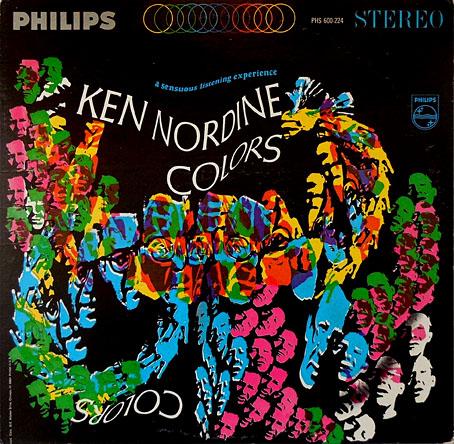
Colors (1967) by Ken Nordine.

• “The Do was the thing”: a lengthy chat with Chuck Gould of the San Francisco Diggers. The second interview from Jay Babcock’s oral history of the Diggers.

Sticking it to the Man: Revolution and Counterculture in Pulp and Popular Fiction, 1950–1980 edited by Andrew Nette and Iain McIntyre.

Adrian Shaughnessy‘s Krautrock Top Ten. (People who know me well won’t be surprised to hear that I own everything on this list.)

See “queer” as a term has become an umbrella that accommodates not only the type of sex you have and with whom, but also how you identify the sex you have, how you identify your personality, your aura, the ineffable je ne sais queer that may or may not be related in any way to your sexuality, or even the way you present yourself to the world, but simply some deeply held, internal feeling. You don’t actually need to share a common oppression or a common romantic or sexual behavior.

[…]

The reason I mind is because queer, in functioning as a catchall, serves to obscure what it is about my life, my community, my partners, that I needed to learn to be proud of in the first place. Because for me and all the other lesbians I know, figuring out your sexuality is hard enough, but the real work is in accepting yourself, demanding acceptance from others, being willing to walk away when that acceptance is denied.

Lesbians are women, and women are taught that we’re supposed to be sexually available objects of public consumption. So we spend a lot of time saying “No.” No, we won’t fuck or partner with men; no, we won’t change our minds about this; no, this body is a no-man’s land. Lesbian, straight or bi, women are punished whenever we try to assert a boundary. Queer as a catchall term makes it really hard for lesbians to assert and maintain this boundary, because it makes it impossible to name this boundary.

Jocelyn Macdonald on how the increasing dilution and commodification of “queer” as a label does little to serve the interests of the people to whom it was applied in the first place

• Two sets of live electronica from last year: Pye Corner Audio at The State51 Factory, and Tangerine Dream at Dekmantel.

• “LSD can get deep down and reset the brain—like shaking up a snow globe,” says Amanda Fielding.

• Ewan Wilson on the impossible architecture of video games.

• Mix of the week: Secret Thirteen Mix 279 by Marcos Cabral.

• RIP Betty Ballantine, Bruno Ganz and Ken Nordine.

• At Dennis Cooper’s: They will never exist.

Cosi Fanni Tutti‘s favourite records.

She Comes In Colors (1967) by Love | Colors (1969) by Pharoah Sanders | Balthus Bemused By Color (Mix II) (1988) by Harold Budd

Weekend links 446

pca.jpg

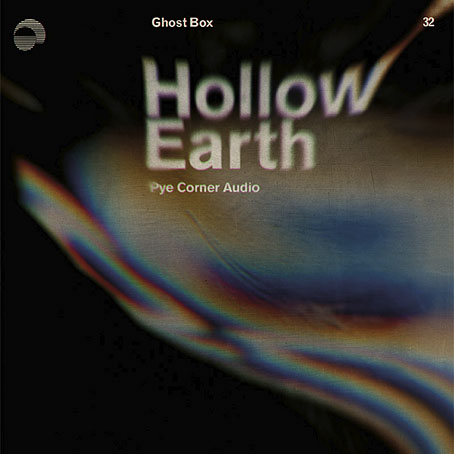
The Ghost Box label releases a new album by the excellent Pye Corner Audio in February (previews are here). The spectral design, as ever, is by Julian House.

• “In October 1966, Phyllis Willner arrived on motorcycle in San Francisco as a teenage Jewish runaway from Jamaica, Queens. She quickly fell in with the Hell’s Angels, the San Francisco Mime Troupe and, most crucially, the Diggers, who were just getting their street radical thing together in the Haight-Ashbury. The next two years would be eventful: many extraordinary highs, some really terrible lows.” Jay Babcock talks to Phyllis Willner about her involvement with “the executive branch of the hippie movement”, the Diggers.

• At Expanding Mind: Erik Davis talks with religious scholar Diana Pasulka about UFOs, scientific believers, book encounters, elite cabals, studying weirdness, and her new book American Cosmic: UFOs, Religion, Technology.

• Kenneth Anger is now 91 but he still appears hale, and looks even more magus-like than ever. This short film by Floria Sigismondi finds him reminiscing in the antiquated confines of the Chateau Marmont hotel on Sunset Boulevard.

David Wojnarowicz did not write dark fantasy. He wrote real life. In The Waterfront Journals he brilliantly captures electric tales from the mouths of strangers, those he described as “junkies, prostitutes, male hustlers, truck drivers, hobos, young outlaws, runaway kids, criminal types”, whose lives echo his own ostracized existence. He was thirteen when he was first paid for sex and sixteen when he started “turning tricks” regularly. His mother kicked him out of the house. By the time Wojnarowicz came out to friends in New York, he was in his early twenties. He was on the cusp of finding his voice as a writer and his confidence as an artist. It was the mid-1970s. AIDS was about to tear through the gay community.

Lara Pawson reviews three books by artist and writer David Wojnarowicz

John Banville reviews Kafka’s Last Trial by Benjamin Balint: “A scrupulous study of the squabble between Germany and Israel over Kafka’s papers, and the two women caught in the middle.”

• A sitting with the diva of the diode: electronic musician Suzanne Ciani in conversation with Christine Kakaire.

• Mixes of the week: Secret Thirteen Mix 076 by KK Null, and XLR8R Podcast 574 by SHXCXCHCXSH.

Cassie Packard on the colorful and clairvoyant history of aura photography.

Edward Gorey’s Children’s Books Illustrations, Revisited.

Alison Flood on the fascination of miniature books.

Magic Hollow (1967) by The Beau Brummels | Hollow Stone (1972) by Khan | Through Hollow Lands (For Harold Budd) (1977) by Brian Eno

Weekend links 443

gorey.jpg

• Yet more Gorey: Mark Dery’s biography of the artist prompted The New Yorker to unearth a piece of cover art that Edward Gorey submitted 25 years ago. In the same magazine Joan Acocella reviews Dery’s book and examines Gorey’s life and art. At Expanding Mind, Erik Davis talks with Mark Dery about Surrealism, the gay voice, Penny Dreadfuls, and the occult and Taoist influences in Gorey’s work.

Moving Through Old Daylight: Mark Fisher, Jim Jupp & Julian House of Ghost Box Recordings, and Iain Sinclair in conversation at the Roundhouse, Camden, London, 5 June 2010. Topics under discussion included Nigel Kneale, TC Lethbridge, John Foxx, BBC Radiophonic Workshop, alchemies of sound, the homogenisation of culture, imagining space and the impersistence of memory.

• “A radical retelling of our relationship with the cosmos, reinventing the history of astronomy as a new form of astrological calendar.” The Space Oracle by Ken Hollings.

There was a deliberate, almost prickly quality to Fisher’s writing and thinking that is rare nowadays, when criticism is more likely to involve open-minded rationalizing than steadfast refusal. He was not one to frolic in ambiguity or irony. “Just because something is current doesn’t mean it is new,” he writes in K-Punk, as he wonders if a time traveller from the nineties would find any contemporary music as radical as post-punk or jungle had once seemed to him. When everything is cheerfully “retro,” Fisher argued, we lose our grasp on history—and, without a sense of why the past happened the way it did, our anything-goes embrace of “happy hybridities” is an empty gesture. “What pop lacks now is the capacity for nihilation, for producing new potentials through the negation of what already exists,” he writes.

Hua Hsu on Mark Fisher’s K-Punk

• At Wormwoodiana: Mark Valentine on The Wind Protect You (1946), a novel by Pat Murphy which Mark describes as a forgotten precursor of Watership Down.

• “At once tiny and huge: what is this feeling we call ‘sublime’?” Sandra Shapshay explores the Romantic aesthetic.

Dennis Cooper‘s favourite fiction, poetry, non-fiction, film, art, and internet of 2018. Thanks again for the link here!

• Mixes of the week: XLR8R Podcast 572 by Nastia, and FACT Mix 683 by Casino Versus Japan.

A Child’s Voice (1978) by David Thomson, an overlooked ghost story starring TP McKenna.

• Jean Cocteau’s Orphée returns from the underworld via BFI blu-ray next month.

Rated SAVX: The Savage Pencil Scratchbook

Orpheus (1967) by The Walker Brothers | Orpheus (1987) by David Sylvian | Overture To Orpheus (2003) by Colin Booth

Borges in the Firing Line

borges.jpg

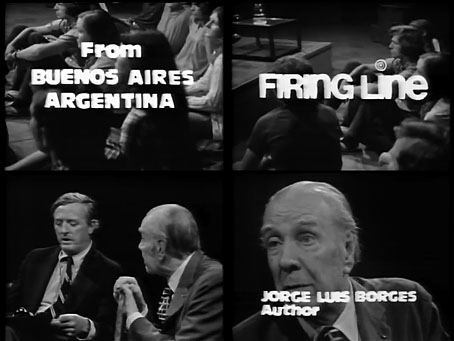
Jorge Luis Borges was interviewed on TV a number of times in later life but most of the available appearances are in un-subtitled Spanish. His 1977 meeting with William F Buckley on Buckley’s long-running debate and discussion show, Firing Line, is an exception, and a welcome one for being almost a whole hour of serious discussion. Buckley’s reputation has been reappraised in recent years. Gore Vidal famously accused him on live TV of being a “crypto-Nazi”, a barb that prompted Buckley to momentarily lose his usual composure. With American politics currently beset by actual Nazis, crypto- or otherwise, as well as people who wouldn’t crack open the spine of a book even if you offered them another tax break, Buckley now looks like an impossible figure: an American conservative who was also a genuine intellectual with a passion for literature.

The discussion on this occasion is less about Borges’ works than about language and literature. If you’ve read any Borges interviews then this is familiar territory, but Borges elaborates here on subjects that were only touched on elsewhere, especially the strengths of English over Spanish as a literary language, and the pros and cons of translation. This latter subject is a sore point for Borges readers such as myself who believe that the current translations (made after Borges’ death) are inferior to the earlier ones, many of which were prepared with the approval of the author. It’s painful to hear him say he thought his stories worked better in English, and it makes me wonder again what he might make of the present state of affairs.

Elsewhere, Buckley tries to lead Borges into a discussion of politics, a subject that he generally avoided because it didn’t interest him, and whenever he did mention the subject he’d usually get into trouble by saying something that would annoy one side of the political spectrum or the other. I was pleased to note a fleeting reference to Arthur Machen, mentioned in relation to the Julio Cortázar short story, Casa Tomada (House Taken Over), which Borges, Adolfo Bioy Casares and Silvina Ocampo reprinted in their Antología de la Literatura Fantástica (1977).

Previously on { feuilleton }
La Bibliothèque de Babel
Borges and the cats
Invasion, a film by Hugo Santiago
Spiderweb, a film by Paul Miller
The Library of Babel by Érik Desmazières
Books Borges never wrote
Borges and I
Borges documentary
Borges in Performance

Weekend links 438

awazu.jpg

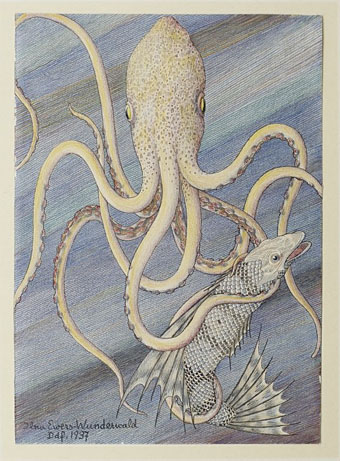
Seishu Hanaoka’s Wife (1970) by Awazu Kiyoshi.

Hoodoo, Conjuration, Witchcraft & Rootwork: a colossal new addition to the Internet Archive, being a 5-volume, 4766-page collection of folkloric material gathered by Harry Middleton Hyatt in Alabama, Arkansas, Florida, Georgia, Illinois, Louisiana, Maryland, Mississippi, North Carolina, South Carolina, Tennessee, and Virginia between 1936 and 1940.

• Edward Gorey is the theme du jour, so here’s some more: Gorey’s 1977 appearance on The Dick Cavett Show is revelatory, especially if you’ve never seen him talking before. Meanwhile, Laughing Squid has a previously unpublished interview in which Gorey discusses his love for his disruptive cats.

• Jeff Nuttall’s mid-century survey of the aesthetic underground, Bomb Culture, receives a fiftieth anniversary republication by Strange Attractor. The new edition is edited by Douglas Field and Jay Jeff Jones, with a foreword by Iain Sinclair and an afterword by Maria Fusco.

I have always questioned identity politics with my work. I often have characters that engage in homosexual sex but do not identify as gay (hustlers, neo-Nazi skinheads, extreme left wing revolutionaries, gerontophiles, etc.). But my films have also always been inclusive in terms of race, class, and gender. I find that the new emphasis on identity politics has really narrowed creative expression. It demonstrates a profound ignorance about sexuality, history, and human experience.

My sexual identity is pretty much fixed—I’m a Kinsey 6, if not a 7—but I acknowledge that this means I’m sexually repressed. I believe, after Freud, that everyone has some bisexual potential, and the tendency to increasingly entrench gender identity as innate and immutable is really preposterous. It also leads to strict rules about sexual representation—how gays, lesbians and transgender people “must” be portrayed, the policing of representation, a kind of proprietary stance about who is allowed to portray these characters.

It really boils down to a naivety about sexuality, and a complete failure of the imagination. It discourages people who may have the potential for some kind of sexual fluidity to express themselves. I’ve always been a “bad gay,” but now this political correctness has made me feel even more alienated from the notion of “gay identity”—particularly since the new assimilationist model is so conservative and dull.

Filmmaker Bruce LaBruce discussing art, porn and politics with Hoçâ Cové Mbede

• “Who is Barbara Baranowska? Despite the so-called Polish Poster School’s fame, certain people were seemingly forgotten. Perhaps they even wanted it that way…” Daniel Bird on an elusive artist. Related: Selected works by Barbara Baranowska.

• “I don’t think I’m ever mean-spirited and I try to understand human behaviour even though it’s impossible,” says John Waters.

Nine Dimensional Synod Of Oblique Pleasures is a very welcome new release by The Wyrding Module.

Galerie Dennis Cooper presents…The Resplendent Illegibility of Extreme Metal Logos.

Apocalypse Burlesque — Tales of Doomsday Eros: a new book by Supervert.

Rare booksellers rallied against an Amazon-owned company and won.

B. Alexandra Szerlip on the 80-year history of the ballpoint pen.

Anjelica Huston: how we made The Addams Family.

• Mix of the week: Secret Thirteen Mix 270 by Okkre.

The Cabinet of the Quay Brothers

Hoodoo Man Blues (1965) by Junior Wells’ Chicago Blues Band | Evil Hoodoo (1966) by The Seeds | I Been Hoodood (1973) by Dr John