Weekend links 471

maclean.jpg

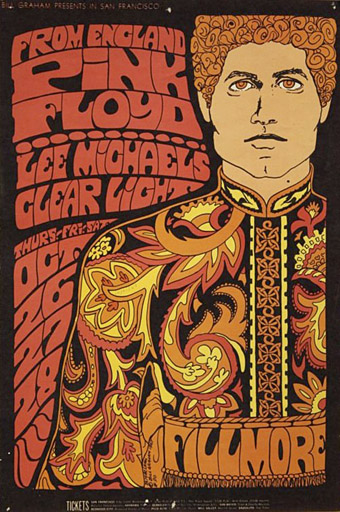
Pink Floyd, Lee Michaels, Clear Light (1967) by Bonnie MacLean.

• Electronic musician Mort Garson has been subject to a revival of interest recently, with reissues of his works as Ataraxia (The Unexplained), and Lucifer (Black Mass). The latest reissue is Mother Earth’s Plantasia (1976), an album released under Garson’s own name, and one of several works of plant mysticism from the 1970s (see Stevie Wonder’s Journey Through The Secret Life Of Plants, and Green by Steve Hillage).

• “It is striking how much of this work sounds like a missing link from the art world to the popular groups of the time, such as the Detroit techno pioneers Cybotron and the Japanese electro legends Yellow Magic Orchestra.” Geeta Dayal on the reconfigured Speak & Spell machinery of Paul DeMarinis.

The cost of free love and the designers who bore it: Madeleine Morley meets the women of psychedelic design.

For the transhumanist anarchist Wilson, the neurological relativism revealed by his own learning and personal deprogramming experiments called for a form of ‘guerrilla ontology’ that lampooned, rejected and transmitted much needed interference into the ‘reality tunnels’ that attempt to control much of contemporary society and individual behaviour. In the Schrödinger’s Cat Trilogy, characters are repeatedly placed in positions of cognitive dissonance, where they are forced to reevaluate their own belief systems due to experiences that they are unable to accommodate.

Sean Kitching on the 40th anniversary of Robert Anton Wilson’s Schrödinger’s Cat Trilogy

• They said books were dead, they were wrong: Adrian Shaughnessy on a decade of Unit Editions.

• Mixes of the week: Xianedelica by Jesús Bacalão, and Kosmische Mix By Tarotplane.

• Swinging 60s surrealist Penny Slinger: “Collectors thought I came with the art”.

• Cabaret Voltaire: Chance Versus Causality (Teaser).

Luc Sante on postcards of American violence.

• At Dennis Cooper’s: Peter Whitehead Day.

Computerwelt (1981) by Kraftwerk | Speak And Spell (1984) by Christina Kubisch | Time Space Transmat (1985) by Model 500

Weekend links 469

X.jpg

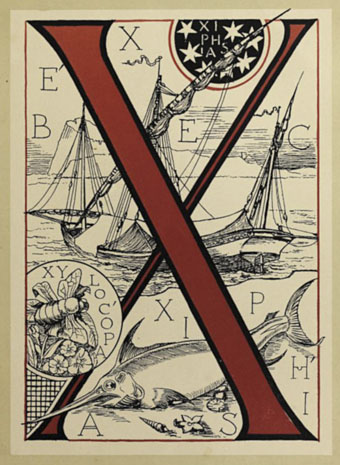
X from Theodore Howard’s ABC (1880) by Theodore Howard.

• “[Parade] has everything: joy and sadness, get-down and wistfulness, mourning and melancholia, group funk and Debussy interludes, echoes of Ellington, Joni, film music, chanson. It’s a perfectly realised whole.” Ian Penman on the enigmas and pleasures of Prince.

• “Mescaline reads like the culmination of a lifetime’s wanderings in the very farthest outposts of scientific and medical history.” Ian Sansom review’s Mike Jay’s history of the psychedelic alkaloid.

• The Day the Music Burned by Jody Rosen: “It was the biggest disaster in the history of the music business—and almost nobody knew. This is the story of the 2008 Universal fire.”

This willing constriction of intellectual freedom will do lasting damage. It corrupts the ability to think clearly, and it undermines both culture and progress. Good art doesn’t come from wokeness, and social problems starved of debate can’t find real solutions. “Nothing is gained by teaching a parrot a new word,” Orwell wrote in 1946. “What is needed is the right to print what one believes to be true, without having to fear bullying or blackmail from any side.” Not much has changed since the 1940s. The will to power still passes through hatred on the right and virtue on the left.

George Packer on what George Orwell’s Nineteen Eighty-Four means today

• Having spent the past week watching Jacques Rivette’s 775-minute Out 1, this interview with Rivette from 1974 was of particular interest.

• At Dangerous Minds: Donald Sutherland as “a sperm-filled waxwork with the eyes of a masturbator” in Fellini’s Casanova.

The Adventures of the Son of Exploding Sausage (1969): the Bonzo Dog Band getting it untogether in the country.

• Dark, velvety dark: Nabokov’s discarded ending to Camera Obscura, introduced by Olga Voronina.

• “Spotify pursues emotional surveillance for global profit”, says Liz Pelly.

• Mix of the week: Then Space Began To Toll by The Ephemeral Man.

• An interview with master of horror manga Junji Ito.

• Announcing the Arthur Machen Essay Prizes.

• RIP film-maker and author Peter Whitehead.

X is for…

X Offender (1976) by Blondie | X-Factor (1981) by Patrick Cowley | X-Flies (1997) by Mouse On Mars

Weekend links 465

palladini.jpg

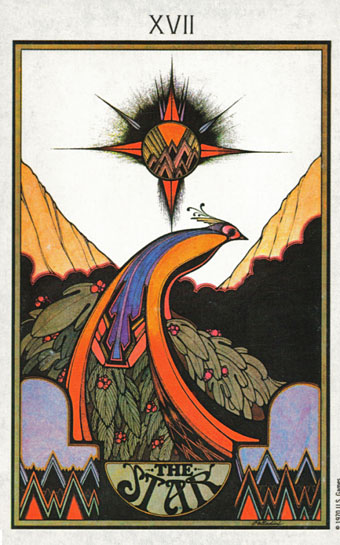
The Star (1970) from The Aquarian Tarot by David Palladini.

• Artist David Palladini died in March but I only heard the news this week. His poster for Werner Herzog’s Nosferatu has been a favourite of mine ever since the film’s release, while some of his other works have featured here in the past. Still popular among Tarot users is the Aquarian Tarot (1970), a deck published a few years after Palladini had helped with the production of the Linweave Tarot. From the same period as the Aquarian deck is a set of Zodiac posters, all of which exhibit Palladini’s distinctive blend of Art Nouveau and Deco stylings. In addition to posters, Palladini produced book covers and illustrations, and even a few record covers. A book collecting all of this work would be very welcome.

Erotikus: A History of the Gay Movies (1974? 75? 78?): Fred Halsted presents a 90-minute history of American gay porn, from the earliest beefcake films to the hardcore of the 1970s, some of which Halsted also helped create. Related: Centurians of Rome [sic]: Ashley West and April Hall on the bank robber who made the most expensive gay porno of all time.

Peter Bradshaw reviews Too Old to Die Young, a Nicolas Winding Refn TV series described as “a supernatural noir”. Sign me up.

Naomi Wolf’s Outrages establishes the context for [John Addington] Symonds’s desperate efforts to justify his own sexual feelings. Since he was born in 1840, he was 15 when the first edition of Walt Whitman’s Leaves of Grass appeared, the same year that legislation in Britain streamlined the laws against sodomy and ensured that men found guilty of it served long prison sentences. With intelligence and flair, Wolf uses the various responses to Whitman to show the levels of intense need in the decades after the publication of Leaves of Grass for images and books that would rescue homosexuality from increasing public disapproval.

Colm Tóibín reviews Outrages: Sex, Censorship and the Criminalisation of Love by Naomi Wolf

• Record label Dark Entries has discovered 40 more reels (!) of music by Patrick Cowley dating from 1974 to 1979.

• “Is Stockhausen’s Licht the most bonkers operatic spectacle ever?” asks Robert Barry.

• Sex, Spunk, Shoes and Sweet Satisfaction: A Q&A with artist Cary Kwok.

• Tripping his brains out: Eric Bulson on Michel Foucault and LSD.

• Paul O’Callaghan chooses 10 best Dennis Hopper performances.

• “More obscene than De Sade.” Luc Sante on the fotonovela.

• Karl Blossfeldt’s Urformen der Kunst (1928).

• The Strange World of…Gong

Neonlicht (1978) by Kraftwerk | Brüder Des Schattens, Söhne Des Lichtes (1978) by Popol Vuh | Lichtfest (2017) by ToiToiToi

Weekend links 456

tanning.jpg

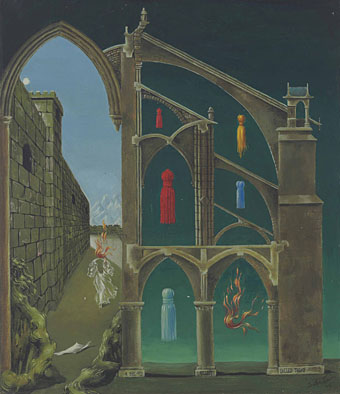
A Mrs Radcliffe Called Today (1944) by Dorothea Tanning.

Darran Anderson on how the Bauhaus kept things weird. “Many imitators of the famous art school’s output have missed the surreal, sensual, irrational, and instinctual spirit that drove its creativity.”

• Notes on the Fourth Dimension: Hyperspace, ghosts, and colourful cubes—Jon Crabb on the work of Charles Howard Hinton and the cultural history of higher dimensions.

• “[Edward] Gorey is slowly emerging as one of the more unclubbable American greats, like Lovecraft or Joseph Cornell,” says Phil Baker.

The label “homosexual writer” stuck for the rest of his career, with Purdy confined to what Gore Vidal called “the large cemetery of gay literature…where unalike writers are thrown together in a lot, well off the beaten track of family values”. In later years, Purdy moved further off the beaten track, as much by intention as circumstance. “I’m not a gay writer,” he would tell interviewers. “I’m a monster. Gay writers are too conservative.”

Speaking to Penthouse magazine in 1978, Purdy said being published was like “throwing a party for friends and all these coarse wicked people come instead, and break the furniture and vomit all over the house”. He added that, in order to protect oneself, “a writer needs to be completely unavailable”.

Andrew Male on writer James Purdy

• The Necessity of Being Judgmental: Roger Luckhurst on k-punk: The Collected and Unpublished Writings of Mark Fisher.

Faunus: The Decorative Imagination of Arthur Machen, edited by James Machin with an introduction by Stewart Lee.

• More James Purdy: “His poetry displays a softness that readers of his fiction might not expect,” says Daniel Green.

Drag Star! is a 150,000-word interactive novel/text adventure by Evan J. Peterson.

• At Dangerous Minds: Dave Ball discusses his years as the other half of Soft Cell.

Daisy Woodward on the story of radical female Surrealist Dorothea Tanning.

• Inside the bascule chamber: photos of Tower Bridge, inside and out.

Tim Smith-Laing on the meaning of Miró’s doodles.

• Galerie Dennis Cooper presents…Emma Kunz.

rarecinema: a shop at Redbubble.

Apollo Press Kits

The Fourth Dimension (1964) by The Ventures | Dimension Soleils (1983) by Gilles Tremblay | Into The Fourth Dimension (1991) by The Orb

Weekend links 454

ewerswunderwald.jpg

Octopus and Pike (1937) by Ilna Ewers-Wunderwald.

• At Expanding Mind: writer and avant-garde publisher Tosh Berman talks with Erik Davis growing up in postwar California, hipster sexism, the hippie horrors of Topanga canyon, his impressions of family friends like Cameron and Brian Jones, and his charming new memoir Tosh, about growing up with his father, the remarkable underground California artist Wallace Berman.

• At Haute Macabre: A Sentiment of Spirits: Conversations with Handsome Devils Puppets.

• “We felt a huge responsibility.” Behind the landmark Apollo 11 documentary.

Jarman’s work was a statement that conservatism did not, or at least should not, define the perception of Britishness. His vision extended all of the way back to the likes of William Blake, John Dee and Gerard Winstanley, the radicals, mystics and outcasts of English history. His era, on the other hand, looked inwards and pessimistically so. The outward world was solely a free market. Our projected national identity was little else but the retread of colonial fantasies, a faux benevolence to the world that handily discarded the violence and tyranny that built it. Jarman saw through this imaginary landscape, often skewering it in his films.

Adam Scovell on the much-missed radicalism of Derek Jarman

• Director Nicolas Winding Refn: “Film is not an art-form any more.”

• Mix of the week: Secret Thirteen Mix 281 by Blakk Harbor.

• At Greydogtales: Hope Hodgson and the Haunted Ear.

Hans Prinzhorn’s Artistry of the Mentally Ill (1922).

Michael Rother‘s favourite albums.

Renaissance metal

Puppet Theatre (1984) by Thomas Dolby | Puppet Motel (1994) by Laurie Anderson | Maybe You’re My Puppet (2002) by Cliff Martinez