Clearlight: Symphonies

clearlight1.jpg

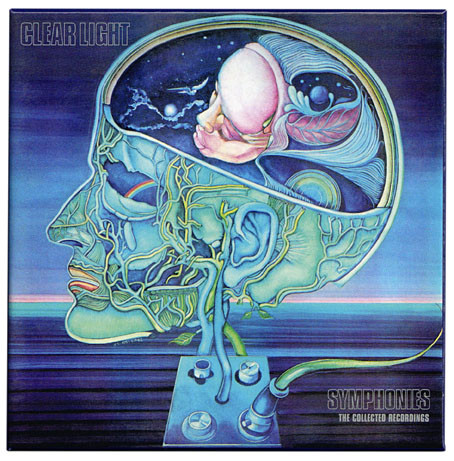
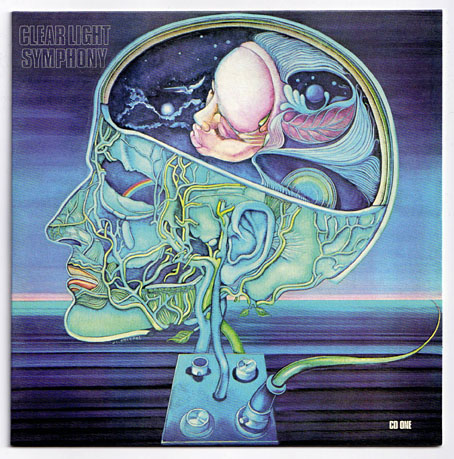
The Clearlight that concerns us here is a French musical ensemble with a shifting line-up, formed by and oriented around the activities of its keyboard-playing composer Cyrille Verdeaux. Clearlight, in other words, shouldn’t be confused with the short-lived American psychedelic band known as Clear Light. Cherry Red have just released five Clearlight albums in one of their well-produced CD boxes: Clear Light Symphony (1975), Forever Blowing Bubbles (1975), Les Contes Du Singe Fou (1977), Visions (1978), and Impressionist Symphony (2014). The box bears the subtitle “The Collected Recordings” but these albums comprise only one half of the Clearlight discography. I doubt there’s much demand for anything more substantial than this, at least in Britain where the group have been chiefly known for their first album, Clear Light Symphony. Cyrille Verdeaux’s booklet notes describe how he secured a deal with Virgin Records thanks to the success of Mike Oldfield’s early albums. Verdeaux’s demo tape was aiming for a similar blend of rock music with classical structures, with one long “symphony” divided into two parts. When the album was being recorded Virgin persuaded him to flesh out his composition with three musicians who were signed to the label via Gong—Steve Hillage, Tim Blake and Didier Malherbe—all of whom play on the second part. Or what should have been the second part… Virgin switched the two playing sides of the recording around in order to give the Gong artists greater prominence. The switch has been reversed for this latest release.
clearlight2.jpg

Cover art by Jean-Claude Michel.

I’ve not heard everything in Cyrille Verdeaux’s discography but the Clearlight albums that follow the debut are further excursions into quasi-classical prog-rock composition. There was a lot of this around in the 1970s, especially from keyboard players like Rick Wakeman, Vangelis, Bo Hansson and others. Verdeaux isn’t as much of a Liberace show-off as Wakeman, and he’s not as original as Vangelis, but in Clearlight his piano and keyboard flourishes benefit from the other musicians assembled on each release. Tim Blake had settled in France in the late 1970s, and turns up on several of the albums that follow Clear Light Symphony. The presence of Blake’s burbling synthesizers and Christian Boulé’s Hillage-like guitar lead the music out of the concert hall and into the cosmos. I have to admit to being pleasantly surprised by this collection of albums. I bought the set mainly to restore Clear Light Symphony to my record collection, an album I used to own on vinyl then sold following a shelf purge in the early 2000s. (One thing you’ll never get on a CD reissue is the locked groove that ends side two of the vinyl release.) My worries about the other albums being severely unpalatable haven’t been realised.
clearlight3.jpg

Cover art by Jean-Claude Michel.

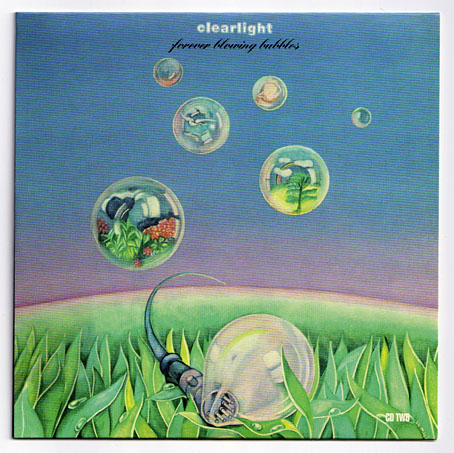
Forever Blowing Bubbles was another Virgin release, this time with shorter pieces separated by electronic bubbling noises that posit each composition as one of a number of musical “bubbles” that we’re visiting in turn. A couple of these are songs which I was less keen on but the music is just as good as on the debut album. This is also the first album in the box featuring bonus tracks, a common feature of album reissues which often prove to be superfluous. Not so here, where the additions sound like a continuation of the album as a whole. King Crimson enthusiasts may like to know that David Cross plays violin on this album.
clearlight4.jpg

Cover art by Jean Solé.

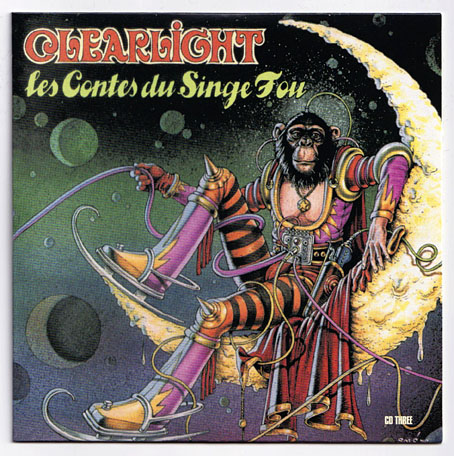
Les Contes Du Singe Fou continues the formula, with more short compositions and a couple more songs, one of which is so close to the beginning of Supper’s Ready by Genesis as to be almost plagiaristic. In place of David Cross on violin there’s a recent exile from Magma, Didier Lockwood, whose fiery contributions are especially welcome. I didn’t expect there to be a tangible link with the Zeuhl artists when Verdeaux’s compositions are generally more palatable than Magma and co. Christian Boulé was touring in Steve Hillage’s band in 1977 so Yves Chouard takes over on the guitar. I ought to note that this album and the one that follow have been mastered from vinyl sources.

Continue reading “Clearlight: Symphonies”

Weekend links 727

maar.jpg

Untitled (Hand-Shell) (1934) by Dora Maar.

• “The Secret Public…reads like the book he was born to write…and speaks to the taboo around homosexuality which the bravest pop stars did their best to dispel.” Alex Needham reviewing The Secret Public: How LGBTQ Resistance Shaped Popular Culture (1955–1979) by Jon Savage. Anyone buying the book should also find themselves a copy of Savage’s Queer Noises compilation.

• At Dangerous Minds: Richard Metzger advises everyone to seek out Sion Sono’s 237-minute Love Exposure (2008), “Japan’s eroto-theosophical answer to the allegorical journeys of Alejandro Jodorowsky”.

Prince – Sign O’ The Times (Live at Paisley Park 12/31/87). Pro-shot video of the last performance of the Sign O’ The Times tour, with a unique contribution from Miles Davis.

• Old music: Camembert Electrique by Gong. A rocking riposte to the stereotype of the group as a bunch of whimsical hippies.

• New music: Lambda by ZULI. This is another release on the Subtext label which I designed.

• The Devil in the Flesh: Patrick Clarke on David Sylvian’s Red Guitar at 40.

Milky Way photographer of the year 2024.

The Strange World of…Gastr del Sol.

Jungle Guitar (1961) by The Palatons | Lunatic Guitar (1980) by Ippu-Do | Naive Guitar (1982) by Adrian Belew

Weekend links 726

ferriss.jpg

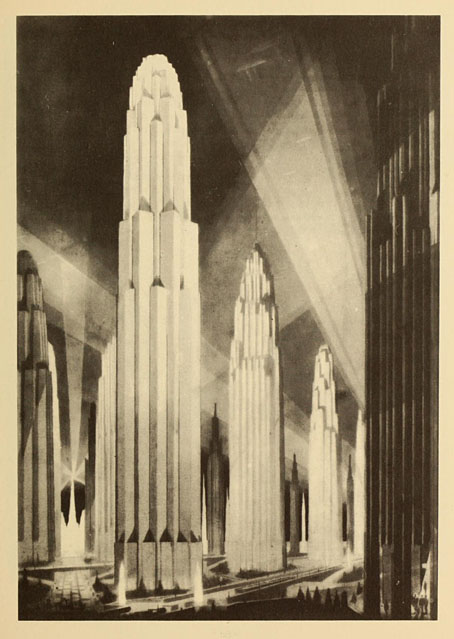
Verticals on Wide Avenues from The Metropolis of Tomorrow (1929) by Hugh Ferriss.

Megalopolis, the futuristic epic written and directed by Francis Ford Coppola, now has a trailer and a handful of mixed reviews. I recall Coppola saying years ago that he was the kind of director who would happily make films in any genre, science fiction included. I’ve wondered ever since what a full-on Coppola SF film might look like. (Captain EO and Peggy Sue Got Married don’t count). Now it seems we’re about to find out. Given his previous missteps I remain sceptical yet curious about this one. I’ve avoided his output since Bram Stoker’s Dracula but I’m still happy to see him being so ambitious while retaining his independence.

• And RIP Roger Corman who Coppola remembered as “my first boss, task-master, teacher, mentor, and role model. There is nothing about the practical matter of making movies I didn’t learn by being his assistant.” Related: It rained on the Sunday: a career interview with Roger Corman by Matthew Thrift.

• At Retro-Forteana: Fortean-themed music, from opera to metal. A difficult subject for a such short post, as the author admits. I’m amused to see one of my Hawkwind album covers in the list although the album itself doesn’t seem very Fortean to me.

• “Did you know that, if things had gone differently, the Pompidou Centre could have been an egg?” Oliver Wainwright on architecture that might have been.

• At Cartoon Brew: A closer look at great animated title sequences. I deplore the omission of Richard Williams’ titles for The Charge of the Light Brigade (1968).

• At Public Domain Review: Love Spells and Deadly Shrieks: Illustrations of Mandrakes (ca. 650–1927).

• At Wormwoodiana: “That Strange Little Book”: Ding Dong Bell by Walter de la Mare.

• At Unquiet Things: The latest collection of Intermittent Eyeball Fodder.

• Mix of the week: DreamScenes – May 2024 by Ambientblog.

Mandrake Root (1968) by Deep Purple | Mandrake (1975) by Gong | The Mandrake’s Hymn (2019) by Earth

Weekend links 492

wilson

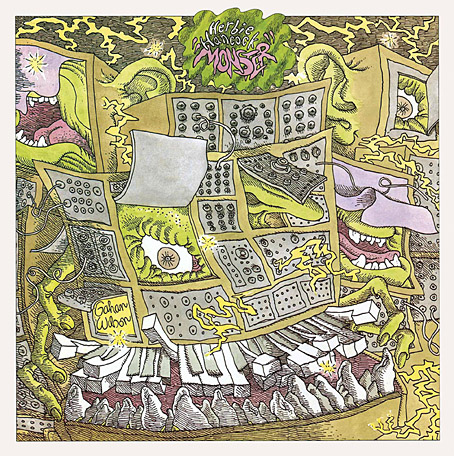
Cover art by Gahan Wilson for Monster (1980) by Herbie Hancock.

• RIP Gahan Wilson, a great cartoonist with a flair for horror, the macabre and grotesque. Many of his best cartoons are buried in back issues of The New Yorker, Playboy and National Lampoon but book collections of his work are worth seeking out. He also wrote regularly, and for several years was a film reviewer and columnist for The Twilight Zone Magazine, back issues of which may be found at the Internet Archive. Related: Gahan Wilson and the Comedy of the Weird, an interview with Wilson by Richard Gehr; The Beautifully Macabre Cartoons of Gahan Wilson by Michael Maslin.

• The Unanswered Question: Irmin Schmidt, the last surviving member of Can, interviewed by Duncan Seaman. The conversation is mostly about his solo work but he also mentions plans to release a collection of live Can recordings next year.

Valerie and Her Week of Wonders (1970), the Surrealist fable directed by Jaromil Jires, receives a welcome region-free blu-ray release by Second Run in January.

At its best, the true psychedelic experience is an analogue of psychotherapy: you are encouraged to lean in to something potentially rupturing or even disturbing, in an attempt to achieve deep personal resolution rather than simply mind-scrambling hedonism or entertainment (which, to be fair, the group can provide as well). […] Despite clear and longstanding links with the extreme worlds of black metal, power electronics, industrial, sludge metal and doom, Sunn O))) have created a space that now stands beyond any obvious scene signifiers. This zone of pure affect—and what they hope will be a healing experience—is welcome to all.

John Doran on the vibrational power of Sunn O)))

Neuland is an electronic collaboration by two ex-members of Tangerine Dream, Peter Baumann and Paul Haslinger.

• Flying teapots and electric Camembert: the story of Gong, prog’s trippiest band by Simon Reynolds.

• Conversations with Ursula: Clive Hicks-Jenkins answers some questions about his art.

• Mix of the week: Test Transmission Archive Reel 38 by Keith Seatman.

• Limitation of Life: Tim Pelan on John Frankenheimer’s Seconds.

Anthony Madrid on the most famous coin in Borges.

• At Dennis Cooper’s: Jacques Tati Day.

Dutch Graphic Roots

The Magic Yard (1970) by Lubos Fiser | Valerie (2003) by Broadcast | Introduction (2007) by The Valerie Project

Weekend links 465

palladini.jpg

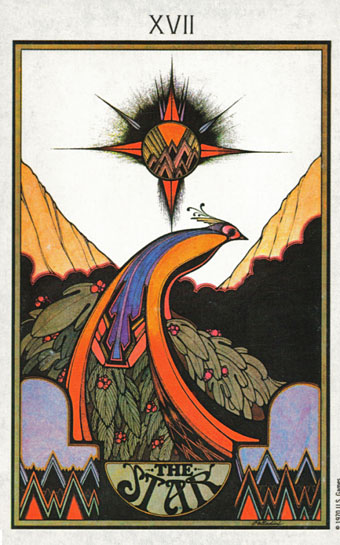
The Star (1970) from The Aquarian Tarot by David Palladini.

• Artist David Palladini died in March but I only heard the news this week. His poster for Werner Herzog’s Nosferatu has been a favourite of mine ever since the film’s release, while some of his other works have featured here in the past. Still popular among Tarot users is the Aquarian Tarot (1970), a deck published a few years after Palladini had helped with the production of the Linweave Tarot. From the same period as the Aquarian deck is a set of Zodiac posters, all of which exhibit Palladini’s distinctive blend of Art Nouveau and Deco stylings. In addition to posters, Palladini produced book covers and illustrations, and even a few record covers. A book collecting all of this work would be very welcome.

Erotikus: A History of the Gay Movies (1974? 75? 78?): Fred Halsted presents a 90-minute history of American gay porn, from the earliest beefcake films to the hardcore of the 1970s, some of which Halsted also helped create. Related: Centurians of Rome [sic]: Ashley West and April Hall on the bank robber who made the most expensive gay porno of all time.

Peter Bradshaw reviews Too Old to Die Young, a Nicolas Winding Refn TV series described as “a supernatural noir”. Sign me up.

Naomi Wolf’s Outrages establishes the context for [John Addington] Symonds’s desperate efforts to justify his own sexual feelings. Since he was born in 1840, he was 15 when the first edition of Walt Whitman’s Leaves of Grass appeared, the same year that legislation in Britain streamlined the laws against sodomy and ensured that men found guilty of it served long prison sentences. With intelligence and flair, Wolf uses the various responses to Whitman to show the levels of intense need in the decades after the publication of Leaves of Grass for images and books that would rescue homosexuality from increasing public disapproval.

Colm Tóibín reviews Outrages: Sex, Censorship and the Criminalisation of Love by Naomi Wolf

• Record label Dark Entries has discovered 40 more reels (!) of music by Patrick Cowley dating from 1974 to 1979.

• “Is Stockhausen’s Licht the most bonkers operatic spectacle ever?” asks Robert Barry.

• Sex, Spunk, Shoes and Sweet Satisfaction: A Q&A with artist Cary Kwok.

• Tripping his brains out: Eric Bulson on Michel Foucault and LSD.

• Paul O’Callaghan chooses 10 best Dennis Hopper performances.

• “More obscene than De Sade.” Luc Sante on the fotonovela.

• Karl Blossfeldt’s Urformen der Kunst (1928).

• The Strange World of…Gong

Neonlicht (1978) by Kraftwerk | Brüder Des Schattens, Söhne Des Lichtes (1978) by Popol Vuh | Lichtfest (2017) by ToiToiToi