Weekend links 430

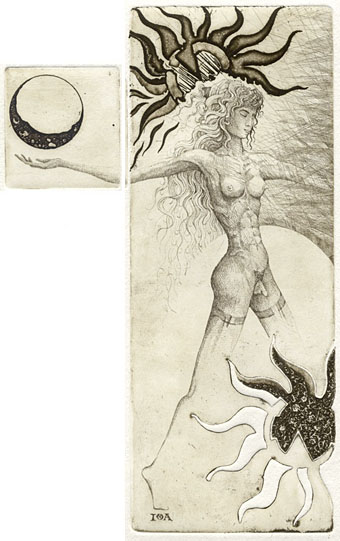
fiochi.jpg

Il Mago from the IONA Tarot by Giona Fiochi.

• “Russia’s answer to James Bond: did he trigger Putin’s rise to power?” Andrew Male on Max Otto von Stierlitz and Seventeen Moments of Spring. The whole series is on YouTube (with subtitles).

Geeta Dayal reviews High Static, Dead Lines: Sonic Spectres and the Object Hereafter by Kristen Gallerneaux, a new book about the eeriness of sound technology.

• Published next month: Strange Frequencies: The Extraordinary Story of the Technological Quest for the Supernatural by Peter Bebergal.

Let me first introduce an aside: I hate the word “queer” and all its new iterations. “Gay” was awful enough. “‘Gays’ makes us sound like bliss ninnies,” Christopher Isherwood said once. “Queer” will always be for men of my generation a word of violence and hatred, and it separates generations. And while I’m digressing, let me commit blasphemy: the over-emphasis on the Stonewall riots depletes and distorts our history of resistance and the art produced, which is determinedly referred to as “pre-Stonewall.” Resistance occurred years before Stonewall (but there were lots of writers in New York at the time to write about those riots), in San Francisco, Los Angeles, other cities, powerful confrontations with the police, powerful demonstrations. “Pre-Stonewall” writers include William Burroughs, Allen Ginsberg, strong radical voices confronting the grave dangers of the time, violence, prison.

John Rechy talking to Eric Newman about his latest novel, Pablo!, written in 1948 but only now seeing publication

Tangerine Dream performing Identity Proven Matrix, one of the standout pieces from recent album Quantum Gate, live in the studio.

Beloved is the debut solo album by Randall Dunn, record producer and member of the masterful Master Musicians of Bukkake.

• “How will police solve murders on Mars?” Geoff Manaugh on the new frontier of interplanetary law enforcement.

Milly Burroughs on how Verner Panton changed the way the world sees furniture design.

Tim Martin on the new science of psychedelics.

Werner’s Nomenclature of Colours

Next Stop Mars (1966) by Sun Ra & His Arkestra | Mars, The Bringer Of War (1976) by Isao Tomita | Mars Garden (2013) by Juan Atkins & Moritz Von Oswald

Weekend links 429

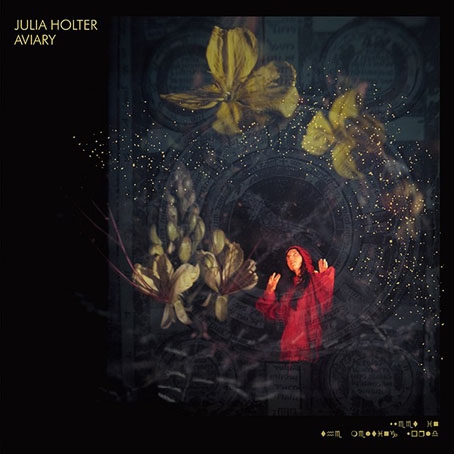
holter.jpg

• Julia Holter’s next album, Aviary, will arrive next month with a cover design bearing astrological symbols (a cryptic message?) and what looks like a grimoire page in the background, although I may be reading too much into this. Whatever the esoterics signify, the album is a double, and going by the sound of new song I Shall Love 2 it’s going to be a good one. Aviary will be released on 26th October just in time for the witch season.

Donna Ferguson talks to Oscar Wilde’s grandson, Merlin Holland, about the manuscript for The Picture of Dorian Gray which includes more openly homoerotic sentences than were included in the printed versions. A facsimile of the manuscript is now available in a limited, numbered edition from SP Books.

• The final single in the excellent Other Voices series from the Ghost Box label is released later this month. Something Out Of Nothing is by Sharron Kraus and Belbury Poly.

…we’re still trying to operate this new, paranoid society on what amounts to a psychedelic substrate—with little or no awareness of how our sets and settings are determining our results. The set and setting of the advertiser yield addictive behavioral design and persuasive technologies. The set and setting of the investor lead to algorithmic trading and winner-takes-all, extractive businesses. The set and setting of the military lead to drone warfare. The set and setting of the politician lead to targeted propaganda and digital fascism.

America is unconsciously living in a psychedelic landscape and having a bad trip. We don’t realize that we are living in a media environment that offers us an unprecedented capacity over reality. The world may have always been a consensual hallucination to some extent, but never before have we built our world so completely.

The internet is acid, and America is having a bad trip, says Douglas Rushkoff

Photographia Erotica Historica is a tiny leatherbound collection of antique pornography from Goliath Books.

Why is the Federal Government threatening an indie book publisher with $100,000 in fines?

• Undead, undead: my illustrations for Dracula are featured at Dangerous Minds. Thanks!

• The Vinyl Factory meets Japanese composer and musician Midori Takada.

• Exploring HP Lovecraft’s Gothic roots by Dr Xavier Aldana Reyes.

• From 2013: Dario Argento discussing his films with Alan Jones.

• Aurora Mitchell on Electro pioneer Doris Norton.

• Mix of the week: XLR8R Podcast 558 by DJ T.

Aviator (1970) by Michael Chapman | Aviation (2000) by Fluxion | Aviation (2001) by Monolake

Weekend links 426

slinger.jpg

Self Preservation (1970–77), a collage by Penny Slinger from the series An Exorcism.

• RIP John Calder, one of the most important British publishers of the last century whose death was acknowledged in the Washington Post (and in the Telegraph, a paper that would have given him no support during his censorship battles) but at the time of writing hasn’t been mentioned at all in the increasingly useless Guardian. The omission in the latter seems even more surprising when Calder himself wrote obituaries for the paper, and they ran an archive piece two weeks ago for the 50th anniversary of Calder & Boyars’ successful court defence of Last Exit to Brooklyn. “Publishing is an industry run by capitalists now.

• Another 50th anniversary: David Bushman asked Alan Moore for his memories of Patrick McGoohan’s superb TV series The Prisoner.

Michael Moorcock in conversation with Hari Kunzru at Shakespeare and Company, Paris.

Stephen O’Malley presents Acid Quarry Paris – In Session with Richard Pinhas (Heldon).

• When a rock is a stone: Louise Steinman on finding Robert Smithson’s Spiral Jetty.

• Victorians, Vaults, and Violet Water: a profusion of links at Greydogtales.

• Mix of the week: FACT mix 666 by Róisín Murphy.

• The amazing adventures of Melinda Gebbie.

Starbirthed

Exorcism (1971) by Lucifer | The Final Calling (Physical Exorcism) (1984) by CTI | Exorcism Of The Hippies (2010) by Mater Suspiria Vision

Weekend links 425

tsuruta.jpg

Art by Ichiro Tsuruta.

• “Writing is so much about subverting dogmatisms of all kinds, above all the ones that insist you cannot go there! You must not say that! Writers need to go anywhere, to take anything on. And the only rule is to do it well.” Rikki Ducornet in a feature at Dennis Cooper’s which has been linked here before but was previously on DC’s old (now deleted) blog.

• “This book-cover trend is turning bookstores into flower shops,” says Kenzie Bryant. “How publishing’s floral-print trend came to rule the world’s bookshelves.” (Where “the world” means the USA, as usual…)

• The third edition of Wyrd Daze—”The multimedia zine of speculative fiction + extra-ordinary music, art & writing”—is out now.

For this listener, Nardis has become a full-on musical obsession. I have more than ninety official and bootleg recordings of the tune stored in the cloud, ranked in a fluid and continually updated order of preference, so they follow me wherever I go. In my travels as a writer, I use Nardis as a litmus test of musical competence: if I see a jazz band in a bar or a busker taking requests, I inevitably suggest it. (If they’ve never heard of it, I understand that they must be new at this game.) By now I’ve heard so many different interpretations, in such a far-flung variety of settings, that a Platonic ideal of the melody resides in my mind untethered to any actual performance. It’s as if Nardis were always going on somewhere, with players dropping in and out of a musical conversation beyond space and time.

Steve Silberman on the obsession that he and pianist Bill Evans share with Nardis, a Miles Davis composition that Davis himself never recorded

• Mixes of the week: Secret Thirteen Mix 263 by Jung An Tagen, and XLR8R Podcast 554 by Tutu.

• “René Magritte still has the power to surprise,” says Sophie Haigney.

Ishmael Reed at the Brockport Writers Forum, 1st May, 1974.

• The On-U Sound label is now at Bandcamp.

Brian Eno talks music, global politics, etc.

Faded Flowers (1985) by Shriekback | Other Flowers (2003) by Harold Budd | White Flowers (2014) by Lutine

Weekend links 422

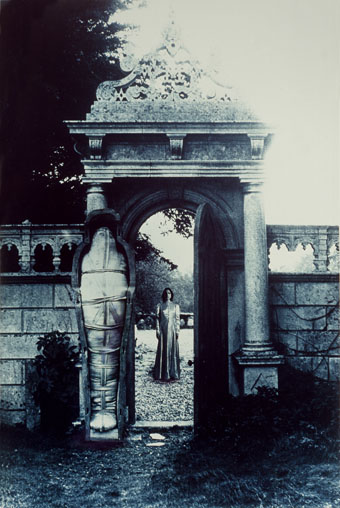
kolosimo.jpg

Wu Ming, a communist writing collective known for its historical fiction, sees Kolosimo as using pseudohistory as a tool to shake people from their belief that capitalist society is natural and transhistorical, opening minds to other possibilities for how humans can live. They regret that popular proponents of his theories today, like Graham Hancock and Erich von Däniken, are unable to recognize the political motivations behind his project: “Nothing of his radicality survives in today’s copycats… Every corner has been blunted, the heresy has become telegenic, but we know that the revolution will not be televised.”

The secret history of Marxist alien hunters by AM Gittlitz

I received the Sphere edition of Peter Kolosimo’s book as a Christmas present in 1974, and being 12 years old at the time took its theories fairly seriously. As a work of pseudohistory it’s as poor as the books of Erich von Däniken but I always liked the title, and it happens to be the place I first encountered the mysterious words “Popol Vuh”, a name that would acquire a very different significance a few years later. Kolosimo also joins Kenneth Grant in taking HP Lovecraft’s work as a thin fictionalisation of supposed fact. For a serious dismantling of Not of This World see this review (the first of three parts) by “skeptical xenoarchaelogist” Jason Colavito.

• The Archons are back: Erik Davis talks with Gnostic scholar Matthew Dillon about religious mourning, the Nag Hammadi library, sex-magick Jesus, the Gnostic Eden, David Icke’s lizards, and the power of the Archons as an allegory of contemporary technological and political power.

Crystal Voyager (1973) is a surfing film by David Elfick that ends with a 23-minute sequence of slow-motion waves set to Echoes by Pink Floyd. Some of the same footage later appeared in the final scenes of Peter Weir’s The Last Wave (1977).

• Sweet artifice: “Dandies in the age of decadence favoured synthetics over nature, nowhere more so than in perfumery’s fabulous counterfeits,” says Catherine Maxwell.

• Now for a lampshade solo: Pascal Wyse on how the Radiophonic Workshop built the future of sound.

• Wilde about Paris: Alex Dean on the sex, drink and liberation of Oscar Wilde’s “lost” years.

Bee in the City: the vanguard of an invading army from Planet Bee.

• Five books that most inspired Alexander McQueen.

Colin Newman‘s favourite albums.

Echoes (1969) by Leon Thomas | Echo Waves (1974) by Ash Ra Tempel | Not Of This World (1988) by Danzig