Weekend links 834

hockney.jpg

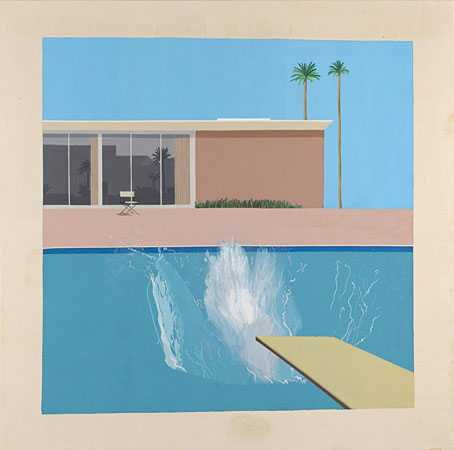
A Bigger Splash (1967) by David Hockney.

• I was interviewed this week at Retrofuturista, the first interview I’ve done in a while, and more wide-ranging than they sometimes are. Subjects covered include illustration, design, weird fiction, the Reverbstorm comics, the Bumper Book of Magic, underground culture, and the deficiencies of AI art. Also my ongoing, mostly unseen, Axiom project.

• At Nautilus: Kristen French conducts a lengthy and fascinating interview with Andrew Gallimore and Donald Hoffman, a pair of reseachers seeking to upend theoretical physics by making consciousness the foundation of reality, rather than its inconvenient and inexplicable by-product.

• “My audience is film-smart, and I always say, ‘If they don’t get something, then do your homework.’ Sometimes you have homework when you come to see my movies to figure out what the references are.” John Waters talking to Marya E. Gates at RogerEbert.com.

• The Morgan Library & Museum in NYC launches an exhibition later this month: Tarot! Renaissance Symbols, Modern Visions. At Colossal there’s a look at some of the 20th-century art, while Smithsonian Magazine has a selection of older card designs.

Inferno by Boards Of Canada is “probably as close to a political statement as these mystery men will ever approach.” Thus Simon Reynolds looking back over the history of the group following the release of their marvellous new album.

• Among the new titles at Standard Ebooks, the home of free, high-quality, public-domain texts: The Necromancers by Robert Hugh Benson.

• New music: Demand To Be Taken To Heaven Alive by Horse Lords; A Wave Of Alarm by Comdex; Teleportations by Danalogue.

Dennis Cooper’s favourite fiction, poetry, non-fiction, film, art, and internet of 2026 so far. Thanks again for the link here!

• At Public Domain Review: Venetian Bridge Brawls in 17th and 18th Century Art.

• At Door of Perception: Sibylle Ruppert—The Inward Gaze of the Flesh.

• RIP David Hockney and James Blood Ulmer.

• The Strange World of…Melinda Gebbie.

Splash One (Now I’m Home) (1966) by 13th Floor Elevators | Splash (1968) by Miles Davis | Splash (1974) by Can

Weekend links 809

hubacher.jpg

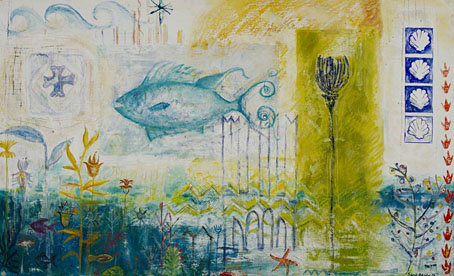
Atlantis by Sarah Hubacher.

• Regular readers will know Leigh Wright from his Wyrd Daze creations which I’ve linked here many times in the past. (The same goes for his frequent Mixcloud compilations.) Leigh’s wife died recently which means he now has to return to the UK from Canada where he doesn’t have permanent resident status. His request for help is here.

Melinda Gebbie’s Greatest Fits: “Ranging from painting, illustration, Comix, portraiture, eroticism and so much more, this fully illustrated and beautifully presented book is a glimpse into the unique mind of a woman forged in the fire of counterculture.”

• At The Daily Heller: Adrian Wilson’s collection of elaborate vintage fabric stamps is explored in a two-part feature here and here.

• Mixes of the week: DreamScenes – December 2025 at Ambientblog, and ASIP – Reflection on 2025 at A Strangely Isolated Place.

Dennis Cooper’s favourite fiction, poetry, non-fiction, film, art, and internet of 2025. Thanks again for the link here!

• At Colossal: “Field Kallop meditates on universal patterns through bold chromatic compositions.”

• “Scientists discover massive underwater ruins that may be a lost city of legend.”

• New music: The King In Yellow by Blarke Bayer.

• RIP Rob Reiner.

Atlantis (1955) by Les Baxter | The Atlantis Healing Harp (1982) by Upper Astral | A Man For Atlantis (2000) by Broadcast

Heartbreak Hotel

hh01.jpg

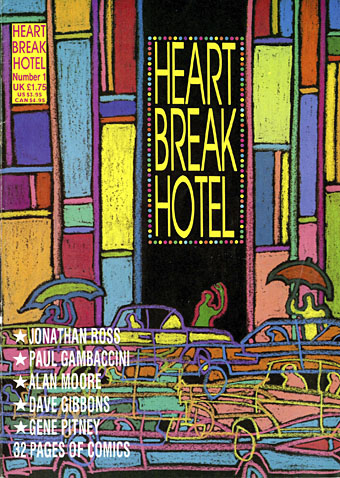
Number One: Teen Angels in Anguish. Cover by Barry Kamen.

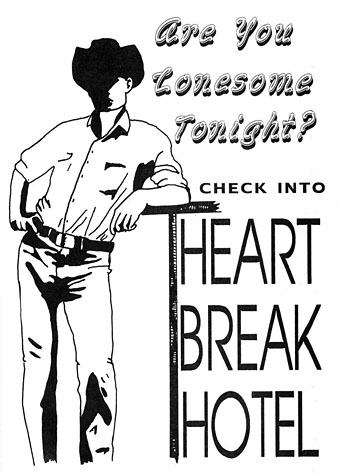
Among the recent uploads at the Internet Archive is a complete run of Heartbreak Hotel, a British magazine six issues of which were published in 1988. (More or less…I think the first issue may have appeared at the end of 1987.) Heartbreak Hotel differed from other bi-monthly publications by being predominantly a comics magazine, but it also differed from other comics magazines by a) having the contents of each issue themed to follow a different musical genre, b) running articles by and interviews with people who had little or no connection to the comics world, and c) being a lot more openly sympathetic towards gay men and lesbians than any other magazine aimed at a general readership. The latter stance was a political one in 1988. This was the year when the Thatcher government, growing hubristic after a third election win, passed a Local Government Act whose notorious Section 28 prevented authorities from “promoting homosexuality”. The clause was designed to prevent Labour-run councils from funding gay and lesbian support groups, as well as to stop teachers from mentioning homosexuality in sex education lessons. The editors of Heartbreak Hotel, Don Melia and Lionel Gracey-Whitman, were a gay couple, so the magazine stood against the repressive atmosphere of the time without being too polemical or too serious. The polemic was more overt in affiliated publications Strip AIDS, a benefit comic for the London Lighthouse (a residential and daycare centre for people with AIDS), and AARGH (or Artists Against Rampant Government Homophobia), a collection of comics taking a stand against Section 28 which was the first publication from Alan Moore’s Mad Love imprint.
hh07.jpg

The other notable feature of Heartbreak Hotel was the attention it gave to new artists, to women artists, or to people who weren’t drawing generic action/adventure strips. The first two issues appeared while I was working on the last pages of my adaptation of The Call of Cthulhu so I sent the magazine some sample pages and was subsequently invited to meet the editors at the launch of the next issue in London. I spent a somewhat nervous weekend in the capital; this was my first introduction to the wider comics world, and my introversion in those days was a lot more pronounced among strangers than it is today. I met Alan Moore and Melinda Gebbie for the first time (separately—they weren’t a couple at that time), and was amused when Don made a point of telling me that he and Lionel were gay, something he evidently felt he had to declare even though it had been (for me, at least) quite obvious from the editorial stance of Heartbreak Hotel, as well as the camp graphics scattered throughout the magazine’s pages, and the fact that the publisher was co-named “Willyprods”.
hh08.jpg

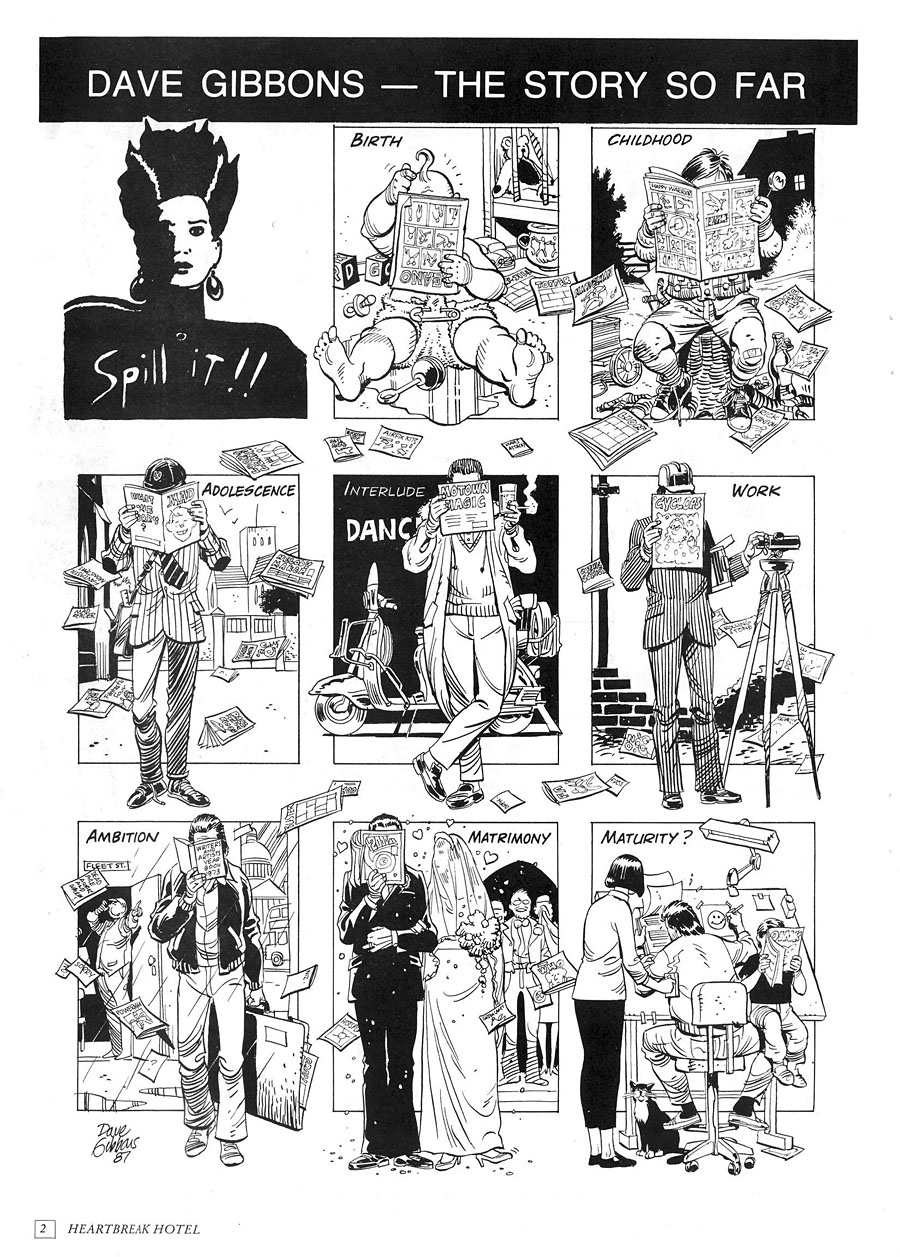
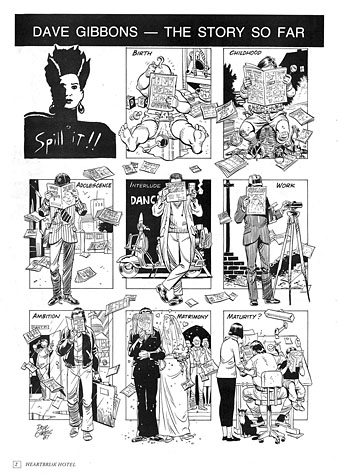
Dave Gibbons spills the beans in issue one.

The format of the magazine was established in the first issue: five or six strips based on songs that suited that issue’s theme, together with interviews or features, some of which also matched the theme. “Spill It!!” was a regular feature in which a different artist had a page to create an autobiographical piece in strip form, and there was also a column about comics and related matters by artist/writer Trina Robbins. I’d initially hoped to draw something for the psychedelic issue but by the time I posted my photocopies that number was already being prepared for print. I did turn up in the fourth issue, however, in a short news piece which announced the publication of the Caemaen Books edition of my Haunter of the Dark strip.
hh09.jpg

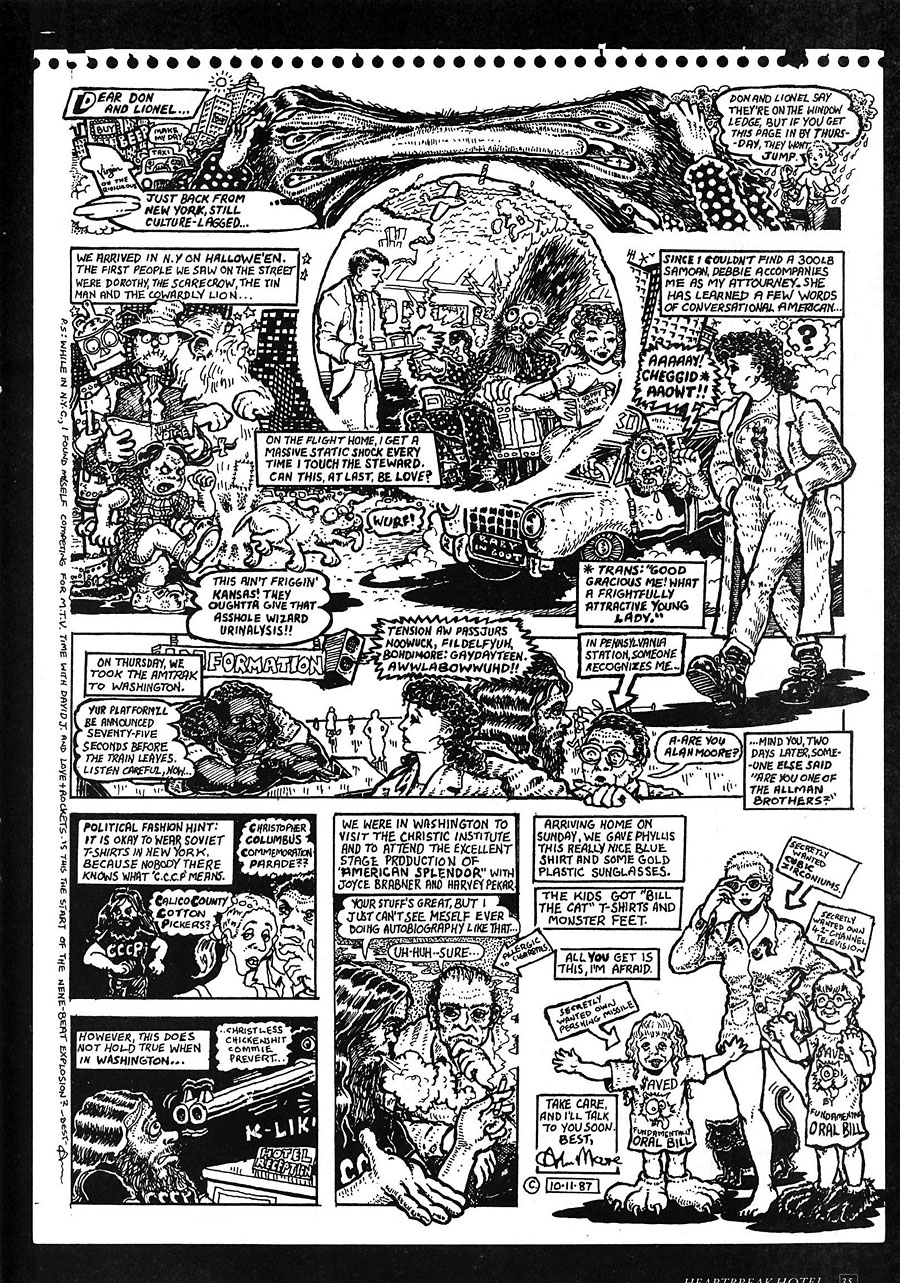
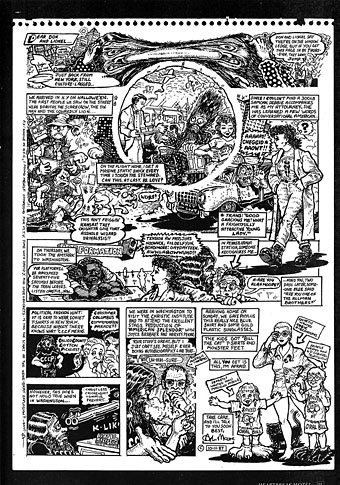
Also from issue one, Alan Moore recounts his trip to the USA.

A more important outcome from my journey to London was Lionel’s offer to run The Call of Cthulhu in BLAAM, a spin-off comic that Willyprods/Small Time Ink was planning. Heartbreak Hotel had been inundated with work by talented newcomers so rather than make them wait for a slot in the parent magazine the editors decided to launch another title to provide an additional outlet for new creators. Lionel had been very impressed with my Lovecraft story, and also assisted with its conclusion when he suggested that I add an extra page to help the pacing near the end, something I did, and which I’ve been grateful for ever since. The first issue of BLAAM, printed on tabloid-size newsprint sheets, came bundled with issue five of Heartbreak Hotel. The idea was that BLAAM would continue separately as a free publication thanks to a combination of low production costs, advertising, and Don Melia’s contacts at Titan Distribution. This was all very exciting, especially when two more issues of BLAAM appeared soon after. My strip was slated to run in number four or five but Willyprods/Small Time Ink didn’t publish anything more after December 1988. I was disappointed by this but not for long. A year later I’d started working on the Savoy comics, and Steve Bissette offered to publish the Cthulhu strip in Lovecraft Lives, a book he was planning for Kevin Eastman’s new enterprise, Tundra Publishing. That one didn’t work out either—the stars weren’t right for a variety of reasons—but all this attention, and the enthusiasm shown by everyone involved with Heartbreak Hotel, made the comics world seem like a good place to be. For a while, anyway.

Continue reading “Heartbreak Hotel”

Weekend links 426

slinger.jpg

Self Preservation (1970–77), a collage by Penny Slinger from the series An Exorcism.

• RIP John Calder, one of the most important British publishers of the last century whose death was acknowledged in the Washington Post (and in the Telegraph, a paper that would have given him no support during his censorship battles) but at the time of writing hasn’t been mentioned at all in the increasingly useless Guardian. The omission in the latter seems even more surprising when Calder himself wrote obituaries for the paper, and they ran an archive piece two weeks ago for the 50th anniversary of Calder & Boyars’ successful court defence of Last Exit to Brooklyn. “Publishing is an industry run by capitalists now.

• Another 50th anniversary: David Bushman asked Alan Moore for his memories of Patrick McGoohan’s superb TV series The Prisoner.

Michael Moorcock in conversation with Hari Kunzru at Shakespeare and Company, Paris.

Stephen O’Malley presents Acid Quarry Paris – In Session with Richard Pinhas (Heldon).

• When a rock is a stone: Louise Steinman on finding Robert Smithson’s Spiral Jetty.

• Victorians, Vaults, and Violet Water: a profusion of links at Greydogtales.

• Mix of the week: FACT mix 666 by Róisín Murphy.

• The amazing adventures of Melinda Gebbie.

Starbirthed

Exorcism (1971) by Lucifer | The Final Calling (Physical Exorcism) (1984) by CTI | Exorcism Of The Hippies (2010) by Mater Suspiria Vision

Weekend links 250

gebbie.jpg

Untitled artwork by Melinda Gebbie.

• “Johnny Rocket is like a Chaucerian epic retold by David Peace with music by Bruce Haack and The Focus Group for a music hall located in Hell.” John Doran talks to Maxine Peake and the Eccentronic Research Council about their “psychedelic ouija pop”.

Allison Meier looks at a new exhibition of Victor Moscoso’s psychedelic drawings. Related: Julia Bigham writing in Eye magazine in 2001 about London’s psychedelic poster scene.

• “Oh to eye the very enfilade through which that orchidaceous entity would make his stately progress…” Strange Flowers on the eccentric Count Stenbock.

Melinda Gebbie: What Is The Female Gaze? The artist is in conversation next month with Mark Pilkington and Tai Shani at the Horse Hospital, London.

Pamela Colman Smith: She Believes in Fairies. The Tarot artist and illustrator in a rare interview from 1912.

• Minimalist posters: “a lack of nuance disguised as insight,” says John Brownlee.

• Saturday night in the City of the Dead: Richard Metzger on the John Foxx-era Ultravox.

The Will Gregory Moog Ensemble plays the Brandenberg Concerto No. 3.

• “In a weird way”: a brief history of a phrase by Ivan Kreilkamp.

Die Hexe: An installation by Alex Da Corte.

• RIP Daevid Allen

Istaqsinaayok

You Can’t Kill Me (1971) by Gong | Master Builder (1974) by Gong | When (1982) by Daevid Allen